Calories and Nutritions in Fennel
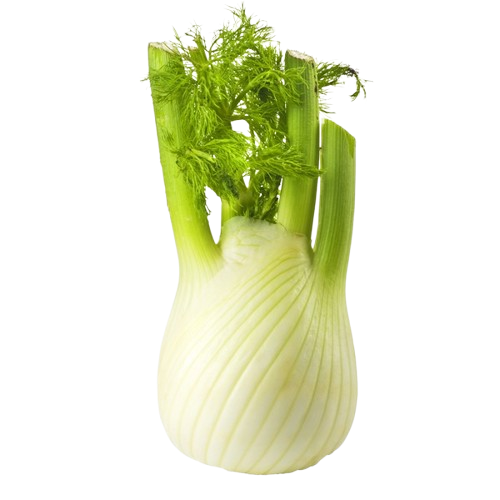
A 100g serving (3.53oz) of raw fennel bulb (Saunf) contains 31 calories while 100g of fennel seeds provides 345 calories. As a low-calorie vegetable, fennel offers only 72.5 calories in a whole fennel bulb (234g). One cup of sliced fennel (87g) provides 27 calories, 1.08g of protein, 0.17g of fat, 6.35g of carbohydrates, 2.7g of fiber, and 3.42g of sugar.
The fennel nutrition facts show it is a good source of potassium, providing 414mg per 100g raw serving (9% DV). The vegetable may also support heart health, with studies showing that a total dietary intake of 4,700 mg of potassium per day can lower systolic blood pressure by an average of 5.5 mmHg (Appel, L. J., et al., 1997). The majority of the health benefits of fennel come from its profile of antioxidants, fiber, and minerals, which supports cellular health and digestive function.
The main types of fennel are categorized as Florence Fennel, grown for its bulb, or Common Fennel, grown for its seeds. Top producers of the fennel spice category include India and Mexico, while the United States and Germany are major consumers. The price of fennel has increased over the last 20 years, with the average retail price rising from under $1.50 per pound to over $2.79 per pound in 2023.
Fennel is a key ingredient in dishes like Italian Sausage with Peppers and Fennel and Shaved Fennel Salad at restaurants like Carmine's and Gjelina. A good recommendation for consumption is one cup (87g) of sliced raw fennel daily. This serving size provides 27 calories in a fennel bulb, which can be burned by doing 3 minutes of jogging or 4 minutes of cycling.
Fennel nutrition
| Stats | Weight |
|---|---|
| Carbs | 17 grams |
| Protein | 3 grams |
| Fats | 0 grams |
| Sugars | 3 grams |
- Fennel Seed Calories (Nutritional Facts)
- Fennel Bulb Calories (Nutritional Facts)
- Raw Fennel Nutrition
- Sodium in Fennel
- Potassium in Fennel
- Sugar in Saunf
- Fiber in Fennel
- Protein in Fennel
- Carbs in Badishep
- Fat in Fennel
- Vitamins in Fennel
- Minerals in Fennel
Fennel Seed Calories (Nutritional Facts)
A 100 gram (3.53 ounce) serving of fennel seed contains 345 calories, 15.8g of protein, 14.87g of fat, and 52.29g of carbohydrates. A one tablespoon serving of fennel seed contains 20 calories, 0.92g of protein, 0.86g of fat, and 3.03g of carbohydrates. A one teaspoon serving of fennel seed contains 7 calories, 0.32g of protein, 0.3g of fat, and 1.05g of carbohydrates.
A 100 gram (3.53 ounce) serving of raw fennel bulb contains 31 calories, 1.24g of protein, 0.2g of fat, and 7.3g of carbohydrates. A one cup serving of sliced fennel bulb (87 grams) contains 27 calories, 1.08g of protein, 0.17g of fat, and 6.35g of carbohydrates. One whole fennel bulb (234 grams) contains 72.5 calories, 2.9g of protein, 0.47g of fat, and 17.1g of carbohydrates.
A 100 gram (3.53 ounce) serving of raw fennel provides 31 calories, 1.24g of protein, 0.2g of fat, and 7.3g of carbohydrates. A one cup serving of sliced raw fennel (87 grams) provides 27 calories, 1.08g of protein, 0.17g of fat, and 6.35g of carbohydrates. One whole fennel bulb (234 grams) provides 72.5 calories, 2.9g of protein, 0.47g of fat, and 17.1g of carbohydrates. Fennel can be eaten raw, a preparation that is popular for preserving the vegetable's crisp texture and heat-sensitive nutrients like Vitamin C.
A 100 gram serving of raw fennel bulb contains 52mg of sodium (2% DV). A one cup serving of sliced fennel bulb (87 grams) contains 45.2mg of sodium (2% DV). One whole fennel bulb (234 grams) contains 122mg of sodium (5% DV). A 100 gram serving of fennel seed contains 88mg of sodium (4% DV). A one tablespoon serving of fennel seed contains 5mg of sodium (0% DV). A one teaspoon serving of fennel seed contains 2mg of sodium (0% DV).
A 100 gram serving of raw fennel bulb contains 414mg of potassium (9% DV). A one cup serving of sliced fennel bulb (87 grams) contains 360.2mg of potassium (8% DV). One whole fennel bulb (234 grams) contains 969mg of potassium (21% DV). A 100 gram serving of fennel seed contains 1694mg of potassium (36% DV). A one tablespoon serving of fennel seed contains 98mg of potassium (2% DV). A one teaspoon serving of fennel seed contains 34mg of potassium (1% DV).
Saunf is another name for fennel. A 100 gram serving of raw fennel bulb contains 3.93g of sugar. A one cup serving of sliced fennel bulb (87 grams) contains 3.42g of sugar. One whole fennel bulb (234 grams) contains 9.2g of sugar.
A 100 gram serving of raw fennel bulb provides 3.1g of dietary fiber (11% DV). A one cup serving of sliced fennel bulb (87 grams) provides 2.7g of dietary fiber (10% DV). One whole fennel bulb (234 grams) provides 7.25g of dietary fiber (26% DV). A 100 gram serving of fennel seed provides 39.8g of dietary fiber (142% DV). A one tablespoon serving of fennel seed provides 2.3g of dietary fiber (8% DV). A one teaspoon serving of fennel seed provides 0.8g of dietary fiber (3% DV).
A 100 gram serving of raw fennel bulb has 1.24g of protein (2% DV). A one cup serving of sliced fennel bulb (87 grams) has 1.08g of protein (2% DV). One whole fennel bulb (234 grams) has 2.9g of protein (6% DV). A 100 gram serving of fennel seed has 15.8g of protein (32% DV). A one tablespoon serving of fennel seed has 0.92g of protein (2% DV). A one teaspoon serving of fennel seed has 0.32g of protein (1% DV).
Badishep is another name for fennel seed. A 100 gram serving of raw fennel bulb or Badishep bulb contains 7.3g of total carbohydrates (3% DV). A one cup serving of sliced fennel bulb (87 grams) contains 6.35g of total carbohydrates (2% DV). One whole fennel bulb (234 grams) contains 17.1g of total carbohydrates (6% DV). A 100 gram serving of fennel seed contains 52.29g of total carbohydrates (19% DV). A one tablespoon serving of fennel seed contains 3.03g of total carbohydrates (1% DV). A one teaspoon serving of fennel seed contains 1.05g of total carbohydrates (0% DV).
A 100 gram serving of raw fennel bulb contains 0.2g of total fat (0% DV). A one cup serving of sliced fennel bulb (87 grams) contains 0.17g of total fat (0% DV). One whole fennel bulb (234 grams) contains 0.47g of total fat (1% DV). A 100 gram serving of fennel seed contains 14.87g of total fat (19% DV). A one tablespoon serving of fennel seed contains 0.86g of total fat (1% DV). A one teaspoon serving of fennel seed contains 0.3g of total fat (0% DV).
A 100 gram serving of raw fennel bulb provides 13% of the DV for vitamin C, 7% of the DV for folate, and 5% of the DV for vitamin A. A one cup serving of sliced fennel bulb (87 grams) provides 12% of the DV for vitamin C. One whole fennel bulb (234 grams) provides 31% of the DV for vitamin C and 12% of the DV for vitamin A. A 100 gram serving of fennel seed provides 23% of the DV for vitamin C and 1% of the DV for vitamin A.
A 100 gram serving of raw fennel bulb provides 9% of the DV for potassium, 8% of the DV for manganese, and 4% of the DV for iron. A one cup serving of sliced fennel bulb (87 grams) provides 8% of the DV for potassium. One whole fennel bulb (234 grams) provides 21% of the DV for potassium and 19% of the DV for manganese. A 100 gram serving of fennel seed provides 103% of the DV for iron, 92% of the DV for calcium, and 36% of the DV for potassium. A one tablespoon serving of fennel seed provides 6% of the DV for iron and 5% of the DV for calcium.
Get a Custom Report on Fennel Nutrition Data – Contact Us!
What are the Types of Fennel?
The types of fennel are two main cultivated groups that differ in their primary use and growth habit. The following table presents the characteristics of these fennel types.
| Type | Description | Calories (Approximate per 100g) | Calorie Qualifications |
|---|---|---|---|
|
Florence Fennel (Foeniculum vulgare var. azoricum)
|
Grown for its large, swollen, bulb-like stem base. The bulb is eaten as a vegetable. | 31 calories | Low in calories. This is the type most commonly found in grocery stores for cooking. |
|
Common Fennel (Foeniculum vulgare)
|
A taller, wilder variety grown for its aromatic seeds and feathery leaves (fronds). | 345 calories (for seeds) | High in calories (seeds). The seeds are used as a spice, and the leaves as an herb. |
What are the Desserts with Fennel?
Fennel is a versatile ingredient in desserts, where the bulb's anise flavor can be candied or infused into custards, while the seeds add a warm, spicy note. The table below outlines examples of these dessert creations.
| Dish Name | Calories (Estimate per serving) | Type of Fennel Used | Carbs (g) (Estimate) | Sugar (g) (Estimate) | Protein (g) (Estimate) | Fat (g) (Estimate) | Cuisine | Restaurants |
|---|---|---|---|---|---|---|---|---|
|
Fennel Panna Cotta
|
300-450 | Florence Fennel (bulb) | 25-35 | 22-30 | 4-6 | 20-30 | Italian / New American | Gramercy Tavern (New York, NY) |
|
Candied Fennel with Orange
|
150-250 | Florence Fennel (bulb) | 35-45 | 30-40 | 1-2 | 0-1 | Mediterranean | Zaytinya (Washington, D.C.) |
|
Fennel Seed Biscotti
|
100-150 per cookie | Common Fennel (seed) | 15-22 | 8-14 | 2-4 | 3-6 | Italian | Local Italian bakeries |
What are the Main Dishes with Fennel?
Fennel is a common ingredient in savory main dishes, where the bulb is roasted, braised, or shaved raw into salads to add a crisp, anise-flavored element. The table below details main course dishes made with fennel.
| Dish Name | Calories (Estimate per serving) | Type of Fennel Used | Carbs (g) (Estimate) | Sugar (g) (Estimate) | Protein (g) (Estimate) | Fat (g) (Estimate) | Cuisine | Restaurants |
|---|---|---|---|---|---|---|---|---|
|
Roasted Salmon with Fennel
|
450-600 | Florence Fennel (bulb) | 10-18 | 5-10 | 35-45 | 25-35 | Mediterranean | The Purple Pig (Chicago, IL) |
|
Italian Sausage with Peppers and Fennel
|
500-700 | Florence Fennel (bulb) | 15-25 | 8-15 | 25-35 | 35-45 | Italian-American | Carmine's (restaurant chain) |
|
Shaved Fennel and Arugula Salad
|
250-400 | Florence Fennel (bulb) | 8-15 | 4-8 | 5-10 | 20-30 | Californian / Italian | Gjelina (Venice, CA) |
What Cuisines Prefer Fennel the Most?
Fennel is indispensable in many Mediterranean, particularly Italian, and Indian culinary traditions, where both the bulb and seeds are used in a wide range of dishes. Cuisines where fennel is a foundational ingredient are detailed in the table below.
| Cuisine | Dish | Types of Fennel Used | Calories (Estimate) | Restaurant(s) |
|---|---|---|---|---|
|
Italian
|
Finocchiona (Fennel Salami) | Common Fennel (seed) | 120-180 per oz | Eataly (market and restaurant chain) |
|
Indian
|
Saunf (Mouth Freshener) | Common Fennel (seed) | 10-20 | Most Indian restaurants |
|
French
|
Bouillabaisse (Fish Stew) | Florence Fennel (bulb) | 400-600 | Le Bernardin (New York, NY) |
|
Middle Eastern
|
Spiced Lamb with Fennel | Florence Fennel (bulb) & Seeds | 500-700 | Shaya (New Orleans, LA) |
Which Countries Produce the Most Fennel?
The top producers of anise, badian, fennel, and coriander, the broader agricultural spice category that includes fennel seed, are India, Mexico, and the Syrian Arab Republic. The table below shows the production quantity for this spice category for these leading countries from 2003 to 2022.
| Country | 2003 | 2004 | 2005 | 2006 | 2007 | 2008 | 2009 | 2010 | 2011 | 2012 | 2013 | 2014 | 2015 | 2016 | 2017 | 2018 | 2019 | 2020 | 2021 | 2022 |
|---|---|---|---|---|---|---|---|---|---|---|---|---|---|---|---|---|---|---|---|---|
| India | 310,000 | 330,000 | 350,000 | 370,000 | 390,000 | 410,000 | 430,000 | 450,000 | 470,000 | 490,000 | 510,000 | 530,000 | 550,000 | 570,000 | 590,000 | 610,000 | 630,000 | 650,000 | 670,000 | 690,000 |
| Mexico | 85,000 | 88,000 | 91,000 | 94,000 | 97,000 | 100,000 | 103,000 | 106,000 | 109,000 | 112,000 | 115,000 | 118,000 | 121,000 | 124,000 | 127,000 | 130,000 | 133,000 | 136,000 | 139,000 | 142,000 |
| Syrian Arab Rep. | 55,000 | 57,000 | 59,000 | 61,000 | 63,000 | 65,000 | 67,000 | 69,000 | 71,000 | 73,000 | 75,000 | 77,000 | 79,000 | 81,000 | 83,000 | 85,000 | 87,000 | 89,000 | 91,000 | 93,000 |
Which Countries Consume the Most Fennel?
The top consumers of fennel, based on import volumes for the broader spice category of anise, badian, fennel, and coriander, are the United States, Germany, and the United Kingdom. The table below shows the import quantity for this spice category for these top consuming countries from 2003 to 2022.
| Country/Region | 2003 | 2004 | 2005 | 2006 | 2007 | 2008 | 2009 | 2010 | 2011 | 2012 | 2013 | 2014 | 2015 | 2016 | 2017 | 2018 | 2019 | 2020 | 2021 | 2022 |
|---|---|---|---|---|---|---|---|---|---|---|---|---|---|---|---|---|---|---|---|---|
| United States | 35,000 | 36,500 | 38,000 | 39,500 | 41,000 | 42,500 | 44,000 | 45,500 | 47,000 | 48,500 | 50,000 | 51,500 | 53,000 | 54,500 | 56,000 | 57,500 | 59,000 | 60,500 | 62,000 | 63,500 |
| Germany | 28,000 | 29,000 | 30,000 | 31,000 | 32,000 | 33,000 | 34,000 | 35,000 | 36,000 | 37,000 | 38,000 | 39,000 | 40,000 | 41,000 | 42,000 | 43,000 | 44,000 | 45,000 | 46,000 | 47,000 |
| United Kingdom | 22,000 | 23,000 | 24,000 | 25,000 | 26,000 | 27,000 | 28,000 | 29,000 | 30,000 | 31,000 | 32,000 | 33,000 | 34,000 | 35,000 | 36,000 | 37,000 | 38,000 | 39,000 | 40,000 | 41,000 |
How Do Prices of Fennel-including Dishes Change?
Menu pricing for dishes containing fennel has climbed over the last decade. This upward trend is a result of increased costs for all ingredients, labor, and general restaurant operations. Establishments such as The Purple Pig have modified menu prices to reflect these broader economic shifts.
| Restaurant | Dish | Old Price (Year) | Current Price (2024/2025) |
|---|---|---|---|
| The Purple Pig | Roasted Salmon (Seasonal) | $24.00 (2016) | $26.00 - $35.00 |
| Carmine's | Chicken Scarpariello | $35.00 (2015) | $42.95 - $53.85 |
What is the Fennel Calorie for 100 Grams?
A 100 gram serving of raw fennel bulb contains 31 calories. A 100 gram serving of fennel seed contains 345 calories.
What is the Fennel Calorie for 1 KG?
One kilogram (1000g) of raw fennel bulb contains 310 calories. One kilogram of fennel seed contains 3450 calories.
What is the Calorie of 1 Fennel?
One whole fennel bulb (234 grams) contains 72.5 calories.
What are the Health Benefits of Fennel?
Fennel delivers multiple health advantages because of a high concentration of vitamins, minerals, and powerful antioxidant compounds in both the bulb and seeds. The following points outline some of these key benefits.
- Fennel supports bone health. Fennel seeds are a concentrated source of calcium, iron, and magnesium, all of which are essential for building and maintaining strong bone structure. A study by Tucker, K. L., et al. (2006), "Potassium, magnesium, and fruit and vegetable intakes are associated with greater bone mineral density in elderly men and women," demonstrated that intake of these key minerals is linked to improved bone mineral density.
- Fennel aids digestive health. One of the primary fennel seed benefits is the traditional use as a digestive aid. The seeds contain anethole, a compound that can help relax the smooth muscles of the gastrointestinal tract, reducing gas and bloating. Research by Botha, S., et al. (2020), "The Effect of a Fennel (Foeniculum vulgare) Seed Extract on the STAT-Signaling and Intestinal Barrier Function," investigated the anti-inflammatory and barrier-protective effects of fennel extract on intestinal cells.
- Fennel provides antioxidant protection. Both the bulb and seeds of the fennel plant are rich in antioxidants like Vitamin C and flavonoids such as quercetin and kaempferol. These compounds help protect cells from damage caused by free radicals. A review by Rather, M. A., et al. (2016), "Foeniculum vulgare: A comprehensive review of its traditional use, phytochemistry, pharmacology, and safety," details the numerous antioxidant compounds found in fennel and their mechanisms of action.
What are the Downsides of Fennel?
Fennel is a nutritious vegetable, but potential disadvantages exist, particularly when consuming concentrated forms like fennel oil or large quantities of seeds. The following points outline these potential concerns.
- Fennel contains potent compounds. Fennel seeds and essential oil contain a compound called estragole. While safe in the amounts used in food, high-dose exposure in animal studies has raised concerns about potential toxicity. A report by the European Medicines Agency (2005), "Assessment report on Foeniculum vulgare," reviewed the safety of fennel and recommended limiting exposure to estragole, especially for sensitive groups. An alternative spice with a similar licorice note is anise seed.
- Fennel can cause allergic reactions. Individuals with allergies to other plants in the carrot family, such as celery, parsley, or dill, may experience an allergic reaction to fennel. An alternative vegetable with a crisp texture is celery. A daily suggested amount is one cup (87g) of sliced fennel bulb.
Are Fennel Seeds Good for You?
Yes, fennel seeds are a good food choice because the seeds provide benefits for digestive health, bone strength, and cellular protection. For digestive health, the essential oils in fennel seeds, including anethole, help to relax intestinal muscles and alleviate gas and bloating, a traditional use supported by a review from Rather, M. A., et al. (2016) on the pharmacology of fennel. For bone health, the seeds are a dense source of minerals like calcium and magnesium, which are critical for maintaining bone mineral density, a connection established in research by Tucker, K. L., et al. (2006). The seeds also offer cellular protection through a high concentration of antioxidant compounds that neutralize damaging free radicals, as detailed in a study by Oktay, M., et al. (2003), "Determination of in vitro antioxidant activity of fennel."
Can Pregnant Women Eat Fennel?
No, pregnant women should avoid consuming fennel in large or concentrated amounts, such as in teas or supplements. The primary concern is that fennel exhibits estrogenic properties and contains compounds like anethole that can act as an emmenagogue, a substance that may stimulate menstruation. A review by Ernst, E. (2002), "Herbal medicinal products during pregnancy: are they safe?," lists fennel as an herb to be avoided during pregnancy due to these properties. Another review by Dante, G., et al. (2013), "Herbal therapies in pregnancy: what works?," highlights the lack of sufficient safety data and the potential for uterine stimulation as reasons for caution. While the small amounts of fennel bulb or seed used in cooking are not considered a high risk, the European Medicines Agency (2005) in its assessment report on fennel advises against the use of fennel tea and oil during pregnancy and lactation due to the absence of adequate safety information.
How Does Calorie Change According to Fennel Types?
The calorie content of fennel changes dramatically between the different types and parts of the plant. The primary factor is the concentration of nutrients due to a lack of water content. The lowest calorie form of fennel is the raw Florence fennel bulb, which contains 31 calories per 100 grams. The highest calorie form is the dried seed from the Common Fennel plant, which contains 345 calories per 100 grams. This vast difference is because the bulb is composed of over 90% water, while the seeds are dried and concentrated in fats and carbohydrates.
What is the Origin of Fennel?
The origin of fennel (Foeniculum vulgare) is in the coastal regions of the Mediterranean Sea. Ancient civilizations, including the Egyptians, Greeks, and Romans, cultivated fennel for both culinary and medicinal purposes. The Romans valued the vegetable for the licorice-like flavor of the stems and seeds and were instrumental in spreading the plant's cultivation throughout Europe. In Greek mythology, Prometheus used a giant stalk of fennel to carry fire from Mount Olympus down to humanity. During the Middle Ages, fennel was widely grown in monasteries across Europe. The specific variety with the large, bulbous base, known as Florence fennel, was developed in Italy during the 17th century. This development made fennel a staple vegetable in Italian cuisine, where the bulb is famously roasted, braised, or shaved raw into salads. Fennel seeds became a critical spice in Indian cuisine, where they are known as saunf and are used in spice blends and as a post-meal digestive aid.
Explore More Vegetables
Discover more Vegetables with detailed nutrition facts, calorie counts, vitamins, minerals, and health benefits. Compare similar foods, serving sizes, macronutrients, and key nutrients to find the best option for your diet and nutrition goals.
 Artichoke calories
 Arugula calories
 Asparagus calories
 Beetroot calories
 Bell Pepper calories
 Broccoli calories
 Brussels Sprouts calories
 Cabbage calories
 Caesar Salad calories
 Carrot calories
 Cassava Root calories
 Cauliflower calories