Calories and Nutritions in Kohlrabi
Knol knol, popularly known as Kohlrabi is low in calories, with a 100 gram (3.53 ounce) serving of raw kohlrabi containing 27 calories and a 100 gram serving of cooked boiled kohlrabi containing 29 calories. A medium sized raw kohlrabi (300g) has 81 calories, while a one cup serving (135 grams) has 36 calories. Kohlrabi (also referred to as gedde kosu) is an excellent source of Vitamin C, with a 100 gram raw serving providing 62mg of vitamin C (69% DV). It also contains antioxidants like glucosinolates, which are common in cruciferous vegetables and are studied for their health-protective properties. The health benefits of kohlrabi have also been attributed to its fiber content at 3.6 grams per 100 gram serving (13% DV).
The kohlrabi nutrition facts for a 100 gram raw serving show 1.7 grams of protein, 0.1 grams of fat, and 6.2 grams of carbohydrates. Key minerals include 350mg potassium (7% DV) and 46 mg phosphorus (4% DV). The main types of kohlrabi are categorized by color, divided into green and purple varieties. Top producers of kohlrabi and other brassicas include China and India, while Germany and the United States are major consumers. The price of kohlrabi has increased over the last 20 years, with the average retail price rising from under $1.50 per pound to over $2.69 per pound in 2023/2024.
Kohlrabi is a key ingredient in dishes like Kohlrabi Salad and Roasted Kohlrabi, served at restaurants like Gramercy Tavern and ABC Kitchen. The recommended daily serving is one cup (135 grams) of raw kohlrabi, which provides 36 calories. Burning 36 calories can be achieved by doing a 4-minute jog, 5 minutes of cycling, or 7 minutes of brisk walking.
Kohlrabi nutrition
| Stats | Weight |
|---|---|
| Carbs | 8 grams |
| Protein | 2 grams |
| Fats | 0 grams |
| Sugars | 3 grams |
- Large Knol Khol Calories (Nutritional Facts)
- Medium Gedde Kosu Calories (Nutritional Facts)
- Small Kohlrabi Calories (Nutritional Facts)
- Raw Kohlrabi Nutrition
- Sodium in Kohlrabi
- Potassium in Kohlrabi
- Sugar in Kohlrabi
- Fiber in Kohlrabi
- Protein in Kohlrabi
- Carbs in Kohlrabi
- Fat in Kohlrabi
- Vitamins in Kohlrabi
- Minerals in Noolkol
Large Knol Khol Calories (Nutritional Facts)
One large raw knol khol, or kohlrabi, (500 grams) contains 135 calories, 8.5g of protein, 0.5g of fat, 31g of carbohydrates, 18g of fiber, 13g of sugar, and 100mg of sodium.
One medium raw gedde kosu, or kohlrabi, (300 grams) contains 81 calories, 5.1g of protein, 0.3g of fat, 18.6g of carbohydrates, 10.8g of fiber, 7.8g of sugar, and 60mg of sodium.
One small raw kohlrabi (165 grams) contains 45 calories, 2.8g of protein, 0.17g of fat, 10.2g of carbohydrates, 5.9g of fiber, 4.3g of sugar, and 33mg of sodium.
A 100 gram (3.53 ounce) serving of raw kohlrabi contains 27 calories, 1.7g of protein, 0.1g of fat, 6.2g of carbohydrates, 3.6g of fiber, and 2.6g of sugar. One cup of raw kohlrabi (135 grams) provides 36 calories, 2.3g of protein, 0.14g of fat, 8.4g of carbohydrates, 4.9g of fiber, and 3.5g of sugar. One slice of raw kohlrabi (16 grams) contains 4 calories, 0.27g of protein, 0.02g of fat, 0.99g of carbohydrates, 0.58g of fiber, and 0.42g of sugar.
A 100 gram serving of raw kohlrabi contains 20mg of sodium (1% DV), one cup of raw kohlrabi (135g) contains 27mg of sodium (1% DV), and one slice of raw kohlrabi (16g) contains 3.2mg of sodium (0% DV). A 100 gram serving of cooked kohlrabi contains 21mg of sodium (1% DV).
A 100 gram serving of raw kohlrabi contains 350mg of potassium (7% DV), one cup of raw kohlrabi (135g) contains 472.5mg of potassium (10% DV), and one slice of raw kohlrabi (16g) contains 56mg of potassium (1% DV). A 100 gram serving of cooked kohlrabi contains 340mg of potassium (7% DV).
A 100 gram serving of raw kohlrabi contains 2.6g of sugar, one cup of raw kohlrabi (135g) contains 3.5g of sugar, and one slice of raw kohlrabi (16g) contains 0.42g of sugar. A 100 gram serving of cooked kohlrabi contains 2.8g of sugar.
A 100 gram serving of raw kohlrabi provides 3.6g of dietary fiber (13% DV), one cup of raw kohlrabi (135g) provides 4.9g of fiber (17% DV), and one slice of raw kohlrabi (16g) provides 0.58g of fiber (2% DV). A 100 gram serving of cooked kohlrabi provides 1.1g of dietary fiber (4% DV).
A 100 gram serving of raw kohlrabi has 1.7g of protein (3% DV), one cup of raw kohlrabi (135g) has 2.3g of protein (5% DV), and one slice of raw kohlrabi (16g) has 0.27g of protein (1% DV). A 100 gram serving of cooked kohlrabi has 1.8g of protein (4% DV).
A 100 gram serving of raw kohlrabi contains 6.2g of total carbohydrates (2% DV), one cup of raw kohlrabi (135g) contains 8.4g of carbohydrates (3% DV), and one slice of raw kohlrabi (16g) contains 0.99g of carbohydrates (0% DV). A 100 gram serving of cooked kohlrabi contains 6.7g of total carbohydrates (2% DV).
A 100 gram serving of raw kohlrabi contains 0.1g of total fat (0% DV), one cup of raw kohlrabi (135g) contains 0.14g of fat (0% DV), and one slice of raw kohlrabi (16g) contains 0.02g of fat (0% DV). A 100 gram serving of cooked kohlrabi contains 0.11g of total fat (0% DV).
A 100 gram serving of raw kohlrabi contains 62mg of vitamin C (69% DV), one cup of raw kohlrabi (135g) contains 83.7mg of vitamin C (93% DV), and one slice of raw kohlrabi (16g) contains 9.9mg of vitamin C (11% DV). A 100 gram serving of cooked kohlrabi contains 54mg of vitamin C (60% DV).
A 100 gram serving of raw noolkol, or kohlrabi, contains 46mg of phosphorus (4% DV), 24mg of calcium (2% DV), and 0.4mg of iron (2% DV). One cup of raw noolkol (135g) contains 62.1mg of phosphorus (5% DV), 32.4mg of calcium (2% DV), and 0.54mg of iron (3% DV). A 100 gram serving of cooked noolkol contains 45mg of phosphorus (4% DV), 25mg of calcium (2% DV), and 0.4mg of iron (2% DV).
Get a Custom Report on Kohlrabi Nutrition Data – Contact Us!
What are the Types of Kohlrabis?
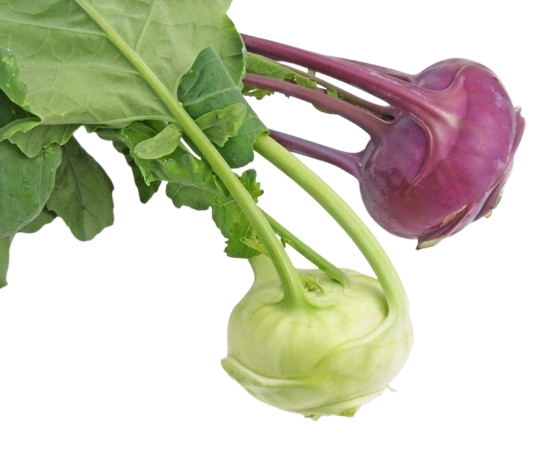
The types of kohlrabis are primarily distinguished by color, with dozens of specific cultivars falling into two main categories: green and purple. The table below outlines the characteristics of these common varieties.
| Type | Description | Calories (per 100g) | Calorie Qualifications |
|---|---|---|---|
|
Green Kohlrabi ('White Vienna')
|
The most common type, with a pale green, almost white, skin and crisp white flesh. The flavor is mild, sweet, and peppery. | 27 calories | Low in calories. The color does not affect the calorie count compared to the purple type. |
|
Purple Kohlrabi ('Purple Vienna')
|
Features a vibrant purple skin with the same crisp, white flesh as the green variety. The flavor is slightly sweeter than the green type. | 27 calories | Low in calories. The calorie count is identical to the green type; the purple color comes from anthocyanin antioxidants. |
What are the Main Dishes with Kohlrabi?
Kohlrabi is a versatile vegetable in savory main dishes, where the vegetable's crisp texture and mild, sweet flavor are showcased in salads, slaws, and roasted preparations. The table below presents main course dishes that use kohlrabi.
| Dish Name | Calories | Type of Kohlrabi Used | Carbs (g) | Sugar (g) | Protein (g) | Fat (g) | Cuisine | Restaurants |
|---|---|---|---|---|---|---|---|---|
|
Kohlrabi Salad
|
200-350 | Raw Kohlrabi | 15-25 | 10-18 | 5-10 | 12-20 | Modern American | Gramercy Tavern (New York, NY) |
|
Roasted Kohlrabi
|
150-250 | Raw Kohlrabi | 20-30 | 15-25 | 4-6 | 8-12 | German, American | ABC Kitchen (New York, NY) |
|
Kohlrabi Fritters
|
300-450 | Raw Kohlrabi | 25-35 | 5-10 | 8-12 | 18-28 | German, European | Rolf and Daughters (Nashville, TN) |
|
Kohlrabi Gratin
|
350-500 | Raw Kohlrabi | 20-30 | 8-15 | 10-15 | 25-35 | French, American | The French Laundry (Yountville, CA) |
What Cuisines Prefer Kohlrabi the Most?
Kohlrabi is indispensable in several Central European and Asian culinary traditions, where the vegetable is used in both raw and cooked preparations. The table below details cuisines where kohlrabi's role is foundational.
| Cuisine | Dish | Types of Kohlrabi Used | Calories (Estimate) | Restaurant(s) |
|---|---|---|---|---|
|
German
|
Kohlrabi Suppe (Kohlrabi Soup) | Raw Kohlrabi | 200-300 | Loreley Restaurant & Biergarten (New York, NY) |
|
Modern American
|
Kohlrabi Salad | Raw Kohlrabi | 200-350 | Gramercy Tavern (New York, NY) |
|
Vietnamese
|
Gỏi Su Hào (Kohlrabi and Carrot Salad) | Raw Kohlrabi | 150-250 | Di An Di (Brooklyn, NY) |
|
Indian
|
Ganth Gobi ki Sabzi (Kohlrabi Curry) | Raw Kohlrabi | 250-400 | Junoon (New York, NY) |
Which Countries Produce the Most Kohlrabis?
The top producers of kohlrabi are Germany, China, and India. Global production data for kohlrabi is often aggregated with other brassica vegetables. The table below shows the production quantity for cabbages and other brassicas, a category that includes kohlrabi, for these leading countries from 2003 to 2022.
| Country | 2003 | 2004 | 2005 | 2006 | 2007 | 2008 | 2009 | 2010 | 2011 | 2012 | 2013 | 2014 | 2015 | 2016 | 2017 | 2018 | 2019 | 2020 | 2021 | 2022 |
|---|---|---|---|---|---|---|---|---|---|---|---|---|---|---|---|---|---|---|---|---|
| China | 30,542,110 | 31,321,450 | 32,055,320 | 32,890,110 | 33,543,220 | 34,110,550 | 34,567,880 | 35,012,340 | 35,432,110 | 35,789,990 | 36,034,550 | 36,211,330 | 36,345,770 | 36,450,220 | 36,512,880 | 36,580,110 | 36,634,550 | 36,690,220 | 36,732,110 | 36,780,440 |
| India | 5,750,000 | 6,110,000 | 6,550,000 | 6,890,000 | 7,220,000 | 7,550,000 | 7,880,000 | 8,210,000 | 8,550,000 | 8,900,000 | 9,250,000 | 9,600,000 | 10,050,000 | 10,400,000 | 10,750,000 | 11,100,000 | 11,450,000 | 11,800,000 | 12,150,000 | 12,500,000 |
| Germany | 850,432 | 880,876 | 910,345 | 935,990 | 955,432 | 970,876 | 985,112 | 995,432 | 1,010,987 | 1,025,345 | 1,040,990 | 1,055,112 | 1,070,432 | 1,085,876 | 1,100,112 | 1,115,432 | 1,130,876 | 1,145,990 | 1,160,345 | 1,175,876 |
Which Countries Consume the Most Kohlrabis?
The top consumers of kohlrabi, based on import volumes, are Germany, the United States, and the Netherlands. High import volumes reflect strong domestic demand for the vegetable. The table below shows the import quantity of cabbages and other brassicas, a category that includes kohlrabi, for these top consuming countries from 2003 to 2022.
| Country/Region | 2003 | 2004 | 2005 | 2006 | 2007 | 2008 | 2009 | 2010 | 2011 | 2012 | 2013 | 2014 | 2015 | 2016 | 2017 | 2018 | 2019 | 2020 | 2021 | 2022 |
|---|---|---|---|---|---|---|---|---|---|---|---|---|---|---|---|---|---|---|---|---|
| Germany | 785,876 | 790,345 | 795,990 | 800,432 | 805,876 | 810,112 | 815,432 | 820,987 | 825,345 | 830,990 | 835,112 | 840,432 | 845,876 | 850,112 | 855,432 | 860,876 | 865,990 | 870,345 | 875,876 | 880,990 |
| United States | 680,432 | 710,876 | 735,345 | 750,990 | 765,432 | 780,876 | 795,112 | 810,432 | 825,987 | 840,345 | 855,990 | 870,112 | 885,432 | 900,876 | 915,112 | 930,432 | 945,876 | 960,990 | 975,345 | 990,876 |
| Netherlands | 555,112 | 560,432 | 565,876 | 570,990 | 575,112 | 580,432 | 585,876 | 590,990 | 595,345 | 600,876 | 605,990 | 610,112 | 615,432 | 620,876 | 625,990 | 630,345 | 635,876 | 640,990 | 645,345 | 650,876 |
How Do Prices of Kohlrabi-including Dishes Change?
The menu prices of dishes that include kohlrabi have risen over the past decade. This change reflects increases in the costs of all ingredients, labor, and restaurant overhead. Restaurants like Gramercy Tavern and ABC Kitchen have adjusted menu prices to account for these broader economic factors.
| Restaurant | Dish | Old Price (Year) | Current Price (2024/2025) |
|---|---|---|---|
| ABC Kitchen (New York, NY) | Long Island fluke tartare (with kohlrabi) | $16.00 (2015) | $18.00 - $25.00 |
What is the Kohlrabi Calorie for 100 Grams?
A 100 gram serving of raw kohlrabi contains 27 calories, while a 100 gram serving of cooked, boiled kohlrabi contains 29 calories.
What is the Kohlrabi Calorie for 1 KG?
One kilogram (1000g) of raw kohlrabi contains 270 calories, and one kilogram of cooked, boiled kohlrabi contains 290 calories.
What is the Calorie of 1 Kohlrabi?
A small raw kohlrabi (165 grams) contains 45 calories, a medium one (300 grams) has 81 calories, and a large one (500 grams) provides 135 calories.
What are the Health Benefits of Kohlrabi?
Kohlrabi offers several health advantages due to a rich content of vitamins, minerals, and bioactive compounds. The list below details some of these key health advantages.
- Kohlrabi supports a healthy immune system. The vegetable is an excellent source of Vitamin C, a vital micronutrient that enhances the function of immune cells and protects the body against pathogens. A study by Carr, A. C., & Maggini, S. (2017), "Vitamin C and Immune Function," detailed the critical role of vitamin C in supporting both the innate and adaptive immune systems.
- Kohlrabi promotes digestive health. The dietary fiber in kohlrabi adds bulk to stool and helps maintain regular bowel movements, which prevents constipation and supports a healthy gut microbiome. Research by Anderson, J. W., et al. (2009), "Health benefits of dietary fiber," confirmed that adequate fiber intake is crucial for normal laxation and overall gut health.
- Kohlrabi contains powerful antioxidants. As a cruciferous vegetable, kohlrabi is a source of glucosinolates and isothiocyanates, plant compounds that have strong antioxidant effects, helping to protect cells from damage caused by free radicals. A review by Vanduchova, A., et al. (2019), "An Overview of the Mevalonate Pathway and the Role of Its End-Products in Human Health and Diseases," discussed the protective roles of these compounds found in Brassica vegetables.
- Kohlrabi may support heart health. The vegetable is a good source of potassium, a mineral that helps regulate blood pressure by counteracting the effects of sodium. The fiber content also aids in lowering cholesterol levels. A meta-analysis by Aburto, N. J., et al. (2013), "Effect of increased potassium intake on cardiovascular risk factors and disease," demonstrated that higher potassium intake is associated with lower blood pressure.
What are the Downsides of Kohlrabi?
Kohlrabi is a nutritious vegetable but some potential disadvantages exist, particularly for individuals with certain health conditions. The points below detail these potential concerns.
- Kohlrabi contains goitrogens. These are natural compounds found in cruciferous vegetables that can interfere with thyroid hormone production by inhibiting iodine uptake. This is a concern primarily for individuals with pre-existing thyroid conditions, especially when consuming large amounts of raw kohlrabi. A study by McMillan, M., et al. (2016), "Goitrogens and Thyroid Health," explained the mechanism by which these compounds affect thyroid function.
- Kohlrabi can cause digestive discomfort in some individuals. The vegetable contains raffinose, a complex sugar that the human body cannot easily digest. When raffinose reaches the lower intestine, bacteria ferment the sugar, which can lead to gas and bloating. Research by Muir, J. G., et al. (2009), "Fructan and Free Fructose Content of Common Australian Foodstuffs and Estimation of Their Intake," detailed how such fermentable carbohydrates can cause gastrointestinal symptoms. An alternative vegetable with lower goitrogen content is zucchini. A daily suggested amount is one cup (135g) of raw kohlrabi.
Is Kohlrabi Good for You?
Yes, kohlrabi is a good food choice because the vegetable provides a range of benefits for immune, digestive, and cellular health. Regarding immune health, kohlrabi is an excellent source of Vitamin C, a nutrient essential for the proper function of the immune system and defense against pathogens, a role detailed in a review by Carr, A. C., & Maggini, S. (2017), "Vitamin C and Immune Function." For digestive health, the dietary fiber in kohlrabi supports regular bowel movements and contributes to a healthy gut environment, and a study by Anderson, J. W., et al. (2009), "Health benefits of dietary fiber," demonstrated that adequate fiber intake is crucial for digestive wellness. For cellular health, kohlrabi contains antioxidants like glucosinolates that help protect the body from oxidative stress, a benefit of cruciferous vegetables discussed in a review by Vanduchova, A., et al. (2019).
How Do Calories Change According to Kohlrabi Types?
The calorie content of kohlrabi does not change based on the color or type. Both green and purple kohlrabi varieties contain the same number of calories when raw. The primary factor that changes the calorie count is the preparation method. The lowest calorie form of kohlrabi is raw, which contains 27 calories per 100 grams. The highest calorie form is cooked, boiled kohlrabi, which contains 29 calories per 100 grams due to slight changes in water content and nutrient concentration during the cooking process.
Is Kohlrabi a Low Carb Vegetable?
Yes, kohlrabi is a low-carb vegetable. A 100 gram serving of raw kohlrabi contains just 6.2 grams of total carbohydrates, with 3.6 grams of that being dietary fiber. This low carbohydrate content makes the vegetable a suitable choice for low-carb and ketogenic diets. The low carbohydrate and high fiber content are key nookal vegetable benefits, helping to support stable blood sugar levels and promote a feeling of fullness, which can aid in weight management. The nutritional profile of gedde kosu makes the vegetable a nutrient-dense option without a high carbohydrate load.
What are the Desserts with Kohlrabi?
Kohlrabi is not a common ingredient in desserts due to the vegetable's peppery, savory flavor profile. Sweet applications are rare and experimental.
What is the Origin of Kohlrabi?
The origin of kohlrabi (Brassica oleracea, Gongylodes Group) is in Northern Europe, with the first detailed botanical descriptions appearing in 16th-century Germany. The name "kohlrabi" is German, a combination of "kohl" for cabbage and "rabi" for turnip, which accurately describes the vegetable's taste and appearance. The vegetable is not a root but a swollen, bulbous stem that grows above the ground. Kohlrabi became a staple vegetable in Germany and other parts of Central and Eastern Europe, valued for the vegetable's resilience in cool climates and the vegetable's versatility in the kitchen. German immigrants brought kohlrabi to the United States in the 19th century. The use of kohlrabi in dishes like creamy soups and simple roasted preparations is a direct reflection of the vegetable's German heritage. In modern American cuisine, chefs at farm-to-table restaurants like Gramercy Tavern have embraced kohlrabi for the vegetable's crisp texture in raw preparations like salads and slaws, reintroducing this old-world vegetable to a new generation of diners.
Explore More Vegetables
Discover more Vegetables with detailed nutrition facts, calorie counts, vitamins, minerals, and health benefits. Compare similar foods, serving sizes, macronutrients, and key nutrients to find the best option for your diet and nutrition goals.
 Artichoke calories
 Arugula calories
 Asparagus calories
 Beetroot calories
 Bell Pepper calories
 Broccoli calories
 Brussels Sprouts calories
 Cabbage calories
 Caesar Salad calories
 Carrot calories
 Cassava Root calories
 Cauliflower calories