Calories and Nutritions in Leek
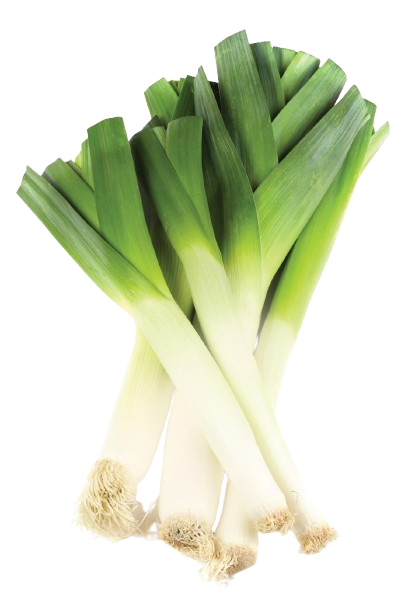
Leek calories are quite low, with a 100g (3.5 oz) serving of raw leeks (bulb and lower leaf portion) containing 61 calories. One medium raw leek (89g) provides 54 calories. Leek nutrition facts show good amounts of vitamins and minerals, with a 100g raw portion offering Vitamin K (47µg, 39% DV), Vitamin A (83µg RAE, 9% DV from carotenoids), Vitamin C (12mg, 13% DV), folate (64µg, 16% DV), and manganese (0.481mg, 21% DV). Leeks, as Allium vegetables, contain organosulfur compounds and flavonoids like kaempferol, which have been studied for their antioxidant and potential health-protective properties (Nicastro, H.L., et al., 2015, "Garlic and onions: Their cancer prevention properties").
The nutritional value of leeks shows that cultivated leeks have around 61 calories per 100g raw, while wild leeks or ramps are lower at 30 calories per 100g raw. Cooked leeks (boiled) have fewer calories per 100g (31 calories) due to water absorption. Indonesia, Turkey, and France are among the top global producers of leeks. Consumption is high in European countries. The price of fresh leeks in the U.S. has seen a moderate upward trend, often retailing between $2.00 and $3.50 per pound or bunch in recent years, up from $1.00 to $2.00 in the early 2000s.
Leeks are a key ingredient in dishes like Potato Leek Soup, found at restaurants such as Panera Bread (seasonal), and various quiches and savory tarts. Incorporating one medium leek (89g, 54 calories) into meals contributes valuable nutrients and fiber. Burning the 54 calories from a medium raw leek requires minimal physical activity, such as 5-7 minutes of brisk walking or light gardening.
Leek nutrition
| Stats | Weight |
|---|---|
| Carbs | 0 grams |
| Protein | 1.47 grams |
| Fats | 0 grams |
| Sugars | 0 grams |
- Ramp Calories (Nutritional Facts)
- Raw Leek Nutrition
- Sodium in Leek
- Potassium in Leek
- Sugar in Leek
- Fiber in Leek
- Protein in Leek
- Carbs in Leek
- Fat in Leek
- Vitamins in Leek
- Vitamin E in Leek
- Minerals in Leek
Ramp Calories (Nutritional Facts)
Ramps (wild leeks) contain 30 calories per 100g (3.5 oz) serving of the raw bulbs and lower leaf portions. One cup of chopped raw ramps (60g, 2.12 oz) provides 18 calories. Ramps (100g raw) also contain 2.1g of protein, 5.1g of carbohydrates, and 0.3g of total fat. Cooked ramps will have a similar calorie count per 100g of cooked product if prepared without added fats, though the concentration of nutrients might change slightly due to moisture loss.
A 100g (3.5 oz) serving of raw leeks (bulb and lower leaf portion) contains 61 calories. This portion also provides 1.5g of protein, 14.2g of total carbohydrates (including 1.8g of fiber), and 0.3g of total fat. One medium raw leek (89g, 3.14 oz, edible portion) contains 54 calories.
Raw leeks contain 20mg of sodium per 100g (1% DV). One medium raw leek (89g, 3.14 oz) provides 18mg of sodium (1% DV). Ramps (wild leeks) contain 4mg of sodium per 100g (0% DV).
Raw leeks provide 180mg of potassium per 100g (4% DV). One medium raw leek (89g, 3.14 oz) contains 160mg of potassium (3% DV). Ramps (wild leeks) contain 190mg of potassium per 100g (4% DV).
Raw leeks contain 3.9g of total sugars per 100g. One medium raw leek (89g, 3.14 oz) has 3.5g of sugar. Ramps (wild leeks) contain 1.8g of total sugars per 100g.
Raw leeks provide 1.8g of dietary fiber per 100g (6% DV). One medium raw leek (89g, 3.14 oz) offers 1.6g of dietary fiber (6% DV). Ramps (wild leeks) contain 2.1g of dietary fiber per 100g (7% DV).
Raw leeks contain 1.5g of protein per 100g (3% DV). One medium raw leek (89g, 3.14 oz) has 1.3g of protein (3% DV). Ramps (wild leeks) provide 2.1g of protein per 100g (4% DV).
Raw leeks have 14.2g of total carbohydrates per 100g (5% DV). One medium raw leek (89g, 3.14 oz) contains 12.6g of total carbohydrates (5% DV). Ramps (wild leeks) provide 5.1g of total carbohydrates per 100g (2% DV).
Raw leeks contain 0.3g of total fat per 100g (0% DV). One medium raw leek (89g, 3.14 oz) has 0.3g of total fat (0% DV). Ramps (wild leeks) provide 0.3g of total fat per 100g (0% DV).
A 100g (3.5 oz) serving of raw leeks is a good source of Vitamin K, providing 47µg (39% DV), and Vitamin A, with 83µg RAE (9% DV from carotenoids). It is also a good source of Vitamin C at 12mg (13% DV) and Folate (Vitamin B9) at 64µg (16% DV). Cooked leeks (boiled, drained, 100g) provide 41.6µg of Vitamin K (35% DV) and 29µg RAE of Vitamin A (3% DV). Ramps (wild leeks, 100g raw) are rich in Vitamin C, containing 42mg (47% DV), and Vitamin A at 111µg RAE (12% DV).
Raw leeks (100g) provide 0.92mg of Vitamin E (alpha-tocopherol) (6% DV). Cooked, boiled, and drained leeks (100g) contain 0.47mg of Vitamin E (3% DV).
A 100g (3.5 oz) serving of raw leeks is a good source of Manganese, providing 0.481mg (21% DV). It also contains Iron at 2.1mg (12% DV), Calcium at 59mg (6% DV), and Magnesium at 28mg (7% DV). Cooked leeks (boiled, drained, 100g) provide 0.138mg of Manganese (6% DV) and 0.5mg of Iron (3% DV). Ramps (wild leeks, 100g raw) contain Iron at 1.2mg (7% DV).
Get a Custom Report on Leek Nutrition Data – Contact Us!
What are the Types of Leeks?
There are many cultivars of leeks (Allium ampeloprasum var. porrum) and they are generally categorized more by their growing season or slight variations in size and intensity. The primary distinctions consumers might notice are between standard leeks and wild leeks (ramps). The table below shows these common forms and their calorie information.
| Type | Description | Calories (per 100g raw) | Calorie Qualifications |
|---|---|---|---|
|
Standard Cultivated Leek
|
(Allium ampeloprasum var. porrum) Long, cylindrical white stalk transitioning to flat, dark green leaves. Mild onion flavor. | 61 | Low in calories. This is the most common type found in grocery stores. |
|
Baby Leeks
|
Young, smaller, and more tender versions of standard leeks. Milder flavor. | Similar to standard leeks (55-65) | Calorie content per 100g is very close to mature leeks. |
|
Wild Leeks (Ramps)
|
(Allium tricoccum) Smaller bulbs with broad, flat green leaves. Stronger, garlicky-onion flavor. Seasonal. | 30 | Lower in calories than cultivated leeks, potentially due to higher water content in bulbs/lower leaves. |
What are the Main Dishes with Leeks?
Leeks, with their mild, sweet, onion-like flavor, are a versatile vegetable featured in a wide array of main dishes, particularly in European cuisines. Some of the most widespread main dishes that contain leeks include Potato Leek Soup, quiches, and various savory tarts and stews. They add a subtle depth and aroma without overpowering other ingredients. The table below lists diverse main dishes incorporating leeks:
| Dish Name | Calories (per serving) | Type of Leek Used (Typically Cultivated) | Carbs (g) | Sugar (g) | Protein (g) | Fat (g) | Cuisine | Restaurants |
|---|---|---|---|---|---|---|---|---|
|
Potato Leek Soup (Vichyssoise - cold version)
|
200-350 (bowl) | Standard Leeks | 20-35 | 3-7 | 4-8 | 10-20 | French, European, American | Panera Bread (seasonal), Au Bon Pain (seasonal), La Madeleine French Bakery & Café |
|
Quiche Lorraine (often contains leeks or onions)
|
400-600 (slice) | Standard Leeks | 15-25 | 2-5 | 15-25 | 25-40 | French | Local French bakeries and bistros, some Starbucks locations offer quiche |
|
Chicken and Leek Pie
|
450-700 (individual pie) | Standard Leeks | 35-50 | 4-8 | 20-30 | 20-35 | British, European | Pubs with British fare, some specialty pie shops |
|
Cock-a-Leekie Soup
|
250-400 (bowl) | Standard Leeks | 15-25 | 3-6 | 15-25 | 8-15 | Scottish, British | Restaurants specializing in Scottish or British cuisine (less common in US chains) |
|
Leek and Mushroom Risotto
|
400-600 | Standard Leeks | 45-65 | 2-5 | 10-18 | 15-25 | Italian | Upscale Italian restaurants, some contemporary American eateries with risotto options |
|
Braised Leeks (as a side or component)
|
80-150 (side serving) | Standard Leeks, Baby Leeks | 10-18 | 4-8 | 2-4 | 3-8 | French, European | Fine dining restaurants, French bistros |
|
Leek and Salmon Tart/Quiche
|
400-650 (slice) | Standard Leeks | 20-30 | 2-5 | 18-28 | 25-40 | European, Contemporary | Bakeries or cafes with a focus on savory tarts |
|
Leek and Potato Gratin
|
300-500 | Standard Leeks | 25-40 | 3-6 | 8-12 | 15-25 | French, European | Some steakhouses or French-inspired restaurants as a side dish, e.g., Ruth's Chris (seasonal) |
|
Creamy Leek Pasta
|
450-700 | Standard Leeks | 50-70 | 4-8 | 12-20 | 18-30 | Italian, Contemporary | Restaurants with creative pasta dishes |
|
Leek and Feta Stuffed Chicken Breast
|
350-550 | Standard Leeks | 5-15 | 2-4 | 35-50 | 15-25 | Mediterranean, Contemporary | Some Mediterranean or health-focused contemporary restaurants |
|
Leek Fritters/Pancakes
|
200-350 (3-4 small) | Standard Leeks | 15-25 | 2-4 | 5-8 | 10-18 | Middle Eastern, European | Some Turkish or Greek restaurants may offer variations (prasopita) |
|
Welsh Cawl (Lamb and Vegetable Stew with Leeks)
|
400-600 (bowl) | Standard Leeks | 25-40 | 5-10 | 25-35 | 15-25 | Welsh, British | Restaurants or pubs specializing in Welsh cuisine (rare outside of Wales/UK) |
|
Leeks Vinaigrette (Poireaux Vinaigrette)
|
150-250 (appetizer) | Standard Leeks | 8-15 | 3-6 | 2-4 | 10-18 | French | Classic French bistros |
What Cuisines Prefer Leeks the Most?
Leeks are mostly featured and preferred in European cuisines, particularly French, British (especially Welsh and Scottish), Belgian, and German cooking, where their subtle, sweet oniony flavor enhances soups, stews, savory pies, and gratins. The table below highlights cuisines that frequently utilize leeks.
| Cuisine | Dish Name | Calories (per serving) | Restaurants |
|---|---|---|---|
|
French
|
Potato Leek Soup (Vichyssoise) | 200-350 (bowl) | Panera Bread (seasonal), La Madeleine French Bakery & Café, French bistros |
|
French
|
Quiche (often with leeks) | 400-600 (slice) | Local French bakeries, Starbucks (some varieties) |
|
French
|
Leeks Vinaigrette (Poireaux Vinaigrette) | 150-250 (appetizer) | Classic French bistros |
|
British (Welsh)
|
Welsh Cawl (Lamb and Leek Stew) | 400-600 (bowl) | Restaurants or pubs specializing in Welsh cuisine (UK-focused) |
|
British (Scottish)
|
Cock-a-Leekie Soup | 250-400 (bowl) | Restaurants specializing in Scottish cuisine (UK-focused) |
|
British
|
Chicken and Leek Pie | 450-700 (individual) | British-style pubs |
|
Belgian
|
Stoemp (Mashed Potatoes with Leeks/Vegetables) | 250-400 | Restaurants offering Belgian cuisine |
|
German
|
Leek Soups and Savory Tarts | Varies | German restaurants and bakeries |
|
Italian (some regional)
|
Leek and Mushroom Risotto | 400-600 | Upscale Italian restaurants |
|
American (Comfort Food/Contemporary)
|
Leek and Potato Gratin (as a side) | 300-500 | Some American steakhouses, contemporary American restaurants with European influences |
Which Countries Produce the Most Leeks?
The top producers of leeks globally include Indonesia, Turkey, France, Belgium, and South Korea. China also produces a significant volume, though it is often aggregated with other Allium vegetables in some international statistics. In 2022, Indonesia was a leading producer, with over 650 kilotonnes. European countries like France and Belgium have a long tradition of leek cultivation and remain important producers. The Food and Agriculture Organization of the United Nations (FAO) provides data specifically for "Leeks, other alliaceous vegetables." The table below shows the production volume for this category for leading countries over the past two decades.
| Country | 2004 | 2005 | 2006 | 2007 | 2008 | 2009 | 2010 | 2011 | 2012 | 2013 | 2014 | 2015 | 2016 | 2017 | 2018 | 2019 | 2020 | 2021 | 2022 | 2023 (Est.) |
|---|---|---|---|---|---|---|---|---|---|---|---|---|---|---|---|---|---|---|---|---|
| Indonesia | 410 | 430 | 450 | 470 | 490 | 510 | 530 | 550 | 570 | 590 | 610 | 620 | 630 | 640 | 650 | 655 | 660 | 665 | 670 | 672 |
| Turkey | 200 | 205 | 210 | 215 | 220 | 225 | 230 | 235 | 240 | 230 | 225 | 220 | 215 | 210 | 205 | 200 | 195 | 198 | 200 | 201 |
| France | 220 | 215 | 210 | 205 | 200 | 195 | 190 | 185 | 180 | 175 | 170 | 165 | 160 | 155 | 150 | 148 | 145 | 147 | 149 | 150 |
| Belgium | 150 | 155 | 160 | 158 | 155 | 150 | 145 | 140 | 135 | 130 | 128 | 125 | 122 | 120 | 118 | 115 | 112 | 110 | 108 | 107 |
| South Korea | 80 | 85 | 90 | 95 | 100 | 105 | 110 | 115 | 120 | 115 | 110 | 105 | 100 | 95 | 90 | 88 | 85 | 87 | 89 | 90 |
| Germany | 70 | 72 | 75 | 78 | 80 | 75 | 70 | 68 | 65 | 62 | 60 | 58 | 55 | 53 | 50 | 48 | 45 | 46 | 47 | 48 |
Which Countries Consume the Most Leeks?
Based on data from FAOSTAT regarding food supply quantity ( kg/capita/yr ) and production/trade figures, countries in Europe, particularly France, Belgium, the Netherlands, and the United Kingdom, are among the highest per capita consumers of leeks. Indonesia, as a major producer, also has significant domestic consumption. Leeks are a traditional part of these cuisines. The table below represents estimated domestic food supply, which gives an indication of consumption.
| Country | 2004 | 2005 | 2006 | 2007 | 2008 | 2009 | 2010 | 2011 | 2012 | 2013 | 2014 | 2015 | 2016 | 2017 | 2018 | 2019 | 2020 | 2021 |
|---|---|---|---|---|---|---|---|---|---|---|---|---|---|---|---|---|---|---|
| Indonesia | 400 | 420 | 440 | 460 | 480 | 500 | 520 | 540 | 560 | 580 | 600 | 610 | 620 | 630 | 640 | 645 | 650 | 655 |
| France | 200 | 195 | 190 | 185 | 180 | 175 | 170 | 165 | 160 | 155 | 150 | 145 | 140 | 135 | 130 | 128 | 125 | 127 |
| Turkey | 180 | 185 | 190 | 195 | 200 | 205 | 210 | 215 | 220 | 210 | 205 | 200 | 195 | 190 | 185 | 180 | 175 | 178 |
| Belgium | 130 | 135 | 140 | 138 | 135 | 130 | 125 | 120 | 115 | 110 | 108 | 105 | 102 | 100 | 98 | 95 | 92 | 90 |
| United Kingdom | 90 | 92 | 95 | 98 | 100 | 98 | 95 | 92 | 90 | 88 | 85 | 82 | 80 | 78 | 75 | 73 | 70 | 71 |
| Germany | 80 | 82 | 85 | 88 | 90 | 85 | 80 | 78 | 75 | 72 | 70 | 68 | 65 | 63 | 60 | 58 | 55 | 56 |
How Does Prices of Leeks-including Dishes Change?
The prices of restaurant dishes that feature leeks as a prominent ingredient, such as Potato Leek Soup, Quiche Lorraine (with leeks), or Chicken and Leek Pie, have increased significantly over the past 20 years. This is due not only to the moderate rise in the cost of leeks but more substantially to increases in the prices of other main ingredients (potatoes, cream, chicken, pastry, cheese), as well as major escalations in restaurant operational costs like labor, rent, and energy. Below is a comparison of estimated prices for representative menu items where leeks play a key role.
| Restaurant Chain/Type | Dish | Estimated Old Price (2004-2008) | Current Price (2024-2025) |
|---|---|---|---|
| Panera Bread (Seasonal) | Potato Leek Soup (Bowl) | $4.29 - $5.79 | $8.99 - $10.99 |
| French Bistro/Cafe | Quiche Lorraine (Slice, often with leeks/onions) | $7.95 - $10.95 | $12.95 - $17.95 |
| La Madeleine French Bakery & Café | Cream of Mushroom & Leek Soup (if featured) | $3.99 - $5.49 (Cup/Bowl) | $6.49 - $8.49 (Cup/Bowl) |
| British Pub | Chicken and Leek Pie (Individual) | $10.99 - $14.99 | $17.99 - $24.99 |
| Upscale European Restaurant | Braised Leeks (as Appetizer/Side) | $6.00 - $9.00 | $10.00 - $16.00 |
| Au Bon Pain (Seasonal) | Soup featuring Leeks (Harvest Leek) | $3.79 - $5.29 (Cup/Bowl) | $5.99 - $7.99 (Cup/Bowl) |
What is the Leek Calorie for 100G?
A 100g (3.5 oz) serving of raw leeks (bulb and lower leaf portion) contains 61 calories. A 100g (3.5 oz) serving of cooked leeks (boiled, drained) provides 31 calories due to water absorption increasing its weight relative to nutrients. Ramps (wild leeks, 100g raw) contain 30 calories.
What is the Leek Calorie for 1 KG?
One kilogram (1000g, 35.27 oz) of raw leeks (bulb and lower leaf portion) contains 610 calories. One kilogram (1000g, 35.27 oz) of cooked leeks (boiled, drained) provides 310 calories. One kilogram of raw ramps (wild leeks) contains 300 calories.
What is the Calorie of 1 Leek?
The calorie content of one leek varies depending on its size. One medium raw leek (bulb and lower leaf portion, weighing 89g, 3.14 oz) contains 54 calories. A large raw leek (124g, 4.37 oz) provides 76 calories. A small raw leek (50g, 1.76 oz) has 31 calories.
What are the Health Benefits of Leeks?
Leeks provide some health benefits like promoting digestive health and offering antioxidant support due to its rich composition of dietary fiber, vitamins, minerals, and organosulfur compounds. A list of the health benefits of leeks are shown below:
- Rich in Nutrients: Leeks are a good source of several vitamins and minerals, including Vitamin K, Vitamin A (from carotenoids), Vitamin C, folate, manganese, and iron, all while being low in calories. (USDA FoodData Central, "Leeks, raw").
- Contain Beneficial Plant Compounds: Leeks belong to the Allium family (along with onions, garlic, and chives) and contain organosulfur compounds like allicin (though in lesser amounts than garlic) and flavonoids such as kaempferol. These compounds have been studied for their antioxidant, anti-inflammatory, and potential anti-cancer properties. (Nicastro, H.L., et al., 2015, "Garlic and onions: Their cancer prevention properties").
- May Support Heart Health: The kaempferol in leeks may help protect blood vessel linings and has been associated with a reduced risk of heart disease. Leeks also provide folate, which helps lower homocysteine levels, an amino acid linked to cardiovascular risk when elevated. The presence of allicin-like compounds may also contribute to lower blood pressure. (Hertog, M.G., et al., 1993, "Dietary antioxidant flavonoids and risk of coronary heart disease: the Zutphen Elderly Study").
- Good Source of Dietary Fiber: Leeks contain soluble and insoluble fiber, which aids in digestion, promotes regular bowel movements, helps manage blood sugar levels, and contributes to feelings of fullness, which can support weight management. (Slavin, J.L., 2013, "Fiber and Prebiotics: Mechanisms and Health Benefits").
- High in Vitamin K: Leeks are an excellent source of Vitamin K1, which is essential for blood clotting and plays a crucial role in bone health by aiding in calcium regulation and bone mineralization. (Weber, P., 2001, "Vitamin K and bone health").
- May Protect Against Certain Cancers: The organosulfur compounds and antioxidants found in Allium vegetables like leeks have been investigated for their potential protective effects against certain types of cancers, such as colorectal and stomach cancers, by inhibiting cancer cell growth and promoting detoxification. (Galeone, C., et al., 2006, "Onion and garlic use and human cancer").
What are the Downsides of Leeks?
Leeks have been known to cause some unwanted effects like digestive discomfort in sensitive individuals and potential interactions with certain medications due to its specific compounds. A list of the downsides of leeks are shown below:
- Can Cause Digestive Issues (Fructans): Leeks are high in fructans, a type of FODMAP (Fermentable Oligo-, Di-, Mono-saccharides And Polyols). For individuals with Irritable Bowel Syndrome (IBS) or fructan intolerance, leeks can cause gas, bloating, abdominal pain, and diarrhea. (Gibson, P.R. & Shepherd, S.J., 2010, "Evidence-based dietary management of functional gastrointestinal symptoms: The FODMAP approach").
- High Vitamin K Content Can Interact with Blood Thinners: Leeks are rich in Vitamin K, which is vital for blood clotting. Individuals taking anticoagulant medications like warfarin (Coumadin) need to maintain a consistent intake of Vitamin K. Significant changes in leek consumption could interfere with the medication's effectiveness and should be discussed with a healthcare provider. (Holmes, M.V., et al., 2012, "Vitamin K and Warfarin Therapy: A Volatile Combination").
- Oxalate Content: Leeks contain oxalates, though not as high as some other vegetables like spinach. For individuals prone to forming calcium oxalate kidney stones, very high and frequent intake of oxalate-containing foods might be a concern, and moderation is advised. (Noonan, S.C. & Savage, G.P., 2003, "Oxalate content of foods and its effect on humans").
- Potential for Allergic Reactions (Rare): While uncommon, allergic reactions to leeks or other Allium vegetables can occur in sensitive individuals.
Are Leeks Good for You?
Yes, leeks are good for you and can be a very nutritious addition to a balanced diet for most people. They are low in calories and provide a good array of vitamins and minerals, particularly Vitamin K, Vitamin A (as carotenoids), Vitamin C, folate, and manganese. Leeks also contain beneficial dietary fiber and unique plant compounds like flavonoids (such as kaempferol) and organosulfur compounds, which are characteristic of the Allium family and have been linked to various health benefits, including antioxidant and anti-inflammatory effects. (Chen, L., et al., 2019, "Allium vegetable consumption and health: A narrative review of the Lliterature"). Research suggests that consumption of Allium vegetables may contribute to a reduced risk of certain chronic diseases. (Powolny, A.A. & Singh, S.V., 2008, "Multitargeted prevention and therapy of cancer by diallyl trisulfide and related Allium vegetable-derived organosulfur compounds"). The main considerations are for individuals with IBS who may be sensitive to fructans in leeks, and those on blood-thinning medication due to the high Vitamin K content.
How Do Calories Change According to Leek Types?
The calorie content of leeks shows some variation between cultivated leeks and their wild counterparts, ramps. Standard cultivated leeks, including baby leeks which are just younger versions, contain 61 calories per 100g of the raw edible portion (bulb and lower leaf). This makes them a low-calorie vegetable. Ramps (wild leeks), on the other hand, are even lower in calories, providing 30 calories per 100g of their raw bulbs and lower leaf portions. This difference is likely due to variations in moisture content and the density of carbohydrates and other macronutrients, with ramps possibly having a higher water content or a different composition in their edible parts. When leeks are cooked, their calorie content per 100g can change; for example, boiled and drained cultivated leeks have 31 calories per 100g, as they absorb water, which dilutes the nutrient density by weight compared to the raw form.
Are Leeks a Vegetable?
Yes, leeks are a vegetable. They belong to the genus Allium, which is part of the Amaryllidaceae family (subfamily Allioideae). This family includes other well-known vegetables such as onions, garlic, shallots, and chives. Leeks are cultivated for their edible stalk (a bundle of leaf sheaths) and lower leaf portions, which are used in a variety of culinary applications for their mild, onion-like flavor.
What are the Desserts with Leeks?
The use of leeks in desserts is extremely rare and highly unconventional. Leeks possess a distinct savory, mild onion-like flavor that is fundamentally at odds with the sweet profiles expected in desserts. Some avant-garde chefs might experiment with leek elements in a savory-leaning "dessert" course but there are no established or widely recognized sweet desserts that feature leeks as a key ingredient. Their culinary domain is firmly within savory dishes.
What is the Origin of Leeks?
Leeks (Allium ampeloprasum var. porrum) are believed to have originated in the Mediterranean basin and the Middle East, with evidence of their cultivation and consumption dating back thousands of years. Ancient Egyptians depicted leeks in tomb paintings, and they were consumed by laborers building the pyramids. The Roman Emperor Nero was said to have eaten leeks regularly, believing they improved his singing voice, earning him the nickname "Porrophagus" (leek-eater). Leeks were spread throughout Europe by the Romans and became a staple vegetable in many regional cuisines.
Unlike their pungent relatives, onions and garlic, leeks offer a milder, sweeter, and more delicate flavor, making them highly valued in soups, stews, and as a subtle aromatic base. A classic dish that beautifully highlights the leek is Potato Leek Soup, a simple yet elegant preparation beloved in French cuisine (where its chilled version is known as Vichyssoise). This soup, often consisting of just leeks, potatoes, broth, and cream or milk, allows the leek's gentle sweetness to shine, creating a comforting and sophisticated dish. The leek is also a national symbol of Wales, a connection that is said to date back to a 7th-century battle where Welsh soldiers distinguished themselves from their Saxon enemies by wearing leeks in their hats, as advised by Saint David. This historical and cultural significance underscores the leek's long and esteemed history in European foodways.
Explore More Vegetables
Discover more Vegetables with detailed nutrition facts, calorie counts, vitamins, minerals, and health benefits. Compare similar foods, serving sizes, macronutrients, and key nutrients to find the best option for your diet and nutrition goals.
 Artichoke calories
 Arugula calories
 Asparagus calories
 Beetroot calories
 Bell Pepper calories
 Broccoli calories
 Brussels Sprouts calories
 Cabbage calories
 Caesar Salad calories
 Carrot calories
 Cassava Root calories
 Cauliflower calories