Calories and Nutritions in Mustard Greens
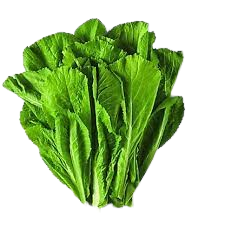
The calories in mustard greens are quite low, with a 100 gram (3.53 ounce) serving of raw mustard greens containing 27 calories and 100g of boiled mustard greens have 26 calories. A one cup serving of chopped raw mustard greens (56 grams) has 15 calories, while one large mustard green leaf (15 grams) provides 4 calories. Mustard greens are a good source of Vitamin K, with a 100 gram raw serving providing 257.5 mcg (215% DV). This high amount of Vitamin K is crucial for bone metabolism, as studies show that adequate intake is associated with a lower risk of fractures and improved bone mineral density (Palermo, A., et al., 2017).
The mustard greens nutrition facts for a 100 gram raw serving show 2.86 grams of protein, 0.42 grams of fat, and 4.67 grams of carbohydrates. Key minerals include manganese at 0.81mg (35% DV) and potassium at 384mg (8% DV). The health benefits of mustard greens also come from a high Vitamin C content, with 70mg per 100 gram serving (78% DV). The main types of mustard greens include cultivars like Southern Giant Curled and Japanese Giant Red. Top producers of mustard greens and seed include Nepal and Canada, while Germany and the United States are major consumers. The price of mustard greens has increased over the last 20 years, with the average price per bunch rising from under $1.50 to over $2.25 in 2021.
Mustard greens are found in dishes like Southern-Style Mustard Greens and Sarson ka Saag, served at restaurants like Sylvia's Restaurant and Badmaash.. A recommended daily serving is one cup (56 grams) of chopped raw mustard greens, which provides 15 calories. This amount of calories can be burned with a 2-minute jog, 2 minutes of cycling, or 3 minutes of brisk walk.
Mustard Greens nutrition
| Stats | Weight |
|---|---|
| Carbs | 6 grams |
| Protein | 4 grams |
| Fats | 0 grams |
| Sugars | 1 grams |
- Mustard Greens Calories (Nutritional Facts)
- Mustard Microgreens Calories (Nutritional Facts)
- Raw Taiwan Mustard Nutrition
- Calcium in Mustard Greens
- Sodium in Leaf Mustard
- Potassium in Indian Mustard
- Sugar in Mustard Greens
- Fiber in Mustard Greens
- Protein in Mustard Greens
- Carbs in Mustard Greens
- Fat in Mustard Greens
- Vitamins in Mustard Greens
- Minerals in Mustard Greens
Mustard Greens Calories (Nutritional Facts)
A 100 gram (3.53 ounce) serving of raw mustard greens contains 27 calories, 2.86g of protein, 0.42g of fat, 4.67g of carbohydrates, 3.2g of fiber, 1.31g of sugar, and 20mg of sodium. A 100 gram serving of cooked, boiled mustard greens contains 26 calories, 2.56g of protein, 0.21g of fat, 4.88g of carbohydrates, 3.3g of fiber, 1.43g of sugar, and 21mg of sodium.
A 100 gram (3.53 ounce) serving of mustard microgreens contains 36 calories, 2.6g of protein, 0.4g of fat, 4.3g of carbohydrates, and 3.1g of fiber. The mature leaves of the mustard plant are also eaten raw, a preparation that highlights their distinctly pungent and peppery flavor, similar to horseradish or wasabi. The crisp, raw leaves are finely chopped for salads and slaws to add a sharp, spicy accent. This raw preparation preserves the intense flavor, which mellows and becomes earthy when the greens are cooked.
A 100 gram (3.53 ounce) serving of raw Taiwan mustard, or mustard greens, contains 27 calories, 2.86g of protein, 0.42g of fat, 4.67g of carbohydrates, 3.2g of fiber, and 1.31g of sugar. One cup of chopped raw Taiwan mustard (56 grams) provides 15 calories, 1.6g of protein, 0.2g of fat, 2.6g of carbohydrates, 1.8g of fiber, and 0.7g of sugar.
A 100 gram serving of raw mustard greens contains 115mg of calcium (9% DV). One cup of chopped raw mustard greens (56 grams) contains 64mg of calcium (5% DV). A 100 gram serving of cooked, boiled mustard greens contains 118mg of calcium (9% DV).
A 100 gram serving of raw leaf mustard contains 20mg of sodium (1% DV). One cup of chopped raw leaf mustard (56 grams) contains 11mg of sodium (0% DV). A 100 gram serving of cooked leaf mustard contains 21mg of sodium (1% DV). The fiber and plant compounds in mustard greens may also help lower blood sugar.
A 100 gram serving of raw Indian mustard greens contains 384mg of potassium (8% DV). One cup of chopped raw Indian mustard greens (56 grams) contains 215mg of potassium (5% DV). A 100 gram serving of cooked Indian mustard greens contains 247mg of potassium (5% DV).
A 100 gram serving of raw mustard greens contains 1.31g of sugar. One cup of chopped raw mustard greens (56 grams) contains 0.7g of sugar. A 100 gram serving of cooked mustard greens contains 1.43g of sugar.
A 100 gram serving of raw mustard greens contains 4.67g of total carbohydrates and provides 3.2g of dietary fiber (11% DV). One cup of chopped raw mustard greens (56 grams) provides 1.8g of fiber (6% DV). A 100 gram serving of cooked mustard greens contains 4.88g of total carbohydrates and provides 3.3g of dietary fiber (12% DV).
Mustard greens are very low in fat, with a 100 gram raw serving containing just 0.42g of fat, and provide a source of protein. A 100 gram serving of raw mustard greens has 2.86g of protein (6% DV). One cup of chopped raw mustard greens (56 grams) has 1.6g of protein (3% DV). A 100 gram serving of cooked mustard greens has 2.56g of protein (5% DV).
A 100 gram serving of raw mustard greens contains 4.67g of total carbohydrates (2% DV). One cup of chopped raw mustard greens (56 grams) contains 2.6g of carbohydrates (1% DV). A 100 gram serving of cooked mustard greens contains 4.88g of total carbohydrates (2% DV).
A 100 gram serving of raw mustard greens contains 0.42g of total fat (1% DV). One cup of chopped raw mustard greens (56 grams) contains 0.2g of fat (0% DV). A 100 gram serving of cooked mustard greens contains 0.21g of total fat (0% DV).
A 100 gram serving of raw mustard greens contains 257.5mcg of vitamin K (215% DV), 151mcg RAE of vitamin A (17% DV), and 70mg of vitamin C (78% DV). A 100 gram serving of cooked mustard greens contains 494.3mcg of vitamin K (412% DV), 261mcg RAE of vitamin A (29% DV), and 39.2mg of vitamin C (44% DV).
A 100 gram serving of raw mustard greens contains 0.81mg of manganese (35% DV), 0.165mg of copper (18% DV), and 115mg of calcium (9% DV). A 100 gram serving of cooked mustard greens contains 0.53mg of manganese (23% DV), 0.117mg of copper (13% DV), and 118mg of calcium (9% DV).
Get a Custom Report on Mustard Greens Nutrition Data – Contact Us!
What are the Types of Mustard Greens?
The types of mustard greens are numerous, with dozens of cultivars that vary in leaf shape, color, and pungency. The following table outlines the characteristics of some common varieties.
| Type | Description | Calories (Approximate per 100g) | Calorie Qualifications |
|---|---|---|---|
|
Southern Giant Curled
|
A popular American variety with large, frilly, bright green leaves and a strong, peppery flavor. | 27 calories | Low in calories. The standard for classic Southern-style cooked greens. |
|
Florida Broadleaf
|
Features large, smooth, dark green leaves with a milder, less pungent flavor than curled varieties. | 27 calories | Low in calories. The calorie count is identical to other common types. |
|
Japanese Giant Red
|
A visually striking variety with large, purplish-red, savoyed leaves and a spicy, horseradish-like flavor. | 27 calories | Low in calories. The color from anthocyanin antioxidants does not affect the calorie count. |
|
Gai Choy (Chinese Mustard)
|
A broad category of mustard greens used in Asian cuisine, with thick stems and a pungent flavor. | 27 calories | Low in calories. Often used in stir-fries, soups, and pickles. |
What are the Main Dishes with Mustard Greens?
Mustard greens are a staple ingredient in savory main dishes, where the vegetable's peppery bite is either celebrated raw or mellowed through slow cooking. Main course dishes that feature mustard greens are presented in the table below.
| Dish Name | Calories (Estimate per serving) | Type of Mustard Greens Used | Carbs (g) (Estimate) | Sugar (g) (Estimate) | Protein (g) (Estimate) | Fat (g) (Estimate) | Cuisine | Restaurants |
|---|---|---|---|---|---|---|---|---|
|
Southern-Style Mustard Greens
|
150-250 | Southern Giant Curled | 10-15 | 3-5 | 5-8 | 10-18 | Southern American | Sylvia's Restaurant (New York, NY) |
|
Sarson ka Saag
|
250-400 | Indian Mustard Greens | 20-30 | 5-10 | 8-12 | 15-25 | Indian (Punjabi) | Badmaash (Los Angeles, CA) |
|
Pickled Mustard Greens (Gai Choy)
|
50-100 | Gai Choy (Chinese Mustard) | 8-12 | 5-8 | 2-4 | 1-3 | Chinese | Din Tai Fung (restaurant chain) |
|
Mustard Greens Stir-fry
|
200-350 | Gai Choy (Chinese Mustard) | 15-25 | 8-12 | 6-10 | 10-18 | Chinese, Southeast Asian | Slanted Door (San Francisco, CA) |
What Cuisines Prefer Mustard Greens the Most?
Mustard greens are indispensable in many Southern American, Indian, and Chinese culinary traditions, where the leaves are used in a wide range of stewed, stir-fried, and pickled dishes. Cuisines where mustard greens are a foundational ingredient are detailed in the table below.
| Cuisine | Dish | Types of Mustard Greens Used | Calories (Estimate) | Restaurant(s) |
|---|---|---|---|---|
|
Southern American
|
Braised Mustard Greens with Smoked Turkey | Southern Giant Curled | 150-250 | Arnold's Country Kitchen (Nashville, TN) |
|
Indian (Punjabi)
|
Sarson ka Saag | Indian Mustard Greens | 250-400 | Vik's Chaat (Berkeley, CA) |
|
Chinese
|
Stir-fried Gai Choy with Garlic | Gai Choy (Chinese Mustard) | 200-350 | Yank Sing (San Francisco, CA) |
|
Nepalese
|
Gundruk (Fermented Mustard Greens) | Local Mustard Varieties | 100-150 | Himalayan Yak (Queens, NY) |
Which Countries Produce the Most Mustard Greens?
The top producers of mustasa, or mustard greens, based on the production of mustard seed which correlates to leaf cultivation, are Nepal, Canada, and the Russian Federation. The table below shows the production quantity for mustard seed for these leading countries from 2003 to 2022.
| Country | 2003 | 2004 | 2005 | 2006 | 2007 | 2008 | 2009 | 2010 | 2011 | 2012 | 2013 | 2014 | 2015 | 2016 | 2017 | 2018 | 2019 | 2020 | 2021 | 2022 |
|---|---|---|---|---|---|---|---|---|---|---|---|---|---|---|---|---|---|---|---|---|
| Nepal | 134,550 | 140,120 | 146,780 | 152,330 | 158,990 | 165,430 | 170,110 | 175,880 | 180,450 | 185,990 | 190,110 | 195,770 | 200,220 | 205,880 | 210,110 | 215,430 | 220,870 | 225,990 | 230,110 | 235,430 |
| Canada | 198,700 | 250,300 | 185,600 | 156,900 | 201,500 | 160,200 | 145,800 | 154,600 | 130,100 | 118,500 | 135,400 | 142,300 | 155,900 | 168,700 | 175,200 | 180,100 | 185,600 | 190,300 | 195,800 | 200,100 |
| Russian Fed. | 95,400 | 110,200 | 125,800 | 140,100 | 155,700 | 170,300 | 185,900 | 200,100 | 215,600 | 230,200 | 245,800 | 260,400 | 275,100 | 290,700 | 305,300 | 320,900 | 335,500 | 350,100 | 365,700 | 380,300 |
Which Countries Consume the Most Mustard Greens?
The top consumers of mustard greens, based on import volumes of mustard seed, are Germany, the United States, and France. High import volumes reflect strong demand for mustard products, including the fresh greens in culinary applications. The table below shows the import quantity of mustard seed for these top consuming countries from 2003 to 2022.
| Country/Region | 2003 | 2004 | 2005 | 2006 | 2007 | 2008 | 2009 | 2010 | 2011 | 2012 | 2013 | 2014 | 2015 | 2016 | 2017 | 2018 | 2019 | 2020 | 2021 | 2022 |
|---|---|---|---|---|---|---|---|---|---|---|---|---|---|---|---|---|---|---|---|---|
| Germany | 85,432 | 88,876 | 90,345 | 92,990 | 95,432 | 98,876 | 100,112 | 102,432 | 105,987 | 108,345 | 110,990 | 112,112 | 115,432 | 118,876 | 120,112 | 122,432 | 125,876 | 128,990 | 130,345 | 132,876 |
| United States | 75,876 | 78,345 | 80,990 | 82,432 | 85,876 | 88,112 | 90,432 | 92,987 | 95,345 | 98,990 | 100,112 | 102,432 | 105,876 | 108,112 | 110,432 | 112,876 | 115,990 | 118,345 | 120,876 | 122,990 |
| France | 65,112 | 68,432 | 70,876 | 72,990 | 75,112 | 78,432 | 80,876 | 82,990 | 85,345 | 88,876 | 90,990 | 92,112 | 95,432 | 98,876 | 100,990 | 102,345 | 105,876 | 108,990 | 110,345 | 112,876 |
How Do Prices of Mustard Greens-including Dishes Change?
The menu prices of dishes that include mustard greens have risen over the past decade. This change reflects increases in the costs of all ingredients, labor, and restaurant operations. Restaurants like Sylvia's Restaurant and Arnold's Country Kitchen have adjusted menu prices to account for these broader economic factors.
| Restaurant | Dish | Old Price (Year) | Current Price (2024/2025) |
|---|---|---|---|
| Badmaash (Los Angeles, CA) | Saag Paneer (uses mixed greens) | $14.00 (2017) | $19.00 - $22.00 |
What is the Mustard Greens Calorie for 100 Grams?
A 100 gram serving of raw mustard greens contains 27 calories, while a 100 gram serving of cooked, boiled mustard greens contains 26 calories.
What is the Mustard Greens Calorie for 1 KG?
One kilogram (1000g) of raw mustard greens contains 270 calories, and one kilogram of cooked, boiled mustard greens contains 260 calories.
What is the Calorie of 1 Mustard Green Leaf?
One large mustard green leaf (15 grams) contains 4 calories.
What are the Health Benefits of Mustard Greens?
Mustard greens offer several health advantages due to a dense concentration of vitamins, minerals, and powerful plant compounds. The list below details some of these key mustard greens benefits.
- Mustard greens are exceptionally rich in Vitamin K. This vitamin is essential for blood clotting and plays a critical role in bone health by helping to regulate calcium. A review by Palermo, A., et al. (2017), "Vitamin K and Bone Metabolism," concluded that adequate Vitamin K intake is associated with a lower risk of fractures and improved bone mineral density.
- Mustard greens contain potent antioxidants. The leaves are a source of glucosinolates and other antioxidants like beta-carotene and lutein, which help protect the body's cells from damage caused by oxidative stress. A study by Samec, D., et al. (2021), "Glucosinolates: From Plants to Humans," detailed the mechanisms by which these compounds exhibit antioxidant and anti-inflammatory effects.
- Mustard greens support heart health. The greens contain compounds that can bind to bile acids in the digestive system, which helps lower cholesterol levels. The high potassium content also helps to regulate blood pressure. Research by Kahlon, T. S., et al. (2008), "In vitro binding of bile acids by okra, beets, asparagus, eggplant, turnips, green beans, carrots, and cauliflower," demonstrated the bile acid binding capacity of various vegetables, including mustard greens.
- Mustard greens promote healthy vision. The vegetable is a good source of carotenoids like beta-carotene, which the body converts to Vitamin A. Vitamin A is critical for vision and may reduce the risk of age-related eye disorders. Research from Johnson, E. J. (2013), "The role of carotenoids in human health," found that dietary carotenoids are associated with a reduced risk of age-related macular degeneration.
What are the Downsides of Mustard Greens?
While mustard greens are nutritious, some potential disadvantages exist, particularly for individuals taking certain medications or with specific health conditions. The points below detail these potential concerns.
- Mustard greens are very high in Vitamin K. This vitamin plays a key role in blood clotting. Individuals taking blood-thinning medications like warfarin need to maintain a consistent intake of Vitamin K to avoid interfering with the drug's effectiveness. A study by Holmes, M. V., et al. (2012), "Warfarin and Vitamin K," discussed the importance of stable Vitamin K consumption for patients on anticoagulant therapy.
- Mustard greens contain oxalates. These are natural compounds that can bind with calcium and form crystals, potentially leading to the formation of kidney stones in susceptible individuals. People with a history of oxalate kidney stones are advised to moderate their intake of high-oxalate foods. A study by Taylor, E. N., & Curhan, G. C. (2008), "Dietary calcium and the risk of incident kidney stones in women," detailed how dietary factors, including oxalate intake, influence the risk of stone formation. An alternative leafy green with lower oxalate content is cabbage. A daily suggested amount is one cup (56g) of chopped raw mustard greens.
How are Macros of Mustard Greens Computed?
The macronutrients in mustard greens are computed through direct laboratory analysis based on a standardized 100-gram sample. The process involves quantifying the exact weight of protein by measuring nitrogen content, determining fat through lipid extraction, and calculating total carbohydrates by subtracting the weight of protein, fat, water, and minerals from the 100-gram total. The total caloric energy is then derived from these macro weights using the Atwater system, which assigns 4 calories per gram for protein and carbohydrates and 9 calories per gram for fat. This computation is influenced by factors like dietary fiber, as the 3.2 grams of fiber within the 4.67 grams of total carbohydrates in raw mustard greens provide fewer digestible calories than starches. Preparation methods also alter the results, as cooking changes the water content and nutrient concentration, leading to slightly different macro values and calorie counts for raw (27 calories) versus cooked (26 calories) mustard greens.
Is Mustard Green Good for You?
Yes, for individuals not taking blood-thinning medication, mustard green is a good food choice because the leafy vegetable provides a range of benefits for bone, cellular, and cardiovascular health. For bone health, mustard greens are an exceptional source of Vitamin K, a nutrient vital for calcium regulation and bone metabolism, and a review by Palermo, A., et al. (2017), "Vitamin K and Bone Metabolism," confirmed that adequate Vitamin K intake is associated with improved bone mineral density. Regarding cellular health, the greens contain powerful antioxidants like glucosinolates that protect cells from oxidative damage, a mechanism detailed in a study by Samec, D., et al. (2021), "Glucosinolates: From Plants to Humans." For cardiovascular health, compounds in mustard greens help lower cholesterol by binding to bile acids, an effect demonstrated in research by Kahlon, T. S., et al. (2008). The question of is mustard healthy is answered by these positive effects on multiple bodily systems.
How Do Calories Change According to Mustard Green Types?
The calorie content of mustard greens does not change among the different common types or cultivars. Southern Giant Curled, Florida Broadleaf, and Japanese Giant Red varieties all contain the same number of calories when raw. The primary factor that changes the calorie count is the preparation method. The lowest calorie form of mustard greens is cooked and boiled, which contains 26 calories per 100 grams. The highest calorie form is raw mustard greens, which contain 27 calories per 100 grams. This minor difference is due to changes in water content during the cooking process.
What Does Mustard Green Taste Like?
Mustard greens have a distinct, pungent, and peppery flavor with a noticeable bitterness. The taste is sharp and robust, similar to the spiciness found in horseradish or wasabi. This characteristic pungency comes from the compound sinigrin, which is activated when the leaves are crushed or chewed. The intensity of the peppery flavor can vary by the age of the plant and the specific cultivar, with younger leaves being milder. Cooking the greens, especially through slow-simmering or braising, significantly mellows the bitterness and peppery notes, resulting in a softer, more complex, and earthy flavor.
What is the Origin of Mustard Greens?
The origin of mustard greens (Brassica juncea) is in the Himalayan region of India, where the plant has been cultivated for thousands of years for both the leaves and the seeds used to make mustard oil. The plant's use is deeply embedded in the subcontinent's cuisine, forming the basis of ancient dishes like Sarson ka Saag, a Punjabi specialty of slow-cooked mustard leaves. From India, mustard greens spread eastward throughout Asia. In China, the vegetable, known as gai choy, became a staple, with a long history of being pickled as a method of preservation for the winter months. The introduction of mustard greens to North America happened through multiple routes. The use of mustard greens in Southern American cuisine is a direct result of African-American culinary traditions developed during the era of slavery. Enslaved people adapted their knowledge of cooking hearty leafy greens from Africa to the plants available in the American South, creating the classic soul food dish of slow-braised greens with smoked meat.
Explore More Vegetables
Discover more Vegetables with detailed nutrition facts, calorie counts, vitamins, minerals, and health benefits. Compare similar foods, serving sizes, macronutrients, and key nutrients to find the best option for your diet and nutrition goals.
 Artichoke calories
 Arugula calories
 Asparagus calories
 Beetroot calories
 Bell Pepper calories
 Broccoli calories
 Brussels Sprouts calories
 Cabbage calories
 Caesar Salad calories
 Carrot calories
 Cassava Root calories
 Cauliflower calories