Calories and Nutritions in Naan Bread
Calories in naan bread depend on the type and serving size. A 100g serving of plain Naan bread has 295 calories, while a 100g serving of butter naan has 319 calories. A 100g serving of garlic naan has 328 calories, and a 100g serving of whole wheat roti naan has 280 calories. Naan bread nutrition facts for a 100g serving of plain naan include 9.1g of protein (18% DV), 4.5g of fat (6% DV), 54g of carbohydrates (20% DV), and 2.2g of fiber (8% DV). Naan made from enriched flour is a source of B-vitamins like thiamin and niacin, which are vital for energy metabolism, a benefit of food fortification strategies.
The common types of naan bread are Plain, Butter, Garlic, Roti (Whole Wheat), and Keema. India and the United Kingdom are major producers and consumers of naan bread. The price of naan has risen over the last two decades, with a plain naan in a U.S. restaurant increasing from $1.50-$2.50 to $3.00-$5.00. Naan is a staple accompaniment for dishes like Tikka Masala and Korma, served at restaurants such as Rasika in Washington D.C. and Tamarind in New York.
Naan bread provides energy from carbohydrates and essential minerals like iron. A moderate intake of one piece can be part of a balanced meal (295 calories). Burning the calories from naan requires 30 minutes of moderate cycling or 25 minutes of running at 5mph.
Naan Bread nutrition
| Stats | Weight |
|---|---|
| Carbs | 45 grams |
| Protein | 8 grams |
| Fats | 0 grams |
| Sugars | 4 grams |
- Butter Naan Calories (Nutritional Facts)
- Pakistani Naan Calories (Nutritional Facts)
- Garlic Naan Calories (Nutritional Facts)
- Roti Naan Calories (Nutritional Facts)
- Keema Naan Calories (Nutritional Facts)
- Sodium in Naan Bread
- Potassium in Naan Bread
- Sugar in Naan Bread
- Fiber in Naan Bread
- Protein in Naan Bread
- Carbs in Naan Bread
- Fat in Naan Bread
- Vitamins in Naan Bread
- Minerals in Naan Bread
Butter Naan Calories (Nutritional Facts)
A 100g (3.53oz) serving of butter naan contains 319 calories, 9.4g of protein, 8.1g of fat, and 51.2g of carbohydrates. One 7-inch butter naan weighing 88g contains 281 calories, along with 8.3g of protein, 7.1g of fat, and 45.1g of carbohydrates. A larger 9-inch piece weighing 120g (4.23oz) contains 383 calories, 11.3g of protein, 9.7g of fat, and 61.4g of carbohydrates.
A 100g (3.53oz) serving of Pakistani naan contains 295 calories, 9.1g of protein, 4.5g of fat, and 54g of carbohydrates. There are 295 calories in Pakistani naan weighing 100g, plus 9.1g of protein, 4.5g of fat, and 54g of carbohydrates. A larger 10-inch piece weighing 130g (4.59oz) contains 384 calories, 11.8g of protein, 5.9g of fat, and 70.2g of carbohydrates.
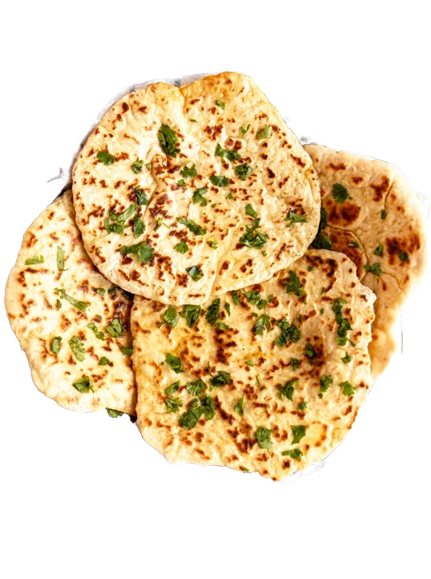
A 100g (3.53oz) serving of garlic naan contains 328 calories, 9.8g of protein, 9.2g of fat, and 50.5g of carbohydrates. The garlic naan calories for one 7-inch piece weighing 95g (3.35oz) amount to 312 calories, with 9.3g of protein, 8.7g of fat, and 48g of carbohydrates. A larger 9-inch piece weighing 125g (4.41oz) contains 410 calories, 12.3g of protein, 11.5g of fat, and 63.1g of carbohydrates.
A 100g (3.53oz) serving of roti naan, or whole wheat naan, contains 280 calories, 10.5g of protein, 5.1g of fat, and 49g of carbohydrates. The roti naan calories for one 7-inch piece weighing 85g (3oz) are 238, with 8.9g of protein, 4.3g of fat, and 41.7g of carbohydrates. A larger 9-inch piece weighing 115g (4.06oz) contains 322 calories, 12.1g of protein, 5.9g of fat, and 56.4g of carbohydrates.
A 100g (3.53oz) serving of keema naan contains 355 calories, 15.2g of protein, 13.5g of fat, and 43.1g of carbohydrates. There are 533 calories in keema naan 8-inches (150g), along with 22.8g of protein, 20.3g of fat, and 64.7g of carbohydrates. A larger 10-inch piece weighing 200g (7.05oz) contains 710 calories, 30.4g of protein, 27g of fat, and 86.2g of carbohydrates.
A 100g (3.53oz) serving of butter naan contains 466mg of sodium (20% DV). A 7-inch piece (88g) of butter naan has 410mg of sodium (18% DV). A 100g (3.53oz) serving of Pakistani naan contains 420mg of sodium (18% DV). An 8-inch piece (100g) of Pakistani naan has 420mg of sodium (18% DV). A 100g (3.53oz) serving of garlic naan contains 480mg of sodium (21% DV). A 7-inch piece (95g) of garlic naan has 456mg of sodium (20% DV). A 100g (3.53oz) serving of roti naan contains 440mg of sodium (19% DV). A 7-inch piece (85g) of roti naan has 374mg of sodium (16% DV). A 100g (3.53oz) serving of keema naan contains 550mg of sodium (24% DV). An 8-inch piece (150g) of keema naan has 825mg of sodium (36% DV).
A 100g (3.53oz) serving of butter naan contains 130mg of potassium (3% DV). A 7-inch piece (88g) of butter naan has 114mg of potassium (2% DV). A 100g (3.53oz) serving of Pakistani naan contains 125mg of potassium (3% DV). An 8-inch piece (100g) of Pakistani naan has 125mg of potassium (3% DV). A 100g (3.53oz) serving of garlic naan contains 135mg of potassium (3% DV). A 7-inch piece (95g) of garlic naan has 128mg of potassium (3% DV). A 100g (3.53oz) serving of roti naan contains 220mg of potassium (5% DV). A 7-inch piece (85g) of roti naan has 187mg of potassium (4% DV). A 100g (3.53oz) serving of keema naan contains 250mg of potassium (5% DV). An 8-inch piece (150g) of keema naan has 375mg of potassium (8% DV).
A 100g (3.53oz) serving of butter naan contains 3.5g of sugar. A 7-inch piece (88g) of butter naan has 3.1g of sugar. A 100g (3.53oz) serving of Pakistani naan contains 3.1g of sugar. An 8-inch piece (100g) of Pakistani naan has 3.1g of sugar. A 100g (3.53oz) serving of garlic naan contains 3.3g of sugar. A 7-inch piece (95g) of garlic naan has 3.1g of sugar. A 100g (3.53oz) serving of roti naan contains 3g of sugar. A 7-inch piece (85g) of roti naan has 2.6g of sugar. A 100g (3.53oz) serving of keema naan contains 2.5g of sugar. An 8-inch piece (150g) of keema naan has 3.8g of sugar.
A 100g (3.53oz) serving of butter naan contains 2.4g of fiber (9% DV). A 7-inch piece (88g) of butter naan has 2.1g of fiber (8% DV). A 100g (3.53oz) serving of Pakistani naan contains 2.2g of fiber (8% DV). An 8-inch piece (100g) of Pakistani naan has 2.2g of fiber (8% DV). A 100g (3.53oz) serving of garlic naan contains 2.5g of fiber (9% DV). A 7-inch piece (95g) of garlic naan has 2.4g of fiber (9% DV). A 100g (3.53oz) serving of roti naan contains 4.5g of fiber (16% DV). A 7-inch piece (85g) of roti naan has 3.8g of fiber (14% DV). A 100g (3.53oz) serving of keema naan contains 3g of fiber (11% DV). An 8-inch piece (150g) of keema naan has 4.5g of fiber (16% DV).
A 100g (3.53oz) serving of butter naan contains 9.4g of protein (19% DV). A 7-inch piece (88g) of butter naan has 8.3g of protein (17% DV). A 100g (3.53oz) serving of Pakistani naan contains 9.1g of protein (18% DV). An 8-inch piece (100g) of Pakistani naan has 9.1g of protein (18% DV). A 100g (3.53oz) serving of garlic naan contains 9.8g of protein (20% DV). A 7-inch piece (95g) of garlic naan has 9.3g of protein (19% DV). A 100g (3.53oz) serving of roti naan contains 10.5g of protein (21% DV). A 7-inch piece (85g) of roti naan has 8.9g of protein (18% DV). A 100g (3.53oz) serving of keema naan contains 15.2g of protein (30% DV). An 8-inch piece (150g) of keema naan has 22.8g of protein (46% DV).
A 100g (3.53oz) serving of butter naan contains 51.2g of carbohydrates (19% DV). A 7-inch piece (88g) of butter naan has 45.1g of carbohydrates (16% DV). A 100g (3.53oz) serving of Pakistani naan contains 54g of carbohydrates (20% DV). An 8-inch piece (100g) of Pakistani naan has 54g of carbohydrates (20% DV). A 100g (3.53oz) serving of garlic naan contains 50.5g of carbohydrates (18% DV). A 7-inch piece (95g) of garlic naan has 48g of carbohydrates (17% DV). A 100g (3.53oz) serving of roti naan contains 49g of carbohydrates (18% DV). A 7-inch piece (85g) of roti naan has 41.7g of carbohydrates (15% DV). A 100g (3.53oz) serving of keema naan contains 43.1g of carbohydrates (16% DV). An 8-inch piece (150g) of keema naan has 64.7g of carbohydrates (24% DV).
A 100g (3.53oz) serving of butter naan contains 8.1g of fat (10% DV). A 7-inch piece (88g) of butter naan has 7.1g of fat (9% DV). A 100g (3.53oz) serving of Pakistani naan contains 4.5g of fat (6% DV). An 8-inch piece (100g) of Pakistani naan has 4.5g of fat (6% DV). A 100g (3.53oz) serving of garlic naan contains 9.2g of fat (12% DV). A 7-inch piece (95g) of garlic naan has 8.7g of fat (11% DV). A 100g (3.53oz) serving of roti naan contains 5.1g of fat (7% DV). A 7-inch piece (85g) of roti naan has 4.3g of fat (5% DV). A 100g (3.53oz) serving of keema naan contains 13.5g of fat (17% DV). An 8-inch piece (150g) of keema naan has 20.3g of fat (26% DV).
A 100g (3.53oz) serving of butter naan contains 0.6mg of thiamin (50% DV), 0.4mg of riboflavin (31% DV), 5.1mg of niacin (32% DV), and 124µg of folate (31% DV). A 7-inch piece (88g) of butter naan has 0.53mg of thiamin (44% DV) and 109µg of folate (27% DV). A 100g (3.53oz) serving of Pakistani naan contains 0.6mg of thiamin (50% DV) and 5.0mg of niacin (31% DV). An 8-inch piece (100g) of Pakistani naan has the same vitamin values. A 100g (3.53oz) serving of garlic naan contains 0.6mg of thiamin (50% DV) and 5.1mg of niacin (32% DV). A 7-inch piece (95g) of garlic naan has 0.57mg of thiamin (48% DV) and 4.8mg of niacin (30% DV). A 100g (3.53oz) serving of roti naan contains 0.4mg of thiamin (33% DV) and 4.5mg of niacin (28% DV). A 7-inch piece (85g) of roti naan has 0.34mg of thiamin (28% DV) and 3.8mg of niacin (24% DV). A 100g (3.53oz) serving of keema naan contains 0.5mg of thiamin (42% DV), 5.5mg of niacin (34% DV), and 0.2mg of vitamin B6 (12% DV). An 8-inch piece (150g) of keema naan has 0.75mg of thiamin (63% DV), 8.3mg of niacin (52% DV), and 0.3mg of vitamin B6 (18% DV).
A 100g (3.53oz) serving of butter naan contains 110mg of calcium (8% DV), 3.5mg of iron (19% DV), and 35mg of magnesium (8% DV). A 7-inch piece (88g) of butter naan has 97mg of calcium (7% DV) and 3.1mg of iron (17% DV). A 100g (3.53oz) serving of Pakistani naan contains 100mg of calcium (8% DV) and 3.4mg of iron (19% DV). An 8-inch piece (100g) of Pakistani naan has the same mineral values. A 100g (3.53oz) serving of garlic naan contains 112mg of calcium (9% DV) and 3.5mg of iron (19% DV). A 7-inch piece (95g) of garlic naan has 106mg of calcium (8% DV) and 3.3mg of iron (18% DV). A 100g (3.53oz) serving of roti naan contains 4mg of iron (22% DV) and 75mg of magnesium (18% DV). A 7-inch piece (85g) of roti naan has 3.4mg of iron (19% DV) and 64mg of magnesium (15% DV). A 100g (3.53oz) serving of keema naan contains 4.5mg of iron (25% DV), 45mg of magnesium (11% DV), and 3.1mg of zinc (28% DV). An 8-inch piece (150g) of keema naan has 6.8mg of iron (38% DV), 68mg of magnesium (16% DV), and 4.7mg of zinc (43% DV).
Get a Custom Report on Naan Bread Nutrition Data – Contact Us!
What are the Types of Naan Breads?
The types of Naan Breads are Plain Naan, Butter Naan, Garlic Naan, Roti Naan (Whole Wheat), and Keema Naan. The table below details these common types.
| Type | Description | Calories (per 100g) | Calorie Qualifications |
|---|---|---|---|
|
Plain/Pakistani Naan
|
The basic, traditional leavened flatbread made with white flour, yogurt, and yeast. | 295 | Standard calorie count for this type. Calories come from refined carbohydrates. |
|
Butter Naan
|
Plain naan brushed with melted butter or ghee after cooking. | 319 | Higher in calories and fat than plain naan due to the addition of butter. |
|
Garlic Naan
|
Plain naan flavored with chopped garlic and cilantro, brushed with butter. | 328 | Calorie count is higher than plain naan due to added butter and garlic-infused oil. |
|
Roti Naan (Whole Wheat)
|
Made with whole wheat flour instead of white flour. Denser texture and nuttier flavor. | 280 | Lowest in calories among these types due to higher fiber content and less fat. |
|
Keema Naan
|
Naan stuffed with a spiced mixture of minced meat (lamb, goat, or chicken). | 355 | Highest in calories, protein, and fat due to the substantial meat filling. |
What are the Desserts with Naan Bread?
Naan bread serves as a versatile base for sweet dishes, particularly in fusion and contemporary South Asian cuisine. The table below details some dessert preparations using naan bread.
| Dish Name | Calories (Estimate per serving) | Type of Naan Bread Used | Carbs (g) (Estimate) | Sugar (g) (Estimate) | Protein (g) (Estimate) | Fat (g) (Estimate) | Cuisine | Restaurants |
|---|---|---|---|---|---|---|---|---|
|
Chocolate Naan
|
400-600 | Plain Naan | 55-75 | 25-40 | 10-15 | 15-25 | Indian Fusion | Badmaash (Los Angeles) has offered creative naan dishes. |
|
Naan Bread Pudding
|
450-650 | Plain or Butter Naan | 60-80 | 35-50 | 10-14 | 18-28 | Indian Fusion | Junoon (New York) has featured modern takes on Indian desserts. |
What are the Main Dishes with Naan Bread?
Naan bread is a classic accompaniment to a wide array of savory main courses, especially in South Asian cuisines. The table below details main dishes that are served with naan bread.
| Dish Name | Calories (Estimate per serving) | Type of Naan Bread Used | Carbs (g) (Estimate) | Sugar (g) (Estimate) | Protein (g) (Estimate) | Fat (g) (Estimate) | Cuisine | Restaurants |
|---|---|---|---|---|---|---|---|---|
|
Tikka Masala (Chicken/Paneer)
|
400-700 (dish only) | Plain, Butter, or Garlic Naan | 15-25 | 8-15 | 30-50 | 20-40 | Indian/British-Indian | Tamarind (New York), Rasika (Washington D.C.). |
|
Korma (Chicken/Lamb/Vegetable)
|
450-800 (dish only) | Plain or Butter Naan | 10-20 | 5-10 | 30-50 | 30-55 | North Indian/Mughlai | The Bombay Club (Washington D.C.), Amber India (multiple locations). |
|
Saag/Palak Paneer
|
300-500 (dish only) | Plain, Garlic, or Roti Naan | 10-20 | 2-6 | 15-25 | 20-35 | North Indian | Vik's Chaat (Berkeley), Udupi Palace (multiple locations). |
|
Karahi (Chicken/Lamb)
|
350-600 (dish only) | Plain or Pakistani Naan | 8-15 | 4-8 | 30-45 | 20-35 | Pakistani/North Indian | Khan BBQ (Chicago), Bundoo Khan (Houston). |
|
Naan Pizza/Naanwich
|
500-900 | Plain or Garlic Naan | 50-70 | 5-10 | 25-40 | 20-40 | American/Indian Fusion | Trader Joe's offers naan for home cooking; some cafes create naan-based sandwiches. |
What Cuisines Prefer Naan Bread the Most?
Naan bread is indispensable in many South and Central Asian culinary traditions, serving as a staple accompaniment to rich curries and grilled meats. The table below details the cuisines where naan bread is most prominent.
| Cuisine | Dish | Types of Naan Bread Used | Calories (Estimate per serving) | Restaurant(s) |
|---|---|---|---|---|
|
North Indian
|
Butter Chicken, Palak Paneer, Kormas | Plain, Butter, Garlic, Roti Naan | 300-800 (dish only) | Rasika (Washington D.C.), Tamarind (New York), Amber India (CA) |
|
Pakistani
|
Chicken Karahi, Nihari, Haleem | Plain Naan (often larger, fluffier) | 350-600 (dish only) | Khan BBQ (Chicago), Bundoo Khan (Houston), Shan-A-Punjab (Los Angeles) |
|
Mughlai
|
Rogan Josh, Shahi Paneer, Kebabs | Plain, Butter, Keema Naan | 400-800 (dish only) | The Bombay Club (Washington D.C.), Junoon (New York) |
|
Afghan
|
Kebab Platters, Qormas | Naan-e-Afghani (a similar but distinct long, oval flatbread) | 300-600 (dish only) | The Helmand (Baltimore, Boston), Afghan Kabob House (New York) |
Which Countries Produce the Most Naan Bread?
The top producers of wheat, the main component of naan bread, are China, India, and Russia. The table below shows wheat production quantities for key countries, which directly impacts the availability and price of flour for naan bread.
| Country | 2004 | 2005 | 2006 | 2007 | 2008 | 2009 | 2010 | 2011 | 2012 | 2013 | 2014 | 2015 | 2016 | 2017 | 2018 | 2019 | 2020 | 2021 | 2022 | 2023 |
|---|---|---|---|---|---|---|---|---|---|---|---|---|---|---|---|---|---|---|---|---|
| China | 91,610,000 | 97,445,000 | 108,467,000 | 109,872,000 | 112,463,000 | 115,124,000 | 115,182,000 | 117,925,000 | 121,023,000 | 121,723,000 | 126,212,000 | 130,188,000 | 131,698,000 | 134,334,000 | 131,439,000 | 133,596,000 | 134,250,000 | 136,946,000 | 137,720,000 | 136,590,000 |
| India | 72,156,000 | 68,637,000 | 69,355,000 | 75,807,000 | 78,570,000 | 80,680,000 | 80,800,000 | 86,870,000 | 94,880,000 | 93,510,000 | 95,850,000 | 86,530,000 | 92,290,000 | 98,510,000 | 99,700,000 | 103,600,000 | 107,860,000 | 109,590,000 | 107,740,000 | 110,550,000 |
| Russian Federation | 45,408,000 | 47,698,000 | 44,920,000 | 41,508,000 | 63,765,000 | 61,737,000 | 41,508,000 | 56,240,000 | 37,719,000 | 52,089,000 | 59,711,000 | 61,786,000 | 73,295,000 | 85,863,000 | 72,136,000 | 74,453,000 | 85,896,000 | 75,945,000 | 104,230,000 | 92,270,000 |
| USA | 58,735,000 | 57,293,000 | 49,247,000 | 55,821,000 | 68,028,000 | 60,336,000 | 60,113,000 | 54,425,000 | 61,755,000 | 57,997,000 | 55,145,000 | 55,839,000 | 62,832,000 | 47,372,000 | 51,306,000 | 52,258,000 | 49,691,000 | 44,795,000 | 44,902,000 | 49,330,000 |
| United Kingdom | 15,486,000 | 14,830,000 | 13,200,000 | 13,300,000 | 17,230,000 | 14,080,000 | 14,880,000 | 15,250,000 | 13,260,000 | 11,920,000 | 16,620,000 | 16,430,000 | 14,360,000 | 14,830,000 | 13,560,000 | 16,200,000 | 9,660,000 | 14,000,000 | 15,500,000 | 14,020,000 |
Which Countries Consume the Most Naan Breads?
The top consumers of naan bread are India, Pakistan, the United Kingdom, the United States, and Canada, driven by large South Asian diaspora communities and the global popularity of Indian cuisine. Import values for "Bread, pastry, cakes, biscuits and other bakers' wares" can serve as a proxy for demand in non-producing nations. The table below shows recent import values (USD) for this category for leading consuming nations.
| Country | 2004 | 2005 | 2006 | 2007 | 2008 | 2009 | 2010 | 2011 | 2012 | 2013 | 2014 | 2015 | 2016 | 2017 | 2018 | 2019 | 2020 | 2021 | 2022 | 2023 |
|---|---|---|---|---|---|---|---|---|---|---|---|---|---|---|---|---|---|---|---|---|
| USA | 2.1B | 2.3B | 2.5B | 2.8B | 3.1B | 2.9B | 3.2B | 3.6B | 3.8B | 4.1B | 4.5B | 4.6B | 4.8B | 5.1B | 5.4B | 5.7B | 6.0B | 6.8B | 7.9B | 8.5B |
| United Kingdom | 1.4B | 1.5B | 1.6B | 2.0B | 2.1B | 1.8B | 1.9B | 2.2B | 2.4B | 2.6B | 2.8B | 2.7B | 2.5B | 2.6B | 2.8B | 2.9B | 3.1B | 3.5B | 3.7B | 3.9B |
| Germany | 1.5B | 1.6B | 1.8B | 2.2B | 2.5B | 2.4B | 2.5B | 3.0B | 3.1B | 3.4B | 3.6B | 3.5B | 3.7B | 3.9B | 4.2B | 4.3B | 4.6B | 5.1B | 5.6B | 6.1B |
| France | 1.1B | 1.2B | 1.3B | 1.6B | 1.8B | 1.7B | 1.8B | 2.1B | 2.2B | 2.4B | 2.5B | 2.4B | 2.5B | 2.7B | 2.9B | 3.0B | 3.2B | 3.6B | 3.9B | 4.3B |
| Canada | 0.8B | 0.9B | 1.0B | 1.1B | 1.2B | 1.1B | 1.3B | 1.4B | 1.5B | 1.6B | 1.7B | 1.6B | 1.7B | 1.8B | 1.9B | 2.0B | 2.2B | 2.5B | 2.9B | 3.1B |
How Do Prices of Naan Bread-Including Dishes Change?
Menu prices for dishes that are served with naan bread, such as Tikka Masala or Korma, have risen steadily over time. This increase reflects the rising cost of all ingredients, including the naan bread itself, as well as labor and operational expenses for restaurants.
| Restaurant | Dish | Old Price | Current Price (2024/2025) |
|---|---|---|---|
| Tamarind (New York) | Chicken Tikka Masala | $24.00 (2012) | $16.49 - $34.10 |
| Rasika (Washington D.C.) | Palak Chaat (often eaten with bread) | $11.00 (2013) | $14.00 - $15.00 |
| Junoon (New York) | Ghost Chili Murgh Tikka | $18.00 (2015) | $22.00 - $24.00 |
What is the Naan Bread Calorie for 100 Grams?
A 100g (3.53oz) serving of butter naan contains 319 calories. A 100g serving of Pakistani naan contains 295 calories. A 100g serving of garlic naan contains 328 calories. A 100g serving of roti naan contains 280 calories. A 100g serving of keema naan contains 355 calories.
What is the Naan Bread Calorie for 1 KG?
A 1kg (2.2lb) serving of butter naan contains 3,190 calories. A 1kg serving of Pakistani naan contains 2,950 calories. A 1kg serving of garlic naan contains 3,280 calories. A 1kg serving of roti naan contains 2,800 calories. A 1kg serving of keema naan contains 3,550 calories.
How Many Calories in 1 Naan Bread?
One piece (88g) of butter naan has 281 calories. One piece (100g) of Pakistani naan has 295 calories. One piece (95g) of garlic naan has 312 calories. One piece (85g) of roti naan has 238 calories. One piece (150g) of keema naan has 533 calories.
What is the Calorie of Half Naan Bread?
There are 141 calories in a half butter naan. Half a piece of Pakistani naan has 148 calories. Half a piece of garlic naan has 156 calories. Half a piece of roti naan has 119 calories. Half a piece of keema naan has 267 calories.
What are the Health Benefits of Naan Bread?
Naan bread offers several health advantages such as a source of B-vitamins and energy. The main health benefits are discussed below:
- Provides Energy: Naan bread is a rich source of carbohydrates, which are the body's main fuel source. The refined flour provides readily available glucose for immediate energy needs, supporting daily activities and bodily functions. (Slavin, J., & Carlson, J., 2007, Carbohydrates)
- Source of B-Vitamins: Naan made from enriched white flour is a good source of B-vitamins, including niacin, thiamin, and folic acid. These vitamins are essential for converting food into energy, maintaining nervous system function, and forming red blood cells. Food fortification is a proven public health strategy. (Fulgoni, V. L., et al., 2011, Foods, Fortificants, and Supplements: Where Do Americans Get Their Nutrients?)
- Contains Essential Minerals: Enriched flour provides important minerals like iron. Iron is a critical component of hemoglobin, the substance in red blood cells that carries oxygen from the lungs to transport throughout the body, helping to prevent anemia and fatigue. (Zimmermann, M. B., & Hurrell, R. F., 2007, Nutritional iron deficiency)
What are the Downsides of Naan Bread?
Naan bread has potential downsides to consider, which are outlined below:
- High in Refined Carbohydrates: Traditional naan is made with refined white flour, which lacks the fiber of whole grains. Diets high in refined carbs can lead to rapid spikes in blood sugar and are associated with an increased risk of type 2 diabetes and heart disease. An alternative is whole wheat naan (roti naan). A daily suggested amount depends on individual carbohydrate needs. (Ludwig, D. S., et al., 2018, Dietary carbohydrates: role of quality and quantity in chronic disease)
- High Sodium Content: A single piece of commercially prepared naan can contain a substantial amount of sodium, which is used for flavor and dough conditioning. Excessive sodium intake is a primary driver of high blood pressure, a major risk factor for cardiovascular events. An alternative is making homemade naan to control the salt content. A daily suggested amount for adults is to consume less than 2,300mg of sodium from all foods. (Appel, L. J., et al., 2011, A clinical trial of the effects of dietary patterns on blood pressure)
- Calorie Density: Naan, especially butter and garlic varieties, is calorie-dense due to the use of refined flour, yogurt, and added fats like butter or ghee. Overconsumption without a corresponding increase in physical activity can lead to a calorie surplus and weight gain. An alternative is plain or whole wheat naan. A daily suggested amount should be aligned with personal calorie targets. (Swinburn, B. A., et al., 2011, The global obesity pandemic: shaped by global drivers and local environments)
Is Naan Bread Good for You?
Yes, naan bread can be part of a balanced diet when consumed in moderation. For metabolic health, naan made from enriched flour provides essential B-vitamins like niacin and thiamin, which are crucial for converting food into energy (Fulgoni, V. L., et al., 2011, Foods, Fortificants, and Supplements: Where Do Americans Get Their Nutrients?). The fortification also adds iron, a mineral vital for preventing anemia and supporting oxygen transport, which is important for overall physical health (Zimmermann, M. B., & Hurrell, R. F., 2007, Nutritional iron deficiency). When made with whole wheat flour, naan offers dietary fiber that supports digestive health by promoting regular bowel movements and feeding beneficial gut bacteria, a key aspect of maintaining a healthy gut microbiome (Anderson, J. W., et al., 2009, Health benefits of dietary fiber).
When is Naan Bread Bad for You?
Naan bread can be bad for individuals with diabetes or insulin resistance, as the high glycemic index of traditional naan made from refined white flour can cause rapid and unhealthy spikes in blood sugar levels, making glycemic control difficult (Jenkins, D. J., et al., 1981, Glycemic index of foods: a physiological basis for carbohydrate exchange). For people managing weight or cardiovascular health, the high calorie and saturated fat content of butter and keema naan can lead to a calorie surplus and elevated LDL cholesterol when consumed in excess (Mozaffarian, D., et al., 2006, Trans fatty acids and cardiovascular disease). For individuals with hypertension, the high sodium content in commercially prepared naan can elevate blood pressure, increasing the risk of heart attack and stroke (He, F. J., & MacGregor, G. A., 2009, A comprehensive review on salt and health and current experience of worldwide salt reduction programmes).
How Does Naan Bread Affect Blood Sugar Levels in Diabetics?
Naan bread is not good for diabetics when made with traditional refined white flour. Naan bread affects blood sugar levels by causing a rapid increase after consumption due to its high glycemic index (GI). Factors in naan bread that affect sugar level include the use of refined white flour, which is stripped of fiber and digests quickly, and the addition of sugar and yogurt in the dough. This rapid digestion and absorption of carbohydrates leads to a sharp spike in blood glucose, which can be challenging for a person with diabetes to manage. Research consistently shows that foods with a high GI, like white bread, can worsen glycemic control (Jenkins, D. J., et al., 1981, Glycemic index of foods: a physiological basis for carbohydrate exchange). The lack of fiber in white naan means there is nothing to slow down the absorption of sugar into the bloodstream (Weickert, M. O., & Pfeiffer, A. F., 2008, Metabolic effects of dietary fiber consumption and prevention of diabetes). The portion size is also a critical factor; a large piece of naan delivers a substantial carbohydrate load in a single meal, further challenging the body's insulin response (Wolever, T. M., 2017, Yogurt and dairy product consumption and risk of type 2 diabetes: a systematic review and dose-response meta-analysis of cohort studies).
How Does Calorie Change According to Naan Bread Types?
The calorie content of naan bread changes based on toppings and fillings. Roti naan, made with whole wheat flour, has the lowest calorie count at 280 calories per 100g. Plain naan made with white flour is slightly higher at 295 calories. Adding toppings like butter and garlic increases the calorie count to 319 and 328 calories, respectively, due to the added fat. Keema naan has the highest calorie count at 355 calories per 100g because of the calorie-dense spiced meat filling, which adds substantial protein and fat.
Which Type of Naan Bread is Safest for Diabetics to Eat?
The safest type of naan bread for diabetics to eat is Roti Naan, which is made from whole wheat flour. The reason naan bread is healthy for diabetics when it is whole wheat is due to the higher fiber content. Dietary fiber slows the absorption of sugar into the bloodstream, which helps prevent the sharp spikes in blood glucose that are dangerous for individuals with diabetes (Weickert, M. O., & Pfeiffer, A. F., 2008, Metabolic effects of dietary fiber consumption and prevention of diabetes). Whole grains have a lower glycemic index compared to refined grains, leading to a more gradual and manageable blood sugar response (Jenkins, D. J., et al., 1981, Glycemic index of foods: a physiological basis for carbohydrate exchange). Furthermore, whole grain consumption is associated with improved insulin sensitivity and a lower risk of developing type 2 diabetes (de Munter, J. S., et al., 2007, Whole grain, bran, and germ intake and risk of type 2 diabetes: a prospective cohort study and systematic review).
Which Type of Naan Bread has the Best Macros for Weight Loss?
Roti Naan, or whole wheat naan, has the best macros for weight loss. The key to naan bread being good for weight loss lies in selecting the type with the most favorable macronutrient profile for satiety and lower calorie density. The naan macros of roti naan are superior for this purpose because it contains the highest amount of dietary fiber and a good level of protein relative to its calorie content. High-fiber foods increase feelings of fullness, which can help reduce overall calorie intake throughout the day (Slavin, J. L., 2013, Fiber and Prebiotics: Mechanisms and Health Benefits). Protein is the most satiating macronutrient, and consuming adequate protein can help preserve lean muscle mass during weight loss, which is important for maintaining metabolic rate (Paddon-Jones, D., et al., 2008, Protein, weight management, and satiety). Compared to other naan varieties that are higher in refined carbohydrates and fats, the balanced macronutrient profile of roti naan makes it the most supportive choice for a weight loss diet (Sacks, F. M., et al., 2009, Comparison of weight-loss diets with different compositions of fat, protein, and carbohydrates).
Does Naan Bread Have More Calories Than Pita Bread?
Yes, naan bread has more calories than pita bread. A 100g serving of plain naan contains around 295 calories, while a 100g serving of white pita bread contains about 275 calories. This difference is due to the ingredients used in each. Naan dough is enriched with yogurt, milk, and fat (like ghee or butter), which increases its calorie and fat content. Pita bread is a simpler lean dough made from just flour, water, yeast, and salt. The enrichment of the naan dough results in a softer, richer flatbread but also a higher calorie density (U.S. Department of Agriculture, FoodData Central). Studies comparing different types of bread show that breads enriched with fats and dairy have a higher energy value than lean breads (Gómez, M., et al., 2011, Functionality of different emulsifiers on the quality of microwave-baked bread). The different cooking methods, with naan often cooked in a tandoor and pita baked in a hot oven, also affect the final texture and moisture content but the primary calorie difference comes from the dough's composition (Akesowan, A., 2008, Effect of Added-Fat on Quality of Wheat-Cassava Composite Bread).
Does Naan Bread Taste Better When Toasted or Grilled?
Yes, the best way to eat naan bread is toasted or grilled to enhance flavor and texture. Heating naan activates the Maillard reaction, a chemical process between amino acids and reducing sugars that gives browned food its distinctive flavor and aroma, making the bread more complex and appealing (Martins, S. I., et al., 2001, A review of Maillard reaction in food and implications to kinetic modelling). Grilling or toasting also improves the texture, creating a slightly crisp exterior while maintaining a soft, chewy interior. This textural contrast is a key component of food enjoyment (Szczesniak, A. S., 2002, Texture is a sensory property). The heat softens the gluten and starches within the bread, making it more pliable and pleasant to eat. A suggested consumption rate is to eat naan warm, directly after heating. Research on consumer preference confirms that warm bread is preferred for its superior sensory attributes, including aroma, flavor, and texture (Heenan, S. P., et al., 2008, Consumer acceptance of wholegrain bread).
What is the Origin of Naan Bread?
The origin of naan bread traces back to ancient Persia and the Indian subcontinent. The term "naan" itself comes from the Persian word for bread. Historical records suggest that a form of leavened bread was developed in the region with the arrival of yeast from Egypt. The modern naan, as a soft, leavened flatbread cooked in a tandoor (a cylindrical clay oven), was perfected in the Imperial courts of the Mughal Empire in India. The Mughals, with their Persian cultural roots, refined naan by using milk or yogurt in the dough to create a softer texture, a practice that continues today. Naan became a staple of royal and noble cuisine, served alongside rich dishes like kormas and kebabs. The use of the tandoor, which reaches very high temperatures, is critical to naan's characteristic puffy texture with charred spots. Different regional variations developed over time, such as the stuffed Keema Naan or the sweet Peshawari Naan. The bread spread throughout South and Central Asia and eventually to the rest of the world with the migration of South Asian communities, becoming one of the most recognized symbols of Indian and Pakistani cuisine.
Explore More Baked Goods
Discover more Baked Goods with detailed nutrition facts, calorie counts, vitamins, minerals, and health benefits. Compare similar foods, serving sizes, macronutrients, and key nutrients to find the best option for your diet and nutrition goals.
 Bagel calories
 Baguette calories
 Biscuit calories
 Blueberry Muffins calories
 Bread calories
 Brioche Bread calories
 Bun calories
 Churros calories
 Cinnamon Rolls calories
 Corn Tortilla calories
 Cornbread calories
 Croissant calories