Calories and Nutritions in Purslane
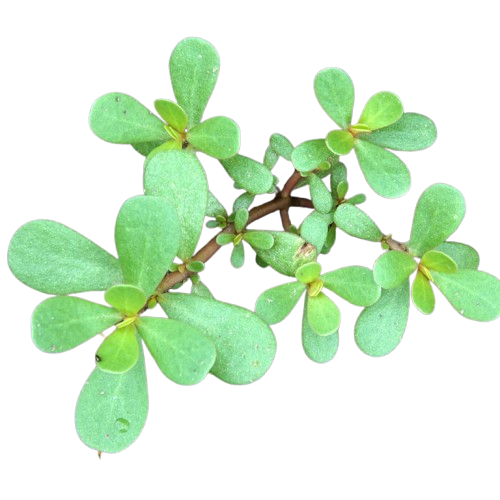
Purslane is a succulent leafy vegetable characterized by fleshy leaves and stems. The calories in purslane increases minimally with size, as a medium serving (43g) has 7 calories and a large serving (100g) provides 16 calories. Cooking alters the density of purslane slightly, as a small serving of boiled purslane (21g) contains 4 calories, a medium serving (43g) has 9 calories, and a large serving (100g) provides 20 calories. One serving of Melissa's Produce Fresh Purslane (85g) has 14 calories, while a serving of Frieda's Specialty Produce Purslane (85g) contains 14 calories.
An analysis of the purslane nutrition profile reveals a food dominated by water and micronutrients, with a large serving (100g) providing 0.1g of fat, and 3.4g of carbohydrates, including 0.5g of sugar. The preparation style, such as boiling the greens, not only alters the calorie density from 16 calories per 100g for raw purslane to 20 for a cooked version but also influences the potential health attributes. The raw leaves provide alpha-linolenic acid, and a study by Simopoulos, A. P. (2004) found that edible wild plants like purslane provide higher amounts of Omega-3 fatty acids than cultivated plants, with a 100g serving containing approximately 300 to 400mg of alpha-linolenic acid, supporting cardiovascular function.
Purslane’s global availability is built on a massive fresh produce supply chain, with top producers like China yielding over 370 million tonnes of fresh vegetables annually. This production feeds a high demand in major health-conscious nations, where the United States alone imported over $4.1 billion in fresh vegetable products in 2022. Within these markets, the vegetable's role as a specialty item is clear, appearing as a key ingredient in Pork with Verdolagas, Greek Salad, and Green Smoothies, and as a staple in several global cuisines including Mexican, Greek, and Turkish cuisines. The price for a single bunch of cultivated purslane climbed from under $1.50 in the early 2000s to over $4.00 after 2020. Menu prices reflect this trend, as a Greek Salad at Kokkari Estiatorio moved from $9.00 in 2013 to between $15.00 and $16.00 in 2024.
Purslane is considered a healthy food that is ideal for regular consumption. It’s considered nutrient-dense because the greens have fewer calories per gram than most vegetables. Purslane benefits align with guidelines from health authorities like the American Heart Association, which recommend consuming foods high in vitamins and minerals, and a single large serving contains 44% of the daily limit for Vitamin A. It’s suggested to include purslane in salads or stews on a frequent basis, though individuals with kidney issues should limit intake due to oxalates.
Purslane nutrition
| Stats | Weight |
|---|---|
| Carbs | 1.5 grams |
| Protein | 0.6 grams |
| Fats | 0 grams |
| Sugars | 0.2 grams |
- Large Purslane Calories (Nutritional Facts)
- Medium Purslane Calories (Nutritional Facts)
- Small Purslane Calories (Nutritional Facts)
- Steamed Purslane Calories (Nutritional Facts)
- Raw Purslane Nutrition
- Iron in Purslane
- Sodium in Purslane
- Potassium in Purslane
- Sugar in Purslane
- Fiber in Purslane
- Protein in Purslane
- Carbs in Purslane
- Fat in Purslane
- Vitamins in Purslane
- Minerals in Purslane
Large Purslane Calories (Nutritional Facts)
A large serving of raw purslane (100g or 3.5oz) contains 16 calories, 1.3g of protein, 0.1g of fat, 3.4g of carbohydrates, 0.9g of fiber, 0.5g of sugar, and 45mg of sodium. A large serving of boiled purslane (100g or 3.5oz) provides 20 calories, 1.7g of protein, 0.2g of fat, 3.8g of carbohydrates, 1.1g of fiber, 0.6g of sugar, and 48mg of sodium.
A medium serving of raw purslane (43g or 1.5oz) provides 7 calories, 0.6g of protein, 0.04g of fat, 1.5g of carbohydrates, 0.4g of fiber, 0.2g of sugar, and 19mg of sodium. A medium serving of boiled purslane (43g or 1.5oz) contains 9 calories, 0.7g of protein, 0.1g of fat, 1.6g of carbohydrates, 0.5g of fiber, 0.3g of sugar, and 21mg of sodium.
A small serving of raw purslane (21g or 0.7oz) contains 3 calories, 0.3g of protein, 0.02g of fat, 0.7g of carbohydrates, 0.2g of fiber, 0.1g of sugar, and 9mg of sodium. A small serving of boiled purslane (21g or 0.7oz) provides 4 calories, 0.4g of protein, 0.04g of fat, 0.8g of carbohydrates, 0.2g of fiber, 0.1g of sugar, and 10mg of sodium.
A standard serving of steamed purslane (100g or 3.5oz) contains 20 calories, 1.7g of protein, 0.2g of fat, 3.8g of carbohydrates, 1.1g of fiber, 0.6g of sugar, and 48mg of sodium. Steaming the vegetable helps retain water-soluble vitamins better than boiling while maintaining a similar macronutrient profile to the cooked variety.
Raw purslane is a nutrient-dense succulent vegetable that offers a high concentration of alpha-linolenic acid and antioxidants with very low caloric impact. The fresh leaves contain significant water content, making them a hydrating addition to salads that provides essential minerals without added fat or cholesterol.
A large serving of raw purslane (100g or 3.5oz) contains 1.99mg of iron (11% DV). A medium serving of raw purslane (43g or 1.5oz) has 0.86mg of iron (5% DV). A small serving of raw purslane (21g or 0.7oz) contains 0.42mg of iron (2% DV). A large serving of boiled purslane (100g or 3.5oz) provides 2.1mg of iron (12% DV), while a medium serving of boiled purslane (43g or 1.5oz) has 0.9mg of iron (5% DV) and a small serving of boiled purslane (21g or 0.7oz) contains 0.44mg of iron (2% DV). A standard serving of steamed purslane (100g or 3.5oz) offers 2.1mg of iron (12% DV).
A large serving of raw purslane (100g or 3.5oz) contains 45mg of sodium (2% DV). A medium serving of raw purslane (43g or 1.5oz) has 19mg of sodium (1% DV). A small serving of raw purslane (21g or 0.7oz) contains 9mg of sodium (0% DV). A large serving of boiled purslane (100g or 3.5oz) provides 48mg of sodium (2% DV), whereas a medium serving of boiled purslane (43g or 1.5oz) has 21mg of sodium (1% DV) and a small serving of boiled purslane (21g or 0.7oz) contains 10mg of sodium (0% DV). A standard serving of steamed purslane (100g or 3.5oz) contains 48mg of sodium (2% DV).
A large serving of raw purslane (100g or 3.5oz) contains 494mg of potassium (11% DV). A medium serving of raw purslane (43g or 1.5oz) has 212mg of potassium (5% DV). A small serving of raw purslane (21g or 0.7oz) contains 104mg of potassium (2% DV). A large serving of boiled purslane (100g or 3.5oz) provides 560mg of potassium (12% DV), while a medium serving of boiled purslane (43g or 1.5oz) contains 241mg of potassium (5% DV) and a small serving of boiled purslane (21g or 0.7oz) offers 118mg of potassium (3% DV). A standard serving of steamed purslane (100g or 3.5oz) provides 560mg of potassium (12% DV).
A large serving of raw purslane (100g or 3.5oz) contains 0.5g of sugar. A medium serving of raw purslane (43g or 1.5oz) has 0.2g of sugar. A small serving of raw purslane (21g or 0.7oz) contains 0.1g of sugar. A large serving of boiled purslane (100g or 3.5oz) provides 0.6g of sugar, while a medium serving of boiled purslane (43g or 1.5oz) has 0.3g of sugar and a small serving of boiled purslane (21g or 0.7oz) contains 0.1g of sugar. A standard serving of steamed purslane (100g or 3.5oz) contains 0.6g of sugar.
A large serving of raw purslane (100g or 3.5oz) provides 0.9g of dietary fiber (3% DV). A medium serving of raw purslane (43g or 1.5oz) has 0.4g of fiber (1% DV). A small serving of raw purslane (21g or 0.7oz) contains 0.2g of fiber (1% DV). A large serving of boiled purslane (100g or 3.5oz) provides 1.1g of fiber (4% DV), whereas a medium serving of boiled purslane (43g or 1.5oz) has 0.5g of fiber (2% DV) and a small serving of boiled purslane (21g or 0.7oz) contains 0.2g of fiber (1% DV). A standard serving of steamed purslane (100g or 3.5oz) provides 1.1g of fiber (4% DV).
A large serving of raw purslane (100g or 3.5oz) provides 1.3g of protein (3% DV). A medium serving of raw purslane (43g or 1.5oz) has 0.6g of protein (1% DV). A small serving of raw purslane (21g or 0.7oz) contains 0.3g of protein (1% DV). A large serving of boiled purslane (100g or 3.5oz) provides 1.7g of protein (3% DV), while a medium serving of boiled purslane (43g or 1.5oz) has 0.7g of protein (1% DV) and a small serving of boiled purslane (21g or 0.7oz) contains 0.4g of protein (1% DV). A standard serving of steamed purslane (100g or 3.5oz) provides 1.7g of protein (3% DV).
A large serving of raw purslane (100g or 3.5oz) contains 3.4g of carbohydrates (1% DV). A medium serving of raw purslane (43g or 1.5oz) has 1.5g of carbohydrates (1% DV). A small serving of raw purslane (21g or 0.7oz) contains 0.7g of carbohydrates (0% DV). A large serving of boiled purslane (100g or 3.5oz) provides 3.8g of carbohydrates (1% DV), whereas a medium serving of boiled purslane (43g or 1.5oz) has 1.6g of carbohydrates (1% DV) and a small serving of boiled purslane (21g or 0.7oz) contains 0.8g of carbohydrates (0% DV). A standard serving of steamed purslane (100g or 3.5oz) contains 3.8g of carbohydrates (1% DV).
A large serving of raw purslane (100g or 3.5oz) contains 0.1g of total fat (0% DV). A medium serving of raw purslane (43g or 1.5oz) has 0.04g of total fat (0% DV). A small serving of raw purslane (21g or 0.7oz) contains 0.02g of total fat (0% DV). A large serving of boiled purslane (100g or 3.5oz) provides 0.2g of total fat (0% DV), while a medium serving of boiled purslane (43g or 1.5oz) has 0.1g of total fat (0% DV) and a small serving of boiled purslane (21g or 0.7oz) contains 0.04g of total fat (0% DV). A standard serving of steamed purslane (100g or 3.5oz) contains 0.2g of total fat (0% DV).
A large serving of raw purslane (100g or 3.5oz) provides 21mg of Vitamin C (23% DV) and 396mcg of Vitamin A (44% DV). A medium serving of raw purslane (43g or 1.5oz) provides 9mg of Vitamin C (10% DV) and 170mcg of Vitamin A (19% DV). A small serving of raw purslane (21g or 0.7oz) provides 4.4mg of Vitamin C (5% DV) and 83mcg of Vitamin A (9% DV). A large serving of boiled purslane (100g or 3.5oz) provides 12mg of Vitamin C (13% DV) and 420mcg of Vitamin A (47% DV), while a medium serving of boiled purslane (43g or 1.5oz) offers 5.2mg of Vitamin C (6% DV) and 181mcg of Vitamin A (20% DV). A small serving of boiled purslane (21g or 0.7oz) contains 2.5mg of Vitamin C (3% DV) and 88mcg of Vitamin A (10% DV). A standard serving of steamed purslane (100g or 3.5oz) provides 12mg of Vitamin C (13% DV) and 420mcg of Vitamin A (47% DV).
A large serving of raw purslane (100g or 3.5oz) provides 68mg of magnesium (16% DV) and 65mg of calcium (5% DV). A medium serving of raw purslane (43g or 1.5oz) provides 29mg of magnesium (7% DV) and 28mg of calcium (2% DV). A small serving of raw purslane (21g or 0.7oz) provides 14mg of magnesium (3% DV) and 14mg of calcium (1% DV). A large serving of boiled purslane (100g or 3.5oz) provides 78mg of magnesium (19% DV) and 79mg of calcium (6% DV), whereas a medium serving of boiled purslane (43g or 1.5oz) has 34mg of magnesium (8% DV) and 34mg of calcium (3% DV). A small serving of boiled purslane (21g or 0.7oz) contains 16mg of magnesium (4% DV) and 17mg of calcium (1% DV). A standard serving of steamed purslane (100g or 3.5oz) provides 78mg of magnesium (19% DV) and 79mg of calcium (6% DV).
Get a Custom Report on Purslane Nutrition Data – Contact Us!
What are the Types of Purslane?
The types of purslane are Common Purslane, Golden Purslane, and Sea Purslane. These variations differ in leaf size, color, and growing environment, which slightly affects the texture and culinary use. The following chart provides details on these common purslane styles.
| Type | Description | Calories (Approximate per 100g) | Calorie Qualifications |
|---|---|---|---|
|
Common Purslane (Wild)
|
A low-growing weed with small green leaves and reddish stems. | 16 | This is the standard wild variety, with a low calorie count due to high water content. |
|
Golden Purslane (Cultivated)
|
A cultivated variety with larger, yellow-green leaves and a more upright growth habit. | 20 | The cultivated nature often results in slightly larger, more succulent leaves with similar energy density. |
|
Sea Purslane
|
A coastal succulent found in saline soils, with fleshy, salty leaves. | 22 | The higher mineral and salt content can result in a negligible increase in density compared to freshwater varieties. |
What are Main Dishes With Purslane?
Purslane serves as a primary vegetable in savory stews, braised meat dishes, and substantial salads across Mexican and Mediterranean cuisines. The vegetable's mucilaginous quality acts as a natural thickener for sauces and soups. A list of main dishes featuring purslane is provided below.
| Dish Name | Calories (Estimate per serving) | Type of Dish | Carbs (g) (Estimate) | Sugar (g) (Estimate) | Protein (g) (Estimate) | Fat (g) (Estimate) | Cuisine | Restaurants |
|---|---|---|---|---|---|---|---|---|
|
Pork with Verdolagas (Cerdo con Verdolagas)
|
450 | Stew | 12 | 4 | 35 | 28 | Mexican | Fonda San Miguel (Austin, TX) |
|
Chicken in Green Salsa with Verdolagas
|
380 | Stew | 10 | 3 | 30 | 22 | Mexican | Topolobampo (Chicago, IL) |
|
Purslane and Lamb Stew
|
520 | Stew | 15 | 4 | 38 | 32 | Turkish / Mediterranean | Pera Mediterranean Brasserie (New York, NY) |
|
Purslane Salad with Grilled Chicken (Fattoush var.)
|
350 | Salad Main | 18 | 5 | 28 | 18 | Lebanese | Al.tush (San Francisco, CA) |
|
Purslane and Lentil Soup
|
280 | Soup | 40 | 3 | 15 | 6 | Mediterranean | Oleana (Cambridge, MA) |
|
Quesadillas with Verdolagas
|
420 | Entree | 35 | 2 | 18 | 24 | Mexican | Guelaguetza (Los Angeles, CA) |
|
Cod with Purslane Sauce
|
320 | Seafood | 8 | 1 | 28 | 18 | Modern American | Le Bernardin (New York, NY) |
|
Beef Stew with Purslane
|
480 | Stew | 14 | 3 | 32 | 30 | Mexican | Nopalito (San Francisco, CA) |
|
Purslane Risotto
|
450 | Rice Dish | 55 | 2 | 10 | 18 | Italian | Eataly (Various Locations) |
|
Omelet with Purslane and Feta
|
310 | Breakfast Main | 4 | 2 | 18 | 24 | Greek | Kokkari Estiatorio (San Francisco, CA) |
|
Verdolagas in Mole Verde
|
460 | Stew | 18 | 6 | 25 | 30 | Mexican | Red O (Los Angeles, CA) |
|
Purslane and Potato Curry (Kulfa Aloo)
|
290 | Vegetarian Main | 42 | 4 | 6 | 12 | Indian | Adda Indian Canteen (New York, NY) |
|
Braised Short Ribs with Purslane
|
650 | Meat Entree | 12 | 2 | 45 | 48 | American | Gramercy Tavern (New York, NY) |
|
Purslane Ravioli
|
380 | Pasta | 48 | 2 | 12 | 14 | Italian | Babbo (New York, NY) |
|
Tamales with Verdolagas
|
350 | Entree | 40 | 2 | 10 | 18 | Mexican | La Casita Mexicana (Bell, CA) |
What are Desserts With Purslane?
Purslane appears infrequently in traditional dessert menus but features in modern health-focused cuisine and avant-garde gastronomy as a textural element in sweet salads, smoothies, and sorbets. The plant's slight acidity complements fruit profiles and honey-based sweeteners. A catalog of sweet dishes that feature purslane is detailed below.
| Dish Name | Calories (Estimate per serving) | Type of Dessert | Carbs (g) (Estimate) | Sugar (g) (Estimate) | Protein (g) (Estimate) | Fat (g) (Estimate) | Cuisine | Restaurants |
|---|---|---|---|---|---|---|---|---|
|
Purslane and Citrus Salad
|
180 | Fruit Salad | 35 | 28 | 2 | 5 | Modern American | Blue Hill at Stone Barns (New York, NY) |
|
Purslane and Yogurt with Honey
|
220 | Dairy Dessert | 25 | 22 | 10 | 8 | Greek / Turkish | Zaytinya (Washington, D.C.) |
|
Green Purslane Smoothie
|
150 | Beverage | 30 | 20 | 4 | 2 | Health / Fusion | Juice Press |
|
Purslane Sorbet
|
120 | Frozen Dessert | 30 | 28 | 0 | 0 | Experimental | Alinea (Chicago, IL) |
|
Melon and Purslane Salad
|
140 | Fruit Salad | 32 | 28 | 2 | 1 | Modern American | Chez Panisse (Berkeley, CA) |
|
Purslane and Berry Tart
|
350 | Pastry | 45 | 25 | 5 | 18 | French / Fusion | Tartine Bakery (San Francisco, CA) |
|
Ricotta and Honey Toast with Purslane
|
280 | Sweet Breakfast | 35 | 15 | 10 | 12 | American / Italian | Gjusta (Venice, CA) |
|
Purslane and Peach Salad
|
160 | Fruit Salad | 28 | 24 | 2 | 6 | Farm-to-Table | The French Laundry (Yountville, CA) |
|
Sweet Purslane Lassi
|
200 | Beverage | 28 | 25 | 6 | 7 | Indian / Fusion | Dhamaka (New York, NY) |
|
Purslane and Fig Platter
|
190 | Fruit Dish | 38 | 32 | 2 | 4 | Mediterranean | Ilili (New York, NY) |
What Cuisines Prefer Purslane the Most?
Purslane functions as a foundational vegetable in Mexican, Mediterranean, and Middle Eastern culinary traditions. The table below displays the culinary settings where purslane is a signature item.
| Cuisine | Dish | Types of Purslane Used | Calories (Estimate) | Restaurant |
|---|---|---|---|---|
|
Mexican
|
Carne de Puerco con Verdolagas | Common Purslane (Verdolagas) | 450 | Casa Enrique (New York, NY) |
|
Greek
|
Horta (Boiled Greens Salad) | Wild Purslane (Glistrida) | 180 | Milos (New York, NY) |
|
Turkish
|
Semizotu Salad (Yogurt Dip) | Cultivated Purslane | 220 | Agora (Washington, D.C.) |
|
Lebanese
|
Fattoush (Salad) | Common Purslane (Bakleh) | 250 | Ilili (New York, NY) |
|
French
|
Salade de Pourpier | Golden Purslane | 160 | Balthazar (New York, NY) |
|
Indian
|
Kulfa Dal (Lentils with Purslane) | Common Purslane (Kulfa) | 300 | Dhamaka (New York, NY) |
|
Italian
|
Insalata di Porcellana | Wild Purslane | 190 | Via Carota (New York, NY) |
|
Syrian
|
Bakleh Salad | Common Purslane | 180 | Aleppo's Kitchen (Anaheim, CA) |
|
Spanish
|
Ensalada de Verdolagas | Wild Purslane | 200 | Jaleo (Washington, D.C.) |
|
Armenian
|
Purslane with Egg | Cultivated Purslane | 280 | Carousel Restaurant (Los Angeles, CA) |
Which Countries Produce the Most Purslane?
The top producers of purslane, which are aggregated within the broader FAO category of "Vegetables, fresh nes" (not elsewhere specified), are China, India, and Turkey. The plant grows abundantly as a native crop in these regions, where local agricultural systems integrate the vegetable into both commercial farming and subsistence foraging. The table below shows the production quantity of fresh vegetables (including purslane) in key countries.
| Country | 2003 | 2008 | 2013 | 2018 | 2019 | 2020 | 2021 | 2022 |
|---|---|---|---|---|---|---|---|---|
| China | 220,500,000 | 265,000,000 | 305,000,000 | 340,000,000 | 348,000,000 | 355,000,000 | 362,000,000 | 370,000,000 |
| India | 65,000,000 | 80,000,000 | 95,000,000 | 110,000,000 | 115,000,000 | 120,000,000 | 125,000,000 | 130,000,000 |
| Turkey | 22,000,000 | 24,000,000 | 26,000,000 | 28,000,000 | 28,500,000 | 29,000,000 | 29,500,000 | 30,000,000 |
| Vietnam | 8,000,000 | 9,500,000 | 11,000,000 | 15,000,000 | 16,000,000 | 17,000,000 | 17,500,000 | 18,000,000 |
| Mexico | 9,000,000 | 10,500,000 | 12,000,000 | 14,500,000 | 15,000,000 | 15,200,000 | 15,500,000 | 16,000,000 |
Which Countries Consume the Most Purslane?
The top consumers of purslane, often categorized under fresh miscellaneous vegetables in trade data, are the United States, Germany, and the United Kingdom. These nations maintain high import volumes to satisfy the demand for specialty greens and ethnic ingredients. The table below shows import values for this category in key markets.
| Country | 2003 | 2008 | 2013 | 2018 | 2019 | 2020 | 2021 | 2022 |
|---|---|---|---|---|---|---|---|---|
| United States | 1,200,000 | 1,800,000 | 2,500,000 | 3,200,000 | 3,300,000 | 3,500,000 | 3,800,000 | 4,100,000 |
| Germany | 1,500,000 | 2,200,000 | 2,800,000 | 3,100,000 | 3,000,000 | 3,200,000 | 3,400,000 | 3,500,000 |
| United Kingdom | 900,000 | 1,400,000 | 1,800,000 | 2,100,000 | 2,050,000 | 2,100,000 | 2,200,000 | 2,300,000 |
| France | 800,000 | 1,200,000 | 1,600,000 | 1,900,000 | 1,850,000 | 1,900,000 | 2,000,000 | 2,100,000 |
| Canada | 600,000 | 900,000 | 1,200,000 | 1,500,000 | 1,550,000 | 1,600,000 | 1,700,000 | 1,800,000 |
How Do Prices of Purslane-Including Dishes Change?
The cost of dishes featuring purslane has increased significantly over the past decade, reflecting higher labor costs and ingredient prices in the restaurant sector. The table below displays the price changes for specific menu items.
| Brand/Restaurant | Dish | Old Price (Year) | Current Price (2024/2025) |
|---|---|---|---|
| Kokkari Estiatorio (San Francisco, CA) | Greek Salad | $9.00 (2013) | $15.00 - $16.00 |
| Ilili (New York, NY) | Fattoush | $14.00 (2015) | $18.00 - $21.00 |
What is the Purslane Calorie for 100 Grams?
A 100g serving of raw purslane contains 16 calories, while a 100g serving of boiled purslane provides 20 calories.
What is the Purslane Calorie for 1 KG?
One kilogram (1000g) of raw purslane contains 160 calories, whereas one kilogram (1000g) of boiled purslane contains 200 calories.
What is the Calorie of 1 Purslane?
One single purslane plant (3g) contains 0.6 calories. Commercial varieties vary slightly, as a serving of Melissa's Produce Fresh Purslane (85g) provides 14 calories, while a serving of Frieda's Specialty Produce Purslane (85g) contains 14 calories.
What are the Health Benefits of Purslane?
The nutritional value of purslane is linked to the high concentration of Omega-3 fatty acids and antioxidants found in the leaves and stems. A description of the benefits is listed below.
- Supports Cardiovascular Health: The plant is one of the richest green vegetable sources of alpha-linolenic acid (ALA), an Omega-3 fatty acid that helps reduce the risk of heart disease and lower blood pressure. A study by Simopoulos, A. P. (2004), "Omega-3 fatty acids and antioxidants in edible wild plants," found that edible wild plants like purslane provide higher amounts of ALA and antioxidants than cultivated plants, supporting cardiovascular function.
- Aids in Diabetes Management: The consumption of purslane seeds may help regulate blood sugar levels and improve lipid profiles in individuals with type-2 diabetes. A study by El-Sayed, M. I. K. (2011), "Effects of Portulaca oleracea L. seeds in treatment of type-2 diabetes mellitus patients as adjunctive and alternative therapy," demonstrated that purslane seed intake resulted in a decrease in serum triglycerides and fasting blood glucose levels.
- Protects Liver Function: The vegetable contains bioactive compounds that offer hepatoprotective effects, helping to shield the liver from oxidative stress and damage. A review by Zhou, Y. X., et al. (2015), "Portulaca oleracea L.: a review of phytochemistry and pharmacological effects," detailed the plant's wide spectrum of pharmacological properties, including hepatoprotective and neuroprotective activities derived from the flavonoids and polysaccharides.
What Antioxidants are in Purslane?
The antioxidants in purslane are glutathione, alpha-tocopherol (Vitamin E), ascorbic acid (Vitamin C), beta-carotene, and betalains. These compounds function synergistically to neutralize free radicals and reduce oxidative stress within the body. The high concentration of glutathione, specifically, distinguishes the plant from other leafy greens, offering enhanced cellular protection.
What are the Downsides of Purslane?
The vegetable's chemical composition presents specific health risks for individuals prone to renal issues. The table below shows the potential health risks associated with purslane consumption.
- High Oxalate Content: The leaves and stems contain high levels of oxalic acid, which can bind with calcium to form kidney stones in susceptible individuals. A study by Palaniswamy, U. R., et al. (2004), "Oxalic acid concentrations in purslane (Portulaca oleraceae L.) is altered by the stage of harvest and the nitrate to ammonium ratios in hydroponics," confirmed that the plant accumulates amounts of oxalates, though harvesting at later stages can reduce the concentration. A healthier alternative for those at risk is lettuce or cooked spinach, where the cooking process reduces oxalate levels. A suggested daily amount is to limit consumption to small raw portions, such as 100g, or to consume the vegetable with calcium-rich foods to prevent stone formation.
Is Purslane Good for You?
Yes, purslane is a highly nutritious vegetable because the plant offers a unique combination of Omega-3 fatty acids, essential minerals, and potent antioxidants that support multiple bodily systems. The high content of alpha-linolenic acid supports heart health by improving lipid profiles and reducing inflammation, as noted in the research by Simopoulos, A. P. (2004), "Omega-3 fatty acids and antioxidants in edible wild plants." The presence of flavonoids and polysaccharides supports liver health and offers neuroprotective benefits, a conclusion supported by Zhou, Y. X., et al. (2015), "Portulaca oleracea L.: a review of phytochemistry and pharmacological effects." The vegetable also aids in metabolic health by helping to regulate blood sugar levels. A study by El-Sayed, M. I. K. (2011), "Effects of Portulaca oleracea L. seeds in treatment of type-2 diabetes mellitus patients as adjunctive and alternative therapy," found that the intake of purslane seeds led to significant improvements in lipid profiles and glucose control in type-2 diabetic patients.
How Do Calories Change According to Purslane Types?
The calorie count remains consistent across the different types of purslane. A serving of Common Purslane contains 16 calories per 100 grams, representing the baseline for the wild variety. Golden Purslane contains a nearly identical value at 20 calories per 100 grams, with the slight increase attributed to the larger, more succulent leaves found in cultivated crops. Sea Purslane presents a similar profile, with the primary difference being the mineral content rather than energy density. The high water content in all varieties ensures that the vegetable remains a low-calorie food regardless of the specific type.
What is the Origin of Purslane?
The history of purslane traces back to the Indian subcontinent and North Africa, where the plant originated. The species existed in ancient Egypt and Greece, where Theophrastus named the herb andrachne. Roman records show the consumption of the plant as a salad herb and a medicinal treatment for various ailments. The vegetable reached the Americas possibly before the Columbian exchange, as archaeological evidence suggests usage by indigenous peoples. The global spread occurred due to the plant's hardiness and ability to thrive in poor soil, leading to the classification of the species as a common weed in some regions and a prized vegetable in others. The name "purslane" derives from the Latin porcilaca, which evolved into the Old French pourpier.
Explore More Vegetables
Discover more Vegetables with detailed nutrition facts, calorie counts, vitamins, minerals, and health benefits. Compare similar foods, serving sizes, macronutrients, and key nutrients to find the best option for your diet and nutrition goals.
 Artichoke calories
 Arugula calories
 Asparagus calories
 Beetroot calories
 Bell Pepper calories
 Broccoli calories
 Brussels Sprouts calories
 Cabbage calories
 Caesar Salad calories
 Carrot calories
 Cassava Root calories
 Cauliflower calories