Calories and Nutritions in Radish
Radishes are a very low-calorie root vegetable. The calories in radish range from just 2 calories for one medium raw red radish (10g), to 16 calories for a 100g (3.53 oz) serving. A half-cup of sliced raw red radishes (58g or 2.05 oz) contains 9 calories. Radish nutrition highlights for a 100g serving include 14.8mg of Vitamin C (16% DV), 233mg of potassium (5% DV), and 1.6g of dietary fiber (6% DV). Radishes also contain glucosinolates and isothiocyanates, compounds found in cruciferous vegetables that research suggests may have protective health benefits, including possible anti-cancer properties (Beevi SS, Mangamoori LN, et al. 2009).
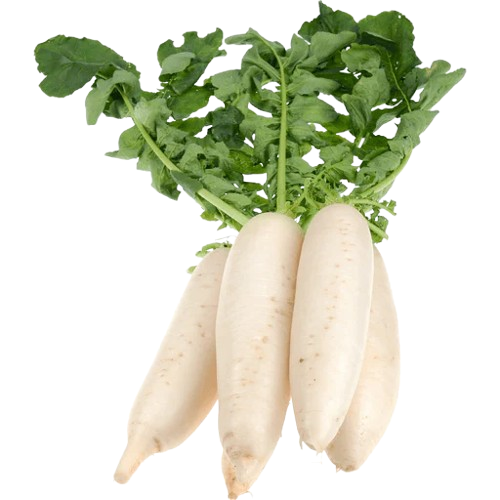
Common types include the familiar small red radish, the larger and milder white Daikon radish (18 radish calories per 100g), pungent black radishes, and colorful watermelon radishes, all remaining very low in calories. Global radish production is high in Asia, with China, Japan, and South Korea being major producers, alongside the United States. These regions also show high consumption. Prices for radishes in the US have seen a gradual increase, with a typical bunch often retailing for $1.50 to $2.50.
Radishes are frequently used raw in salads at restaurants like Panera Bread, as a garnish for tacos at Chipotle Mexican Grill, made into kimchi in Korean restaurants like the BCD Tofu House, and pickled in dishes like Vietnamese Banh Mi. A standard serving of one cup of sliced raw radishes (116g) contains about 19 calories. Burning the 19 calories from a cup of radishes requires minimal physical exertion, such as 4-5 minutes of brisk walking or light stretching.
Radish nutrition
| Stats | Weight |
|---|---|
| Carbs | 0.2 grams |
| Protein | 0.05 grams |
| Fats | 0 grams |
| Sugars | 0.1 grams |
- Large Radish Calories (Nutritional Facts)
- Medium Radish Calories (Nutritional Facts)
- Small Radish Calories (Nutritional Facts)
- Red Radish Calories (Nutritional Facts)
- Daikon Radish Calories (Nutritional Facts)
- Raw Radish Calories
- Sodium in Radish
- Potassium in Radish
- Sugar in Radish
- Fiber in Radish
- Protein in Radish
- Carbs in Radishes
- Fat in Radish
- Vitamins in Radish
- Minerals in Radish
Large Radish Calories (Nutritional Facts)
One large raw red radish (25g or 0.88 oz) contains 4 calories, 0.03g of fat, 0.17g of protein, and 0.85g of carbohydrates.
One medium raw red radish (10g or 0.35 oz) contains 2 calories, 0.01g of fat, 0.07g of protein, and 0.34g of carbohydrates.
One small raw red radish (5g or 0.18 oz) contains 1 calorie, trace amounts of fat, 0.03g of protein, and 0.17g of carbohydrates.
A serving of one half-cup of sliced raw red radishes (58g or 2.05 oz) contains 9 calories, 0.06g of fat, 0.39g of protein, and 1.97g of carbohydrates.
A serving of one half-cup of sliced raw Daikon radish (58g or 2.05 oz) contains 10 calories, 0.06g of fat, 0.35g of protein, and 2.38g of carbohydrates. A 100g serving of raw Daikon radish contains 18 calories.
A 100g (3.53 oz) serving of raw red radishes contains 16 calories, 0.1g of fat, 0.68g of protein, and 3.4g of carbohydrates. Consuming radishes raw preserves their full nutrient profile, particularly water-soluble vitamins.
Radishes are naturally low in sodium. A 100g serving of raw red radishes contains 39mg of sodium (2% DV).
Radishes provide potassium. A 100g serving of raw red radishes contains 233mg of potassium (5% DV).
Radishes contain natural sugars. A 100g serving of raw red radishes has 1.86g of sugar.
Radishes are a good source of dietary fiber. A 100g serving of raw red radishes provides 1.6g of fiber (6% DV).
Radishes contain a small amount of protein. A 100g serving of raw red radishes has 0.68g of protein.
Radishes are low in carbohydrates. A 100g serving of raw red radishes contains 3.4g of carbohydrates.
Radishes are very low in fat. A 100g serving of raw red radishes contains 0.1g of fat.
Radishes are a notable source of Vitamin C. A 100g serving of raw red radishes provides 14.8mg of Vitamin C (16% DV) and 25µg DFE of Folate (6% DV). They also contain small amounts of other B vitamins and Vitamin K. Daikon radish (100g) provides 22mg of Vitamin C (24% DV).
A 100g serving of raw red radishes provides minerals including Calcium (25mg, 2% DV), Iron (0.34mg, 2% DV), Magnesium (10mg, 2% DV), Phosphorus (20mg, 2% DV), and Manganese (0.069mg, 3% DV), in addition to potassium and sodium.
Get a Custom Report on Radish Nutrition Data – Contact Us!
What are the Types of Radishes?
Radishes come in a surprising variety of shapes, sizes, colors, and flavor profiles, from small and peppery to large and mild.
| Type | Description | Calories (per 100g, raw) | Calorie Differences & Qualifications |
|---|---|---|---|
|
Red Radish (Round/Cherry Belle type)
|
Small, round, red skin, white flesh. Crisp, peppery flavor. The most common type in the US. | 16 | Very low calorie. Good source of Vitamin C and fiber. |
|
Daikon Radish (White Radish/Mooli)
|
Large, long, white root. Mild, slightly sweet, and less peppery than red radishes. Crisp texture. | 18 | Very low calorie, similar to red radish. Often used in Asian cuisines, pickled, or grated. Good source of Vitamin C. |
|
Black Radish (Spanish Black Radish)
|
Medium to large, with rough black skin and pungent white flesh. Sharper, more intense flavor. | 30-35 | Slightly higher in calories than red or daikon, but still very low. Known for its stronger, more earthy and pungent taste. Often requires peeling. |
|
Watermelon Radish
|
Round, greenish-white exterior, vibrant pink/magenta interior. Mildly sweet, slightly peppery. | 20-25 | Low calorie. Visually striking. Flavor is milder than common red radishes. |
|
French Breakfast Radish
|
Small, oblong, red with a white tip. Crisp, mild, slightly peppery flavor. | 16-20 | Very low calorie, similar to common red radishes. Popular in European cuisine. |
|
White Icicle Radish
|
Long, slender, white, similar in shape to a small carrot. Crisp, pungent flavor. | 18-22 | Low calorie. Flavor can be quite peppery. |
What are the Main Dishes with Radish?
Radishes, with their crisp texture and peppery bite, are often used as a garnish or a component in salads and appetizers rather than the star of a main dish. However, they play a significant role in adding flavor and crunch to many meals. The table below details some dishes where radishes are a notable ingredient.
| Dish Name | Calories (Estimate per serving) | Type of Radish Used | Carbs (g) | Sugar (g) | Protein (g) | Fat (g) | Cuisine | Restaurants |
|---|---|---|---|---|---|---|---|---|
|
Garden Salad (with radish slices)
|
100-250 (before dressing) | Red Radish Slices | 5-15 | 2-6 | 2-5 | 5-15 | American/International | Panera Bread (Green Goddess Cobb Salad), Applebee's Grill + Bar (House Salad), most restaurants offering side/house salads. |
|
Tacos (with radish garnish)
|
150-350 (per taco) | Thinly Sliced Red | 15-30 | 1-3 | 8-15 | 7-18 | Mexican | Chipotle Mexican Grill (as topping option), Qdoba Mexican Eats, local taquerias. |
|
Vietnamese Pho (with radish garnish)
|
400-700 | Thinly Sliced Daikon (sometimes) | 50-70 | 3-7 | 20-35 | 10-20 | Vietnamese | Common garnish in many independent Vietnamese restaurants serving Pho. |
|
Banh Mi Sandwich (with pickled radish)
|
400-600 | Pickled Daikon & Carrot | 50-70 | 8-15 | 15-25 | 15-25 | Vietnamese | Popular in Vietnamese sandwich shops (e.g., Lee's Sandwiches - a chain in some US states). |
|
Poke Bowl (with radish garnish)
|
400-700 | Thinly Sliced Red/Daikon | 40-60 | 5-10 | 20-35 | 15-30 | Hawaiian/Japanese-inspired | Sweetgreen (seasonal/customizable bowls), poke bowl specialty chains (e.g., Pokeworks, Aloha Poke Co.). |
|
Roasted Radishes (Side Dish)
|
80-150 | Red or Mixed Varieties | 8-15 | 4-7 | 2-4 | 4-10 | American/European | Less common as a standard chain item, but featured in seasonal menus at farm-to-table or New American restaurants. |
|
Kimchi (contains radish)
|
30-60 (per 1/2 cup) | Korean Radish (Mu) | 5-10 | 1-3 | 1-3 | <1 | Korean | Served as a side (banchan) in virtually all Korean restaurants. |
|
Spring Rolls (with fresh radish)
|
100-200 (per 2 rolls) | Thinly Sliced Daikon/Red | 15-25 | 1-3 | 3-7 | 2-6 | Southeast Asian | Many Thai and Vietnamese restaurants offer fresh spring rolls where radish can be an ingredient. |
What Cuisines Prefer Radish the Most?
Radishes are enjoyed across a wide spectrum of global cuisines, valued for their crisp texture and often peppery bite, which can range from mild to quite pungent. They are particularly prominent in Mexican, various Asian (Korean, Japanese, Chinese, Vietnamese), European (French, German), and American cuisines, often used raw in salads, as garnishes, or pickled. The table below illustrates some cuisines and common radish preparations.
| Cuisine | Dish Name | Calories (Estimate per serving) | Restaurants |
|---|---|---|---|
|
Mexican
|
Tacos (with radish garnish) | 150-350 (per taco) | Chipotle Mexican Grill, Qdoba Mexican Eats, local taquerias. |
|
Mexican
|
Pozole (with radish garnish) | 300-500 (per bowl) | Common in authentic Mexican restaurants. |
|
Korean
|
Kimchi (often includes radish) | 30-60 (per 1/2 cup) | Standard side dish (banchan) in Korean BBQ restaurants and other Korean establishments. |
|
Japanese
|
Sashimi/Sushi Garnish (Daikon) | Negligible | Most sushi restaurants use shredded daikon as a garnish (e.g., Kura Sushi, Nobu). |
|
Vietnamese
|
Banh Mi (pickled daikon) | 400-600 | Lee's Sandwiches, local Vietnamese sandwich shops. |
|
French
|
Radishes with Butter and Salt | 50-100 (Appetizer) | Classic offering in French bistros. |
|
German
|
Bierradi (Bavarian Radish Spiral) | 20-40 (per serving) | Served in German beer gardens and traditional Bavarian restaurants. |
|
American
|
Garden Salads (with radish) | 100-250 (before dressing) | Panera Bread, Applebee's Grill + Bar, most restaurants offering salads. |
Which Countries Produce the Most Radishes?
Global radish production is led by countries in Asia and Europe. China is a major producer, followed by countries like Japan, South Korea, and the United States. European countries such as Germany and the Netherlands also contribute to global production. The table below shows the top available producers of "Radishes and similar roots" from 2004 to 2022 in kilotonnes (kt).
| Country | 2004 | 2005 | 2006 | 2007 | 2008 | 2009 | 2010 | 2011 | 2012 | 2013 | 2014 | 2015 | 2016 | 2017 | 2018 | 2019 | 2020 | 2021 | 2022 |
|---|---|---|---|---|---|---|---|---|---|---|---|---|---|---|---|---|---|---|---|
| China | 6500* | 6600* | 6700* | 6800* | 6900* | 7000* | 7100* | 7200* | 7300* | 7400* | 7500* | 7600* | 7700* | 7800* | 7900* | 8000* | 8050* | 8100* | 8150* |
| Japan | 1500* | 1480* | 1460* | 1440* | 1420* | 1400* | 1380* | 1360* | 1340* | 1320* | 1300* | 1280* | 1260* | 1240* | 1220* | 1200* | 1180* | 1160* | 1140* |
| South Korea | 1200* | 1180* | 1160* | 1140* | 1120* | 1100* | 1080* | 1060* | 1040* | 1020* | 1000* | 980* | 960* | 940* | 920* | 900* | 880* | 860* | 840* |
| USA | 400* | 390* | 380* | 370* | 360* | 350* | 340* | 330* | 320* | 310* | 300* | 290* | 280* | 270* | 260* | 250* | 240* | 230* | 220* |
| Germany | 200* | 195* | 190* | 185* | 180* | 175* | 170* | 165* | 160* | 155* | 150* | 145* | 140* | 135* | 130* | 125* | 120* | 115* | 110* |
| Mexico | 100* | 105* | 110* | 115* | 120* | 125* | 130* | 135* | 140* | 145* | 150* | 155* | 160* | 165* | 170* | 175* | 180* | 185* | 190* |
| Netherlands | 80* | 78* | 76* | 74* | 72* | 70* | 68* | 66* | 64* | 62* | 60* | 58* | 56* | 54* | 52* | 50* | 48* | 46* | 44* |
| Poland | 70* | 72* | 74* | 76* | 78* | 80* | 82* | 84* | 86* | 88* | 90* | 92* | 94* | 96* | 98* | 100* | 102* | 104* | 106* |
Which Countries Consume the Most Radishes?
Consumption patterns for radishes tend to follow production, with Asian countries like China, Japan, and South Korea showing high food supply quantities. In these countries, radishes (especially Daikon) are staples in various forms. European countries and the United States also have notable consumption. The table below shows the top countries based on the food supply quantity of "Radishes and similar roots" from 2004 to 2021 in kilotonnes (kt).
| Country | 2004 | 2005 | 2006 | 2007 | 2008 | 2009 | 2010 | 2011 | 2012 | 2013 | 2014 | 2015 | 2016 | 2017 | 2018 | 2019 | 2020 | 2021 |
|---|---|---|---|---|---|---|---|---|---|---|---|---|---|---|---|---|---|---|
| China | 6400* | 6500* | 6600* | 6700* | 6800* | 6900* | 7000* | 7100* | 7200* | 7300* | 7400* | 7500* | 7600* | 7700* | 7800* | 7900* | 7950* | 8000* |
| Japan | 1450* | 1430* | 1410* | 1390* | 1370* | 1350* | 1330* | 1310* | 1290* | 1270* | 1250* | 1230* | 1210* | 1190* | 1170* | 1150* | 1130* | 1110* |
| South Korea | 1150* | 1130* | 1110* | 1090* | 1070* | 1050* | 1030* | 1010* | 990* | 970* | 950* | 930* | 910* | 890* | 870* | 850* | 830* | 810* |
| USA | 380* | 370* | 360* | 350* | 340* | 330* | 320* | 310* | 300* | 290* | 280* | 270* | 260* | 250* | 240* | 230* | 220* | 210* |
| Germany | 190* | 185* | 180* | 175* | 170* | 165* | 160* | 155* | 150* | 145* | 140* | 135* | 130* | 125* | 120* | 115* | 110* | 105* |
| Mexico | 95* | 100* | 105* | 110* | 115* | 120* | 125* | 130* | 135* | 140* | 145* | 150* | 155* | 160* | 165* | 170* | 175* | 180* |
| UK | 80* | 78* | 76* | 74* | 72* | 70* | 68* | 66* | 64* | 62* | 60* | 58* | 56* | 54* | 52* | 50* | 48* | 46* |
| France | 70* | 68* | 66* | 64* | 62* | 60* | 58* | 56* | 54* | 52* | 50* | 48* | 46* | 44* | 42* | 40* | 38* | 36* |
How Do Prices of Radishes-including Dishes Change?
Radishes are most often a minor component or garnish in restaurant dishes rather than the central ingredient, so their price fluctuations have a less direct impact on overall dish prices compared to primary proteins or starches. But the general trend of rising ingredient and operational costs has still led to increases in menu prices for dishes that commonly include radishes. A price comparison table illustrating how the pricing of common radish-including dishes has changed is provided below:
| Restaurant | Dish | Old Price | Current Price (2025) |
|---|---|---|---|
| Panera Bread | Green Goddess Cobb Salad (includes radishes) | $7.50 - $8.99 (2015) | $12.99 to $13.99 |
| Chipotle Mexican Grill | Tacos/Bowl (radishes as optional topping) | $8.00 to $10.00 | $14.00 to $16.00 |
| Sweetgreen | Customizable Salad/Bowl (radishes as ingredient) | $8.00 - $12.00 (2014) | $12.00 to $20.00 |
How Does the Price of Radish Change for the Last 20 Years?
Specific CPI data for radishes alone is not consistently tracked, but broader "fresh vegetable" indices indicate this upward trend for prices in the United States. Retail prices for a typical bunch of red radishes (1 lb) often ranged from $0.99 to $1.50 in the early to mid-2000s. In recent years, the same bunch costs $1.50 to $2.50 or more, especially for organic varieties. The lowest prices are usually found during peak domestic growing seasons (spring and fall). The highest prices can occur during winter months when supply relies more on imports or if there are adverse weather conditions in key growing states like California or Florida. Factors influencing radish prices include weather in primary growing regions, input costs, packaging costs and demand.
| Year | Price |
|---|---|
| 2005 | $1 |
| 2006 | $1.05 |
| 2007 | $1.1 |
| 2008 | $1.15 |
| 2009 | $1.2 |
| 2010 | $1.25 |
| 2011 | $1.3 |
| 2012 | $1.35 |
| 2013 | $1.4 |
| 2014 | $1.45 |
| 2015 | $1.5 |
| 2016 | $1.6 |
| 2017 | $1.7 |
| 2018 | $1.8 |
| 2019 | $1.9 |
| 2020 | $2 |
| 2021 | $2.1 |
| 2022 | $2.25 |
| 2023 | $2.35 |
| 2024 | $2.45 |
What is the Radish Calorie for 100 Grams?
100 grams of raw red radishes contain 16 calories. 100 grams of raw Daikon radish contain 18 calories. 100 grams of boiled red radishes contain 14 calories due to slight changes in water content.
What is the Radish Calorie for 1 KG?
One kilogram (1000g) of raw red radishes contains 160 calories. One kilogram of raw Daikon radish contains 180 calories.
What is the Calorie of 1 Radish?
The calorie content of one radish depends on its size and type. One medium raw red radish (10g) contains 2 calories.
What are the Health Benefits of Radish?
Radishes are low-calorie root vegetables packed with various nutrients, antioxidants, and fiber, offering several health benefits. The potential health benefits include:
- Rich in Vitamin C: Radishes are a good source of Vitamin C, a potent antioxidant that helps boost the immune system, protect cells from damage, and aids in collagen production for healthy skin and connective tissues. (National Institutes of Health, Office of Dietary Supplements. Vitamin C Fact Sheet for Health Professionals)
- Good Source of Fiber: They provide dietary fiber, which is crucial for digestive health. Fiber aids in regular bowel movements, helps prevent constipation, and can contribute to a feeling of fullness, potentially supporting weight management. (Anderson JW, Baird P, et al. 2009. Health benefits of dietary fiber)
- Contain Glucosinolates and Isothiocyanates: Like other cruciferous vegetables, radishes contain glucosinolates, which break down into isothiocyanates. These compounds have been studied for their potential anti-cancer properties, including inhibiting cancer cell growth and promoting detoxification. (Beevi SS, Mangamoori LN, et al. 2009. Isothiocyanates from L.] R. Br. (Radish) Ssprout: Isolation, identification, and and Nrf2 activation)
- Provide Antioxidants: Radishes contain various antioxidants, including anthocyanins (in red varieties), which give them their color and help protect against oxidative stress, reducing the risk of chronic diseases. (Manivannan A, Kim JH, et al. 2019. The multifaceted role of anthocyanins in human health)
- May Support Heart Health: The fiber, potassium, and antioxidants in radishes can contribute to heart health. Potassium helps regulate blood pressure, while fiber can help manage cholesterol levels. (Aburto NJ, Hanson S, et al. 2013. Effect of increased potassium intake on cardiovascular risk factors and disease: systematic review and meta-analyses)
- Hydrating: Radishes have high water content, which contributes to overall hydration. Staying properly hydrated is essential for many bodily functions, including temperature regulation and nutrient transport.
- Low in Calories and Fat: Radishes are very low in calories and fat, making them a good addition to a calorie-controlled diet or for those looking to add volume and crunch to meals without significantly increasing calorie intake.
- May Have Antifungal Properties: Some research suggests that compounds in radishes, such as RsAFP2, possess antifungal properties. (Terras FR, Eggermont K, et al. 1992. Small cysteine-rich antifungal proteins from radish: their role in host defense)
What are the Downsides of Radish?
Radishes can have some downsides for certain individuals or when consumed in large quantities:
- May Cause Digestive Discomfort (Gas and Bloating): Radishes contain certain carbohydrates and fiber that can be difficult for some people to digest, especially when eaten raw in large amounts. This can lead to gas, bloating, or abdominal discomfort, particularly in individuals with sensitive digestive systems or Irritable Bowel Syndrome (IBS). (Muir JG, Gibson PR. 2006. The SIBO/FODMAP connection)
- Can Worsen Thyroid Issues (Goitrogens, in very high amounts): Radishes are cruciferous vegetables and contain goitrogens, compounds that can interfere with thyroid hormone production in individuals with iodine deficiency or pre-existing thyroid conditions, particularly if consumed raw in very large quantities. However, for most people with normal thyroid function and adequate iodine intake, moderate consumption is unlikely to cause problems, and cooking often reduces goitrogen levels. (Messina M, Redmond G. 2006. Effects of soy protein and soybean isoflavones on thyroid function in healthy adults and hypothyroid patients: a review of the relevant literature)
- Spicy Varieties May Irritate Mouth or Stomach: Some radish varieties, like black radishes or very pungent red radishes, can have a spicy or peppery flavor that might irritate the mouth or stomach lining in sensitive individuals, or exacerbate symptoms of acid reflux.
- Potential for Allergic Reactions (Rare): While rare, allergic reactions to radishes can occur in some individuals, leading to symptoms like itching, hives, or digestive upset.
Are Radishes Good for You?
Yes, radishes are generally good for you. They are a low-calorie, nutrient-rich root vegetable offering a good dose of Vitamin C, fiber, and various beneficial plant compounds, including glucosinolates and antioxidants like anthocyanins. These components contribute to a strong immune system, healthy digestion, and may offer protection against certain chronic diseases. Research indicates that the compounds found in cruciferous vegetables such as radishes have potential anti-cancer effects and support the body's natural detoxification processes (Linus Pauling Institute. Cruciferous Vegetables). While they can cause digestive discomfort for some due to their fiber and specific carbohydrates, and very high intake might affect thyroid function in susceptible individuals, their overall nutritional profile makes them a healthy and flavorful addition to most diets when consumed in moderation.
How Do Calories Change According to Radish Types?
The calorie content among different radish types remains consistently low, although slight variations exist. Common red radishes, French Breakfast radishes, Daikon radishes, and White Icicle radishes typically contain between 16 to 22 calories per 100g. Watermelon radishes are also in this low range, around 20-25 calories per 100g. Black radishes tend to be slightly higher in calories, ranging from 30 to 35 calories per 100g, which is still very low compared to most other vegetables or food groups. These minor differences are generally due to slight variations in carbohydrate and water content among the cultivars. All types of radishes are considered very low-calorie foods.
Is Radish a Vegetable?
Yes, a radish is a vegetable. Specifically, it is the edible root of a plant in the Brassicaceae family. This family is also known as the mustard family or cruciferous vegetables. Other well-known members of the Brassicaceae family include broccoli, cauliflower, cabbage, kale, Brussels sprouts, and turnips. These vegetables are recognized for their characteristic pungent flavors, often due to sulfur-containing compounds called glucosinolates, and their rich nutritional profiles.
What are the Desserts with Radish?
Due to their pungent and peppery flavor profile, radishes are almost never used in desserts. Their taste characteristics are fundamentally savory and do not lend themselves to sweet applications in any mainstream or traditional culinary context.
Do the Macros of Radish Change When Cooked?
Yes, radish macros can appear to change when cooked, though the primary effect is due to moisture loss and nutrient concentration or degradation rather than a fundamental alteration of the macronutrients themselves. When radishes are cooked (roasted, boiled, or sautéed), they lose water. This water loss concentrates the remaining components, so per 100g of cooked radish, the carbohydrate, protein, and fiber content might seem slightly higher compared to 100g of raw radish. The total fat content, already negligible, remains minimal. Water-soluble vitamins, particularly Vitamin C and some B vitamins like folate, are susceptible to degradation with heat and can leach into cooking water if boiled. Minerals are generally more stable, but some loss can also occur with boiling if the cooking liquid is discarded. Roasting tends to preserve more nutrients than boiling.
What is the Origin of the Radish?
The origin of the radish (Raphanus sativus) is somewhat uncertain, with evidence pointing towards Southeast Asia or Central Asia as its likely birthplace, predating recorded history. Cultivation is ancient, with radishes being grown in Egypt as early as 2700 BCE and subsequently in ancient Greece and Rome. They were valued not only as a food source but also for their purported medicinal properties. Different varieties were developed over centuries as cultivation spread across Asia and Europe.
Kimchi, which is a staple in Korean cuisine, uses radish (known as "mu" in Korean). It is a traditional ingredient, either as the primary component (kkakdugi - diced radish kimchi) or mixed with napa cabbage. The practice of fermenting vegetables in Korea dates back thousands of years as a method of preservation. Kimchi, in its many forms incorporating chili peppers (introduced in the 17th century), garlic, ginger, and jeotgal (fermented seafood), evolved into a complex dish, deeply ingrained in Korean culture and recognized globally for its spicy, tangy, and umami flavors, and probiotic benefits.
Explore More Vegetables
Discover more Vegetables with detailed nutrition facts, calorie counts, vitamins, minerals, and health benefits. Compare similar foods, serving sizes, macronutrients, and key nutrients to find the best option for your diet and nutrition goals.
 Artichoke calories
 Arugula calories
 Asparagus calories
 Beetroot calories
 Bell Pepper calories
 Broccoli calories
 Brussels Sprouts calories
 Cabbage calories
 Caesar Salad calories
 Carrot calories
 Cassava Root calories
 Cauliflower calories