Calories and Nutritions in Sponge Cake
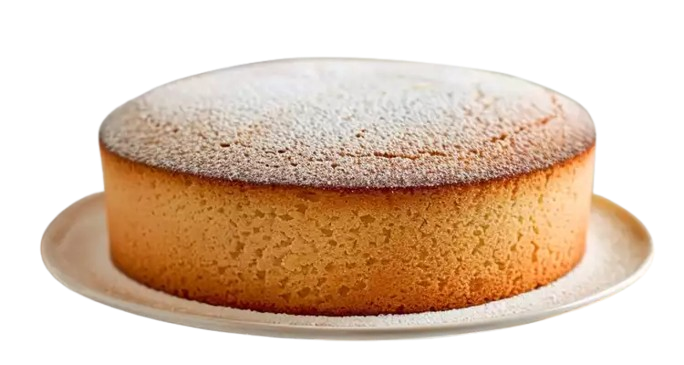
Sponge cake is a light foam-style cake leavened primarily with whipped eggs. The sponge cake calories for a small slice of vanilla sponge cake (50g) is 220 calories, while a large slice (100g) contain 440 calories. A medium slice of sponge cake with icing has 227 calories, while a whole 16oz plain sponge cake provides 1320 calories. Hostess Twinkie (38g) has 130 calories while a slice of Lady M Mille Crêpes contains 360 calories.
The nutritional profile of sponge cake is defined by its high egg and sugar content, with a medium slice (85g) providing 5.9g of protein (12% DV), 4.1g of fat (5% DV), and 48g of carbohydrates (17% DV), including 30.4g of sugar. The cake's versatility is shown in its different types, with calories ranging from a fat-free Angel Food Cake at 257 calories per 100g to a rich Victoria Sponge at 410 calories per 100g. The high egg content makes the cake a source of choline, a nutrient vital for brain health as confirmed in a study by Zeisel, S. H., & da Costa, K. A. (2009).
The cake's global popularity is supported by a supply chain that includes top wheat producers like China and India and major bakery consumers such as the United Kingdom. Its versatility is demonstrated in its use as a base for at least 5 different composed desserts and its role as a staple in 6 distinct global cuisines, from British Victoria Sponge to Japanese Strawberry Shortcake. The resulting global demand and rising ingredient costs are reflected in the price, with a pre-packaged cake increasing from below $3.00 in the early 2000s to over $5.00 after 2020.
Sponge cake's composition of refined flour and high sugar firmly places the dessert in the category of an occasional treat, supported by dietary guidelines of the American Heart Association to prevent negative health outcomes like weight gain. A single small slice (50g) contains nearly 18g of sugar, representing a large portion of the daily recommended limit, and its 149 calories require an energy expenditure equivalent to 15 minutes of jogging or 19 minutes of swimming.
Sponge Cake nutrition
| Stats | Weight |
|---|---|
| Carbs | 37.5 grams |
| Protein | 3 grams |
| Fats | 0 grams |
| Sugars | 22.5 grams |
- Large Sponge Cake Calories (Nutritional Facts)
- Medium Sponge Cake Calories (Nutritional Facts)
- Small Sponge Cake Calories (Nutritional Facts)
- Plain Sponge Cake Calories (Nutritional Facts)
- Raw Sponge Cake Nutrition
- Sodium in Sponge Cake
- Potassium in Sponge Cake
- Sugar in Sponge Cake
- Fiber in Sponge Cake
- Protein in Sponge Cake
- Carbs in Sponge Cake
- Fat in Sponge Cake
- Vitamins in Sponge Cake
- Minerals in Sponge Cake
Large Sponge Cake Calories (Nutritional Facts)
A large slice of vanilla sponge cake (100g or 3.5oz) contains 440 calories, 4g of protein, 24g of fat, 50g of carbohydrates, 2g of fiber, 30g of sugar, and 560mg of sodium. A large slice of sponge cake with icing (100g or 3.5oz) contains 302 calories, 3.4g of protein, 4.9g of fat, 61.9g of carbohydrates, 0.3g of fiber, 46.5g of sugar, and 208mg of sodium.
A medium slice of vanilla sponge cake (75g or 2.6oz) provides 330 calories, 3g of protein, 18g of fat, 37.5g of carbohydrates, 1.5g of fiber, 22.5g of sugar, and 420mg of sodium. A medium slice of sponge cake with icing (75g or 2.6oz) provides 227 calories, 2.6g of protein, 3.7g of fat, 46.4g of carbohydrates, 0.2g of fiber, 34.9g of sugar, and 156mg of sodium.
A small slice of vanilla sponge cake (50g or 1.8oz) contains 220 calories, 2g of protein, 12g of fat, 25g of carbohydrates, 1g of fiber, 15g of sugar, and 280mg of sodium. A small slice of sponge cake with icing (50g or 1.8oz) contains 151 calories, 1.7g of protein, 2.5g of fat, 31g of carbohydrates, 0.2g of fiber, 23.3g of sugar, and 104mg of sodium.
A slice of plain sponge cake (1/12 of a 16oz cake, 38g or 1.3oz) contains 110 calories, 2.1g of protein, 1g of fat, 23.2g of carbohydrates, 0.2g of fiber, 13.9g of sugar, and 237mg of sodium. One whole 16oz plain sponge cake (456g) contains 1320 calories, 25.2g of protein, 12g of fat, 278.4g of carbohydrates, 2.4g of fiber, 166.8g of sugar, and 2844mg of sodium.
Sponge cake batter is not consumed raw due to health risks from uncooked eggs and flour. All nutritional information reflects a fully baked cake.
A large slice of vanilla sponge cake (100g) contains 560mg of sodium (24% DV). A large slice of sponge cake with icing (100g) has 208mg of sodium (9% DV). A medium slice of vanilla sponge cake (75g) has 420mg of sodium (18% DV). A medium slice of sponge cake with icing (75g) has 156mg of sodium (7% DV). A small slice of vanilla sponge cake (50g) contains 280mg of sodium (12% DV). A small slice of sponge cake with icing (50g) has 104mg of sodium (5% DV). A slice of plain sponge cake (38g) has 237mg of sodium (10% DV). One whole 16oz plain sponge cake (456g) contains 2844mg of sodium (124% DV).
A large slice of vanilla sponge cake (100g) contains 0mg of potassium (0% DV). A large slice of sponge cake with icing (100g) has 64mg of potassium (1% DV). A medium slice of vanilla sponge cake (75g) has 0mg of potassium (0% DV). A medium slice of sponge cake with icing (75g) has 48mg of potassium (1% DV). A small slice of vanilla sponge cake (50g) contains 0mg of potassium (0% DV). A small slice of sponge cake with icing (50g) has 32mg of potassium (1% DV). A slice of plain sponge cake (38g) has 38mg of potassium (1% DV). One whole 16oz plain sponge cake (456g) contains 451mg of potassium (10% DV).
A large slice of vanilla sponge cake (100g) contains 30g of sugar. A large slice of sponge cake with icing (100g) has 46.5g of sugar. A medium slice of vanilla sponge cake (75g) has 22.5g of sugar. A medium slice of sponge cake with icing (75g) has 34.9g of sugar. A small slice of vanilla sponge cake (50g) contains 15g of sugar. A small slice of sponge cake with icing (50g) has 23.3g of sugar. A slice of plain sponge cake (38g) has 13.9g of sugar. One whole 16oz plain sponge cake (456g) contains 166.8g of sugar.
A large slice of vanilla sponge cake (100g) provides 2g of dietary fiber (7% DV). A large slice of sponge cake with icing (100g) has 0.3g of fiber (1% DV). A medium slice of vanilla sponge cake (75g) has 1.5g of fiber (5% DV). A medium slice of sponge cake with icing (75g) has 0.2g of fiber (1% DV). A small slice of vanilla sponge cake (50g) contains 1g of fiber (4% DV). A small slice of sponge cake with icing (50g) has 0.2g of fiber (1% DV). A slice of plain sponge cake (38g) has 0.2g of fiber (1% DV). One whole 16oz plain sponge cake (456g) provides 2.4g of fiber (9% DV).
A large slice of vanilla sponge cake (100g) provides 4g of protein (8% DV). A large slice of sponge cake with icing (100g) has 3.4g of protein (7% DV). A medium slice of vanilla sponge cake (75g) has 3g of protein (6% DV). A medium slice of sponge cake with icing (75g) has 2.6g of protein (5% DV). A small slice of vanilla sponge cake (50g) contains 2g of protein (4% DV). A small slice of sponge cake with icing (50g) has 1.7g of protein (3% DV). A slice of plain sponge cake (38g) has 2.1g of protein (4% DV). One whole 16oz plain sponge cake (456g) provides 25.2g of protein (50% DV).
A large slice of vanilla sponge cake (100g) contains 50g of carbohydrates (18% DV). A large slice of sponge cake with icing (100g) has 61.9g of carbohydrates (23% DV). A medium slice of vanilla sponge cake (75g) has 37.5g of carbohydrates (14% DV). A medium slice of sponge cake with icing (75g) has 46.4g of carbohydrates (17% DV). A small slice of vanilla sponge cake (50g) contains 25g of carbohydrates (9% DV). A small slice of sponge cake with icing (50g) has 31g of carbohydrates (11% DV). A slice of plain sponge cake (38g) has 23.2g of carbohydrates (8% DV). One whole 16oz plain sponge cake (456g) contains 278.4g of carbohydrates (101% DV).
A large slice of vanilla sponge cake (100g) contains 24g of total fat (31% DV). A large slice of sponge cake with icing (100g) has 4.9g of total fat (6% DV). A medium slice of vanilla sponge cake (75g) has 18g of total fat (23% DV). A medium slice of sponge cake with icing (75g) has 3.7g of total fat (5% DV). A small slice of vanilla sponge cake (50g) contains 12g of total fat (15% DV). A small slice of sponge cake with icing (50g) has 2.5g of total fat (3% DV). A slice of plain sponge cake (38g) has 1g of total fat (1% DV). One whole 16oz plain sponge cake (456g) contains 12g of total fat (15% DV).
A slice of plain sponge cake (38g) provides 0mg of Vitamin C (0% DV) and 0.08mcg of Vitamin D (0% DV).
A large slice of vanilla sponge cake (100g) provides 0.7mg of iron (4% DV) and 40mg of calcium (3% DV). A large slice of sponge cake with icing (100g) provides no significant mineral content. A medium slice of vanilla sponge cake (75g) provides 0.5mg of iron (3% DV) and 30mg of calcium (2% DV). A small slice of vanilla sponge cake (50g) provides 0.4mg of iron (2% DV) and 20mg of calcium (2% DV). A slice of plain sponge cake (38g) provides 1mg of iron (6% DV) and 27mg of calcium (2% DV). One whole 16oz plain sponge cake (456g) provides 12mg of iron (67% DV) and 319mg of calcium (25% DV).
Get a Custom Report on Sponge Cake Nutrition Data – Contact Us!
What are the Types of Sponge Cakes?
The types of sponge cakes are Genoise, Angel Food Cake, Chiffon Cake, and Victoria Sponge. These variations are distinguished by the method of leavening and the inclusion of fat, which alters the final texture and richness. A description of these common cake styles is in the table below.
| Type | Description | Calories (Approximate per 100g) | Calorie Qualifications |
|---|---|---|---|
|
Genoise
|
A classic Italian/French sponge using whole eggs beaten with sugar until thick, with a small amount of melted butter folded in. | 320 | The addition of butter makes this version richer and slightly higher in calories than a basic sponge. |
|
Angel Food Cake
|
Made with only stiffly beaten egg whites, flour, and sugar. Contains no fat. | 257 | The complete absence of fat (no egg yolks or butter) makes this the lowest-calorie type of sponge cake. |
|
Chiffon Cake
|
A hybrid cake that includes baking powder, egg yolks, and vegetable oil, with beaten egg whites folded in for lightness. | 355 | The addition of vegetable oil makes this version very moist but also higher in fat and calories than other sponge cakes. |
|
Victoria Sponge
|
A British cake using a creaming method with equal weights of butter, sugar, flour, and eggs. Technically a butter cake but called a sponge. | 410 | The very high butter content makes this the most calorie-dense cake in this category. |
What are Desserts With Sponge Cake?
Sponge cake's light and absorbent nature makes the cake a versatile base for many desserts, often paired with fruits, creams, or syrups. An inventory of items commonly served with sponge cake is detailed in the table below.
| Dish Name | Calories (Estimate per serving) | Type of Dessert | Carbs (g) (Estimate) | Sugar (g) (Estimate) | Protein (g) (Estimate) | Fat (g) (Estimate) | Cuisine | Restaurants |
|---|---|---|---|---|---|---|---|---|
|
Fresh Berries and Cream
|
150 (per cup) | Topping/Side | 15 | 12 | 1 | 10 | American/British | The Cheesecake Factory |
|
Fruit Jam (for filling)
|
50 (per tbsp) | Filling | 13 | 10 | 0 | 0 | British | Panera Bread |
|
Whipped Cream
|
50-100 (per dollop) | Topping | 2 | 2 | 0 | 8 | French/American | Starbucks |
|
Chocolate Ganache
|
150 (per 2 tbsp) | Icing/Filling | 15 | 13 | 1 | 10 | French | Godiva Chocolatier |
|
Lemon Curd
|
80 (per 2 tbsp) | Filling | 12 | 10 | 1 | 4 | English | Magnolia Bakery |
What Cuisines Do Prefer Sponge Cake Most?
Sponge cake is a foundational cake in many global baking traditions, prized for its versatility. The following list displays the culinary settings where sponge cake is a common item.
| Cuisine | Dish | Types of Sponge Cakes Used | Calories (Estimate) | Restaurant(s) |
|---|---|---|---|---|
|
British
|
Victoria Sponge | Butter-rich sponge with jam and cream | 400-500 | Tea & Sympathy |
|
Japanese
|
Strawberry Shortcake | Light, airy sponge with whipped cream | 250-350 | Lady M, Paris Baguette |
|
French
|
Genoise (used in Fraisier) | Buttery sponge layered with cream and fruit | 350-450 | Bouchon Bakery |
|
Italian
|
Pan di Spagna (used in Tiramisu) | Dry sponge fingers (Savoiardi) | 350-500 | Eataly |
|
American
|
Twinkie / Angel Food Cake | Cream-filled sponge / Fat-free sponge | 130-260 | Hostess (retail), Publix (retail) |
|
Southeast Asian
|
Pandan Chiffon Cake | Chiffon cake flavored with pandan | 300-400 | 85°C Bakery Cafe |
Which Countries Produce the Most Sponge Cakes?
The top producers of wheat, the primary ingredient in sponge cake, are China, India, and Russia. Specific global production data for finished sponge cakes is not tracked as a separate category. The table below shows the production quantity of wheat in key countries.
| Country | 2003 | 2008 | 2013 | 2018 | 2019 | 2020 | 2021 | 2022 |
|---|---|---|---|---|---|---|---|---|
| China | 86,500,000 | 112,500,000 | 121,700,000 | 131,400,000 | 133,600,000 | 134,300,000 | 136,900,000 | 137,700,000 |
| India | 72,100,000 | 78,600,000 | 93,500,000 | 99,700,000 | 103,600,000 | 107,600,000 | 109,600,000 | 104,000,000 |
| Russian Federation | 34,100,000 | 63,800,000 | 52,100,000 | 72,100,000 | 74,500,000 | 85,900,000 | 76,000,000 | 104,400,000 |
| United States | 63,800,000 | 68,000,000 | 61,700,000 | 51,300,000 | 52,300,000 | 49,700,000 | 44,800,000 | 44,900,000 |
| France | 30,500,000 | 39,000,000 | 38,600,000 | 35,800,000 | 39,500,000 | 30,100,000 | 36,600,000 | 30,400,000 |
Which Countries Consume the Most Sponge Cakes?
The top consumers of bakery products, a category that includes sponge cake, are the United States, the United Kingdom, and Germany. Consumption data for sponge cake is best represented by import values for the broader category of pastries, cakes, and sweet biscuits. The table below shows import values for this category in key markets.
| Country | 2003 | 2008 | 2013 | 2018 | 2019 | 2020 | 2021 | 2022 |
|---|---|---|---|---|---|---|---|---|
| United States | 1,300,000 | 2,000,000 | 2,900,000 | 3,800,000 | 4,000,000 | 4,300,000 | 5,000,000 | 5,600,000 |
| United Kingdom | 1,000,000 | 1,600,000 | 2,400,000 | 3,100,000 | 3,200,000 | 3,400,000 | 3,800,000 | 4,100,000 |
| Germany | 900,000 | 1,400,000 | 2,000,000 | 2,600,000 | 2,700,000 | 2,900,000 | 3,300,000 | 3,600,000 |
| France | 700,000 | 1,100,000 | 1,600,000 | 2,100,000 | 2,200,000 | 2,300,000 | 2,600,000 | 2,900,000 |
| Canada | 600,000 | 950,000 | 1,400,000 | 1,800,000 | 1,900,000 | 2,100,000 | 2,400,000 | 2,700,000 |
How Do Prices of Sponge Cake-Including Dishes Change?
The price for sponge cake-based desserts on restaurant and cafe menus has climbed over the last decade. This adjustment is a direct result of higher wholesale ingredient costs and increased labor and operational expenses. This upward adjustment is reflected on the menus of prominent food service chains.
| Restaurant | Dish | Old Price (Year) | Current Price (2024/2025) |
|---|---|---|---|
| Hostess | Twinkie (2-pack) | $1.49 (2014) | $1.68 - $2.39 |
| Lady M | Signature Mille Crêpes Slice | $8.00 (2015) | $10.50 - $11.50 |
| Paris Baguette | Strawberry Soft Cream Cake Slice | $5.50 (2016) | $8.49 - $10.79 |
| The Cheesecake Factory | Fresh Strawberry Shortcake | $7.95 (2014) | $10.95 - $13.95 |
| 85°C Bakery Cafe | Mango Crème Brûlée | $3.50 (2017) | $3.40 - $4.15 |
What is the Sponge Cake Calorie for 100 Grams?
A 100g serving of plain sponge cake contains 289 calories, a 100g serving with icing has 302 calories, and a 100g serving of vanilla sponge cake contains 440 calories.
What is the Sponge Cake Calorie for 1 KG?
One kilogram (1000g) of plain sponge cake contains 2,890 calories, a kilogram with icing has 3,020 calories, and a kilogram of vanilla sponge cake contains 4,400 calories.
What is the Calorie of 1 Sponge Cake?
A single serving of sponge cake (370g) contains 983 calories, while a Hostess Twinkie (38g) has 130 calories, and one Lady M Signature Mille Crêpes slice (118g) has 360 calories.
What are the Health Benefits of Sponge Cake?
The nutritional upsides of sponge cake are linked to the high proportion of eggs used in the batter. A review of these limited potential advantages is available here.
- Provides High-Quality Protein: Eggs are a primary ingredient, making sponge cake a source of complete protein which is essential for muscle repair and building tissues. A study by Layman, D. K., & Rodriguez, N. R. (2009), "Egg protein as a source of power, strength, and energy," details the role of egg protein in muscle synthesis and overall health.
- Contains Choline for Brain Health: Egg yolks are one of the best dietary sources of choline, a nutrient that is vital for brain development, memory, and neurotransmitter synthesis. A study by Zeisel, S. H., & da Costa, K. A. (2009), "Choline: an essential nutrient for public health," confirms that choline is a critical nutrient for cognitive function throughout life.
- Supplies Selenium: Eggs provide a significant amount of selenium, a trace mineral that functions as a powerful antioxidant and is essential for thyroid hormone metabolism and immune function. A large slice of sponge cake (100g) can provide 26% of the Daily Value for selenium.
What are the Downsides of Sponge Cake?
The dessert's simple composition presents several health concerns, mainly related to its high sugar and refined flour content. An analysis of these health risks is provided here.
- High in Sugar and Refined Flour: Sponge cake is made with a large amount of sugar and refined white flour, a combination that can cause a rapid increase in blood sugar levels. A scientific statement from the American Heart Association by Johnson, R. K., et al. (2009), "Dietary sugars intake and cardiovascular health," recommends strict limits on added sugar, linking high consumption to an increased risk of obesity and heart disease. A healthier alternative is a hard-boiled egg. A suggested amount is to limit consumption to one small, plain slice on an infrequent basis.
- Low in Fiber and Micronutrients: The use of refined white flour means the cake has very little dietary fiber, vitamins, or minerals, making the dessert a source of "empty calories." A review by Ludwig, D. S., et al. (2018), "Dietary carbohydrates: role of quality and quantity in chronic disease," connects diets high in refined carbohydrates and low in fiber to a greater risk of metabolic diseases.
Are Sponge Cakes Good for You?
No, sponge cakes are not a healthy food because the high concentration of sugar and refined flour negates any benefits from the eggs. The cake's impact on metabolic health is negative. The high glycemic index of the cake's ingredients can lead to sharp fluctuations in blood sugar. A study by Brand-Miller, J. C., et al. (2002), "Glycemic index and obesity," found that high-glycemic-index diets may promote overeating and increase the risk of obesity. For dental health, the high sugar content is a primary risk factor for tooth decay. A study by Touger-Decker, R., & van Loveren, C. (2003), "Sugars and dental caries," affirms the direct relationship between the frequency of sugar consumption and the risk of developing dental caries. For liver health, the high sugar content, particularly fructose (from sucrose), can be converted into fat by the liver, potentially contributing to non-alcoholic fatty liver disease over time. A review by Tappy, L., & Lê, K. A. (2010), "Metabolic effects of fructose and the worldwide increase in obesity," explains this metabolic pathway.
Is Sponge Cake Healthy?
No, sponge cake is not a healthy food. The cake is composed almost entirely of refined flour, sugar, and eggs, providing a high number of calories with very few nutrients like fiber, vitamins, or minerals. Such foods are considered sources of "empty calories" and can displace more nutritious foods from the diet. A review by Popkin, B. M., et al. (2012), "Global nutrition transition and the pandemic of obesity in developing countries," discusses how a shift toward energy-dense, nutrient-poor foods is a major driver of the global obesity epidemic. The high sugar content is another primary concern. A meta-analysis by Malik, V. S., et al. (2006), "Intake of sugar-sweetened beverages and weight gain: a systematic review," found clear evidence linking the consumption of sugary items to weight gain. The lack of fiber and low fat content also makes sponge cake less satiating than other foods.
How Do Calories Change According to Sponge Cake Types?
The ingredients used for fat and leavening determine the calorie count of a sponge cake. A Victoria Sponge has the highest calorie value at 410 calories per 100 grams, a consequence of its high butter content. An Angel Food Cake contains the lowest calorie value at 257 calories per 100 grams, a direct result of having no fat from egg yolks or butter. Chiffon and Genoise cakes fall in between, with the oil in Chiffon cake making the cake higher in calories than a Genoise made with a smaller amount of butter.
Is Sponge Cake Lower in Calories Compared to Other Cakes?
Yes, a plain sponge cake is lower in calories compared to most other types of cakes. A plain sponge cake contains around 289 calories per 100 grams. This is because the cake's structure and volume come from whipped eggs rather than large amounts of fat. In contrast, a traditional butter cake or pound cake, which relies on a high proportion of butter for its dense texture, contains around 390 calories per 100 grams. A rich chocolate fudge cake can have over 450 calories per 100 grams, and a dense cheesecake can have over 320 calories per 100 grams. The lower fat content is the primary reason for the sponge cake's lower calorie count.
What are the Main Dishes With Sponge Cake?
A sponge cake is served only as a dessert or as a component in a sweet dish. The cake's light, sweet, and delicate character makes the baked good incompatible with savory main courses. A sponge cake is conventionally presented after a meal, either on its own or as the foundation for other desserts.
When Does a Slice of Cake Become High in Calories?
A slice of cake becomes high in calories when the portion size is large or when the cake is made with high-fat and high-sugar ingredients like buttercream, cream cheese frosting, or dense fillings. A small, plain slice of sponge cake (38g) has only 110 calories. A slice becomes high-calorie when it exceeds 400 calories. A medium slice of vanilla sponge cake (75g) has 330 calories, while a large slice (100g) has 440 calories. Restaurant desserts, like a slice of Godiva Chocolate Cheesecake from The Cheesecake Factory, can exceed 1,300 calories, which is exceptionally high.
What is the Origin of Sponge Cake?
The history of sponge cake begins in the Renaissance, with early recipes appearing in both England and Spain. These first cakes, known as sponge biscuits, were thin, crisp, and cookie-like. The creation of the modern, light, and airy sponge cake is credited to Italian pastry chefs in the mid-18th century. The recipe, known as Pan di Spagna ("Spanish bread"), was developed in the kitchens of the Genoese aristocracy. The key innovation was the technique of whipping whole eggs with sugar over heat for a long period to create a stable foam that would act as the sole leavening agent. This method produced a light yet sturdy cake that was unlike anything before. The recipe spread to France, where the cake became known as Genoise, and to England, where the invention of baking powder in the 1840s led to the development of the Victoria Sponge, a simpler version that used chemical leavening.
Explore More Baked Goods
Discover more Baked Goods with detailed nutrition facts, calorie counts, vitamins, minerals, and health benefits. Compare similar foods, serving sizes, macronutrients, and key nutrients to find the best option for your diet and nutrition goals.
 Bagel calories
 Baguette calories
 Biscuit calories
 Blueberry Muffins calories
 Bread calories
 Brioche Bread calories
 Bun calories
 Churros calories
 Cinnamon Rolls calories
 Corn Tortilla calories
 Cornbread calories
 Croissant calories