Calories and Nutritions in Sweet Pepper
Sweet pepper is a low-calorie vegetable valued for its crisp textures and vibrant color profiles. A one-tablespoon serving of chopped raw red sweet pepper contains 2 calories, while a single ring of raw red sweet pepper (3" dia, 1/4" thick) provides 3 calories. Branded frozen options, such as those found at Target, offer similar energy values at 35 calories per 100g serving.
Nutrient profiling reveals a composition consisting of 17.7mg of Vitamin C, 20mg of potassium and small amounts of fiber and carbohydrates per 1 tablespoon of chopped raw red sweet pepper. Scientific research explores the anti-inflammatory effects of pepper phytonutrients, such as the work by Cho, S. Y., et al. (2020), which investigates the role of flavonoids in reducing systemic inflammation.
Dietitians recommend consuming one medium pepper (119g) daily to maximize nutrient intake without triggering digestive discomfort. This suggested portion provides a concentrated dose of vitamins rather than a high caloric load. Expending the 31 calories from a medium raw red pepper requires activities like 5 minutes of washing the car, 4 minutes of shoveling snow, or 6 minutes of raking leaves.
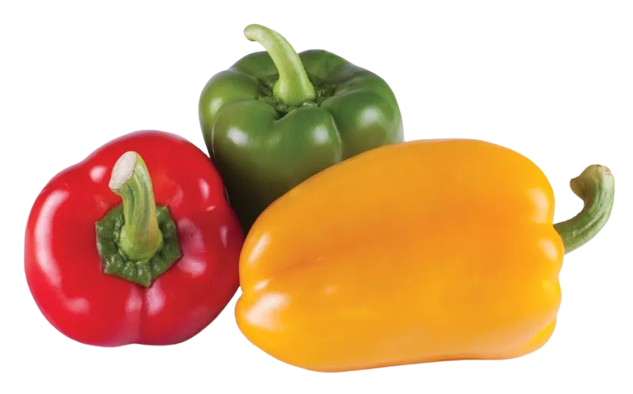
Sweet pepper varieties including Green, Red, Yellow, and Orange cultivars are used in many cuisines and culinary applications. Stuffed Bell Peppers are a sought after dish at Cracker Barrel and Pepper Steak Stir-Fry is popular at P.F. Chang's. Originating in Central and South America, the ingredient is now consumed globally, with the price tied to the fresh produce market. The Producer Price Index for fresh and dry vegetables rose from 202.2 in 2016 to 302.503 in 2024, while retail prices for 1lb of fresh red sweet peppers rose from $0.99 in 2015 to a range of $1.48 to $3.99 in 2026.
Sweet Pepper nutrition
| Stats | Weight |
|---|---|
| Carbs | 7 grams |
| Protein | 1 grams |
| Fats | 0 grams |
| Sugars | 5 grams |
- Large Sweet Pepper Calories (Nutritional Facts)
- Medium Sweet Pepper Calories (Nutritional Facts)
- Small Sweet Pepper Calories (Nutritional Facts)
- Raw Sweet Pepper Nutrition
- Sodium in Sweet Pepper
- Potassium in Sweet Pepper
- Sugar in Sweet Pepper
- Fiber in Sweet Pepper
- Protein in Sweet Pepper
- Carbs in Sweet Pepper
- Fat in Sweet Pepper
- Vitamins in Sweet Pepper
- Minerals in Sweet Pepper
Large Sweet Pepper Calories (Nutritional Facts)
A large raw red sweet pepper (2-1/4 per lb, approx 3-3/4" long, 3" dia) contains 43 calories, 1.62g of protein (3% DV), 0.49g of fat (1% DV), 9.89g of carbohydrates (4% DV), 3.3g of dietary fiber (12% DV), 6.89g of sugar, and 3mg of sodium (0% DV).
A medium raw red sweet pepper (approx 2-3/4" long, 2-1/2" dia) provides 31 calories, 1.18g of protein (2% DV), 0.36g of fat (0% DV), 7.18g of carbohydrates (3% DV), 2.4g of dietary fiber (9% DV), 5g of sugar, and 2mg of sodium (0% DV).
A small raw red sweet pepper has 19 calories, 0.73g of protein (1% DV), 0.22g of fat (0% DV), 4.46g of carbohydrates (2% DV), 1.5g of dietary fiber (5% DV), 3.11g of sugar, and 1mg of sodium (0% DV).
A one-tablespoon serving of chopped raw red sweet pepper contains 2 calories, 0.09g of protein, 0.03g of fat, and 0.56g of total carbohydrates. This serving size also provides 0.2g of dietary fiber, 20mg of potassium, and 17.7mg of Vitamin C. A one-cup serving of chopped raw red sweet pepper contains 39 calories, 1.48g of protein, 0.45g of fat, and 8.98g of total carbohydrates. This serving size also provides 3g of dietary fiber, 314mg of potassium, and 283.1mg of Vitamin C. A single ring of raw red sweet pepper (3" dia, 1/4" thick) contains 3 calories, 0.1g of protein, 0.03g of fat, and 0.6g of total carbohydrates. This serving size also provides 0.2g of dietary fiber, 21mg of potassium, and 19mg of Vitamin C.
A large raw red sweet pepper contains 3mg of sodium (0% DV). A medium raw red sweet pepper has 2mg of sodium (0% DV), and a small raw red sweet pepper contains 1mg of sodium (0% DV).
A large raw red sweet pepper provides 346mg of potassium (7% DV). A medium raw red sweet pepper offers 251mg of potassium (5% DV), while a small raw red sweet pepper has 156mg of potassium (3% DV).
A large raw red sweet pepper contains 6.89g of sugar. A medium raw red sweet pepper has 5g of sugar, and a small raw red sweet pepper contains 3.11g of sugar.
A large raw red sweet pepper contains 3.3g of dietary fiber (12% DV). A medium raw red sweet pepper provides 2.4g of dietary fiber (9% DV), and a small raw red sweet pepper contains 1.5g of dietary fiber (5% DV).
A large raw red sweet pepper provides 1.62g of protein (3% DV). A medium raw red sweet pepper has 1.18g of protein (2% DV), and a small raw red sweet pepper contains 0.73g of protein (1% DV).
A large raw red sweet pepper contains 9.89g of total carbohydrates (4% DV). A medium raw red sweet pepper has 7.18g of carbohydrates (3% DV), and a small raw red sweet pepper provides 4.46g of carbohydrates (2% DV).
A large raw red sweet pepper contains 0.49g of total fat (1% DV). A medium raw red sweet pepper has 0.36g of fat (0% DV), and a small raw red sweet pepper contains 0.22g of fat (0% DV).
A large raw red sweet pepper contains 311.6mg of Vitamin C (346% DV) and 257mcg of Vitamin A (29% DV). A medium raw red sweet pepper provides 226.1mg of Vitamin C (251% DV) and 187mcg of Vitamin A (21% DV). A small raw red sweet pepper delivers 140.6mg of Vitamin C (156% DV) and 116mcg of Vitamin A (13% DV).
A large raw red sweet pepper provides 0.71mg of iron (4% DV) and 11mg of calcium (1% DV). A medium raw red sweet pepper offers 0.51mg of iron (3% DV) and 8mg of calcium (1% DV). A small raw red sweet pepper has 0.32mg of iron (2% DV) and 5mg of calcium (0% DV).
Get a Custom Report on Sweet Pepper Nutrition Data – Contact Us!
What are the Types of Sweet Peppers?
The main varieties of sweet pepper include the common Green, Red, Yellow, and Orange cultivars. The table below presents the nutritional differences between the main varieties.
| Type | Description | Calories (Per 100g) | Calorie Qualifications |
|---|---|---|---|
|
Green Sweet Pepper
|
The unripe variety features a crisp texture and slightly bitter flavor. | 20 | This amount represents the standard caloric value for unripe Capsicum annuum. |
|
Red Sweet Pepper
|
A fully ripened variety displays a sweet flavor and high antioxidant content. | 31 | The ripening process increases sugar concentration and Vitamin C levels. |
|
Yellow Sweet Pepper
|
A cultivar features a mild, sweet flavor and vibrant color. | 27 | The nutritional profile mirrors the red variety with slightly lower Vitamin C. |
|
Orange Sweet Pepper
|
A variety displays a sweet, fruity flavor profile. | 31 | The caloric load matches the red variety due to similar sugar density. |
What are the Desserts With Sweet Pepper?
Sweet pepper features in unique desserts due to a mild, sweet profile that pairs well with fruits and chocolate. The fruit adds a crisp texture and subtle flavor to creative pastry applications. A breakdown of specific sweet dishes that include this fruit is shown in the list that follows.
| Dish Name | Calories | Type of Sweet Pepper | Carbs (g) | Sugar (g) | Protein (g) | Fat (g) | Cuisine | Restaurants |
|---|---|---|---|---|---|---|---|---|
|
Red Pepper Sorbet
|
130 | Raw Red Pepper Puree | 32 | 28 | 1 | 0 | Mediterranean | Fig & Olive |
|
Sweet Pepper Chocolate Tart
|
410 | Baked Red Pepper Puree | 45 | 32 | 6 | 24 | French Fusion | Balthazar (New York, NY) |
|
Yellow Pepper Mousse
|
280 | Raw Yellow Pepper Puree | 28 | 20 | 4 | 18 | Modern American | True Food Kitchen |
|
Pepper-Infused Fruit Salad
|
95 | Raw Red Pepper Chunks | 22 | 18 | 1 | 0 | Tropical | Seasons 52 |
|
Red Pepper Jam Cookies
|
180 | Baked Red Pepper Jam | 25 | 15 | 2 | 8 | American | Levain Bakery (New York, NY) |
|
Sweet Pepper Panna Cotta
|
290 | Cooked Red Pepper Juice | 24 | 18 | 5 | 20 | Italian Fusion | Fiola (Washington, D.C.) |
|
Red Pepper Gelato
|
230 | Raw Red Pepper Pulp | 35 | 28 | 4 | 9 | Italian | Amorino (National) |
|
Pepper and Berry Smoothie
|
220 | Raw Red Pepper Puree | 40 | 35 | 3 | 2 | Tropical | Tropical Smoothie Cafe (National) |
|
Red Pepper Cheesecake
|
460 | Cooked Red Pepper Puree | 45 | 35 | 7 | 28 | American | The Cheesecake Factory (National) |
|
Sweet Pepper Macarons
|
90 | Red Pepper Ganache | 12 | 10 | 2 | 4 | French | Bottega Louie (Los Angeles, CA) |
What are the Main Dishes With Sweet Pepper?
Sweet pepper appears in savory cooking as a foundational flavor component in many global dishes. The crisp texture and sweet profile function well in stir-fries, sauces, and roasted vegetable medleys. A breakdown of specific savory dishes that include this fruit is shown in the list that follows.
| Dish Name | Calories | Type of Sweet Pepper | Carbs (g) | Sugar (g) | Protein (g) | Fat (g) | Cuisine | Restaurants |
|---|---|---|---|---|---|---|---|---|
|
Stuffed Bell Peppers
|
450 | Roasted Red Pepper | 35 | 10 | 25 | 22 | American | Cracker Barrel |
|
Pepper Steak Stir-Fry
|
520 | Sautéed Green Pepper | 25 | 8 | 45 | 28 | Chinese-American | P.F. Chang's |
|
Roasted Pepper Soup
|
280 | Roasted Red Pepper | 20 | 12 | 8 | 18 | Mediterranean | Panera Bread |
|
Ratatouille
|
320 | Stewed Mixed Peppers | 35 | 15 | 6 | 16 | French | Le Coucou (New York, NY) |
|
Pepper and Sausage Skillet
|
610 | Sautéed Red Pepper | 15 | 6 | 35 | 45 | Italian-American | Maggiano's Little Italy |
|
Sweet Pepper Quinoa Salad
|
290 | Raw Red Pepper Dressing | 45 | 6 | 10 | 8 | Modern American | Flower Child |
|
Grilled Tofu and Pepper Skewers
|
310 | Grilled Yellow Pepper | 18 | 8 | 22 | 16 | Pan-Asian | True Food Kitchen |
|
Pepper Butter Scallops
|
510 | Red Pepper Infused Butter | 12 | 7 | 30 | 40 | French Fusion | Le Bernardin (New York, NY) |
|
Red Pepper Lamb Tagine
|
680 | Cooked Red Pepper | 38 | 18 | 50 | 45 | Moroccan | Mourad (San Francisco, CA) |
|
Sweet Pepper Chickpea Stew
|
360 | Simmered Red Pepper | 52 | 12 | 17 | 12 | Middle Eastern | Oleana (Cambridge, MA) |
What Cuisines Prefer Sweet Pepper the Most?
Sweet pepper holds a prominent place within Mediterranean, Mexican, and Asian culinary traditions. The fruit is indispensable in many global cuisines. The table below presents specific cuisines and associated restaurant offerings.
| Cuisine | Dish | Types of Sweet Pepper | Calories (Estimate) | Restaurant(s) |
|---|---|---|---|---|
|
American
|
Stuffed Bell Peppers | Roasted Red Pepper | 450 | Cracker Barrel |
|
Chinese-American
|
Pepper Steak Stir-Fry | Sautéed Green Pepper | 520 | P.F. Chang's |
|
Mediterranean
|
Roasted Pepper Soup | Roasted Red Pepper | 280 | Panera Bread |
|
French
|
Ratatouille | Stewed Mixed Peppers | 320 | Le Coucou |
|
Italian-American
|
Pepper and Sausage Skillet | Sautéed Red Pepper | 610 | Maggiano's Little Italy |
|
Modern American
|
Sweet Pepper Quinoa Salad | Raw Red Pepper | 290 | Flower Child |
|
Pan-Asian
|
Grilled Tofu and Pepper Skewers | Grilled Yellow Pepper | 310 | True Food Kitchen |
|
French Fusion
|
Pepper Butter Scallops | Red Pepper Infused Butter | 510 | Le Bernardin |
|
Moroccan
|
Red Pepper Lamb Tagine | Cooked Red Pepper | 680 | Mourad |
|
Middle Eastern
|
Sweet Pepper Chickpea Stew | Simmered Red Pepper | 360 | Oleana |
Which Countries Produce the Most Sweet Peppers?
The top producers of sweet peppers are China, Mexico, and Turkey. Cultivation thrives in these regions due to ideal greenhouse and field conditions. Agricultural sectors in these nations dedicate vast acreage to pepper farming to meet domestic needs and export demands. The table below shows the annual production volumes in thousand metric tonnes for these countries over the last two decades.
| Country | 2003 | 2008 | 2013 | 2018 | 2019 | 2020 | 2021 | 2022 |
|---|---|---|---|---|---|---|---|---|
| China | 10,500 | 13,200 | 16,800 | 19,500 | 20,100 | 20,500 | 20,800 | 21,200 |
| Mexico | 1,200 | 1,600 | 2,100 | 2,800 | 2,950 | 3,100 | 3,250 | 3,400 |
| Turkey | 1,500 | 1,800 | 2,200 | 2,600 | 2,700 | 2,800 | 2,900 | 3,000 |
| Spain | 900 | 1,050 | 1,200 | 1,400 | 1,450 | 1,500 | 1,550 | 1,600 |
| Netherlands | 300 | 350 | 400 | 450 | 460 | 470 | 480 | 490 |
Which Countries Consume the Most Sweet Peppers?
The top consumers of sweet peppers are China, Mexico, and Turkey. High consumption rates stem from deep-rooted culinary traditions that incorporate fresh peppers into daily meals and regional recipes. Growing populations and expanding middle classes in these regions drive the demand for fresh produce. The table below shows the annual consumption volumes in thousand metric tonnes for these markets over the last two decades.
| Country | 2003 | 2008 | 2013 | 2018 | 2019 | 2020 | 2021 | 2022 |
|---|---|---|---|---|---|---|---|---|
| China | 10,400 | 13,100 | 16,700 | 19,400 | 20,000 | 20,400 | 20,700 | 21,100 |
| Mexico | 1,100 | 1,500 | 2,000 | 2,700 | 2,850 | 3,000 | 3,150 | 3,300 |
| Turkey | 1,450 | 1,750 | 2,150 | 2,550 | 2,650 | 2,750 | 2,850 | 2,950 |
| Spain | 850 | 1,000 | 1,150 | 1,350 | 1,400 | 1,450 | 1,500 | 1,550 |
| United States | 600 | 850 | 1,100 | 1,400 | 1,500 | 1,600 | 1,700 | 1,850 |
How Do Prices of Sweet Pepper-Including Dishes Change?
The financial outlay for retail goods and restaurant dishes containing sweet pepper has expanded, mirroring the rising sourcing expenses for fresh produce. The subsequent chart details the price shifts for specific store-bought items and menu offerings.
| Brand/Restaurant/Retailer | Item | Old Price (Year) | Current Price (2025/2026) |
|---|---|---|---|
| Walmart | Fresh Red Sweet Peppers (1 lb) | $0.99 (2015) | $1.48 - $3.99 |
| Whole Foods Market | Organic Mixed Sweet Peppers (1 lb) | $2.99 (2016) | $4.99 - $6.99 |
| Panda Express | Kung Pao Chicken (Entree) | $4.50 (2014) | $6.50 - $8.50 |
| Kroger | Fresh Green Sweet Peppers (1 lb) | $0.99 (2015) | $1.49 - $2.99 |
| Balthazar (New York, NY) | Ratatouille | $18.00 (2015) | $24.00 - $28.00 |
What is the Sweet Pepper Calorie for 100 Grams?
One hundred grams (3.5oz) of raw red sweet pepper contains 26 calories.
What is the Sweet Pepper Calorie for 1 KG?
One kilogram (1000g) of raw red sweet pepper contains 260 calories.
What is the Calorie of 1 Sweet Pepper?
A single large raw red sweet pepper contains 43 calories, a medium one provides 31 calories, and a small one has 19 calories. A single ring of raw red sweet pepper (3" dia, 1/4" thick) contains 3 calories, and one tablespoon of chopped raw red sweet pepper has 2 calories.
What are the Health Benefits of Sweet Pepper?
Sweet peppers provide distinct wellness advantages due to a dense nutrient and antioxidant profile. Specific health benefits are supported by scientific research below.
- Supports Eye Health: The high concentration of carotenoids, specifically lutein and zeaxanthin, protects the eyes from oxidative damage. Eisenhauer, B., et al. (2017). "Lutein and Zeaxanthin—Food Sources, Bioavailability and Dietary Variety in Age-Related Macular Degeneration Protection." Evidence from this research shows these compounds reduce the risk of macular degeneration.
- Enhances Immune Function: Abundant Vitamin C content aids in the production of white blood cells. Carr, A. C., & Maggini, S. (2017). "Vitamin C and Immune Function." This review explains the essential role of Vitamin C in protecting the body against infections.
- Provides Antioxidant Support: The fruit pulp contains high levels of phenolic compounds that combat oxidative stress. Cho, S. Y., et al. (2020). " Antioxidant and Anti-Inflammatory Activities in Relation to the Flavonoids Composition of Pepper (Capsicum annuum L.)." Findings from the study link the intake of these compounds to reduced systemic inflammation.
What are the Downsides of Sweet Pepper?
Consumption of sweet pepper presents potential health considerations, particularly regarding nightshade sensitivity and digestive discomfort. Nutritionists recommend a daily suggested amount of one medium pepper (119g) to avoid adverse effects. A lower-nightshade alternative is a serving of cucumber. These potential aspects are outlined below.
- Triggers Nightshade Sensitivity: Peppers belong to the Solanaceae family, which contains alkaloids that cause joint pain or inflammation in sensitive individuals. Childers, N. F., & Margoles, M. S. (1993). "An apparent relation of nightshades (Solanaceae) to arthritis." Data from the study suggests nightshade elimination provides relief for specific inflammatory conditions.
- Causes Digestive Irritation: The skin of the pepper can be difficult to digest for individuals with gastrointestinal issues. Myers, B. M. (1987). " Effect of red pepper and black pepper on the stomach." Analysis within the research confirms that insoluble fiber in the skin can lead to bloating or discomfort in patients with irritable bowel syndrome.
Are Sweet Peppers Good for You?
Yes, sweet peppers are good for health when consumed as whole fruit to retain fiber and nutrient content. Heart health receives support from high Vitamin C and flavonoid levels, which help maintain vascular integrity and lower oxidative stress. The meta-analysis by Grosso, G., et al. (2013), "Citrus Fruits and Cancer Risk in Epidemiologic Studies: A Systematic Review and Meta-Analysis," confirms the link between high antioxidant intake and cardiovascular protection. Digestive health improves through the intake of dietary fiber, which ensures regular bowel movements and gut wellness. Research by Anderson, J. W., et al. (2009), "Health benefits of dietary fiber," details how fiber intake prevents gastrointestinal issues. Cognitive function receives support from the presence of lutein and zeaxanthin, which are linked to better brain health. The study by Eisenhauer, B., et al. (2017), "Lutein and Zeaxanthin—Food Sources, Bioavailability and Dietary Variety in Age-Related Macular Degeneration Protection," identifies bioactive compounds that protect neural cells from damage.
How Do Calories Change According to Sweet Pepper Types?
Energy content shows variation based on the ripening stage of the sweet pepper. The caloric value for the Green Sweet Pepper remains the lowest at 20 calories per 100g. Red and Orange varieties contain the highest energy density at 31 calories per 100g. The fundamental composition of the fruit pulp, consisting of carbohydrates and fiber, changes as the pepper matures on the vine. Ripening increases the sugar concentration, which accounts for the higher caloric density in Red and Orange types compared to the Green variety. The lowest calorie type is the Green Sweet Pepper, while the highest calorie types are the Red and Orange Sweet Peppers.
What is the Origin of Sweet Pepper?
The origin of the sweet pepper traces back to Central and South America. Indigenous populations cultivated various species of Capsicum for thousands of years before European explorers introduced the plant to the rest of the world. The fruit thrived in warm climates across Europe, Africa, and Asia, leading to widespread global adoption. Culinary applications evolved alongside regional expansion, starting with simple raw consumption and drying for preservation. Modern gastronomy incorporated the sweet pulp into complex dishes ranging from Mediterranean ratatouille to Chinese stir-fries. Savory culinary practices adopted the fruit to provide a sweet flavor profile and vibrant color to diverse fusion dishes.
Explore More Vegetables
Discover more Vegetables with detailed nutrition facts, calorie counts, vitamins, minerals, and health benefits. Compare similar foods, serving sizes, macronutrients, and key nutrients to find the best option for your diet and nutrition goals.
 Artichoke calories
 Arugula calories
 Asparagus calories
 Beetroot calories
 Bell Pepper calories
 Broccoli calories
 Brussels Sprouts calories
 Cabbage calories
 Caesar Salad calories
 Carrot calories
 Cassava Root calories
 Cauliflower calories