Calories and Nutritions in Taro Root
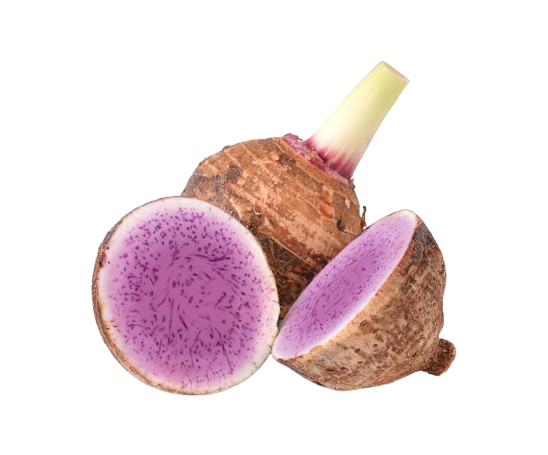
Taro root is a starchy corm (underground stem) of the Colocasia esculenta plant used as a staple vegetable in tropical regions. Taro root calories vary by size and preparation, with a small raw taro root (100g or 3.5oz) containing 112 calories and a small cooked taro root without salt (100g or 3.5oz) providing 142 calories. A serving of raw taro root (104g or 1 cup) contains 116 calories, while a standard 100g portion of raw taro root contains 112 calories. A serving of Melissa's Produce Taro Root (85g or 3oz) contains 90 calories, while a serving of Frieda's Taro Root (85g or 3oz) provides 110 calories.
An analysis of taro root nutrition reveals a food dense in complex carbohydrates and fiber, with a medium raw root (250g or 8.8oz) providing 3.8g of protein (8% DV), 0.5g of fat (1% DV), and 66.1g of carbohydrates (24% DV), including 1g of sugar and 27.4mg of sodium. The calorie density changes based on the root type, as 100g of raw taro contains 112 calories and 26g of carbohydrates, whereas 100g of raw white potato provides 77 calories and 17g of carbohydrates, though taro offers nearly double the fiber at 4.1g compared to 2.2g in the potato. The corm stands out for high potassium levels, delivering 2955mg per large root. A study by Weaver, C. M. (2013) confirms that adequate potassium intake supports cardiovascular health by offsetting the hypertensive effects of sodium.
The supply chain for taro root relies on tropical agriculture, with top producers like Nigeria yielding over 3.3 million tonnes of taro in 2022. In global markets, the United States imported over $190 million in roots and tubers in 2022. The vegetable serves as a primary ingredient in at least 15 distinct dessert preparations, such as Taro Bubble Tea, and as a hearty starch in 15 different culinary traditions, including Chinese braised pork dishes. Economic factors have driven costs upward, as the retail price for fresh taro root rose from under $0.99 per pound in the early 2000s to over $2.99 after 2020. Menu prices reflect this trend, as Sweet Taro Xiao Long Bao at Din Tai Fung moved from $5.50 to as high as $10.00.
The presence of calcium oxalate crystals means taro root requires careful preparation and must be peeled and cooked thoroughly to eliminate toxins that cause skin and throat irritation. Health authorities classify the corm as a starchy vegetable and recommend consuming the food as a fiber-rich alternative to grains. A suggested consumption rate is to limit intake to one cup (150g) of cooked root per meal to manage the high carbohydrate load. Burning off the 112 calories found in a standard 100g raw serving requires an energy expenditure equivalent to 12 minutes of running or 15 minutes of swimming.
Taro Root nutrition
| Stats | Weight |
|---|---|
| Carbs | 66.1 grams |
| Protein | 3.8 grams |
| Fats | 0 grams |
| Sugars | 1 grams |
- Large Taro Root Calories (Nutritional Facts)
- Medium Taro Root Calories (Nutritional Facts)
- Small Taro Root Calories (Nutritional Facts)
- Raw Taro Root Nutrition
- Sodium in Taro Root
- Potassium in Taro Root
- Sugar in Taro Root
- Fiber in Taro Root
- Protein in Taro Root
- Carbs in Taro Root
- Fat in Taro Root
- Vitamins in Taro Root
- Minerals in Taro Root
Large Taro Root Calories (Nutritional Facts)
A large raw taro root (500g or 17.6oz) contains 558 calories, 7.7g of protein, 1g of fat, 132.2g of carbohydrates, 20.7g of fiber, 2g of sugar, and 55mg of sodium. A large cooked taro root without salt (500g or 17.6oz) provides 710 calories, 2.5g of protein, 0.5g of fat, 173g of carbohydrates, 25.5g of fiber, 2.5g of sugar, and 75mg of sodium.
A medium raw taro root (250g or 8.8oz) provides 279 calories, 3.8g of protein, 0.5g of fat, 66.1g of carbohydrates, 10.3g of fiber, 1g of sugar, and 27.4mg of sodium. A medium cooked taro root without salt (250g or 8.8oz) contains 355 calories, 1.3g of protein, 0.3g of fat, 86.5g of carbohydrates, 12.8g of fiber, 1.3g of sugar, and 38mg of sodium.
A small raw taro root (100g or 3.5oz) contains 112 calories, 1.5g of protein, 0.2g of fat, 26.4g of carbohydrates, 4.1g of fiber, 0.4g of sugar, and 11mg of sodium. A small cooked taro root without salt (100g or 3.5oz) provides 142 calories, 0.5g of protein, 0.1g of fat, 34.6g of carbohydrates, 5.1g of fiber, 0.5g of sugar, and 15mg of sodium.
A serving of raw taro root (104g or 1 cup) contains 116 calories, 1.6g of protein, 0.21g of fat, 27.5g of carbohydrates, 4.3g of fiber, 0.42g of sugar, and 11.4mg of sodium.
A large raw taro root (500g) contains 55mg of sodium (2% DV), while a large cooked taro root without salt (500g) contains 75mg of sodium (3% DV). A medium raw taro root (250g) has 27.4mg of sodium (1% DV), and a medium cooked taro root without salt (250g) has 38mg of sodium (2% DV). A small raw taro root (100g) contains 11mg of sodium (0% DV), whereas a small cooked taro root without salt (100g) contains 15mg of sodium (1% DV). A serving of raw taro root (104g) contains 11.4mg of sodium (0% DV).
A large raw taro root (500g) contains 2955mg of potassium (63% DV), and a large cooked taro root without salt (500g) contains 2420mg of potassium (51% DV). A medium raw taro root (250g) has 1477mg of potassium (31% DV), while a medium cooked taro root without salt (250g) has 1210mg of potassium (26% DV). A small raw taro root (100g) contains 591mg of potassium (13% DV), whereas a small cooked taro root without salt (100g) contains 484mg of potassium (10% DV). A serving of raw taro root (104g) contains 614.6mg of potassium (13% DV).
A large raw taro root (500g) contains 2g of sugar, while a large cooked taro root without salt (500g) contains 2.5g of sugar. A medium raw taro root (250g) has 1g of sugar, and a medium cooked taro root without salt (250g) has 1.3g of sugar. A small raw taro root (100g) contains 0.4g of sugar, whereas a small cooked taro root without salt (100g) contains 0.5g of sugar. A serving of raw taro root (104g) contains 0.42g of sugar.
A large raw taro root (500g) provides 20.7g of dietary fiber (72% DV), and a large cooked taro root without salt (500g) provides 25.5g of fiber (91% DV). A medium raw taro root (250g) has 10.3g of fiber (36% DV), while a medium cooked taro root without salt (250g) has 12.8g of fiber (46% DV). A small raw taro root (100g) contains 4.1g of fiber (14% DV), whereas a small cooked taro root without salt (100g) contains 5.1g of fiber (18% DV). A serving of raw taro root (104g) provides 4.3g of fiber (15% DV).
A large raw taro root (500g) provides 7.7g of protein (15% DV), while a large cooked taro root without salt (500g) provides 2.5g of protein (5% DV). A medium raw taro root (250g) has 3.8g of protein (8% DV), and a medium cooked taro root without salt (250g) has 1.3g of protein (3% DV). A small raw taro root (100g) contains 1.5g of protein (3% DV), whereas a small cooked taro root without salt (100g) contains 0.5g of protein (1% DV). A serving of raw taro root (104g) provides 1.6g of protein (3% DV).
A large raw taro root (500g) contains 132.2g of carbohydrates (48% DV), and a large cooked taro root without salt (500g) contains 173g of carbohydrates (63% DV). A medium raw taro root (250g) has 66.1g of carbohydrates (24% DV), while a medium cooked taro root without salt (250g) has 86.5g of carbohydrates (31% DV). A small raw taro root (100g) contains 26.4g of carbohydrates (10% DV), whereas a small cooked taro root without salt (100g) contains 34.6g of carbohydrates (13% DV). A serving of raw taro root (104g) contains 27.5g of carbohydrates (10% DV).
A large raw taro root (500g) contains 1g of total fat (1% DV), while a large cooked taro root without salt (500g) contains 0.5g of total fat (1% DV). A medium raw taro root (250g) has 0.5g of total fat (1% DV), and a medium cooked taro root without salt (250g) has 0.3g of total fat (0% DV). A small raw taro root (100g) contains 0.2g of total fat (0% DV), whereas a small cooked taro root without salt (100g) contains 0.1g of total fat (0% DV). A serving of raw taro root (104g) contains 0.21g of total fat (0% DV).
A large raw taro root (500g) provides 22.5mg of Vitamin C (25% DV), while a large cooked taro root without salt (500g) provides 25mg of Vitamin C (28% DV). A medium raw taro root (250g) provides 11.3mg of Vitamin C (13% DV), and a medium cooked taro root without salt (250g) provides 12.5mg of Vitamin C (14% DV). A small raw taro root (100g) provides 4.5mg of Vitamin C (5% DV), whereas a small cooked taro root without salt (100g) provides 5mg of Vitamin C (6% DV). A serving of raw taro root (104g) provides 4.7mg of Vitamin C (5% DV).
A large raw taro root (500g) provides 2.7mg of iron (14% DV) and 215mg of calcium (14% DV), while a large cooked taro root without salt (500g) provides 3.5mg of iron (19% DV) and 90mg of calcium (7% DV). A medium raw taro root (250g) provides 1.4mg of iron (7% DV) and 107mg of calcium (7% DV), and a medium cooked taro root without salt (250g) provides 1.8mg of iron (10% DV) and 45mg of calcium (3% DV). A small raw taro root (100g) provides 0.55mg of iron (3% DV) and 43mg of calcium (3% DV), whereas a small cooked taro root without salt (100g) provides 0.7mg of iron (4% DV) and 18mg of calcium (1% DV). A serving of raw taro root (104g) provides 0.57mg of iron (3% DV) and 44.7mg of calcium (3% DV).
Get a Custom Report on Taro Root Nutrition Data – Contact Us!
What are the Types of Taro Roots?
The types of taro roots are Dasheen (Large Corms), Eddoe (Small Corms), and Giant Swamp Taro. These variations are distinguished by size, texture, and mucilage content, which results in different culinary applications. The table below details these common taro styles.
| Type | Description | Calories (per 100g) | Calorie Qualifications |
|---|---|---|---|
|
Dasheen (Large Taro)
|
Large, cylindrical corm with dry, fluffy texture similar to a potato; often used for chips or mashing. | 112 | The standard calorie count reflects a balance of starch and water content. |
|
Eddoe (Small Taro)
|
Smaller, rounder corm with a slimier, more mucilaginous texture; preferred for soups and stews. | 120 | A slightly higher starch concentration results in a marginally higher calorie density. |
|
Giant Swamp Taro
|
Massive corms grown in wetland patches, often coarser in texture. | 115 | The nutritional profile is similar to Dasheen but with a denser fibrous structure. |
|
Araimo (Japanese Taro)
|
Small, oval variety with a sticky texture and white flesh; used in simmering dishes. | 110 | The high water content keeps the calorie count consistent with other small varieties. |
What are Desserts With Taro Root?
Taro root serves as a popular ingredient in Asian desserts, valued for the natural sweetness and creamy texture when mashed. The table below lists desserts that incorporate taro.
| Dish Name | Calories (Estimate per serving) | Type of Dessert | Carbs (g) (Estimate) | Sugar (g) (Estimate) | Protein (g) (Estimate) | Fat (g) (Estimate) | Cuisine | Restaurants |
|---|---|---|---|---|---|---|---|---|
|
Taro Bubble Tea (Milk Tea)
|
450 | Beverage | 80 | 55 | 2 | 12 | Taiwanese | Chatime |
|
Sweet Taro Pie
|
280 | Pastry | 35 | 15 | 3 | 14 | Chinese (Fast Food) | McDonald's |
|
Taro Balls (Jiufen Style)
|
300 | Dessert Soup | 70 | 25 | 2 | 1 | Taiwanese | Meet Fresh |
|
Steamed Taro Bun
|
250 | Dim Sum | 45 | 15 | 5 | 6 | Chinese | Tim Ho Wan |
|
Taro Sago Soup (Tong Sui)
|
220 | Soup | 40 | 20 | 3 | 5 | Cantonese | Hui Lau Shan |
|
Taro Ice Cream
|
200 | Frozen Dessert | 25 | 18 | 4 | 10 | Fusion | Magnolia Ice Cream |
|
Poi (Sweetened)
|
150 | Pudding | 35 | 10 | 1 | 0 | Hawaiian | Polynesian Cultural Center |
|
Taro Pastry (Mooncake style)
|
350 | Pastry | 50 | 20 | 5 | 15 | Taiwanese | 85°C Bakery Cafe |
|
Halo-Halo (with Taro/Ube)
|
650 | Shaved Ice | 120 | 85 | 12 | 15 | Filipino | Chowking |
|
Taro Mochi
|
150 | Rice Cake | 30 | 12 | 2 | 1 | Japanese | Mochidoki |
|
Fried Taro Puff (Wu Gok)
|
320 | Dim Sum | 25 | 3 | 8 | 22 | Chinese | Koi Palace |
|
Taro Sponge Cake
|
200 | Cake | 28 | 15 | 4 | 8 | Chinese | Sheng Kee Bakery |
|
Bubur Cha Cha (with Taro)
|
350 | Dessert Soup | 50 | 25 | 3 | 15 | Peranakan | PappaRich |
|
Taro Frozen Yogurt
|
180 | Frozen Dessert | 35 | 25 | 4 | 0 | American | Yogurtland |
|
Teochew Yam Paste (Orh Nee)
|
400 | Pudding | 60 | 30 | 4 | 18 | Singaporean/Chinese | Crystal Jade |
What are Main Dishes With Taro Root?
Taro root functions as a hearty starch in savory stews, braises, and fried dishes. The table below displays common meal pairings and dishes utilizing taro root.
| Dish Name | Calories (Estimate per serving) | Type of Dish | Carbs (g) (Estimate) | Sugar (g) (Estimate) | Protein (g) (Estimate) | Fat (g) (Estimate) | Cuisine | Restaurants |
|---|---|---|---|---|---|---|---|---|
|
Braised Pork Belly with Taro
|
800 | Entree | 40 | 8 | 35 | 60 | Chinese (Hakka) | Hakka Restaurant |
|
Sinigang na Baboy (with Taro)
|
450 | Soup | 15 | 4 | 30 | 25 | Filipino | Max's Restaurant |
|
Taro Cake (Pan-Fried)
|
300 | Dim Sum | 35 | 2 | 8 | 15 | Chinese | Tim Ho Wan |
|
Lau Lau (Pork wrapped in Taro)
|
600 | Entree | 15 | 2 | 45 | 40 | Hawaiian | L&L Hawaiian Barbecue |
|
Duck and Taro Curry
|
700 | Curry | 50 | 8 | 30 | 45 | Thai | Jitlada |
|
Taro Dumpling (Wu Gok)
|
320 | Appetizer | 25 | 3 | 8 | 22 | Chinese | Yank Sing |
|
Arbi Fry (Spiced Taro)
|
250 | Side Dish | 35 | 3 | 4 | 12 | Indian | Saravana Bhavan |
|
Poi (Savory/Sour)
|
120 | Side Dish | 28 | 1 | 1 | 0 | Hawaiian | Highway Inn |
|
Braised Chicken with Taro
|
500 | Entree | 25 | 4 | 35 | 25 | Chinese | Panda Express |
|
Taro Tempura
|
300 | Appetizer | 35 | 2 | 4 | 18 | Japanese | Tenya |
|
Creamy Taro Soup
|
250 | Soup | 30 | 4 | 5 | 12 | Western Fusion | The Soup Spoon |
|
Taro Chips (Savory Side)
|
150 | Side Dish | 20 | 1 | 1 | 8 | American | Terra Chips (Retail) |
|
Oden (with Taro/Satoimo)
|
200 | Stew | 15 | 4 | 10 | 8 | Japanese | 7-Eleven Japan |
|
Vegetarian Taro Duck
|
400 | Entree | 35 | 3 | 15 | 20 | Chinese Vegetarian | Enjoy Vegetarian |
|
Taro Fish Head Pot
|
600 | Soup/Stew | 20 | 2 | 40 | 35 | Chinese | Tasty Garden |
What Cuisines Prefer Taro Root the Most?
Taro root functions as a staple carbohydrate in Pacific Island, Southeast Asian, and West African culinary traditions. The table below details the cuisines that frequently incorporate this item.
| Cuisine | Dish | Types of Taro Root | Calories (Estimate) | Restaurant(s) |
|---|---|---|---|---|
|
Hawaiian
|
Poi/Lau Lau | Dasheen/Leaves | 150-600 | Highway Inn |
|
Chinese (Cantonese)
|
Dim Sum (Cake/Puff) | Dasheen | 300-400 | Tim Ho Wan |
|
Filipino
|
Sinigang/Ginataang | Dasheen/Eddoe | 300-500 | Max's Restaurant |
|
Japanese
|
Simmered Satoimo | Araimo (Small) | 100-200 | Ootoya |
|
Indian
|
Arbi Masala | Eddoe | 200-300 | Punjab Grill |
|
Taiwanese
|
Taro Ball Dessert | Dasheen | 300-500 | Meet Fresh |
|
Thai
|
Taro Curry/Dessert | Dasheen | 300-600 | Thai Express |
|
West African
|
Fufu (Taro/Cocoyam) | Dasheen | 300-500 | Local Bukas |
|
Vietnamese
|
Canh Khoai Mon (Soup) | Eddoe | 200-300 | Pho 24 |
|
Caribbean
|
Dasheen Bush Soup | Dasheen/Leaves | 200-350 | Golden Krust |
Which Countries Produce the Most Taro Root?
The top producers of taro root are Nigeria, China, and Cameroon. Nigeria consistently leads global production, cultivating the crop as a primary dietary staple. The table below shows the production quantity of taro in key countries.
| Country | 2003 | 2008 | 2013 | 2018 | 2019 | 2020 | 2021 | 2022 |
|---|---|---|---|---|---|---|---|---|
| Nigeria | 3,500,000 | 4,200,000 | 3,000,000 | 3,200,000 | 3,100,000 | 3,250,000 | 3,150,000 | 3,300,000 |
| China | 1,600,000 | 1,750,000 | 1,850,000 | 1,900,000 | 1,920,000 | 1,940,000 | 1,960,000 | 1,980,000 |
| Cameroon | 1,200,000 | 1,400,000 | 1,600,000 | 1,750,000 | 1,800,000 | 1,850,000 | 1,900,000 | 1,950,000 |
| Ghana | 1,500,000 | 1,600,000 | 1,300,000 | 1,400,000 | 1,450,000 | 1,500,000 | 1,550,000 | 1,600,000 |
| Papua New Guinea | 250,000 | 280,000 | 300,000 | 320,000 | 330,000 | 340,000 | 350,000 | 360,000 |
Which Countries Consume the Most Taro Roots?
The top consumers of roots and tubers, specifically taro, are found in the Pacific Islands, West Africa, and East Asia. Consumption data for taro is best represented by import values for the broader category of roots and tubers (excluding potatoes). The table below shows import values for this category in key markets.
| Country | 2003 | 2008 | 2013 | 2018 | 2019 | 2020 | 2021 | 2022 |
|---|---|---|---|---|---|---|---|---|
| United States | 40,000 | 60,000 | 90,000 | 130,000 | 140,000 | 150,000 | 170,000 | 190,000 |
| Japan | 50,000 | 65,000 | 70,000 | 80,000 | 82,000 | 78,000 | 75,000 | 72,000 |
| United Kingdom | 20,000 | 30,000 | 40,000 | 50,000 | 52,000 | 55,000 | 60,000 | 65,000 |
| Canada | 15,000 | 25,000 | 35,000 | 45,000 | 48,000 | 50,000 | 55,000 | 60,000 |
| China | 5,000 | 10,000 | 20,000 | 40,000 | 45,000 | 50,000 | 60,000 | 70,000 |
How Do Prices of Taro Root-Including Dishes Change?
The cost of taro dishes on restaurant menus has risen over the past ten years due to higher wholesale costs for imported tubers and increased labor expenses. This upward price trend is evident on the menus of well-known Asian restaurant chains and tea shops.
| Restaurant | Dish | Old Price (Year) | Current Price (2024/2025) |
|---|---|---|---|
| Din Tai Fung | Sweet Taro Xiao Long Bao | $5.50 (2014) | $12.00 - $13.50 |
| 85°C Bakery Cafe | Marble Taro | $1.50 (2013) | $2.50 - $4.00 |
| Chatime | Taro Milk Tea (Regular) | $3.50 (2013) | $5.50 - $6.90 |
| Koi Palace | Deep Fried Taro Puffs | $5.00 (2013) | $8.00 - $9.50 |
| Max's Restaurant | Sinigang na Baboy (with Taro) | $10.00 (2012) | $15.00 - $19.00 |
What is the Taro Root Calorie for 100 Grams?
A 100g serving of raw taro root contains 112 calories, while a 100g serving of cooked taro root without salt provides 142 calories.
What is the Taro Root Calorie for 1 KG?
One kilogram (1000g) of raw taro root contains 1,120 calories, whereas one kilogram (1000g) of cooked taro root without salt provides 1,420 calories.
What is the Calorie of 1 Taro Root?
A single medium raw taro root (250g) contains 279 calories. Commercial produce options vary, as a serving of Melissa's Produce Taro Root (85g or 3oz) contains 90 calories, while a serving of Frieda's Taro Root (85g or 3oz) provides 110 calories.
What are the Health Benefits of Taro Root?
The nutritional profile of taro root offers distinct advantages derived from the dense concentration of fiber, vitamins, and resistant starch in the corm. A summary of these positive attributes is outlined below.
- Supports Digestive Health: The root serves as an excellent source of dietary fiber and resistant starch, which escape digestion and ferment in the colon to feed beneficial bacteria. A review by Birt, D. F., et al. (2013), "Resistant starch: health benefits and food applications," confirms that resistant starch acts as a prebiotic, improving colonic health and potentially reducing the risk of colorectal cancer.
- Regulates Blood Pressure: Taro contains significant levels of potassium, an electrolyte essential for fluid balance and vasodilation. A study by Weaver, C. M. (2013), "Potassium and health," indicates that adequate potassium intake is crucial for offsetting the hypertensive effects of sodium and maintaining cardiovascular stability.
- Provides Antioxidant Protection: The vegetable contains polyphenols, including quercetin and anthocyanins (in purple varieties), which combat oxidative stress. A study by Brown, A. C., et al. (2005), "The anti-cancer effects of poi (Colocasia esculenta) on colonic adenocarcinoma cells in vitro," suggests that bioactive compounds in taro possess antiproliferative properties that may support cellular health.
What are the Downsides of Taro Root?
The consumption of taro root presents specific health risks if the vegetable is not prepared correctly due to natural toxins. An analysis of these potential health liabilities is provided here.
- Presence of Calcium Oxalate: Raw taro contains needle-like calcium oxalate crystals (raphides) which cause severe irritation to the mouth and throat if ingested. A study by Iwuoha, C. I., & Kalu, F. A. (1995), "Calcium oxalate and physico-chemical properties of cocoyam (Colocasia esculenta and Xanthosoma sagittifolium) tuber flours as affected by processing," confirms that thorough processing, such as boiling or roasting, is necessary to reduce the concentration of oxalates and eliminate acridity. A safer alternative for raw consumption is jicama. A suggested amount is to limit consumption to one cup (150g) of thoroughly cooked root per day.
- High Carbohydrate Density: The root is energy-dense and high in carbohydrates, which can impact blood glucose management if portion sizes are unregulated. A study by Atkinson, F. S., et al. (2008), "International tables of glycemic index and glycemic load values: 2008,"classifies boiled taro as having a medium-to-high glycemic index depending on the variety and cooking time.
Are Taro Roots Good for You?
Yes, taro roots are good for health when cooked properly because the vegetable provides a rich source of complex carbohydrates, fiber, and essential minerals that support energy levels and metabolic function. The vegetable's impact on cardiovascular health is positive due to the high potassium content which aids in blood pressure regulation. A meta-analysis by Aburto, N. J., et al. (2013), "Effect of increased potassium intake on cardiovascular risk factors and disease," found that higher potassium intake reduces the risk of stroke and coronary heart disease. Regarding digestive health, the high concentration of resistant starch promotes a healthy gut microbiome. A study by Simsek, S., & El, S. N. (2015), "In vitro starch digestibility, resistant starch content and antioxidant capacity of cooked taro (Colocasia esculenta)," confirms that cooked taro retains a significant amount of resistant starch, which resists digestion in the small intestine and functions as a prebiotic. For energy metabolism, the root provides B-complex vitamins like thiamin and pyridoxine. A study by Tardy, A. L., et al. (2020), "Vitamins and Minerals for Energy, Fatigue and Cognition," confirms that B vitamins are co-factors in the cellular conversion of food into energy.
How Do Calories Change According to Taro Root Types?
The starch density and moisture content determine the calorie count of a taro root variety. Eddoe, the smaller variety, tends to have a slightly higher calorie value at 120 calories per 100 grams, a consequence of a denser concentration of starch and less water compared to larger corms. Dasheen, the large variety, contains a standard calorie value at 112 calories per 100 grams, representing the baseline for the vegetable. Giant Swamp Taro falls in the middle range, while Japanese Araimo remains comparable to Dasheen. Cooking methods involving oil, such as frying for taro puffs, significantly elevate the caloric density regardless of the raw root type.
How Does Taro Root Compare to Other Root Vegetables?
Taro root contains significantly more calories and carbohydrates than white potatoes but offers a higher fiber content. A nutritional comparison reveals that 100g of raw taro provides 112 calories and 26g of carbohydrates, whereas 100g of raw white potato provides 77 calories and 17g of carbohydrates. The fiber content in taro is approximately double that of a potato, providing over 4g per serving compared to 2g in the potato. The glycemic index of boiled taro is generally lower than that of baked potatoes, making the former a more complex carbohydrate source despite the higher energy density.
Is Taro Root a Vegetable?
Yes, taro root is a starchy vegetable classified botanically as a corm, which is a swollen underground stem used by the plant for storage. The plant, Colocasia esculenta, belongs to the Araceae family. Culinary definitions categorize the corm as a root vegetable or tuber, similar to potatoes and yams, due to the growth habit and nutritional composition rich in starch and fiber.
How Do You Prepare Taro Root for Cooking?
Preparing taro root for cooking requires peeling the thick, hairy skin and thoroughly cooking the flesh to eliminate calcium oxalate crystals. The raw vegetable contains these needle-like crystals which cause intense itching and irritation to the skin and throat. Handling the raw root with gloves prevents skin irritation. Boiling, steaming, frying, or baking the root breaks down the toxins, making the vegetable safe for consumption.
What is the Origin of Taro Root?
The origin of taro root traces back to Southeast Asia and India, where the plant was domesticated over 9,000 years ago, making the crop one of the oldest cultivated plants in human history. The species Colocasia esculenta spread from the Indo-Malayan region to the Pacific Islands, where the root became a foundational staple crop for Polynesian cultures. Ancient migration routes carried the vegetable to Africa and the Mediterranean, establishing the tuber as a critical food source in tropical and subtropical regions globally.
Explore More Vegetables
Discover more Vegetables with detailed nutrition facts, calorie counts, vitamins, minerals, and health benefits. Compare similar foods, serving sizes, macronutrients, and key nutrients to find the best option for your diet and nutrition goals.
 Artichoke calories
 Arugula calories
 Asparagus calories
 Beetroot calories
 Bell Pepper calories
 Broccoli calories
 Brussels Sprouts calories
 Cabbage calories
 Caesar Salad calories
 Carrot calories
 Cassava Root calories
 Cauliflower calories