Calories and Nutritions in Turnip Greens
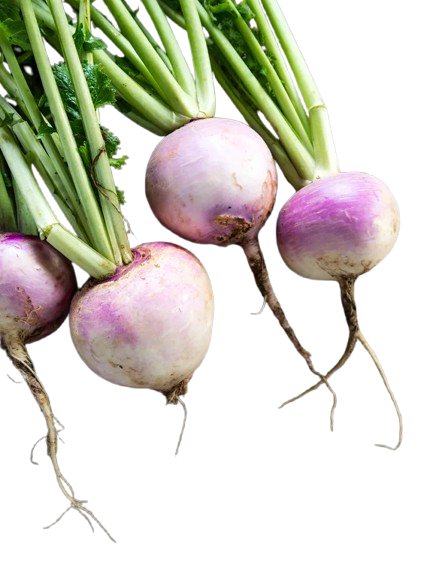
Turnip greens are the leafy foliage of the Brassica rapa plant, and the calories in turnip greens vary by size and preparation. A single small serving of raw turnip greens (28g) contains 9 calories, while a large raw serving (100g) provides 32 calories. Cooking reduces the calorie count slightly, as a small boiled serving (28g) contains 8 calories and a large boiled serving (100g) provides 29 calories. Sauteed turnip greens align with the boiled variety, containing 29 calories per 100g. One cup of chopped raw turnip greens (55g) contains 18 calories, while a serving of Glory Foods Seasoned Turnip Greens (135g) has 30 calories, and Pictsweet Farms Chopped Turnip Greens (85g) contains 20 calories.
An assessment of the turnip greens nutrition facts reveals a food characterized by a high concentration of vitamins, minerals, and bioactive compounds relative to the low caloric load, with a large raw serving (100g) delivering 5.7g of carbohydrates, including 3.2g of dietary fiber, 1.5g of protein, and only 0.3g of fat. The preparation style alters the nutrient profile slightly, as the calorie density shifts from 32 calories per 100g for raw greens to 29 calories for a boiled version, while the cooking process increases the bioavailability of certain nutrients. The foliage distinguishes itself through an exceptional vitamin profile, providing 251mcg of Vitamin K (209% DV) and 60mg of Vitamin C (67% DV) per large serving. The mineral content proves substantial as well, offering 190mg of calcium (15% DV), 296mg of potassium (6% DV), and 31mg of magnesium (7% DV), supporting bone density and fluid regulation. These greens also contain potent phytochemicals such as glucosinolates, lutein, and beta-carotene, which function as antioxidants and anti-inflammatory agents.
The vegetable's global availability relies on a robust agricultural sector, with major producers like China yielding over 29 million tonnes of turnips and associated greens annually. This cultivation meets significant demand in key markets, where the United States alone imported over $1.4 billion in edible brassicas in 2022. Turnip greens function as a staple ingredient in at least three distinct cuisines, appearing in Southern American stews, Italian pasta dishes like Orecchiette, and Chinese stir-fries. This consistent demand and rising agricultural costs are reflected in the retail pricing, with a single bunch of fresh greens climbing from under $0.89 in the early 2000s to over $1.99 after 2020. Menu prices mirror this economic shift, as a side of greens at Cracker Barrel moved from $2.49 in 2014 to $3.49 in recent years.
Given its nutrient density, turnip greens are a beneficial food for regular consumption and are considered a "superfood" due to the high ratio of nutrients to calories. Organizations like the USDA and the American Heart Association recognize the value of cruciferous vegetables in disease prevention, and a single large serving provides over double the daily requirement for Vitamin K. A suggested consumption rate is to include the vegetable in meals two to three times per week, though individuals on anticoagulant medication must monitor intake carefully. The 32 calories in a large portion of turnip greens require an energy expenditure equivalent to 3 minutes of running or 4 minutes of swimming.
Turnip Greens nutrition
| Stats | Weight |
|---|---|
| Carbs | 3.1 grams |
| Protein | 0.8 grams |
| Fats | 0 grams |
| Sugars | 0.4 grams |
- Large Turnip Greens Calories (Nutritional Facts)
- Medium Turnip Greens Calories (Nutritional Facts)
- Small Turnip Greens Calories (Nutritional Facts)
- Sauteed Turnip Calories (Nutritional Facts)
- Raw Turnip Greens Nutrition
- Magnesium in Turnip Greens
- Sodium in Turnip Greens
- Potassium in Turnip Greens
- Sugar in Turnip Greens
- Fiber in Turnip Greens
- Protein in Turnip Greens
- Carbs in Turnip Greens
- Fat in Turnip Greens
- Vitamins in Turnip Greens
- Minerals in Turnip Greens
Large Turnip Greens Calories (Nutritional Facts)
A large serving of raw turnip greens (100g or 3.5oz) contains 32 calories, 1.5g of protein, 0.3g of fat, 5.7g of carbohydrates, 3.2g of fiber, 0.8g of sugar, and 40mg of sodium. A large serving of boiled turnip greens (100g or 3.5oz) provides 29 calories, 1.6g of protein, 0.3g of fat, 6.3g of carbohydrates, 5g of fiber, 1.1g of sugar, and 42mg of sodium.
A medium serving of raw turnip greens (55g or 1.9oz) provides 18 calories, 0.8g of protein, 0.2g of fat, 3.1g of carbohydrates, 1.8g of fiber, 0.4g of sugar, and 22mg of sodium. A medium serving of boiled turnip greens (55g or 1.9oz) contains 16 calories, 0.9g of protein, 0.2g of fat, 3.5g of carbohydrates, 2.8g of fiber, 0.6g of sugar, and 23mg of sodium.
A small serving of raw turnip greens (28g or 1oz) contains 9 calories, 0.4g of protein, 0.1g of fat, 1.6g of carbohydrates, 0.9g of fiber, 0.2g of sugar, and 11mg of sodium. A small serving of boiled turnip greens (28g or 1oz) provides 8 calories, 0.5g of protein, 0.1g of fat, 1.8g of carbohydrates, 1.4g of fiber, 0.3g of sugar, and 12mg of sodium.
A standard serving of sauteed turnip greens (100g or 3.5oz) prepared without added fat contains 29 calories, 1.6g of protein, 0.3g of fat, 6.3g of carbohydrates, 5g of fiber, 1.1g of sugar, and 42mg of sodium. The cooking process softens the tough cellulose fibers, increasing the density of the greens and making the nutrients more bioavailable compared to the raw state.
Raw turnip greens are a cruciferous leafy vegetable that provides 32 calories per 100g serving, alongside 1.5g of protein and only 0.3g of fat. The fresh leaves contain 5.7g of carbohydrates, which includes 3.2g of dietary fiber and 0.8g of sugar. This nutrient-dense profile offers a high concentration of essential vitamins, delivering 251mcg of Vitamin K (209% DV) and 60mg of Vitamin C (67% DV) per large serving. The vegetable also supplies 190mg of calcium (15% DV) and 1.1mg of iron (6% DV), supporting bone health and oxygen transport without contributing significant cholesterol.
A large serving of raw turnip greens (100g or 3.5oz) provides 31mg of magnesium (7% DV). A medium serving of raw turnip greens (55g or 1.9oz) has 17mg of magnesium (4% DV). A small serving of raw turnip greens (28g or 1oz) contains 9mg of magnesium (2% DV). A large serving of boiled turnip greens (100g or 3.5oz) provides 32mg of magnesium (8% DV), while a medium serving of boiled turnip greens (55g or 1.9oz) has 18mg of magnesium (4% DV) and a small serving of boiled turnip greens (28g or 1oz) contains 9mg of magnesium (2% DV).
A large serving of raw turnip greens (100g or 3.5oz) contains 40mg of sodium (2% DV). A medium serving of raw turnip greens (55g or 1.9oz) has 22mg of sodium (1% DV). A small serving of raw turnip greens (28g or 1oz) contains 11mg of sodium (0% DV). A large serving of boiled turnip greens (100g or 3.5oz) provides 42mg of sodium (2% DV), whereas a medium serving of boiled turnip greens (55g or 1.9oz) has 23mg of sodium (1% DV) and a small serving of boiled turnip greens (28g or 1oz) contains 12mg of sodium (0% DV).
A large serving of raw turnip greens (100g or 3.5oz) contains 296mg of potassium (6% DV). A medium serving of raw turnip greens (55g or 1.9oz) has 163mg of potassium (3% DV). A small serving of raw turnip greens (28g or 1oz) contains 83mg of potassium (2% DV). A large serving of boiled turnip greens (100g or 3.5oz) provides 292mg of potassium (6% DV), while a medium serving of boiled turnip greens (55g or 1.9oz) contains 161mg of potassium (3% DV) and a small serving of boiled turnip greens (28g or 1oz) offers 82mg of potassium (2% DV).
A large serving of raw turnip greens (100g or 3.5oz) contains 0.8g of sugar. A medium serving of raw turnip greens (55g or 1.9oz) has 0.4g of sugar. A small serving of raw turnip greens (28g or 1oz) contains 0.2g of sugar. A large serving of boiled turnip greens (100g or 3.5oz) provides 1.1g of sugar, while a medium serving of boiled turnip greens (55g or 1.9oz) has 0.6g of sugar and a small serving of boiled turnip greens (28g or 1oz) contains 0.3g of sugar.
A large serving of raw turnip greens (100g or 3.5oz) provides 3.2g of dietary fiber (11% DV). A medium serving of raw turnip greens (55g or 1.9oz) has 1.8g of fiber (6% DV). A small serving of raw turnip greens (28g or 1oz) contains 0.9g of fiber (3% DV). A large serving of boiled turnip greens (100g or 3.5oz) provides 5g of fiber (18% DV), whereas a medium serving of boiled turnip greens (55g or 1.9oz) has 2.8g of fiber (10% DV) and a small serving of boiled turnip greens (28g or 1oz) contains 1.4g of fiber (5% DV).
A large serving of raw turnip greens (100g or 3.5oz) provides 1.5g of protein (3% DV). A medium serving of raw turnip greens (55g or 1.9oz) has 0.8g of protein (2% DV). A small serving of raw turnip greens (28g or 1oz) contains 0.4g of protein (1% DV). A large serving of boiled turnip greens (100g or 3.5oz) provides 1.6g of protein (3% DV), while a medium serving of boiled turnip greens (55g or 1.9oz) has 0.9g of protein (2% DV) and a small serving of boiled turnip greens (28g or 1oz) contains 0.5g of protein (1% DV).
A large serving of raw turnip greens (100g or 3.5oz) contains 5.7g of carbohydrates (2% DV). A medium serving of raw turnip greens (55g or 1.9oz) has 3.1g of carbohydrates (1% DV). A small serving of raw turnip greens (28g or 1oz) contains 1.6g of carbohydrates (1% DV). A large serving of boiled turnip greens (100g or 3.5oz) provides 6.3g of carbohydrates (2% DV), whereas a medium serving of boiled turnip greens (55g or 1.9oz) has 3.5g of carbohydrates (1% DV) and a small serving of boiled turnip greens (28g or 1oz) contains 1.8g of carbohydrates (1% DV).
A large serving of raw turnip greens (100g or 3.5oz) contains 0.3g of total fat (0% DV). A medium serving of raw turnip greens (55g or 1.9oz) has 0.2g of total fat (0% DV). A small serving of raw turnip greens (28g or 1oz) contains 0.1g of total fat (0% DV). A large serving of boiled turnip greens (100g or 3.5oz) provides 0.3g of total fat (0% DV), while a medium serving of boiled turnip greens (55g or 1.9oz) has 0.2g of total fat (0% DV) and a small serving of boiled turnip greens (28g or 1oz) contains 0.1g of total fat (0% DV).
A large serving of raw turnip greens (100g or 3.5oz) provides 60mg of Vitamin C (67% DV) and 251mcg of Vitamin K (209% DV). A medium serving of raw turnip greens (55g or 1.9oz) provides 33mg of Vitamin C (37% DV) and 138mcg of Vitamin K (115% DV). A small serving of raw turnip greens (28g or 1oz) provides 17mg of Vitamin C (19% DV) and 70mcg of Vitamin K (58% DV). A large serving of boiled turnip greens (100g or 3.5oz) provides 27.4mg of Vitamin C (30% DV) and 529mcg of Vitamin K (441% DV), while a medium serving of boiled turnip greens (55g or 1.9oz) offers 15mg of Vitamin C (17% DV) and 291mcg of Vitamin K (242% DV). A small serving of boiled turnip greens (28g or 1oz) contains 7.7mg of Vitamin C (9% DV) and 148mcg of Vitamin K (123% DV).
A large serving of raw turnip greens (100g or 3.5oz) provides 190mg of calcium (15% DV) and 1.1mg of iron (6% DV). A medium serving of raw turnip greens (55g or 1.9oz) provides 105mg of calcium (8% DV) and 0.6mg of iron (3% DV). A small serving of raw turnip greens (28g or 1oz) provides 53mg of calcium (4% DV) and 0.3mg of iron (2% DV). A large serving of boiled turnip greens (100g or 3.5oz) provides 137mg of calcium (11% DV) and 1.15mg of iron (6% DV), whereas a medium serving of boiled turnip greens (55g or 1.9oz) has 75mg of calcium (6% DV) and 0.6mg of iron (3% DV). A small serving of boiled turnip greens (28g or 1oz) contains 38mg of calcium (3% DV) and 0.3mg of iron (2% DV).
Get a Custom Report on Turnip Greens Nutrition Data – Contact Us!
What are the Types of Turnip Greens?
The types of turnip greens are Seven Top, Shogoin, and Purple Top White Globe. These variations are distinguished by the primary use of the plant (foliage vs. root) and the texture of the leaves. The following chart provides details on these common turnip green styles.
| Type | Description | Calories (Approximate per 100g) | Calorie Qualifications |
|---|---|---|---|
|
Seven Top
|
A variety grown exclusively for the leafy greens, producing no edible root. | 32 | The standard calorie count reflects the dense, dark green foliage. |
|
Purple Top White Globe
|
A dual-purpose variety grown for both the purple-topped root and the jagged leaves. | 30 | The leaves are slightly less fibrous than Seven Top, resulting in a marginal calorie difference. |
|
Shogoin
|
A Japanese variety with broad, mild-flavored leaves and a large white root. | 28 | The higher water content in this broad-leaf variety results in a slightly lower energy density. |
What are the Main Dishes With Turnip Greens?
Turnip greens serve as a primary vegetable in savory stews, braised pork dishes, and pasta preparations across Southern American, Italian, and Chinese cuisines. The vegetable's robust texture allows the leaves to withstand long cooking times. A list of main dishes featuring turnip greens is provided below.
| Dish Name | Calories (Estimate per serving) | Type of Dish | Carbs (g) (Estimate) | Sugar (g) (Estimate) | Protein (g) (Estimate) | Fat (g) (Estimate) | Cuisine | Restaurants |
|---|---|---|---|---|---|---|---|---|
|
Southern Turnip Greens with Ham Hocks
|
250 | Stew | 10 | 2 | 18 | 15 | Southern American | Mary Mac's Tea Room (Atlanta, GA) |
|
Orecchiette with Turnip Tops (Cime di Rapa)
|
450 | Pasta | 65 | 3 | 14 | 16 | Italian | Maialino (New York, NY) |
|
Sauteed Greens with Bacon
|
180 | Side Main | 8 | 2 | 10 | 12 | American | Cracker Barrel |
|
Turnip Green Soup (Pot Likker Soup)
|
150 | Soup | 12 | 3 | 8 | 6 | Southern American | Arnold's Country Kitchen (Nashville, TN) |
|
Stir-Fried Turnip Greens with Garlic
|
120 | Stir Fry | 10 | 2 | 4 | 8 | Chinese | Din Tai Fung |
|
Braised Pork with Turnip Greens
|
550 | Meat Entree | 8 | 2 | 45 | 38 | Chinese | Hunan Taste (Baltimore, MD) |
|
Turnip Greens and Black-Eyed Peas
|
220 | Stew | 35 | 4 | 12 | 4 | Soul Food | Sylvia's Restaurant (New York, NY) |
|
Cornbread Salad with Greens
|
380 | Salad Main | 45 | 8 | 10 | 18 | Southern American | Martin's Bar-B-Que Joint (Nashville, TN) |
|
Sausage and Greens Pasta
|
520 | Pasta | 55 | 3 | 22 | 24 | Italian | Maggiano's Little Italy |
|
Shrimp and Turnip Greens Grits
|
480 | Entree | 40 | 2 | 25 | 22 | Southern American | Crook's Corner (Chapel Hill, NC) |
|
Caldo Gallego (Galician Soup)
|
320 | Soup | 25 | 3 | 15 | 14 | Spanish | Columbia Restaurant (Tampa, FL) |
|
Smoked Turkey and Greens
|
280 | Stew | 8 | 2 | 35 | 10 | Soul Food | Bully's Restaurant (Jackson, MS) |
|
Turnip Green Casserole
|
350 | Casserole | 15 | 3 | 12 | 26 | Southern American | The Lady & Sons (Savannah, GA) |
|
Greens and Beans Stew
|
240 | Vegetarian Main | 38 | 4 | 14 | 5 | Mediterranean | Zaytinya (Washington, D.C.) |
|
Pizza with Sausage and Turnip Greens
|
300 | Pizza (Slice) | 35 | 2 | 12 | 14 | Italian | Ribalta (New York, NY) |
What are the Desserts With Turnip Greens?
Turnip greens do not appear in traditional dessert menus due to the bitter and pungent flavor profile, but modern health-focused recipes occasionally incorporate the greens into smoothies or savory-sweet baked goods. The list below catalogs dishes that feature turnip greens in a sweet or semi-sweet context.
| Dish Name | Calories (Estimate per serving) | Type of Dessert | Carbs (g) (Estimate) | Sugar (g) (Estimate) | Protein (g) (Estimate) | Fat (g) (Estimate) | Cuisine | Restaurants |
|---|---|---|---|---|---|---|---|---|
|
Green Smoothie (Turnip Greens)
|
180 | Beverage | 35 | 25 | 4 | 2 | Health / Fusion | Smoothie King |
|
Sweet Cornbread with Greens
|
280 | Sweet Bread | 40 | 12 | 6 | 10 | Southern American | Cracker Barrel |
|
Turnip Green Muffins
|
220 | Pastry | 30 | 8 | 5 | 9 | Modern American | Flying Biscuit Cafe (Atlanta, GA) |
|
Green Juice Blend
|
120 | Beverage | 25 | 18 | 2 | 0 | Health | Juice Press |
|
Savory-Sweet Pot Likker Scone
|
310 | Pastry | 38 | 6 | 7 | 14 | Southern Fusion | Biscuit Love (Nashville, TN) |
|
Honey Glazed Greens Tart
|
290 | Pastry | 32 | 15 | 5 | 16 | Experimental | Husk (Charleston, SC) |
|
Green Vegetable Cake
|
350 | Cake | 45 | 25 | 6 | 18 | Modern Fusion | Dirt Candy (New York, NY) |
|
Sweet Potato and Green Hash
|
240 | Breakfast Sweet | 35 | 12 | 4 | 8 | American | First Watch |
|
Apple and Greens Puree
|
140 | Fruit Dish | 32 | 26 | 2 | 1 | Baby Food / Health | Whole Foods Market |
|
Citrus Green Sorbet
|
130 | Frozen Dessert | 32 | 28 | 1 | 0 | Experimental | The Catbird Seat (Nashville, TN) |
What Cuisines Prefer Turnip Greens the Most?
Turnip greens function as a foundational vegetable in Southern American, Italian, and Chinese. The table below displays the culinary settings where turnip greens are a signature item.
| Cuisine | Dish | Types of Greens Used | Calories (Estimate) | Restaurant |
|---|---|---|---|---|
|
Southern American
|
Mess of Greens | Seven Top / Purple Top | 250 | Mary Mac's Tea Room (Atlanta, GA) |
|
Italian (Puglia)
|
Orecchiette alle Cime di Rapa | Turnip Tops (Rapini) | 450 | Antico Forno (Boston, MA) |
|
Chinese
|
Stir-Fried Greens | Shogoin / Chinese Turnip | 120 | Joe's Shanghai (New York, NY) |
|
Soul Food
|
Greens with Smoked Meat | Seven Top | 280 | Sylvia's Restaurant (New York, NY) |
|
Spanish (Galician)
|
Caldo Gallego | Turnip Tops (Grelos) | 320 | Alcalá (New York, NY) |
|
Portuguese
|
Caldo Verde (Variation) | Turnip Tops (Nabizas) | 250 | Adega (San Jose, CA) |
|
Japanese
|
Tsukemono (Pickled Greens) | Shogoin | 40 | Ootoya (New York, NY) |
|
Kashmiri
|
Gogji Nadir (Turnips with Lotus Stem) | Turnip Greens | 220 | Royal India (San Diego, CA) |
|
Turkish
|
Turnip Green Salad | Wild Turnip Greens | 150 | Pera Mediterranean (New York, NY) |
|
French
|
Navarin (Lamb Stew) | Spring Turnip Greens | 480 | Balthazar (New York, NY) |
Which Countries Produce the Most Turnip Greens?
The top producers of turnip greens, which are aggregated within the broader FAO category of "Turnips" or "Brassicas," are China, Uzbekistan, and the United States. The plant grows abundantly in temperate climates, where local agricultural systems integrate the vegetable into both commercial farming and livestock feed. The table below shows the production quantity of turnips and related roots (which imply greens production) in key countries.
| Country | 2003 | 2008 | 2013 | 2018 | 2019 | 2020 | 2021 | 2022 |
|---|---|---|---|---|---|---|---|---|
| China | 15,000,000 | 18,500,000 | 22,000,000 | 25,000,000 | 26,000,000 | 27,000,000 | 28,000,000 | 29,000,000 |
| Uzbekistan | 1,200,000 | 1,500,000 | 1,800,000 | 2,200,000 | 2,300,000 | 2,400,000 | 2,500,000 | 2,600,000 |
| Russia | 1,000,000 | 1,200,000 | 1,400,000 | 1,600,000 | 1,650,000 | 1,700,000 | 1,750,000 | 1,800,000 |
| United States | 800,000 | 950,000 | 1,100,000 | 1,300,000 | 1,350,000 | 1,400,000 | 1,450,000 | 1,500,000 |
| Ukraine | 700,000 | 850,000 | 1,000,000 | 1,200,000 | 1,250,000 | 1,300,000 | 1,350,000 | 1,400,000 |
Which Countries Consume the Most Turnip Greens?
The top consumers of turnip greens are China, the United States (specifically the Southern region), and Italy. Consumption is highest in regions where the vegetable is a traditional staple. The table below shows import values for the broader category of "Edible Brassicas" in key markets, reflecting the trade of these leafy greens.
| Country | 2003 | 2008 | 2013 | 2018 | 2019 | 2020 | 2021 | 2022 |
|---|---|---|---|---|---|---|---|---|
| United States | 450,000 | 600,000 | 850,000 | 1,100,000 | 1,150,000 | 1,200,000 | 1,300,000 | 1,400,000 |
| Canada | 300,000 | 450,000 | 600,000 | 800,000 | 850,000 | 900,000 | 950,000 | 1,000,000 |
| Germany | 250,000 | 400,000 | 550,000 | 700,000 | 720,000 | 750,000 | 800,000 | 850,000 |
| United Kingdom | 200,000 | 350,000 | 500,000 | 650,000 | 680,000 | 700,000 | 750,000 | 800,000 |
| France | 150,000 | 250,000 | 350,000 | 450,000 | 480,000 | 500,000 | 550,000 | 600,000 |
How Do Prices of Turnip Greens-Including Dishes Change?
The cost of dishes featuring turnip greens has increased significantly over the past decade, reflecting higher operational costs in restaurants and the rising price of pork products often paired with the greens. The table below displays the price changes for specific menu items.
| Brand/Restaurant | Dish | Old Price (Year) | Current Price (2024/2025) |
|---|---|---|---|
| Mary Mac's Tea Room (Atlanta, GA) | Garden House Salad | $3.50 (2012) | $3.95 - $6.50 |
| Sylvia's Restaurant (New York, NY) | Collard/Turnip Greens | $3.50 (2013) | $4.59 - $6.00 |
| Cracker Barrel | Turnip Greens (Side) | $2.49 (2014) | $2.99 – $3.49 |
| Maggiano's Little Italy | Italian Sausage Flatbread | $14.95 (2015) | $17.00 - $22.50 |
What is the Turnip Greens Calorie for 100 Grams?
A 100g serving of raw turnip greens contains 32 calories, while a 100g serving of boiled turnip greens provides 29 calories.
What is the Turnip Greens Calorie for 1 KG?
One kilogram (1000g) of raw turnip greens contains 320 calories, whereas one kilogram (1000g) of boiled turnip greens contains 290 calories.
What is the Calorie of 1 Turnip Greens?
One cup of chopped raw turnip greens (55g) contains 18 calories. Commercial varieties vary slightly, as a serving of Glory Foods Seasoned Turnip Greens (135g) provides 30 calories, while a serving of Pictsweet Farms Chopped Turnip Greens (85g) contains 20 calories.
What are the Health Benefits of Turnip Greens?
The nutritional value of turnip greens is defined by the high concentration of Vitamin K, glucosinolates, and dietary fiber found in the leaves. A description of the benefits is listed below.
- Supports Bone Health: The leaves serve as an exceptional source of Vitamin K, a nutrient essential for bone mineralization and calcium absorption. A study by Booth, S. L. (2009), "Roles for Vitamin K in cartilage and bone health," established that adequate Vitamin K intake is associated with higher bone mineral density and a reduced risk of hip fractures.
- Reduces Cancer Risk: The vegetable contains glucosinolates, sulfur-containing compounds that break down into biologically active isothiocyanates, which exhibit anti-carcinogenic properties. A review by Higdon, J. V., et al. (2007), "Cruciferous vegetables and cancer risk in human clinical epidemiological studies," found an inverse association between the consumption of cruciferous vegetables and the risk of various cancers, particularly lung and colorectal cancer.
- Enhances Digestive Function: The greens provide a substantial amount of dietary fiber and water, which facilitate bowel regularity and gut health. A study by Anderson, J. W., et al. (2009), "Health benefits of dietary fiber," confirmed that high-fiber diets significantly lower the prevalence of gastrointestinal disorders and improve overall digestive efficiency.
What are the Downsides of Turnip Greens?
The vegetable's chemical composition presents specific health risks for individuals taking anticoagulants or those prone to kidney stones. The table below shows the potential health risks associated with turnip greens consumption.
- Interference with Blood Thinners: The high Vitamin K content promotes blood clotting, which can counteract the efficacy of anticoagulant medications like Warfarin. A study by Violi, F., et al. (2016), "Interaction between dietary vitamin K intake and anticoagulation by vitamin K antagonists," indicates that sudden increases in Vitamin K intake can destabilize the International Normalized Ratio (INR) in patients on anticoagulation therapy. A safer alternative for those on medication is carrots or green beans, which contain lower levels of Vitamin K. A suggested daily amount is to maintain a consistent intake of no more than half a cup of cooked greens to avoid fluctuations in drug metabolism.
What Phytochemicals are Found in Turnip Greens?
The phytochemicals in turnip greens include glucosinolates (specifically gluconapin and glucobrassicanapin), lutein, zeaxanthin, beta-carotene, and quercetin. These bioactive compounds function as potent antioxidants and anti-inflammatory agents within the body. The glucosinolates are hydrolyzed upon chewing or chopping into isothiocyanates and indoles, which trigger detoxification enzymes in the liver and protect cells from DNA damage.
Are Turnip Greens Good for You?
Yes, turnip greens are good for health because the vegetable offers a dense profile of calcium, Vitamin A, and folate that supports multiple physiological systems. The high nitrate and potassium content supports heart health by helping to regulate blood pressure and improve endothelial function, as noted in the research by Blekkenhorst, L. C., et al. (2018), "Cardiovascular health benefits of specific vegetable types." The presence of lutein and zeaxanthin supports eye health by protecting the retina from oxidative stress, a benefit highlighted by Eisenhauer, B., et al. (2017), "Lutein and Zeaxanthin—Food Sources, Bioavailability and Dietary Variety in Age-Related Macular Degeneration Protection." The vegetable also aids in weight management due to the low caloric density and high fiber content. A study by Slavin, J. L. (2005), "Dietary fiber and body weight," found that increased fiber intake is inversely associated with body weight and body fat.
How Do Calories Change According to Turnip Greens Types?
The calorie count remains relatively consistent across the different types of turnip greens. A serving of Seven Top greens contains 32 calories per 100 grams, representing the baseline for varieties grown specifically for foliage. Purple Top White Globe greens contain a nearly identical value at 30 calories per 100 grams, with the slight decrease attributed to the dual-energy allocation of the plant between root and leaf. Shogoin greens present a slightly lower profile at 28 calories per 100 grams, a consequence of the higher water content and milder tissue structure found in Asian cultivars.
Can You Eat Turnip Leaves?
Yes, turnip leaves are entirely edible and serve as a highly nutritious vegetable comparable to kale or collard greens. Turnip leaves' edible qualities include a peppery, slightly bitter flavor that mellows significantly upon cooking. Traditions across the American South, Italy, and Asia have utilized the greens for centuries, often valuing the foliage more than the root itself. The leaves contain higher concentrations of vitamins and minerals than the turnip root, making the disposal of the tops a waste of valuable nutrition.
What is the Origin of Turnip Greens?
The history of turnip greens traces back to Northern Europe and Western Asia, where the plant Brassica rapa was first domesticated. The species existed in ancient Rome and Greece, where Pliny the Elder described the cultivation of turnips for both the root and the foliage. The vegetable reached the Americas with European colonists in the 16th and 17th centuries, becoming a staple crop in the Southern United States due to the plant's ability to thrive in cool weather and poor soil. The global spread occurred due to the plant's hardiness, leading to the development of distinct varieties in East Asia (Shogoin) and Europe (Rapini/Grelos).
Explore More Vegetables
Discover more Vegetables with detailed nutrition facts, calorie counts, vitamins, minerals, and health benefits. Compare similar foods, serving sizes, macronutrients, and key nutrients to find the best option for your diet and nutrition goals.
 Artichoke calories
 Arugula calories
 Asparagus calories
 Beetroot calories
 Bell Pepper calories
 Broccoli calories
 Brussels Sprouts calories
 Cabbage calories
 Caesar Salad calories
 Carrot calories
 Cassava Root calories
 Cauliflower calories