Calories and Nutritions in Watercress
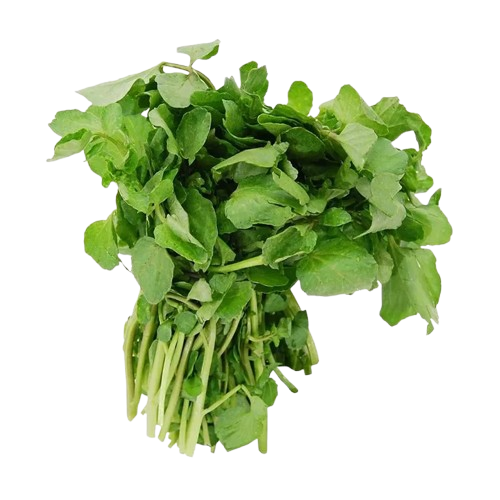
Watercress is a peppery aquatic leafy green often used in salads and soups. The calories in a watercress bunch are minimal, with a large bunch (150g or 5.3oz) containing only 17 calories. A serving of B&W Quality Growers Watercress (85g or 3oz) contains 10 calories, while a serving of Waitrose Watercress (80g or 2.8oz) provides 9 calories. A standard 100g portion of raw watercress has 11 calories. Cooking methods significantly impact the value, as a serving of steamed watercress (130g or 4.6oz) contains 29 calories, whereas a serving of creamy watercress soup (245g or 8.6oz) provides 180 calories.
An analysis of the watercress nutrition facts reveals a food dominated by water and vitamins, with a large bunch (150g or 5.3oz) providing 142.7g of water and 375mcg of Vitamin K (313% DV). The preparation style, such as using cream for soup, not only alters the calorie density from 11 calories per 100g for raw greens to 73 for a creamy soup version but also influences potential health attributes. The raw vegetable provides essential nutrients, and a large bunch (150g or 5.3oz) offers 64.5mg of Vitamin C (72% DV) and 240mcg of Vitamin A RAE (27% DV). The nutrient profile supports the status of watercress as a superfood, driven by phytochemicals like phenethyl isothiocyanate (PEITC). The raw vegetable provides essential antioxidants, and a study by Gill, C. I., et al. (2007) found that watercress supplementation reduces lymphocyte DNA damage and alters blood antioxidant status.
Watercress’ global availability is built on a specialized aquatic supply chain, with China as the top producer and the United States as the top consumer, importing more than $340 million in watercress and related vegetables in 2022. Watercress is a key component in several distinct preparations such as Watercress Sorbet, Potage Cressonnière, and Shaking Beef, and as a specialty in British, French, and Chinese cuisines. This strong global demand and the rising cost of manual harvesting are directly reflected in the price, with a standard bunch climbing from $0.99 in 2003 to over $2.50 by 2023. Menu prices reflect this trend, as Watercress with Bean Curd Soup at Joe's Shanghai moved from $6.95 in 2010 to between $13.95 and $16.95 in 2024.
Watercress is a healthy food recommended for regular consumption and serves as an effective aid for weight loss and appetite control. Health authorities like the Centers for Disease Control and Prevention classify the plant as a powerhouse vegetable with a nutrient density score of 100, the highest among all produce items. A suggested consumption rate is to limit intake to 80g (2.8oz) per day to manage Vitamin K intake. This serving size contains 9 calories which can be burned by doing 1 minute of running or 1 minute of swimming.
Watercress nutrition
| Stats | Weight |
|---|---|
| Carbs | 0.4 grams |
| Protein | 0.8 grams |
| Fats | 0 grams |
| Sugars | 0.1 grams |
- Large Watercress Calories (Nutritional Facts)
- Medium Watercress Calories (Nutritional Facts)
- Small Watercress Calories (Nutritional Facts)
- Watercress Leaf Calories (Nutritional Facts)
- Watercress Soup Calories (Nutritional Facts)
- Steamed Watercress Calories (Nutritional Facts)
- Raw Watercress Nutrition
- Sodium in Watercress
- Potassium in Watercress
- Sugar in Watercress
- Fiber in Watercress
- Protein in Watercress
- Carbs in Watercress
- Fat in Watercress
- Vitamins in Watercress
- Minerals in Watercress
Large Watercress Calories (Nutritional Facts)
A large bunch of raw watercress (150g or 5.3oz) contains 17 calories, 3.5g of protein, 0.2g of fat, 2g of carbohydrates, 0.8g of fiber, 0.3g of sugar, and 62mg of sodium.
A medium serving of chopped raw watercress (34g or 1.2oz) provides 4 calories, 0.8g of protein, 0g of fat, 0.4g of carbohydrates, 0.2g of fiber, 0.1g of sugar, and 14mg of sodium.
A small serving of watercress sprigs (10g or 0.35oz) contains 1 calorie, 0.2g of protein, 0g of fat, 0.1g of carbohydrates, 0.1g of fiber, 0g of sugar, and 4mg of sodium.
A serving of watercress leaves (20g or 0.7oz) contains 2 calories, 0.5g of protein, 0g of fat, 0.3g of carbohydrates, 0.1g of fiber, 0g of sugar, and 8mg of sodium.
A serving of creamy watercress soup (245g or 8.6oz) provides 180 calories, 4g of protein, 12g of fat, 15g of carbohydrates, 2g of fiber, 3g of sugar, and 680mg of sodium.
A serving of steamed watercress (130g or 4.6oz) contains 29 calories, 2.9g of protein, 0.1g of fat, 2.5g of carbohydrates, 1.2g of fiber, 0.3g of sugar, and 31mg of sodium.
A serving of 10 raw watercress sprigs (25g) contains 3 calories, 0.57g of protein, 0.03g of fat, 0.32g of carbohydrates, 0.13g of dietary fiber, 0.05g of sugar, and 10.3mg of sodium.
A large bunch of watercress (150g) contains 62mg of sodium (3% DV). A medium serving of chopped watercress (34g) has 14mg of sodium (1% DV). A small serving of watercress sprigs (10g) contains 4mg of sodium (0% DV). A serving of 10 raw sprigs (25g) contains 10.3mg of sodium (0% DV). A serving of watercress leaves (20g) contains 8mg of sodium (0% DV). A serving of creamy watercress soup (245g) contains 680mg of sodium (30% DV). A serving of steamed watercress (130g) contains 31mg of sodium (1% DV).
A large bunch of watercress (150g) contains 495mg of potassium (11% DV). A medium serving of chopped watercress (34g) has 112mg of potassium (2% DV). A small serving of watercress sprigs (10g) contains 33mg of potassium (1% DV). A serving of 10 raw sprigs (25g) contains 82.5mg of potassium (2% DV).
A large bunch of watercress (150g) contains 0.3g of sugar. A medium serving of chopped watercress (34g) has 0.1g of sugar. A small serving of watercress sprigs (10g) contains 0g of sugar. A serving of 10 raw sprigs (25g) contains 0.05g of sugar. A serving of watercress leaves (20g) contains 0g of sugar. A serving of creamy watercress soup (245g) contains 3g of sugar. A serving of steamed watercress (130g) contains 0.3g of sugar.
A large bunch of watercress (150g) provides 0.8g of dietary fiber (3% DV). A medium serving of chopped watercress (34g) has 0.2g of fiber (1% DV). A small serving of watercress sprigs (10g) contains 0.1g of fiber (0% DV). A serving of 10 raw sprigs (25g) provides 0.13g of fiber (0% DV). A serving of watercress leaves (20g) provides 0.1g of fiber (0% DV). A serving of creamy watercress soup (245g) provides 2g of fiber (7% DV). A serving of steamed watercress (130g) provides 1.2g of fiber (4% DV).
A large bunch of watercress (150g) provides 3.5g of protein (7% DV). A medium serving of chopped watercress (34g) has 0.8g of protein (2% DV). A small serving of watercress sprigs (10g) contains 0.2g of protein (0% DV). A serving of 10 raw sprigs (25g) provides 0.57g of protein (1% DV). A serving of watercress leaves (20g) provides 0.5g of protein (1% DV). A serving of creamy watercress soup (245g) provides 4g of protein (8% DV). A serving of steamed watercress (130g) provides 2.9g of protein (6% DV).
A large bunch of watercress (150g) contains 2g of carbohydrates (1% DV). A medium serving of chopped watercress (34g) has 0.4g of carbohydrates (0% DV). A small serving of watercress sprigs (10g) contains 0.1g of carbohydrates (0% DV). A serving of 10 raw sprigs (25g) contains 0.32g of carbohydrates (0% DV). A serving of watercress leaves (20g) contains 0.3g of carbohydrates (0% DV). A serving of creamy watercress soup (245g) contains 15g of carbohydrates (5% DV). A serving of steamed watercress (130g) contains 2.5g of carbohydrates (1% DV).
A large bunch of watercress (150g) contains 0.2g of total fat (0% DV). A medium serving of chopped watercress (34g) has 0g of total fat (0% DV). A small serving of watercress sprigs (10g) contains 0g of total fat (0% DV). A serving of 10 raw sprigs (25g) contains 0.03g of total fat (0% DV). A serving of watercress leaves (20g) contains 0g of total fat (0% DV). A serving of creamy watercress soup (245g) contains 12g of total fat (15% DV). A serving of steamed watercress (130g) contains 0.1g of total fat (0% DV).
A large bunch of watercress (150g) provides 64.5mg of Vitamin C (72% DV) and 375mcg of Vitamin K (312% DV). A medium serving of chopped watercress (34g) provides 14.6mg of Vitamin C (16% DV) and 85mcg of Vitamin K (71% DV). A small serving of watercress sprigs (10g) provides 4.3mg of Vitamin C (5% DV) and 25mcg of Vitamin K (21% DV). A serving of 10 raw sprigs (25g) provides 10.8mg of Vitamin C (12% DV).
A large bunch of watercress (150g) provides 180mg of calcium (14% DV) and 0.3mg of manganese (13% DV). A medium serving of chopped watercress (34g) provides 41mg of calcium (3% DV) and 0.07mg of manganese (3% DV). A small serving of watercress sprigs (10g) provides 12mg of calcium (1% DV) and 0.02mg of manganese (1% DV). A serving of 10 raw sprigs (25g) provides 30mg of calcium (2% DV) and 0.05mg of iron (0% DV).
Get a Custom Report on Watercress Nutrition Data – Contact Us!
What are the Types of Watercress?
The types of watercress are Watercress (Nasturtium officinale), Garden Cress, and Upland Cress. The table below provides details on these common varieties.
| Type | Description | Calories (Approximate per 100g) | Calorie Qualifications |
|---|---|---|---|
|
Watercress (Nasturtium officinale)
|
The standard aquatic plant with round, dark green leaves and a peppery flavor. | 11 | This is the lowest calorie option, consisting mostly of water and fiber. |
|
Garden Cress (Lepidium sativum)
|
A fast-growing herb with a tangier, spicier flavor, often grown on soil rather than in water. | 32 | The higher seed and stem density results in a higher calorie and protein count. |
|
Upland Cress (Barbarea verna)
|
A land-based creeper that resembles watercress in flavor but is easier to grow in soil. | 20 | The calorie count is slightly higher than aquatic watercress due to lower water retention. |
What are the Main Dishes With Watercress?
The vegetable serves as a primary ingredient in salads, soups, and as a counterbalance to rich meats in main courses. A catalog of dishes that feature watercress is detailed below.
| Dish Name | Calories (Estimate per serving) | Type of Dish | Carbs (g) (Estimate) | Sugar (g) (Estimate) | Protein (g) (Estimate) | Fat (g) (Estimate) | Cuisine | Restaurants |
|---|---|---|---|---|---|---|---|---|
|
Watercress & Bacon Salad
|
350 | Salad | 8 | 2 | 12 | 30 | American Steakhouse | Peter Luger Steak House |
|
Potage Cressonnière (Watercress Soup)
|
220 | Soup | 18 | 4 | 5 | 15 | French | Balthazar |
|
Stir-Fried Watercress with Garlic
|
160 | Side/Main | 12 | 1 | 4 | 11 | Chinese | Joe's Shanghai |
|
Shaking Beef (Bo Luc Lac) on Watercress
|
450 | Meat Entree | 15 | 6 | 35 | 28 | Vietnamese | The Slanted Door |
|
Watercress Tea Sandwiches
|
180 | Sandwich | 25 | 2 | 6 | 8 | British/American | The Plaza Hotel Palm Court |
|
Watercress & Pork Rib Soup
|
250 | Soup | 10 | 2 | 25 | 12 | Chinese | Ping's Seafood |
|
Duck Confit with Watercress Salad
|
580 | Meat Entree | 8 | 1 | 30 | 45 | French | Le Coucou |
|
Watercress Risotto
|
420 | Rice Dish | 45 | 2 | 10 | 22 | Italian | Eataly |
|
Grilled Salmon with Watercress Sauce
|
550 | Seafood Entree | 5 | 1 | 40 | 38 | French/Seafood | Le Bernardin |
|
Watercress Namul
|
80 | Side Dish | 6 | 1 | 3 | 5 | Korean | Kang Ho Dong Baekjeong |
|
Roast Beef & Watercress Sandwich
|
450 | Sandwich | 40 | 3 | 28 | 18 | British | Pret A Manger |
|
Watercress Pesto Pasta
|
520 | Pasta | 65 | 3 | 12 | 24 | Italian | Olive Garden |
|
Warm Mushroom & Watercress Salad
|
280 | Salad | 12 | 3 | 6 | 22 | American | The Capital Grille |
|
Watercress & Avocado Salad
|
320 | Salad | 14 | 2 | 5 | 28 | American | Sweetgreen |
|
Seared Scallops with Watercress Puree
|
340 | Seafood Entree | 12 | 2 | 25 | 20 | American/French | Per Se |
What are Desserts With Watercress?
Watercress functions primarily as a savory ingredient, yet the peppery profile occasionally features in experimental fine dining or traditional Asian sweet soups. A catalog of sweet dishes that feature watercress is detailed below.
| Dish Name | Calories (Estimate per serving) | Type of Dish | Carbs (g) (Estimate) | Sugar (g) (Estimate) | Protein (g) (Estimate) | Fat (g) (Estimate) | Cuisine | Restaurants |
|---|---|---|---|---|---|---|---|---|
|
Watercress Sorbet
|
120 | Frozen Dessert | 30 | 28 | 0 | 0 | French/Modern | The French Laundry |
|
Cantonese Sweet Watercress Soup (Tong Sui)
|
180 | Sweet Soup | 40 | 35 | 2 | 1 | Chinese | Tim Ho Wan |
|
Watercress & Apple Granita
|
90 | Frozen Dessert | 22 | 20 | 0 | 0 | American/Modern | Gramercy Tavern |
|
Watercress Honey Smoothie
|
160 | Beverage | 38 | 30 | 2 | 1 | Health/Fusion | Juice Press |
|
Watercress & Lemon Mousse
|
250 | Mousse | 20 | 18 | 4 | 18 | French | Le Bernardin |
|
Watercress Macaron
|
70 | Confection | 12 | 10 | 1 | 3 | French | Ladurée |
|
Sweet Watercress Tea
|
60 | Beverage | 15 | 15 | 0 | 0 | Chinese | Ten Ren's Tea Time |
|
Watercress & Pear Tart
|
320 | Pastry | 45 | 25 | 4 | 14 | American | Panera Bread |
|
Watercress Jelly
|
140 | Gelatin | 35 | 32 | 1 | 0 | Asian Fusion | Momofuku Ko |
|
Candied Watercress Leaf
|
45 | Garnish | 11 | 11 | 0 | 0 | Modern | Alinea |
What Cuisines Prefer Watercress the Most?
Watercress functions as a staple vegetable in British, French, and East Asian culinary traditions. The table below displays the culinary settings where watercress is a signature item.
| Cuisine | Dish | Types of Watercress | Calories (Estimate) | Restaurant(s) |
|---|---|---|---|---|
|
British
|
Egg & Watercress Sandwiches | Raw Sprigs | 180-250 | The Plaza Hotel Palm Court |
|
French
|
Potage Cressonnière | Pureed Leaves | 220-300 | Balthazar |
|
Chinese (Cantonese)
|
Stir-Fried Watercress with Garlic | Whole Stems/Cooked | 160-200 | Joe's Shanghai |
|
Vietnamese
|
Bo Luc Lac (Shaking Beef) | Raw Bedding | 450-600 | The Slanted Door |
|
American Steakhouse
|
Luger's Sizzling Bacon & Watercress | Raw Sprigs | 350-500 | Peter Luger Steak House |
|
Japanese
|
Watercress Ohitashi | Blanched/Marinated | 60-90 | Nobu |
|
Italian
|
Watercress Risotto | Cooked/Pureed | 400-550 | Eataly |
|
Spanish
|
Ensalada de Berros | Raw Leaves | 150-250 | Jaleo |
|
Portuguese
|
Sopa de Agrião | Cooked/Soup | 180-250 | Seabra's Marisqueira |
|
Korean
|
Watercress Namul | Blanched/Seasoned | 70-100 | Kang Ho Dong Baekjeong |
|
Brazilian
|
Watercress & Strawberry Salad | Raw Leaves | 120-180 | Fogo de Chão |
|
Thai
|
Pad Phak | Stir-Fried | 150-220 | Pok Pok (Historical) |
Which Countries Produce the Most Watercress?
The top producers of watercress based on export value and cultivation volume are China, the United States, and Spain. The United Kingdom also maintains a substantial production industry, specifically in the Hampshire region. The table below shows the export value of watercress and related aquatic vegetables for the leading producing countries from 2003 to 2022.
| Country | 2003 | 2008 | 2013 | 2018 | 2019 | 2020 | 2021 | 2022 |
|---|---|---|---|---|---|---|---|---|
| China | 150,000 | 280,000 | 450,000 | 620,000 | 640,000 | 680,000 | 750,000 | 810,000 |
| United States | 85,000 | 110,000 | 145,000 | 180,000 | 185,000 | 190,000 | 210,000 | 225,000 |
| Spain | 65,000 | 95,000 | 130,000 | 165,000 | 170,000 | 175,000 | 190,000 | 205,000 |
| Netherlands | 55,000 | 85,000 | 120,000 | 150,000 | 155,000 | 160,000 | 175,000 | 185,000 |
| United Kingdom | 45,000 | 60,000 | 85,000 | 105,000 | 108,000 | 110,000 | 120,000 | 130,000 |
Which Countries Consume the Most Watercress?
The top consumers of watercress based on import demand and market availability are the United States, the United Kingdom, and Germany. These nations rely on year-round imports to supplement domestic supplies during colder months. The table below shows the import value of watercress and related fresh vegetables for the leading consumer markets from 2003 to 2022.
| Country | 2003 | 2008 | 2013 | 2018 | 2019 | 2020 | 2021 | 2022 |
|---|---|---|---|---|---|---|---|---|
| United States | 95,000 | 140,000 | 190,000 | 250,000 | 260,000 | 275,000 | 310,000 | 340,000 |
| United Kingdom | 75,000 | 110,000 | 150,000 | 190,000 | 195,000 | 200,000 | 220,000 | 235,000 |
| Germany | 65,000 | 95,000 | 135,000 | 175,000 | 180,000 | 185,000 | 205,000 | 220,000 |
| Canada | 50,000 | 75,000 | 105,000 | 140,000 | 145,000 | 150,000 | 165,000 | 180,000 |
| France | 45,000 | 65,000 | 90,000 | 120,000 | 125,000 | 130,000 | 145,000 | 155,000 |
How Do Prices of Watercress-Including Dishes Change?
The cost of menu items featuring watercress has risen due to ingredient inflation and increased operational costs for restaurants. The table below displays the price comparison for specific dishes at established restaurants.
| Brand/Restaurant | Dish | Old Price (Year) | Current Price (2024/2025) |
|---|---|---|---|
| Peter Luger Steak House | Luger's Sizzling Bacon with Watercress | $12.95 (2012) | $23.95 - 27.95 |
| Joe's Shanghai | Watercress with Bean Curd Soup | $6.95 (2010) | $13.95 - $16.95 |
| The Slanted Door | Shaking Beef on Watercress | $32.00 (2013) | $46.00 - $58.00 |
What is the Watercress Calorie for 100 Grams?
A 100g serving of raw watercress contains 11 calories, while a 100g serving of watercress leaves also provides 11 calories. A 100g serving of steamed watercress contains 22 calories, and a 100g serving of creamy watercress soup provides 73 calories.
What is the Watercress Calorie for 1 KG?
One kilogram (1000g) of raw watercress contains 110 calories, whereas one kilogram (1000g) of watercress leaves also provides 110 calories. One kilogram (1000g) of steamed watercress contains 220 calories, and one kilogram (1000g) of creamy watercress soup provides 730 calories.
What is the Calorie of 1 Watercress?
A single sprig of watercress (2.5g) contains 0.3 calories. Commercial packaged options vary, as a serving of B&W Quality Growers Watercress (85g or 3oz) contains 10 calories, while a serving of Waitrose Watercress (80g or 2.8oz) provides 9 calories. A serving of Tesco Watercress (85g or 3oz) has 11 calories.
What are the Health Benefits of Watercress?
The nutritional value of watercress is linked to the high concentration of vitamins, minerals, and bioactive compounds that support various physiological functions. An account of these potential upsides is provided here.
- Reduces DNA Damage: Watercress consumption is linked to a reduction in damage to DNA in white blood cells, a key factor in cancer prevention. A study by Gill, C. I., et al. (2007), "Watercress supplementation in diet reduces lymphocyte DNA damage and alters blood antioxidant status in healthy adults," found that daily consumption of watercress reduced basal DNA damage and increased the cell's ability to resist hydrogen peroxide-induced damage.
- Supports Cardiovascular Health: The high nitrate content in watercress helps lower blood pressure and improve endothelial function. A study by Lidder, S., et al. (2013), "Vascular effects of dietary nitrate (as found in green leafy vegetables and beetroot) via the nitrate-nitrite-nitric oxide pathway," demonstrated that dietary nitrates enhance blood vessel dilation and reduce arterial stiffness.
- Promotes Eye Health: The plant contains high levels of lutein and zeaxanthin, carotenoids essential for protecting the retina from oxidative stress. A study by Ma, L., et al. (2012), "Lutein and zeaxanthin intake and the risk of age-related macular degeneration: a systematic review and meta-analysis," confirmed that higher intake of these carotenoids is associated with a reduced risk of late-stage age-related macular degeneration.
What Phytochemicals Make Watercress a Superfood?
The classification of watercress as a superfood stems from the plant's dense concentration of phenethyl isothiocyanate (PEITC), a hydrolysis product of gluconasturtiin. PEITC is the subject of extensive research regarding the compound's ability to inhibit carcinogen activation and induce apoptosis in cancer cells. A study by Hecht, S. S., et al. (1999), "Effects of watercress consumption on urinary metabolites of nicotine in smokers," showed that PEITC from watercress alters the metabolism of tobacco-specific carcinogens, potentially reducing lung cancer risk. Another key phytochemical is quercetin, a flavonoid with potent anti-inflammatory properties. A study by Boots, A. W., et al. (2008), "Health effects of quercetin: from antioxidant to nutraceutical," detailed the compound's ability to scavenge free radicals and protect cellular structures. The plant also contains sulphoraphane, known for activating the body's detoxification enzymes. A study by Fahey, J. W., et al. (1997), "Broccoli sprouts: an exceptionally rich source of inducers of enzymes that protect against chemical carcinogens," identified the mechanisms by which these isothiocyanates boost cellular defense. A suggested consumption rate to obtain these phytochemical benefits is 80g (one cereal bowl full) of raw watercress per day.
What are the Downsides of Watercress?
The plant's potent chemical composition and growth environment present specific health risks for certain populations. The table below shows the potential negative effects associated with watercress consumption.
- Interference with Blood Thinners: Watercress contains a very high concentration of Vitamin K, which promotes blood clotting and counteracts the effects of anticoagulants like warfarin. A study by Violi, F., et al. (2016), "Interaction between dietary vitamin K intake and anticoagulation by vitamin K antagonists," indicates that sudden increases in Vitamin K intake can destabilize the International Normalized Ratio (INR) in patients on anticoagulant therapy. A safer alternative for individuals on these medications is cooked zucchini, and the daily limit for watercress should not exceed 10g without medical consultation.
- Thyroid Function Disruption: The plant contains goitrogens, compounds that can interfere with iodine uptake and thyroid hormone production when consumed in large amounts. A review by Felker, P., et al. (2016), "Concentrations of thiocyanate and goitrin in human plasma, their precursor concentrations in brassica vegetables, and associated potential risk for hypothyroidism," highlights the risk of excessive Brassica consumption for individuals with iodine deficiency. A suggested alternative is cooked spinach, as heat deactivates some goitrogenic compounds, and consumption should be limited to 34g per day for those with thyroid concerns.
- Risk of Liver Fluke Infection: Wild watercress grown in contaminated water can host Fasciola hepatica, a parasitic flatworm that causes fascioliasis. A study by Ashrafi, K., et al. (2015), " The Endemicity of Human Fascioliasis in Guilan Province, Northern Iran: the Baseline for Implementation of Control Strategies," identified the consumption of raw aquatic plants as the primary transmission route for this parasite. A safer alternative is commercially grown, hydroponic watercress, and wild-harvested watercress should be avoided entirely.
Is Watercress Good for You?
Yes, watercress is a highly beneficial food because the nutrient density and bioactive compounds provide systemic support for heart, bone, and cellular health. The high concentration of Vitamin K is critical for bone mineralization and density. A study by Feskanich, D., et al. (1999), "Vitamin K intake and hip fractures in women: a prospective study," found that higher Vitamin K intake is associated with a lower risk of hip fractures. The cardiovascular system benefits from the dietary nitrates, which facilitate blood pressure regulation. A review by Bondonno, C. P., et al. (2021), "Vegetable nitrate intake, blood pressure and cardiovascular disease: a review," confirmed the positive correlation between nitrate-rich vegetable consumption and reduced cardiovascular risk. The plant also supports cellular integrity through antioxidant activity that mitigates DNA damage. A study by Kyriakou, S., et al. (2022), "Evaluation of Bioactive Properties of Lipophilic Fractions of Edible and Non-Edible Parts of Nasturtium officinale (Watercress)," demonstrated the antiproliferative effects of watercress extracts on malignant melanoma cells.
Is Watercress Good for Weight Loss and Appetite Control?
Yes, watercress is an effective food for weight loss and appetite control due to its low calorie density and high water content. The plant allows for the consumption of a large volume of food with minimal caloric intake, a concept known as low energy density eating. A study by Ello-Martin, J. A., et al. (2007), "Dietary energy density in the treatment of obesity: a year-long trial comparing 2 weight-loss diets," established that diets focused on low-energy-dense foods like watercress result in greater weight loss than calorie-restricted diets alone. The fiber content promotes satiety by slowing gastric emptying. A study by Slavin, J. L. (2005), "Dietary fiber and body weight," confirmed that increased fiber intake is inversely associated with body weight and body fat. Additionally, the need to chew the fibrous leaves increases the time spent eating, which signals fullness to the brain. A study by Raynor, H. A., et al. (2015), "Partial meal replacement plan and quality of the diet," found that increasing vegetable intake supports long-term weight management.
How Do Calories Change According to Watercress Types?
The specific variety of cress determines the caloric density based on the plant's water content and structural composition. Garden Cress has the highest calorie value at 32 calories per 100 grams, a result of the denser leaf structure and higher protein content found in this soil-grown variety. Upland Cress falls in the middle range with 20 calories per 100 grams. Standard aquatic Watercress contains the lowest calorie value at 11 calories per 100 grams, representing the baseline for this vegetable family due to the extremely high water content absorbed from the aquatic growing medium. The difference in growing conditions, specifically soil versus water, is the main factor that dictates the final calorie count.
What is the Origin of Watercress?
The plant originated in Ancient Greece and remains one of the oldest leaf vegetables consumed by humans. Hippocrates founded the first hospital on the island of Kos near a stream to ensure fresh access to the vegetable for patients. Romans later named the plant "Nasturtium," translating to "twisted nose," a reference to the pungent, peppery scent. Commercial cultivation began in the United Kingdom in 1808 along the River Ebble. European immigrants introduced the crop to the United States, where Huntsville, Alabama, eventually became known as the "Watercress Capital of the World" during the 20th century. The vegetable continues to thrive in temperate climates with access to alkaline spring water.
Explore More Vegetables
Discover more Vegetables with detailed nutrition facts, calorie counts, vitamins, minerals, and health benefits. Compare similar foods, serving sizes, macronutrients, and key nutrients to find the best option for your diet and nutrition goals.
 Artichoke calories
 Arugula calories
 Asparagus calories
 Beetroot calories
 Bell Pepper calories
 Broccoli calories
 Brussels Sprouts calories
 Cabbage calories
 Caesar Salad calories
 Carrot calories
 Cassava Root calories
 Cauliflower calories