Calories and Nutritions in Yardlong Beans
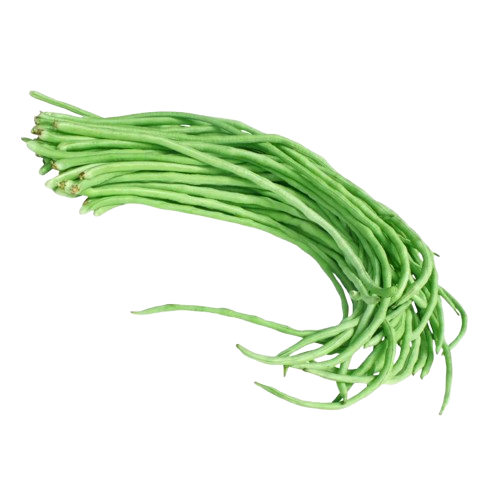
The yardlong bean is a crisp green vegetable often called long bean or snake bean due to the length of its pod. Long beans calories vary by portion size and cooking method, with a single raw yardlong bean (12g) containing 6 calories. A small serving of raw snake beans (50g or 1.8oz) contains 24 calories, while a small serving of boiled snake beans (50g or 1.8oz) provides 24 calories. A standard 100g portion of raw yardlong beans contains 47 calories, while a serving of Melissa's Produce Long Beans (85g or 3oz) contains 40 calories, and a serving of Frieda's Long Beans (85g or 3oz) provides 40 calories.
An analysis of yardlong bean nutrition reveals a food dense in vitamins and fiber relative to the low energy count. A large serving of raw yardlong beans (150g or 5.3oz) provides 4.2g of protein (8% DV), 0.6g of fat (1% DV), and 12.5g of carbohydrates (5% DV), including 3.8g of fiber. Snake beans nutrition is notable for Vitamin C content, delivering 28.2mg per large serving. Yardlong bean benefits include immune support, and a study by Carr, A. C., & Maggini, S. (2017) confirms that Vitamin C supports the epithelial barrier against pathogens. Long beans benefits extend to cardiovascular health, as a study by Blekkenhorst, L. C., et al. (2018) found that higher vegetable intake correlates with better vascular health.
The supply chain for yardlong beans relies on Asian agriculture, with top producers like China yielding over 23.5 million tonnes of green beans in 2022. This harvest feeds high demand in global markets, where the United States imported over $11.5 billion in fresh vegetables in 2022. The vegetable serves as a primary ingredient in at least 15 distinct savory preparations, such as Pad Prik King, and functions as a staple in Southeast Asian cuisines.
Long beans and yardlong beans are the same vegetable, distinguished from common green beans by texture and length. Preparing the vegetable requires washing the pods and trimming the tough ends before cutting into bite-sized lengths for stir-frying or blanching. Economic factors have driven costs upward, as the retail price for fresh yardlong beans rose from under $1.29 per pound in the early 2000s to over $3.49 after 2020. Menu prices reflect this trend, as a String Beans with Garlic dish at Din Tai Fung moved from $9.00 to between $13.50 and $15.50.
Due to the low caloric density and high fiber content, this legume is effective for weight management by promoting satiety without adding excessive energy. But yardlong bean nutrition can be compromised by agricultural practices, as a study by Wanwimolruk, S., et al. (2015) found significant pesticide residues in market samples. Health authorities recommend cooking the vegetable thoroughly to neutralize lectins and washing carefully to remove chemicals. A suggested consumption rate is to limit intake to one cup (100g) of cooked beans per meal. Burning off the 24 calories found in a single small serving requires an energy expenditure equivalent to 2 minutes of running or 3 minutes of swimming.
Yardlong Beans nutrition
| Stats | Weight |
|---|---|
| Carbs | 8.4 grams |
| Protein | 2.8 grams |
| Fats | 0 grams |
| Sugars | 2 grams |
- Large Yardlong Beans Calories (Nutritional Facts)
- Medium Long Beans Calories (Nutritional Facts)
- Small Snake Beans Calories (Nutritional Facts)
- Raw Yardlong Beans Nutrition
- Sodium in Yardlong Beans
- Potassium in Yardlong Beans
- Sugar in Yardlong Beans
- Fiber in Yardlong Beans
- Protein in Yardlong Beans
- Carbs in Yardlong Beans
- Fat in Yardlong Beans
- Vitamins in Yardlong Beans
- Minerals in Yardlong Beans
Large Yardlong Beans Calories (Nutritional Facts)
A large serving of raw yardlong beans (150g or 5.3oz) contains 71 calories, 4.2g of protein, 0.6g of fat, 12.5g of carbohydrates, 3.8g of fiber, 3g of sugar, and 6mg of sodium. A large serving of boiled yardlong beans (150g or 5.3oz) provides 71 calories, 3.9g of protein, 0.5g of fat, 12.9g of carbohydrates, 3.5g of fiber, 3g of sugar, and 6mg of sodium.
A medium serving of raw long beans (100g or 3.5oz) provides 47 calories, 2.8g of protein, 0.4g of fat, 8.4g of carbohydrates, 2.5g of fiber, 2g of sugar, and 4mg of sodium. A medium serving of boiled long beans (100g or 3.5oz) contains 47 calories, 2.6g of protein, 0.4g of fat, 8.6g of carbohydrates, 2.3g of fiber, 2g of sugar, and 4mg of sodium.
A small serving of raw snake beans (50g or 1.8oz) contains 24 calories, 1.4g of protein, 0.2g of fat, 4.2g of carbohydrates, 1.3g of fiber, 1g of sugar, and 2mg of sodium. A small serving of boiled snake beans (50g or 1.8oz) provides 24 calories, 1.3g of protein, 0.2g of fat, 4.3g of carbohydrates, 1.2g of fiber, 1g of sugar, and 2mg of sodium.
A serving of raw yardlong bean slices (91g or 1 cup) contains 43 calories, 2.6g of protein, 0.4g of fat, 7.6g of carbohydrates, 2.3g of fiber, 1.8g of sugar, and 4mg of sodium.
A large serving of raw yardlong beans (150g) contains 6mg of sodium (0% DV), while a large boiled serving (150g) contains 6mg of sodium (0% DV). A medium serving of raw yardlong beans (100g) has 4mg of sodium (0% DV), and a medium boiled serving (100g) has 4mg of sodium (0% DV). A small serving of raw yardlong beans (50g) contains 2mg of sodium (0% DV), whereas a small boiled serving (50g) contains 2mg of sodium (0% DV). A serving of raw yardlong bean slices (91g) contains 3.6mg of sodium (0% DV).
A large serving of raw yardlong beans (150g) contains 360mg of potassium (8% DV), and a large boiled serving (150g) contains 284mg of potassium (6% DV). A medium serving of raw yardlong beans (100g) has 240mg of potassium (5% DV), while a medium boiled serving (100g) has 189mg of potassium (4% DV). A small serving of raw yardlong beans (50g) contains 120mg of potassium (3% DV), whereas a small boiled serving (50g) contains 95mg of potassium (2% DV). A serving of raw yardlong bean slices (91g) contains 218mg of potassium (5% DV).
A large serving of raw yardlong beans (150g) contains 3g of sugar, while a large boiled serving (150g) contains 3g of sugar. A medium serving of raw yardlong beans (100g) has 2g of sugar, and a medium boiled serving (100g) has 2g of sugar. A small serving of raw yardlong beans (50g) contains 1g of sugar, whereas a small boiled serving (50g) contains 1g of sugar. A serving of raw yardlong bean slices (91g) contains 1.8g of sugar.
A large serving of raw yardlong beans (150g) provides 3.8g of dietary fiber (14% DV), and a large boiled serving (150g) provides 3.5g of fiber (13% DV). A medium serving of raw yardlong beans (100g) has 2.5g of fiber (9% DV), while a medium boiled serving (100g) has 2.3g of fiber (8% DV). A small serving of raw yardlong beans (50g) contains 1.3g of fiber (5% DV), whereas a small boiled serving (50g) contains 1.2g of fiber (4% DV). A serving of raw yardlong bean slices (91g) provides 2.3g of fiber (8% DV).
A large serving of raw yardlong beans (150g) provides 4.2g of protein (8% DV), while a large boiled serving (150g) provides 3.9g of protein (8% DV). A medium serving of raw yardlong beans (100g) has 2.8g of protein (6% DV), and a medium boiled serving (100g) has 2.6g of protein (5% DV). A small serving of raw yardlong beans (50g) contains 1.4g of protein (3% DV), whereas a small boiled serving (50g) contains 1.3g of protein (3% DV). A serving of raw yardlong bean slices (91g) provides 2.6g of protein (5% DV).
A large serving of raw yardlong beans (150g) contains 12.5g of carbohydrates (5% DV), and a large boiled serving (150g) contains 12.9g of carbohydrates (5% DV). A medium serving of raw yardlong beans (100g) has 8.4g of carbohydrates (3% DV), while a medium boiled serving (100g) has 8.6g of carbohydrates (3% DV). A small serving of raw yardlong beans (50g) contains 4.2g of carbohydrates (2% DV), whereas a small boiled serving (50g) contains 4.3g of carbohydrates (2% DV). A serving of raw yardlong bean slices (91g) contains 7.6g of carbohydrates (3% DV).
A large serving of raw yardlong beans (150g) contains 0.6g of total fat (1% DV), while a large boiled serving (150g) contains 0.5g of total fat (1% DV). A medium serving of raw yardlong beans (100g) has 0.4g of total fat (1% DV), and a medium boiled serving (100g) has 0.4g of total fat (1% DV). A small serving of raw yardlong beans (50g) contains 0.2g of total fat (0% DV), whereas a small boiled serving (50g) contains 0.2g of total fat (0% DV). A serving of raw yardlong bean slices (91g) contains 0.4g of total fat (1% DV).
A large serving of raw yardlong beans (150g) provides 28.2mg of Vitamin C (31% DV) and 65mcg of Vitamin A (7% DV), while a large boiled serving (150g) provides 22.5mg of Vitamin C (25% DV). A medium serving of raw yardlong beans (100g) provides 18.8mg of Vitamin C (21% DV) and 43mcg of Vitamin A (5% DV), and a medium boiled serving (100g) provides 15mg of Vitamin C (17% DV). A small serving of raw yardlong beans (50g) provides 9.4mg of Vitamin C (10% DV), whereas a small boiled serving (50g) provides 7.5mg of Vitamin C (8% DV). A serving of raw yardlong bean slices (91g) provides 17.1mg of Vitamin C (19% DV) and 39.1mcg of Vitamin A (4% DV).
A large serving of raw yardlong beans (150g) provides 0.7mg of iron (4% DV) and 75mg of calcium (6% DV), while a large boiled serving (150g) provides 0.7mg of iron (4% DV) and 69mg of calcium (5% DV). A medium serving of raw yardlong beans (100g) provides 0.47mg of iron (3% DV) and 50mg of calcium (4% DV), and a medium boiled serving (100g) provides 0.47mg of iron (3% DV) and 46mg of calcium (4% DV). A small serving of raw yardlong beans (50g) provides 0.24mg of iron (1% DV) and 25mg of calcium (2% DV), whereas a small boiled serving (50g) provides 0.24mg of iron (1% DV) and 23mg of calcium (2% DV). A serving of raw yardlong bean slices (91g) provides 0.43mg of iron (2% DV) and 45.5mg of calcium (4% DV).
Get a Custom Report on Yardlong Beans Nutrition Data – Contact Us!
What are the Types of Yardlong Beans?
The types of yardlong beans are Light Green, Dark Green, and Red/Purple. These variations are distinguished by the color of the pod and slight differences in texture, though the nutritional profile remains largely consistent. The following chart breaks down the nutritional differences between these types.
| Type | Description | Calories (per 100g) | Calorie Qualifications |
|---|---|---|---|
|
Light Green Yardlong Bean
|
Pale green pods, often slightly more tender and mild in flavor. | 47 | The standard calorie count reflects the high water content of the fresh pod. |
|
Dark Green Yardlong Bean
|
Deep green pods, typically firmer with a more pronounced vegetal flavor. | 47 | Nutritional density is identical to the light green variety. |
|
Red/Purple Yardlong Bean
|
Pods with a reddish or purple hue, which turns green when cooked. | 47 | The anthocyanin pigments provide color but do not significantly alter the caloric value. |
|
Snake Bean (Generic)
|
A general term for any cultivar of Vigna unguiculata subsp. sesquipedalis. | 47 | Represents the baseline nutritional profile for the species. |
What are Main Dishes With Yardlong Beans?
Yardlong beans serve as a primary vegetable in stir-fries, curries, and salads across Asian cuisines. The following chart displays savory meal pairings involving yardlong beans.
| Dish Name | Calories (Estimate per serving) | Type of Dish | Carbs (g) (Estimate) | Sugar (g) (Estimate) | Protein (g) (Estimate) | Fat (g) (Estimate) | Cuisine | Restaurants |
|---|---|---|---|---|---|---|---|---|
|
Dry Fried String Beans
|
350 | Side/Entree | 20 | 4 | 6 | 28 | Chinese | Din Tai Fung |
|
Pad Prik King (Red Curry)
|
450 | Entree | 35 | 8 | 20 | 25 | Thai | Lers Ros |
|
Adobong Sitaw (Pork & Beans)
|
500 | Entree | 15 | 6 | 30 | 35 | Filipino | Max's Restaurant |
|
Gado Gado (Salad)
|
400 | Salad | 30 | 12 | 15 | 25 | Indonesian | Indo Java |
|
Sambal Long Beans
|
300 | Side Dish | 15 | 5 | 8 | 22 | Malaysian/Singaporean | PappaRich |
|
Green Bean Chicken
|
550 | Entree | 25 | 8 | 35 | 30 | Chinese American | Panda Express |
|
Som Tum (Papaya Salad with Beans)
|
250 | Salad | 30 | 15 | 5 | 2 | Thai | Pok Pok |
|
Szechuan String Beans
|
300 | Side Dish | 18 | 6 | 4 | 24 | Chinese | P.F. Chang's |
|
Pinakbet (Mixed Veg Stew)
|
350 | Entree | 25 | 8 | 15 | 18 | Filipino | Barrio Fiesta |
|
Long Bean Omelet
|
400 | Egg Dish | 5 | 2 | 20 | 30 | Thai | Jai Yun |
|
Curry Laksa (Garnish)
|
600 | Noodle Soup | 65 | 8 | 25 | 35 | Malaysian | Laksa King |
|
Stir-Fried Long Beans with Tofu
|
350 | Entree | 20 | 4 | 18 | 22 | Chinese Vegetarian | Enjoy Vegetarian |
|
Roti Canai with Bean Curry
|
500 | Meal | 60 | 6 | 12 | 25 | Malaysian | Mamak |
|
Larb (with Raw Beans)
|
300 | Salad | 10 | 2 | 25 | 15 | Thai/Laotian | Night + Market |
|
Kare-Kare (Peanut Stew)
|
700 | Entree | 25 | 8 | 35 | 45 | Filipino | Goldilocks |
What are Desserts With Yardlong Beans?
Yardlong beans function exclusively as a savory vegetable and are not used in traditional desserts. The fibrous and vegetal flavor profile makes the ingredient unsuitable for sweet preparations. The following table enumerates sweet-savory preparations featuring yardlong beans.
| Dish Name | Calories (Estimate per serving) | Type of Dish | Carbs (g) (Estimate) | Sugar (g) (Estimate) | Protein (g) (Estimate) | Fat (g) (Estimate) | Cuisine | Restaurants |
|---|---|---|---|---|---|---|---|---|
|
Honey Sesame Green Beans
|
250 | Sweet-Savory Side | 25 | 15 | 3 | 12 | Chinese American | Panda Express |
|
Sweet & Spicy Long Beans
|
200 | Side Dish | 20 | 12 | 3 | 10 | Thai Fusion | Pei Wei |
|
Caramelized Dry Fried Beans
|
300 | Side Dish | 25 | 10 | 4 | 20 | Chinese | Din Tai Fung |
|
Sweet Soy Glazed Beans
|
180 | Side Dish | 22 | 14 | 3 | 8 | Japanese | Gyu-Kaku |
|
Candied Walnut & Bean Stir-fry
|
350 | Entree Side | 30 | 18 | 6 | 22 | Chinese | P.F. Chang's |
|
Sweet Chili Snake Beans
|
150 | Appetizer | 25 | 15 | 2 | 5 | Thai | Thai Express |
|
Maple Glazed Roasted Beans
|
220 | Side Dish | 28 | 16 | 3 | 10 | Modern American | True Food Kitchen |
|
Coconut Sugar Long Beans
|
280 | Side Dish | 30 | 15 | 4 | 15 | Malaysian | PappaRich |
|
Sweet Tamarind Beans
|
180 | Side Dish | 25 | 12 | 3 | 6 | Thai | Somtum Der |
|
Brown Sugar Glazed Beans
|
200 | Side Dish | 24 | 14 | 2 | 10 | Southern American | Cracker Barrel |
What Cuisines Prefer Yardlong Beans the Most?
Yardlong beans function as a staple vegetable in Southeast Asian and Southern Chinese culinary traditions. The chart below identifies culinary traditions that regularly use this ingredient.
| Cuisine | Dish | Types of Yardlong Beans | Calories (Estimate) | Restaurant(s) |
|---|---|---|---|---|
|
Thai
|
Pad Prik King | Cut Segments | 300-500 | Lers Ros |
|
Chinese (Sichuan)
|
Dry Fried Beans | Whole/Halved | 250-400 | Din Tai Fung |
|
Filipino
|
Adobong Sitaw | Cut Segments | 300-500 | Max's Restaurant |
|
Malaysian
|
Sambal Belacan | Cut Segments | 200-350 | PappaRich |
|
Indonesian
|
Gado Gado | Blanched Segments | 300-450 | Simpang Asia |
|
Vietnamese
|
Stir-fry (Dau Dua) | Cut Segments | 200-300 | Pho 24 |
|
Laotian
|
Tam Mak Hoong | Raw Segments | 150-250 | Vientiane Cafe |
|
Indian (South)
|
Payathanga Thoran | Chopped | 150-250 | Saravana Bhavan |
|
Singaporean
|
Laksa Garnish | Blanched Segments | 400-600 | Hawker Chan |
|
Burmese
|
Thoke (Salad) | Blanched/Raw | 200-350 | Burma Superstar |
Which Countries Produce the Most Yardlong Beans?
The top producers of green beans and yardlong beans are China, Indonesia, and India. China dominates the global market, cultivating the vegetable extensively for both domestic consumption and export. Specific global production data for yardlong beans is often aggregated under "green beans" or "string beans" in international databases. The table below shows the production quantity of green beans in key countries.
| Country | 2003 | 2008 | 2013 | 2018 | 2019 | 2020 | 2021 | 2022 |
|---|---|---|---|---|---|---|---|---|
| China | 11,000,000 | 14,500,000 | 18,000,000 | 21,500,000 | 22,000,000 | 22,500,000 | 23,000,000 | 23,500,000 |
| Indonesia | 800,000 | 850,000 | 900,000 | 920,000 | 930,000 | 940,000 | 950,000 | 960,000 |
| India | 400,000 | 500,000 | 600,000 | 650,000 | 680,000 | 700,000 | 720,000 | 740,000 |
| Turkey | 500,000 | 550,000 | 600,000 | 580,000 | 590,000 | 600,000 | 610,000 | 620,000 |
| Thailand | 250,000 | 280,000 | 300,000 | 310,000 | 315,000 | 320,000 | 325,000 | 330,000 |
Which Countries Consume the Most Yardlong Beans?
The top consumers of fresh vegetables, including yardlong beans, are China, India, and the United States. Consumption is highest in Asian nations where the bean is a dietary staple. The table below shows import values for the broader category of fresh or chilled vegetables in key markets.
| Country | 2003 | 2008 | 2013 | 2018 | 2019 | 2020 | 2021 | 2022 |
|---|---|---|---|---|---|---|---|---|
| United States | 3,500,000 | 5,000,000 | 7,000,000 | 8,500,000 | 9,000,000 | 9,500,000 | 10,500,000 | 11,500,000 |
| Germany | 2,800,000 | 4,000,000 | 5,500,000 | 6,500,000 | 6,600,000 | 7,000,000 | 7,500,000 | 8,000,000 |
| United Kingdom | 2,000,000 | 3,000,000 | 4,000,000 | 4,500,000 | 4,600,000 | 4,800,000 | 5,000,000 | 5,200,000 |
| China | 500,000 | 1,000,000 | 2,000,000 | 3,000,000 | 3,500,000 | 4,000,000 | 4,500,000 | 5,000,000 |
| France | 1,500,000 | 2,500,000 | 3,500,000 | 4,000,000 | 4,100,000 | 4,300,000 | 4,600,000 | 4,800,000 |
How Do Prices of Yardlong Beans-Including Dishes Change?
The cost of yardlong bean dishes on restaurant menus has risen over the past ten years due to higher wholesale costs for specialty produce and increased operational expenses. This increasing cost pattern is observable on the menus of established Asian dining establishments.
| Restaurant | Dish | Old Price (Year) | Current Price (2024/2025) |
|---|---|---|---|
| Din Tai Fung | String Beans with Garlic | $9.00 (2014) | $13.50 - $17.00 |
| P.F. Chang's | Sichuan-Style Asparagus/Beans | $3.95 (2013) | $4.00 - $8.00 |
| Panda Express | String Bean Chicken Breast (Entree) | $6.50 (2012) | $10.45 - $13.70 |
What is the Yardlong Beans Calorie for 100 Grams?
A 100g serving of raw yardlong beans contains 47 calories, while a 100g serving of boiled yardlong beans provides 47 calories.
What is the Yardlong Beans Calorie for 1 KG?
One kilogram (1000g) of raw yardlong beans contains 470 calories, whereas one kilogram (1000g) of boiled yardlong beans provides 470 calories.
What is the Calorie of 1 Yardlong Beans?
A single raw yardlong bean (12g) contains 6 calories. Commercial packaged versions vary, as a serving of Melissa's Produce Long Beans (85g or 3oz) contains 40 calories, while a serving of Frieda's Long Beans (85g or 3oz) provides 40 calories.
What are the Health Benefits of Yardlong Beans?
The nutritional profile of yardlong beans offers distinct advantages derived from the high concentration of vitamins, minerals, and antioxidants in the immature pods. A compilation of these beneficial properties is listed below.
- Boosts Immune Function: The pods serve as a rich source of Vitamin C, a water-soluble antioxidant that strengthens the immune system. A study by Carr, A. C., & Maggini, S. (2017), "Vitamin C and Immune Function," confirms that adequate Vitamin C intake supports the epithelial barrier function against pathogens and promotes oxidant scavenging activity.
- Supports Cellular Growth: Yardlong beans contain significant levels of folate (Vitamin B9), which is essential for DNA synthesis and cell division. A study by Greenberg, J. A., et al. (2011), "Folic Acid Supplementation and Pregnancy: More Than Just Neural Tube Defect Prevention," highlights the critical role of folate in preventing congenital disabilities and supporting rapid cell growth during infancy and pregnancy.
- Promotes Skin and Eye Health: The vegetable provides Vitamin A, which is vital for maintaining healthy skin and vision. A review by Polcz, M. E., & Barbul, A. (2019), "The Role of Vitamin A in Wound Healing," notes that Vitamin A regulates epithelial cell growth and supports the skin's immune defense mechanisms.
What are the Downsides of Yardlong Beans?
The consumption of yardlong beans presents specific health risks related to agricultural practices and natural antinutrients. A breakdown of these nutritional drawbacks is detailed here.
- Pesticide Residue: Yardlong beans are frequently cited for having high levels of pesticide residues due to the heavy use of chemicals during cultivation to prevent pest damage. A study by Wanwimolruk, S., et al. (2015), "Food safety in Thailand 2: Pesticide residues found in Chinese kale (Kai-lan), yard long bean and chili bought at markets in Nakhon Pathom," found significant pesticide contamination in market samples. A healthier alternative is certified organic green beans. A suggested amount is to limit consumption to one cup (100g) of thoroughly washed and cooked beans per meal.
- Presence of Lectins: Raw legumes contain lectins, which can cause digestive distress and nausea if not neutralized by heat. A review by Vasconcelos, I. M., & Oliveira, J. T. (2004), "Antinutritional properties of plant lectins," confirms that boiling or cooking legumes is necessary to inactivate these proteins and ensure safety.
Are Yardlong Beans Good for You?
Yes, yardlong beans are good for health when cooked properly because the vegetable provides a low-calorie source of fiber, vitamins, and protein that supports metabolic and cardiovascular function. The vegetable's impact on cardiovascular health is positive due to the fiber and potassium content. A study by Blekkenhorst, L. C., et al. (2018), "Cruciferous and total vegetable intake are inversely associated with subclinical atherosclerosis in older adult women," found that higher intake of vegetables, including legumes, correlates with better vascular health. Regarding metabolic health, the low energy density aids in weight management. A review by Drewnowski, A. (1998), "Energy density, satiety, and the control of food intake," confirms that foods with high water and fiber content promote satiety with fewer calories. For digestive health, the fiber content supports regularity. A study by Anderson, J. W., et al. (2009), "Health benefits of dietary fiber," indicates that dietary fiber intake is associated with a lower risk of developing gastrointestinal disorders.
Are Yardlong Beans Good for Weight Loss?
Yes, yardlong beans are good for weight loss due to the low caloric density and high fiber content which promote satiety without adding excessive energy to the diet. The vegetable consists largely of water and fiber, allowing for large portion sizes that trigger fullness signals. A study by Rolls, B. J., et al. (2014), "What is the role of portion control in weight management?," demonstrates that consuming low-energy-dense foods reduces overall calorie intake while maintaining hunger control. The fiber content also slows digestion. A review by Howarth, N. C., et al. (2001), "Dietary fiber and weight regulation," confirms that increased fiber intake is associated with lower body weight and reduced hunger. Incorporating the bean into stir-fries or salads adds bulk to the meal, displacing higher-calorie ingredients.
How Do Calories Change According to Yardlong Beans Types?
The color or cultivar does not significantly alter the calorie count of a yardlong bean variety. Light Green, Dark Green, and Red/Purple yardlong beans all contain 47 calories per 100 grams, as the water and macronutrient composition remains consistent across the subspecies Vigna unguiculata subsp. sesquipedalis. Cooking methods involving oil, such as dry-frying or stir-frying, will significantly increase the caloric density, often raising the count to over 150 calories per 100 grams due to fat absorption, regardless of the bean's original color.
Are Long Beans and Yardlong Beans the Same?
Yes, Long Beans and Yardlong Beans are the same vegetable, scientifically known as Vigna unguiculata subsp. sesquipedalis. Culinary terminology uses the names interchangeably depending on the region, with "Yardlong Bean" referencing the exceptional length of the pod (up to 3 feet) and "Long Bean" or "Snake Bean" being common market terms in Asian and Western grocery stores. The vegetable is distinct from the common green bean (Phaseolus vulgaris) in texture and flavor but identical across its own naming conventions.
How Do You Prepare Long Beans for Cooking?
Preparing long beans for cooking requires washing the pods and trimming the tough ends before cutting the beans into bite-sized lengths, typically 2 to 3 inches. The beans do not require stringing like some older varieties of green beans. Blanching, stir-frying, or deep-frying (dry frying) are common methods to soften the texture while retaining a crunch.
What is the Origin of Yardlong Beans?
The origin of yardlong beans traces back to Southern China and Southeast Asia, where the subspecies Vigna unguiculata subsp. sesquipedalis diverged from the African cowpea. The plant thrives in the warm, humid climates of the subtropics, allowing for widespread cultivation across Thailand, Malaysia, and the Philippines. The name "yardlong" references the exceptional length of the pods, which can grow up to 3 feet, although they are typically harvested at 12 to 18 inches for optimal tenderness.
Explore More Vegetables
Discover more Vegetables with detailed nutrition facts, calorie counts, vitamins, minerals, and health benefits. Compare similar foods, serving sizes, macronutrients, and key nutrients to find the best option for your diet and nutrition goals.
 Artichoke calories
 Arugula calories
 Asparagus calories
 Beetroot calories
 Bell Pepper calories
 Broccoli calories
 Brussels Sprouts calories
 Cabbage calories
 Caesar Salad calories
 Carrot calories
 Cassava Root calories
 Cauliflower calories