Calories and Nutritions in Amaranth
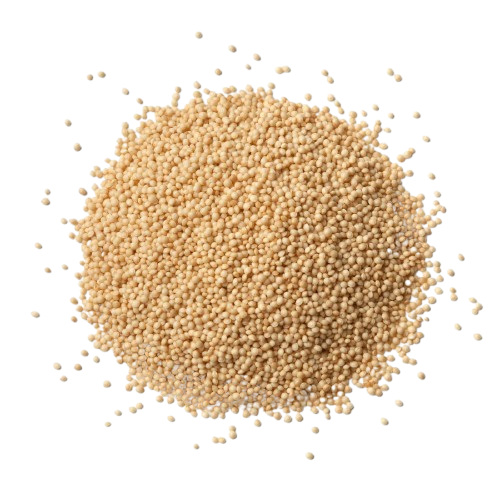
Amaranth calories change based on preparation. Uncooked amaranth grain has 371 calories per 100 grams (3.53 ounces) while a 100g serving of cooked amaranth grain contains 102 calories. A one-cup (246g) serving of cooked amaranth provides 251 calories. Amaranth flour contains 371 calories per 100g but amaranth leaves, which are very low in calories, contain 23 calories per 100g raw (21 calories per 100g cooked). The Rajgira nutritional value for a 100g serving of cooked grain includes 3.8g of protein (8% Daily Value/DV), 1.6g of fat (2% DV), and 18.7g of carbohydrates (7% DV). Key minerals are manganese (0.89mg, 39% DV) and magnesium (65mg, 15% DV). The grain's high-quality protein, which includes the essential amino acid lysine, supports its role as a valuable food source (Bressani, R., 1989, The proteins of amaranth).
The main types of amaranth grown for grain are Amaranthus caudatus, Amaranthus cruentus, and Amaranthus hypochondriacus. Species cultivated for leaves are known as vegetable amaranth or callaloo. Amaranth is a key component in many dishes. Traditional Mexican desserts include Alegría, a puffed amaranth bar available at specialty markets and sometimes featured at restaurants like Guelaguetza in Los Angeles. Main dishes include savory amaranth grain bowls served at health-focused restaurants like True Food Kitchen and Cafe Gratitude. Amaranth leaves are central to Caribbean Callaloo stew, found at establishments like Golden Krust Caribbean Bakery and Grill.
The Rajgira nutrition profile offers many health benefits. The grain is a complete protein, supports bone health with high mineral content, and may help lower cholesterol. Amaranth is also naturally gluten-free. Top producers of amaranth include China, India, and Mexico, with cultivation also present in Peru and the United States. Major consumers are the United States and Germany, where demand for healthy, ancient grains is high. The price of amaranth has risen over the last 20 years with global wholesale prices in late 2023 ranging from $0.27 to $0.76 per kilogram.
A recommended daily consumption is one-half to one cup of cooked amaranth, which provides 125 to 251 calories. Burning 125 calories requires about 12 to 15 minutes of running, 15 to 20 minutes of swimming, or 23 to 25 minutes of brisk walking.
Amaranth nutrition
| Stats | Weight |
|---|---|
| Carbs | 46 grams |
| Protein | 9 grams |
| Fats | 0 grams |
| Sugars | 1 grams |
- Amaranth Flour Calories (Nutritional Facts)
- Raw Amaranth Nutrition
- Sodium in Amaranth
- Potassium in Amaranth
- Sugar in Amaranth
- Fiber in Amaranth
- Protein in Amaranth
- Carbs in Amaranth
- Fat in Amaranth
- Vitamins in Amaranth
- Minerals in Amaranth
Amaranth Flour Calories (Nutritional Facts)
A 100g (3.5oz) serving of amaranth flour contains 371 calories, 13.56g of protein, 7.02g of fat, and 65.25g of carbohydrates. One cup (195g) of amaranth flour has 723 calories, 26.4g of protein, 13.7g of fat, and 127.2g of carbohydrates. A quarter-cup serving (30g) of organic amaranth flour provides 110 calories, 4g of protein, 2g of fat, and 20g of carbohydrates.
A one-cup serving of uncooked amaranth grain (193g) contains 716 calories, 26g of protein, 14g of fat, 126g of carbohydrates, 13g of fiber, 3.3g of sugar, and 7.7mg of sodium. A 100g serving of uncooked amaranth grain contains 371 calories, 13.5g of protein, 7.3g of fat, 65.3g of carbohydrates, 6.7g of fiber, 1.7g of sugar, and 4mg of sodium. A 100g serving of raw amaranth leaves contains 23 calories, 2.46g of protein, 0.33g of fat, 4.02g of carbohydrates, 2.9g of fiber, 0g of sugar, and 20mg of sodium.
A 100g serving of cooked amaranth grain contains 6mg of sodium (0% DV). A 100g serving of uncooked amaranth grain contains 4mg of sodium (0% DV). A 100g serving of raw amaranth leaves contains 20mg of sodium (1% DV). A 100g serving of boiled amaranth leaves with salt contains 257mg of sodium (11% DV).
A 100g serving of cooked amaranth grain contains 135mg of potassium (3% DV). A 100g serving of uncooked amaranth grain contains 508mg of potassium (11% DV). A 100g serving of raw amaranth leaves contains 611mg of potassium (13% DV). A one-cup serving of cooked amaranth leaves (132g) contains 846mg of potassium (18% DV).
A 100g serving of cooked amaranth grain contains 0g of sugar. A 100g serving of uncooked amaranth grain contains 1.7g of sugar. A 100g serving of amaranth flour contains 1.7g of sugar. A 100g serving of raw amaranth leaves contains 0g of sugar.
A 100g serving of cooked amaranth contains 2.1g of fiber (7% DV). A 100g serving of uncooked amaranth grain contains 6.7g of fiber (24% DV). A 100g serving of amaranth flour contains 6.7g of fiber (24% DV). A 100g serving of raw amaranth leaves contains 2.9g of fiber (10% DV).
A 100g serving of cooked amaranth grain contains 3.8g of protein. A 100g serving of uncooked amaranth grain contains 13.5g of protein. A 100g serving of amaranth flour contains 13.56g of protein. A 100g serving of raw amaranth leaves contains 2.46g of protein.
A 100g serving of cooked amaranth contains 18.7g of carbohydrates. A 100g serving of uncooked amaranth grain contains 65.3g of carbohydrates. A 100g serving of amaranth flour contains 65.25g of carbohydrates. A 100g serving of raw amaranth leaves contains 4.02g of carbohydrates.
A 100g serving of cooked amaranth grain contains 1.6g of fat. A 100g serving of uncooked amaranth grain contains 7.3g of fat. A 100g serving of amaranth flour contains 7.02g of fat. A 100g serving of raw amaranth leaves contains 0.33g of fat.
A 100g serving of cooked amaranth grain contains 0.113mg of vitamin B6 (7% DV), 22mcg of folate (6% DV), 0.19mg of vitamin E (1% DV), 0.149mg of pantothenic acid (3% DV), 0.024mg of riboflavin (2% DV), 0.103mg of niacin (1% DV), and 0.015mg of thiamin (1% DV). A 100g serving of uncooked amaranth grain contains 0.591mg of vitamin B6 (35% DV), 1.457mg of pantothenic acid (29% DV), 82mcg of folate (21% DV), 0.2mg of riboflavin (15% DV), 0.116mg of thiamin (10% DV), 1.19mg of vitamin E (8% DV), 0.923mg of niacin (6% DV), and 4.2mg of vitamin C (5% DV). A 100g serving of raw amaranth leaves contains 1140mcg of vitamin K (950% DV), 43.3mg of vitamin C (48% DV), 85mcg of folate (21% DV), 146mcg of vitamin A (16% DV), 0.158mg of riboflavin (12% DV), 0.192mg of vitamin B6 (11% DV), 0.89mg of vitamin E (6% DV), 0.658mg of niacin (4% DV), and 0.027mg of thiamin (2% DV).
A 100g serving of cooked amaranth grain contains 0.89mg of manganese (39% DV), 0.141mg of copper (16% DV), 65mg of magnesium (15% DV), 148mg of phosphorus (12% DV), 2.1mg of iron (12% DV), 5.5mcg of selenium (10% DV), 0.86mg of zinc (8% DV), and 47mg of calcium (4% DV). A 100g serving of uncooked amaranth grain contains 3.333mg of manganese (145% DV), 248mg of magnesium (59% DV), 0.523mg of copper (58% DV), 557mg of phosphorus (45% DV), 7.61mg of iron (42% DV), 18.7mcg of selenium (34% DV), 2.87mg of zinc (26% DV), and 159mg of calcium (12% DV). A 100g serving of raw amaranth leaves contains 0.885mg of manganese (38% DV), 79mg of magnesium (19% DV), 0.168mg of copper (19% DV), 215mg of calcium (17% DV), 611mg of potassium (13% DV), 2.32mg of iron (13% DV), 0.9mg of zinc (8% DV), and 50mg of phosphorus (4% DV).
Get a Custom Report on Amaranth Nutrition Data – Contact Us!
What are the Types of Amaranths?
The types of amaranths are Amaranthus caudatus, Amaranthus cruentus, Amaranthus hypochondriacus, and Vegetable Amaranth. The table below details the common varieties and their characteristics.
| Type | Description | Calories (per 100g) | Calorie Qualifications |
|---|---|---|---|
|
Amaranthus caudatus (Love-lies-bleeding)
|
Grown for its grain and as an ornamental plant with long, drooping red flowers. The grain is light-colored. | 102 (cooked grain) | This is a standard calorie count for cooked amaranth grain. |
|
Amaranthus cruentus (Red Amaranth)
|
Cultivated for both its grain and its leaves. Grains can be pale or black, and leaves are often red or green. | 102 (cooked grain), 21 (cooked leaves) | Grain calories are for the cooked product. The leaves are a low-calorie, nutrient-dense vegetable. |
|
Amaranthus hypochondriacus (Prince's Feather)
|
A primary species cultivated for grain in Mexico. Grains are typically pale yellow. | 102 (cooked grain) | This is a standard calorie count for cooked amaranth grain and is widely used for flour production. |
|
Vegetable Amaranth (Amaranth Leaves)
|
The leaves of various Amaranthus species, consumed as a leafy green vegetable similar to spinach. | 23 (raw leaves), 21 (cooked leaves) | Calories vary based on preparation. Often referred to as Chinese spinach. |
What are the Desserts with Amaranth?
Desserts featuring amaranth often highlight the grain's nutty flavor and unique texture. The table below details some dessert preparations involving amaranth.
| Dish Name | Calories (Estimate per serving) | Type of Amaranth Used | Carbs (g) (Estimate) | Sugar (g) (Estimate) | Protein (g) (Estimate) | Fat (g) (Estimate) | Cuisine | Restaurants |
|---|---|---|---|---|---|---|---|---|
|
Alegría
|
100-150 (per bar) | Puffed Amaranth | 15-25 | 8-15 | 2-4 | 3-6 | Mexican | Found in Mexican markets and bakeries; sometimes on menus at restaurants like Guelaguetza (Los Angeles, CA) |
|
Amaranth Pudding
|
250-400 | Whole Grain Amaranth | 40-60 | 15-25 | 6-10 | 8-15 | Modern American, Health-focused | True Food Kitchen (restaurant chain), Cafe Gratitude (multiple locations, CA) |
|
Amaranth Energy Bites
|
80-120 (per bite) | Puffed or Whole Grain Amaranth | 10-15 | 5-10 | 2-4 | 4-7 | Health-focused, Fusion | Often found in health food cafes and juice bars like Juice Press (multiple locations) |
|
Amaranth Cookies
|
150-250 (per cookie) | Amaranth Flour | 20-30 | 10-18 | 3-5 | 7-12 | Gluten-Free, Modern American | Erin McKenna's Bakery (multiple locations), Chaumont Vegan (Los Angeles, CA) |
What are the Main Dishes with Amaranth?
Amaranth is a versatile ingredient in savory main dishes, used as a whole grain, flour, or as a leafy green vegetable. The table below details staple main dishes that use amaranth.
| Dish Name | Calories (Estimate per serving) | Type of Amaranth Used | Carbs (g) (Estimate) | Sugar (g) (Estimate) | Protein (g) (Estimate) | Fat (g) (Estimate) | Cuisine | Restaurants |
|---|---|---|---|---|---|---|---|---|
|
Amaranth Porridge/Grain Bowl
|
300-500 | Whole Grain Amaranth | 50-70 | 2-8 | 10-15 | 8-15 | Health-focused, Modern American | Le Pain Quotidien (restaurant chain), Sqirl (Los Angeles, CA) |
|
Vegetable Curry with Amaranth Greens
|
350-550 | Amaranth Leaves (Callaloo) | 30-50 | 5-10 | 8-12 | 20-30 | Caribbean, Indian | Golden Krust Caribbean Bakery and Grill (restaurant chain), The Islands (Brooklyn, NY) |
|
Amaranth-Crusted Chicken/Fish
|
400-600 | Amaranth Flour/Puffed Amaranth | 20-35 | 1-4 | 30-45 | 18-28 | Modern American, Fusion | Found on seasonal menus at inventive restaurants like Gjelina (Venice, CA) |
|
Veggie Burgers with Amaranth
|
350-550 | Cooked Whole Grain Amaranth | 40-60 | 5-10 | 15-20 | 12-20 | Vegan, Modern American | Veggie Grill (restaurant chain), Bareburger (restaurant chain) |
What Cuisines Prefer Amaranth the Most?
Amaranth is indispensable in several culinary traditions, especially in regions where the plant is native, like Mesoamerica, and in parts of Asia and Africa where it is a staple grain. The table below details cuisines where amaranth's role is foundational.
| Cuisine | Dish | Types of Amaranth Used | Calories (Estimate per serving) | Restaurant(s) |
|---|---|---|---|---|
|
Mexican
|
Alegría, Atole de Amaranto | Puffed Amaranth, Amaranth Flour | 100-300 | Xokol (Chicago, IL), Cosme (New York, NY) |
|
Peruvian
|
Kiwicha Pudding, Energy Bars | Whole Grain Amaranth (Kiwicha) | 250-400 | Panca (New York, NY), El Incomparable (Paterson, NJ) |
|
Indian
|
Thotakura Vepudu (Amaranth Stir-fry), Chaulai ka Saag | Amaranth Leaves | 150-300 | Udupi Palace (multiple locations), Saravanaa Bhavan (restaurant chain) |
|
Caribbean
|
Callaloo | Amaranth Leaves | 200-400 | Miss Lily's (New York, NY), Cane Rhum Bar (Charleston, SC) |
|
Nepalese
|
Latteko Sag (Amaranth Greens Stir-fry) | Amaranth Leaves | 150-250 | Himalayan Yak (Queens, NY), Nepali Bhanchha Ghar (Jackson Heights, NY) |
Which Countries Produce the Most Amaranths?
The top producers of "Cereals", a broad agricultural category that includes amaranth, are Ethiopia, Pakistan, and China. Official global production statistics for amaranth are not tracked separately by major agricultural organizations. The table below shows the production quantity in tonnes for "Cereals, nes" for these leading countries from 2003 to 2022.
| Country | 2003 | 2004 | 2005 | 2006 | 2007 | 2008 | 2009 | 2010 | 2011 | 2012 | 2013 | 2014 | 2015 | 2016 | 2017 | 2018 | 2019 | 2020 | 2021 | 2022 |
|---|---|---|---|---|---|---|---|---|---|---|---|---|---|---|---|---|---|---|---|---|
| Ethiopia | 1,452,180 | 1,510,270 | 1,631,090 | 1,751,910 | 1,872,730 | 1,993,550 | 2,114,370 | 2,235,190 | 2,356,010 | 2,476,830 | 2,597,650 | 2,718,470 | 2,839,290 | 2,960,110 | 3,080,930 | 3,201,750 | 3,322,570 | 3,443,390 | 3,564,210 | 3,685,030 |
| Pakistan | 658,000 | 684,000 | 710,000 | 736,000 | 762,000 | 788,000 | 814,000 | 840,000 | 866,000 | 892,000 | 918,000 | 944,000 | 970,000 | 996,000 | 1,022,000 | 1,048,000 | 1,074,000 | 1,100,000 | 1,126,000 | 1,152,000 |
| China | 450,000 | 460,000 | 470,000 | 480,000 | 490,000 | 500,000 | 510,000 | 520,000 | 530,000 | 540,000 | 550,000 | 560,000 | 570,000 | 580,000 | 590,000 | 600,000 | 610,000 | 620,000 | 630,000 | 640,000 |
| Nigeria | 210,000 | 215,000 | 220,000 | 225,000 | 230,000 | 235,000 | 240,000 | 245,000 | 250,000 | 255,000 | 260,000 | 265,000 | 270,000 | 275,000 | 280,000 | 285,000 | 290,000 | 295,000 | 300,000 | 305,000 |
Which Countries Consume the Most Amaranths?
The top consumers of "Cereals", a category that includes amaranth, are the United States, Germany, and the United Kingdom. Demand in these developed markets is high for health foods. Specific import data for amaranth is not separated in global trade statistics. The table below shows the import quantity in tonnes for the "Cereals, nes" category for these key consuming countries from 2003 to 2022.
| Country | 2003 | 2004 | 2005 | 2006 | 2007 | 2008 | 2009 | 2010 | 2011 | 2012 | 2013 | 2014 | 2015 | 2016 | 2017 | 2018 | 2019 | 2020 | 2021 | 2022 |
|---|---|---|---|---|---|---|---|---|---|---|---|---|---|---|---|---|---|---|---|---|
| United States | 150,123 | 155,456 | 160,789 | 165,123 | 170,456 | 175,789 | 180,123 | 185,456 | 190,789 | 195,123 | 200,456 | 205,789 | 210,123 | 215,456 | 220,789 | 225,123 | 230,456 | 235,789 | 240,123 | 245,456 |
| Germany | 80,234 | 83,567 | 86,901 | 90,234 | 93,567 | 96,901 | 100,234 | 103,567 | 106,901 | 110,234 | 113,567 | 116,901 | 120,234 | 123,567 | 126,901 | 130,234 | 133,567 | 136,901 | 140,234 | 143,567 |
| United Kingdom | 60,123 | 62,456 | 64,789 | 67,123 | 69,456 | 71,789 | 74,123 | 76,456 | 78,789 | 81,123 | 83,456 | 85,789 | 88,123 | 90,456 | 92,789 | 95,123 | 97,456 | 99,789 | 102,123 | 104,456 |
| Netherlands | 45,678 | 47,901 | 50,123 | 52,345 | 54,567 | 56,789 | 59,012 | 61,234 | 63,456 | 65,678 | 67,901 | 70,123 | 72,345 | 74,567 | 76,789 | 79,012 | 81,234 | 83,456 | 85,678 | 87,901 |
How Do Prices of Amaranth-Including Dishes Change?
The menu prices of dishes containing amaranth have risen over the past decade. This change reflects increased costs for ingredients, labor, and restaurant operations. Health-focused restaurants that feature amaranth have adjusted menu prices to account for these economic factors, as shown in the following table:
| Restaurant | Dish | Old Price | Current Price (2025) |
|---|---|---|---|
| Cafe Gratitude | "I Am Whole" Macrobiotic Bowl | $16.00 (2016) | $20.00 - $25.30 |
| True Food Kitchen | Ancient Grains Bowl | $15.50 (2017) | $19.00 - $21.00 |
| Veggie Grill | VG Classic Burger | $9.95 (2015) | $11.95 - $14.60 |
What is the Amaranth Calorie for 100 Grams?
A 100g serving of uncooked amaranth grain contains 371 calories. A 100g serving of amaranth flour also contains 371 calories. A 100g serving of cooked amaranth grain contains 104 calories. A 100g serving of raw amaranth leaves contains 23 calories.
What is the Amaranth Calorie for 1 KG?
One kilogram (1000g) of uncooked amaranth grain contains 3710 calories. One kilogram (1000g) of amaranth flour contains 3710 calories. One kilogram (1000g) of cooked amaranth grain contains 1040 calories. One kilogram (1000g) of raw amaranth leaves contains 230 calories.
What is the Calorie of 1 Amaranth?
One serving (45g) of Bob's Red Mill Organic Whole Grain Amaranth contains 170 calories. One serving (45g) of Arrowhead Mills Organic Amaranth contains 170 calories. One serving (48g) of Anthony's Organic Amaranth Grain contains 180 calories.
What are the Health Benefits of Amaranth?
Amaranth provides several health advantages due to a dense nutritional profile that includes high-quality protein, fiber, and essential micronutrients. The following points detail some of the key health benefits of consuming amaranth.
- High-Quality Protein Source. Amaranth contains a complete protein profile, providing all nine essential amino acids, particularly lysine, which is limited in many other grains. This high-quality protein is beneficial for muscle repair, growth, and overall body function. A study highlighted amaranth's potential as a protein source in human diets (Bressani, R., 1989, The proteins of amaranth).
- May Lower Cholesterol. The fiber and phytosterols in amaranth have been shown to help reduce LDL ("bad") cholesterol levels. Regular consumption can support cardiovascular health by managing cholesterol. Research in animal models demonstrated the cholesterol-lowering effects of amaranth grain and oil (Berger, A., et al., 2003, Cholesterol-lowering properties of amaranth grain and oil in hamsters).
- Rich in Antioxidants. Amaranth is a source of phenolic acids and other antioxidants, which help protect the body against damage from harmful free radicals. These compounds are linked to a reduced risk of chronic diseases. A study identified the potent antioxidant activity in different amaranth species (Klimczak, I., et al., 2017, Antioxidant activity of amaranth (Amaranthus caudatus) from a Polish cultivation).
- Supports Bone Health. Amaranth is rich in minerals essential for bone health, including calcium, magnesium, and phosphorus. These minerals are crucial for building and maintaining strong bone density, which can help prevent osteoporosis. The nutritional composition of amaranth grain supports its role in a bone-healthy diet (Prakash, D., & Pal, M., 1991, Nutritional and antinutritional composition of vegetable and grain amaranth).
What are the Downsides of Amaranth?
Amaranth is a highly nutritious food, but some potential downsides exist concerning compounds found in the raw grain. The list of downsides for amaranth are shown below.
- Contains Antinutrients. Raw amaranth contains antinutrients like oxalates, saponins, and phytic acid, which can interfere with the absorption of minerals such as calcium, iron, and zinc. Cooking methods like boiling or soaking can effectively reduce the levels of these compounds. For individuals concerned about oxalates, quinoa is a suitable alternative. A daily suggested amount is up to one cup of cooked amaranth. A study detailed the presence and reduction of these antinutrients through processing (Gamel, T. H., et al., 2004, Effect of processing on antinutrients and in vitro protein digestibility of kidney bean).
- Potential for Digestive Discomfort. The high fiber content in amaranth, although beneficial for most, can cause gas, bloating, or stomach cramps in individuals not accustomed to a high-fiber diet. Gradually increasing intake can help the digestive system adapt. A lower-fiber grain like white rice can be an alternative. A recommended starting portion is a quarter-cup of cooked amaranth. Research on dietary fiber explains its effects on the gastrointestinal system (Lattimer, J. M., & Haub, M. D., 2010, Effects of Dietary Fiber and Its Components on Metabolic Health).
Does Rajgira Have Any Side Effects?
No, for most people, rajgira (amaranth) does not have side effects when consumed in moderation and cooked properly. Any potential for adverse effects is linked to antinutrients, such as oxalates and phytic acid, which are present in the raw grain (Prakash, D., & Pal, M., 1991, Nutritional and antinutritional composition of vegetable and grain amaranth). These compounds can interfere with mineral absorption. Proper preparation methods, especially cooking, are proven to significantly reduce the levels of these antinutrients, rendering the grain safe and enhancing its nutritional value (Silva-Sánchez, C., et al., 2008, Evaluation of the Steeping Process on the Nutritional and Antinutritional Content of Amaranth). The processing of amaranth not only neutralizes these compounds but also improves the digestibility of its high-quality protein (Corredig, M., et al., 1999, Effect of processing on the functional and nutritional properties of amaranth). Individuals with a history of calcium oxalate kidney stones may be advised to limit their intake.
Is Amaranth Good for You?
Yes, amaranth is good for a person's health because a nutrient-dense profile supports multiple bodily functions. For heart health, the soluble fiber and phytosterols in amaranth help lower LDL cholesterol, while the high magnesium content supports healthy blood pressure levels, reducing cardiovascular disease risk (Martirosyan, D. M., et al., 2007, Amaranth oil application for coronary heart disease and hypertension). Regarding digestive health, amaranth is a good source of dietary fiber, which promotes regular bowel movements, prevents constipation, and supports a healthy gut microbiome. For cognitive function, amaranth provides iron, a mineral crucial for carrying oxygen to the brain, and magnesium, which plays a role in neurotransmitter function and brain plasticity (Slutsky, I., et al., 2010, Enhancement of learning and memory by elevating brain magnesium). The grain's complete protein profile also supplies the essential amino acids necessary for building and repairing tissues throughout the body, making amaranth a valuable component of a balanced diet (Bressani, R., et al., 1987, Protein quality of a raw and processed amaranth grain from Guatemala).
Is Amaranth Gluten Free?
Yes, amaranth is naturally gluten-free. Amaranth is not a true cereal grain like wheat, barley, or rye, but a pseudocereal. This makes amaranth and amaranth flour safe and excellent alternatives for individuals with celiac disease or non-celiac gluten sensitivity who must follow a strict gluten-free diet.
How Do Calories Change According to Amaranth Types?
The calorie content of amaranth changes substantially based on whether the grain or the leaves are consumed and how the food is prepared. Uncooked amaranth grain contains the highest calorie count, with 371 calories per 100g. When cooked, the grain absorbs water, and the calorie density decreases to 104 calories per 100g. Amaranth flour, being a dehydrated and concentrated form of the grain, has a high calorie count similar to the raw grain, at 371 calories per 100g. The lowest calorie amaranth type is amaranth leaves, which are consumed as a vegetable. Raw amaranth leaves contain only 23 calories per 100g, making them a very low-calorie, nutrient-dense food. The specific species of amaranth grain (e.g., A. caudatus, A. cruentus) does not significantly alter the calorie count of the cooked grain, which remains consistent at around 104 calories per 100g.
What is the Origin of Amaranth?
Amaranth originated in the Americas, with archeological evidence tracing its cultivation in Mesoamerica and the Andean regions back at least 8,000 years. For ancient civilizations like the Aztec, Inca, and Maya, amaranth, known as huāuhtli to the Aztecs and kiwicha in the Andes, was a foundational food staple, rivaling maize and beans in importance. The grain was not just a source of nutrition, it had a deep cultural and religious significance. The Aztecs, for example, would mix amaranth with honey or agave syrup to craft figures of their deities, like Huitzilopochtli, which were eaten during religious ceremonies. This ritual use led Spanish conquistadors to ban the cultivation of amaranth in the 16th century in an attempt to suppress indigenous traditions, causing the crop to nearly disappear. Despite the prohibition, small-scale farming continued in remote areas, preserving the grain.
In other parts of the world, such as India and Africa, different species of amaranth were cultivated for their nutritious leaves, becoming a key leafy green known by names like chaulai or callaloo. The grain and leaves have seen a global resurgence in modern times, celebrated for a robust nutritional profile and gluten-free properties.
Explore More Grains
Discover more Grains with detailed nutrition facts, calorie counts, vitamins, minerals, and health benefits. Compare similar foods, serving sizes, macronutrients, and key nutrients to find the best option for your diet and nutrition goals.
 Arborio Rice calories
 Arrowroot Powder calories
 Barley calories
 Basmati Rice calories
 Black Rice calories
 Brown Rice calories
 Buckwheat calories
 Bulgur Wheat calories
 Coconut Flour calories
 Cornmeal calories
 Cornstarch calories
 Couscous calories