Calories and Nutritions in Barley
Barley is a nutritious cereal grain, and its caloric content depends on the type and preparation. A 100-gram serving of raw hulled barley contains 354 calories, 2.3g fat, and 17.3g fiber, along with 0.646mg of Vitamin B1 thiamine (54% of the DV), 0.498 mg of copper (55% of the DV), 1.94mg of manganese (84% of the DV), and 37.7µg of selenium (69% of the DV). A 60-gram serving of raw barley contains 212 calories, 1.38g fat, 7.5g protein, 5.2g fiber, and 52.2g carbs. A study published in the European Journal of Clinical Nutrition in 2010 (Wolever et al.) found that barley's high fiber content, particularly its beta-glucan soluble fiber, contributes to improved blood sugar control and increased satiety, which can be beneficial for weight management.
There are several types of barley, including hulled, pearled, and hulless barley. The top producers of barley are the European Union, Russia, and Australia. The European Union consumes the most barley, followed by Russia and Saudi Arabia. Global barley prices have fluctuated, with the price per metric ton ranging from $100.09 in Q4 2005 to $122.23 in Q4 of 2024.
Barley is featured in many dishes across different cuisines, including barley soup and barley salad available in restaurants such as Sweetgreen, Panera Bread, and Cava. The health benefits of barley make it a recommended food choice, with studies suggesting that 3.6 grams of barley daily can reduce the risk of heart disease. Consuming up to 12 grams of barley daily (equivalent to 42 calories) has been found to reduce the total and LDL cholesterol in adults. To burn off 42 calories, running at 6mph for 5 minutes or boxing for 6 to 7 minutes are recommended.
Barley nutrition
| Stats | Weight |
|---|---|
| Carbs | 77.4 grams |
| Protein | 8.72 grams |
| Fats | 2.45 grams |
| Sugars | 0 grams |
- Raw Barley Calories
- Potassium in Barley
- Sugar in Barley
- Fiber in Barley
- Protein in Barley
- Carbs in Barley
- Fat in Barley
- Vitamins in Barley
- Minerals in Barley
Raw Barley Calories
According to USDA data, 100 grams of raw, hulled barley contains 354 calories. A cup of barley (184g) contains 651 calories.
A 100g serving of raw, hulled barley contains 452 mg of potassium, which is 10% of the recommended DV.
A 100g serving of raw, hulled barley contains 0.8 grams of total sugars.
A 100g serving of raw, hulled barley contains 17.3 grams of dietary fiber.
A 100g serving of raw, hulled barley contains 12.5 grams of protein.
A 100g serving of raw, hulled barley contains 73.5 grams of carbohydrates (by difference).
A 100g serving of raw, hulled barley contains 2.3 grams of total fat.
Barley provides a range of essential vitamins, contributing to its nutritional value. A 100-gram serving of raw, hulled barley contains 0.646mg of thiamine or Vitamin B1 (54% of the DV), 0.285mg of riboflavin (22% of the DV), and 4.6mg of niacin (29% of the DV), all important for energy metabolism. It also contains 0.318mg of vitamin B6 (19% of the DV) and 19µg of total folate (5% of the DV). While barley contains only a trace amount of Vitamin A (1µg RAE, 0% of the DV) and Vitamin E (0.57mg, 4% of DV), it provides 2.2µg of Vitamin K (2% of the DV).
Barley is a good source of several essential minerals. A 100-gram serving of raw, hulled barley contains 33mg of calcium (3% of the DV), 3.6mg of iron (20% of the DV), and 133mg of magnesium (32% of the DV), contributing to bone health and other bodily functions. It also provides 264mg of phosphorus (21% of the DV) and 452mg of potassium (10% of the DV). Other minerals present in smaller amounts include 2.77mg of zinc (25% of the DV), 0.498mg of copper (55% of the DV), 1.94mg of manganese (84% of the DV), and 37.7µg of selenium (69% of the DV).
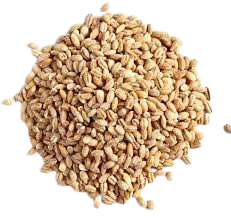
Get a Custom Report on Barley Nutrition Data – Contact Us!
What are the Types of Barley?
The different types of barley are hulled barley, hulless barley, barley grits, barley flakes, barley flour, pearl barley, and quick pearl barley. Here's a table summarizing the types, their characteristics, and calorie information
| Barley Type | Calories (per 100g, raw) | Calories (per cup, raw) | Characteristics |
|---|---|---|---|
|
Hulled Barley
|
354 | 651 (184g cup) | Minimally processed; only the tough, inedible outer hull is removed. Retains most of the bran and germ. Chewy texture, nutty flavor. Takes the longest to cook. |
|
Hulless Barley
|
352 | ~648 (184g cup) Estimate | The outer hull is loosely attached and falls off during harvesting. Retains all of the bran and germ. Similar in texture and flavor to hulled barley. |
|
Pearl Barley
|
352 | 704 (200g cup)1, 193 (per cup, cooked, 157g) | Polished to remove some or all of the bran layer (and sometimes the germ). Less chewy than hulled/hulless barley. Cooks faster. The most common form found in supermarkets. |
|
Quick Pearl Barley
|
357 | ~660 (185g cup) Estimate | Pre-cooked and dried pearl barley. Cooks very quickly (about 10 minutes). Not a whole grain. |
|
Barley Grits
|
348 | ~585 (168g cup) Estimate | Barley kernels that have been cut into several pieces. Can be made from hulled/hulless barley (whole grain) or pearl barley (not whole grain). Cooking time varies depending on the size of the grits. |
|
Barley Flakes
|
357 | ~314 (88g cup)2 | Similar to rolled oats; made by steaming, rolling, and drying barley kernels. Can be made from hulled/hulless barley (whole grain) or pearl barley (not whole grain). Used for porridge and in baked goods. |
|
Barley Flour
|
345 | 511 (148g cup) | Ground barley. Can be made from hulled/hulless barley (whole grain) or pearl barley (not whole grain). Used in baking and as a thickener. Adds a slightly nutty flavor. Lower in gluten than wheat flour. |
What are the Main Dishes with Barley?
The main dishes with barley are listed below
| Dish Type | Description | Calories (Estimate) | Restaurants |
|---|---|---|---|
| Barley Soup | Hearty soup with barley, vegetables, and often meat or broth. | 150-300 (per cup) | Zoup!, Panera Bread, various delis and soup shops |
| Barley Salad | Cooked barley, vegetables, herbs, and vinaigrette dressing. | 200-450 (per 1-2 cups) | Sweetgreen, Cava, various salad bars and cafes |
| Barley Risotto (Orzotto) | Similar to risotto, but made with barley instead of rice. Cooked with broth, cheese, and vegetables. | 300-500+ (per cup) | Italian restaurants like North Italia and Olive Garden (sometimes as a special) |
| Barley Pilaf | Cooked barley, often sautéed with onions, garlic, and spices. | 200-350 (per cup) | Mediterranean restaurants like Zaytinya and Cava |
| Barley Bread | Bread made with barley flour, often mixed with other flours. | 70-120 (per slice) | Various bakeries and health food stores |
| Barley Porridge | Breakfast dish with cooked barley, milk/water, and sweeteners. | 150-250 (per cup) |
What are the Desserts with Barley?
The desserts with barley are listed below
| Dessert Name | Description | Calories (Estimate) |
|---|---|---|
| Scottish Barley Pudding | Traditional dessert with barley, milk, sugar, and flavorings. | 200-350 (per serving) |
| Kamhiyeh | Lebanese dessert with barley, anise seeds, rosewater, sugar, and wheat. Often for holidays. | 200-300 (per serving, estimate) |
What Cuisines Prefer Barley the Most?
The cuisines that often use barley in their recipes are listed below
| Cuisine | Restaurant(s) | Main Dish(es) |
|---|---|---|
|
Scottish
|
Many traditional pubs and restaurants in Scotland; The Kitchin (Edinburgh), Ubiquitous Chip (Glasgow) | Scotch Broth (soup with barley, vegetables, and often meat), Barley Pudding, Barley in stews |
|
Irish
|
Traditional pubs and restaurants throughout Ireland; The Winding Stair (Dublin), The Brazen Head (Dublin) | Irish Stew (often includes barley), Barley Soup |
|
Middle Eastern/ North African
|
Zaytinya (Washington, D.C.), Cafe Mogador (NYC), many local Middle Eastern and North African restaurants | Barley in soups (like Harira), Barley Pilafs, Barley salads (similar to Tabbouleh, but with barley instead of bulgur), Barley stews |
|
Mediterranean
|
Cava (various locations), Zaytinya (Washington, D.C.), many local Mediterranean restaurants | Barley Salads, Barley Pilafs, Barley in soups, Orzotto (barley risotto - though this is more of an Italian adaptation) |
|
Eastern European
|
Veselka (NYC), Russian Tea Room (NYC), many local Eastern European restaurants | Barley in soups (like Krupnik - a Polish barley and mushroom soup), Barley in stews, Barley as a side dish |
|
Tibetan
|
Tibetan restaurants (often found in areas with significant Tibetan communities) | Tsampa (roasted barley flour - a staple food, used in various ways, including porridge and dumplings), Barley soup |
|
Moroccan
|
Many Moroccan restaurants | Harira soup, tagines |
|
Ethiopian
|
Many Ethiopian restaurants | Besso (roasted barley flour), barley bread, barley beer |
|
Korean
|
Many Korean restaurants | Boribap (barley and rice) |
Which Countries Produce the Most Barley?
The top producing countries for barley are the European Union, Russia, Australia, Canada, the United Kingdom, and Turkey. In 2024/2025, global production of barley is estimated at 142.47 million metric tons, based on the data provided by the USDA Foreign Agricultural Service.
| Country/Region | % of Global Production | Total Production (Metric Tons) |
|---|---|---|
| European Union | 35% | 50.4 Million |
| Russia | 11% | 16.25 Million |
| Australia | 8% | 11.7 Million |
| Canada | 6% | 8.14 Million |
| United Kingdom | 5% | 7.2 Million |
| Turkey | 5% | 7 Million |
| Ukraine | 4% | 5.9 Million |
| Argentina | 4% | 5.1 Million |
| Kazakhstan | 3% | 3.84 Million |
| United States | 2% | 3.13 Million |
How Do Prices of Barley-including Dishes Change?
The price of barley itself has a limited direct impact on the prices of most barley-inclusive dishes in restaurants and prepared foods. This is because barley is often a relatively inexpensive ingredient compared to other components of these dishes. But overall inflation and rising operational costs do influence menu prices. GrainFox analyst Neil Townsend notes that barley markets continue to struggle, with old crop premiums barely above feed values due to persistent weak demand. This weak demand may further contribute to lower prices for barley-inclusive dishes.
| Restaurant | Dish | Old Price | Current Price |
|---|---|---|---|
| Zoup! | Chicken & Barley Soup | $5-6 (2010) | $7-9 |
| Sweetgreen | Barley Salad | $8-10 (2015) | $11-14 |
| North Italia | Barley Risotto (Orzotto) | $14-18 (2015) | $18-24 |
How Does the Price of Barley Change for the Last 20 Years?
The global price of barley per metric ton has fluctuated significantly over the last 20 years. Data from the Federal Reserve Bank of St. Louis indicates that the prices were stable in the early 2000s and peaked around 2010. In the early 2020s, prices surged due to factors such as supply chain disruptions and increased demand. The price of barley per metric ton from 2005 to 2024 are listed below:
| Year | Price |
|---|---|
| 2005 | $100.09 |
| 2010 | $181.11 |
| 2015 | $92.33 |
| 2020 | $107.63 |
| 2021 | $223.84 |
| 2022 | $177.79 |
| 2023 | $144.41 |
| 2024 | $122.23 |
What is the Barley Calorie for 100 GR?
A 100g serving of raw, hulled barley contains 354 calories.
What is the Barley Calorie for 1 KG?
1 kg of raw, hulled barley contains 3,540 calories.
What is the Calorie of 1 Cup of Barley?
The calorie content of 1 cup of barley depends on whether it's raw or cooked and how tightly it's packed. A cup of raw, hulled barley (approximately 184 grams) contains roughly 651 calories.
What is Barley?
Barley (Hordeum vulgare) is a common grain that is high in fiber. Barley is the fourth largest grain crop globally, after wheat, rice, and corn. It is commonly used in breads, soups, stews, and health products.
What are the Health Benefits of Barley?
Barley is filled with essential nutrients that support overall health, as shown below:
- Excellent Source of Fiber: Barley is very high in fiber, which aids digestion, promotes gut health, and can help regulate blood sugar levels. A 100-gram serving of hulled barley contains 17.3 grams of fiber.
- May Lower Blood Sugar Levels: Barley-based foods have been shown to help boost the number of beneficial Prevotella bacteria in the gut. These bacteria have been shown to help lower blood sugar levels for up to 11–14 hours. Keeping blood sugar levels in check can help reduce the risk of type 2 diabetes.
- May Reduce Risk of Diabetes: Barley may help lower blood sugar and insulin levels, which may reduce your risk of diabetes. Whole-grain barley is a good source of fiber, which contributes to this effect. One study found that people who ate barley had lower glucose and insulin levels after their meal, compared to those who ate other grains (Kay M Behall et al., 2005).
- May Reduce Risk of Heart Disease: Eating 3.6 grams of barley daily as a source of dietary fiber seems to reduce the risk of heart disease.
- May Lower Cholesterol: Eating 3-12 grams of barley daily seems to reduce total and low-density lipoprotein (LDL or "bad") cholesterol in adults with high cholesterol.
- Promotes Gut Health: In a four-week study in 28 healthy individuals, 60 grams of barley a day increased a beneficial type of bacteria in the gut that may help reduce inflammation (Ines Martinez et al., 2013).
What are the Downsides of Barley?
Barley is a nutritious grain that can be a great addition to a balanced diet, but eating barley has a few potential downsides as listed below:
- Gluten Content: Barley contains gluten, which makes it unsuitable for people with celiac disease or gluten sensitivity.
- High Carbohydrate Content: Barley is high in carbohydrates, which may be a concern for individuals following very low-carb diets.
- Phytic Acid: Barley contains phytic acid, which can inhibit the absorption of certain minerals like iron and zinc. Soaking or sprouting barley before consumption can help reduce phytic acid levels.
Is Barley Good for You?
Yes, barley is considered a nutritious and healthy food because it is high in fiber, protein, and important minerals. Eating barley can be a part of a balanced diet that supports overall health, particularly for digestive health, heart health, and blood sugar control.
Is Barley Good for Diabetics?
Yes, barley can be a beneficial grain for individuals with diabetes due to its high fiber content and potential to help regulate blood sugar levels. Barley-based foods have been shown to help boost beneficial gut bacteria that can lower blood sugar levels. Whole-grain barley is a good source of fiber, which slows down the absorption of glucose and helps prevent spikes in blood sugar. A clinical trial by Kay M Behall et al. (June 2005) found that people who ate barley had lower glucose and insulin levels after their meal, compared to those who ate other grains.
How Much Barley Should I Eat a Day?
According to WebMD, eating 3.6 grams of barley daily as a source of dietary fiber seems to reduce the risk of heart disease. For high cholesterol, eating 3-12 grams of barley daily seems to reduce total and LDL cholesterol in adults. In a four-week randomized controlled trial by Ines Martinez et al. (February 2013), 60 grams of barley a day increased a beneficial type of bacteria in the gut that may help reduce inflammation.
How Much Barley Can I Eat a Day at Most?
While there is no strict upper limit for barley consumption, it is generally recommended to consume it in moderation as part of a balanced diet. Pay attention to portion sizes and consider individual tolerance and dietary needs.
How Does Calorie Change According to Barley Types?
Calories in barley vary based on the degree of processing. Hulled barley, which retains the most bran and germ, has the highest calorie count per cup (184g raw) at 651 calories. Hulless barley, while technically having a similar calorie count per 100g as pearled barley, offers more nutritional value due to the intact bran. Pearl barley is the most commonly available form, which has some or all of the bran removed, resulting in a lower calorie count of about 193 calories per cup (157g) when cooked. Quick pearl barley, barley grits, and barley flakes have calorie counts similar to pearl barley if they are made from pearl barley, but higher if made from hulled or hulless. Barley flour has 511 calories per cup (148g). In summary, hulled barley has the highest calorie density per raw weight due to its intact bran and germ, while pearl barley and its derivatives (quick pearl, some grits and flakes) have lower calorie counts due to processing.
What is the Origin of Barley?
Barley (Hordeum vulgare) is one of the oldest cultivated grains, with a history stretching back over 10,000 years. Its origins trace to the Fertile Crescent region of the Near East, encompassing parts of modern-day Iraq, Syria, Turkey, Iran, Israel, Palestine, Lebanon, and Jordan. Archaeological evidence, including remnants of barley grains and early farming tools, points to this area as the center of barley domestication. Barley was a staple food for many ancient civilizations, including the Egyptians, Sumerians, Babylonians, and Greeks. It was used to make bread, porridge, soups, and beer. In fact, barley was so crucial to some of these cultures that it was even used as a form of currency.
The spread of barley cultivation followed the migration of people and the development of trade routes. It reached Europe, North Africa, and Asia thousands of years ago, becoming a key crop in many regions. Different cultures adapted barley to their local cuisines and preferences, leading to the diverse range of dishes we see today.
The use of barley in specific dishes also has a long history. Scotch Broth, which is a hearty soup made with barley, vegetables, and often meat, has been a staple in Scotland for centuries, evolving from simple peasant fare to a national dish. The Irish Stew, which frequently includes barley, has roots in the traditional cooking practices of Ireland.Barley's use in beer-making is also ancient, with evidence of barley beer production dating back to ancient Sumeria and Egypt.
Which Countries Consume the Most Barley?
The European Union leads as the world's largest consumer of barley, with a consumption of 52.2 million metric tons annually. The Russian Federation and Saudi Arabia follow, consuming 14.4 million and 8.025 million metric tons respectively. China is also a significant consumer of barley.
The European Union's high consumption is driven by its use of barley in animal feed, brewing, and various food products. Russia uses a substantial amount of barley for animal feed and brewing. Saudi Arabia's barley consumption is primarily for animal feed, especially its livestock industry.
Explore More Grains
Discover more Grains with detailed nutrition facts, calorie counts, vitamins, minerals, and health benefits. Compare similar foods, serving sizes, macronutrients, and key nutrients to find the best option for your diet and nutrition goals.
 Amaranth calories
 Arborio Rice calories
 Arrowroot Powder calories
 Basmati Rice calories
 Black Rice calories
 Brown Rice calories
 Buckwheat calories
 Bulgur Wheat calories
 Coconut Flour calories
 Cornmeal calories
 Cornstarch calories
 Couscous calories