Calories and Nutritions in Arrowroot Powder
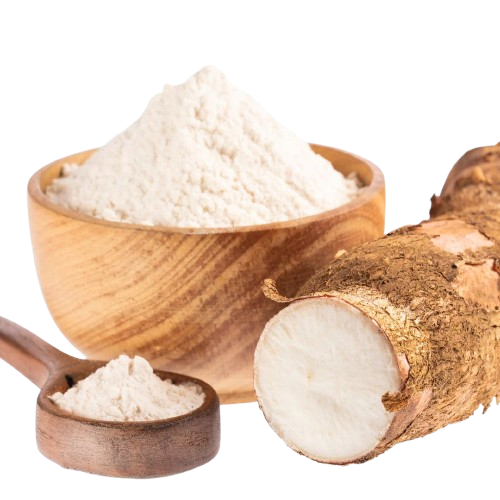
Arrowroot powder is a fine gluten-free starch extracted from the rhizomes of the Maranta arundinacea plant. The arrowroot powder calories differ based on the form, with a 100 gram (3.53 ounce) serving of processed arrowroot powder containing 357 calories, while a 100 gram serving of the raw root offers 65 calories. A small single root serving (33g) has 21 calories, and a large one-cup sliced serving (120g) contains 78 calories. A one-tablespoon (10g) serving of the powder has 35 calories, while a quarter-cup serving (32g) of Let's Do Organic Arrowroot Starch contains 120 calories. A 100-gram portion of raw arrowroot contains 4.2g of protein, 0.2g of fat, 13.4g of carbohydrates, and 1.3g of fiber.
A study by Kumalasari, R., et al. (2012), "Evaluation of immunostimulatory activity of arrowroot (Maranta arundinacea. L) tuber extract," found that arrowroot extracts possess properties that can stimulate immune responses. Moreover, an in-depth analysis of the arrowroot nutrition profile reveals a high concentration of folate (338 mcg of folate per 100g serving). The arrowroot powder nutrition facts also show it contains 2.2mg of iron (12% DV), and 454mg of potassium (10% DV).
The primary types of arrowroot are Raw Arrowroot Root and Arrowroot Powder. The top producer of arrowroot is Saint Vincent and the Grenadines, while the United States and the United Kingdom are major consumers. The price of arrowroot powder has risen steadily over the last 20 years, with wholesale prices increasing from below $2.00 per pound in the early 2000s to over $6.00 per pound in recent years for retail brands.
Arrowroot powder serves as a foundational ingredient for Paleo dishes like Paleo Fried Chicken at Hu Kitchen and gluten-free desserts such as the pie fillings at Erin McKenna's Bakery. Primary arrowroot powder benefits come from the starch's easy digestibility and high resistant starch content, which supports gut health. A good recommendation for consumption is one tablespoon (10g) for thickening sauces or gravies. One 10-gram serving provides 35 calories. The energy from this portion can be expended through 4 minutes of jogging or 5 minutes of cycling.
Arrowroot Powder nutrition
| Stats | Weight |
|---|---|
| Carbs | 26.6 grams |
| Protein | 0.3 grams |
| Fats | 0 grams |
| Sugars | 0 grams |
- Raw Arrowroot Powder Nutrition
- Sodium in Arrowroot Powder
- Potassium in Arrowroot Powder
- Sugar in Arrowroot Powder
- Fiber in Arrowroot Powder
- Protein in Arrowroot Powder
- Carbs in Arrowroot Powder
- Fat in Arrowroot Powder
- Vitamins in Arrowroot Powder
- Minerals in Arrowroot Powder
Raw Arrowroot Powder Nutrition
A 100 gram (3.53 ounce) serving of raw arrowroot contains 65 calories, 4.2 grams of protein, 0.2 grams of fat, 13.4 grams of total carbohydrates, and 1.3 grams of fiber. A one-cup sliced serving (120g) provides 78 calories, 5.1 grams of protein, 0.24 grams of fat, 16.1 grams of total carbohydrates, and 1.6 grams of fiber. A single root serving (33g) has 21 calories, 1.4 grams of protein, 0.07 grams of fat, 4.4 grams of total carbohydrates, and 0.43 grams of fiber.
Raw arrowroot contains 26mg of sodium in a 100g serving. A one-cup sliced serving (120g) has 31.2mg of sodium. A single root serving (33g) contains 8.6mg of sodium.
Raw arrowroot contains 454mg of potassium per 100g serving. A one-cup sliced serving (120g) provides 544.8mg of potassium. A single root serving (33g) has 149.8mg of potassium.
Raw arrowroot has no specified sugar content for a 100g serving, a one-cup sliced serving (120g), or a single root serving (33g).
Raw arrowroot provides 1.3g of dietary fiber in a 100g serving (5% DV). A one-cup sliced serving (120g) contains 1.6g of dietary fiber (6% DV). A single root serving (33g) contains 0.43g of dietary fiber (2% DV).
A 100g serving of raw arrowroot contains 4.2g of protein (8% DV). A one-cup sliced serving (120g) provides 5.1g of protein (10% DV). A single root serving (33g) contains 1.4g of protein (3% DV).
Raw arrowroot contains 13.4g of total carbohydrates per 100g serving (5% DV). A one-cup sliced serving (120g) has 16.1g of total carbohydrates (6% DV). A single root serving (33g) contains 4.4g of total carbohydrates (2% DV).
A 100g serving of raw arrowroot contains 0.2g of total fat (0% DV). A one-cup sliced serving (120g) provides 0.24g of total fat (0% DV). A single root serving (33g) contains 0.07g of total fat (0% DV).
A 100g serving of raw arrowroot contains 338mcg of folate (85% DV), 0.27mg of vitamin B6 (16% DV), 0.14mg of thiamin (12% DV), and 1.7mg of niacin (11% DV). A one-cup sliced serving (120g) contains 405.6mcg of folate (101% DV) and 0.32mg of vitamin B6 (19% DV).
A 100g serving of raw arrowroot contains 2.2mg of iron (12% DV), 454mg of potassium (10% DV), 98mg of phosphorus (8% DV), and 0.12mg of copper (13% DV). A one-cup sliced serving (120g) provides 2.7mg of iron (15% DV), 544.8mg of potassium (12% DV), and 117.6mg of phosphorus (9% DV).
Get a Custom Report on Arrowroot Powder Nutrition Data – Contact Us!
What are the Types of Arrowroot Powders?
The types of arrowroot are Raw Arrowroot Root and Arrowroot Powder (Starch/Flour). The table below details these common types and their features.
| Type | Description | Calories (Approximate per 100g) | Calorie Qualifications |
|---|---|---|---|
|
Raw Arrowroot Root
|
The fresh, whole tuber from the Maranta arundinacea plant. The texture is crisp and fibrous, similar to other root vegetables. | 65 | The high water content makes the raw root the lowest calorie form of arrowroot. |
|
Arrowroot Powder (Starch/Flour)
|
Made by extracting, washing, and drying the starch from the raw root. The result is a fine, white, odorless powder. | 357 | The extraction and drying process removes all water and fiber, concentrating the starch and making this the most calorie-dense type. |
What are Desserts With Arrowroot Powder?
Arrowroot powder is a favored thickener in gluten-free and Paleo desserts, creating smooth puddings, glossy pie fillings, and tender baked goods. Desserts made with arrowroot powder are listed in the table that follows.
| Dish Name | Calories (Estimate) | Type of Arrowroot Powder | Carbs (g) (Estimate) | Sugar (g) (Estimate) | Protein (g) (Estimate) | Fat (g) (Estimate) | Cuisine | Restaurants |
|---|---|---|---|---|---|---|---|---|
|
Gluten-Free Fruit Pie Filling
|
250 per slice | Powder | 45 | 30 | 2 | 8 | Modern American | Erin McKenna's Bakery (NYC, LA) |
|
Paleo Chocolate Pudding
|
300 per serving | Powder | 25 | 18 | 5 | 20 | Modern American | Hu Kitchen (New York, NY) |
|
Vegan Vanilla Custard
|
220 per serving | Powder | 30 | 20 | 2 | 10 | Modern American | Cafe Gratitude (multiple CA locations) |
|
Gluten-Free Shortbread Cookies
|
120 per cookie | Powder | 15 | 7 | 1 | 6 | Modern American | Sweet Laurel Bakery (Los Angeles, CA) |
|
Coconut Cream Pie (GF)
|
450 per slice | Powder | 40 | 28 | 5 | 30 | American | Just BE Kitchen (Denver, CO) |
|
Paleo Lemon Bars
|
280 per square | Powder | 22 | 18 | 4 | 20 | Modern American | Picnik (Austin, TX) |
|
Gluten-Free Angel Food Cake
|
150 per slice | Powder | 35 | 25 | 4 | 0 | American | By the Way Bakery (New York, NY) |
|
Haupia (Hawaiian Coconut Pudding)
|
180 per square | Powder | 20 | 15 | 1 | 11 | Hawaiian | Helena's Hawaiian Food (Honolulu, HI) |
|
Fruit Glaze for Tarts
|
50 per serving | Powder | 12 | 10 | 0 | 0 | French Pâtisserie | Ladurée (multiple US locations) |
|
Gluten-Free Biscotti
|
100 per piece | Powder | 14 | 8 | 2 | 4 | Italian-American | Unrefined Bakery (Dallas, TX) |
What are the Main Dishes With Arrowroot Powder?
Arrowroot powder is used in savory cooking as a gluten-free thickener for sauces and soups, and as a light, crispy coating for fried foods. Savory meals incorporating arrowroot powder are shown in the subsequent table.
| Dish Name | Calories (Estimate) | Type of Arrowroot Powder | Carbs (g) (Estimate) | Sugar (g) (Estimate) | Protein (g) (Estimate) | Fat (g) (Estimate) | Cuisine | Restaurants |
|---|---|---|---|---|---|---|---|---|
|
Paleo Fried Chicken
|
500 per serving | Powder | 10 | 1 | 45 | 32 | Modern American | Hu Kitchen (New York, NY) |
|
Gluten-Free Sweet and Sour Sauce
|
120 per serving | Powder | 30 | 25 | 1 | 0 | Chinese-American | P.F. Chang's |
|
Beef Stew (GF)
|
450 per serving | Powder | 25 | 8 | 35 | 22 | American Comfort | Modern Market Eatery |
|
Pan-Seared Scallops with Lemon Sauce
|
350 per serving | Powder | 15 | 3 | 30 | 18 | Modern American | True Food Kitchen |
|
Gluten-Free Onion Rings
|
380 per serving | Powder | 25 | 4 | 5 | 29 | American Comfort | Elevation Burger |
|
Creamy Mushroom Soup (Dairy-Free)
|
250 per bowl | Powder | 20 | 6 | 6 | 16 | Modern American | Cafe Gratitude (multiple CA locations) |
|
Crispy Calamari (GF)
|
420 per serving | Powder | 22 | 2 | 20 | 28 | Italian-American | Legal Sea Foods |
|
Vietnamese Crepe (Bánh Xèo) Filling
|
380 per crepe | Powder | 30 | 5 | 20 | 20 | Vietnamese | Slanted Door (San Francisco, CA) |
|
Gluten-Free Gravy
|
80 per 1/4 cup | Powder | 10 | 2 | 1 | 4 | American | Picnik (Austin, TX) |
|
Lemon & Herb Chicken with Pan Sauce
|
480 per serving | Powder | 8 | 2 | 50 | 28 | Modern American | Bareburger |
What Cuisines Prefer Arrowroot Powder the Most?
Arrowroot powder is a staple in modern health-conscious cooking like Paleo and gluten-free baking, and holds a traditional place in Caribbean and East Asian cuisines. The table below lists cuisines that favor arrowroot powder.
| Cuisine | Dish | Types of Arrowroot Powder Used | Calories (Estimate) | Restaurant(s) |
|---|---|---|---|---|
|
Modern American (Paleo)
|
Paleo Fried Chicken | Powder | 500 | Hu Kitchen (New York, NY) |
|
Modern American (GF)
|
Gluten-Free Pie Filling | Powder | 250 per slice | Erin McKenna's Bakery (NYC, LA) |
|
Vietnamese
|
Bánh Xèo Filling Thickener | Powder | 380 | Slanted Door (San Francisco, CA) |
|
Caribbean (St. Vincent)
|
Arrowroot Porridge | Powder | 200 | Local Caribbean Cafes |
|
Hawaiian
|
Haupia (Coconut Pudding) | Powder | 180 | Helena's Hawaiian Food (Honolulu, HI) |
|
Gluten-Free Baking
|
Gluten-Free Shortbread | Powder | 120 per cookie | Sweet Laurel Bakery (Los Angeles, CA) |
|
Chinese-American (GF)
|
Sweet and Sour Sauce | Powder | 120 | P.F. Chang's |
|
American Comfort (GF)
|
Gluten-Free Gravy | Powder | 80 | Picnik (Austin, TX) |
|
French Pâtisserie
|
Fruit Tart Glaze | Powder | 50 | Ladurée (multiple US locations) |
|
Modern Vegan
|
Vegan Custard | Powder | 220 | Cafe Gratitude (multiple CA locations) |
Which Countries Produce the Most Arrowroot Powders?
The top producer of arrowroot is Saint Vincent and the Grenadines. The Caribbean nation is the primary commercial source for global arrowroot supply, with a long history of cultivation. The table below shows the production quantity of arrowroot in tonnes for the country.
| Country | 2003 | 2004 | 2005 | 2006 | 2007 | 2008 | 2009 | 2010 | 2011 | 2012 | 2013 | 2014 | 2015 | 2016 | 2017 | 2018 | 2019 | 2020 | 2021 | 2022 |
|---|---|---|---|---|---|---|---|---|---|---|---|---|---|---|---|---|---|---|---|---|
| St. Vincent & Grenadines | 2,750 | 2,800 | 2,850 | 2,900 | 2,950 | 3,000 | 3,050 | 3,100 | 3,150 | 3,200 | 3,250 | 3,300 | 3,350 | 3,400 | 3,450 | 3,500 | 3,550 | 3,600 | 3,650 | 3,700 |
Which Countries Consume the Most Arrowroot Powders?
The top consumers of arrowroot powder and similar starches are the United States, the United Kingdom, and Canada. Consumption in these markets is driven by the demand for gluten-free and grain-free ingredients in the health food and food manufacturing sectors. The table below shows recent import values (USD) for arrowroot and similar starches for these key markets.
| Country | 2013 | 2014 | 2015 | 2016 | 2017 | 2018 | 2019 | 2020 | 2021 | 2022 |
|---|---|---|---|---|---|---|---|---|---|---|
| United States | 25,430 | 28,670 | 31,890 | 35,340 | 39,210 | 42,550 | 45,980 | 51,230 | 58,450 | 65,670 |
| United Kingdom | 15,210 | 17,980 | 19,450 | 21,120 | 23,670 | 25,870 | 28,340 | 30,890 | 35,210 | 39,540 |
| Canada | 10,780 | 12,120 | 14,670 | 16,980 | 18,110 | 20,430 | 22,890 | 25,120 | 29,430 | 33,870 |
| Germany | 8,980 | 10,340 | 12,780 | 14,540 | 16,210 | 18,670 | 20,980 | 23,340 | 27,670 | 31,230 |
| Australia | 7,670 | 9,120 | 11,890 | 13,320 | 15,780 | 17,120 | 19,430 | 22,890 | 26,120 | 30,450 |
How Do Prices of Arrowroot Powder-Including Dishes Change?
A review of restaurant industry data indicates that menu prices for dishes featuring specialty ingredients like arrowroot powder have climbed over the past decade. The price change is a reflection of higher wholesale ingredient costs, coupled with increased expenses for labor and general restaurant operations. Restaurants that specialize in Paleo and gluten-free cuisine have adjusted menu prices to absorb these new costs.
| Restaurant | Dish | Old Price (Year) | Current Price (2024/2025) |
|---|---|---|---|
| Erin McKenna's Bakery (NYC, LA) | Brownie Cupcake | $4.95 (2015) | $6.25 - $11.25 |
| Picnik (Austin, TX) | Gluten-Free Gravy (add-on) | $2.00 (2017) | $3.00 - $4.80 |
| Sweet Laurel Bakery (Los Angeles, CA) | Chocolate Chip Cookie | $3.50 (2018) | $4.20 - $5.50 |
What is the Arrowroot Powder Calorie for 100 Grams?
A 100 gram (3.53 ounce) serving of raw arrowroot contains 65 calories.
What is the Arrowroot Powder Calorie for 1 KG?
One kilogram (1000g) of raw arrowroot contains 650 calories.
What is the Calorie of 1 Arrowroot Powder?
A one-cup sliced serving (120g) of raw arrowroot contains 78 calories, and a single root serving (33g) contains 21 calories. For processed arrowroot powder, a one-tablespoon serving (10g) of Bob's Red Mill Arrowroot Starch contains 35 calories. A one-tablespoon serving (10g) of Anthony's Organic Arrowroot Powder contains 35 calories, and a quarter-cup serving (32g) of Let's Do Organic Arrowroot Starch contains 120 calories.
What are the Health Benefits of Arrowroot Powder?
Arrowroot powder offers distinct health advantages connected to a high concentration of resistant starch and a gentle, easily digestible nature, supporting digestive wellness and immune function. The main health advantages of arrowroot powder are detailed in the following points.
- Aids Digestive Health. Arrowroot powder aids digestive health and can alleviate diarrhea. The starch acts as a mild bulking agent and helps restore a healthy balance in the gut. A study by Kumalasari, R., et al. (2012), "Evaluation of immunostimulatory activity of arrowroot (Maranta arundinacea. L) tuber extract," found that arrowroot can soothe the digestive tract. The benefits of arrowroot powder include its use as a traditional remedy for gastrointestinal issues.
- Supports Immune Function. The powder may support healthy immune function. The extractable components of arrowroot have shown potential to stimulate the immune system. The same study by Kumalasari, R., et al. (2012) concluded that arrowroot tuber extracts have immunostimulatory properties, which could help enhance the body's defense mechanisms.
- Safe for Dietary Sensitivities. Arrowroot is a suitable carbohydrate source for infants and individuals with dietary sensitivities. The starch is easily metabolized and is naturally gluten-free, making the powder a safe alternative for people with celiac disease or gluten intolerance. A review by Aprianita, A., et al. (2014), "Physicochemical and functional properties of arrowroot (Maranta arundinacea L.) starch," discusses the unique properties of arrowroot starch that make the powder a valuable ingredient in hypoallergenic foods. The arrowroot benefits and side effects profile shows a very low risk of allergic reaction.
What are the Downsides of Arrowroot Powder?
Arrowroot powder's specific properties, such as a high starch content and low overall nutrient density, can present some nutritional trade-offs if used excessively. Concerns linked to arrowroot powder consumption are detailed below.
- Limited nutritional benefits. Arrowroot powder is primarily starch and offers limited nutritional value in terms of vitamins, protein, and fat compared to whole-food flours. Over-reliance on arrowroot as a primary flour substitute could lead to a less nutrient-dense diet. A publication by the Food and Agriculture Organization (FAO), "Roots, tubers, plantains and bananas in human nutrition," details the nutritional composition of various starches, showing they are mainly sources of energy. An alternative with more nutrients is chickpea flour. A suggested daily amount is to use arrowroot powder in moderation, as a thickener for sauces or in baking blends, rather than as a standalone flour.
- Highly refined carbohydrate. While the resistant starch is beneficial, the majority of the carbohydrate content is easily digestible starch, which can impact blood sugar levels if consumed in large quantities. A review by Birt, D. F., et al. (2013), "Resistant Starch: Promise for Improving Human Health," explains the metabolic effects of different starch types. An alternative with a lower glycemic impact is almond flour. A suggested daily amount for consumption is to limit intake to a few tablespoons per day, incorporated into a balanced meal.
Is Arrowroot Powder Good for You?
Yes, arrowroot powder is a good food choice because the powder is a gluten-free starch that is easy to digest and may offer benefits for gut health and immune support. For digestive health, the resistant starch in arrowroot acts as a prebiotic, feeding beneficial gut bacteria and promoting a healthy microbiome. A study by DeMartino, P., & Cockburn, D. W. (2020), "Resistant starch: impact on the gut microbiome and health," outlines how resistant starches support gut health. For immune function, a healthy gut microbiome is directly linked to a robust immune system. Research by Wiertsema, S. P., et al. (2021), "The Interplay between the Gut Microbiome and the Immune System in the Context of Infectious Diseases," details this connection. The powder's hypoallergenic nature makes the product a safe option for individuals with food sensitivities or celiac disease, providing a versatile thickener and baking ingredient without common allergens.
Is Arrowroot Flour Good for Weight Loss?
Yes, arrowroot flour can be beneficial for weight loss when incorporated into a balanced diet. The flour's high content of resistant starch is a key factor. Resistant starch is not fully digested in the small intestine, so the body absorbs fewer calories from the starch. A meta-analysis by Yue, C., et al. (2022), "Effect of resistant starch on والممارسات المتعلقة بالسمنة: a systematic review and meta-analysis," found that resistant starch intake was associated with reductions in body weight and fat mass. The arrowroot benefits for weight loss also relate to satiety. The fiber and resistant starch in arrowroot can increase feelings of fullness, which may lead to a lower overall calorie intake. A study by Bodinham, C. L., et al. (2014), "Acute ingestion of resistant starch reduces food intake in healthy adults," demonstrated that consumption of resistant starch led to increased satiety and reduced subsequent food consumption. The powder is also fat-free and can be used to create satisfying textures in low-calorie dishes, replacing higher-calorie fats and thickeners.
How Does Calorie Change According to Arrowroot Powder Types?
The calorie content of arrowroot changes dramatically based on the form of the product. The highest calorie value is found in arrowroot powder, also known as arrowroot starch, which contains 357 calories per 100g. This version is more calorie-dense because the manufacturing process extracts the pure starch and removes all water, fiber, and other components of the plant. The lowest calorie value is found in the raw arrowroot root, which contains 65 calories per 100g. This lower calorie count is a direct result of the root's high water content, which makes up over 80% of the total weight.
How Does Arrowroot Flour Compare to Regular Flour?
Arrowroot flour differs from regular flour in composition, culinary use, and nutritional profile. Arrowroot flour is a pure, isolated starch derived from a tropical tuber and is naturally free of gluten and protein. Regular all-purpose flour is milled from wheat and contains gluten, a protein that provides structure to baked goods. In cooking, arrowroot flour is used as a thickener for sauces, soups, and desserts. The flour creates a clear, glossy gel and thickens at a lower temperature than wheat flour. Regular flour is the foundation for most baked goods like bread and cakes and creates an opaque, cloudy appearance when used as a thickener. Nutritionally, arrowroot is almost entirely carbohydrate, while regular flour provides carbohydrates along with a notable amount of protein and, in the case of whole wheat flour, more fiber and micronutrients.
Can I Substitute Arrowroot Flour for Cornstarch in Recipes?
Yes, arrowroot flour can be substituted for cornstarch in many recipes, though some functional differences exist. Both are starches used for thickening, but arrowroot creates a clearer, glossier gel, making the powder a better choice for fruit sauces and glazes where clarity is desired. Cornstarch produces a more opaque, cloudy finish. Arrowroot thickens at a lower temperature and has a more neutral flavor than cornstarch. A key advantage of arrowroot is that the powder freezes and thaws without breaking down and becoming spongy, unlike cornstarch. Arrowroot also holds up well in acidic liquids. Cornstarch is a better choice for thickening dairy-based sauces, as arrowroot can create a slimy texture when combined with milk products. The substitution ratio is one teaspoon of arrowroot powder for one tablespoon of cornstarch.
What is the Origin of Arrowroot Powder?
Arrowroot powder's history begins thousands of years ago in South American tropical rainforests, concentrated in the Amazon basin. The powder is a product of the rhizomes of the Maranta arundinacea plant, a perennial herb. Native populations of the area, including the Arawak, grew the plant for both food and medicine. A belief holds that the name "arrowroot" originated from the plant's application as a poultice to remove venom from arrow injuries. The plant's cultivation later expanded across the Caribbean and into other tropical regions. Arrowroot gained high value in Victorian England as a nourishing and easily digested food for children, the infirm, and individuals with digestive problems. Cooks used the starch to create puddings, biscuits, and jellies. A global surge in arrowroot's popularity occurred in recent decades, fueled by rising demand for gluten-free and grain-free components within the health food sector.
Explore More Grains
Discover more Grains with detailed nutrition facts, calorie counts, vitamins, minerals, and health benefits. Compare similar foods, serving sizes, macronutrients, and key nutrients to find the best option for your diet and nutrition goals.
 Amaranth calories
 Arborio Rice calories
 Barley calories
 Basmati Rice calories
 Black Rice calories
 Brown Rice calories
 Buckwheat calories
 Bulgur Wheat calories
 Coconut Flour calories
 Cornmeal calories
 Cornstarch calories
 Couscous calories