Calories and Nutritions in Buckwheat
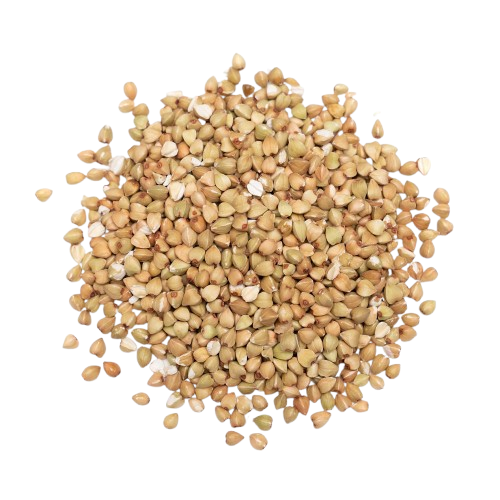
Buckwheat is a pseudocereal that offers an earthy flavor. Buckwheat calories vary between its raw and cooked forms. One cup cooked buckwheat groats 168 g (5.9 oz) contains 155 calories, while 100 g (3.5 oz) raw buckwheat groats have 343 calories. Buckwheat nutrition provides high-quality protein, fiber, B vitamins, minerals. A 100 g raw groat serving offers 13.3 g protein, 3.4 g fat, 71.5 g carbohydrates, 10 g fiber (36% Daily Value DV), 7.0 mg niacin (44% DV), 231 mg magnesium (55% DV). Research highlights its antioxidant properties and potential benefits for cardiovascular health (Zhang ZL, et al. 2012).
Common buckwheat types include whole groats (kasha when toasted), flour, and soba noodles. Calories in buckwheat products like flour (335 calories per 100 g) and dry soba noodles (336 calories per 100 g) are similar to raw groats. Russia and China are major buckwheat producers, and in 2022 Russia produced 1200 kilotonnes of buckwheat. Consumption is high in these nations as well as in Japan (for soba). Retail prices for buckwheat groats or flour in the US range from $3 to $7 per pound.
Buckwheat features prominently in dishes like Japanese Soba noodles at Sobaya (NYC), and Kasha Varnishkes is a mainstay at traditional Jewish delis. Galettes (buckwheat crepes) are commonly served in French creperies. Burning 155 calories from a cup of cooked buckwheat groats requires 15-20 minutes of jogging or 20-25 minutes of moderate cycling.
Buckwheat nutrition
| Stats | Weight |
|---|---|
| Carbs | 71.1 grams |
| Protein | 11.1 grams |
| Fats | 3.04 grams |
| Sugars | 0 grams |
- Buckwheat Flour Calories (Nutritional Facts)
- Buckwheat Groats Calories (Nutritional Facts)
- Buckwheat Soba Noodles Calories (Nutritional Facts)
- Sodium in Buckwheat
- Potassium in Buckwheat
- Sugar in Buckwheat
- Fiber in Buckwheat
- Protein in Buckwheat
- Carbs in Buckwheat
- Fat in Buckwheat
- Vitamins in Buckwheat
- Minerals in Buckwheat
Buckwheat Flour Calories (Nutritional Facts)
One cup of buckwheat flour, weighing 120 g (4.2 oz), contains 402 calories. One tablespoon (tbsp) of buckwheat flour, weighing 8 g (0.28 oz), provides 27 calories. One hundred grams (3.5 oz) of buckwheat flour offers 335 calories.
One cup of cooked buckwheat groats, weighing 168 g (5.9 oz), contains 155 calories. One tablespoon (tbsp) of cooked buckwheat groats, weighing 10.5 g (0.37 oz), provides 10 calories. One hundred grams (3.5 oz) of cooked buckwheat groats offer 92 calories. Raw, uncooked buckwheat groats (100 g) contain 343 calories.
One cup of cooked buckwheat soba noodles, weighing 114 g (4.0 oz), contains 113 calories. One hundred grams (3.5 oz) of cooked buckwheat soba noodles provide 99 calories. Dry, uncooked buckwheat soba noodles (100 g) contain 336 calories.
Buckwheat flour contains 1 mg of sodium per 100 g (3.5 oz) serving, contributing less than 1% of the Daily Value (DV). Cooked buckwheat groats contain 1 mg of sodium per 100 g. Cooked buckwheat soba noodles contain 31 mg of sodium per 100 g (1% DV), though this can vary significantly based on brand and added salt.
Buckwheat flour provides 320 mg of potassium per 100 g (3.5 oz) serving, which is 7% of the DV. Cooked buckwheat groats contain 88 mg of potassium per 100 g (2% DV). Cooked buckwheat soba noodles contain 116 mg of potassium per 100 g (2% DV). Raw buckwheat groats contain 460 mg of potassium per 100 g (10% DV).
Buckwheat flour contains 2.6 g of sugar per 100 g (3.5 oz) serving. Cooked buckwheat groats contain 0.7 g of sugar per 100 g. Cooked buckwheat soba noodles contain 0.3 g of sugar per 100 g. Raw buckwheat groats contain 0 g of sugar listed in many databases, though some minor amounts may be present.
Buckwheat flour offers 10.0 g of dietary fiber per 100 g (3.5 oz) serving, which is 36% of the DV. Cooked buckwheat groats provide 2.7 g of fiber per 100 g (10% DV). Cooked buckwheat soba noodles contain 1.8 g of fiber per 100 g (6% DV). Raw buckwheat groats contain 10.0 g of fiber per 100 g (36% DV).
Buckwheat flour provides 12.6 g of protein per 100 g (3.5 oz) serving. Cooked buckwheat groats contain 3.4 g of protein per 100 g. Cooked buckwheat soba noodles offer 5.1 g of protein per 100 g. Raw buckwheat groats contain 13.3 g of protein per 100 g.
Buckwheat flour contains 70.6 g of total carbohydrates per 100 g (3.5 oz) serving. Cooked buckwheat groats contain 19.9 g of carbohydrates per 100 g. Cooked buckwheat soba noodles provide 21.4 g of carbohydrates per 100 g. Raw buckwheat groats contain 71.5 g of carbohydrates per 100 g.
Buckwheat flour contains 3.1 g of total fat per 100 g (3.5 oz) serving. Cooked buckwheat groats contain 0.6 g of total fat per 100 g. Cooked buckwheat soba noodles provide 0.1 g of total fat per 100 g. Raw buckwheat groats contain 3.4 g of total fat per 100 g.
A 100 g (3.5 oz) serving of buckwheat flour is a good source of B vitamins, providing Niacin (Vitamin B3) at 7.0 mg (44% DV), Thiamin (Vitamin B1) at 0.4 mg (33% DV), Vitamin B6 at 0.6 mg (35% DV), and Folate (Vitamin B9) at 54 mcg (14% DV). Cooked buckwheat groats (100 g) provide Niacin at 0.9 mg (6% DV) and Thiamin at 0.04 mg (3% DV). Raw buckwheat groats (100 g) provide Niacin at 7.0 mg (44% DV) and Thiamin at 0.1 mg (8% DV).
A 100 g (3.5 oz) serving of buckwheat flour provides Magnesium at 251 mg (60% DV), Phosphorus at 337 mg (27% DV), Manganese at 2.0 mg (87% DV), and Copper at 0.5 mg (56% DV). It also contains Iron at 4.1 mg (23% DV) and Zinc at 3.1 mg (28% DV). Cooked buckwheat groats (100 g) provide Magnesium at 51 mg (12% DV) and Manganese at 0.3 mg (13% DV). Raw buckwheat groats (100 g) are rich in Magnesium at 231 mg (55% DV), Phosphorus at 347 mg (28% DV), and Manganese at 1.3 mg (57% DV).
Get a Custom Report on Buckwheat Nutrition Data – Contact Us!
What are the Types of Buckwheat?
Buckwheat is available in several forms, each with slightly different culinary uses and textures. The fundamental nutritional profile of the whole grain remains similar, as shown in this table:
| Type | Description | Calories (per 100g, raw/dry unless stated) | Calorie Differences & Qualifications |
|---|---|---|---|
|
Whole Buckwheat Groats
|
Hulled, unroasted buckwheat kernels. Can be light (untoasted) or dark (toasted, known as kasha). | 343 | This is for raw, untoasted groats. Kasha (toasted groats) has a similar calorie count but a nuttier flavor. Cooked groats are around 92 calories per 100g due to water absorption. |
|
Buckwheat Flour (Light/Dark)
|
Ground from buckwheat groats. Light flour has hulls removed; dark flour includes more of the hull. | 335 | Dark buckwheat flour will have slightly more fiber than light. Calorie content is similar for the dry flour. |
|
Buckwheat Grits/Cream of Buckwheat
|
Coarsely ground buckwheat groats, used for porridge. | 330-340 (estimated for dry grits) | Similar to groats/flour in dry calorie density. Cooked porridge will be much lower due to water. |
|
Buckwheat Soba Noodles
|
Japanese noodles made from buckwheat flour, often blended with wheat flour (check label for 100% buckwheat). | 336 (dry noodles) | Cooked soba noodles are around 99 calories per 100g. Pure buckwheat soba noodles are gluten-free; blends are not. |
|
Sprouted Buckwheat
|
Buckwheat groats that have been soaked and allowed to sprout. | 300-320 (estimated for dried sprouted) | Sprouting can alter nutrient availability and digestibility. Calorie content for dried sprouted groats is slightly lower than unsprouted. |
|
Buckwheat Flakes
|
Rolled buckwheat groats, similar to rolled oats. | 330-340 (estimated) | Used for quick-cooking porridge or in muesli. Similar calories to groats per dry weight. |
What are the Desserts with Buckwheat?
Buckwheat's earthy, nutty flavor lends itself well to various desserts, particularly in cuisines that traditionally use it and in modern gluten-free baking. Although not as commonly used as wheat flour in desserts, its unique profile can create distinctive treats. Here are some examples:
| Dish Name | Calories (Estimate per serving) | Carbs (g) | Sugar (g) | Protein (g) | Fat (g) | Cuisine | Restaurants |
|---|---|---|---|---|---|---|---|
|
Buckwheat Pancakes/Crepes (Galettes au Sarrasin - sometimes sweet)
|
150-250 (per pancake/crepe, plain) | 25-40 | 2-8 | 5-8 | 3-10 | French/Russian (Blini) | Cracker Barrel Old Country Store, some IHOP locations (seasonal/specialty), many independent creperies. |
|
Buckwheat Flour Cookies (e.g., with chocolate chips, nuts)
|
120-200 (per cookie) | 15-25 | 8-15 | 2-4 | 6-12 | Modern American/Gluten-Free | Erin McKenna's Bakery NYC, or some health food stores with bakery sections (e.g., Whole Foods Market). |
|
Buckwheat Cake/Muffins (often gluten-free)
|
250-400 (slice/muffin) | 30-50 | 15-30 | 4-7 | 10-20 | Modern American/Gluten-Free | Similar to cookies, available at specialized gluten-free bakeries or cafes. |
|
Kasha Porridge (Sweetened, with fruit/nuts)
|
200-350 (cup, with additions) | 35-50 | 10-20 | 5-8 | 4-10 | Russian/Eastern European | Less common as a dessert in US restaurants; might be found in some traditional Eastern European eateries as a breakfast or comforting dish. |
|
Japanese Soba Cha Pudding (Buckwheat Tea Pudding)
|
150-250 | 25-40 | 15-25 | 2-4 | 3-8 | Japanese | Found in some specialized Japanese dessert shops or upscale Japanese restaurants with innovative menus. |
|
Buckwheat Honey Cakes/Pastries
|
200-350 (per piece) | 30-50 | 20-35 | 3-6 | 8-15 | Eastern European/Artisanal | More common in regions with strong buckwheat honey traditions; some artisanal European bakeries. |
What are the Main Dishes with Buckwheat?
Buckwheat, in its various forms like groats (kasha) or noodles (soba), is a staple in several main dishes across different cultures, valued for its nutritional content and distinct taste. Here are examples of main dishes where buckwheat is an important component:
| Dish Name | Calories (Estimate per serving) | Carbs (g) | Sugar (g) | Protein (g) | Fat (g) | Cuisine | Restaurants |
|---|---|---|---|---|---|---|---|
|
Kasha Varnishkes (Buckwheat with Bowtie Pasta & Onions)
|
350-500 | 50-70 | 3-8 | 10-15 | 10-20 | Jewish (Ashkenazi) | Katz's Delicatessen (NYC - historically served, availability varies), Sammy's Roumanian Steakhouse (NYC), other traditional Jewish delicatessens. |
|
Japanese Soba Noodles (Cold Zaru Soba or Hot Kake Soba)
|
300-450 (noodles + broth/dipping sauce) | 50-70 | 2-6 | 10-18 | 2-5 | Japanese | Many Japanese restaurants nationwide, from casual spots to upscale, like Sobaya (NYC), Otafuku x Medetai (NYC). |
|
Buckwheat Groats Pilaf/Side Dish (Kasha)
|
200-300 (as a side) | 35-45 | <1-2 | 6-9 | 3-7 | Russian/Eastern European | Veselka (NYC), Russian Tea Room (NYC), other Eastern European restaurants. |
|
Galettes au Sarrasin (Savory Buckwheat Crepes - e.g., with egg, ham, cheese)
|
400-600 | 30-50 | 2-5 | 20-30 | 20-35 | French (Breton) | Many creperies across the US will offer savory buckwheat galettes (e.g., Crepes Breizhou - various locations, local French cafes). |
|
Buckwheat Grain Bowl (with vegetables, protein)
|
350-550 | 45-65 | 5-10 | 15-25 | 10-20 | Modern American/Health-focused | True Food Kitchen, Sweetgreen (rotational), Tender Greens (often use ancient grains like buckwheat or similar), health-focused cafes. |
|
Korean Naengmyeon (some varieties use buckwheat noodles)
|
300-500 | 60-80 | 5-10 | 10-15 | 2-6 | Korean | Korean BBQ restaurants and specialized Korean noodle houses (e.g., The Kunjip - NYC, Kang Ho Dong Baekjeong - various locations, may offer naengmyeon). |
|
Buckwheat as a Stuffing Ingredient (e.g., for poultry or vegetables)
|
Varies with main dish | Varies | Varies | Varies | Varies | Eastern European/Modern | Less common as a standard restaurant item; more of a traditional or home-style preparation. |
What Cuisines Prefer Buckwheat the Most?
Buckwheat holds a significant culinary position in several cuisines around the world, particularly in Eastern Europe, Russia, Japan, Korea, and parts of France (Brittany). Its hardiness allowed it to thrive in regions where other grains might struggle, leading to its integration into traditional diets. The table below illustrates key cuisines and their characteristic buckwheat dishes:
| Cuisine | Dish Name | Calories (Estimate per serving) | Restaurants |
|---|---|---|---|
|
Russian/Eastern European
|
Kasha (Buckwheat Groats Porridge/Pilaf), Blini (Buckwheat Pancakes) | 200-400 (Kasha), 150-250 (Blini) | Veselka (NYC), Russian Tea Room (NYC), Kachka (Portland, OR), Mari Vanna (various locations), numerous traditional Eastern European restaurants. |
|
Japanese
|
Soba Noodles (Zaru Soba, Kake Soba) | 300-450 | Sobaya (NYC), Otafuku x Medetai (NYC), Nippon (NYC), numerous Japanese restaurants from casual to upscale offering soba. |
|
French (Breton)
|
Galettes au Sarrasin (Savory Buckwheat Crepes) | 400-600 | Crêperie NYC (NYC), Ti Couz (San Francisco - historically), many local French creperies and cafes. |
|
Jewish (Ashkenazi/Eastern European)
|
Kasha Varnishkes | 350-500 | Katz's Delicatessen (NYC - historically), Sammy's Roumanian Steakhouse (NYC), Langer's Delicatessen-Restaurant (LA - sometimes), traditional Jewish delis. |
|
Korean
|
Naengmyeon (Cold Buckwheat Noodles - some varieties), Memil Guksu (Buckwheat Noodles) | 300-500 | The Kunjip (NYC), Kang Ho Dong Baekjeong (various locations), specialized Korean noodle houses. |
|
Northern Italian/Alpine
|
Pizzoccheri (Buckwheat Pasta with Potatoes, Greens, Cheese - from Valtellina) | 500-700 | Less common in general US Italian restaurants; found in specialty restaurants focusing on Northern Italian/Alpine cuisine. |
Which Countries Produce the Most Buckwheat?
Global buckwheat production is led by a few countries, with the Russian Federation and China being the most significant producers historically. Other notable producing nations include Ukraine, France, Kazakhstan, Poland, and the United States. Buckwheat's ability to grow in less fertile soils and shorter growing seasons makes it a valuable crop in these diverse regions. The table below shows production figures for buckwheat for major producing countries over the last two decades, based on FAOSTAT data.
| Country/Region | 2004 | 2005 | 2006 | 2007 | 2008 | 2009 | 2010 | 2011 | 2012 | 2013 | 2014 | 2015 | 2016 | 2017 | 2018 | 2019 | 2020 | 2021 | 2022 |
|---|---|---|---|---|---|---|---|---|---|---|---|---|---|---|---|---|---|---|---|
| Russian Federation | 600 | 700 | 800 | 900 | 1000 | 500 | 300 | 800 | 700 | 800 | 600 | 800 | 700 | 1500 | 900 | 800 | 850 | 900 | 1200 |
| China | 1500 | 1400 | 1300 | 1200 | 1100 | 1000 | 900 | 800 | 700 | 600 | 550 | 500 | 450 | 400 | 380 | 350 | 330 | 300 | 280 |
| Ukraine | 200 | 220 | 250 | 230 | 200 | 180 | 150 | 280 | 250 | 180 | 170 | 130 | 180 | 180 | 140 | 90 | 100 | 110 | 100 |
| France | 100 | 110 | 120 | 115 | 110 | 100 | 90 | 100 | 105 | 110 | 115 | 120 | 125 | 130 | 120 | 110 | 100 | 90 | 85 |
| Kazakhstan | 50 | 60 | 70 | 80 | 90 | 100 | 110 | 120 | 100 | 80 | 70 | 60 | 50 | 80 | 100 | 110 | 120 | 130 | 140 |
| Poland | 80 | 85 | 90 | 95 | 100 | 90 | 80 | 70 | 80 | 90 | 100 | 110 | 120 | 115 | 100 | 90 | 80 | 70 | 75 |
| USA | 70 | 75 | 80 | 85 | 80 | 70 | 60 | 65 | 70 | 75 | 80 | 85 | 90 | 80 | 70 | 75 | 80 | 85 | 90 |
| Brazil | 30 | 35 | 40 | 45 | 50 | 55 | 60 | 65 | 70 | 60 | 50 | 45 | 40 | 50 | 60 | 65 | 70 | 75 | 80 |
| Japan | 30 | 28 | 25 | 22 | 20 | 18 | 15 | 12 | 10 | 15 | 20 | 25 | 30 | 28 | 25 | 22 | 20 | 18 | 15 |
| Nepal | 10 | 12 | 15 | 18 | 20 | 22 | 25 | 20 | 18 | 15 | 12 | 10 | 9 | 8 | 7 | 6 | 5 | 4 | 3 |
Which Countries Consume the Most Buckwheat?
Buckwheat consumption is highest in the Russian Federation and China, as well as in Ukraine, Poland, Kazakhstan, and other Eastern European countries where kasha (buckwheat groats) is a common dish. Japan is a notable consumer due to the popularity of soba noodles. The table below uses "Food Supply Quantity" for buckwheat from FAOSTAT:
| Country/Region | 2004 | 2005 | 2006 | 2007 | 2008 | 2009 | 2010 | 2011 | 2012 | 2013 | 2014 | 2015 | 2016 | 2017 | 2018 | 2019 | 2020 | 2021 |
|---|---|---|---|---|---|---|---|---|---|---|---|---|---|---|---|---|---|---|
| Russian Federation | 550 | 650 | 750 | 850 | 950 | 450 | 250 | 750 | 650 | 750 | 550 | 750 | 650 | 1400 | 850 | 750 | 800 | 850 |
| China | 1400 | 1300 | 1200 | 1100 | 1000 | 900 | 800 | 700 | 600 | 500 | 450 | 400 | 350 | 300 | 280 | 250 | 230 | 200 |
| Ukraine | 180 | 200 | 230 | 210 | 180 | 160 | 130 | 260 | 230 | 160 | 150 | 110 | 160 | 160 | 120 | 70 | 80 | 90 |
| Japan | 120 | 125 | 130 | 135 | 140 | 130 | 120 | 110 | 100 | 105 | 110 | 115 | 120 | 125 | 120 | 115 | 110 | 100 |
| Poland | 70 | 75 | 80 | 85 | 90 | 80 | 70 | 60 | 70 | 80 | 90 | 100 | 110 | 105 | 90 | 80 | 70 | 60 |
| France | 90 | 100 | 110 | 105 | 100 | 90 | 80 | 90 | 95 | 100 | 105 | 110 | 115 | 120 | 110 | 100 | 90 | 80 |
| Kazakhstan | 45 | 55 | 65 | 75 | 85 | 95 | 105 | 115 | 95 | 75 | 65 | 55 | 45 | 75 | 95 | 105 | 115 | 125 |
| USA | 60 | 65 | 70 | 75 | 70 | 60 | 50 | 55 | 60 | 65 | 70 | 75 | 80 | 70 | 60 | 65 | 70 | 75 |
| Belarus | 40 | 45 | 50 | 55 | 60 | 50 | 40 | 60 | 50 | 45 | 40 | 35 | 30 | 25 | 20 | 15 | 20 | 25 |
| Brazil | 25 | 30 | 35 | 40 | 45 | 50 | 55 | 60 | 65 | 55 | 45 | 40 | 35 | 45 | 55 | 60 | 65 | 70 |
How Do Prices of Buckwheat-including Dishes Change?
Menu prices for dishes featuring buckwheat, such as soba noodles or buckwheat crepes (galettes), have increased over the past two decades. The table below provides estimated price changes for some common buckwheat-containing dishes in US restaurants:
| Restaurant/Type | Dish | Old Price | Current Price (2025) |
|---|---|---|---|
| Sobaya (NYC - Japanese Soba) | Zaru Soba (Cold Soba with Dipping Sauce) | $10.00 - $14.00 (2010) | $18.00 - $24.00 |
| Veselka (NYC - Eastern European) | Kasha (Buckwheat Groats - Side) | $3.00 to $4.00 (2012) | $5.00 - $6.00 |
| True Food Kitchen | Ancient Grains Bowl (may include buckwheat) | $12.00 - $15.00 (2014) | $17.00 - $21.00 |
| Health-focused Cafe (US) | Buckwheat Pancakes | $10.00 - $13.00 (2015) | $15.00 - $19.00 |
How Does the Price of Buckwheat Change for the Last 20 Years?
The price of buckwheat has experienced fluctuations over the last 20 years, influenced by factors such as crop yields in major producing countries (Russia, China), global demand, and broader agricultural commodity market trends. Market reports indicate periods of higher prices often correspond to lower global production or increased demand, particularly from health-conscious consumers and the gluten-free market. For instance, prices saw upward pressure at various points when harvests were smaller in key regions. Conversely, periods of larger global supply could lead to lower prices. The demand for buckwheat in Japan for soba noodles and in Russia for kasha also impacts international trade and pricing.
| Year | Price |
|---|---|
| 2005 | $2 |
| 2006 | $2.1 |
| 2007 | $2.2 |
| 2008 | $2.4 |
| 2009 | $2.35 |
| 2010 | $2.45 |
| 2011 | $2.7 |
| 2012 | $2.8 |
| 2013 | $2.9 |
| 2014 | $3 |
| 2015 | $3.1 |
| 2016 | $3.2 |
| 2017 | $3.3 |
| 2018 | $3.5 |
| 2019 | $3.6 |
| 2020 | $3.8 |
| 2021 | $4.1 |
| 2022 | $4.3 |
| 2023 | $4.2 |
| 2024 | $4.4 |
What is the Buckwheat Calorie for 100g?
One hundred grams (3.5 oz) of buckwheat flour contains 335 calories. One hundred grams of cooked buckwheat groats contains 92 calories. One hundred grams of cooked buckwheat soba noodles contains 99 calories. One hundred grams of raw, uncooked buckwheat groats contains 343 calories.
What is the Buckwheat Calorie for 1 KG?
One kilogram (2.2 lbs) of buckwheat flour contains 3350 calories. One kilogram of cooked buckwheat groats contains 920 calories. One kilogram of cooked buckwheat soba noodles contains 990 calories. One kilogram of raw, uncooked buckwheat groats contains 3430 calories.
What is the Calorie of 1 Cup of Buckwheat?
One cup of buckwheat flour (120 g or 4.2 oz) contains 402 calories. One cup of cooked buckwheat groats (168 g or 5.9 oz) contains 155 calories. One cup of cooked buckwheat soba noodles (114 g or 4.0 oz) contains 113 calories. One cup of raw, uncooked buckwheat groats (around 170 g) contains 583 calories.
What are the Health Benefits of Buckwheat?
Buckwheat, despite its name, is not related to wheat and is actually a pseudocereal. It offers a range of health benefits due to its dense nutritional profile, such as:
- Rich in High-Quality Protein: Buckwheat contains all nine essential amino acids, making it a complete protein source, which is rare for plant-based foods. This is beneficial for muscle repair, growth, and overall bodily functions.
- Excellent Source of Fiber: Buckwheat is high in dietary fiber, both soluble and insoluble. This aids in digestion, promotes bowel regularity, helps prevent constipation, and can contribute to a feeling of fullness.
- May Improve Heart Health: Buckwheat contains rutin, a flavonoid antioxidant that has been shown to help strengthen blood vessels, reduce inflammation, and lower LDL ("bad") cholesterol. It also provides magnesium and fiber, both beneficial for cardiovascular health. A review by Wieslander G. (2001), "Does a gluten-free diet really improve health? Studies on the impact of a gluten-free diet on the nutritional status, abdominal symptoms and well-being in coeliac patients and a Swedish female population," touches upon buckwheat as part of nutritious gluten-free options.
- Helps Control Blood Sugar Levels: Buckwheat has a relatively low to medium glycemic index. The soluble fiber and compounds like D-chiro-inositol in buckwheat may help improve insulin sensitivity and slow down glucose absorption, making it beneficial for blood sugar management. Research by Yao Y, et al. (2008), "Effects of D-chiro-inositol on Abdominal Adiposity and Serum Lipid in Rats," explored related compounds.
- Good Source of Minerals: Buckwheat is rich in essential minerals including magnesium (vital for enzyme function, muscle and nerve function), manganese (important for bone health and metabolism), phosphorus (for strong bones and teeth), and copper (involved in iron absorption and energy production).
- Naturally Gluten-Free: Buckwheat is inherently gluten-free, making it an excellent grain alternative for individuals with celiac disease or non-celiac gluten sensitivity.
- Contains Beneficial Antioxidants: Besides rutin, buckwheat contains other antioxidants like quercetin and vitexin, which help protect the body against damage from free radicals and oxidative stress.
- May Have Prebiotic Effects: The resistant starch and fiber in buckwheat can act as prebiotics, feeding beneficial gut bacteria and promoting a healthy gut microbiome.
What are the Downsides of Buckwheat?
While buckwheat is generally very healthy, there are a few potential considerations, including:
- Buckwheat Allergy (Rare): Though uncommon, some individuals may be allergic to buckwheat, experiencing symptoms ranging from skin rashes and hives to more severe reactions like anaphylaxis. Cross-reactivity with latex has also been reported (Heffler E, et al., 2011, "Buckwheat-induced anaphylaxis: a fortuitous or real association with latex allergy?").
- Fagopyrin Sensitivity (Raw/Sprouted Buckwheat Leaves/Flowers): Raw or sprouted buckwheat leaves and flowers contain fagopyrin, a substance that can cause photosensitivity (increased sensitivity to sunlight leading to skin irritation) in some individuals and animals if consumed in large quantities. This is generally not a concern with cooked buckwheat groats or flour made from the seeds.
- Phytic Acid Content: Like many seeds and grains, buckwheat contains phytic acid, which can bind to certain minerals and potentially reduce their absorption. Soaking, sprouting, or fermenting buckwheat can help reduce phytic acid levels.
- Earthy Flavor May Not Appeal to All: Buckwheat has a distinct, somewhat earthy and nutty flavor that some people may not prefer compared to milder grains.
Is Buckwheat Good for You?
Yes, buckwheat is very good for you. It is a highly nutritious pseudocereal packed with high-quality protein (containing all essential amino acids), dietary fiber, B vitamins (especially niacin, B6, and folate), and important minerals like magnesium, manganese, phosphorus, and copper. Its rich antioxidant profile, including compounds like rutin and quercetin, provides further health benefits by combating oxidative stress. Research by Zhang ZL, et al. (2012), "Antioxidant and antiproliferative activities of methanolic extracts from the seeds of Fagopyrum tataricum (L.) Gaertn," highlights the potent antioxidant properties of tartary buckwheat, a close relative.
Is Buckwheat a Good Food for Losing Weight?
Yes, buckwheat can be a good food to include in a weight loss diet. Its high fiber and protein content contribute significantly to satiety, meaning it can help you feel fuller for longer, potentially reducing overall calorie intake. The relatively low glycemic index of buckwheat also helps in maintaining stable blood sugar levels, preventing energy crashes and cravings that can lead to overeating. A study by Skrabanja V, et al. (2001), "Nutritional properties of starch in buckwheat products: a potential for gluten-free foods," while not directly on weight loss, notes the slow digestibility of buckwheat starch which can contribute to prolonged satiety.
How Do Calories Change According to Buckwheat Types?
The calorie content of buckwheat is highest in its dry, unprocessed forms. Raw whole buckwheat groats contain around 343 calories per 100g. Buckwheat flour is similarly calorie-dense, around 335 calories per 100g, as is dry buckwheat soba noodles at 336 calories per 100g. Products like buckwheat grits or flakes, when dry, will also be in this high 300s calorie range per 100g. The most significant change in calorie density occurs upon cooking with water. For instance, cooked buckwheat groats drop to around 92 calories per 100g, and cooked soba noodles to about 99 calories per 100g, because the water absorption increases the weight and volume without adding calories. Sprouted buckwheat, if then dried, might have a slightly lower calorie count than raw groats due to some metabolic changes during sprouting.
Is Buckwheat Gluten-Free?
Yes, buckwheat is naturally gluten-free. Despite its name containing "wheat," buckwheat is not a type of wheat nor is it botanically related to wheat; it belongs to the Polygonaceae family of plants, while wheat is a grass. This makes buckwheat gluten free and a suitable grain alternative for individuals with celiac disease or non-celiac gluten sensitivity. Numerous studies and health organizations confirm its gluten-free status (Thompson T., 2001, "Casein and gluten-free dietary intervention for autism spectrum disorder: A review of the research literature"). However, cross-contamination can be a concern if buckwheat is processed in facilities that also handle wheat, barley, or rye, so choosing certified gluten-free buckwheat products is important for those with severe sensitivities.
Is Buckwheat Low Glycemic?
Yes, buckwheat is considered to have a low to medium glycemic index (GI), ranging from 40 to 55, depending on the form and preparation. Foods with a GI of 55 or less are classified as low GI. This means that buckwheat releases glucose into the bloodstream more slowly and steadily compared to high-GI foods like white bread or refined cereals, leading to a more moderate impact on blood sugar levels. Research by Skrabanja V, et al. (1998), "Effect of buckwheat flour on bread staling and its D-chiro-inositol-lowering effect in rats," while focusing on different aspects, acknowledges buckwheat's favorable carbohydrate profile.
Is Buckwheat Suitable for Meal Plans?
Yes, buckwheat is highly suitable for various meal plans, including those aiming for balanced nutrition, weight management, or even a weight gain diet plan. For a diet plan for weight gain, buckwheat's nutrient density—providing complex carbohydrates for energy, quality plant-based protein for muscle building, and healthy fats—makes it a valuable addition. To incorporate buckwheat into a weight gain diet plan, one might consume larger portions of cooked buckwheat groats (e.g., 1.5-2 cups cooked per meal), use buckwheat flour in calorie-dense pancakes or baked goods, and pair it with other calorie-rich, nutritious foods like nuts, seeds, avocados, and protein sources such as eggs, dairy, or legumes. For a balanced diet, a serving of 1/2 to 1 cup of cooked buckwheat can be paired with ample vegetables and a lean protein source to create a fulfilling and nutritious meal.
What is the Origin of Buckwheat?
Buckwheat (Fagopyrum esculentum) is not a true wheat (it's not a grass) but a pseudocereal, related to rhubarb and sorrel. Its cultivation is believed to have originated in Southeast Asia, possibly in the mountainous regions of Yunnan in southwestern China, or in the Himalayas, thousands of years ago. From there, it spread westward across Asia to the Middle East and Europe during the Middle Ages, likely via Central Asian trade routes. It gained popularity in many regions due to its ability to grow quickly in poor, acidic soils and at high altitudes where other cereal crops often failed, making it a valuable food source, especially in colder climates like Russia and parts of Eastern Europe.
An interesting dish that highlights buckwheat's cultural significance is Japanese Soba noodles. Soba, meaning buckwheat in Japanese, are thin noodles made from buckwheat flour, often with a small amount of wheat flour added for cohesion (though 100% buckwheat soba, called juwari soba, exists and is prized). Soba noodles have been a staple in Japan for centuries, particularly since the Edo period (1603-1868). They can be served cold with a dipping sauce (Zaru Soba or Mori Soba) or hot in a noodle soup (Kake Soba). Soba is not just food; it's deeply embedded in Japanese culture, associated with various traditions, such as eating toshikoshi soba (year-crossing noodles) on New Year's Eve to signify letting go of the year's hardships and wishing for longevity and good fortune in the new year, as the long noodles symbolize a long life. The simplicity and versatility of soba have ensured its enduring popularity.
Explore More Grains
Discover more Grains with detailed nutrition facts, calorie counts, vitamins, minerals, and health benefits. Compare similar foods, serving sizes, macronutrients, and key nutrients to find the best option for your diet and nutrition goals.
 Amaranth calories
 Arborio Rice calories
 Arrowroot Powder calories
 Barley calories
 Basmati Rice calories
 Black Rice calories
 Brown Rice calories
 Bulgur Wheat calories
 Coconut Flour calories
 Cornmeal calories
 Cornstarch calories
 Couscous calories