Calories and Nutritions in Coconut Flour
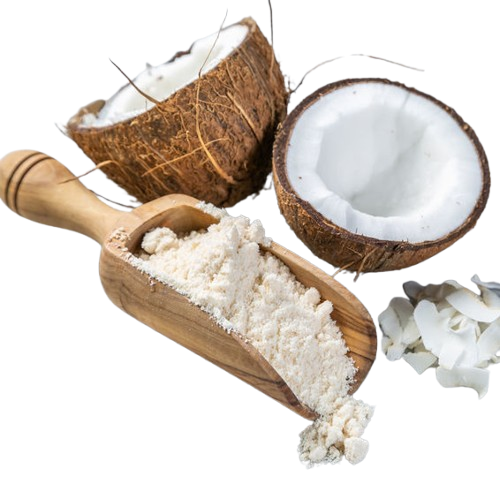
Coconut flour is a high-fiber and gluten-free flour made from dried ground coconut meat. The coconut flour calories are moderately high, with a 100 gram (3.53 ounce) serving containing 443 calories, while one kilogram (1000g) contains 4430 calories. A small two-tablespoon (13g) portion of coconut flour has 58 calories, a medium quarter-cup (28g) serving has 124 calories, and a large one-cup (112g) serving contains 496 calories. A half-cup (56g) portion has 248 calories, and a 200-calorie portion is equivalent to 45g of the flour. Brand-specific values are similar, with a one-cup serving of Bob's Red Mill Organic Coconut Flour or Anthony's Organic Coconut Flour containing 480 calories. A 100-gram portion of coconut flour contains 17.9g of protein, 14.3g of fat, 60.7g of carbohydrates, 35.7g of fiber, and 7.1g of sugar.
A detailed look at the coconut flour nutrition facts reveals an exceptionally high concentration of dietary fiber and essential minerals. A 100-gram serving provides 35.7g of fiber (128% DV), 6.4mg of iron (36% DV), and 1790mg of potassium (38% DV). A study by Trinidad, T.P., et al. (2006), "Dietary fiber from coconut flour: A functional food," found that this fiber has beneficial physiological effects, including improving bowel function. Primary health advantages of coconut flour come from this overall coconut flour nutrition profile of high fiber, minerals, and medium-chain triglycerides (MCTs).
The primary types of coconut flour are Low-Fat (Defatted) Coconut Flour and High-Fat (Whole) Coconut Flour. Top producers of coconuts, the source of the flour, include Indonesia, the Philippines, and India, while the United States and the European Union are major consumers. The price of coconut products has increased over the last 20 years, with the average global price of coconut oil, a benchmark for the industry, rising from under $400 per metric ton in the early 2000s to over $1,475 per metric ton in 2022.
Coconut flour is a central component in Paleo desserts like Paleo Pancakes at Picnik and low-carb savory dishes such as Keto Fried Chicken at Bareburger. A good recommendation for consumption is two tablespoons (13g) for boosting the fiber content of smoothies or baked goods. One 13-gram serving provides 58 calories, which can be expended through 6 minutes of jogging or 8 minutes of cycling.
Coconut Flour nutrition
| Stats | Weight |
|---|---|
| Carbs | 58.9 grams |
| Protein | 16.1 grams |
| Fats | 15.3 grams |
| Sugars | 0 grams |
- Raw Coconut Flour Nutrition
- Sodium in Coconut Flour
- Potassium in Coconut Flour
- Sugar in Coconut Flour
- Gluten in Coconut Flour
- Fiber in Coconut Flour
- Protein in Coconut Flour
- Carbs in Coconut Flour
- Fat in Coconut Flour
- Vitamins in Coconut Flour
- Minerals in Coconut Flour
Raw Coconut Flour Nutrition
A 100g (3.53oz) serving of raw coconut flour contains 443 calories, 17.9g of protein, 14.3g of fat, and 60.7g of total carbohydrates. A one-cup serving (112g) provides 496 calories, 20g of protein, 16g of fat, and 68g of total carbohydrates. A quarter-cup serving (28g) has 124 calories, 5g of protein, 4g of fat, and 17g of total carbohydrates. A two-tablespoon serving (13g) has 58 calories, 2.3g of protein, 1.9g of fat, and 7.9g of total carbohydrates. A 200-calorie serving is equivalent to 45g of coconut flour, which provides 8.1g of protein, 6.4g of fat, and 27.3g of total carbohydrates.
Raw coconut flour contains 200mg of sodium in a 100g serving. A one-cup serving (112g) has 224mg of sodium, a quarter-cup serving (28g) contains 56mg, a 200-calorie serving (45g) has 90mg, and a two-tablespoon serving (13g) contains 26mg of sodium.
Raw coconut flour contains 1790mg of potassium per 100g serving. A one-cup serving (112g) provides 2005mg of potassium, a quarter-cup serving (28g) has 501mg, a 200-calorie serving (45g) has 806mg, and a two-tablespoon serving (13g) contains 233mg of potassium.
A 100g serving of raw coconut flour contains 7.1g of sugar. A one-cup serving (112g) contains 8g of sugar, a quarter-cup serving (28g) has 2g, a 200-calorie serving (45g) has 3.2g, and a two-tablespoon serving (13g) contains 0.9g of sugar.
Coconut flour contains 0g of gluten. The flour is produced from dried, ground coconut meat, a fruit, and is not derived from wheat, barley, or rye. All serving sizes of pure coconut flour are naturally gluten-free.
Raw coconut flour provides 35.7g of dietary fiber in a 100g serving (128% DV). A one-cup serving (112g) contains 40g (143% DV), a quarter-cup serving (28g) has 10g (36% DV), a 200-calorie serving (45g) has 16.1g (58% DV), and a two-tablespoon serving (13g) contains 4.6g of dietary fiber (17% DV).
A 100g serving of raw coconut flour contains 17.9g of protein (36% DV). A one-cup serving (112g) provides 20g (40% DV), a quarter-cup serving (28g) has 5g (10% DV), a 200-calorie serving (45g) has 8.1g (16% DV), and a two-tablespoon serving (13g) contains 2.3g of protein (5% DV).
Raw coconut flour contains 60.7g of total carbohydrates per 100g serving (22% DV). A one-cup serving (112g) has 68g (25% DV), a quarter-cup serving (28g) contains 17g (6% DV), a 200-calorie serving (45g) has 27.3g (10% DV), and a two-tablespoon serving (13g) contains 7.9g of total carbohydrates (3% DV).
A 100g serving of raw coconut flour contains 14.3g of total fat (18% DV). A one-cup serving (112g) provides 16g (21% DV), a quarter-cup serving (28g) has 4g (5% DV), a 200-calorie serving (45g) has 6.4g (8% DV), and a two-tablespoon serving (13g) contains 1.9g of total fat (2% DV).
Raw coconut flour contains negligible amounts of most vitamins, with daily values being 0% for a standard serving.
A 100g serving of raw coconut flour contains 6.4mg of iron (36% DV) and 1790mg of potassium (38% DV). A one-cup serving (112g) provides 7.2mg of iron (40% DV) and 2005mg of potassium (43% DV). A 200-calorie serving (45g) contains 2.9mg of iron (16% DV) and 806mg of potassium (17% DV). A two-tablespoon serving (13g) provides 0.8mg of iron (5% DV) and 233mg of potassium (5% DV).
Get a Custom Report on Coconut Flour Nutrition Data – Contact Us!
What are the Types of Coconut Flours?
The types of coconut flour are distinguished by the fat content remaining after processing, which results in high-fat (or whole) and low-fat (or defatted) varieties. The low-fat version is the most common commercially available type. Common varieties and their features are detailed in the table that follows.
| Type | Description | Calories (Approximate per 100g) | Calorie Qualifications |
|---|---|---|---|
|
Low-Fat (Defatted) Coconut Flour
|
Made from coconut meat after the oil and milk have been extracted. This is the most common type, with a very high fiber content and a fine, powdery texture. | 443 | The lower fat content makes this type less calorie-dense than the high-fat version. This is the standard for most commercial brands. |
|
High-Fat (Whole) Coconut Flour
|
Made from dried, ground coconut meat with a higher percentage of the natural fat retained. The texture is slightly coarser and richer. | 600 | The higher concentration of coconut oil makes this the most calorie-dense type of coconut flour. |
What are Desserts with Coconut Flour?
Coconut flour is a popular ingredient in gluten-free and low-carbohydrate desserts, providing a light texture and subtle sweetness to cakes, cookies, and pancakes. Dessert preparations featuring coconut flour are outlined in the following table.
| Dish Name | Calories (Estimate) | Type of Coconut Flour | Carbs (g) (Estimate) | Sugar (g) (Estimate) | Protein (g) (Estimate) | Fat (g) (Estimate) | Cuisine | Restaurants |
|---|---|---|---|---|---|---|---|---|
|
Keto Chocolate Cake
|
350 per slice | Low-Fat | 9 | 2 | 8 | 32 | Modern American | The Cheesecake Factory (Keto option) |
|
Paleo Pancakes
|
400 per stack | Low-Fat | 25 | 10 | 12 | 28 | Modern American | Picnik (Austin, TX) |
|
Gluten-Free Brownies
|
250 per square | Low-Fat | 18 | 12 | 5 | 19 | Modern American | Hu Kitchen (New York, NY) |
|
Coconut Flour Cookies
|
150 per cookie | Low-Fat | 10 | 6 | 3 | 11 | Modern American | Erin McKenna's Bakery (New York, NY) |
|
Keto Lemon Mug Cake
|
300 | Low-Fat | 7 | 1 | 9 | 27 | Modern American | By the Way Bakery (New York, NY) |
|
Paleo Banana Bread
|
280 per slice | Low-Fat | 22 | 15 | 6 | 19 | Modern American | True Food Kitchen (restaurant chain) |
|
Gluten-Free Donuts
|
320 per donut | Low-Fat | 28 | 18 | 5 | 21 | Modern American | Fonuts (Los Angeles, CA) |
|
Keto Shortcake Biscuits
|
220 per biscuit | Low-Fat | 6 | 2 | 7 | 19 | American Comfort | Unrefined Bakery (Dallas, TX) |
|
Coconut Cream Pie (GF crust)
|
480 per slice | Low-Fat | 35 | 25 | 6 | 35 | American | Just BE Kitchen (Denver, CO) |
|
Paleo Waffles
|
420 per serving | Low-Fat | 28 | 12 | 10 | 30 | Modern American | Capitol Cider (Seattle, WA) |
|
Keto Cinnamon Rolls
|
290 per roll | Low-Fat | 8 | 2 | 8 | 26 | Modern American | Keto Bake & Bowl (online) |
What are the Main Dishes with Coconut Flour?
Coconut flour is used in savory cooking as a gluten-free coating for fried foods, a high-fiber binder in meat dishes, and a base for low-carb breads and crusts. Savory dishes prepared with coconut flour are detailed in the following table.
| Dish Name | Calories (Estimate) | Type of Coconut Flour | Carbs (g) (Estimate) | Sugar (g) (Estimate) | Protein (g) (Estimate) | Fat (g) (Estimate) | Cuisine | Restaurants |
|---|---|---|---|---|---|---|---|---|
|
Keto Fried Chicken
|
550 | Low-Fat | 8 | 1 | 45 | 38 | American Comfort | Bareburger (Paleo Fried Chicken) |
|
Paleo Meatloaf
|
480 per slice | Low-Fat | 12 | 7 | 35 | 30 | American Comfort | Picnik (Austin, TX) |
|
Coconut Shrimp
|
420 per serving | Low-Fat | 20 | 5 | 22 | 28 | Caribbean/American | Red Lobster (menu item) |
|
Gluten-Free Pizza Crust
|
200 per slice | Low-Fat | 15 | 2 | 10 | 10 | Italian-American | Blaze Pizza (Keto Crust option) |
|
Paleo Chicken Tenders
|
450 per serving | Low-Fat | 10 | 1 | 40 | 28 | Modern American | Hu Kitchen (New York, NY) |
|
Keto Bread
|
120 per slice | Low-Fat | 5 | 1 | 6 | 9 | Modern American | Unbun Foods (sold at various chains) |
|
Gluten-Free Onion Rings
|
380 per serving | Low-Fat | 25 | 4 | 5 | 29 | American Comfort | Elevation Burger (GF option) |
|
Paleo Salmon Cakes
|
350 per serving | Low-Fat | 9 | 2 | 25 | 24 | Modern American | True Food Kitchen (restaurant chain) |
|
Keto Tortillas
|
90 per tortilla | Low-Fat | 6 | 1 | 4 | 6 | Mexican-American | Siete Foods (sold at various chains) |
|
Low-Carb Crab Cakes
|
320 per serving | Low-Fat | 8 | 1 | 28 | 20 | American | Legal Sea Foods (GF options) |
What Cuisines Do Prefer Coconut Flour Most?
Coconut flour is a modern staple in health-conscious culinary movements like Paleo and Keto, and is increasingly used in cuisines from regions where coconut is a traditional food source. The following table identifies culinary traditions with a preference for coconut flour.
| Cuisine | Dish | Types of Coconut Flour Used | Calories (Estimate) | Restaurant(s) |
|---|---|---|---|---|
|
Modern American (Paleo)
|
Paleo Pancakes | Low-Fat | 400 | Picnik (Austin, TX) |
|
Modern American (Keto)
|
Keto Fried Chicken | Low-Fat | 550 | Bareburger (restaurant chain) |
|
Filipino
|
Bibingka (Modern GF versions) | Low-Fat | 300 | Red Ribbon Bakeshop (GF options) |
|
Thai
|
Khanom Buang (Modern GF versions) | Low-Fat | 250 | Thai Villa (New York, NY) |
|
Caribbean
|
Coconut Bake (Modern GF versions) | Low-Fat | 320 | Golden Krust (restaurant chain) |
|
Gluten-Free Baking
|
Gluten-Free Brownies | Low-Fat | 250 | Erin McKenna's Bakery (New York, NY) |
|
Italian-American (Keto)
|
Keto Pizza Crust | Low-Fat | 200 per slice | Blaze Pizza (restaurant chain) |
|
Mexican-American (Paleo)
|
Paleo Tortillas | Low-Fat | 90 per tortilla | Siete Foods (sold at various chains) |
|
American Comfort (Keto)
|
Keto Bread | Low-Fat | 120 per slice | Unbun Foods (sold at various chains) |
Which Countries Produce the Most Coconut Flours?
The top producers of coconuts, the main component of coconut flour, are Indonesia, the Philippines, and India. These countries have the ideal tropical climates for coconut cultivation and are central to the global supply of all coconut-derived products. The table below shows the production quantity of coconuts in tonnes for these key countries.
| Country | 2003 | 2004 | 2005 | 2006 | 2007 | 2008 | 2009 | 2010 | 2011 | 2012 | 2013 | 2014 | 2015 | 2016 | 2017 | 2018 | 2019 | 2020 | 2021 | 2022 |
|---|---|---|---|---|---|---|---|---|---|---|---|---|---|---|---|---|---|---|---|---|
| Indonesia | 18,500,000 | 17,600,000 | 17,100,000 | 17,500,000 | 18,000,000 | 19,400,000 | 19,000,000 | 19,500,000 | 18,900,000 | 18,500,000 | 18,000,000 | 19,600,000 | 19,050,000 | 18,200,000 | 17,700,000 | 18,550,000 | 17,100,000 | 16,800,000 | 17,150,000 | 17,300,000 |
| Philippines | 13,800,000 | 14,700,000 | 14,600,000 | 15,000,000 | 15,400,000 | 15,800,000 | 16,000,000 | 15,500,000 | 15,300,000 | 15,000,000 | 14,700,000 | 14,900,000 | 15,200,000 | 14,700,000 | 14,000,000 | 14,720,000 | 14,750,000 | 14,400,000 | 14,930,000 | 15,100,000 |
| India | 12,100,000 | 12,900,000 | 13,500,000 | 14,800,000 | 15,800,000 | 10,800,000 | 10,600,000 | 11,000,000 | 10,500,000 | 10,700,000 | 11,400,000 | 11,900,000 | 12,500,000 | 13,100,000 | 13,700,000 | 14,300,000 | 14,600,000 | 14,000,000 | 14,300,000 | 14,500,000 |
Which Countries Consume the Most Coconut Flours?
The top consumers of coconut products like desiccated coconut and coconut flour are the United States, the Netherlands (as a major European import hub), and Germany. Consumption is measured by import values, which reflect the growing demand for coconut ingredients in the food manufacturing and health food sectors. The table below shows recent import values (USD) for desiccated coconut for these key markets.
| Country | 2013 | 2014 | 2015 | 2016 | 2017 | 2018 | 2019 | 2020 | 2021 | 2022 |
|---|---|---|---|---|---|---|---|---|---|---|
| United States | 95,430 | 102,670 | 115,890 | 121,340 | 135,210 | 140,550 | 148,980 | 165,230 | 210,450 | 235,670 |
| Netherlands | 68,210 | 75,980 | 82,450 | 88,120 | 95,670 | 99,870 | 105,340 | 112,890 | 145,210 | 160,540 |
| Germany | 45,780 | 49,120 | 53,670 | 55,980 | 60,110 | 62,430 | 65,890 | 70,120 | 85,430 | 92,870 |
| United Kingdom | 38,980 | 42,340 | 46,780 | 49,540 | 53,210 | 55,670 | 58,980 | 62,340 | 75,670 | 81,230 |
| China | 25,670 | 30,120 | 35,890 | 40,320 | 45,780 | 52,120 | 60,430 | 75,890 | 95,120 | 110,450 |
How Do Prices of Coconut Flour-Including Dishes Change?
Menu prices for dishes containing coconut flour have risen over the last ten years. The increase is a result of higher wholesale flour costs, combined with greater expenses for labor and general restaurant operations. Restaurants specializing in Paleo and gluten-free cuisine have adjusted menu prices to cover these new costs.
| Restaurant | Dish | Old Price (Year) | Current Price (2024/2025) |
|---|---|---|---|
| Picnik (Austin, TX) | Paleo Pancakes | $13.00 (2017) | $16.00 - $19.00 |
| Hu Kitchen (New York, NY) | Paleo Chicken Tenders | $14.50 (2016) | $18.00 - $21.95 |
| Erin McKenna's Bakery (New York, NY) | Brownie Cupcake | $4.95 (2015) | $6.25 - $9.80 |
| Blaze Pizza (restaurant chain) | Keto Crust (upcharge) | $3.00 (2019) | $4.00 - $5.00 |
What is the Coconut Flour Calorie for 100g?
A 100g (3.53oz) serving of coconut flour contains 443 calories.
What is the Coconut Flour Calorie for 1 KG?
One kilogram (1000g) of coconut flour contains 4430 calories.
What is the Calorie of 1 Coconut Flour?
A two-tablespoon serving (13g) contains 58 calories. The amount of 1/4 cup coconut flour calories is 124 for a 28g serving. The 1/2 cup coconut flour calories total is 248 for a 56g serving. A 200-calorie serving is equivalent to 45g of coconut flour.
What is the Coconut Flour Calorie for 1 Cup?
A one-cup serving of Bob's Red Mill Organic Coconut Flour contains 480 calories. A one-cup serving of Anthony's Organic Coconut Flour contains 480 calories.
What are the Health Benefits of Coconut Flour?
Coconut flour offers distinct health advantages linked to its high fiber content, unique fatty acid profile, and gluten-free properties, supporting digestive health and metabolic function. The primary health advantages of coconut flour are detailed in the following points.
- Coconut flour promotes digestive health due to an exceptionally high fiber content. The flour is rich in insoluble fiber, which adds bulk to stool and supports regular bowel movements, helping to prevent constipation. A study by Trinidad, T.P., et al. (2006), "Dietary fiber from coconut flour: A functional food," found that the dietary fiber in coconut flour has beneficial physiological effects, including improving bowel function.
- Coconut flour may support metabolic health and weight management. Coconut flour contains medium-chain triglycerides (MCTs), a type of fat that is metabolized differently than long-chain fatty acids. MCTs are transported directly to the liver and can be used as a rapid source of energy or converted into ketones. Research by St-Onge, M.P., & Jones, P.J. (2002), "Physiological effects of medium-chain triglycerides: potential agents in the prevention of obesity," reviewed evidence suggesting that MCTs can increase energy expenditure and fat oxidation.
- Coconut flour helps regulate blood sugar levels. The flour has a low glycemic index and is high in fiber, which slows the absorption of sugar into the bloodstream. This action helps prevent sharp spikes in blood glucose after meals. A study by Trinidad, T.P., et al. (2003), "Glycaemic index of different coconut (Cocos nucifera)-flour products in normal and diabetic subjects," demonstrated the low glycemic index of foods made with coconut flour, making the product suitable for diabetic diets.
What are the Downsides of Coconut Flour?
Coconut flour's unique properties, such as its high fiber content and absorbency, can present some challenges in digestion and baking if not used correctly. Concerns linked to coconut flour consumption are detailed below.
- A high fiber content can cause digestive discomfort for some individuals. Rapidly increasing fiber intake with coconut flour can lead to bloating, gas, or cramping, especially for those not accustomed to a high-fiber diet. A review by Anderson, J.W., et al. (2009), "Health benefits of dietary fiber," notes that while fiber is beneficial, a sudden increase can cause gastrointestinal distress. An alternative with lower fiber is tapioca starch. A suggested daily amount is to start with a small quantity, like one tablespoon, and gradually increase intake.
- Coconut flour is extremely absorbent, which can affect recipe outcomes. The flour soaks up a large amount of liquid, and using the product as a one-to-one substitute for other flours will result in dry, dense baked goods. This property requires recipes to be specifically formulated with extra liquid. A less absorbent alternative is almond flour. A suggested daily amount for baking is to use coconut flour as only 20-25% of the total flour in a recipe unless the recipe is designed specifically for coconut flour.
- Coconut flour contains phytic acid, which can reduce mineral absorption. Like many plant-based foods, coconut contains phytic acid, an antinutrient that can bind to minerals like iron, zinc, and calcium, inhibiting the body's ability to absorb them. Research by Gibson, R.S., et al. (2010), "A review of phytate, iron, zinc, and calcium concentrations in plant-based complementary foods used in low-income countries and implications for bioavailability," details how phytates can impair the bioavailability of essential minerals.
Are Coconut Flours Good for You?
Yes, coconut flour is a good food choice because the product is a nutrient-dense, gluten-free option that supports digestive health, blood sugar regulation, and metabolic function. The exceptionally high fiber content promotes digestive regularity and provides food for beneficial gut bacteria. A study by Slavin, J.L. (2013), "Fiber and Prebiotics: Mechanisms and Health Benefits," outlines how dietary fiber is crucial for maintaining a healthy gut microbiome. The flour's composition of low digestible carbohydrates and high fiber helps to moderate blood sugar release, making the product beneficial for glycemic control. A study by Weickert, M.O., & Pfeiffer, A.F.H. (2008), "Metabolic Effects of Dietary Fiber Consumption and Prevention of Diabetes," confirmed the positive effects of high-fiber foods on insulin sensitivity and diabetes prevention. The presence of medium-chain triglycerides (MCTs) in coconut flour offers metabolic advantages, as these fats are readily used for energy. Research by Mumme, K., & Stonehouse, W. (2015), "Effects of medium-chain triglycerides on weight loss and body composition: a meta-analysis of randomized controlled trials," suggests that MCTs can aid in weight management by increasing energy expenditure.
How Does Calorie Change According to Coconut Flour Types?
The calorie content of coconut flour changes based on the amount of fat retained during processing. The highest calorie value is found in high-fat coconut flour, which contains 600 calories per 100g. This version is more calorie-dense because more of the natural coconut oil is left in the final product. The lowest calorie value is found in the more common low-fat, or defatted, coconut flour, which contains 443 calories per 100g. This lower calorie count is a direct result of the process that removes most of the coconut milk and oil before the coconut meat is dried and ground.
Are Coconut Flour Recipes Safe for Keto Diets?
Yes, coconut flour is keto-friendly, and recipes using the flour are safe for keto diets when all other ingredients are also low in carbohydrates. The flour is low in net carbohydrates, a key factor for ketogenic suitability. A quarter-cup serving (28g) of coconut flour contains 17 grams of total carbohydrates and 10 grams of dietary fiber, resulting in only 7 grams of net carbs, an amount that fits easily within the daily limits of a keto diet. The safety of the final dish, however, depends entirely on the other components. A recipe for a coconut flour cake that uses a sugar-free sweetener like erythritol or monk fruit would be keto-safe. A coconut flour cake recipe that uses regular sugar, honey, or maple syrup would not be keto-safe because those sweeteners are high in carbohydrates and would prevent ketosis.
What is the Origin of Coconut Flour?
The origin of coconut flour is a modern development stemming from the long history of coconut processing in tropical regions. Coconuts have been cultivated for thousands of years in Southeast Asia, the Indian subcontinent, and other tropical climates, where the meat, milk, and oil were primary food staples. Coconut flour itself is a relatively new product, emerging as a byproduct of the coconut milk and virgin coconut oil industries. In the production of these items, fresh coconut meat is pressed to extract the liquid milk and oil. The remaining dry, defatted coconut pulp was once considered a waste product. In the late 20th and early 21st centuries, producers began to dry and finely grind this pulp, creating the high-fiber, protein-rich powder now known as coconut flour. The flour's rise to global popularity is directly linked to the growing demand for gluten-free, low-carbohydrate, and Paleo-friendly baking alternatives.
Explore More Grains
Discover more Grains with detailed nutrition facts, calorie counts, vitamins, minerals, and health benefits. Compare similar foods, serving sizes, macronutrients, and key nutrients to find the best option for your diet and nutrition goals.
 Amaranth calories
 Arborio Rice calories
 Arrowroot Powder calories
 Barley calories
 Basmati Rice calories
 Black Rice calories
 Brown Rice calories
 Buckwheat calories
 Bulgur Wheat calories
 Cornmeal calories
 Cornstarch calories
 Couscous calories