Calories and Nutritions in Black Rice
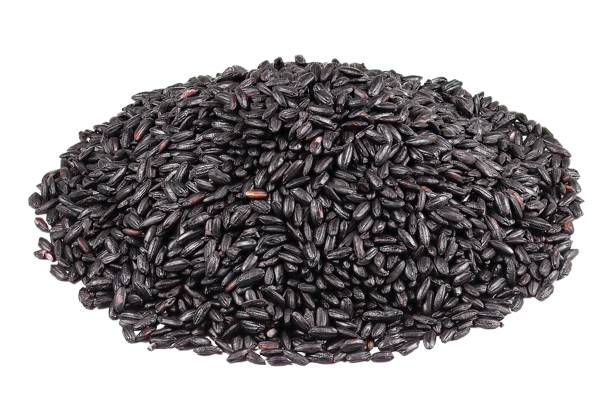
Black rice is a nutrient-dense whole grain that contains more calories than white rice. A 100 gram (3.53 ounce) serving of cooked black rice contains 117 calories, while one kilogram (1000g) of cooked black rice offers 1170 calories. A 0.5 cup serving of Y&Y Brand black glutinous rice (90g) has 320 calories, while one cup of puffed black rice (14g) has 54 calories. There are 170 calories in black rice for a 0.3 cup (45g) serving of C.T.F Brand Black Glutinous Rice, which provides 4g of protein, 2g of fat (3% DV), 33g of carbohydrates (12% DV), 2g of fiber (7% DV), and 0g of sugar. Black rice is a naturally gluten-free grain.
Black rice nutrition facts show the grain is exceptionally high in antioxidants. A study on the anthocyanins in black rice confirmed the bran is a rich source of these compounds, which may help reduce chronic disease risk (Hou, F., et al., 2013). The main health benefits of black rice come from a profile of antioxidants, fiber, and minerals. A 0.5 cup (90g) serving of Y&Y Brand Black Glutinous Rice provides 16% of the DV for iron, supporting heart health and digestive function.
The main types of black rice are Chinese Forbidden Rice, Indonesian black rice, and Thai black sticky rice. Top producers of black rice include China and Indonesia, while the United States and the European Union are major consumers. The price of black rice has increased over the last 20 years, with the average retail price rising from under $4.50 per pound to over $6.49 per pound in 2022.
Black rice is a key ingredient in Asian cuisines, used in dishes like Black Rice Pudding and Mango Sticky Rice at restaurants like Pig and Khao and Ayada Thai. A good recommendation for consumption is one cup (160g) of cooked black rice daily. This serving size provides 187 calories. The nutritional value of black rice in this portion can be balanced by burning the calories with 19 minutes of jogging or 23 minutes of cycling.
Black Rice nutrition
| Stats | Weight |
|---|---|
| Carbs | 77.2 grams |
| Protein | 7.57 grams |
| Fats | 3.44 grams |
| Sugars | 0 grams |
- Black Glutinous Rice Calories (Nutritional Facts)
- Puffed Black Rice Calories (Nutritional Facts)
- Sodium in Black Rice
- Potassium in Black Rice
- Sugar in Black Rice
- Fiber in Karuppu Kavuni
- Protein in Black Rice
- Carbs in Black Rice
- Fat in Black Rice
- Vitamins in Black Rice
- Minerals in Black Rice
Black Glutinous Rice Calories (Nutritional Facts)
A 0.5 cup (90g) serving of Y&Y Brand Black Glutinous Rice contains 320 calories, 8g of protein, 3g of fat (5% DV), 66g of carbohydrates (22% DV), and 2g of fiber (8% DV). A 0.25 cup (45g) serving of the same brand contains 160 calories, 4g of protein, 2g of fat (2% DV), 33g of carbohydrates (12% DV), and 1g of fiber (4% DV). A 0.3 cup (45g) serving of C.T.F Brand Black Glutinous Rice contains 170 calories, 4g of protein, 2g of fat (3% DV), 33g of carbohydrates (12% DV), and 2g of fiber (7% DV).
A one cup serving of puffed rice (14g) contains 54 calories, 0.98g of protein, 0.13g of fat, 12.29g of carbohydrates, 0.2g of fiber, and 0g of sugar. A 100g serving of puffed rice contains 383 calories, 7g of protein, 0.9g of fat, 87.77g of carbohydrates, and 1.4g of fiber.
A 100g serving (3.53oz) of cooked black rice contains 148mg of sodium (6% DV). Y&Y Brand and C.T.F Brand black glutinous rice both contain 0mg of sodium (0% DV) per serving. A 100g serving of puffed rice contains 5mg of sodium (0% DV), and a one cup serving (14g) contains 1mg of sodium (0% DV).
A 100g serving of cooked black rice provides 42mg of potassium (1% DV). A 0.5 cup (90g) serving of Y&Y Brand Black Glutinous Rice provides 270mg of potassium (8% DV), and a 0.25 cup (45g) serving provides 135mg of potassium (3% DV). A 0.3 cup (45g) serving of C.T.F Brand Black Glutinous Rice provides 122mg of potassium (3% DV). A 100g serving of puffed rice provides 116mg of potassium (2% DV), and a one cup serving (14g) provides 16mg of potassium (0% DV).
A 100g serving of cooked black rice contains 0.16g of sugar. Y&Y Brand and C.T.F Brand black glutinous rice both contain 0g of sugar per serving. Puffed rice also contains 0g of sugar.
A 100g serving of cooked Karuppu Kavuni, or black rice, provides 0.8g of dietary fiber (3% DV). A 0.5 cup (90g) serving of Y&Y Brand Black Glutinous Rice provides 2g of fiber (8% DV), and a 0.25 cup (45g) serving provides 1g of fiber (4% DV). A 0.3 cup (45g) serving of C.T.F Brand Black Glutinous Rice provides 2g of fiber (7% DV). A 100g serving of puffed rice provides 1.4g of fiber (5% DV), and a one cup serving (14g) provides 0.2g of fiber (1% DV).
A 100g serving of cooked black rice has 2.64g of protein. A 0.5 cup (90g) serving of Y&Y Brand Black Glutinous Rice has 8g of protein, and a 0.25 cup (45g) serving has 4g of protein. A 0.3 cup (45g) serving of C.T.F Brand Black Glutinous Rice has 4g of protein. A 100g serving of puffed rice has 7g of protein, and a one cup serving (14g) has 0.98g of protein.
A 100g serving of cooked black rice contains 25.11g of carbohydrates (9% DV). A 0.5 cup (90g) serving of Y&Y Brand Black Glutinous Rice contains 66g of carbohydrates (22% DV), and a 0.25 cup (45g) serving contains 33g of carbohydrates (12% DV). A 0.3 cup (45g) serving of C.T.F Brand Black Glutinous Rice contains 33g of carbohydrates (12% DV). A 100g serving of puffed rice contains 87.77g of carbohydrates (32% DV), and a one cup serving (14g) contains 12.29g of carbohydrates (4% DV).
A 100g serving of cooked black rice contains 0.38g of total fat (1% DV). A 0.5 cup (90g) serving of Y&Y Brand Black Glutinous Rice contains 3g of total fat (5% DV), and a 0.25 cup (45g) serving contains 2g of total fat (2% DV). A 0.3 cup (45g) serving of C.T.F Brand Black Glutinous Rice contains 2g of total fat (3% DV). A 100g serving of puffed rice contains 0.9g of total fat (1% DV), and a one cup serving (14g) contains 0.13g of total fat (0% DV).
A 0.5 cup (90g) serving of Y&Y Brand Black Glutinous Rice contains 0% of the DV for Vitamin A and 0% of the DV for Vitamin C. A 0.25 cup (45g) serving of the same brand contains 0mcg of Vitamin D (0% DV). A 0.3 cup (45g) serving of C.T.F Brand Black Glutinous Rice contains 0mcg of Vitamin D (0% DV).
A 0.5 cup (90g) serving of Y&Y Brand Black Glutinous Rice provides 16% of the DV for iron and 0% of the DV for calcium. A 0.25 cup (45g) serving of the same brand provides 1mg of iron (18% DV). A 0.3 cup (45g) serving of C.T.F Brand Black Glutinous Rice contains 5mg of calcium (0% DV) and 0.7mg of iron (4% DV).
Get a Custom Report on Black Rice Nutrition Data – Contact Us!
What are the Types of Black Rice?
The types of black rice are Chinese Forbidden Rice, Indonesian black rice, and Thai black sticky rice. The types differ in grain length, texture, and culinary use. The table below details the characteristics of these common varieties.
| Type | Description | Calories (Approximate per 100g cooked) | Calorie Qualifications |
|---|---|---|---|
|
Chinese Forbidden Rice
|
A medium-grain rice with a nutty, slightly sweet flavor and a chewy texture. | 179 calories | Low in calories, excellent for pilafs, salads, and side dishes. |
|
Indonesian Black Rice
|
A mix of black and white rice grains that cook together. Becomes deep purple when cooked. | 175 calories | Low in calories, often used in desserts like black rice pudding. |
|
Thai Black Sticky Rice
|
A short-grain glutinous rice. Becomes sticky and tender when cooked. | 100 calories | Lowest in calories, ideal for sweet puddings and desserts. |
What are the Desserts with Black Rice?
Black rice, particularly the glutinous varieties, is a popular ingredient in Southeast Asian desserts, prized for its chewy texture and nutty flavor. Dessert dishes incorporating black rice are detailed in the table below.
| Dish Name | Calories (Estimate per serving) | Description | Carbs (g) (Estimate) | Sugar (g) (Estimate) | Protein (g) (Estimate) | Fat (g) (Estimate) | Cuisine | Restaurants |
|---|---|---|---|---|---|---|---|---|
|
Black Rice Pudding
|
350-500 | Sweet black sticky rice simmered in coconut milk and palm sugar, served warm. | 60-75 | 30-40 | 6-8 | 10-15 | Thai, Indonesian | Pig and Khao (New York, NY) |
|
Mango Sticky Rice with Black Rice
|
400-550 | A variation of the classic Thai dessert, using black sticky rice instead of white, served with fresh mango and a sweet coconut sauce. | 70-85 | 40-50 | 5-7 | 12-18 | Thai | Ayada Thai (New York, NY) |
|
Black Rice Porridge (Bubur Ketan Hitam)
|
300-450 | A traditional Indonesian porridge made from black glutinous rice, coconut milk, and palm sugar, often garnished with pandan leaves. | 55-70 | 25-35 | 5-7 | 8-12 | Indonesian | Kopi Kopi (New York, NY) |
What are the Main Dishes with Black Rice?
Black rice is used in savory main dishes as a visually striking and more nutritious alternative to white or brown rice. Main course dishes that feature black rice are outlined in the following table.
| Dish Name | Calories (Estimate per serving) | Type of Black Rice Used | Carbs (g) (Estimate) | Sugar (g) (Estimate) | Protein (g) (Estimate) | Fat (g) (Estimate) | Cuisine | Restaurants |
|---|---|---|---|---|---|---|---|---|
|
Black Rice Risotto
|
450-600 | Chinese Forbidden Rice | 50-65 | 4-8 | 15-20 | 18-25 | Modern Italian, American | The Cheesecake Factory (restaurant chain) |
|
Black Rice Salad with Vegetables
|
300-450 | Chinese Forbidden Rice | 40-55 | 6-10 | 10-15 | 10-15 | Modern American | True Food Kitchen (restaurant chain) |
|
Coconut Curry with Black Rice
|
500-700 | Chinese Forbidden Rice | 55-70 | 8-15 | 15-20 | 25-35 | Southeast Asian | Slanted Door (San Francisco, CA) |
|
Grilled Salmon with Black Rice
|
550-750 | Chinese Forbidden Rice | 45-60 | 3-7 | 35-45 | 25-35 | Modern American | Roy's (restaurant chain) |
What Cuisines Prefer Black Rice Most?
Black rice is a cherished ingredient in many Asian culinary traditions, especially in China, Thailand, and Indonesia, where the grain is used in both sweet and savory contexts. Cuisines that prominently feature black rice are shown in the table below.
| Cuisine | Dish | Types of Black Rice Used | Calories (Estimate per serving) | Restaurant(s) |
|---|---|---|---|---|
|
Thai
|
Mango Sticky Rice with Black Rice | Thai Black Sticky Rice | 400-550 | Ayada Thai (New York, NY) |
|
Indonesian
|
Bubur Ketan Hitam (Black Rice Porridge) | Indonesian Black Rice | 300-450 | Kopi Kopi (New York, NY) |
|
Chinese
|
Black Rice Congee | Chinese Forbidden Rice | 200-300 | Tim Ho Wan (restaurant chain) |
|
Modern American
|
Black Rice Salad | Chinese Forbidden Rice | 300-450 | True Food Kitchen (restaurant chain) |
Which Countries Produce the Most Black Rice?
The top producers of black rice are China, Indonesia, and Thailand. Production data for black rice is often aggregated with general rice production figures, but these countries are the primary cultivators of the specific black rice varieties. The table below shows the production quantity of rice for these leading countries from 2003 to 2022.
| Country | 2003 | 2004 | 2005 | 2006 | 2007 | 2008 | 2009 | 2010 | 2011 | 2012 | 2013 | 2014 | 2015 | 2016 | 2017 | 2018 | 2019 | 2020 | 2019 | 2022 |
|---|---|---|---|---|---|---|---|---|---|---|---|---|---|---|---|---|---|---|---|---|
| China | 166,890,000 | 180,650,000 | 185,230,000 | 187,450,000 | 190,670,000 | 193,350,000 | 196,890,000 | 200,780,000 | 202,650,000 | 204,290,000 | 205,020,000 | 206,510,000 | 208,230,000 | 209,610,000 | 212,680,000 | 212,130,000 | 209,610,000 | 211,860,000 | 212,840,000 | 214,460,000 |
| Indonesia | 52,130,000 | 53,980,000 | 53,985,000 | 54,150,000 | 57,160,000 | 60,325,000 | 64,398,000 | 66,470,000 | 65,750,000 | 69,050,000 | 71,280,000 | 70,850,000 | 75,390,000 | 79,360,000 | 81,380,000 | 83,040,000 | 77,300,000 | 74,900,000 | 75,100,000 | 75,500,000 |
| Thailand | 27,110,000 | 29,150,000 | 29,450,000 | 31,560,000 | 32,450,000 | 31,650,000 | 31,460,000 | 34,590,000 | 35,560,000 | 37,450,000 | 38,230,000 | 37,560,000 | 36,450,000 | 35,890,000 | 33,380,000 | 32,190,000 | 30,450,000 | 28,900,000 | 29,100,000 | 29,500,000 |
Which Countries Consume the Most Black Rice?
The top consumers of black rice, based on import volumes for specialty rice, are the United States, countries in the European Union, and Australia. High import volumes in these regions reflect a growing demand for healthy, whole-grain, and exotic food products. The table below shows recent import values (USD) for rice for these top consuming countries.
| Country/Region | 2003 | 2004 | 2005 | 2006 | 2007 | 2008 | 2009 | 2010 | 2011 | 2012 | 2013 | 2014 | 2015 | 2016 | 2017 | 2018 | 2019 | 2020 | 2021 | 2022 |
|---|---|---|---|---|---|---|---|---|---|---|---|---|---|---|---|---|---|---|---|---|
| United States | 510,432,000 | 565,876,000 | 620,345,000 | 685,990,000 | 750,432,000 | 895,876,000 | 810,112,000 | 905,432,000 | 1,150,987,000 | 1,215,345,000 | 1,280,990,000 | 1,355,112,000 | 1,310,432,000 | 1,345,876,000 | 1,390,112,000 | 1,435,432,000 | 1,480,876,000 | 1,555,990,000 | 1,720,345,000 | 1,895,876,000 |
| European Union | 1,110,876,000 | 1,220,345,000 | 1,330,990,000 | 1,440,432,000 | 1,650,876,000 | 2,160,112,000 | 1,870,432,000 | 1,980,987,000 | 2,490,345,000 | 2,510,990,000 | 2,620,112,000 | 2,730,432,000 | 2,530,876,000 | 2,640,112,000 | 2,750,432,000 | 2,860,876,000 | 2,970,990,000 | 3,180,345,000 | 3,590,876,000 | 4,100,990,000 |
| Australia | 45,678,000 | 50,345,000 | 55,112,000 | 60,432,000 | 68,876,000 | 80,990,000 | 75,345,000 | 85,876,000 | 105,990,000 | 110,112,000 | 115,432,000 | 120,876,000 | 118,990,000 | 122,345,000 | 128,876,000 | 135,990,000 | 140,345,000 | 148,876,000 | 165,990,000 | 180,345,000 |
How Do Prices of Black Rice-Including Dishes Change?
The menu prices of dishes that include black rice have risen over the past decade. This change reflects increases in the cost of this specialty grain, labor, and restaurant overhead. Restaurants like True Food Kitchen and Roy's, which feature healthy and Pan-Asian cuisine, have adjusted menu prices to account for these broader economic factors.
| Restaurant | Dish | Old Price (Year) | Current Price (2024/2025) |
|---|---|---|---|
| True Food Kitchen (restaurant chain) | Teriyaki Quinoa Bowl (sub black rice) | $16.50 (2017) | $20.65 - $24.00 |
| Roy's (restaurant chain) | Blackened Island Ahi | $29.00 (2016) | $35.00 - $48.00 |
What is the Black Rice Calorie for 100 Grams?
A 100g serving (3.53oz) of cooked black rice contains 117 calories. A 100g serving of Y&Y Brand Black Glutinous Rice contains 356 calories. A 100g serving of C.T.F Brand Black Glutinous Rice contains 378 calories. A 100g serving of puffed rice contains 383 calories.
What is the Black Rice Calorie for 1 KG?
One kilogram (1000g) of cooked black rice contains 1170 calories. One kilogram of Y&Y Brand Black Glutinous Rice contains 3560 calories. One kilogram of C.T.F Brand Black Glutinous Rice contains 3780 calories. One kilogram of puffed rice contains 3830 calories.
What is the Calorie of 1 Black Rice?
A 0.5 cup (90g) serving of Y&Y Brand Black Glutinous Rice contains 320 calories, and a 0.25 cup (45g) serving contains 160 calories. A 0.3 cup (45g) serving of C.T.F Brand Black Glutinous Rice contains 170 calories. One cup of puffed rice (14g) contains 54 calories.
What are the Health Benefits of Black Rice?
Black rice offers distinct health benefits, largely due to a high concentration of powerful plant pigments called anthocyanins. The food's whole-grain nature also provides important nutrients. The key health advantages are detailed below.
- Black rice is exceptionally high in antioxidants. The dark purple color of black rice comes from anthocyanins, a type of flavonoid with potent antioxidant properties that help protect cells from oxidative stress. A study by Hou, F., et al. (2013), "Anthocyanins in black rice and their effects on health," confirmed that the bran of black rice is a rich source of these compounds, which may help reduce the risk of chronic diseases.
- Black rice may support heart health. The anthocyanins in black rice can help improve cholesterol levels and reduce inflammation, both of which are risk factors for heart disease. Research by Xia, X., et al. (2006), "An anthocyanin-rich extract from black rice enhances atherosclerotic plaque stabilization in apolipoprotein E-deficient mice," found that consumption of black rice extract helped reduce atherosclerotic plaque formation in an animal study.
- Black rice is a good source of dietary fiber. As a whole grain, black rice retains its bran and germ, providing more fiber than refined white rice. Fiber is essential for digestive health, promoting regular bowel movements and supporting a healthy gut microbiome. A review by Anderson, J. W., et al. (2009), "Health benefits of dietary fiber," demonstrated that increased fiber intake improves digestive function and is associated with a lower risk of cardiovascular disease.
What are the Downsides of Black Rice?
Black rice is a nutritious grain, but like other types of rice, the food can contain traces of heavy metals and the fiber content may cause digestive issues for some. These potential concerns are outlined in the points that follow.
- Black rice can contain arsenic. Rice plants can absorb arsenic from the soil and water, and the heavy metal can accumulate in the grain. Long-term exposure to inorganic arsenic is linked to health problems. A report by the Food and Drug Administration (FDA) in 2016, "Arsenic in Rice and Rice Products Risk Assessment," monitored arsenic levels across various rice products and advised consumers to eat a variety of grains. An alternative grain with lower arsenic levels is quinoa.
- The fiber content may cause digestive discomfort. For individuals not accustomed to a high-fiber diet, a sudden increase in fiber from whole grains like black rice can lead to gas, bloating, and cramping. A publication from the Cleveland Clinic, "Improving Your Health With Fiber," recommends increasing fiber intake gradually to allow the digestive system to adjust. A daily suggested amount is one cup (160g) of cooked black rice.
Are Black Rice Good for You?
Yes, black rice is a good food choice because the food is a nutrient-dense whole grain packed with antioxidants, fiber, and minerals. For heart health, the anthocyanins in black rice have been shown to improve cholesterol profiles by reducing LDL ("bad") cholesterol and preventing plaque formation in arteries. A study by Xia, X., et al. (2006), "An anthocyanin-rich extract from black rice enhances atherosclerotic plaque stabilization," provided evidence for these cardiovascular benefits in animal models. Regarding digestive health, the dietary fiber in black rice promotes regular bowel movements and supports the growth of beneficial gut bacteria. Research by Anderson, J. W., et al. (2009), "Health benefits of dietary fiber," confirmed the crucial role of fiber in maintaining a healthy digestive system. For cellular health and brain health, the potent antioxidant activity of black rice's anthocyanins helps protect cells throughout the body, including brain cells, from damage caused by free radicals. A study by Hou, F., et al. (2013), "Anthocyanins in black rice and their effects on health," detailed the high antioxidant capacity of the grain and its potential to prevent chronic diseases.
Is Black Rice Good for Diabetics?
Yes, black rice is a good food for diabetics. The grain has a lower glycemic index (GI) compared to white rice, meaning the food causes a slower and more gradual rise in blood sugar levels. The high fiber content of black rice also slows down the absorption of sugar into the bloodstream. A study by Walter, M., et al. (2013), "The effect of black rice on the glycemic index, insulin, and satiety in healthy humans," found that black rice had a significantly lower GI than white rice and helped improve post-meal blood sugar control.
Is Black Rice Gluten Free?
Yes, black rice is naturally gluten-free. Rice in all its forms, including black, brown, and white, does not contain the gluten proteins found in wheat, barley, and rye. A 100g serving of cooked black rice contains 0g of gluten. This makes black rice a safe and healthy carbohydrate choice for individuals with celiac disease or non-celiac gluten sensitivity. The Celiac Disease Foundation lists rice as a permitted grain on a gluten-free diet, confirming its suitability for those who must avoid gluten for health reasons.
How Does Calorie Change According to Black Rice Types?
The calorie content of black rice changes based on the specific variety and whether the rice is glutinous. Chinese Forbidden Rice, a standard non-glutinous variety, contains 179 calories per 100g cooked serving. Indonesian black rice is very similar, with 175 calories per 100g. The lowest calorie count is found in Thai black sticky rice, a glutinous variety, which provides only 100 calories per 100g cooked serving. The lowest calorie count for black rice is 100 calories for the Thai sticky variety, while the highest is 179 calories for Chinese Forbidden Rice. The highest calorie form is uncooked black rice, which contains 356 calories per 100g.
What is the Origin of Black Rice?
The origin of black rice is in ancient China, with genetic evidence suggesting the grain first appeared as a result of a single gene mutation in a common rice variety. For thousands of years, this unique grain was cultivated in very small quantities. The rice was highly prized for its nutritional properties and distinctive color, which was associated with wealth and power. The grain's history is deeply intertwined with Chinese royalty and nobility. The rarity and perceived health benefits of black rice made the food an exclusive commodity. The cultivation of black rice eventually spread from China to other parts of Asia, including Thailand and Indonesia, where new varieties and culinary uses developed, such as the sweet, sticky rice puddings popular in those regions.
Why is Black rice Also Called Forbidden Rice?
Yes, black rice is also called Forbidden Rice because of its history as an exclusive food reserved for royalty in ancient China. The name's origin is rooted in the grain's rarity and the strict laws that governed its consumption. The emperors of China and the royal family believed that black rice was a source of longevity and good health, and they wanted to keep these benefits for themselves. Common people were forbidden from growing or eating the grain, and any violation of this rule was punishable by death. This prohibition made black rice a symbol of extreme status and exclusivity, earning the grain its dramatic name.
Explore More Grains
Discover more Grains with detailed nutrition facts, calorie counts, vitamins, minerals, and health benefits. Compare similar foods, serving sizes, macronutrients, and key nutrients to find the best option for your diet and nutrition goals.
 Amaranth calories
 Arborio Rice calories
 Arrowroot Powder calories
 Barley calories
 Basmati Rice calories
 Brown Rice calories
 Buckwheat calories
 Bulgur Wheat calories
 Coconut Flour calories
 Cornmeal calories
 Cornstarch calories
 Couscous calories