Calories and Nutritions in Barramundi
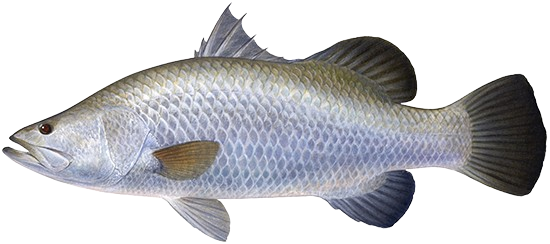
Barramundi, also known as Asian Sea Bass, is a low-calorie catadromous fish inhabiting the Indo-West Pacific. A single whole cooked barramundi fillet (227g) offers 250 barramundi calories, while a serving of The Better Fish Barramundi (113g) provides 100 calories. A large serving of cooked barramundi (7 ounces or 198g) yields 218 calories, while a 3.5 ounce (100g) portion of cooked barramundi provides 110 calories.
An evaluation of barramundi nutrition facts highlights a fish abundant in protein and beneficial fatty acids. Cooked barramundi (7 ounces) provides 45.5g of protein and 3.2g of fat, which includes essential polyunsaturated fats that play a crucial role in maintaining heart function. Research by Swanson, D., et al. (2012), "Omega-3 fatty acids EPA and DHA: health benefits throughout life," confirms that the omega-3 content in barramundi supports cardiovascular health by reducing inflammation and improving arterial function. Barramundi’s mineral profile is robust, supplying 792mg of potassium (17% DV) and 17.5mcg of vitamin D per 7 ounce portion.
Commercial availability of barramundi relies heavily on the aquaculture industries of major nations, with Australia, Indonesia, and Thailand dominating harvest volumes. This supply meets the demands of specific regional markets, particularly in the United States and China where consumption of this sustainable resource is high. Barramundi is popular in Thai, Australian, and Indonesian cuisines and serves as a central ingredient in Pla Kapong Neung Manao, grilled fillets, and spicy curries. Rising global demand has driven retail costs upward, with frozen fillets increasing from between $6.00 and $8.00 per lb in the early 2000s to between $10.00 and $16.00 per lb by 2024. Dining establishments mirror this trend, as the Fire-Grilled Barramundi at Abuelo's rose from $16.99 in 2015 to between $24.09 and $26.00 in 2024 to 2025.
Nutrition experts suggest consuming two servings of barramundi or other similar fish per week to obtain sufficient omega-3 fatty acids while maintaining a lean diet. Barramundi contains low levels of mercury, making it a safe choice for pregnant women and children compared to larger predatory fish. A large serving of cooked barramundi (198g) contains 218 calories, an energy load that requires 60 minutes of vacuuming or 25 minutes of swimming to metabolize.
Barramundi nutrition
| Stats | Weight |
|---|---|
| Carbs | 0 grams |
| Protein | 32.7 grams |
| Fats | 0 grams |
| Sugars | 0 grams |
- Large Barramundi Calories (Nutritional Facts)
- Medium Barramundi Calories (Nutritional Facts)
- Small Barramundi Calories (Nutritional Facts)
- Barramundi Fillet Calories (Nutritional Facts)
- Raw Barramundi Nutrition
- Sodium in Barramundi
- Potassium in Barramundi
- Sugar in Barramundi
- Fiber in Barramundi
- Protein in Barramundi
- Carbs in Barramundi
- Fat in Barramundi
- Vitamins in Barramundi
- Minerals in Barramundi
Large Barramundi Calories (Nutritional Facts)
A large serving consisting of 7 ounces of cooked barramundi (198g) contains 218 calories, 45.5g of protein, 3.2g of fat, 0g of carbohydrates, 0g of fiber, 0g of sugar, and 79mg of sodium.
A medium serving of 5 ounces of cooked barramundi (142g) provides 156 calories, 32.7g of protein, 2.3g of fat, 0g of carbohydrates, 0g of fiber, 0g of sugar, and 57mg of sodium.
A small serving of 3.5 ounces of cooked barramundi (100g) contains 110 calories, 23g of protein, 1.6g of fat, 0g of carbohydrates, 0g of fiber, 0g of sugar, and 40mg of sodium.
A single whole cooked barramundi fillet (227g or 8oz) supplies 250 calories, 52.2g of protein, 3.6g of fat, 0g of carbohydrates, 0g of fiber, 0g of sugar, and 91mg of sodium.
A standard cup of raw barramundi (150g) supplies 132 calories, 27.9g of protein, 2g of fat, 0g of carbohydrates, 0g of fiber, 0g of sugar, and 47mg of sodium.
A large serving consisting of 7 ounces of cooked barramundi (198g) contains 79mg of sodium (3% DV). A medium serving of 5 ounces of cooked barramundi (142g) has 57mg of sodium (2% DV). A small serving of 3.5 ounces of cooked barramundi (100g) contains 40mg of sodium (2% DV). A single whole cooked barramundi fillet (227g) provides 91mg of sodium (4% DV). A standard cup of raw barramundi (150g) supplies 47mg of sodium (2% DV).
A large serving consisting of 7 ounces of cooked barramundi (198g) contains 792mg of potassium (17% DV). A medium serving of 5 ounces of cooked barramundi (142g) has 568mg of potassium (12% DV). A small serving of 3.5 ounces of cooked barramundi (100g) contains 400mg of potassium (9% DV). A single whole cooked barramundi fillet (227g) provides 908mg of potassium (19% DV). A standard cup of raw barramundi (150g) supplies 490mg of potassium (10% DV).
A large serving consisting of 7 ounces of cooked barramundi (198g) contains 0g of sugar. A medium serving of 5 ounces of cooked barramundi (142g) has 0g of sugar. A small serving of 3.5 ounces of cooked barramundi (100g) contains 0g of sugar. A single whole cooked barramundi fillet (227g) provides 0g of sugar. A standard cup of raw barramundi (150g) supplies 0g of sugar.
A large serving consisting of 7 ounces of cooked barramundi (198g) provides 0g of dietary fiber (0% DV). A medium serving of 5 ounces of cooked barramundi (142g) has 0g of fiber (0% DV). A small serving of 3.5 ounces of cooked barramundi (100g) contains 0g of fiber (0% DV). A single whole cooked barramundi fillet (227g) provides 0g of fiber (0% DV). A standard cup of raw barramundi (150g) supplies 0g of fiber (0% DV).
A large serving consisting of 7 ounces of cooked barramundi (198g) provides 45.5g of protein (91% DV). A medium serving of 5 ounces of cooked barramundi (142g) has 32.7g of protein (65% DV). A small serving of 3.5 ounces of cooked barramundi (100g) contains 23g of protein (46% DV). A single whole cooked barramundi fillet (227g) provides 52.2g of protein (104% DV). A standard cup of raw barramundi (150g) supplies 27.9g of protein (56% DV).
A large serving consisting of 7 ounces of cooked barramundi (198g) contains 0g of carbohydrates (0% DV). A medium serving of 5 ounces of cooked barramundi (142g) has 0g of carbohydrates (0% DV). A small serving of 3.5 ounces of cooked barramundi (100g) contains 0g of carbohydrates (0% DV). A single whole cooked barramundi fillet (227g) provides 0g of carbohydrates (0% DV). A standard cup of raw barramundi (150g) supplies 0g of carbohydrates (0% DV).
A large serving consisting of 7 ounces of cooked barramundi (198g) contains 3.2g of total fat (4% DV). A medium serving of 5 ounces of cooked barramundi (142g) has 2.3g of total fat (3% DV). A small serving of 3.5 ounces of cooked barramundi (100g) contains 1.6g of total fat (2% DV). A single whole cooked barramundi fillet (227g) provides 3.6g of total fat (5% DV). A standard cup of raw barramundi (150g) supplies 2g of total fat (3% DV).
A large serving consisting of 7 ounces of cooked barramundi (198g) provides 17.5mcg of Vitamin D (88% DV) and 3.5mcg of Vitamin B12 (146% DV). A medium serving of 5 ounces of cooked barramundi (142g) has 12.5mcg of Vitamin D (63% DV) and 2.5mcg of Vitamin B12 (104% DV). A small serving of 3.5 ounces of cooked barramundi (100g) contains 8.8mcg of Vitamin D (44% DV) and 1.8mcg of Vitamin B12 (75% DV). A single whole cooked barramundi fillet (227g) provides 20mcg of Vitamin D (100% DV). A standard cup of raw barramundi (150g) supplies 13.2mcg of Vitamin D (66% DV).
A large serving consisting of 7 ounces of cooked barramundi (198g) provides 0.9mg of iron (5% DV), 52mg of calcium (4% DV), and 58mcg of selenium (105% DV). A medium serving of 5 ounces of cooked barramundi (142g) has 0.6mg of iron (3% DV), 37mg of calcium (3% DV), and 42mcg of selenium (76% DV). A small serving of 3.5 ounces of cooked barramundi (100g) contains 0.4mg of iron (2% DV), 26mg of calcium (2% DV), and 29mcg of selenium (53% DV). A single whole cooked barramundi fillet (227g) provides 1mg of iron (6% DV) and 60mg of calcium (5% DV). A standard cup of raw barramundi (150g) supplies 0.7mg of iron (4% DV) and 40mg of calcium (3% DV).
Get a Custom Report on Barramundi Nutrition Data – Contact Us!
What are the Types of Barramundis?
The types of Barramundis include Saltwater (Wild), Freshwater, and Farmed (Aquaculture). The chart below delineates the nutritional variances among these varieties.
| Type | Description | Calories (Per 100g Cooked) | Calorie Qualifications |
|---|---|---|---|
|
Wild Saltwater Barramundi
|
Caught in estuaries/oceans. | 105 | The calorie count reflects a leaner profile due to the active nature of wild fish. |
|
Farmed Barramundi
|
Raised in controlled systems. | 110 | The controlled diet often results in slightly higher fat reserves and caloric density. |
|
Freshwater Barramundi
|
Inhabits rivers and lakes. | 108 | The nutritional profile is similar to saltwater varieties but may have a distinct earthy flavor. |
|
Frozen Barramundi Fillets
|
Commercially processed. | 110 | The processing maintains the natural nutrient profile, offering consistent caloric values. |
|
Smoked Barramundi
|
Cured and hot-smoked. | 140 | The smoking process reduces moisture, concentrating the nutrients and increasing calories. |
What are the Main Dishes With Barramundi?
Barramundi functions as a versatile protein in curries, steamed dishes, and grilled entrees. The buttery flesh allows the fish to absorb bold seasonings and rich sauces. Specific dishes utilizing this fish are listed below.
| Dish Name | Calories (Estimate) | Type of Dish | Carbs (g) (Estimate) | Sugar (g) (Estimate) | Protein (g) (Estimate) | Fat (g) (Estimate) | Cuisine | Restaurants |
|---|---|---|---|---|---|---|---|---|
|
Pla Kapong Neung Manao
|
280 | Steamed Entree | 10 | 4 | 30 | 8 | Thai | Jitlada (Los Angeles, CA) |
|
Grilled Barramundi
|
250 | Entree | 2 | 0 | 35 | 10 | Australian/American | Outback Steakhouse |
|
Crispy Skin Barramundi
|
350 | Pan-Fried Entree | 5 | 0 | 32 | 20 | Modern Australian | The Meat & Wine Co (International) |
|
Barramundi Curry
|
400 | Soup Entree | 12 | 5 | 28 | 25 | Thai/Indian | Arun's Thai Restaurant (Chicago, IL) |
|
Steamed Barramundi with Ginger
|
220 | Entree | 5 | 2 | 30 | 8 | Chinese | R&G Lounge (San Francisco, CA) |
|
Barramundi Tacos
|
380 | Entree | 35 | 3 | 25 | 15 | Mexican/Fusion | Rubio's Coastal Grill (Western US) |
|
Pan-Seared Barramundi
|
300 | Entree | 4 | 0 | 32 | 16 | American | Legal Sea Foods |
|
Barramundi Fish & Chips
|
600 | Fried Entree | 55 | 2 | 25 | 30 | Australian | Salt and Battery (New York, NY) |
|
Baked Barramundi with Herbs
|
240 | Entree | 4 | 1 | 33 | 10 | Continental | The Fishery (San Diego, CA) |
|
Spicy Fried Barramundi
|
500 | Fried Entree | 25 | 8 | 30 | 35 | Thai | Lers Ros (San Francisco, CA) |
What Cuisines Prefer Barramundi the Most?
Barramundi serves as a foundational ingredient in Thai, Australian, and Indonesian culinary traditions. The following chart identifies culinary traditions that rely heavily on this seafood.
| Cuisine | Dish | Types of Barramundi Use | Calories (Estimate) | Restaurant(s) |
|---|---|---|---|---|
|
Thai
|
Pla Kapong Neung Manao | Steamed/Spicy | 280 | Jitlada (Los Angeles, CA) |
|
Australian
|
Grilled Barramundi | Grilled | 250 | Outback Steakhouse |
|
Indonesian
|
Ikan Bakar (Grilled Fish) | Grilled/Spiced | 300 | Simpang Asia (Los Angeles, CA) |
|
Chinese
|
Steamed Whole Fish | Steamed | 220 | R&G Lounge (San Francisco, CA) |
|
Bengali
|
Bhetki Macher Paturi | Steamed in Leaf | 320 | Masalawala & Sons (New York, NY) |
|
Vietnamese
|
Ca Chem Chien | Fried | 450 | Pho 79 (Garden Grove, CA) |
|
Malaysian
|
Siakap Tiga Rasa | Fried/Sauced | 400 | PappaRich (Various Locations) |
|
American
|
Pan-Seared Fillet | Pan-Fried | 300 | The Fishery (San Diego, CA) |
|
Singaporean
|
Barramundi Porridge | Boiled | 250 | Hawker Centers (Imports/Style) |
|
Fusion
|
Barramundi Tacos | Grilled | 380 | Rubio's Coastal Grill (Western US) |
Which Countries Produce the Most Barramundis?
The countries that produce the most barramundis are Australia, Indonesia, and Thailand, driven by extensive aquaculture industries. These nations manage the vast majority of the global supply to meet domestic and export demand. Taiwan and Malaysia also maintain substantial output levels, with significant local consumption. The table below presents the estimated aquaculture production of barramundi for the top producing nations over the last two decades.
| Country | 2003 | 2008 | 2013 | 2018 | 2019 | 2020 | 2021 | 2022 | 2023 |
|---|---|---|---|---|---|---|---|---|---|
| Indonesia | 25.5 | 35.2 | 45.6 | 60.4 | 65.2 | 70.5 | 75.4 | 80.2 | 85.0 |
| Thailand | 15.4 | 20.2 | 30.5 | 45.2 | 48.5 | 50.2 | 52.6 | 55.4 | 58.0 |
| Taiwan | 10.2 | 15.6 | 20.5 | 25.4 | 28.2 | 30.5 | 32.4 | 34.2 | 36.0 |
| Malaysia | 8.5 | 12.2 | 18.6 | 25.5 | 28.2 | 30.5 | 32.4 | 35.2 | 38.0 |
| Australia | 5.2 | 8.4 | 12.5 | 18.4 | 20.5 | 22.6 | 24.8 | 26.5 | 28.2 |
| Vietnam | 2.1 | 3.5 | 5.2 | 8.5 | 9.2 | 10.5 | 11.8 | 12.5 | 13.2 |
| United States | 0.5 | 1.2 | 2.4 | 3.5 | 3.8 | 4.0 | 4.2 | 4.5 | 4.8 |
| Saudi Arabia | 0.2 | 0.5 | 1.5 | 3.2 | 3.5 | 3.8 | 4.0 | 4.2 | 4.5 |
Which Countries Consume the Most Barramundis?
The countries that consume the most barramundis are Australia, the United States, and China, where the fish is a culinary staple or premium import. The domestic markets absorb a significant portion of the regional production, utilizing the fish in restaurants and households. Thailand and Indonesia also function as major consumers due to local availability. The table below shows the estimated consumption values and import demand for barramundi in key markets.
| Country | 2003 | 2008 | 2013 | 2018 | 2019 | 2020 | 2021 | 2022 | 2023 |
|---|---|---|---|---|---|---|---|---|---|
| Australia | 45.2 | 65.6 | 85.8 | 110.4 | 120.5 | 130.2 | 140.5 | 150.2 | 160.0 |
| United States | 15.6 | 25.2 | 45.4 | 70.2 | 80.4 | 90.2 | 100.6 | 110.4 | 120.2 |
| China | 20.5 | 35.6 | 55.2 | 85.4 | 95.2 | 105.5 | 115.4 | 125.2 | 135.0 |
| Thailand | 25.4 | 30.2 | 40.5 | 50.4 | 55.2 | 60.5 | 65.4 | 70.2 | 75.0 |
| Indonesia | 30.2 | 40.5 | 50.6 | 60.4 | 65.2 | 70.5 | 75.4 | 80.2 | 85.0 |
| Taiwan | 15.2 | 20.5 | 25.6 | 35.4 | 38.2 | 40.5 | 42.8 | 45.2 | 48.0 |
| Malaysia | 10.5 | 15.6 | 20.2 | 25.4 | 28.6 | 30.2 | 32.5 | 35.4 | 38.2 |
| Singapore | 5.4 | 8.2 | 12.5 | 18.4 | 20.5 | 22.6 | 24.8 | 26.5 | 28.2 |
How Do Prices of Barramundi-Including Dishes Change?
Restaurant costs for barramundi entrees have surged, mirroring the increased expense of sourcing this premium fish. The table below illustrates price adjustments for selected items at well-known establishments.
| Brand/Restaurant | Dish | Old Price (Year) | Current Price (2024/2025) |
|---|---|---|---|
| Abuelo's | Fire-Grilled Barramundi | $16.99 (2015) | $24.09 - $26.00 |
| Fresh USA | Farmed Whole Barramundi1 lb | $11.99 (2012) | $18.69 - $19.99 |
| The Better Fish | Barramundi Lemon Herb Butter Frozen – 12oz | $6.00 (2015) | $9.99 - $15.00 |
What is the Barramundi Calorie for 100 Grams?
A 100g serving of fresh raw barramundi contains 88 calories, while the same quantity of cooked barramundi provides 110 calories.
What is the Barramundi Calorie for 1 KG?
One kilogram (1000g) of fresh raw barramundi contains 880 calories, whereas a kilogram of cooked barramundi provides 1,100 calories.
What is the Calorie of 1 Barramundi?
A single serving of The Better Fish Barramundi (113g) provides 100 calories. Retail offerings present distinct energy values, as a serving of Australis Barramundi Fillet (168g) contains 150 calories, while a serving of Kroger Mild Boneless & Skinless Barramundi (170g) supplies 150 calories.
What are the Health Benefits of Barramundi?
Barramundi provides significant physiological advantages, specifically regarding cardiovascular stability, muscle synthesis, and immune support. The fish functions as a concentrated source of omega-3 fatty acids and essential vitamins. Key physiological benefits include the following.
- Supports Heart Health: Barramundi contains high levels of omega-3 fatty acids, which help lower triglyceride levels and reduce arterial inflammation. Research by Swanson, D., et al. (2012), "Omega-3 fatty acids EPA and DHA: health benefits throughout life," confirmed that adequate intake supports cardiovascular function and reduces the risk of cardiac events.
- Promotes Muscle Maintenance: The fish supplies high-quality complete protein necessary for tissue repair. Research by Paddon-Jones, D., & Rasmussen, B. B. (2009), "Dietary protein recommendations and the prevention of sarcopenia," established that leucine-rich proteins found in fish effectively stimulate muscle protein synthesis in adults.
- Enhances Immune Defense: Vitamin D found in the flesh aids in modulating immune responses. A review by Aranow, C. (2011), "Vitamin D and the immune system," highlights that Vitamin D deficiency correlates with increased susceptibility to infection, making dietary sources like barramundi valuable.
What are the Downsides of Barramundi?
Barramundi remains safe for most populations, yet specific biological and dietary concerns exist. Specific health considerations include the following.
- Triggers Fish Allergies: The fish contains parvalbumins, which are potent allergens for sensitive individuals. Research by Sharp, M. F., & Lopata, A. L. (2014), "Fish allergy: cooking mode affects the stability of parvalbumins," indicates that these proteins remain stable even after cooking, causing reactions in allergic subjects.
- Contains Omega-6 Fatty Acids: Farmed barramundi may contain higher levels of omega-6 fatty acids compared to wild varieties due to feed composition. A study by Strobel, C., et al. (2012), " Survey of n-3 and n-6 polyunsaturated fatty acids in fish and fish products," notes that the omega-3 to omega-6 ratio in farmed fish varies based on diet, which some individuals monitor for inflammation management.
Are Barramundis Good for You?
Yes, barramundi is good for health because the fish supports skeletal integrity, cardiac function, and weight regulation. The substantial Vitamin D and mineral content aids in maintaining bone mineral density, a benefit highlighted by Farina, E. K., et al. (2011), "Protective effects of fish intake and interactive effects of long-chain polyunsaturated fatty acid intakes on hip bone mineral density in older adults." Cardiovascular health improves through the intake of anti-inflammatory omega-3 fatty acids, which Yashodhara, B. M., et al. (2009), "Omega-3 fatty acids: a comprehensive review of their role in health and disease," confirmed significantly reduce the risk of arrhythmias and atherosclerosis. Metabolic processes benefit from the high-quality protein, which enhances thermogenesis and satiety as established by Westerterp-Plantenga, M. S., et al. (2009), "Dietary protein, weight loss, and weight maintenance."
How Does Calorie Change According to Barramundi Types?
Caloric density fluctuates minimally between wild and farmed species of barramundi. Smoked Barramundi contains the highest energy load at approximately 140 calories per 100 grams due to moisture loss. Farmed Barramundi presents a moderate profile at 110 calories per 100 grams. Wild Saltwater Barramundi offers the lowest profile at 105 calories per 100 grams, maintaining a very lean composition suitable for low-fat diets.
Is Barramundi a Lean Fish?
Yes, barramundi is classified as a lean fish due to the moderate fat content, which typically ranges between 2% and 4% by weight. A standard cooked serving (142g) contains 2.3g of total fat, which is significantly lower than fatty fish like salmon or mackerel. The majority of the lipids present are unsaturated fats, including beneficial omega-3s. The white, flaky flesh provides a high protein-to-fat ratio, making the fish an ideal choice for low-fat dietary protocols.
What are the Desserts With Barramundi?
Desserts featuring barramundi do not exist because the fish has a distinctly savory profile and a flaky texture. Culinary applications remain confined to savory main dishes and appetizers, where the flesh readily absorbs spices, citrus, and savory broths.
How Does Portion Size Affect Barramundi Calories?
Caloric intake scales linearly with the portion size of barramundi consumed. A small 3.5-ounce serving provides 110 calories, suitable for a light meal or salad topper. A medium 5-ounce serving supplies 156 calories, offering a standard dinner portion. A large 7-ounce serving yields 218 calories, providing a substantial protein load for higher energy requirements.
What is the Origin of Barramundi?
Barramundi (Lates calcarifer) originated in the Indo-West Pacific region, inhabiting coastal waters from the Persian Gulf to Northern Australia. Indigenous Australians harvested the fish for thousands of years, naming it "barramundi," which translates to "large-scaled river fish" in an Aboriginal language. The species is catadromous, meaning it lives in freshwater and migrates to the ocean to breed. Commercial aquaculture developed significantly in the late 20th century in Thailand and Australia, making the fish a globally available sustainable protein.
Explore More Seafood
Discover more Seafood with detailed nutrition facts, calorie counts, vitamins, minerals, and health benefits. Compare similar foods, serving sizes, macronutrients, and key nutrients to find the best option for your diet and nutrition goals.
 Anchovies calories
 Bluefin Tuna calories
 Bluefish calories
 Calamari calories
 Catfish calories
 Clams calories
 Cod calories
 Conch calories
 Crab calories
 Eel calories
 Fish calories
 Flounder calories