Calories and Nutritions in Bluefin Tuna
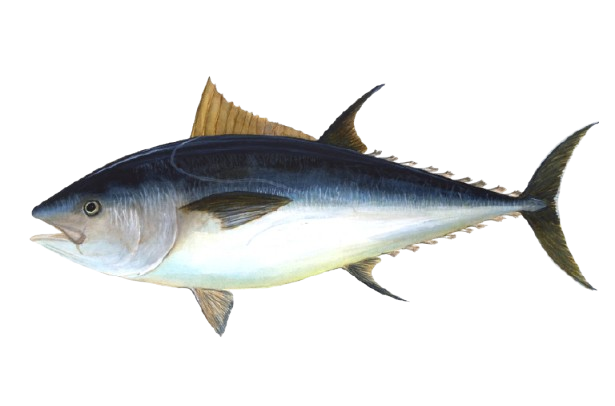
Bluefin tuna is a large predatory fish with deep red meat used in making Japanese sashimi. One slice of sashimi bluefin tuna (30 grams) contains 43 calories, while a serving of Don Bocarte Wild Bluefin Tuna Belly (120 grams) offers 336 calories. A large fillet of cooked bluefin tuna (170 grams) contains 313 calories, while a standard 100 gram serving of raw bluefin tuna nutrition offers 144 calories. A fatty Otoro contains 360 calories per 100g, whereas lean Akami remains low at 144 calories.
A medium fillet of cooked bluefin tuna (85 grams) delivers 25.4g of protein and 0g of carbohydrates, accompanied by 5.4g of fat and 0g of sugar. An analysis of bluefin tuna protein reveals a composition dominated by amino acids and essential lipids. The Omega-3 fatty acid profile supports cardiovascular resilience, a benefit confirmed by Mozaffarian, D., & Rimm, E. B. (2006), who found that regular fish consumption reduces coronary heart disease mortality. Micronutrient intake includes 9.4mcg of Vitamin B12 (392% DV) and 1.1mg of iron (6% DV) per medium serving. Sodium levels in fresh preparations remain naturally low, as this portion contains 43mg of sodium, though the addition of soy sauce during consumption frequently spikes this value.
Bluefin tuna’s availability relies on advanced ranching and wild capture, with Spain and Malta leading the export of these high-value fish. This supply feeds intense demand in Japan and the United States, where Japan imported over $2.1 billion worth of bluefin tuna in 2022. Within these culinary landscapes, the ingredient functions as a luxury element in Omakase Sashimi and Seared Tuna Steaks. Rising conservation costs pushed wholesale prices for whole fish from $15.00 per pound in 2003 to between $40.00 and $80.00 per pound by 2024. Menu pricing mirrors this trend, as a Toro Tartare with Caviar at Nobu increased from $28.00 in 2012 to $48.00 in 2024.
Bluefin tuna is valued for facilitating muscle synthesis and providing antioxidants like selenium. Dietitians recommend limiting consumption to minimal amounts, restricting intake to between 0g and 85g per week to avoid methylmercury accumulation. The lean Akami cuts are not considered fattening due to the low energy density, though fatty Otoro contributes to weight gain if consumed in excess. A large serving of bluefin tuna contains 313 calories, an energy load that requires 35 minutes of stair climbing or 78 minutes of mopping to metabolize.
Bluefin Tuna nutrition
| Stats | Weight |
|---|---|
| Carbs | 0 grams |
| Protein | 25.4 grams |
| Fats | 0 grams |
| Sugars | 0 grams |
- Large Bluefin Tuna Calories (Nutritional Facts)
- Medium Bluefin Tuna Calories (Nutritional Facts)
- Small Bluefin Tuna Calories (Nutritional Facts)
- Raw Bluefin Tuna Nutrition
- Fresh Bluefin Tuna Nutrition
- Sashimi Bluefin Tuna Nutrition
- Sodium in Bluefin Tuna
- Potassium in Bluefin Tuna
- Sugar in Bluefin Tuna
- Fiber in Bluefin Tuna
- Protein in Bluefin Tuna
- Carbs in Bluefin Tuna
- Fat in Bluefin Tuna
- Vitamins in Bluefin Tuna
- Minerals in Bluefin Tuna
Large Bluefin Tuna Calories (Nutritional Facts)
A large fillet of cooked bluefin tuna (170 grams or 6 oz) provides 313 calories, 50.8g of protein, 10.7g of fat, 0g of carbohydrates, 0g of fiber, 0g of sugar, and 85mg of sodium. A large serving of raw bluefin tuna (170 grams or 6 oz) contains 245 calories, 39.6g of protein, 8.3g of fat, 0g of carbohydrates, 0g of fiber, 0g of sugar, and 66mg of sodium. This cooked fillet provides 2.2mg of iron and 18.7mcg of Vitamin B12.
A medium fillet of cooked bluefin tuna (85 grams or 3 oz) contains 156 calories, 25.4g of protein, 5.4g of fat, 0g of carbohydrates, 0g of fiber, 0g of sugar, and 43mg of sodium. A medium serving of raw bluefin tuna (85 grams or 3 oz) provides 122 calories, 19.8g of protein, 4.2g of fat, 0g of carbohydrates, 0g of fiber, 0g of sugar, and 33mg of sodium. This cooked portion supplies 1.1mg of iron and 9.4mcg of Vitamin B12.
A small fillet of cooked bluefin tuna (28 grams or 1 oz) offers 52 calories, 8.4g of protein, 1.8g of fat, 0g of carbohydrates, 0g of fiber, 0g of sugar, and 14mg of sodium. A small serving of raw bluefin tuna (28 grams or 1 oz) contains 40 calories, 6.5g of protein, 1.4g of fat, 0g of carbohydrates, 0g of fiber, 0g of sugar, and 11mg of sodium. This cooked amount offers 0.4mg of iron and 3.1mcg of Vitamin B12.
A serving of raw bluefin tuna nutrition (100 grams or 3.5 oz) contains 144 calories, 23.3g of protein, 4.9g of fat, 0g of carbohydrates, 0g of fiber, 0g of sugar, and 39mg of sodium. A large serving of raw bluefin tuna (170 grams or 6 oz) contains 245 calories, 39.6g of protein, 8.3g of fat, 0g of carbohydrates, 0g of fiber, 0g of sugar, and 66mg of sodium.
A fresh bluefin tuna steak (198 grams or 7 oz) contains 285 calories, 46.2g of protein, 9.7g of fat, 0g of carbohydrates, 0g of fiber, 0g of sugar, and 77mg of sodium. This fresh cut provides 1.7mg of iron and 18.2mcg of Vitamin B12.
A slice of sashimi bluefin tuna nutrition (30 grams or 1 oz) contains 43 calories, 7g of protein, 1.5g of fat, 0g of carbohydrates, 0g of fiber, 0g of sugar, and 12mg of sodium. This raw preparation offers 0.3mg of iron and 2.8mcg of Vitamin B12.
A large fillet of cooked bluefin tuna (170 grams) has 85mg of sodium (4% DV), while the same portion of raw bluefin tuna contains 66mg of sodium (3% DV). A medium fillet of cooked bluefin tuna (85 grams) contains 43mg of sodium (2% DV), whereas a medium serving of raw bluefin tuna (85 grams) has 33mg of sodium (1% DV). A small fillet of cooked bluefin tuna (28 grams) contains 14mg of sodium (1% DV), and a small serving of raw bluefin tuna (28 grams) provides 11mg of sodium (0% DV). A fresh bluefin tuna steak (198 grams) contains 77mg of sodium (3% DV), while a slice of sashimi bluefin tuna (30 grams) offers 12mg of sodium (1% DV).
A large fillet of cooked bluefin tuna (170 grams) provides 549mg of potassium (12% DV), whereas a large serving of raw bluefin tuna (170 grams) contains 428mg of potassium (9% DV). A medium fillet of cooked bluefin tuna (85 grams) offers 275mg of potassium (6% DV), while a medium serving of raw bluefin tuna (85 grams) supplies 214mg of potassium (5% DV). A small fillet of cooked bluefin tuna (28 grams) provides 90mg of potassium (2% DV), and a small serving of raw bluefin tuna (28 grams) has 71mg of potassium (2% DV). A fresh bluefin tuna steak (198 grams) delivers 499mg of potassium (11% DV), and a slice of sashimi bluefin tuna (30 grams) contains 76mg of potassium (2% DV).
A large fillet of cooked bluefin tuna (170 grams) has 0g of sugar, and a large serving of raw bluefin tuna (170 grams) also contains 0g of sugar. A medium fillet of cooked bluefin tuna (85 grams) and a medium serving of raw bluefin tuna (85 grams) both contain 0g of sugar. A small fillet of cooked bluefin tuna (28 grams), a small serving of raw bluefin tuna (28 grams), a fresh bluefin tuna steak (198 grams), and a slice of sashimi bluefin tuna (30 grams) all provide 0g of sugar.
A large fillet of cooked bluefin tuna (170 grams) has 0g of fiber (0% DV), matching the 0g of fiber (0% DV) found in a large serving of raw bluefin tuna (170 grams). A medium fillet of cooked bluefin tuna (85 grams) and a medium serving of raw bluefin tuna (85 grams) contain 0g of fiber (0% DV). A small fillet of cooked bluefin tuna (28 grams), a small serving of raw bluefin tuna (28 grams), a fresh bluefin tuna steak (198 grams), and a slice of sashimi bluefin tuna (30 grams) all provide 0g of fiber (0% DV).
A large fillet of cooked bluefin tuna (170 grams) has 50.8g of protein (102% DV), while a large serving of raw bluefin tuna (170 grams) provides 39.6g of protein (79% DV). A medium fillet of cooked bluefin tuna (85 grams) contains 25.4g of protein (51% DV), whereas a medium serving of raw bluefin tuna (85 grams) offers 19.8g of protein (40% DV). A small fillet of cooked bluefin tuna (28 grams) contains 8.4g of protein (17% DV), and a small serving of raw bluefin tuna (28 grams) supplies 6.5g of protein (13% DV). A fresh bluefin tuna steak (198 grams) delivers 46.2g of protein (92% DV), and a slice of sashimi bluefin tuna (30 grams) provides 7g of protein (14% DV).
A large fillet of cooked bluefin tuna (170 grams) has 0g of carbohydrates (0% DV), whereas a large serving of raw bluefin tuna (170 grams) contains 0g of carbohydrates (0% DV). A medium fillet of cooked bluefin tuna (85 grams) and a medium serving of raw bluefin tuna (85 grams) both contain 0g of carbohydrates (0% DV). A small fillet of cooked bluefin tuna (28 grams), a small serving of raw bluefin tuna (28 grams), a fresh bluefin tuna steak (198 grams), and a slice of sashimi bluefin tuna (30 grams) all provide 0g of carbohydrates (0% DV).
A large fillet of cooked bluefin tuna (170 grams) has 10.7g of total fat (14% DV), and a large serving of raw bluefin tuna (170 grams) contains 8.3g of total fat (11% DV). A medium fillet of cooked bluefin tuna (85 grams) contains 5.4g of total fat (7% DV), while a medium serving of raw bluefin tuna (85 grams) has 4.2g of total fat (5% DV). A small fillet of cooked bluefin tuna (28 grams) contains 1.8g of total fat (2% DV), and a small serving of raw bluefin tuna (28 grams) offers 1.4g of total fat (2% DV). A fresh bluefin tuna steak (198 grams) contains 9.7g of total fat (12% DV), and a slice of sashimi bluefin tuna (30 grams) provides 1.5g of total fat (2% DV).
A large fillet of cooked bluefin tuna (170 grams) provides 18.7mcg of Vitamin B12 (779% DV) and 1287mcg of Vitamin A (143% DV). A large serving of raw bluefin tuna (170 grams) provides 15.6mcg of Vitamin B12 (650% DV) and 1287mcg of Vitamin A (143% DV). A medium fillet of cooked bluefin tuna (85 grams) offers 9.4mcg of Vitamin B12 (392% DV), while a medium serving of raw bluefin tuna (85 grams) supplies 7.8mcg of Vitamin B12 (325% DV). A small fillet of cooked bluefin tuna (28 grams) provides 3.1mcg of Vitamin B12 (129% DV), and a small serving of raw bluefin tuna (28 grams) has 2.6mcg of Vitamin B12 (108% DV). A fresh bluefin tuna steak (198 grams) delivers 18.2mcg of Vitamin B12 (758% DV), and a slice of sashimi bluefin tuna (30 grams) contains 2.8mcg of Vitamin B12 (117% DV).
A large fillet of cooked bluefin tuna (170 grams) provides 2.2mg of iron (12% DV) and 156mcg of selenium (284% DV). A large serving of raw bluefin tuna (170 grams) provides 1.7mg of iron (9% DV) and 62.1mcg of selenium (113% DV). A medium fillet of cooked bluefin tuna (85 grams) contains 1.1mg of iron (6% DV), whereas a medium serving of raw bluefin tuna (85 grams) offers 0.9mg of iron (5% DV). A small fillet of cooked bluefin tuna (28 grams) provides 0.4mg of iron (2% DV), and a small serving of raw bluefin tuna (28 grams) supplies 0.3mg of iron (2% DV). A fresh bluefin tuna steak (198 grams) delivers 1.7mg of iron (9% DV), and a slice of sashimi bluefin tuna (30 grams) contains 0.3mg of iron (2% DV).
Get a Custom Report on Bluefin Tuna Nutrition Data – Contact Us!
What are the Types of Bluefin Tunas?
The types of bluefin tuna cuts are Akami, Chutoro, Otoro, and Kama. The schedule here illustrates the data for these varieties.
| Type | Description | Calories (per 100g) | Calorie Qualifications |
|---|---|---|---|
|
Akami (Lean Red Meat)
|
Taken from the back of the fish; deep red, firm, low fat. | 144 | This lean cut offers the lowest calorie count due to minimal lipid content. |
|
Chutoro (Medium Fatty)
|
Found near the skin and back; pinkish, moderate marbling. | 220 | The moderate fat integration significantly increases the energy density. |
|
Otoro (Fatty Belly)
|
Located on the underside; pale pink, intense marbling. | 360 | The extremely high fat content results in the highest caloric value. |
|
Kama (Collar)
|
The section behind the gills; rich, fatty, often grilled. | 300 | The dense meat and fat deposits create a high-calorie profile similar to the belly. |
What are the Main Dishes With Bluefin Tuna?
Bluefin tuna serves as the centerpiece for high-end raw preparations and seared entrees across global menus. The list below enumerates substantial meals incorporating bluefin tuna.
| Dish Name | Calories (Estimate per serving) | Type of Dish | Carbs (g) (Estimate) | Sugar (g) (Estimate) | Protein (g) (Estimate) | Fat (g) (Estimate) | Cuisine | Restaurants |
|---|---|---|---|---|---|---|---|---|
|
Bluefin Otoro Sashimi
|
360 | Raw Slices | 0 | 0 | 20 | 30 | Japanese | Masa (New York, NY) |
|
Bluefin Tuna Tartare
|
280 | Raw Appetizer | 8 | 2 | 22 | 18 | Fusion | Nobu |
|
Seared Bluefin Steak
|
450 | Grilled Entree | 2 | 0 | 50 | 25 | American | The Capital Grille |
|
Tekkadon (Tuna Bowl)
|
550 | Rice Bowl | 85 | 2 | 35 | 8 | Japanese | Sushi Gen (Los Angeles, CA) |
|
Bluefin Tuna Nigiri (2 pcs)
|
120 | Sushi | 18 | 2 | 10 | 2 | Japanese | Sugarfish (Los Angeles, CA) |
|
Toro Scallion Hand Roll
|
180 | Sushi Roll | 20 | 1 | 12 | 8 | Japanese | KazuNori (New York, NY) |
|
Bluefin Tuna Carpaccio
|
220 | Raw Appetizer | 2 | 0 | 25 | 12 | Italian Fusion | Le Bernardin (New York, NY) |
|
Grilled Tuna Collar (Kama)
|
600 | Grilled Specialty | 1 | 0 | 45 | 45 | Japanese | Aburiya Raku (Las Vegas, NV) |
|
Bluefin Poke Bowl
|
500 | Salad/Rice | 60 | 5 | 30 | 15 | Hawaiian | Sweetfin (Los Angeles, CA) |
|
Bluefin Tuna Tostada
|
250 | Crisp Tortilla | 15 | 1 | 18 | 14 | Mexican Fusion | Cala (San Francisco, CA) |
|
Tuna Niçoise Salad
|
400 | Salad Main | 20 | 4 | 35 | 22 | French | Balthazar (New York, NY) |
|
Spicy Tuna Crispy Rice
|
350 | Fried Appetizer | 35 | 3 | 15 | 18 | Fusion | Koi (Los Angeles, CA) |
|
Bluefin Tuna Tataki
|
160 | Seared Slices | 5 | 2 | 22 | 6 | Japanese | Morimoto (Philadelphia, PA) |
|
Zuke Maguro (Marinated)
|
140 | Cured Sashimi | 4 | 2 | 24 | 2 | Japanese | Sushi Yasuda (New York, NY) |
|
Bluefin Tuna Slider
|
320 | Sandwich | 25 | 3 | 20 | 15 | American | The Sea Fire Grill (New York, NY) |
What Cuisines Prefer Bluefin Tuna the Most?
Bluefin tuna features prominently in Japanese and Mediterranean culinary traditions where the quality of the raw ingredient dictates the dish. The schedule here illustrates the culinary traditions that prioritize this premium seafood item.
| Cuisine | Dish | Types of Bluefin Used | Calories (Estimate) | Restaurant(s) |
|---|---|---|---|---|
|
Japanese
|
Omakase Sashimi | Otoro/Chutoro/Akami | 300 | Sushi Nakazawa (New York, NY) |
|
Spanish
|
Mojama (Cured Tuna) | Loin (Akami) | 180 | Despaña (New York, NY) |
|
Italian
|
Tuna Crudo | Belly/Loin | 220 | Marea (New York, NY) |
|
French
|
Tuna Au Poivre | Steak (Loin) | 450 | Le Coucou (New York, NY) |
|
Peruvian (Nikkei)
|
Tuna Tiradito | Thin Slices | 190 | La Mar (San Francisco, CA) |
|
American
|
Seared Tuna Steak | Thick Cut Loin | 400 | The Grill (New York, NY) |
|
Hawaiian
|
Poke | Cubed Lean Meat | 500 | Da Poke Shack (Hawaii) |
|
Mexican (Baja)
|
Tuna Tostada | Fresh Slices | 250 | Holbox (Los Angeles, CA) |
|
Korean
|
Chamchi Hoe | Raw Slices | 280 | The Kunjip (New York, NY) |
|
Mediterranean
|
Tuna Tartare | Minced Loin | 280 | Avra Madison (New York, NY) |
|
Californian
|
Seared Tuna Salad | Loin | 350 | Chez Panisse (Berkeley, CA) |
|
Portuguese
|
Tuna Steak with Onions | Steak | 420 | O Dinis (East Providence, RI) |
|
Chinese (Fusion)
|
Spicy Tuna Roll | Minced Meat | 320 | Tao (Las Vegas, NV) |
|
Basque
|
Marmitako (Stew) | Chunks | 450 | Txikito (New York, NY) |
|
Brazilian
|
Sushi Fusion | Rolls/Sashimi | 300 | Sushi Samba (Las Vegas, NV) |
Which Countries Produce the Most Bluefin Tunas?
The top producers of bluefin tuna are Spain, Malta, and Japan. These nations utilize advanced ranching techniques and strategic access to migration routes in the Atlantic and Pacific oceans to dominate the global supply chain. The data presented here displays the export values for bluefin tuna for the leading countries over the last two decades.
| Country | 2003 | 2008 | 2013 | 2018 | 2019 | 2020 | 2021 | 2022 |
|---|---|---|---|---|---|---|---|---|
| Spain | 150 | 280 | 350 | 500 | 520 | 450 | 550 | 600 |
| Malta | 80 | 120 | 180 | 250 | 260 | 220 | 280 | 310 |
| Japan | 40 | 80 | 120 | 200 | 210 | 180 | 230 | 250 |
| Australia | 90 | 150 | 160 | 180 | 185 | 160 | 190 | 210 |
| Mexico | 30 | 60 | 90 | 140 | 145 | 120 | 150 | 170 |
Which Countries Consume the Most Bluefin Tunas?
The top consumers of bluefin tuna are Japan, the United States, and China. These markets drive the global trade due to a cultural appreciation for high-end sushi and the specific demand for fatty belly cuts known as Otoro. The schedule here illustrates the import values for bluefin tuna in key markets.
| Country | 2003 | 2008 | 2013 | 2018 | 2019 | 2020 | 2021 | 2022 |
|---|---|---|---|---|---|---|---|---|
| Japan | 800 | 1,200 | 1,500 | 1,800 | 1,850 | 1,600 | 1,900 | 2,100 |
| United States | 150 | 250 | 350 | 500 | 520 | 450 | 550 | 600 |
| China | 20 | 50 | 100 | 200 | 220 | 180 | 250 | 300 |
| South Korea | 30 | 60 | 90 | 130 | 140 | 120 | 150 | 170 |
| Spain | 40 | 70 | 100 | 150 | 160 | 130 | 170 | 190 |
How Do Prices of Bluefin Tuna-Including Dishes Change?
Menu pricing for bluefin tuna dishes escalated sharply as restaurants passed on the rising costs of sustainable sourcing and transport. The comparison table here highlights the financial shifts for signature dishes at well-known dining establishments.
| Brand/Restaurant | Dish | Old Price (Year) | Current Price (2024/2025) |
|---|---|---|---|
| Nobu (Los Angeles, CA) | Toro Tartare with Caviar | $28.00 (2012) | $38.00 - $48.00 |
| The Capital Grille | Sesame Seared Tuna on English Cucumber | $29.00 (2013) | $42.00 - $48.00 |
| Sugarfish (Los Angeles, CA) | "The Nozawa" Trust Me | $33.00 (2014) | $48.00 - $52.00 |
| Morimoto (Philadelphia, PA) | Tuna Pizza | $16.00 (2010) | $26.00 - $28.00 |
| Tao (Las Vegas, NV) | Spicy Tuna Tartare on Crispy Rice | $14.00 (2012) | $21.00 - $25.00 |
What is the Bluefin Tuna Calorie for 100 Grams?
A 100g serving of raw bluefin tuna contains 144 calories, while a 100g fillet of cooked bluefin tuna contains 184 calories. A 100g serving of fresh bluefin tuna provides 144 calories, and a 100g portion of sashimi bluefin tuna offers 144 calories.
What is the Bluefin Tuna Calorie for 1 KG?
One kilogram (1000g) of raw bluefin tuna contains 1440 calories, whereas one kilogram (1000g) of cooked bluefin tuna contains 1840 calories. One kilogram (1000g) of fresh bluefin tuna provides 1440 calories, and one kilogram (1000g) of sashimi bluefin tuna offers 1440 calories.
What is the Calorie of 1 Bluefin Tuna?
One piece of Bluefin Tuna Nigiri (20 grams) contains 29 calories, while one slice of Bluefin Sashimi (30 grams) contains 43 calories. A serving of Don Bocarte Wild Bluefin Tuna Belly (120 grams) contains 336 calories, and a serving of El Capricho Bluefin Tuna (110 grams) provides 220 calories.
What are the Health Benefits of Bluefin Tuna?
Bluefin tuna provides substantial health advantages such as bolstering cardiovascular resilience and optimizing immune defense through a dense concentration of fatty acids and antioxidants. A summary of these favorable characteristics appears below.
- Bolsters Cardiovascular Resilience: The abundance of Omega-3 fatty acids reduces triglycerides and lowers the risk of arrhythmia. A study by Mozaffarian, D., & Rimm, E. B. (2006), "Fish intake, contaminants, and human health: evaluating the risks and the benefits," confirmed that regular consumption of fatty fish decreases mortality rates associated with coronary heart disease.
- Optimizes Immune Defense: The high selenium content acts as a powerful antioxidant, protecting cells from oxidative stress. Research by Rayman, M. P. (2000), "The importance of selenium to human health," demonstrated that adequate selenium intake enhances the immune response against viral infections.
- Supports Muscle Synthesis: The complete amino acid profile facilitates efficient muscle repair and growth. A study by Paddon-Jones, D., et al. (2008), "Protein, weight management, and satiety," established that high-quality dietary protein preserves lean muscle mass during metabolic aging.
What are the Downsides of Bluefin Tuna?
Bluefin tuna poses distinct downsides including high methylmercury accumulation and the potential for histamine toxicity. The list provided here details these specific health risks.
- Increases Mercury Exposure: The position of bluefin tuna at the top of the food chain results in significant bioaccumulation of neurotoxic methylmercury. A study by Karagas, M. R., et al. (2012), "Evidence of health effects of methylmercury exposure," noted that elevated levels cause cognitive impairment and developmental issues in fetuses. A safer alternative is skipjack tuna. A suggested daily limit is 0g to 85g per week maximum.
- Risks Histamine Toxicity: Improper storage leads to scombroid poisoning due to the rapid formation of histamine in the dark meat. Research by Morrow, J. D., et al. (1991), "Evidence that histamine is the causative toxin of scombroid-fish poisoning," identified this mechanism as a common cause of seafood-related illness.
Is Bluefin Tuna Good for You?
Yes, bluefin tuna is good for the body when consumed in strict moderation because the Omega-3 fatty acids support cardiovascular function and the protein content aids tissue repair. Heart health improves through the ingestion of EPA and DHA, nutrients linked to reduced arterial inflammation by Swanson, D., et al. (2012), "Omega-3 Fatty Acids EPA and DHA: Health Benefits Throughout Life." Brain health benefits from the high concentration of Vitamin B12, which preserves myelin sheaths and cognitive speed as confirmed by O'Leary, F., & Samman, S. (2010), "Vitamin B12 in Health and Disease." Liver health relies on the presence of selenium and antioxidants to facilitate detoxification processes, a mechanism detailed in research by Rayman, M. P. (2012), "Selenium and human health."
How Do Calories Change According to Bluefin Tuna Types?
The distribution of adipose tissue determines the calorie count of bluefin tuna cuts. Otoro possesses the highest calorie value at 360 calories per 100 grams due to the intense concentration of lipids in the belly region. Akami contains the lowest calorie value at 144 calories per 100 grams. Chutoro falls in the middle range at 220 calories per 100 grams. Kama presents a high value of 300 calories per 100 grams owing to the rich fat deposits in the collar.
How Does Bluefin Tuna Compare Nutritionally to Other Tuna Varieties?
Bluefin tuna contains significantly higher fat and calorie levels compared to leaner varieties like skipjack or yellowfin. A 100g serving of raw bluefin tuna contains 144 calories and 4.9g of fat. A 100g serving of raw yellowfin tuna contains 109 calories and 0.5g of fat. Skipjack tuna provides 103 calories and 1g of fat per 100g. The bluefin variety offers superior Omega-3 content but carries a heavier caloric load and higher mercury risks than the smaller, leaner species.
What are the Desserts With Bluefin Tuna?
Bluefin tuna does not function as an ingredient in dessert courses due to the high fat content and distinct savory, metallic flavor profile. Culinary professionals utilize this premium fish exclusively for appetizers, main courses, and raw preparations rather than sweet confections. No established recipes or restaurant menus feature bluefin tuna in sugar-based or frozen dessert preparations.
Is Raw Bluefin Tuna Higher in Protein Than Cooked Tuna?
No, raw bluefin tuna is not higher in protein than cooked tuna per unit of weight, as the cooking process removes moisture and concentrates the nutrients. A 100g serving of cooked bluefin tuna contains 29.9g of protein. A 100g serving of raw bluefin tuna contains 23.3g of protein. The application of heat causes water evaporation, resulting in a denser protein profile for the prepared fish compared to the raw state.
What is the Origin of Bluefin Tuna?
The origin of the bluefin tuna traces back to the Mediterranean and Atlantic, where Phoenicians and Romans utilized trap-netting techniques known as Almadraba to harvest the migrating schools. Japanese culinary history initially disregarded the fatty flesh due to spoilage concerns and a preference for lean white fish, often processing the meat for fertilizer or low-grade consumption. The advent of refrigeration technology in the 1960s and 1970s transformed the global perception of the species. Aviation expansion allowed the transport of fresh Atlantic bluefin to Tokyo markets, establishing the fish as a premier sushi ingredient known as "Toro." This shift in demand turned the bluefin tuna into one of the most valuable marine commodities in the world.
Explore More Seafood
Discover more Seafood with detailed nutrition facts, calorie counts, vitamins, minerals, and health benefits. Compare similar foods, serving sizes, macronutrients, and key nutrients to find the best option for your diet and nutrition goals.
 Anchovies calories
 Barramundi calories
 Bluefish calories
 Calamari calories
 Catfish calories
 Clams calories
 Cod calories
 Conch calories
 Crab calories
 Eel calories
 Fish calories
 Flounder calories