Calories and Nutritions in Catfish
Catfish is widely used in the American South, usually prepared by frying or Cajun blackening. The calories in catfish differ based on cooking method and portion. A large coated fried catfish (595 grams or 21 ounces) contains 1464 calories, while a large fried catfish fillet (255 grams or 9 ounces) has 627 calories. A medium coated fried bullhead catfish (195 grams or 6.9 ounces) has 480 calories, while a single cooked wild catfish fillet (143 grams or 5 ounces) contains 150 calories. A single breaded and fried catfish fillet (87 grams or 3.1 ounces) has 199 calories, while a small baked catfish fillet (113 grams or 4 ounces) contains 195 calories.
The catfish nutrition profile features lean protein and beneficial fats, with a single cooked fillet (143g) providing 26.4g of protein (53% DV) and just 4.1g of total fat (5% DV). This fat includes omega-3 fatty acids, whose role in reducing cardiovascular risk was confirmed by a scientific statement (Siscovick, D. S., et al., 2017). The fish's major health value also comes from its exceptional supply of vitamins; a 100g cooked serving delivers 10.6mcg of Vitamin B12 (442% DV) and 5mcg of Vitamin D (25% DV), supporting neurological function and bone health.
Catfish is particularly popular in the American South, where Channel, Blue, and Flathead are widespread. This regional popularity is part of a global demand driven by leading aquaculture producers like Vietnam and India, with the United States also being a key producer and consumer. This market dynamic, along with production costs, has influenced the price of U.S. farmed catfish, which has climbed from around $0.75 per pound in the early 2000s to over $1.20 per pound after 2020.
Primary health advantages of catfish relate to its omega-3 content for heart health and Vitamin B12 for brain function, while the main downside is the high fat and sodium from frying. Health advisories from the U.S. Food and Drug Administration (FDA) and Environmental Protection Agency (EPA) classify catfish as a 'Best Choice' for low mercury, recommending two to three servings per week. A small baked fillet (113g) provides 195 catfish calories, an amount that can be expended through 20 minutes of jogging or 25 minutes of cycling.
Catfish nutrition
| Stats | Weight |
|---|---|
| Carbs | 0 grams |
| Protein | 16.5 grams |
| Fats | 7.31 grams |
| Sugars | 0 grams |
- Large Catfish Calories (Nutritional Facts)
- Medium Catfish Calories (Nutritional Facts)
- Small Catfish Calories (Nutritional Facts)
- Catfish Fillet Calories (Nutritional Facts)
- Raw Catfish Nutrition
- Fried Catfish Nutrition
- Baked Catfish Nutrition
- Sodium in Catfish
- Potassium in Catfish
- Sugar in Catfish
- Fiber in Catfish
- Protein in Catfish
- Carbs in Catfish
- Fat in Catfish
- Vitamins in Catfish
- Minerals in Catfish
Large Catfish Calories (Nutritional Facts)
A large coated fried catfish (595g or 21oz) contains 1464 calories, 95.2g of protein (190% DV), 91.6g of total fat (117% DV), 58.6g of total carbohydrates (21% DV), 3.6g of dietary fiber (13% DV), 5.2g of total sugars, and 2469.3mg of sodium (103% DV). A large coated fried bullhead catfish (292g or 10.3oz) contains 718 calories, 46.7g of protein (93% DV), 45g of total fat (58% DV), 28.8g of total carbohydrates (10% DV), 1.8g of dietary fiber (6% DV), 2.6g of total sugars, and 1211.8mg of sodium (50% DV). A large fried catfish fillet (255g or 9oz) contains 627 calories, 40.8g of protein (82% DV), 39.3g of total fat (50% DV), 25.1g of total carbohydrates (9% DV), 1.5g of fiber (5% DV), 2.2g of sugar, and 1058.3mg of sodium (44% DV).
A medium coated fried catfish fillet (170g or 6oz) provides 418 calories, 27.2g of protein (54% DV), 26.2g of total fat (34% DV), 16.7g of total carbohydrates (6% DV), 1g of dietary fiber (4% DV), 1.5g of total sugars, and 705.5mg of sodium (29% DV). A medium coated fried catfish (390g or 13.8oz) provides 959 calories, 62.4g of protein (125% DV), 60.1g of total fat (77% DV), 38.4g of total carbohydrates (14% DV), 2.3g of dietary fiber (8% DV), 3.4g of total sugars, and 1618.5mg of sodium (67% DV). A medium coated fried bullhead catfish (195g or 6.9oz) provides 480 calories, 31.2g of protein (62% DV), 30g of total fat (39% DV), 19.2g of total carbohydrates (7% DV), 1.2g of dietary fiber (4% DV), 1.7g of total sugars, and 809.3mg of sodium (34% DV).
A small coated fried catfish fillet (113g or 4oz) contains 278 calories, 18.1g of protein (36% DV), 17.4g of total fat (22% DV), 11.1g of total carbohydrates (4% DV), 0.68g of dietary fiber (2% DV), 0.99g of sugar, and 468.9mg of sodium (20% DV). A small coated fried catfish (195g or 6.9oz) contains 480 calories, 31.2g of protein (62% DV), 30g of total fat (39% DV), 19.2g of total carbohydrates (7% DV), 1.2g of dietary fiber (4% DV), 1.7g of sugar, and 809.3mg of sodium (34% DV). A small coated fried bullhead catfish (97g or 3.4oz) contains 239 calories, 15.5g of protein (31% DV), 14.9g of total fat (19% DV), 9.6g of total carbohydrates (3% DV), 0.58g of dietary fiber (2% DV), 0.85g of sugar, and 402.6mg of sodium (17% DV).
One cooked wild catfish fillet (143g or 5oz) contains 150 calories, 26.4g of protein (53% DV), 4.1g of total fat (5% DV), 0g of carbohydrates, 0g of fiber, 0g of sugar, and 71.5mg of sodium (3% DV).
A single raw wild catfish fillet (159g or 5.6oz) contains 151 calories, 26g of protein (52% DV), 4.5g of total fat (6% DV), 0g of carbohydrates, 0g of fiber, 0g of sugar, and 68.4mg of sodium (3% DV).
A single breaded and fried catfish fillet (87g or 3.1oz) contains 199 calories, 15.7g of protein (31% DV), 11.6g of total fat (15% DV), 7g of carbohydrates (3% DV), 0.61g of fiber (2% DV), 0g of sugar, and 243.6mg of sodium (10% DV).
A small baked catfish fillet made with butter (113g or 4oz) contains 195 calories, 21.1g of protein (42% DV), 11.7g of total fat (15% DV), 0.11g of carbohydrates (0% DV), 0g of fiber, 0.05g of sugar, and 517.5mg of sodium (22% DV). A medium baked fillet (170g) contains 294 calories, 31.7g of protein (63% DV), 17.6g of total fat (23% DV), 0.17g of carbohydrates (0% DV), 0g of fiber, 0.07g of sugar, and 778.6mg of sodium (32% DV). A large baked fillet (255g) contains 441 calories, 47.6g of protein (95% DV), 26.4g of total fat (34% DV), 0.26g of carbohydrates (0% DV), 0g of fiber, 0.1g of sugar, and 1167.9mg of sodium (49% DV).
A large fried catfish fillet (255g) contains 1058.3mg of sodium (44% DV), a large coated fried catfish (595g) contains 2469.3mg of sodium (103% DV), a large coated fried bullhead catfish (292g) has 1211.8mg of sodium (50% DV), a medium coated fried catfish fillet (170g) has 705.5mg of sodium (29% DV), a medium coated fried catfish (390g) has 1618.5mg of sodium (67% DV), a medium coated fried bullhead catfish (195g) has 809.3mg of sodium (34% DV), a small coated fried catfish fillet (113g) has 468.9mg of sodium (20% DV), a small coated fried catfish (195g) has 809.3mg of sodium (34% DV), a small coated fried bullhead catfish (97g) has 402.6mg of sodium (17% DV), one cooked wild catfish fillet (143g) has 71.5mg of sodium (3% DV), a single raw wild catfish fillet (159g) has 68.4mg of sodium (3% DV), a single breaded and fried catfish fillet (87g) has 243.6mg of sodium (10% DV), a small baked catfish fillet (113g) has 517.5mg of sodium (22% DV), a medium baked fillet (170g) has 778.6mg of sodium (32% DV), and a large baked fillet (255g) has 1167.9mg of sodium (49% DV).
A large fried catfish fillet (255g) provides 759.9mg of potassium (16% DV), a large coated fried catfish (595g) provides 1773.1mg of potassium (38% DV), a large coated fried bullhead catfish (292g) has 870.2mg of potassium (19% DV), a medium coated fried catfish fillet (170g) has 506.6mg of potassium (11% DV), a medium coated fried catfish (390g) has 1162.2mg of potassium (25% DV), a medium coated fried bullhead catfish (195g) has 581.1mg of potassium (12% DV), a small coated fried catfish fillet (113g) has 336.7mg of potassium (7% DV), a small coated fried catfish (195g) has 581.1mg of potassium (12% DV), a small coated fried bullhead catfish (97g) has 289.1mg of potassium (6% DV), one cooked wild catfish fillet (143g) has 599.2mg of potassium (13% DV), a single raw wild catfish fillet (159g) has 569.2mg of potassium (12% DV), a single breaded and fried catfish fillet (87g) has 295.8mg of potassium (6% DV), a small baked catfish fillet (113g) has 419.2mg of potassium (9% DV), a medium baked fillet (170g) has 630.7mg of potassium (13% DV), and a large baked fillet (255g) has 946.1mg of potassium (20% DV).
A large fried catfish fillet (255g) contains 2.2g of sugar, a large coated fried catfish (595g) contains 5.2g of sugar, a large coated fried bullhead catfish (292g) has 2.6g of sugar, a medium coated fried catfish fillet (170g) has 1.5g of sugar, a medium coated fried catfish (390g) has 3.4g of sugar, a medium coated fried bullhead catfish (195g) has 1.7g of sugar, a small coated fried catfish fillet (113g) has 0.99g of sugar, a small coated fried catfish (195g) has 1.7g of sugar, a small coated fried bullhead catfish (97g) has 0.85g of sugar, one cooked wild catfish fillet (143g) has 0g of sugar, a single raw wild catfish fillet (159g) has 0g of sugar, a single breaded and fried catfish fillet (87g) has 0g of sugar, a small baked catfish fillet (113g) has 0.05g of sugar, a medium baked fillet (170g) has 0.07g of sugar, and a large baked fillet (255g) has 0.1g of sugar.
A large fried catfish fillet (255g) contains 1.5g of dietary fiber (5% DV), a large coated fried catfish (595g) contains 3.6g of dietary fiber (13% DV), a large coated fried bullhead catfish (292g) has 1.8g of dietary fiber (6% DV), a medium coated fried catfish fillet (170g) has 1g of dietary fiber (4% DV), a medium coated fried catfish (390g) has 2.3g of dietary fiber (8% DV), a medium coated fried bullhead catfish (195g) has 1.2g of dietary fiber (4% DV), a small coated fried catfish fillet (113g) has 0.68g of dietary fiber (2% DV), a small coated fried catfish (195g) has 1.2g of dietary fiber (4% DV), a small coated fried bullhead catfish (97g) has 0.58g of dietary fiber (2% DV), and a single breaded and fried catfish fillet (87g) has 0.61g of dietary fiber (2% DV). Cooked, raw, and baked catfish contain 0g of dietary fiber.
A large fried catfish fillet (255g) provides 40.8g of protein (82% DV), a large coated fried catfish (595g) provides 95.2g of protein (190% DV), a large coated fried bullhead catfish (292g) has 46.7g of protein (93% DV), a medium coated fried catfish fillet (170g) has 27.2g of protein (54% DV), a medium coated fried catfish (390g) has 62.4g of protein (125% DV), a medium coated fried bullhead catfish (195g) has 31.2g of protein (62% DV), a small coated fried catfish fillet (113g) has 18.1g of protein (36% DV), a small coated fried catfish (195g) has 31.2g of protein (62% DV), a small coated fried bullhead catfish (97g) has 15.5g of protein (31% DV), one cooked wild catfish fillet (143g) has 26.4g of protein (53% DV), a single raw wild catfish fillet (159g) has 26g of protein (52% DV), a single breaded and fried catfish fillet (87g) has 15.7g of protein (31% DV), a small baked catfish fillet (113g) has 21.1g of protein (42% DV), a medium baked fillet (170g) has 31.7g of protein (63% DV), and a large baked fillet (255g) has 47.6g of protein (95% DV).
A large fried catfish fillet (255g) contains 25.1g of total carbohydrates (9% DV), a large coated fried catfish (595g) contains 58.6g of total carbohydrates (21% DV), a large coated fried bullhead catfish (292g) has 28.8g of total carbohydrates (10% DV), a medium coated fried catfish fillet (170g) has 16.7g of total carbohydrates (6% DV), a medium coated fried catfish (390g) has 38.4g of total carbohydrates (14% DV), a medium coated fried bullhead catfish (195g) has 19.2g of total carbohydrates (7% DV), a small coated fried catfish fillet (113g) has 11.1g of total carbohydrates (4% DV), a small coated fried catfish (195g) has 19.2g of total carbohydrates (7% DV), a small coated fried bullhead catfish (97g) has 9.6g of total carbohydrates (3% DV), and a single breaded and fried catfish fillet (87g) has 7g of total carbohydrates (3% DV). Cooked, raw, and baked catfish contain less than 1g of total carbohydrates.
A large fried catfish fillet (255g) contains 39.3g of total fat (50% DV), a large coated fried catfish (595g) contains 91.6g of total fat (117% DV), a large coated fried bullhead catfish (292g) has 45g of total fat (58% DV), a medium coated fried catfish fillet (170g) has 26.2g of total fat (34% DV), a medium coated fried catfish (390g) has 60.1g of total fat (77% DV), a medium coated fried bullhead catfish (195g) has 30g of total fat (39% DV), a small coated fried catfish fillet (113g) has 17.4g of total fat (22% DV), a small coated fried catfish (195g) has 30g of total fat (39% DV), a small coated fried bullhead catfish (97g) has 14.9g of total fat (19% DV), one cooked wild catfish fillet (143g) has 4.1g of total fat (5% DV), a single raw wild catfish fillet (159g) has 4.5g of total fat (6% DV), a single breaded and fried catfish fillet (87g) has 11.6g of total fat (15% DV), a small baked catfish fillet (113g) has 11.7g of total fat (15% DV), a medium baked fillet (170g) has 17.6g of total fat (23% DV), and a large baked fillet (255g) has 26.4g of total fat (34% DV).
A 100-gram serving of raw wild catfish delivers 12.5mcg of Vitamin D (63% DV) and 2.6mcg of Vitamin B12 (108% DV). A 100-gram serving of cooked catfish provides 2.9mcg of Vitamin B12 (121% DV). A 100-gram serving of baked catfish provides 0.2mcg of Vitamin D (1% DV). A 100-gram serving of fried catfish provides 0.4mcg of Vitamin D (2% DV).
A 100-gram serving of cooked catfish provides 304mg of phosphorus (24% DV) and 27.5mcg of selenium (50% DV). A 100-gram serving of raw wild catfish provides 210mg of phosphorus (17% DV) and 24.3mcg of selenium (44% DV). A 100-gram serving of baked catfish provides 250mg of phosphorus (20% DV). A 100-gram serving of fried catfish provides 216mg of phosphorus (17% DV).
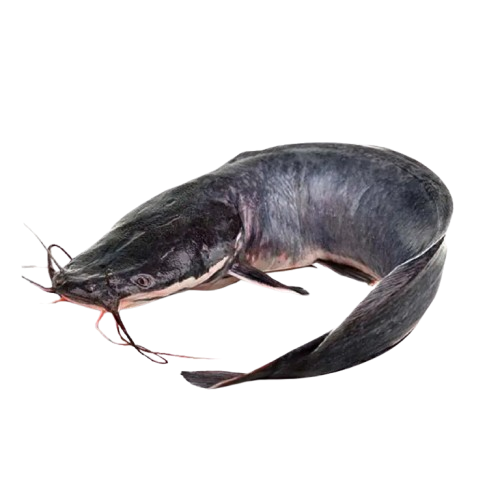
Get a Custom Report on Catfish Nutrition Data – Contact Us!
What are the Types of Catfish?
The types of catfish are numerous, but the most commercially important species for food are the Channel Catfish, Blue Catfish, and Flathead Catfish. The table below provides a breakdown of these common types.
| Type | Description | Calories (Approximate per 100g, Raw) | Calorie Qualifications |
|---|---|---|---|
|
Channel Catfish
|
The most widely farmed catfish in the United States. Has a mild, sweet flavor and a firm texture. | 135 (Farmed) | Farm-raised channel catfish has a higher fat content and thus more calories than its wild counterpart due to controlled feeding. |
|
Blue Catfish
|
A larger species, often wild-caught but also farmed. Has a firm, chunky texture and a slightly more pronounced flavor than channel catfish. | 103 (Wild) | Wild blue catfish is leaner than farmed channel catfish, resulting in a lower calorie count with a high protein density. |
|
Flathead Catfish
|
A wild-caught species prized for its excellent flavor. The meat is firm, dense, and has a clean, less "fishy" taste. | 95 (Wild) | As a lean, wild fish, the flathead has the lowest calorie count of the three, with a very low fat content. |
What are the Best Desserts for Catfish?
Desserts served after a catfish meal, particularly Southern-style fried catfish, are typically classic American comfort sweets. A summary of dessert options that pair well with a catfish dinner is provided in the table that follows.
| Dish Name | Calories (Estimate per serving) | Type of Dessert | Carbs (g) (Estimate) | Sugar (g) (Estimate) | Protein (g) (Estimate) | Fat (g) (Estimate) | Cuisine | Restaurants |
|---|---|---|---|---|---|---|---|---|
| Peach Cobbler | 450-650 | Baked Fruit | 80 | 50 | 6 | 15 | Southern American | Cracker Barrel, Sylvia's Restaurant |
| Pecan Pie | 500-700 | Pie | 65 | 45 | 7 | 28 | Southern American | The Cheesecake Factory, Emeril's New Orleans |
| Banana Pudding | 350-550 | Pudding | 60 | 40 | 8 | 12 | Southern American | Magnolia Bakery, Amy Ruth's |
| Key Lime Pie | 500-700 | Pie | 80 | 65 | 8 | 20 | American (Floridian) | Joe's Stone Crab, Hillstone Restaurant |
| Bread Pudding with Whiskey Sauce | 550-800 | Pudding | 85 | 60 | 12 | 25 | Creole/Cajun | Commander's Palace, Brennan's |
| Chocolate Chess Pie | 450-600 | Pie | 60 | 50 | 6 | 22 | Southern American | The Pie Hole, Arnold's Country Kitchen |
| Buttermilk Pie | 400-550 | Custard Pie | 55 | 45 | 7 | 20 | Southern American | Royers Round Top Cafe |
| Lemon Icebox Pie | 400-550 | Frozen Pie | 65 | 50 | 5 | 18 | Southern American | The Lady and Sons |
What are the Main Dishes With Catfish?
Catfish is a versatile fish featured in a variety of comforting and flavorful main courses around the world, most famously in the American South. A list of main dishes that feature catfish is provided in the following table.
| Dish Name | Calories (Estimate per serving) | Type of Catfish | Carbs (g) (Estimate) | Sugar (g) (Estimate) | Protein (g) (Estimate) | Fat (g) (Estimate) | Cuisine | Restaurants |
|---|---|---|---|---|---|---|---|---|
|
Southern Fried Catfish
|
600-900 | Channel | 45 | 4 | 35 | 40 | Southern American | Cracker Barrel, Sylvia's Restaurant |
|
Blackened Catfish
|
350-550 | Channel or Blue | 5 | 2 | 40 | 20 | Cajun/Creole | Popeyes Louisiana Kitchen, Pappadeaux |
|
Catfish Po' Boy Sandwich
|
700-1100 | Channel | 80 | 8 | 30 | 45 | Louisiana Creole | Mother's Restaurant, Domilise's Po-Boy |
|
Grilled Catfish
|
300-500 | Channel or Blue | 2 | 1 | 45 | 15 | American | Red Lobster, O'Charley's |
|
Smothered Catfish
|
500-750 | Channel | 30 | 8 | 40 | 28 | Soul Food | Amy Ruth's, Dooky Chase's Restaurant |
|
Vietnamese Clay Pot Catfish (Ca Kho To)
|
450-650 | Channel (or Basa) | 35 | 30 | 30 | 20 | Vietnamese | Slanted Door, local Vietnamese restaurants |
|
Catfish and Grits
|
550-800 | Channel | 60 | 5 | 35 | 25 | Southern American | Flying Biscuit Cafe, Another Broken Egg |
|
Catfish Tacos
|
500-750 | Channel | 40 | 5 | 30 | 30 | Mexican-American | Torchy's Tacos, local taquerias |
|
Catfish Stew
|
400-600 | Channel or Blue | 25 | 10 | 35 | 18 | Southern American | The Lady and Sons |
What Cuisines Prefer Catfish the Most?
Catfish is a prized fish in several global culinary traditions, especially those in the American South and Southeast Asia. The table below details the culinary traditions that make prominent use of catfish.
| Cuisine | Dish | Types of Catfish Used | Calories (Estimate) | Restaurant(s) |
|---|---|---|---|---|
|
Southern American
|
Fried Catfish, Catfish and Grits | Channel | 550-900 | Cracker Barrel, Sylvia's Restaurant |
|
Cajun/Creole
|
Blackened Catfish, Po' Boy | Channel, Blue | 350-1100 | Popeyes Louisiana Kitchen, Mother's |
|
Soul Food
|
Smothered Catfish, Fried Catfish | Channel | 500-900 | Amy Ruth's, Dooky Chase's Restaurant |
|
Vietnamese
|
Ca Kho To (Clay Pot), Canh Chua | Channel, Basa | 450-700 | Slanted Door, local Vietnamese restaurants |
|
Nigerian
|
Catfish Pepper Soup | Channel | 300-500 | Buka Nigerian Restaurant, Festac Grill |
|
Thai
|
Pla Duk Pad Prik King (Stir-fried) | Channel | 400-600 | Zabb Elee, Jitlada |
|
Brazilian
|
Moqueca de Peixe (with catfish) | Channel | 450-650 | Fogo de Chão, Texas de Brazil |
|
Mississippi Delta
|
Fried Catfish, Catfish Allison | Channel, Blue | 600-1000 | Doe's Eat Place |
Which Countries Produce the Most Catfish?
The top producers of catfish (including all species within the Siluriformes order) are Vietnam, India, and Indonesia. The United States is also a major producer, specifically of channel catfish. The table below shows the aquaculture production quantity of catfish in key countries.
| Country | 2003 | 2008 | 2013 | 2018 | 2019 | 2020 |
|---|---|---|---|---|---|---|
| Vietnam | 120,000 | 1,050,000 | 1,150,000 | 1,400,000 | 1,500,000 | 1,550,000 |
| India | 220,000 | 350,000 | 550,000 | 700,000 | 750,000 | 800,000 |
| Indonesia | 90,000 | 180,000 | 340,000 | 410,000 | 420,000 | 430,000 |
| Bangladesh | 60,000 | 110,000 | 200,000 | 300,000 | 320,000 | 340,000 |
| United States | 290,000 | 210,000 | 150,000 | 145,000 | 140,000 | 135,000 |
Which Countries Consume the Most Catfish?
The top consumers of catfish are Vietnam, India, and the United States. Consumption data is best represented by domestic supply, which includes production and imports minus exports. The table below shows catfish supply in key markets.
| Country | 2003 | 2008 | 2013 | 2018 | 2019 | 2020 |
|---|---|---|---|---|---|---|
| Vietnam | 115,000 | 450,000 | 500,000 | 600,000 | 650,000 | 700,000 |
| India | 218,000 | 348,000 | 548,000 | 698,000 | 748,000 | 798,000 |
| United States | 310,000 | 280,000 | 250,000 | 240,000 | 235,000 | 230,000 |
| Indonesia | 88,000 | 178,000 | 338,000 | 408,000 | 418,000 | 428,000 |
| Bangladesh | 59,000 | 109,000 | 199,000 | 299,000 | 319,000 | 339,000 |
How Do Prices of Catfish-Including Dishes Change?
Prices for restaurant dishes featuring catfish have climbed over the last ten years. This upward trend reflects higher ingredient costs and increased operational expenses for restaurants. Menus at well-known establishments that specialize in catfish dishes show these price changes.
| Restaurant | Dish | Old Price (Year) | Current Price (2024/2025) |
|---|---|---|---|
| Cracker Barrel | U.S. Farm-Raised Catfish (Fried) | $9.99 (2014) | $17.69 - $18.79 |
| Popeyes Louisiana Kitchen | Catfish Tackle Box (seasonal) | $4.99 (2015) | $5.99 - $6.99. |
| Pappadeaux Seafood Kitchen | Fried Catfish Fillets | $18.95 (2016) | $34.95 - $40.95 |
| Sylvia's Restaurant | Fried Catfish Fingers | $16.95 (2013) | $18.00 - $28.00 |
| Red Lobster | Hand-Breaded Catfish | $11.99 (2017) | $15.00 - $19.29 |
What is the Catfish Calorie for 100 Grams?
A 100-gram (3.5 ounce) serving of raw wild catfish contains 95 calories, a 100-gram serving of cooked catfish contains 105 calories, a 100-gram serving of baked catfish has 173 calories, and a 100-gram serving of fried catfish has 246 calories.
What is the Catfish Calorie for 1 KG?
One kilogram (1000g) of raw wild catfish contains 950 calories, one kilogram of cooked catfish contains 1050 calories, one kilogram of baked catfish has 1730 calories, and one kilogram of fried catfish has 2460 calories.
What is the Calorie of 1 Catfish?
One piece of fried catfish from Long John Silver's contains 200 calories and the U.S. Farm-Raised Catfish dinner at Cracker Barrel contains 800 calories, while one piece of Popeyes Cajun Fish has 380 calories.
What are the Health Benefits of Catfish?
Catfish consumption is associated with several health advantages, supported by research. The key health benefits are detailed below.
- Supports Cardiovascular Health: Catfish provides omega-3 fatty acids, eicosapentaenoic acid (EPA) and docosahexaenoic acid (DHA), which are known to support heart health by reducing inflammation and improving cholesterol levels. A scientific statement from the American Heart Association by Siscovick, D. S., et al. (2017), "Omega-3 Polyunsaturated Fatty Acid (Fish Oil) Supplementation and the Prevention of Clinical Cardiovascular Disease," confirmed the role of omega-3s in reducing the risk of certain cardiovascular events.
- Aids Neurological Function: Catfish is an excellent source of Vitamin B12, a nutrient essential for maintaining healthy nerve cells and supporting the formation of DNA and red blood cells. A review by O'Leary, F., & Samman, S. (2010), "Vitamin B12 in health and disease," detailed the critical function of Vitamin B12 in preventing neurological disorders and preserving cognitive function.
- Promotes Muscle Maintenance: The high-quality, complete protein in catfish supplies all the essential amino acids required to build and repair tissues, including lean muscle mass. Research by Wolfe, R. R. (2017), "Branched-chain amino acids and muscle protein synthesis in humans," established the importance of a complete profile of essential amino acids for stimulating muscle protein synthesis.
What are the Downsides of Catfish?
Catfish is safe for most people, but some health considerations exist, particularly regarding preparation methods and potential contaminants. These potential aspects are outlined below.
- High Fat and Sodium in Fried Preparations: Frying catfish, especially with a cornmeal breading, dramatically increases the fat, calorie, and sodium content of the meal. A study by Gadiraju, T. V., et al. (2015), "Fried food consumption and cardiovascular health," linked frequent consumption of fried foods to a higher risk of heart failure. An alternative with lower fat is baked or grilled catfish. A daily suggested amount is to limit fried fish consumption to an occasional basis.
- Potential for Contaminants: Farmed catfish, depending on the aquaculture practices, can be exposed to contaminants. A study by Foran, J. A., et al. (2005), "Risk-Based Consumption Advice for Farmed Atlantic and Wild Pacific Salmon," highlighted how farming conditions can influence the levels of contaminants like polychlorinated biphenyls (PCBs) in fish. An alternative is to choose U.S.-farmed catfish, which is raised under regulations set by the Environmental Protection Agency (EPA). A suggested amount is to follow local fish advisories for wild-caught fish.
Does Catfish Have Mercury?
Yes, catfish have mercury, but the levels are very low. The U.S. Food and Drug Administration (FDA) and the Environmental Protection Agency (EPA) classify catfish as a "Best Choice" for fish consumption due to its consistently low mercury content. This classification means catfish is one of the safest fish to eat regarding mercury exposure.
According to the joint FDA/EPA advisory, a serving of catfish for an adult is 4 ounces. The "Best Choice" designation indicates that adults can safely consume two to three servings of catfish per week. For children, the advice is to eat two servings per week, with serving sizes adjusted for age: 1 ounce for ages 1-3, 2 ounces for ages 4-7, 3 ounces for ages 8-10, and 4 ounces for ages 11 and older. This makes catfish a safe and healthy option for regular inclusion in a balanced diet.
Is Catfish Good for You?
Yes, catfish is a good food choice because the fish is a nutrient-dense source of lean protein, healthy fats, and essential vitamins and minerals. Catfish provides significant heart health benefits through its supply of omega-3 fatty acids, which help manage cholesterol and reduce inflammation. A large-scale analysis by Mozaffarian, D., & Rimm, E. B. (2006), "Fish intake, contaminants, and human health," concluded that the benefits of modest fish consumption for cardiovascular health outweigh the potential risks. The fish supports brain health and neurological function with an exceptional amount of Vitamin B12, a nutrient vital for nerve cell maintenance. A review by Kennedy, D. O. (2016), "B Vitamins and the Brain," details the critical role of B vitamins in cognitive processes. Catfish also promotes metabolic health and immune function through its supply of phosphorus and selenium. A publication from the National Institutes of Health, "Selenium: Fact Sheet for Health Professionals," outlines the mineral's importance as a component of antioxidant enzymes.
How Do Calories Change According to Catfish Types?
The calorie count of catfish changes based on the species and whether the fish is wild-caught or farm-raised. Farmed channel catfish contains the highest calorie value at 135 calories per 100 grams, a result of a higher fat content from a controlled, high-energy diet. Wild flathead catfish contains the lowest calorie value at 95 calories per 100 grams, reflecting its leaner composition as a wild predator. Wild blue catfish has a calorie count of 103 per 100 grams, placing the fish between the other two. The primary driver of caloric difference is the fat content, which is consistently higher in farmed fish than in wild-caught varieties.
What is the Origin of Catfish?
Catfish are a diverse group of ray-finned fish named for their prominent barbels, which resemble a cat's whiskers. This ancient order of fish is found in freshwater environments on every continent except Antarctica, with a history as a food source dating back millennia in cultures across the globe. In North America, Native American tribes harvested wild catfish from rivers like the Mississippi. The fish became a cornerstone of Southern American and Soul Food cuisine, where the abundant channel catfish was prepared in simple, hearty ways, most notably coated in cornmeal and fried. The most significant development in the history of catfish as a food was the advent of modern aquaculture. In the 1960s, farmers in the Mississippi Delta began developing techniques to raise channel catfish in man-made ponds. This innovation transformed catfish from a regional, wild-caught fish into a nationally available, consistently high-quality product, making the United States a global leader in farmed catfish production.
Explore More Seafood
Discover more Seafood with detailed nutrition facts, calorie counts, vitamins, minerals, and health benefits. Compare similar foods, serving sizes, macronutrients, and key nutrients to find the best option for your diet and nutrition goals.
 Anchovies calories
 Barramundi calories
 Bluefin Tuna calories
 Bluefish calories
 Calamari calories
 Clams calories
 Cod calories
 Conch calories
 Crab calories
 Eel calories
 Fish calories
 Flounder calories