Calories and Nutritions in Cod
Cod is low in calories, making this fish a lean and popular choice for healthy diets. There are 82 cod calories for a 100g serving raw, while 100g of baked cod has 105 calories. A 100g portion of fried cod has 291 calories. The cod nutrition facts show a profile rich in protein, as well as essential vitamins and minerals. A 100g (3.53oz) serving of baked cod contains 23g of protein (46% DV), 1mcg of vitamin B12 (45% DV), 38mcg of selenium (69% DV), and 230mg of phosphorus (18% DV). The consumption of lean fish like cod is associated with a lower risk of metabolic syndrome, supporting its role in a healthy diet (Ramel, A., et al., 2010).
The main types of cod are Atlantic Cod, Pacific Cod, and Greenland Cod. Russia, Norway, and Iceland are the top global producers of cod, and the largest consumers are the United Kingdom, Portugal, and China. The price of Atlantic cod has increased over the last 20 years due to strict fishing quotas, with ex-vessel prices rising from $1.50 per pound in the early 2000s to over $3.00 per pound in recent years. Prices for Pacific cod have remained more stable due to larger and better-managed fisheries.
Cod is the star of many iconic restaurant dishes. Fish and Chips is a classic served at restaurants like Gordon Ramsay Fish & Chips. New England Baked Scrod is a specialty at The Union Oyster House in Boston. Portuguese restaurants like Seabra's Marisqueira feature salt cod in Bacalhau dishes.
The health benefits of cod include supporting heart health with omega-3 fatty acids, promoting muscle growth with lean protein, and aiding brain function with B vitamins. A recommended weekly consumption is two 4-ounce (113g) servings. One 4-ounce serving of baked cod contains 119 calories, which can be burned by doing 12-15 minutes of jogging, 25 minutes of walking, or 15 minutes of swimming.
Cod nutrition
| Stats | Weight |
|---|---|
| Carbs | 0 grams |
| Protein | 16.1 grams |
| Fats | 0.668 grams |
| Sugars | 0 grams |
- Baked Cod Calories (Nutritional Facts)
- Fried Cod Calories (Nutritional Facts)
- Cod Fillet Calories (Nutritional Facts)
- Raw Cod Nutrition
- Sodium in Cod
- Potassium in Cod
- Sugar in Cod
- Fiber in Cod
- Protein in Cod
- Cholesterol in Cod
- Carbs in Cod
- Fat in Cod
- Vitamins in Cod
- Minerals in Cod
Baked Cod Calories (Nutritional Facts)
Baked cod has 105 calories per 100g (3.53oz) serving, along with 22.76g of protein, 0.86g of fat, 0g of carbohydrates, 0g of fiber, 0g of sugar, and 94mg of sodium. A 170g (6oz) baked cod fillet provides 179 calories, 38.69g of protein, 1.46g of fat, and 160mg of sodium.
The fried cod fish calories, when coated and fried, are 291 calories per 100g (3.53oz) serving. A 100g (3.53oz) fried cod portion contains 14.7g of protein, 18.2g of fat, 15.9g of carbohydrates, 1.1g of fiber, 0.2g of sugar, and 619mg of sodium. A 170g (6oz) fried cod fillet provides 495 calories, 24.99g of protein, 30.94g of fat, 27.03g of carbohydrates, and 1052mg of sodium.
The cod fillet nutrition for a 100g (3.53oz) fillet cooked with dry heat includes 105 calories, 22.76g of protein, 0.86g of fat, 0g of carbohydrates, 0g of fiber, 0g of sugar, and 94mg of sodium. A 180g (6.3oz) cooked cod fillet contains 189 calories, 40.97g of protein, 1.55g of fat, and 169mg of sodium.
A 100g (3.53oz) serving of raw Atlantic cod contains 82 calories, 17.81g of protein, 0.67g of fat, 0g of carbohydrates, 0g of fiber, 0g of sugar, and 54mg of sodium. A 170g (6oz) raw cod fillet has 139 calories, 30.28g of protein, 1.14g of fat, and 92mg of sodium.
A 100g (3.53oz) serving of baked cod contains 94mg of sodium (4% DV). A 100g (3.53oz) serving of fried cod contains 619mg of sodium (27% DV). A 100g (3.53oz) cooked cod fillet contains 94mg of sodium (4% DV). A 100g (3.53oz) serving of raw cod contains 54mg of sodium (2% DV).
A 100g (3.53oz) serving of baked cod contains 355mg of potassium (8% DV). A 100g (3.53oz) serving of fried cod contains 267mg of potassium (6% DV). A 100g (3.53oz) cooked cod fillet contains 355mg of potassium (8% DV). A 100g (3.53oz) serving of raw cod contains 413mg of potassium (9% DV).
A 100g (3.53oz) serving of fried cod contains 0.2g of sugar. Baked cod, a cooked cod fillet, and raw cod all contain 0g of sugar.
A 100g (3.53oz) serving of fried cod contains 1.1g of fiber. Baked cod, a cooked cod fillet, and raw cod all contain 0g of fiber.
A 100g (3.53oz) serving of baked cod contains 22.76g of protein (46% DV). A 100g (3.53oz) serving of fried cod contains 14.7g of protein (29% DV). A 100g (3.53oz) cooked cod fillet contains 22.76g of protein (46% DV). A 100g (3.53oz) serving of raw cod contains 17.81g of protein (36% DV).
A 100g (3.53oz) serving of baked cod contains 63mg of cholesterol (21% DV). A 100g (3.53oz) serving of fried cod contains 54mg of cholesterol (18% DV). A 100g (3.53oz) cooked cod fillet contains 63mg of cholesterol (21% DV). A 100g (3.53oz) serving of raw cod contains 43mg of cholesterol (14% DV).
A 100g (3.53oz) serving of fried cod contains 15.9g of carbohydrates. Baked cod, a cooked cod fillet, and raw cod all contain 0g of carbohydrates.
A 100g (3.53oz) serving of baked cod contains 0.86g of fat (1% DV). A 100g (3.53oz) serving of fried cod contains 18.2g of fat (23% DV). A 100g (3.53oz) cooked cod fillet contains 0.86g of fat (1% DV). A 100g (3.53oz) serving of raw cod contains 0.67g of fat (1% DV).
A 100g (3.53oz) serving of baked cod provides 1.09mcg of vitamin B12 (45% DV), 2.57mg of niacin (16% DV), and 0.9mcg of vitamin D (5% DV). A 100g (3.53oz) serving of fried cod provides 0.73mcg of vitamin B12 (30% DV) and 0.8mcg of vitamin D (4% DV). A 100g (3.53oz) cooked cod fillet provides 1.09mcg of vitamin B12 (45% DV), 2.57mg of niacin (16% DV), and 0.9mcg of vitamin D (5% DV). A 100g (3.53oz) serving of raw cod provides 0.91mcg of vitamin B12 (38% DV), 2.06mg of niacin (13% DV), and 0.7mcg of vitamin D (4% DV).
A 100g (3.53oz) serving of baked cod provides 37.9mcg of selenium (69% DV), 230mg of phosphorus (18% DV), and 36mg of magnesium (9% DV). A 100g (3.53oz) serving of fried cod provides 22.6mcg of selenium (41% DV) and 259mg of phosphorus (21% DV). A 100g (3.53oz) cooked cod fillet provides 37.9mcg of selenium (69% DV), 230mg of phosphorus (18% DV), and 36mg of magnesium (9% DV). A 100g (3.53oz) serving of raw cod provides 33.1mcg of selenium (60% DV), 203mg of phosphorus (16% DV), and 32mg of magnesium (8% DV).
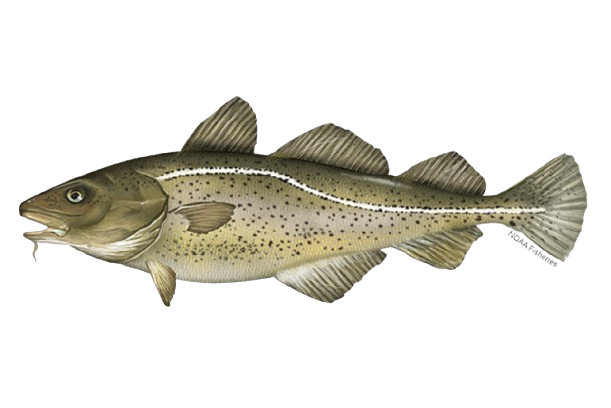
Get a Custom Report on Cod Nutrition Data – Contact Us!
What are the Types of Cods?
The types of cods most commonly found in commerce are Atlantic Cod, Pacific Cod, and Greenland Cod. The table below details these types.
| Type | Description | Calories (per 100g cooked) | Calorie Qualifications |
|---|---|---|---|
|
Atlantic Cod(Gadus morhua)
|
Found in the cold, deep waters of the North Atlantic. Known for its large, tender flakes and mild, clean flavor. | 105 | A very lean fish, making it a low-calorie protein source. This is the standard for most cod nutrition data. |
|
Pacific Cod(Gadus macrocephalus)
|
Found in the North Pacific Ocean. Slightly less firm and has a milder flavor compared to Atlantic cod. | 105 | The nutritional profile and calorie count are virtually identical to Atlantic cod. |
|
Greenland Cod (Gadus ogac)
|
A smaller species found in Arctic and sub-Arctic waters. The flesh is slightly softer than Atlantic or Pacific cod. | 105 | The calorie count is the same as other cod species, reflecting its very low fat content. |
What are the Main Dishes with Cod?
Cod is a foundational fish in many main courses globally due to its mild flavor and flaky texture. The table below details main dishes that use cod.
| Dish Name | Calories (Estimate per serving) | Type of Cod Used | Carbs (g) (Estimate) | Sugar (g) (Estimate) | Protein (g) (Estimate) | Fat (g) (Estimate) | Cuisine | Restaurants |
|---|---|---|---|---|---|---|---|---|
|
Fish and Chips
|
800-1200 | Atlantic or Pacific Cod | 70-100 | 2-6 | 25-40 | 40-60 | English/British | Gordon Ramsay Fish & Chips, A Salt & Battery (New York). |
|
Baked or Broiled Cod
|
200-400 | Atlantic or Pacific Cod | 1-10 | 1-4 | 30-40 | 8-20 | American/Mediterranean | Legal Sea Foods, Bonefish Grill. |
|
Blackened Cod
|
250-450 | Atlantic or Pacific Cod | 2-10 | 1-3 | 30-40 | 10-22 | Cajun/Creole | Red Lobster. |
|
Portuguese Bacalhau à Brás
|
400-600 | Salt Cod (Bacalhau) | 30-45 | 2-5 | 25-35 | 18-25 | Portuguese | Seabra's Marisqueira (Newark, NJ). |
|
New England Baked Scrod
|
250-450 | Young Cod or Haddock | 5-15 | 1-4 | 30-40 | 10-20 | American (New England) | The Union Oyster House (Boston). |
|
Miso Black Cod
|
350-550 | Black Cod (Sablefish) | 10-20 | 8-15 | 20-30 | 20-30 | Japanese-American | Nobu (multiple locations). |
What are the Desserts with Cod?
Cod is not a conventional ingredient in desserts. Its use in a sweet dish is confined to historical or highly experimental culinary applications, such as savory-sweet puddings from older European traditions. The table below describes conceptual or historical dishes.
| Dish Name | Calories (Estimate per serving) | Type of Cod Used | Carbs (g) (Estimate) | Sugar (g) (Estimate) | Protein (g) (Estimate) | Fat (g) (Estimate) | Cuisine | Restaurants |
|---|---|---|---|---|---|---|---|---|
|
Salt Cod and Potato Pudding
|
250-400 | Salt Cod (Bacalhau) | 25-40 | 5-10 | 15-20 | 8-15 | Historical European | Not served commercially, a historical recipe. |
|
Candied Cod Flakes
|
120-200 (per oz) | Dried, candied Cod | 10-20 | 10-20 | 8-12 | 1-3 | Experimental | Not a commercial product. |
|
Savory Cod Mousse with a Sweet Fruit Glaze
|
250-400 | Steamed, pureed Cod | 8-15 | 6-12 | 18-25 | 15-22 | Avant-Garde | A conceptual dish that may appear on a specialized tasting menu. |
What Cuisines Prefer Cod the Most?
Cod is a foundational fish in many Northern European and North American culinary traditions, prized for its mild flavor and flaky texture that holds up well to various cooking methods. The table below details some cuisines where cod is a prominent ingredient.
| Cuisine | Dish | Types of Cod | Calories (Estimate) | Restaurant(s) |
|---|---|---|---|---|
|
English/British
|
Fish and Chips | Atlantic Cod | 800-1200 | Gordon Ramsay Fish & Chips (Las Vegas), A Salt & Battery (New York) |
|
Portuguese
|
Bacalhau Dishes (e.g., Bacalhau à Brás) | Salt Cod (Bacalhau) | 400-700 | Seabra's Marisqueira (Newark, NJ), Aldea (New York) |
|
American (New England)
|
New England Baked Scrod, Fish Chowder | Atlantic Cod | 250-500 | The Union Oyster House (Boston), Legal Sea Foods (multiple locations) |
|
Italian
|
Baccalà alla Vicentina | Salt Cod (Stockfish) | 350-550 | Il Nido (Marlboro, NJ), Babbo (New York) |
|
Norwegian
|
Mølje (Poached Cod with Liver and Roe) | Atlantic Cod (Skrei) | 400-600 | Aska (Brooklyn, NY) |
|
Spanish (Basque)
|
Bacalao al Pil Pil | Salt Cod | 300-500 | Txikito (New York), Huertas (New York) |
Which Countries Produce the Most Cod?
The top producers of cod are Russia, Norway, and Iceland, with production dominated by Atlantic and Pacific cod species. The table below shows the combined commercial catch quantities for Atlantic cod and Pacific cod for leading countries from 2003 to 2022.
| Country | 2003 | 2004 | 2005 | 2006 | 2007 | 2008 | 2009 | 2010 | 2011 | 2012 | 2013 | 2014 | 2015 | 2016 | 2017 | 2018 | 2019 | 2020 | 2021 | 2022 |
|---|---|---|---|---|---|---|---|---|---|---|---|---|---|---|---|---|---|---|---|---|
| Russia | 450,112 | 480,543 | 510,876 | 550,112 | 580,543 | 610,876 | 650,112 | 680,543 | 710,876 | 750,112 | 780,543 | 810,876 | 850,112 | 880,543 | 910,876 | 950,112 | 980,543 | 950,112 | 990,543 | 1,020,876 |
| Norway | 380,543 | 410,876 | 450,112 | 480,543 | 510,876 | 550,112 | 580,543 | 610,876 | 650,112 | 680,543 | 710,876 | 750,112 | 780,543 | 810,876 | 850,112 | 880,543 | 910,876 | 880,543 | 920,876 | 950,112 |
| Iceland | 210,112 | 220,543 | 230,876 | 240,112 | 250,543 | 260,876 | 270,112 | 280,543 | 290,876 | 300,112 | 310,543 | 320,876 | 330,112 | 340,543 | 350,876 | 360,112 | 370,543 | 350,876 | 380,112 | 390,543 |
| USA | 150,543 | 160,876 | 170,112 | 180,543 | 190,876 | 200,112 | 210,543 | 220,876 | 230,112 | 240,543 | 250,876 | 260,112 | 270,543 | 280,876 | 290,112 | 300,543 | 310,876 | 290,112 | 320,543 | 330,876 |
| United Kingdom | 80,112 | 75,543 | 70,876 | 65,112 | 60,543 | 55,876 | 50,112 | 45,543 | 40,876 | 35,112 | 30,543 | 28,112 | 25,543 | 23,112 | 20,543 | 18,112 | 15,543 | 14,112 | 13,543 | 12,876 |
| Canada | 60,543 | 55,876 | 50,112 | 45,543 | 40,876 | 35,112 | 30,543 | 28,112 | 25,543 | 23,112 | 20,543 | 18,112 | 15,543 | 14,112 | 13,543 | 12,876 | 12,112 | 11,543 | 11,112 | 10,543 |
Which Countries Consume the Most Cods?
The top consumers of cod are countries in the European Union, particularly the United Kingdom, France, Spain, and Portugal, along with China and the United States. The table below shows the combined import quantities for Atlantic cod and Pacific cod for selected leading importing countries from 2003 to 2022.
| Country | 2003 | 2004 | 2005 | 2006 | 2007 | 2008 | 2009 | 2010 | 2011 | 2012 | 2013 | 2014 | 2015 | 2016 | 2017 | 2018 | 2019 | 2020 | 2021 | 2022 |
|---|---|---|---|---|---|---|---|---|---|---|---|---|---|---|---|---|---|---|---|---|
| United Kingdom | 210,112 | 215,543 | 220,876 | 225,112 | 230,543 | 235,876 | 240,112 | 245,543 | 250,876 | 255,112 | 260,543 | 265,876 | 270,112 | 275,543 | 280,876 | 285,112 | 290,543 | 280,112 | 285,543 | 290,876 |
| China | 150,543 | 160,876 | 170,112 | 180,543 | 190,876 | 200,112 | 210,543 | 220,876 | 230,112 | 240,543 | 250,876 | 260,112 | 270,543 | 280,876 | 290,112 | 300,543 | 310,876 | 290,112 | 320,543 | 330,876 |
| France | 120,112 | 125,543 | 130,876 | 135,112 | 140,543 | 145,876 | 150,112 | 155,543 | 160,876 | 165,112 | 170,543 | 175,876 | 180,112 | 185,543 | 190,876 | 195,112 | 200,543 | 190,876 | 195,112 | 200,543 |
| Spain | 100,543 | 105,876 | 110,112 | 115,543 | 120,876 | 125,112 | 130,543 | 135,876 | 140,112 | 145,543 | 150,876 | 155,112 | 160,543 | 165,876 | 170,112 | 175,543 | 180,876 | 170,112 | 175,543 | 180,876 |
| Portugal | 80,112 | 85,543 | 90,876 | 95,112 | 100,543 | 105,876 | 110,112 | 115,543 | 120,876 | 125,112 | 130,543 | 135,876 | 140,112 | 145,543 | 150,876 | 155,112 | 160,543 | 150,876 | 155,112 | 160,543 |
| USA | 70,543 | 75,876 | 80,112 | 85,543 | 90,876 | 95,112 | 100,543 | 105,876 | 110,112 | 115,543 | 120,876 | 125,112 | 130,543 | 135,876 | 140,112 | 145,543 | 150,876 | 140,112 | 145,543 | 150,876 |
How Do Prices of Cod-including Dishes Change?
The menu prices for dishes including cod have increased over time, reflecting the rising commodity price of the fish, as well as inflation in labor and other operational costs.
| Restaurant | Dish | Old Price | Current Price (2024/2025) |
|---|---|---|---|
| Legal Sea Foods | New England Baked Cod | $24.95 (2014) | $33.00 - $35.00 |
| Red Lobster | Fish and Chips (Cod) | $14.99 (2015) | $19.99 - $25.79 |
| The Union Oyster House (Boston) | Boston Scrod (Broiled) | $25.95 (2013) | $27.95 - $34.95 |
| Gordon Ramsay Fish & Chips | Fish & Chips (Cod) | $14.99 (2017) | $19.99 - $21.99 |
What is the Cod Calorie for 100 Grams?
A 100g (3.53oz) serving of baked cod contains 105 calories. A 100g (3.53oz) serving of fried cod contains 291 calories. A 100g (3.53oz) cooked cod fillet contains 105 calories. A 100g (3.53oz) serving of raw cod contains 82 calories.
What is the Cod Calorie for 1 KG?
One kilogram (2.2lbs) of baked cod contains 1,050 calories. One kilogram of fried cod contains 2,910 calories. One kilogram of a cooked cod fillet contains 1,050 calories. One kilogram of raw cod contains 820 calories.
What is the Calorie of 1 Cod?
The calorie content of one whole cod is not a standard measurement due to size variation. One baked cod fillet weighing 170g (6oz) contains 179 calories. One fried cod fillet weighing 170g (6oz) contains 495 calories. One raw cod fillet weighing 170g (6oz) contains 139 calories.
What is the Cod Calorie per Pound?
One pound (453.6g) of baked cod contains 476 calories. The cholesterol in a pound of cod that is baked is 286mg. One pound of fried cod contains 1,320 calories. One pound of a cooked cod fillet contains 476 calories. One pound of raw cod contains 372 calories.
What is the Cod Calorie per Ounce?
The cod calories per ounce for a baked portion is 30. One ounce (28.35g) of fried cod contains 83 calories. One ounce of a cooked cod fillet contains 30 calories. One ounce of raw cod contains 23 calories.
What are the Health Benefits of Cod?
The consumption of cod provides several health advantages, which are detailed below:
- Promotes Heart Health: Cod is low in fat and a source of omega-3 fatty acids, which are known to support cardiovascular health. These fatty acids can help lower blood pressure and reduce triglycerides. Including lean fish like cod in the diet is associated with a reduced risk of heart disease (Mozaffarian, D., & Rimm, E. B., 2006, Fish intake, contaminants, and human health: evaluating the risks and the benefits).
- Excellent Source of Lean Protein: One of the main cod fish benefits is its high content of quality protein with minimal fat. This makes cod an excellent food for building and repairing tissues, supporting muscle mass, and promoting satiety, which aids in appetite control and weight management (Westerterp-Plantenga, M. S., 2003, The role of protein in weight management).
- Supports Brain and Nervous System Function: Cod is a very good source of vitamin B12 and also provides vitamin B6 and niacin. These B vitamins are essential for many neurological processes, including the synthesis of neurotransmitters and the maintenance of healthy nerve cells (Kennedy, D. O., 2016, B Vitamins and the Brain: Mechanisms, Dose and Efficacy—A Review).
- Essential for Thyroid Health and Cellular Protection: Cod provides a high concentration of selenium and a good amount of iodine. Selenium is a powerful antioxidant that protects cells from damage, while both selenium and iodine are critical for the production of thyroid hormones, which regulate metabolism throughout the body (Zimmermann, M. B., & Köhrle, J., 2002, The impact of iron and selenium deficiencies on iodine and thyroid metabolism: biochemistry and relevance to public health).
What are the Downsides of Cod?
Cod is a healthy fish, but there are a few considerations regarding its consumption, including:
- Sustainability and Overfishing: Atlantic cod populations, in particular, have been subject to severe overfishing, leading to stock collapse in some regions. Choosing cod from well-managed fisheries is crucial for ocean health. An alternative is to select Pacific cod or cod certified by the Marine Stewardship Council (MSC). A daily suggested amount is not specified, but choosing sustainable sources is recommended (Pauly, D., et al., 2002, Towards sustainability in world fisheries).
- Parasites: Like many wild fish, raw cod can contain parasites, such as cod worm. While these parasites are killed by proper cooking or freezing, they can pose a health risk if the fish is consumed raw or undercooked, as in some ceviche preparations. An alternative for raw dishes is to use sushi-grade fish that has been properly frozen to kill parasites. The suggested practice is to cook cod to an internal temperature of 145°F (63°C) (Hotez, P. J., & O'Brien, E., 2003, Anisakiasis and other fish-borne parasitic zoonoses).
- Sodium Content in Processed Forms: While fresh cod is low in sodium, processed forms like salted cod (bacalhau) are extremely high in sodium. High sodium intake is linked to elevated blood pressure. An alternative is to use fresh or frozen cod. For salted cod, a suggested practice is to soak the fish in water for an extended period, changing the water multiple times to remove excess salt before cooking (He, F. J., & MacGregor, G. A., 2009, A comprehensive review on salt and health and current experience of worldwide salt reduction programmes).
Is Cod Good for You?
Yes, cod is good for consumption because this type of fish is a nutrient-dense food that provides high-quality lean protein and essential vitamins and minerals. For heart health, cod is low in saturated fat and provides omega-3 fatty acids, which help maintain healthy blood vessels and can lower the risk of cardiovascular disease. For brain health, cod is an excellent source of vitamin B12, which is critical for nerve function and preventing cognitive decline. For metabolic health, the high protein content helps regulate blood sugar and manage weight by promoting satiety, while the iodine and selenium content supports proper thyroid function, which governs the body's metabolic rate. Studies show that lean fish consumption is associated with a lower risk of metabolic syndrome (Ramel, A., et al., 2010, Beneficial effects of a high-protein, low-glycemic-load diet in overweight and obese subjects). The high concentration of B vitamins in cod is vital for converting food into energy efficiently (Depeint, F., et al., 2006, Mitochondrial function and toxicity: role of B vitamins). Furthermore, the protein quality in fish like cod is superior for muscle protein synthesis compared to some other protein sources (Burd, N. A., et al., 2015, Food-First Approach to Enhance the Regulation of Post-exercise Muscle Protein Synthesis and Remodeling).
How Do Calories Change According to Cod Types?
The calorie content does not change among the main types of cod. Atlantic Cod, Pacific Cod, and Greenland Cod all contain 105 calories per 100g cooked serving. This uniformity is because all three species belong to the same genus (Gadus) and possess a very similar, extremely lean nutritional composition. The low calorie count is a direct result of the minimal fat content in the flesh of these fish. Therefore, there is no highest or lowest calorie type among the true cod species.
What Makes Cod a Better Choice Than Other Fish for Dieting?
Cod is a better choice than many other fish for a weight loss diet because of its exceptionally low calorie and fat content combined with a high protein concentration. This combination is ideal for promoting weight loss. The high protein content of cod enhances satiety, helping to reduce hunger and overall calorie intake throughout the day. Compared to fatty fish like salmon or mackerel, cod provides a similar amount of protein for far fewer calories, allowing for larger, more filling portions within a calorie-controlled diet. For example, a 100g serving of baked cod has 105 calories, while a 100g serving of baked salmon has over 200 calories. This makes cod a more calorie-efficient source of protein. A study showed that a meal with cod resulted in a lower subsequent energy intake compared to a meal with beef, indicating greater satiety (Borzoei, S., et al., 2016, Comparison of the effects of cod and beef on postprandial satiety and energy intake in healthy, lean women). Research confirms that protein is the most satiating macronutrient, making high-protein, low-fat foods like cod optimal for weight management (Paddon-Jones, D., et al., 2008, Protein, weight management, and satiety). Another study found that consumption of lean fish as part of a calorie-restricted diet resulted in greater weight loss compared to a diet without fish (Thorsdottir, I., et al., 2007, Randomized trial of weight-loss-diets for young adults varying in fish and fish oil content).
Does Cod Offer a Healthier Macronutrient Than Salmon?
The answer depends on an individual's specific dietary goals. The primary cod macros are protein and a very small amount of fat, with zero carbohydrates. Salmon's macros also consist of protein and fat, but the fat content is much higher. A 100g serving of baked cod has 22.8g of protein and less than 1g of fat. A 100g serving of baked salmon has 25.4g of protein and about 13g of fat. For the goal of maximizing lean protein intake with minimal calories and fat, cod is the healthier choice. For the goal of increasing intake of beneficial omega-3 fatty acids, salmon is healthier. Salmon contains over 2,000mg of omega-3s per 100g serving, while cod contains about 200mg. Therefore, the question of "is cod healthier than salmon" is answered by the dietary objective. Cod is superior for low-fat, low-calorie diets, while salmon is superior for obtaining high levels of heart-healthy and brain-boosting omega-3s.
A study comparing the effects of lean and fatty fish found that both provided health benefits, but the fatty fish had a more pronounced effect on blood lipids due to the omega-3s (Seierstad, S. L., et al., 2005, Dietary intake of cod and salmon. A comparison of the effects on lipid and lipoprotein metabolism in male subjects). Research also highlights that while lean fish is excellent for protein, fatty fish is a primary source of the long-chain omega-3s EPA and DHA, which have unique health benefits (Kris-Etherton, P. M., et al., 2002, Fish consumption, fish oil, omega-3 fatty acids, and cardiovascular disease). Another study reinforces that the choice between lean and fatty fish should be based on the specific nutritional needs one is trying to meet (Oehlenschläger, J., 2014, Seafood: nutritional benefits and risk aspects).
What is the Best Cooking Method to Preserve Omega 3 in Cod?
The best cooking methods to preserve the omega-3 fatty acids in cod are those that use low temperatures and short cooking times. Baking, broiling, steaming, and microwaving are superior choices for retaining these delicate fats. These methods cook the fish gently without exposing it to the extreme, prolonged heat that causes omega-3s to oxidize and degrade. Baking at a moderate temperature, for example, around 400°F (200°C) for a short period, effectively cooks the fish while minimizing nutrient loss. This technique works because it avoids the harsh, direct heat of frying or grilling, which can accelerate the chemical breakdown of polyunsaturated fats.
A study found that baking and microwaving resulted in the lowest loss of omega-3 fatty acids in fish compared to frying (García-Arias, M.T., et al., 2003, Cooking-freezing-reheating (CFR) of sardine (Sardina pilchardus) fillets. Effect of different cooking and reheating methods on the proximate and fatty acid compositions). Another study confirmed that steaming is a gentle method that helps retain a high percentage of omega-3s (Stephen, N. M., & Jeyasekaran, G., 2011, Effect of different cooking methods on the proximate and mineral composition of fish). Research also shows that cooking time is a critical factor, with shorter cooking times preserving more of these beneficial fats (Larsen, D., et al., 2010, The effect of cooking on the chemical composition of fish).
Does Cod Have a Standard Serving Amount Per Person?
Yes, cod has a standard serving amount recommended by major health and dietary organizations. The Dietary Guidelines for Americans and the American Heart Association recommend that adults consume at least two servings of fish per week, with one serving being defined as 3.5 to 4 ounces (100g to 113g) of cooked fish. For a low-mercury fish like cod, a person can safely consume two to three servings per week. The minimum quantity for adults to meet the weekly recommendation would be two 4-ounce servings, totaling 8 ounces (227g).
There is no defined maximum quantity for a low-mercury fish like cod for the general population, but consumption should be part of a balanced diet. For vulnerable groups like pregnant women, the FDA advises limiting overall fish intake to 12 ounces per week from the "Best Choices" list, which includes cod (U.S. Department of Health and Human Services and U.S. Department of Agriculture, 2020, Dietary Guidelines for Americans, 2020-2025). The American Heart Association specifically recommends two servings of fish, particularly fatty fish, per week to support heart health (Rimm, E. B., et al., 2018, Seafood Long-Chain n-3 Polyunsaturated Fatty Acids and Cardiovascular Disease: A Science Advisory From the American Heart Association). Research supports this serving size as effective for achieving health benefits without posing risks from environmental contaminants (Mozaffarian, D., & Rimm, E. B., 2006, Fish intake, contaminants, and human health: evaluating the risks and the benefits).
What is the Origin of Cod?
The origin of cod as a transformative food source is rooted in the cold waters of the North Atlantic. For over a thousand years, cod has been a cornerstone of life and commerce for civilizations in Northern Europe and North America. The Vikings were among the first to master the art of preserving cod by air-drying it without salt, creating a hard, durable product known as stockfish. This non-perishable protein source enabled their long sea voyages and became a vital trade commodity. Later, from the 15th century, the Basque and then the Portuguese perfected the method of salt-curing cod, creating bacalhau. This salted cod fueled the Age of Discovery and built vast trade empires, with fishing fleets traveling to the Grand Banks of Newfoundland to harvest the abundant stocks.
The salt cod trade fundamentally shaped the economies and cuisines of Portugal, Spain, and Italy, leading to hundreds of national dishes like Bacalhau à Brás and Baccalà alla Vicentina. In England, the development of steam-powered trawlers in the 19th century made fresh cod widely available and inexpensive, leading directly to the invention of the iconic dish Fish and Chips. In New England, cod was so central to the colonial economy that a wooden carving of the "Sacred Cod" hangs in the Massachusetts State House. The region's cuisine is defined by simple preparations like New England Baked Scrod and creamy cod chowders.
Explore More Seafood
Discover more Seafood with detailed nutrition facts, calorie counts, vitamins, minerals, and health benefits. Compare similar foods, serving sizes, macronutrients, and key nutrients to find the best option for your diet and nutrition goals.
 Anchovies calories
 Barramundi calories
 Bluefin Tuna calories
 Bluefish calories
 Calamari calories
 Catfish calories
 Clams calories
 Conch calories
 Crab calories
 Eel calories
 Fish calories
 Flounder calories