Calories and Nutritions in Clams
The calories in clams are low for raw varieties, with a 100g (3.5 oz) serving of raw clams containing 86 calories, and a smaller serving of three ounces (85g) provides 73 calories. When steamed, clam calories increase to 148 per 100g due to moisture loss and nutrient concentration. Clams nutrition facts reveal high amounts of micronutrients, with a 100g serving of steamed clams delivering 98.9µg of Vitamin B12 (4120% Daily Value/DV), 28mg iron (156% DV), 25.5 g protein (51% DV) and 63.7µg selenium (116% DV). Research indicates that marine bivalves like clams are important sources of bioavailable protein and essential minerals, contributing to human health (Venugopal, V. & Gopakumar, K., 2017, "Nutritional and functional properties of bivalve molluscs").
Different types of clams, such as littlenecks, cherrystones, Manila clams, and razor clams, fall within a low caloric range of 70-90 calories per 100g raw. Canned clams, drained, contain around 104 calories per 100g. China is the world's largest producer of clams, with significant production also in the USA and various Asian and European countries. Consumption is high in coastal regions globally. The price of fresh clams has seen an upward trend over the past two decades, with a pound of common hard-shell clams in the U.S. often retailing between $5.00 and $8.00 in 2023/2024.
Clams are featured in popular dishes like Linguine with Clam Sauce at Olive Garden, New England Clam Chowder at Legal Sea Foods, and Steamed Clams at Red Lobster. A 3-ounce (85g) serving of steamed clams (126 calories) is a common portion size. Burning the 126 calories from this serving might require activities such as 12-15 minutes of jogging, 15-20 minutes of brisk walking, or about 18-22 minutes of cycling at a moderate pace.
Clams nutrition
| Stats | Weight |
|---|---|
| Carbs | 5 grams |
| Protein | 25.5 grams |
| Fats | 0 grams |
| Sugars | 0 grams |
- Steamed Clams Calories (Nutritional Facts)
- Canned Clams Calories (Nutritional Facts)
- Baked Clams Calories (Nutritional Facts)
- Razor Clams Calories (Nutritional Facts)
- Raw Clams Nutrition
- Sodium in Clams
- Potassium in Clams
- Sugar in Clams
- Iron in Clams
- Fiber in Clams
- Protein in Clams
- Carbs in Clams
- Fat in Clams
- Vitamins in Clams
- Minerals in Clams
Steamed Clams Calories (Nutritional Facts)
A 100g (3.5 oz) serving of steamed mixed species clams contains 148 calories. Three ounces (85g, 3 oz) of steamed clams provide 126 calories. Steamed clams (100g) also contain 25.5g of protein, 5.1g of carbohydrates, and 2g of total fat.
A 100g (3.5 oz) serving of canned clams, drained solids, provides 104 calories. One can (5 oz or 142g, drained solids 85g) of Bumble Bee Minced Clams contains 60 calories for the drained solids (85g). Canned, drained clams (100g) contain 16.9g of protein, 3.4g of carbohydrates, and 2.1g of total fat.
The calories in baked clams vary widely depending on added ingredients like breadcrumbs, butter, and cheese. A 100g (3.5 oz) serving of plain baked clams (clams only) would be similar to steamed clams, around 148 calories. However, a dish like Clams Casino (100g), which includes breadcrumbs, bacon, and butter, can contain 200-250 calories. Six medium baked clams with breading (170g) can provide 300-400 calories.
A 100g (3.5 oz) serving of raw Pacific razor clams contains 70 calories. One medium raw Pacific razor clam (45g, 1.59 oz) provides 32 calories. Raw Pacific razor clams (100g) contain 12.8g of protein, 2.6g of carbohydrates, and 0.8g of total fat. Steamed razor clams (100g) contain 140 calories.
A 100g (3.5 oz) serving of raw mixed species clams contains 86 calories. This portion also provides 14.7g of protein, 2.6g of total carbohydrates, and 1g of total fat. Three ounces (85g, 3 oz) of raw clams provide 73 calories.
Raw mixed species clams contain 56mg of sodium per 100g (2% DV). Steamed clams (100g) provide 95mg of sodium (4% DV). Canned, drained clams (100g) contain significantly more sodium, often 300-600mg (13-26% DV) or higher, depending on the brand and processing; for instance, Snow's Chopped Clams in brine (drained, 100g) contain 456mg of sodium (20% DV).
Raw mixed species clams provide 314mg of potassium per 100g (7% DV). Steamed clams (100g) contain 534mg of potassium (11% DV). Canned, drained clams (100g) offer 117mg of potassium (2% DV).
Raw mixed species clams contain 0g of total sugars per 100g. Steamed clams (100g) also contain 0g of total sugars. Canned, drained clams (100g) contain 0g of total sugars.
Raw mixed species clams are an excellent source of iron, providing 13.98mg per 100g (78% DV). Steamed clams (100g) contain 28mg of iron (156% DV). Canned, drained clams (100g) offer 7.8mg of iron (43% DV).
Raw mixed species clams contain 0g of dietary fiber per 100g. Steamed clams (100g) also contain 0g of dietary fiber. Canned, drained clams (100g) provide 0g of dietary fiber.
Raw mixed species clams provide 14.7g of protein per 100g (29% DV). Steamed clams (100g) contain 25.5g of protein (51% DV). Canned, drained clams (100g) offer 16.9g of protein (34% DV).
Raw mixed species clams have 2.6g of total carbohydrates per 100g (1% DV). Steamed clams (100g) contain 5.1g of total carbohydrates (2% DV). Canned, drained clams (100g) provide 3.4g of total carbohydrates (1% DV).
Raw mixed species clams contain 1g of total fat per 100g (1% DV). Steamed clams (100g) have 2g of total fat (3% DV). Canned, drained clams (100g) provide 2.1g of total fat (3% DV).
A 100g (3.5 oz) serving of raw mixed species clams is an exceptionally rich source of Vitamin B12, providing 49.4µg (2058% DV). It also contains Vitamin C at 13.1mg (15% DV) and Vitamin A at 66µg RAE (7% DV). Steamed clams (100g) provide an even higher amount of Vitamin B12 at 98.9µg (4120% DV) and Vitamin C at 20.6mg (23% DV). Canned, drained clams (100g) also offer significant Vitamin B12 at 48.8µg (2033% DV) and Vitamin C at 1.9mg (2% DV).
A 100g (3.5 oz) serving of raw mixed species clams is an excellent source of iron (13.98mg, 78% DV) and selenium (24.3µg, 44% DV). It also provides significant amounts of manganese (0.46mg, 20% DV), phosphorus (163mg, 23% DV), copper (0.27mg, 30% DV), and zinc (1.59mg, 14% DV). Steamed clams (100g) are very rich in iron (28mg, 156% DV) and selenium (63.7µg, 116% DV). Canned, drained clams (100g) provide iron at 7.8mg (43% DV) and selenium at 41.1µg (75% DV).
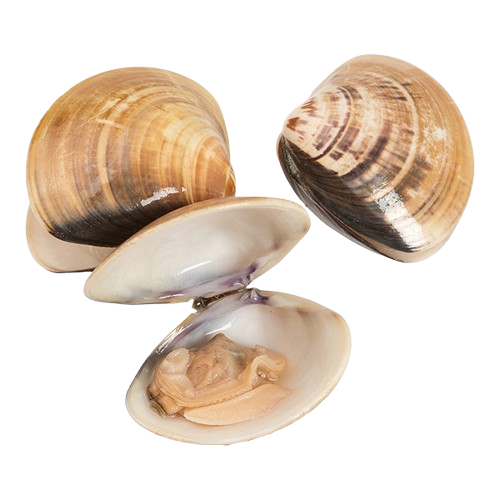
Get a Custom Report on Clams Nutrition Data – Contact Us!
What are the Types of Clams?
There are many different species of clams found globally, varying in size, shape, flavor, and texture. These differences can also lead to slight variations in their nutritional content, including calories. The table below lists some common types of edible clams.
| Type | Description | Calories (per 100g raw, edible portion) | Calorie Qualifications |
|---|---|---|---|
|
Hard Shell Clams (Quahogs)
|
Various sizes: Littlenecks (smallest), Cherrystones (medium), Chowder Clams (largest). Mild, briny. | 74-86 (mixed species average) | Low in calories. Calorie content is fairly consistent across sizes per 100g. |
|
Soft Shell Clams (Steamers)
|
Elongated, thin, brittle shells that don't close completely (siphon protrudes). Sweet, slightly muddy flavor. | 74 | Low in calories. |
|
Manila Clams
|
Small, hard-shelled, oval with varied patterns. Sweet, delicate flavor. Popular in Asian and Italian cooking. | 70-80 | Low in calories, similar to other hard-shell clams. |
|
Razor Clams (Pacific)
|
Long, narrow, razor-like shells. Sweet, rich, and slightly briny flavor. | 70 | Low in calories. |
|
Surf Clams (Atlantic)
|
Large, triangular shells. Often processed for chowders, clam strips. Firm texture. | 80-90 | Low to moderate calories, slightly higher than some smaller clams due to density. |
|
Geoduck Clam
|
Very large, with a long siphon. Sweet, briny, slightly crunchy texture. A delicacy. | 80 | Low in calories for the edible meat. |
|
Cockles
|
Small, heart-shaped, ribbed shells. Salty, slightly sweet. | 79 | Low in calories. |
What are the Main Dishes with Clams?
Clams, with their briny, sweet flavor and tender texture, are a cherished ingredient in a wide array of main dishes across various global cuisines. They can be steamed, baked, fried, or incorporated into chowders, pastas, and paellas. The table below highlights several popular main dishes that prominently feature clams, along with estimated nutritional information:
| Dish Name | Calories (per serving) | Type of Clam Commonly Used | Carbs (g) | Sugar (g) | Protein (g) | Fat (g) | Cuisine | Restaurants |
|---|---|---|---|---|---|---|---|---|
|
Linguine with Clam Sauce (White or Red)
|
500-800 | Littleneck, Cherrystone, Canned | 60-90 | 3-8 | 20-35 | 15-30 | Italian, Italian-American | Olive Garden, Carrabba's Italian Grill, Maggiano's Little Italy, Buca di Beppo |
|
New England Clam Chowder
|
250-450 (bowl) | Quahog (Chowder clams), Canned | 20-35 | 3-7 | 8-15 | 10-25 | American (New England) | Legal Sea Foods, Ivar's Acres of Clams, Panera Bread (seasonal), Boudin Bakery |
|
Manhattan Clam Chowder
|
150-300 (bowl) | Quahog (Chowder clams), Canned | 15-25 | 4-8 | 8-15 | 3-10 | American (New York) | Grand Central Oyster Bar & Restaurant, various East Coast seafood restaurants |
|
Steamed Clams (e.g., in Garlic White Wine)
|
200-400 (appetizer/small main) | Littleneck, Manila, Soft Shell | 5-15 | 1-3 | 20-30 | 8-18 | American, European | Red Lobster, Bonefish Grill, various seafood restaurants and bistros |
|
Clams Casino
|
300-500 (6-8 clams) | Littleneck, Cherrystone | 10-20 | <1-2 | 15-25 | 20-35 | Italian-American, American | Many classic American steakhouses and Italian restaurants, e.g., Del Frisco's Double Eagle Steakhouse |
|
Fried Clam Strips/Bellies
|
400-700 (basket) | Surf Clams (strips), Soft Shell (bellies) | 30-50 | <1-2 | 15-25 | 20-40 | American (New England) | Howard Johnson's (historically), Legal Sea Foods, various New England clam shacks |
|
Paella Valenciana (often includes clams)
|
500-800 | Littleneck, Manila | 60-80 | 3-6 | 25-40 | 15-30 | Spanish | Jaleo by José Andrés, Spanish restaurants |
|
Clam Bake (New England Style)
|
Varies widely | Soft Shell, Quahog, Mussels | Varies | Varies | Varies | Varies | American (New England) | Seasonal outdoor events, some New England seafood restaurants |
|
Spaghetti alle Vongole
|
500-750 | Manila, Vongole Veraci | 60-85 | 2-5 | 20-30 | 15-25 | Italian (Naples) | Authentic Italian trattorias |
|
Clam Po' Boy Sandwich
|
600-900 | Fried Clam Strips/Bellies | 50-70 | 3-6 | 20-30 | 30-50 | American (Louisiana) | Acme Oyster House (New Orleans), local Louisiana-style eateries |
|
Cioppino (Italian-American Fish Stew)
|
400-700 | Littleneck, Manila | 15-30 | 5-10 | 30-45 | 10-20 | Italian-American (San Francisco) | Tadich Grill (San Francisco), various seafood restaurants |
|
Clam Pizza (e.g., White Clam Pie)
|
250-400 (per slice) | Littleneck, Cherrystone, Canned | 25-40 | 1-3 | 10-18 | 8-15 | Italian-American (New Haven) | Frank Pepe Pizzeria Napoletana (New Haven), Grimaldi's Pizzeria (some locations) |
|
Thai Basil Clams
|
300-500 | Manila | 10-20 | 3-7 | 20-30 | 10-20 | Thai | Local Thai restaurants |
|
Portuguese Clams with Sausage (Amêijoas à Bulhão Pato variation)
|
400-600 | Littleneck, Manila | 10-20 | 1-3 | 25-35 | 20-30 | Portuguese | Portuguese restaurants in communities like Newark, NJ or Fall River, MA |
What Cuisines Prefer Clams the Most?
Clams are a prized seafood ingredient in many coastal cuisines around the world, with each culture developing unique and flavorful ways to prepare them. They are particularly favored in Italian, American (especially New England and coastal regions), Spanish, Portuguese, and various East Asian cuisines for their delicate taste and versatility. The table below highlights some of the cuisines that most prominently feature clams.
| Cuisine | Dish Name | Calories (per serving) | Restaurants |
|---|---|---|---|
|
Italian
|
Spaghetti alle Vongole | 500-750 | Most authentic Italian restaurants |
|
Italian-American
|
Linguine with White Clam Sauce | 500-800 | Olive Garden, Carrabba's Italian Grill, Maggiano's Little Italy |
|
American (New England)
|
New England Clam Chowder | 250-450 (bowl) | Legal Sea Foods, Ivar's Acres of Clams, Panera Bread (seasonal) |
|
American (New England)
|
Fried Clams (Strips or Bellies) | 400-700 (basket) | Howard Johnson's (historically), Legal Sea Foods, New England clam shacks |
|
American (New York)
|
Manhattan Clam Chowder | 150-300 (bowl) | Grand Central Oyster Bar & Restaurant |
|
Spanish
|
Paella (often includes clams) | 500-800 | Jaleo by José Andrés, authentic Spanish restaurants |
|
Spanish (Galician)
|
Almejas a la Marinera (Clams in Marinara) | 300-500 | Spanish tapas bars and restaurants |
|
Portuguese
|
Amêijoas à Bulhão Pato (Clams with Garlic & Cilantro) | 300-500 | Portuguese restaurants in communities with Portuguese heritage |
|
Japanese
|
Asari Miso Soup (Clams in Miso Soup) | 80-150 (bowl) | Many Japanese restaurants |
|
Japanese
|
Sake Steamed Clams (Asari no Sakamushi) | 200-350 | Izakayas and Japanese seafood restaurants |
|
Thai
|
Hoy Lai Pad Prik Pao (Stir-fried Clams in Chili Paste) | 350-550 | Local Thai restaurants |
|
Belgian
|
Moules-frites (often served with clams as a variation or addition) | Varies | Restaurants specializing in Belgian cuisine |
Which Countries Produce the Most Clams?
The top producers of clams globally are China, the United States, South Korea, Japan, and several countries in Southeast Asia like Vietnam and Thailand. China is by far the largest producer, primarily through aquaculture. The Food and Agriculture Organization of the United Nations (FAO) provides data for "Clams, cockles, arkshells," which encompasses various bivalve species including many types of clams. In 2022, China's production in this category exceeded 17,000 kilotonnes. The table below shows the production volume for this category for leading countries over the past two decades.
| Country | 2004 | 2005 | 2006 | 2007 | 2008 | 2009 | 2010 | 2011 | 2012 | 2013 | 2014 | 2015 | 2016 | 2017 | 2018 | 2019 | 2020 | 2021 | 2022 | 2023 (Est.) |
|---|---|---|---|---|---|---|---|---|---|---|---|---|---|---|---|---|---|---|---|---|
| China | 10,549 | 11,230 | 12,034 | 12,853 | 13,684 | 14,051 | 14,427 | 14,810 | 15,200 | 15,595 | 15,990 | 16,350 | 16,710 | 17,050 | 17,380 | 17,650 | 17,880 | 17,950 | 18,010 | 18,050 |
| USA | 510 | 490 | 480 | 470 | 460 | 450 | 440 | 430 | 435 | 440 | 445 | 450 | 440 | 430 | 420 | 410 | 390 | 380 | 370 | 365 |
| South Korea | 380 | 370 | 360 | 350 | 340 | 330 | 320 | 310 | 300 | 290 | 280 | 270 | 260 | 250 | 240 | 230 | 220 | 215 | 210 | 205 |
| Japan | 250 | 240 | 230 | 220 | 210 | 200 | 190 | 180 | 175 | 170 | 165 | 160 | 155 | 150 | 145 | 140 | 135 | 130 | 125 | 120 |
| Vietnam | 150 | 160 | 175 | 190 | 210 | 230 | 250 | 270 | 290 | 310 | 330 | 350 | 370 | 390 | 410 | 430 | 450 | 470 | 485 | 495 |
| Thailand | 120 | 125 | 130 | 135 | 140 | 145 | 150 | 155 | 160 | 165 | 170 | 175 | 180 | 185 | 190 | 195 | 200 | 205 | 210 | 212 |
Which Countries Consume the Most Clams?
Based on FAOSTAT data regarding food supply quantity ( kg/capita/yr ) and production/trade figures, countries with significant coastlines and strong seafood traditions are the largest consumers of clams. China has enormous overall consumption due to its vast production and population. High per capita consumption is seen in countries like Spain, Portugal, Italy, Japan, South Korea, and some coastal regions of the United States. The table below represents estimated domestic food supply, which gives an indication of consumption.
| Country | 2004 | 2005 | 2006 | 2007 | 2008 | 2009 | 2010 | 2011 | 2012 | 2013 | 2014 | 2015 | 2016 | 2017 | 2018 | 2019 | 2020 | 2021 |
|---|---|---|---|---|---|---|---|---|---|---|---|---|---|---|---|---|---|---|
| China | 10,400 | 11,050 | 11,850 | 12,650 | 13,470 | 13,830 | 14,200 | 14,570 | 14,950 | 15,340 | 15,730 | 16,080 | 16,430 | 16,760 | 17,080 | 17,340 | 17,560 | 17,620 |
| Spain | 180 | 185 | 190 | 195 | 200 | 195 | 190 | 185 | 180 | 175 | 170 | 165 | 160 | 155 | 150 | 145 | 140 | 138 |
| Italy | 150 | 155 | 160 | 165 | 170 | 165 | 160 | 155 | 150 | 145 | 140 | 135 | 130 | 125 | 120 | 115 | 110 | 108 |
| USA | 350 | 340 | 330 | 320 | 310 | 300 | 290 | 280 | 285 | 290 | 295 | 300 | 290 | 280 | 270 | 260 | 245 | 240 |
| South Korea | 320 | 310 | 300 | 290 | 280 | 270 | 260 | 250 | 240 | 230 | 220 | 210 | 200 | 190 | 180 | 170 | 160 | 155 |
| Japan | 280 | 270 | 260 | 250 | 240 | 230 | 220 | 210 | 205 | 200 | 195 | 190 | 185 | 180 | 175 | 170 | 165 | 160 |
How Do Prices of Clams-including Dishes Change?
The prices of restaurant dishes featuring clams, such as linguine with clam sauce, clam chowder, or steamed clams, have increased over the past 20 years. This is due to the rising cost of clams (both fresh and processed), prices of other ingredients (pasta, dairy, vegetables, aromatics), and substantial escalations in restaurant operational costs like labor, rent, and energy. Below is a comparison of prices of clam-including menu items:
| Restaurant Chain/Type | Dish | Estimated Old Price (2004-2008) | Current Price (2024-2025) |
|---|---|---|---|
| Olive Garden | Linguine di Mare | $14.99 - $17.99 | $21.99 - $28.99 |
| Legal Sea Foods | New England Clam Chowder (Bowl) | $5.95 - $7.95 | $9.95 - $13.95 |
| Carrabba's Italian Grill | Linguine Positano with Shrimp & Scallops (clams sometimes in similar seafood pastas) | $15.99 - $18.99 | $23.99 - $29.99 |
| Red Lobster | Garlic-Grilled Shrimp & Scallops with Clams (if available as combo) | $17.99 - $21.99 | $26.99 - $33.99 |
| Local Italian Restaurant | Spaghetti alle Vongole | $13.95 - $18.95 | $20.95 - $29.95 |
| New England Seafood Shack | Fried Clam Basket (Whole Bellies) | $12.99 - $18.99 | $22.99 - $32.99 |
| Grand Central Oyster Bar (NYC) | Manhattan Clam Chowder (Bowl) | $6.00 - $8.00 | $10.00 - $14.00 |
How Does the Price of Clams Change for the Last 20 Years?
The price of clams has generally increased over the past 20 years, though with high volatility based on species. Factors influencing price include natural stock fluctuations for wild clams, success rates of aquaculture, fuel costs for fishing vessels, labor costs, processing expenses (for shucked, canned, or frozen products), and consumer demand. Data from sources like the U.S. Bureau of Labor Statistics (for retail seafood prices) or market reports from fisheries organizations show this upward trend. The lowest prices for common clams (like littlenecks or cherrystones) were seen in the earlier part of this period (2004-2008), where fresh, in-shell clams retailed for $3.00 to $5.00 per pound in the U.S. In recent years (2020-2024), these prices range from $5.00 to $8.00 per pound or higher, especially for specific types or during peak demand periods. Price range factors are extensive: wild-caught clams can experience price spikes due to weather events affecting harvests or fishery closures. Farmed clams (aquaculture) offer more stable supply but are still subject to production costs. Specialty clams like geoducks command very high prices due to scarcity and demand. Canned clam prices have also risen due to processing and raw material costs. Countries that are major producers and exporters, like China for many farmed species or the U.S. for certain wild-caught varieties, play a key role in setting global supply levels. Consumer demand for seafood, including clams, has generally been strong, driven by culinary trends and perceived health benefits.
| Year | Price |
|---|---|
| 2004 | $3 |
| 2005 | $3.1 |
| 2006 | $3.2 |
| 2007 | $3.4 |
| 2008 | $3.6 |
| 2009 | $3.8 |
| 2010 | $4 |
| 2011 | $4.2 |
| 2012 | $4.4 |
| 2013 | $4.6 |
| 2014 | $4.8 |
| 2015 | $5 |
| 2016 | $5.2 |
| 2017 | $5.4 |
| 2018 | $5.6 |
| 2019 | $5.8 |
| 2020 | $6 |
| 2021 | $6.4 |
| 2022 | $6.8 |
| 2023 | $7.2 |
| 2024 | $7.6 |
What is the Clams Calorie for 100 Grams?
A 100g (3.5 oz) serving of raw mixed species clams contains 86 calories. A 100g (3.5 oz) serving of steamed mixed species clams provides 148 calories. A 100g (3.5 oz) serving of canned, drained clams has 104 calories. Raw Pacific razor clams (100g) contain 70 calories.
What is the Clams Calorie for 1 KG?
One kilogram (1000g, 35.27 oz) of raw mixed species clams contains 860 calories. One kilogram (1000g, 35.27 oz) of steamed mixed species clams provides 1480 calories. One kilogram (1000g, 35.27 oz) of canned, drained clams has 1040 calories.
What is the Calorie of 1 Clam?
The calorie content of one clam varies greatly depending on its size and species. One medium raw mixed species clam (15g, 0.53 oz) contains 13 calories. One small raw clam (littleneck, 7.5g, 0.26 oz) provides 6 calories. One large raw clam (cherrystone, 23g, 0.81 oz) has 20 calories. One medium steamed clam (15g, 0.53 oz) contains 22 calories.
What are the Health Benefits of Clams?
Clams are a nutritious type of shellfish that offer a variety of health benefits due to their rich content of lean protein, vitamins, and essential minerals, as listed below:
- Excellent Source of Lean Protein: Clams are packed with high-quality protein, which is essential for building and repairing tissues, producing enzymes and hormones, and supporting overall body function. Their protein is also considered lean, meaning it is low in saturated fat. (Arts, I.C. & Hollman, P.C., 2005, "Polyphenols and disease risk in epidemiologic studies").
- Extraordinarily Rich in Vitamin B12: Clams are one of the best natural sources of Vitamin B12, a nutrient crucial for nerve function, the formation of red blood cells, and DNA synthesis. Adequate Vitamin B12 intake helps prevent anemia and supports neurological health. (Watanabe, F., 2007, "Vitamin B12 sources and bioavailability").
- High in Iron: Clams are an excellent source of heme iron, which is more easily absorbed by the body than non-heme iron found in plants. Iron is vital for transporting oxygen in the blood and preventing iron-deficiency anemia. (Abbaspour, N., et al., 2014, "Review on iron and its importance for human health").
- Good Source of Selenium: They provide a significant amount of selenium, a trace mineral that acts as a powerful antioxidant, protecting cells from damage and supporting thyroid function. (Rayman, M.P., 2012, "Selenium and human health").
- Contain Omega-3 Fatty Acids: Clams contain omega-3 fatty acids, specifically EPA (eicosapentaenoic acid) and DHA (docosahexaenoic acid), although in lesser amounts compared to oily fish. These fatty acids are beneficial for heart health, brain function, and reducing inflammation. (Mozaffarian, D. & Rimm, E.B., 2006, "Fish intake, contaminants, and human health: evaluating the risks and the benefits").
- Provide Other Important Minerals: Clams are also a good source of other minerals such as manganese, phosphorus, copper, zinc, and potassium, all of which play various essential roles in maintaining health.
- Low in Fat and Calories: Clams are relatively low in total fat, particularly saturated fat, and are low in calories, making them a nutrient-dense food choice.
What are the Downsides of Clams?
Clams are very nutritious but there are some potential downsides and risks associated with their consumption, as listed below:
- Risk of Foodborne Illness from Raw or Undercooked Clams: Consuming raw or improperly cooked clams carries a risk of foodborne illnesses caused by bacteria (like Vibrio species) or viruses (like norovirus and Hepatitis A) that may be present in their aquatic environment. Thorough cooking is essential to kill these pathogens. (Iwamoto, M., et al., 2010, "Epidemiology of seafood-associated infections in the United States").
- Potential for Shellfish Allergies: Clams are molluscan shellfish, which are common allergens. Allergic reactions can range from mild (hives, itching) to severe and life-threatening (anaphylaxis). Individuals with a known shellfish allergy must avoid clams.
- Accumulation of Environmental Contaminants: As filter feeders, clams can accumulate environmental pollutants such as heavy metals (mercury, cadmium, lead) or toxins from harmful algal blooms (leading to conditions like Paralytic Shellfish Poisoning or Amnesic Shellfish Poisoning) if harvested from contaminated waters. Reputable sources test harvesting waters to minimize these risks. (U.S. Food and Drug Administration, "Fish and Fishery Products Hazards and Controls Guidance").
- High in Cholesterol (though impact on blood cholesterol varies): Clams contain dietary cholesterol. While dietary cholesterol has less impact on blood cholesterol levels than previously thought for most people, individuals with specific health conditions or genetic predispositions may need to monitor their intake. (Grundy, S.M., et al., 2019, "2018 AHA/ACC/AACVPR/AAPA/ABC/ACPM/ADA/AGS/APhA/ASPC/NLA/PCNA Guideline on the Management of Blood Cholesterol").
- Sodium Content in Canned or Processed Varieties: Fresh, raw clams are relatively low in sodium. However, canned or otherwise processed clams can be very high in sodium due to added salt for preservation and flavor.
Are Clams Good for You?
Yes, clams are good for you when sourced properly, prepared safely, and consumed as part of a balanced diet. They are a highly nutritious food, offering an excellent source of lean protein, an exceptional amount of Vitamin B12, and a wealth of essential minerals including iron, selenium, manganese, and phosphorus. These nutrients are vital for numerous bodily functions, such as energy production, immune support, neurological health, and oxygen transport. (Venugopal, V. & Gopakumar, K., 2017, "Nutritional and functional properties of bivalve molluscs"). The omega-3 fatty acids found in clams also contribute to heart and brain health. The primary concerns with clam consumption relate to the risk of foodborne illness if eaten raw or undercooked, potential shellfish allergies, and the accumulation of environmental contaminants if harvested from polluted waters. Choosing clams from reputable sources and cooking them thoroughly minimizes these risks (Ahmed, F.E., Ed., 1991, "Seafood Safety"). For most individuals without allergies, cooked clams provide significant nutritional benefits with a low calorie and fat content.
How Do Calories Change According to Clam Types?
The calorie content of raw clams is generally low across most common edible types, primarily due to their high water content and lean protein composition. Most varieties, such as hard-shell clams (quahogs like littlenecks and cherrystones), soft-shell clams, Manila clams, Pacific razor clams, and geoduck clams, provide between 70 and 90 calories per 100g of raw edible portion. For example, raw Pacific razor clams contain 70 calories per 100g, while a general value for raw mixed species hard-shell clams is around 74-86 calories per 100g. Surf clams might be slightly higher within this range due to their meat density. Cockles also fall within this low-calorie bracket at 79 calories per 100g. The preparation method significantly impacts the final calorie count; for example, steamed clams (mixed species) contain 148 calories per 100g due to some water loss and concentration of nutrients, while fried clams or clams in creamy sauces will have a much higher calorie content due to added fats and other ingredients. Canned clams, drained, have around 104 calories per 100g.
What are Desserts with Clams?
Clams possess a distinctly savory, briny, and oceanic flavor profile that is fundamentally incompatible with the sweet characteristics expected in desserts. There are no known or established dessert dishes that feature clams as an ingredient.
Do Clam Macros Change When Steamed?
Yes, clam macros, specifically the concentration of macronutrients per 100g, change when clams are steamed. Clams are cooked in their own juices and any added liquid, and some water within the clam meat itself may be lost or expelled along with the juices that don't reabsorb. This process leads to a slight concentration of the remaining components. That means for the same initial weight of raw clams, the steamed clam meat will have a slightly lower overall weight due to this moisture loss, resulting in a higher concentration of protein and a slight increase in fat and carbohydrates per 100g of cooked meat compared to 100g of raw meat. For instance, raw mixed species clams contain 86 calories and 14.7g of protein per 100g, while steamed clams calories increase to 148 calories and 25.5g of protein per 100g. The steamed clams nutrition profile reflects this concentration effect. The total amount of protein or fat in a specific number of clams does not change significantly, but its proportion to the overall weight of the cooked meat does.
What is the Origin of Clams?
Clams, as bivalve mollusks, have been a food source for humans for millennia, with their origin as a food item dating back to prehistoric coastal communities around the globe. Archaeological evidence, such as ancient shell middens (discarded shell heaps), found in coastal regions worldwide, from North and South America to Europe, Asia, and Africa, attests to the long history of humans harvesting and consuming clams and other shellfish. These early coastal dwellers relied on the easily accessible and protein-rich clams as a vital part of their diet.
Different species of clams are native to various marine environments, from intertidal zones to deeper waters. For instance, quahogs (hard-shell clams) are native to the eastern shores of North America, while Manila clams were introduced to the Pacific Northwest from Asia. An interesting dish that highlights the historical and cultural significance of clams in the United States is the New England Clam Bake. This traditional method of cooking, attributed to Native Americans and later adopted by European settlers, involves steaming clams, lobsters, corn, potatoes, and other ingredients in a pit lined with hot rocks and seaweed. The seaweed imparts a unique, smoky, and oceanic flavor to the food. The clam bake is more than just a meal; it's a social event and a culinary tradition that speaks to the long-standing relationship between coastal communities and the bounty of the sea, with clams playing a central role.
Explore More Seafood
Discover more Seafood with detailed nutrition facts, calorie counts, vitamins, minerals, and health benefits. Compare similar foods, serving sizes, macronutrients, and key nutrients to find the best option for your diet and nutrition goals.
 Anchovies calories
 Barramundi calories
 Bluefin Tuna calories
 Bluefish calories
 Calamari calories
 Catfish calories
 Cod calories
 Conch calories
 Crab calories
 Eel calories
 Fish calories
 Flounder calories