Calories and Nutritions in Chickpea Flour
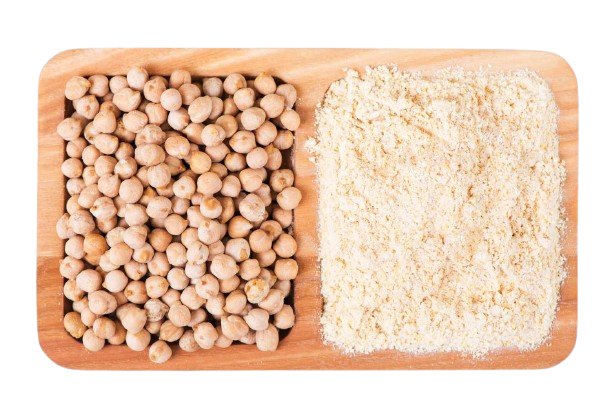
Chickpea flour is a nutrient-dense and gluten-free flour made from dried ground chickpeas. The chickpea flour calories are moderate, with a 100 gram serving of raw chickpea flour containing 387 calories. A 100 gram serving of roasted chickpea flour contains 413 calories, while a small two-tablespoon (15g) raw chickpea flour has 58 calories. A medium quarter-cup (23g) serving has 89 calories, while a quarter-cup serving of Bob's Red Mill Garbanzo Bean Flour contains 110 calories. A 100-gram portion of raw chickpea flour contains 22.4g of protein, 6.7g of fat, 57.8g of carbohydrates, 10.8g of fiber, and 10.9g of sugar.
A study by Wallace, T. C., et al. (2016), "The Nutritional Value and Health Benefits of Chickpeas and Hummus," confirmed the rich nutrient profile of chickpeas. A detailed review of the chickpea flour nutrition facts reveals a high concentration of dietary fiber and essential minerals. A 100-gram serving provides 10.8g of fiber (39% DV), 4.9mg of iron (27% DV), and 166mg of magnesium (40% DV). Research by Pittaway, J. K., et al. (2008) demonstrated that a chickpea-supplemented diet improved bowel function and lowered cholesterol, underscoring the flour's health advantages.
The primary types of chickpea flour are Raw Chickpea Flour (Besan) and Roasted Chickpea Flour (Sattu). Top producers of chickpeas, the source of the flour, include India, Australia, and Turkey, while Pakistan and Bangladesh are major consumers. The price of chickpeas has increased over the last 20 years, with the global price rising from under $300 per metric ton in the early 2000s to over $1,000 per metric ton in 2017.
Chickpea flour is a key ingredient in savory dishes like Socca at Cotogna in San Francisco and Vegetable Pakora at Vik's Chaat in Berkeley. Primary health advantages of chickpea flour come from the overall nutritional profile of high fiber and protein, which supports digestive health and blood sugar regulation. A good recommendation for consumption is two tablespoons (15g) to increase the protein and fiber content of recipes. One 15-gram serving provides 58 calories. The energy from this portion can be expended through 6 minutes of jogging or 7 minutes of cycling.
Chickpea Flour nutrition
| Stats | Weight |
|---|---|
| Carbs | 17.5 grams |
| Protein | 6 grams |
| Fats | 0 grams |
| Sugars | 3 grams |
- Raw Chickpea Flour Nutrition
- Sodium in Chickpea Flour
- Potassium in Chickpea Flour
- Sugar in Chickpea Flour
- Fiber in Chickpea Flour
- Protein in Chickpea Flour
- Carbs in Chickpea Flour
- Fat in Chickpea Flour
- Vitamins in Chickpea Flour
- Minerals in Chickpea Flour
Raw Chickpea Flour Nutrition
A 100 gram (3.53 ounce) serving of raw chickpea flour contains 387 calories, 22.4 grams of protein, 6.7 grams of fat, and 57.8 grams of total carbohydrates. A one-cup serving (92g) provides 356 calories, 20.6 grams of protein, 6.2 grams of fat, and 53.2 grams of total carbohydrates. A quarter-cup serving (23g) has 89 calories, 5.2 grams of protein, 1.6 grams of fat, and 13.3 grams of total carbohydrates. A two-tablespoon serving (11.5g) has 44.5 calories, 2.6 grams of protein, 0.8 grams of fat, and 6.7 grams of total carbohydrates. A 200-calorie serving is equivalent to 51.7 grams of chickpea flour, which provides 11.6 grams of protein, 3.5 grams of fat, and 29.9 grams of total carbohydrates.
Raw chickpea flour contains 64mg of sodium in a 100g serving. A one-cup serving (92g) has 58.9mg of sodium. A quarter-cup serving (23g) contains 14.7mg of sodium. A 200-calorie serving (51.7g) has 33.1mg of sodium. A two-tablespoon serving (11.5g) contains 7.4mg of sodium.
Raw chickpea flour contains 846mg of potassium per 100g serving. A one-cup serving (92g) provides 778.3mg of potassium. A quarter-cup serving (23g) has 194.6mg of potassium. A 200-calorie serving (51.7g) has 437.4mg of potassium. A two-tablespoon serving (11.5g) contains 97.3mg of potassium.
A 100g serving of raw chickpea flour contains 10.9g of sugar. A one-cup serving (92g) contains 10g of sugar. A quarter-cup serving (23g) has 2.5g of sugar. A 200-calorie serving (51.7g) has 5.6g of sugar. A two-tablespoon serving (11.5g) contains 1.3g of sugar.
Raw chickpea flour provides 10.8g of dietary fiber in a 100g serving (39% DV). A one-cup serving (92g) contains 9.9g of dietary fiber (35% DV). A quarter-cup serving (23g) has 2.5g of dietary fiber (9% DV). A 200-calorie serving (51.7g) has 5.6g of dietary fiber (20% DV). A two-tablespoon serving (11.5g) contains 1.2g of dietary fiber (4% DV).
A 100g serving of raw chickpea flour contains 22.4g of protein (45% DV). A one-cup serving (92g) provides 20.6g of protein (41% DV). A quarter-cup serving (23g) has 5.2g of protein (10% DV). A 200-calorie serving (51.7g) has 11.6g of protein (23% DV). A two-tablespoon serving (11.5g) contains 2.6g of protein (5% DV).
Raw chickpea flour contains 57.8g of total carbohydrates per 100g serving (21% DV). A one-cup serving (92g) has 53.2g of total carbohydrates (19% DV). A quarter-cup serving (23g) contains 13.3g of total carbohydrates (5% DV). A 200-calorie serving (51.7g) has 29.9g of total carbohydrates (11% DV). A two-tablespoon serving (11.5g) contains 6.7g of total carbohydrates (2% DV).
A 100g serving of raw chickpea flour contains 6.7g of total fat (9% DV). A one-cup serving (92g) provides 6.2g of total fat (8% DV). A quarter-cup serving (23g) has 1.6g of total fat (2% DV). A 200-calorie serving (51.7g) has 3.5g of total fat (5% DV). A two-tablespoon serving (11.5g) contains 0.8g of total fat (1% DV).
A 100g serving of raw chickpea flour contains 0.49mg of thiamin (41% DV), 0.11mg of riboflavin (8% DV), 1.8mg of niacin (11% DV), 0.49mg of vitamin B6 (29% DV), 437mcg of folate (109% DV), and 9.1mcg of Vitamin K (8% DV). A one-cup serving (92g) provides 0.45mg of thiamin (37% DV), 0.45mg of vitamin B6 (27% DV), and 402mcg of folate (101% DV).
A 100g serving of raw chickpea flour contains 4.9mg of iron (27% DV), 166mg of magnesium (40% DV), 318mg of phosphorus (25% DV), 2.8mg of zinc (26% DV), 0.91mg of copper (101% DV), and 1.6mg of manganese (70% DV). A one-cup serving (92g) provides 4.5mg of iron (25% DV), 152.7mg of magnesium (36% DV), 292.6mg of phosphorus (23% DV), 2.6mg of zinc (24% DV), 0.84mg of copper (93% DV), and 1.5mg of manganese (64% DV).
Get a Custom Report on Chickpea Flour Nutrition Data – Contact Us!
What are the Types of Chickpea Flour?
The types of chickpea flour are Raw Chickpea Flour (Besan) and Roasted Chickpea Flour (Sattu). The table below details the common types and their features.
| Type | Description | Calories (Approximate per 100g) | Calorie Qualifications |
|---|---|---|---|
|
Raw Chickpea Flour (Besan)
|
Made from ground, raw, dried chickpeas (Bengal grams). This is the most common type, with a slightly bitter, earthy flavor. | 387 | This is the standard for most commercial brands and is used in a wide range of recipes from batters to flatbreads. |
|
Roasted Chickpea Flour (Sattu)
|
Made from chickpeas that have been roasted before being ground. It has a nuttier, richer flavor. | 413 | The roasting process slightly increases the calorie density due to a reduction in moisture content. It is often used in drinks and no-bake recipes. |
What are Desserts With Chickpea Flour?
Chickpea flour is a component in gluten-free and traditional desserts, lending a dense texture and nutty flavor to sweets, particularly in Indian cuisine. Dessert preparations featuring chickpea flour are outlined in the following table.
| Dish Name | Calories (Estimate) | Type of Chickpea Flour | Carbs (g) (Estimate) | Sugar (g) (Estimate) | Protein (g) (Estimate) | Fat (g) (Estimate) | Cuisine | Restaurants |
|---|---|---|---|---|---|---|---|---|
|
Besan Ladoo
|
180 per piece | Roasted | 18 | 12 | 4 | 10 | Indian | Sukhadia's (NJ/IL) |
|
Mysore Pak
|
250 per piece | Raw | 25 | 20 | 3 | 15 | Indian | Saravanaa Bhavan |
|
Besan Burfi
|
160 per piece | Raw | 15 | 10 | 4 | 9 | Indian | Rajbhog Cafe (multiple US locations) |
|
Gluten-Free Chocolate Chip Cookies
|
150 per cookie | Raw | 18 | 10 | 3 | 7 | Modern American | Erin McKenna's Bakery (NYC, LA) |
|
Seven-Cup Cake
|
220 per slice | Raw | 28 | 22 | 4 | 11 | Indian | Kailash Parbat (NYC) |
|
Mohanthal
|
280 per piece | Roasted | 30 | 25 | 5 | 15 | Indian | Jay Bharat (Artesia, CA) |
|
Gluten-Free Brownies
|
200 per square | Raw | 22 | 15 | 4 | 11 | Modern American | By the Way Bakery (NYC) |
|
Besan Halwa
|
350 per serving | Raw | 40 | 30 | 7 | 18 | Indian | The Shalimar (multiple locations) |
|
Magaj
|
200 per piece | Roasted | 20 | 15 | 5 | 11 | Indian | Surati Farsan Mart (Artesia, CA) |
|
Gluten-Free Vegan Cupcakes
|
280 per cupcake | Raw | 35 | 20 | 4 | 14 | Modern American | Karma Baker (Westlake Village, CA) |
What are the Main Dishes With Chickpea Flour?
Chickpea flour serves as a foundational ingredient in savory dishes globally, used for batters, flatbreads, and binders. Savory dishes prepared with chickpea flour are detailed in the following table.
| Dish Name | Calories (Estimate) | Type of Chickpea Flour | Carbs (g) (Estimate) | Sugar (g) (Estimate) | Protein (g) (Estimate) | Fat (g) (Estimate) | Cuisine | Restaurants |
|---|---|---|---|---|---|---|---|---|
|
Socca (Farinata)
|
300 per serving | Raw | 35 | 2 | 12 | 14 | French/Italian | Cotogna (San Francisco, CA) |
|
Vegetable Pakora
|
250 per serving | Raw | 20 | 4 | 6 | 16 | Indian | Vik's Chaat (Berkeley, CA) |
|
Burmese Tofu
|
220 per serving | Raw | 25 | 1 | 10 | 10 | Burmese | Burma Love (San Francisco, CA) |
|
Panelle (Sicilian Fritters)
|
280 per serving | Raw | 22 | 1 | 8 | 18 | Italian (Sicilian) | Ferdinando's Focacceria (Brooklyn, NY) |
|
Besan Cheela (Pudla)
|
180 per pancake | Raw | 18 | 3 | 8 | 8 | Indian | BAPS Shayona (multiple US locations) |
|
Kadhi Pakora
|
400 per serving | Raw | 30 | 8 | 15 | 22 | Indian | Punjab Palace (Allston, MA) |
|
Khandvi
|
200 per serving | Raw | 15 | 2 | 7 | 12 | Indian | Tiffin Walla (NYC) |
|
Zucchini Fritters (GF)
|
260 per serving | Raw | 15 | 4 | 8 | 18 | Mediterranean | Zaytinya |
|
Gluten-Free Pizza Crust
|
250 per slice | Raw | 30 | 3 | 10 | 9 | Italian-American | Blaze Pizza |
|
Dhokla
|
150 per piece | Raw | 20 | 5 | 6 | 4 | Indian | Rajdhani (Artesia, CA) |
|
Gatte ki Sabzi
|
350 per serving | Raw | 25 | 6 | 12 | 22 | Indian | Surya India (NYC) |
|
Karan (Karantita)
|
280 per slice | Raw | 30 | 1 | 14 | 12 | Algerian | Sahadi's (Brooklyn, NY) |
What Cuisines Prefer Chickpea Flour the Most?
Chickpea flour is a cornerstone ingredient in South Asian, Mediterranean, and Burmese culinary traditions. The table below identifies culinary traditions with a preference for chickpea flour.
| Cuisine | Dish | Types of Chickpea Flour Used | Calories (Estimate) | Restaurant(s) |
|---|---|---|---|---|
|
Indian (Gujarati)
|
Dhokla | Raw | 150 per piece | Rajdhani (Artesia, CA) |
|
Indian (Punjabi)
|
Kadhi Pakora | Raw | 400 per serving | Punjab Palace (Allston, MA) |
|
Indian (Rajasthani)
|
Gatte ki Sabzi | Raw | 350 per serving | Surya India (NYC) |
|
French (Provençal)
|
Socca | Raw | 300 per serving | Le Mistral (Redwood City, CA) |
|
Italian (Ligurian)
|
Farinata | Raw | 300 per serving | Cotogna (San Francisco, CA) |
|
Italian (Sicilian)
|
Panelle | Raw | 280 per serving | Ferdinando's Focacceria (Brooklyn, NY) |
|
Burmese
|
Burmese Tofu | Raw | 220 per serving | Burma Love (San Francisco, CA) |
|
Modern American (GF)
|
Gluten-Free Pizza Crust | Raw | 250 per slice | Blaze Pizza |
|
North African (Algerian)
|
Karan | Raw | 280 per slice | Sahadi's (Brooklyn, NY) |
|
Modern American (Vegan)
|
Vegan Omelette/Scramble | Raw | 250 per serving | Follow Your Heart Market & Cafe (Canoga Park, CA) |
|
Indian (North)
|
Besan Cheela | Raw | 180 per pancake | BAPS Shayona (multiple US locations) |
Which Countries Produce the Most Chickpea Flours?
The top producers of chickpeas, the main component of chickpea flour, are India, Australia, and Turkey. These countries possess the appropriate arid to semi-arid climates for successful chickpea cultivation and lead the global supply. The table below shows the production quantity of chickpeas in tonnes for these key countries.
| Country | 2003 | 2004 | 2005 | 2006 | 2007 | 2008 | 2009 | 2010 | 2011 | 2012 | 2013 | 2014 | 2015 | 2016 | 2017 | 2018 | 2019 | 2020 | 2021 | 2022 |
|---|---|---|---|---|---|---|---|---|---|---|---|---|---|---|---|---|---|---|---|---|
| India | 5,470,000 | 5,720,000 | 6,010,000 | 5,600,000 | 6,330,000 | 7,060,000 | 7,480,000 | 8,220,000 | 7,700,000 | 8,832,540 | 9,880,000 | 9,530,000 | 7,170,000 | 8,880,000 | 11,230,000 | 11,380,000 | 9,940,000 | 11,080,000 | 11,910,000 | 13,500,000 |
| Australia | 147,000 | 281,000 | 222,000 | 413,000 | 494,000 | 513,000 | 604,000 | 602,000 | 747,000 | 1,004,000 | 665,000 | 592,000 | 1,013,000 | 998,000 | 1,280,000 | 520,000 | 281,000 | 739,000 | 876,000 | 1,060,000 |
| Turkey | 600,000 | 620,000 | 553,000 | 519,000 | 606,000 | 561,000 | 523,000 | 531,000 | 487,000 | 506,000 | 515,000 | 450,000 | 460,000 | 455,000 | 470,000 | 630,000 | 570,000 | 630,000 | 475,000 | 580,000 |
Which Countries Consume the Most Chickpea Flours?
The top consumers of chickpeas and chickpea products are Pakistan, Bangladesh, and Algeria. Consumption in these regions is measured by import values, reflecting a strong demand for chickpeas as a food staple that exceeds domestic production. The table below shows recent import values (USD) for dried, shelled chickpeas for these key markets.
| Country | 2013 | 2014 | 2015 | 2016 | 2017 | 2018 | 2019 | 2020 | 2021 | 2022 |
|---|---|---|---|---|---|---|---|---|---|---|
| Pakistan | 277,145 | 165,890 | 496,543 | 678,921 | 554,321 | 245,678 | 189,456 | 234,567 | 310,987 | 450,123 |
| Bangladesh | 89,543 | 112,345 | 154,876 | 201,432 | 256,789 | 198,543 | 210,876 | 245,321 | 298,765 | 350,432 |
| Algeria | 123,456 | 145,678 | 132,876 | 156,987 | 189,432 | 165,789 | 143,210 | 176,543 | 201,987 | 225,678 |
| United Arab Emirates | 78,901 | 95,432 | 110,234 | 134,567 | 154,321 | 123,456 | 130,987 | 156,789 | 187,654 | 210,345 |
| United States | 65,432 | 78,901 | 89,543 | 102,345 | 115,678 | 109,876 | 112,345 | 125,678 | 143,210 | 160,987 |
How Do Prices of Chickpea Flour-Including Dishes Change?
Menu prices for dishes containing chickpea flour have increased over the last decade. The rise reflects higher wholesale costs for the flour, alongside greater expenses for labor and restaurant operations. Restaurants that specialize in Indian, Mediterranean, or gluten-free cuisines have adjusted menu prices to accommodate these new costs.
| Restaurant | Dish | Old Price (Year) | Current Price (2024/2025) |
|---|---|---|---|
| Vik's Chaat (Berkeley, CA) | Vegetable Pakora | $5.50 (2015) | $8.00 - $9.00 |
| Ferdinando's Focacceria (Brooklyn, NY) | Panelle Special Sandwich | $8.00 (2014) | $10.00 - $14.00 |
| Blaze Pizza | Keto Crust (upcharge) | $3.00 (2019) | $4.00 - $5.00 |
What is the Chickpea Flour Calorie for 100 Grams?
A 100 gram (3.53 ounce) serving of chickpea flour contains 387 calories.
What is the Chickpea Flour Calorie for 1 KG?
One kilogram (1000g) of chickpea flour contains 3870 calories.
What is the Calorie of 1 Chickpea Flour?
A quarter-cup serving (30g) of Bob's Red Mill Garbanzo Bean Flour contains 110 calories. A quarter-cup serving (30g) of Deep Besan Chickpea Flour contains 105 calories, while a quarter-cup serving (30g) of Anthony's Organic Chickpea Flour contains 110 calories.
What are the Health Benefits of Chickpea Flour?
Chickpea flour provides specific health benefits connected to a high protein and fiber composition, along with a low glycemic index, which aids digestive wellness and metabolic regulation. The main health advantages of chickpea flour are outlined in the following points.
- Supports Digestive Health. Chickpea flour supports digestive health due to a high fiber content, including resistant starch. Resistant starch acts as a prebiotic, feeding beneficial bacteria in the large intestine. A study by Wallace, T. C., et al. (2016), "The Nutritional Value and Health Benefits of Chickpeas and Hummus," found that the fiber in chickpeas aids in maintaining bowel regularity and supports a healthy gut microbiome.
- Aids in Weight Management. The flour may aid in weight management by promoting feelings of fullness. The combination of protein and fiber helps to increase satiety and regulate the hunger hormone ghrelin. A review by Zafar, T. A., & Kabir, Y. (2017), "Chickpea (Cicer arietinum L.) as a Source of Essential Fatty Acids and Their Role in Human Health," noted that legumes like chickpeas can increase fullness after a meal, potentially reducing overall calorie intake.
- Regulates Blood Sugar. Chickpea flour assists in regulating blood sugar levels due to a low glycemic index and high fiber content. This slows the absorption of carbohydrates, preventing sharp spikes in blood glucose. Research by Augustin, L. S. A., et al. (2015), "Glycemic index, glycemic load and glycemic response: An International Scientific Consensus Summit," supports the consumption of low-glycemic foods for better metabolic control.
- Improves Heart Health. The consumption of chickpea flour is linked to improved heart health. The soluble fiber in chickpeas helps lower LDL (bad) cholesterol levels, a risk factor for heart disease. A study conducted by Pittaway, J. K., et al. (2008), "Effects of a controlled diet supplemented with chickpeas on serum lipids, glucose tolerance, satiety and bowel function," demonstrated that a chickpea-supplemented diet led to reductions in total and LDL cholesterol.
What are the Downsides of Chickpea Flour?
Chickpea flour's distinct composition, such as the high fiber and antinutrient content, may pose digestive challenges for some individuals. Potential concerns related to chickpea flour consumption are detailed below.
- Causes Digestive Discomfort. The high fiber content in chickpea flour can cause digestive discomfort for some individuals, leading to gas and bloating. This is particularly true for those not accustomed to a high-fiber diet. A study by Muir, J. G., et al. (2016), "Measurement of short-chain carbohydrates in common Australian vegetables and fruits," shows that the fermentable carbohydrates (FODMAPs) in legumes can cause gastrointestinal symptoms in sensitive people. To allow the digestive system to adapt, it is suggested to start with a small quantity, such as one or two tablespoons, and gradually increase the intake.
- Contains Antinutrients. Chickpea flour contains antinutrients like phytic acid and saponins, which can interfere with nutrient absorption. Phytic acid can bind to minerals such as iron, zinc, and calcium, reducing their bioavailability. A review by Kumar, V., et al. (2021), "A comprehensive review on antinutritional factors of chickpea (Cicer arietinum L.)," details how these compounds can affect nutritional quality. Cooking and processing methods like soaking and roasting can reduce these antinutrient levels. It is recommended to ensure the flour is cooked thoroughly and consumed as part of a varied diet to mitigate any potential effects.
Is Chickpea Flour Good for You?
Yes, chickpea flour is a beneficial food choice because it is rich in protein, fiber, and essential micronutrients that support various aspects of health. The flour promotes digestive health through its high fiber content, which aids in regular bowel movements and nourishes beneficial gut bacteria. A study by Murty, A. G., et al. (2021) titled "Chickpea attenuates postprandial blood glucose responses: a systematic review and meta-analysis," found that chickpea consumption improves glycemic control, which is crucial for metabolic health. For heart health, the soluble fiber in chickpea flour helps to lower unhealthy cholesterol levels. Research by Faris, M. A. E., et al. (2018), "Impact of Pre-Processed Chickpea Flour Incorporation into “Mankoushe” on Appetite Hormones and Scores," showed that incorporating chickpea flour into meals can positively influence appetite-regulating hormones, aiding in weight management. The presence of antioxidants like polyphenols also helps combat oxidative stress in the body.
How Does Calorie Change According to Chickpea Flour Types?
The calorie content of chickpea flour changes based on the processing of the chickpeas. The highest calorie value is found in roasted chickpea flour, which contains 413 calories per 100g. This version is more calorie-dense because the roasting process removes moisture, concentrating the nutrients. The lowest calorie value is found in the more common raw chickpea flour, which contains 387 calories per 100g. This lower calorie count is reflective of the uncooked, simply milled state of the chickpeas.
Does Chickpea Flour Contain More Protein Than Regular Flour?
Yes, chickpea flour contains significantly more protein than regular all-purpose white flour and slightly more than whole wheat flour. A 100-gram serving of chickpea flour provides approximately 22.4 grams of protein. In comparison, 100 grams of all-purpose white flour contains about 10-13 grams of protein, and 100 grams of whole wheat flour contains about 13-16 grams. This higher protein content makes chickpea flour a valuable ingredient for increasing protein intake, especially in plant-based diets.
Does Chickpea Flour Have a Low Glycemic Index?
Yes, chickpea flour has a low glycemic index, meaning it causes a slower and more gradual rise in blood sugar levels compared to high-glycemic foods like white flour. The chickpea flour glycemic index is rated below 55, placing it in the low category. This is attributed to its high fiber and protein content, which slows down digestion and the absorption of carbohydrates. A study by Veissi, M., et al. (2017), "Roasted Chickpea Flour Decreases Glycemic Index and Glycemic Load of White Bread," demonstrated that incorporating roasted chickpea flour into white bread significantly lowered the bread's glycemic index and post-meal blood glucose response. Another study by García-Alonso, A., et al. (2002), "Chickpea flour ingredient slows glycemic response to pasta in healthy volunteers," found that pasta made with chickpea flour had a significantly lower glycemic index compared to standard wheat pasta. Research by Zafar, T. A., et al. (2014), "Organoleptic and glycemic properties of chickpea-wheat composite breads," also confirmed that supplementing whole wheat bread with chickpea flour substantially reduced the glycemic response in healthy individuals.
Is Chickpea Flour Better Than Oat Flour for Baking?
The choice between chickpea flour and oat flour depends on the desired outcome of the baked good, as neither is universally superior. Chickpea flour provides a higher protein content and acts as a strong natural binder, making the flour suitable for denser items like flatbreads and fritters. The flour has a distinct nutty, earthy flavor that can be prominent. Oat flour creates a lighter, moister, and fluffier texture with a mild, slightly sweet taste, making the flour ideal for cakes, muffins, and cookies. A baker would choose chickpea flour for a nutritional boost and a firm structure, while selecting oat flour for a delicate crumb and subtle flavor.
What is the Origin of Chickpea Flour?
The origin of chickpea flour is deeply rooted in ancient agriculture, tracing back to the domestication of chickpeas in the Fertile Crescent thousands of years ago. Archaeological evidence places the cultivation of chickpeas in modern-day Turkey and the Levant as early as 7,500 BC. The practice of grinding dried legumes into flour was a logical step for preservation and cooking. Ancient Romans consumed a simple, savory pancake made from chickpea flour and water, known as "farinata." This dish became a staple for sailors and laborers in the port city of Genoa, Italy, and the tradition spread along the Ligurian coast into southern France, where the dish is known as "socca." In the Indian subcontinent, the flour, called "besan," has been a fundamental ingredient for centuries. Ancient texts on Ayurvedic medicine mention besan for both culinary and cosmetic purposes. The flour's versatility allowed for the creation of countless regional dishes, from the battered fritters called pakoras to the sweet confection besan ladoo.
Explore More Legumes
Discover more Legumes with detailed nutrition facts, calorie counts, vitamins, minerals, and health benefits. Compare similar foods, serving sizes, macronutrients, and key nutrients to find the best option for your diet and nutrition goals.
 Arhar Dal calories
 Black beans calories
 Black-Eyed Peas calories
 Cannellini Beans calories
 Cream Bean calories
 Edamame calories
 Fava Beans calories
 Hummus calories
 Lentils calories
 Lupini Beans calories
 Mung Beans calories
 Pigeon Peas calories