Calories and Nutritions in Pigeon Peas
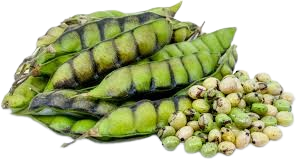
Pigeon peas are a perennial legume from the Fabaceae family and are widely cultivated in tropical and subtropical regions. There are only 1.7 calories in a pigeon pea seed (0.5g) but serving sizes impact the total count, with a small boiled portion (82g) containing 99 calories and a large boiled serving (165g) providing 200 calories. Raw forms of pigeon peas are denser, with a 100g portion of pigeon peas offering 343 calories. A standard serving of canned pigeon peas (76g) provides 84 calories, while one cup of boiled pigeon peas (165g) contains 200 calories. Retail brands vary, as Goya Canned Green Pigeon Peas (126g) provide 110 calories, and Iberia Pigeon Peas (100g) contain 107 calories.
An evaluation of pigeon peas nutrition facts highlights a food rich in complex carbohydrates and plant-based protein. A large boiled serving (165g) of pigeon peas supplies 38.4g of carbohydrates, which includes 11.1g of dietary fiber, alongside 11.2g of protein. The legume is notable for its mineral density, delivering 104mg of magnesium (25% DV) and 1.8mg of iron (10% DV) per large serving. Folate content is particularly high, with the same portion providing 182mcg (46% DV), supporting cellular function. Potassium levels are also significant, offering 634mg (13% DV) to aid in fluid balance.
International supply depends on tropical agriculture, with India leading production by yielding over 4.3 million tonnes annually. This output meets substantial demand in major markets, where India also imported over $550 million in dried pigeon peas in 2022 to supplement domestic crops. Within these regions, the legume serves as a core ingredient in at least three distinct cooking styles, featuring in Puerto Rican Arroz con Gandules, Indian Sambar, and Jamaican Rice and Peas. Rising agricultural costs and sustained demand have driven retail prices upward, with a pound of dried peas increasing from under $1.19 in the early 2000s to over $3.49 after 2020. Menu prices reflect this trend, as a Sambar/Rice Meal at Saravana Bhavan moved from $9.00 in 2013 to between $10.91 and $16.00 in 2024.
Pigeon peas are considered a superfood due to the dense concentration of protein and potassium. This mineral profile aligns with American Heart Association guidelines for managing blood pressure. Nutritionists recommend including pigeon peas and other similar legumes in meals 2-3 times per week. A large serving of pigeon peas contains 200 calories, an energy amount that requires 20 minutes of running or 25 minutes of swimming to burn. Individuals with sensitive digestion should limit intake to smaller portions to avoid bloating caused by anti-nutrients.
Pigeon Peas nutrition
| Stats | Weight |
|---|---|
| Carbs | 23.3 grams |
| Protein | 6.8 grams |
| Fats | 0 grams |
| Sugars | 0.5 grams |
- Large Pigeon Peas Calories (Nutritional Facts)
- Medium Pigeon Peas Calories (Nutritional Facts)
- Small Pigeon Peas Calories (Nutritional Facts)
- Canned Pigeon Peas Calories (Nutritional Facts)
- Raw Pigeon Peas Nutrition
- Sodium in Pigeon Peas
- Magnesium in Pigeon Peas
- Potassium in Pigeon Peas
- Sugar in Pigeon Peas
- Zinc in Pigeon Peas
- Fiber in Pigeon Peas
- Protein in Pigeon Peas
- Carbs in Pigeon Peas
- Fat in Pigeon Peas
- Vitamins in Pigeon Peas
- Minerals in Pigeon Peas
Large Pigeon Peas Calories (Nutritional Facts)
A large serving of boiled pigeon peas (165g or 5.8oz) contains 200 calories, 11.2g of protein, 0.6g of fat, 38.4g of carbohydrates, 11.1g of fiber, 0.8g of sugar, and 8mg of sodium.
A medium serving of boiled pigeon peas (100g or 3.5oz) provides 121 calories, 6.8g of protein, 0.4g of fat, 23.3g of carbohydrates, 6.7g of fiber, 0.5g of sugar, and 5mg of sodium.
A small serving of boiled pigeon peas (82g or 2.9oz) contains 99 calories, 5.6g of protein, 0.3g of fat, 19.1g of carbohydrates, 5.5g of fiber, 0.4g of sugar, and 4mg of sodium.
A serving of canned pigeon peas (76g or 2.7oz) provides 84 calories, 4.5g of protein, 1.03g of fat, 14.7g of carbohydrates, 4.7g of fiber, 1.9g of sugar, and 188mg of sodium. The canning liquid contributes to the sodium content, which is significantly higher than fresh varieties.
A large serving of raw pigeon peas (165g or 5.8oz) provides 566 calories, 35.8g of protein, 2.5g of fat, 103.6g of carbohydrates, 24.8g of fiber, 2.5g of sugar, and 28mg of sodium. A medium serving of raw pigeon peas (100g or 3.5oz) contains 343 calories, 21.7g of protein, 1.5g of fat, 62.8g of carbohydrates, 15g of fiber, 1.5g of sugar, and 17mg of sodium. A small serving of raw pigeon peas (82g or 2.9oz) provides 281 calories, 17.8g of protein, 1.2g of fat, 51.5g of carbohydrates, 12.3g of fiber, 1.2g of sugar, and 14mg of sodium.
A large serving of boiled pigeon peas (165g) contains 8mg of sodium (0% DV). A medium serving of boiled pigeon peas (100g) has 5mg of sodium (0% DV). A small serving of boiled pigeon peas (82g) contains 4mg of sodium (0% DV). A large serving of raw pigeon peas (165g) provides 28mg of sodium (1% DV). A medium serving of raw pigeon peas (100g) has 17mg of sodium (1% DV). A small serving of raw pigeon peas (82g) contains 14mg of sodium (1% DV). A serving of canned pigeon peas (76g) contains 188mg of sodium (8% DV).
A large serving of boiled pigeon peas (165g) provides 104mg of magnesium (25% DV). A medium serving of boiled pigeon peas (100g) has 63mg of magnesium (15% DV). A small serving of boiled pigeon peas (82g) contains 52mg of magnesium (12% DV). A large serving of raw pigeon peas (165g) provides 302mg of magnesium (72% DV). A medium serving of raw pigeon peas (100g) has 183mg of magnesium (44% DV). A small serving of raw pigeon peas (82g) contains 150mg of magnesium (36% DV).
A large serving of boiled pigeon peas (165g) contains 634mg of potassium (13% DV). A medium serving of boiled pigeon peas (100g) has 384mg of potassium (8% DV). A small serving of boiled pigeon peas (82g) contains 315mg of potassium (7% DV). A large serving of raw pigeon peas (165g) provides 2,297mg of potassium (49% DV). A medium serving of raw pigeon peas (100g) has 1,392mg of potassium (30% DV). A small serving of raw pigeon peas (82g) contains 1,141mg of potassium (24% DV). A serving of canned pigeon peas (76g) contains 344mg of potassium (7% DV).
A large serving of boiled pigeon peas (165g) contains 0.8g of sugar. A medium serving of boiled pigeon peas (100g) has 0.5g of sugar. A small serving of boiled pigeon peas (82g) contains 0.4g of sugar. A large serving of raw pigeon peas (165g) provides 2.5g of sugar. A medium serving of raw pigeon peas (100g) has 1.5g of sugar. A small serving of raw pigeon peas (82g) contains 1.2g of sugar. A serving of canned pigeon peas (76g) contains 1.9g of sugar.
A large serving of boiled pigeon peas (165g) provides 1.5mg of zinc (14% DV). A medium serving of boiled pigeon peas (100g) has 0.9mg of zinc (8% DV). A small serving of boiled pigeon peas (82g) contains 0.7mg of zinc (6% DV). A large serving of raw pigeon peas (165g) provides 4.5mg of zinc (41% DV). A medium serving of raw pigeon peas (100g) has 2.7mg of zinc (25% DV). A small serving of raw pigeon peas (82g) contains 2.2mg of zinc (20% DV).
A large serving of boiled pigeon peas (165g) provides 11.1g of dietary fiber (40% DV). A medium serving of boiled pigeon peas (100g) has 6.7g of fiber (24% DV). A small serving of boiled pigeon peas (82g) contains 5.5g of fiber (20% DV). A large serving of raw pigeon peas (165g) provides 24.8g of fiber (89% DV). A medium serving of raw pigeon peas (100g) has 15g of fiber (54% DV). A small serving of raw pigeon peas (82g) contains 12.3g of fiber (44% DV). A serving of canned pigeon peas (76g) contains 4.7g of fiber (17% DV).
A large serving of boiled pigeon peas (165g) provides 11.2g of protein (22% DV). A medium serving of boiled pigeon peas (100g) has 6.8g of protein (14% DV). A small serving of boiled pigeon peas (82g) contains 5.6g of protein (11% DV). A large serving of raw pigeon peas (165g) provides 35.8g of protein (72% DV). A medium serving of raw pigeon peas (100g) has 21.7g of protein (43% DV). A small serving of raw pigeon peas (82g) contains 17.8g of protein (36% DV). A serving of canned pigeon peas (76g) contains 4.5g of protein (9% DV).
A large serving of boiled pigeon peas (165g) contains 38.4g of carbohydrates (14% DV). A medium serving of boiled pigeon peas (100g) has 23.3g of carbohydrates (8% DV). A small serving of boiled pigeon peas (82g) contains 19.1g of carbohydrates (7% DV). A large serving of raw pigeon peas (165g) provides 103.6g of carbohydrates (38% DV). A medium serving of raw pigeon peas (100g) has 62.8g of carbohydrates (23% DV). A small serving of raw pigeon peas (82g) contains 51.5g of carbohydrates (19% DV). A serving of canned pigeon peas (76g) contains 14.7g of carbohydrates (5% DV).
A large serving of boiled pigeon peas (165g) contains 0.6g of total fat (1% DV). A medium serving of boiled pigeon peas (100g) has 0.4g of total fat (1% DV). A small serving of boiled pigeon peas (82g) contains 0.3g of total fat (0% DV). A large serving of raw pigeon peas (165g) provides 2.5g of total fat (3% DV). A medium serving of raw pigeon peas (100g) has 1.5g of total fat (2% DV). A small serving of raw pigeon peas (82g) contains 1.2g of total fat (2% DV). A serving of canned pigeon peas (76g) contains 1g of total fat (1% DV).
A large serving of boiled pigeon peas (165g) provides 0mg of Vitamin C (0% DV) and 182mcg of folate (46% DV). A medium serving of boiled pigeon peas (100g) provides 0mg of Vitamin C (0% DV) and 110mcg of folate (28% DV). A small serving of boiled pigeon peas (82g) provides 0mg of Vitamin C (0% DV) and 90mcg of folate (23% DV). A large serving of raw pigeon peas (165g) provides 0mg of Vitamin C (0% DV) and 752mcg of folate (188% DV). A medium serving of raw pigeon peas (100g) has 0mg of Vitamin C (0% DV) and 456mcg of folate (114% DV). A small serving of raw pigeon peas (82g) contains 0mg of Vitamin C (0% DV) and 374mcg of folate (94% DV).
A large serving of boiled pigeon peas (165g) provides 1.8mg of iron (10% DV), 71mg of calcium (5% DV), and 196mg of phosphorus (16% DV). A medium serving of boiled pigeon peas (100g) provides 1.1mg of iron (6% DV), 43mg of calcium (3% DV), and 119mg of phosphorus (10% DV). A small serving of boiled pigeon peas (82g) provides 0.9mg of iron (5% DV) and 35mg of calcium (3% DV). A large serving of raw pigeon peas (165g) provides 8.6mg of iron (48% DV), 215mg of calcium (17% DV), and 606mg of phosphorus (48% DV). A medium serving of raw pigeon peas (100g) has 5.2mg of iron (29% DV), 130mg of calcium (10% DV), and 367mg of phosphorus (29% DV). A small serving of raw pigeon peas (82g) contains 4.3mg of iron (24% DV), 107mg of calcium (8% DV), and 301mg of phosphorus (24% DV).
Get a Custom Report on Pigeon Peas Nutrition Data – Contact Us!
What are the Types of Pigeon Peas?
The types of pigeon peas are Fresh (Green), Dried (Mature), and Split (Toor Dal). These variations are distinguished by the stage of harvest and the processing method used to prepare the seed. The following chart provides details on these common pigeon pea styles.
| Type | Description | Calories (Approximate per 100g) | Calorie Qualifications |
|---|---|---|---|
|
Fresh Pigeon Peas (Green)
|
Harvested while the pod is still green and the seed is immature. | 136 | The standard calorie count reflects the raw, hydrated seed. |
|
Dried Pigeon Peas (Mature)
|
Fully matured seeds that have been dehydrated for storage. | 343 | The removal of water concentrates the macronutrients, significantly increasing energy density. |
|
Split Pigeon Peas (Toor Dal)
|
Dried, skinned, and split seeds used primarily in Indian cooking. | 335 | The removal of the skin slightly alters the fiber content but maintains high calorie density. |
What are the Main Dishes With Pigeon Peas?
Pigeon peas serve as a primary protein source in rice dishes, stews, and soups across Caribbean, Indian, and African cuisines. The bean's nutty flavor pairs well with coconut milk and spices. A list of main dishes featuring pigeon peas is provided below.
| Dish Name | Calories (Estimate per serving) | Type of Dish | Carbs (g) (Estimate) | Sugar (g) (Estimate) | Protein (g) (Estimate) | Fat (g) (Estimate) | Cuisine | Restaurants |
|---|---|---|---|---|---|---|---|---|
|
Arroz con Gandules
|
350 | Rice Dish | 55 | 3 | 8 | 10 | Puerto Rican | La Fonda Boricua (New York, NY) |
|
Toor Dal Tadka
|
280 | Stew | 35 | 2 | 12 | 10 | Indian | Sahib (New York, NY) |
|
Pelau
|
450 | One-Pot Meal | 50 | 4 | 25 | 15 | Trinidadian | Pearl's (Brooklyn, NY) |
|
Sambar
|
180 | Stew | 25 | 3 | 8 | 6 | Indian | Saravana Bhavan (Global) |
|
Rice and Peas (Gungo Peas)
|
320 | Rice Dish | 45 | 2 | 8 | 12 | Jamaican | The Door (Queens, NY) |
|
Moro de Gandules
|
340 | Rice Dish | 52 | 2 | 9 | 10 | Dominican | El Malecon (New York, NY) |
|
Pigeon Pea Soup
|
220 | Soup | 30 | 3 | 10 | 6 | Caribbean | Golden Krust |
|
Bisi Bele Bath
|
400 | Rice Dish | 55 | 4 | 10 | 14 | Indian | MTR (Global) |
|
Kitchari (with Toor Dal)
|
300 | Porridge | 40 | 2 | 12 | 8 | Indian | Divya's Kitchen (New York, NY) |
|
Asopao de Gandules
|
380 | Stew | 45 | 3 | 12 | 16 | Puerto Rican | Casa Adela (New York, NY) |
|
Kachori (Dal Filling)
|
260 | Snack/Main | 30 | 2 | 6 | 14 | Indian | Rajbhog Sweets (National) |
|
Pigeon Peas and Rice (Bahamian)
|
330 | Rice Dish | 48 | 2 | 8 | 11 | Bahamian | Bahama Breeze |
|
Rasam
|
120 | Soup | 15 | 1 | 4 | 5 | Indian | Anjappar (Global) |
|
Vegetable Korma (with Dal)
|
350 | Stew | 25 | 6 | 8 | 22 | Indian | Amber India (San Francisco, CA) |
|
Gandules Guisados
|
240 | Stew | 28 | 3 | 10 | 10 | Puerto Rican | Sofrito (New York, NY) |
What are Desserts With Pigeon Peas?
Pigeon peas appear infrequently in dessert menus compared to other beans, but specific Caribbean and Indian traditions utilize the legume in sweetened puddings or pastes. The list below catalogs sweet dishes that feature pigeon peas.
| Dish Name | Calories (Estimate per serving) | Type of Dessert | Carbs (g) (Estimate) | Sugar (g) (Estimate) | Protein (g) (Estimate) | Fat (g) (Estimate) | Cuisine | Restaurants |
|---|---|---|---|---|---|---|---|---|
|
Sweet Pigeon Pea Paste
|
250 | Pudding | 45 | 25 | 6 | 5 | Caribbean | Local Bakeries (Puerto Rico) |
|
Hayagreeva (Sweet Dal)
|
320 | Pudding | 50 | 30 | 8 | 10 | Indian | MTR (Bangalore/Global) |
|
Obbattu (Holige)
|
280 | Sweet Flatbread | 40 | 15 | 6 | 8 | Indian | Mane Holige (Various Locations) |
|
Gandules con Dulce
|
260 | Pudding | 42 | 28 | 5 | 8 | Dominican | El Malecon (New York, NY) |
|
Puran Poli
|
290 | Sweet Flatbread | 45 | 18 | 7 | 6 | Indian | Kailash Parbat (New York, NY) |
|
Sweet Adzuki Style Pigeon Peas
|
200 | Paste | 35 | 15 | 8 | 1 | Fusion | Experimental |
|
Coconut Pigeon Pea Pudding
|
310 | Pudding | 30 | 22 | 5 | 18 | Caribbean Fusion | Bahama Breeze |
|
Toor Dal Payasam
|
350 | Pudding | 48 | 35 | 8 | 12 | Indian | Saravana Bhavan (Global) |
|
Sweet Bean Bun (Variation)
|
220 | Pastry | 38 | 12 | 6 | 4 | Asian Fusion | 85°C Bakery Cafe |
|
Pigeon Pea Ice Cream
|
240 | Frozen Dessert | 25 | 20 | 4 | 14 | Experimental | Salt & Straw |
What Cuisines Prefer Pigeon Peas the Most?
Pigeon peas function as a foundational staple in Indian, Caribbean, and African culinary traditions. The table below displays the culinary settings where pigeon peas are a signature item.
| Cuisine | Dish | Types of Peas Used | Calories (Estimate) | Restaurant |
|---|---|---|---|---|
|
Puerto Rican
|
Arroz con Gandules | Fresh/Canned Green | 350 | La Fonda Boricua (New York, NY) |
|
Indian (South)
|
Sambar | Split (Toor Dal) | 180 | Saravana Bhavan (Global) |
|
Jamaican
|
Rice and Peas | Dried/Canned Brown | 320 | The Door (Queens, NY) |
|
Trinidadian
|
Pelau | Fresh/Canned Green | 450 | Pearl's (Brooklyn, NY) |
|
Dominican
|
Moro de Gandules | Canned Green | 340 | El Malecon (New York, NY) |
|
Indian (North)
|
Dal Tadka | Split (Toor Dal) | 280 | Sahib (New York, NY) |
|
Kenyan
|
Mbaazi za Nazi | Dried/Fresh | 300 | Swahili Village (Washington, D.C.) |
|
Bahamian
|
Peas n' Rice | Canned/Dried | 330 | Bahama Breeze |
|
Guyanese
|
Cook-up Rice | Dried/Fresh | 400 | Sybil's Bakery (Queens, NY) |
|
Haitian
|
Diri ak Pwa Kongo | Dried/Fresh | 320 | La Caye (Brooklyn, NY) |
Which Countries Produce the Most Pigeon Peas?
The top producers of pigeon peas are India, Myanmar, and Malawi. The plant grows abundantly in semi-arid tropical climates, where local agricultural systems utilize the crop for both dal production and export. The table below shows the production quantity of pigeon peas in key countries.
| Country | 2003 | 2008 | 2013 | 2018 | 2019 | 2020 | 2021 | 2022 |
|---|---|---|---|---|---|---|---|---|
| India | 2,400,000 | 2,500,000 | 3,000,000 | 3,800,000 | 3,900,000 | 4,000,000 | 4,200,000 | 4,300,000 |
| Myanmar | 500,000 | 600,000 | 800,000 | 900,000 | 850,000 | 800,000 | 750,000 | 700,000 |
| Malawi | 150,000 | 200,000 | 300,000 | 400,000 | 420,000 | 450,000 | 480,000 | 500,000 |
| Tanzania | 100,000 | 150,000 | 200,000 | 250,000 | 260,000 | 270,000 | 280,000 | 300,000 |
| Haiti | 50,000 | 60,000 | 70,000 | 80,000 | 85,000 | 90,000 | 95,000 | 100,000 |
Which Countries Consume the Most Pigeon Peas?
The top consumers of pigeon peas are India, Kenya, and the Caribbean nations. Consumption is highest in regions where the legume is a primary protein source. The table below shows import values for dried pigeon peas in key markets, reflecting the demand in non-sufficient producing regions.
| Country | 2003 | 2008 | 2013 | 2018 | 2019 | 2020 | 2021 | 2022 |
|---|---|---|---|---|---|---|---|---|
| India | 100,000 | 150,000 | 300,000 | 400,000 | 420,000 | 450,000 | 500,000 | 550,000 |
| United Arab Emirates | 10,000 | 20,000 | 30,000 | 40,000 | 45,000 | 50,000 | 55,000 | 60,000 |
| United States | 8,000 | 12,000 | 18,000 | 25,000 | 28,000 | 30,000 | 35,000 | 40,000 |
| United Kingdom | 5,000 | 8,000 | 12,000 | 15,000 | 16,000 | 18,000 | 20,000 | 22,000 |
| Canada | 3,000 | 5,000 | 8,000 | 10,000 | 11,000 | 12,000 | 14,000 | 16,000 |
How Do Prices of Pigeon Peas-Including Dishes Change?
The cost of dishes featuring pigeon peas has increased significantly over the past decade, reflecting higher operational costs in restaurants and the rising price of imported legumes. The table below displays the price changes for specific menu items.
| Brand/Restaurant | Dish | Old Price (Year) | Current Price (2024/2025) |
|---|---|---|---|
| Saravana Bhavan (National) | Sambar/Rice Meal | $9.00 (2013) | $10.91 - $16.00 |
| The Door (Queens, NY) | Rice and Peas (Side) | $4.00 (2014) | $6.00 - $8.70 |
| Bahama Breeze | Rice and Beans (Side) | $2.99 (2015) | $3.99 - $4.49 |
| Sahib (New York, NY) | Yellow Dal Tadka | $12.00 (2014) | $18.00 - $21.99 |
| El Malecon (New York, NY) | Moro de Gandules | $2.00 (2013) | $3.50 - $8.00 |
What is the Pigeon Peas Calorie for 100 Grams?
A 100g serving of raw pigeon peas contains 343 calories, while a 100g serving of boiled pigeon peas provides 121 calories.
What is the Pigeon Peas Calorie for 1 KG?
One kilogram (1000g) of raw pigeon peas contains 3,430 calories, whereas one kilogram (1000g) of boiled pigeon peas contains 1,210 calories.
What is the Calorie of 1 Pigeon Peas?
One single pigeon pea (0.5g) contains 1.7 calories, and one cup of boiled pigeon peas (165g) contains 200 calories. Commercial varieties vary, as a serving of Goya Canned Green Pigeon Peas (126g) provides 110 calories, while a serving of Iberia Pigeon Peas (100g) contains 107 calories.
What are the Health Benefits of Pigeon Peas?
The nutritional profile of pigeon peas is defined by the high concentration of plant protein, dietary fiber, and essential minerals found in the seeds. A description of the benefits is listed below.
- Supports Heart Health: The legume serves as a rich source of potassium, which acts as a vasodilator to reduce blood pressure. A study by Whelton, P. K., et al. (1997), "Effects of oral potassium on blood pressure," established that increased potassium intake lowers systolic and diastolic blood pressure, thereby reducing the risk of stroke and coronary heart disease.
- Enhances Metabolic Control: The vegetable contains complex carbohydrates and high fiber, which results in a low glycemic index. A study by Jenkins, D. J., et al. (2012), "Effect of legumes as part of a low glycemic index diet on glycemic control and cardiovascular risk factors in type 2 diabetes mellitus," found that legume consumption improved hemoglobin A1c levels and reduced cardiovascular risk in diabetic patients.
- Aids in Digestive Health: The peas provide a substantial amount of resistant starch and insoluble fiber, which promote bowel regularity. A review by Anderson, J. W., et al. (2009), "Health benefits of dietary fiber," confirmed that high-fiber diets significantly lower the prevalence of constipation and diverticular disease.
What are the Downsides of Pigeon Peas?
The vegetable's chemical composition presents specific health risks related to anti-nutrients and digestive discomfort. The table below shows the potential health risks associated with pigeon pea consumption.
- Presence of Anti-Nutrients: The raw seeds contain phytic acid and trypsin inhibitors, which can reduce the absorption of minerals like iron and zinc. A study by Gupta, R. K., et al. (2015), "Reduction of phytic acid and enhancement of bioavailable micronutrients in food grains," indicates that soaking and cooking significantly reduce these compounds. A safer alternative for those with sensitive digestion is zucchini or green beans. A suggested daily amount is to limit consumption to half a cup (82g) of cooked peas to prevent bloating.
Are Pigeon Peas Good for You?
Yes, pigeon peas are good for health because the legume offers a dense profile of protein, folate, and magnesium that supports multiple physiological systems. The high potassium content supports heart health by helping to regulate blood pressure and vascular function, as noted in the research by Whelton, P. K., et al. (1997), "Effects of oral potassium on blood pressure." The presence of folate supports cellular health by aiding in DNA synthesis and repair, a benefit highlighted by Bailey, L. B., & Gregory, J. F. (1999), "Folate metabolism and requirements." The vegetable also aids in metabolic health due to the low glycemic impact and high fiber density. A study by Jenkins, D. J., et al. (2012), "Effect of legumes as part of a low glycemic index diet," confirmed that legume consumption improves glycemic control.
How Do Calories Change According to Pigeon Peas Types?
The calorie count varies significantly between the hydrated and dehydrated forms of pigeon peas. A serving of Dried Pigeon Peas contains 343 calories per 100 grams, representing the highest energy density due to the lack of water. Split Pigeon Peas (Toor Dal) contain a similar value at 335 calories per 100 grams, as the processing removes only the outer hull. Fresh Pigeon Peas contain a moderate value at 136 calories per 100 grams, as the natural water content dilutes the macronutrients. Canned Pigeon Peas present the lowest profile at approximately 84 calories per 100 grams, a consequence of the beans absorbing water during the canning process and the inclusion of packing liquid.
What is the Origin of Pigeon Peas?
The history of pigeon peas traces back to the Indian subcontinent, where the plant Cajanus cajan was domesticated over 3,500 years ago. The crop spread to East Africa roughly 2,000 years ago, becoming a vital subsistence crop due to drought resistance. The vegetable reached the Americas during the Columbian exchange and the Atlantic slave trade, establishing itself as a staple in the Caribbean. The global spread occurred due to the plant's nitrogen-fixing abilities, leading to the classification of the legume as a critical crop for soil health and human nutrition in tropical regions.
Explore More Legumes
Discover more Legumes with detailed nutrition facts, calorie counts, vitamins, minerals, and health benefits. Compare similar foods, serving sizes, macronutrients, and key nutrients to find the best option for your diet and nutrition goals.
 Arhar Dal calories
 Black beans calories
 Black-Eyed Peas calories
 Cannellini Beans calories
 Chickpea Flour calories
 Cream Bean calories
 Edamame calories
 Fava Beans calories
 Hummus calories
 Lentils calories
 Lupini Beans calories
 Mung Beans calories