Calories and Nutritions in Edamame
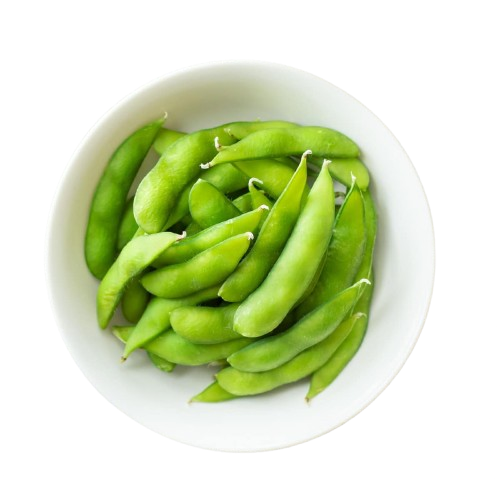
Edamame is a popular ingredient in East Asian cuisine, especially in Japanese appetizers. The calories in an edamame pod (2.5g edible portion) are low, providing only 3 calories. A small serving of boiled edamame (50g) contains 61 calories while a large serving of boiled edamame (155g) provides188 calories. A standard 100g portion of raw shelled edamame beans contains 109 calories, while a 100g portion of boiled shelled beans provides 121 calories. One cup of shelled edamame (155g) contains 188 calories, while a serving of Seapoint Farms Edamame (85g) has 100 calories, and Bird's Eye Steamfresh Edamame (85g) also contains 100 calories.
An assessment of the edamame nutrition facts reveals a food characterized by a complete protein profile and high fiber content relative to the moderate caloric load. A large serving of boiled edamame (155g) delivers 13.8g of carbohydrates, including 8.1g of dietary fiber, 18.4g of protein, and 8.1g of fat. The legume distinguishes itself through a rich micronutrient profile, providing 9.5mg of Vitamin C (11% DV) and 3.6mg of iron (20% DV) per large serving. The mineral content proves substantial as well, offering 98mg of calcium (8% DV) and 676mg of potassium (14% DV), supporting bone density and muscle function. Edamame beans also contain potent phytochemicals such as isoflavones, specifically genistein and daidzein, which function as antioxidants and support hormonal balance.
Edamame’s global availability relies on the agricultural sector, with major producers like China yielding over 13.5 million tonnes of green soybeans annually. This cultivation meets significant demand in key markets, where the United States alone imported over $110 million in frozen edamame in 2022. Edamame beans function as a staple ingredient in at least three distinct global cuisines, appearing in Japanese dishes, Chinese stir-fries, and Hawaiian poke bowls. This consistent demand and rising cold chain costs are reflected in the retail pricing, with a 12oz bag of frozen edamame climbing from under $1.99 in the early 2000s to over $3.99 after 2020. Menu prices mirror this economic shift, as an edamame appetizer on P.F. Chang's menu moved from $5.95 in 2016 to between $8.50 and $10.99 in 2024/2025.
Health experts advise incorporating edamame beans into diets at least twice a week. A single large serving of boiled shelled edamame provides 188 calories, an amount that requires 19 minutes of running or 24 minutes of swimming to burn.
Edamame nutrition
| Stats | Weight |
|---|---|
| Carbs | 7.1 grams |
| Protein | 9.5 grams |
| Fats | 0 grams |
| Sugars | 1.8 grams |
- Large Edamame Calories (Nutritional Facts)
- Medium Edamame Calories (Nutritional Facts)
- Small Edamame Calories (Nutritional Facts)
- Shelled Edamame Calories (Nutritional Facts)
- Boiled Edamame Calories (Nutritional Facts)
- Raw Edamame Nutrition
- Sodium in Edamame
- Potassium in Edamame
- Sugar in Edamame
- Fiber in Edamame
- Protein in Edamame
- Carbs in Edamame
- Fat in Edamame
- Vitamins in Edamame
- Minerals in Edamame
Large Edamame Calories (Nutritional Facts)
A large serving of boiled shelled edamame (155g or 5.5oz) contains 188 calories, 18.4g of protein, 8.1g of fat, 13.8g of carbohydrates, 8.1g of fiber, 3.4g of sugar, and 9mg of sodium. A large serving of raw shelled edamame (155g or 5.5oz) provides 169 calories, 17.4g of protein, 7.3g of fat, 11.8g of carbohydrates, 7.4g of fiber, 3.9g of sugar, and 9mg of sodium.
A medium serving of boiled shelled edamame (80g or 2.8oz) provides 97 calories, 9.5g of protein, 4.2g of fat, 7.1g of carbohydrates, 4.2g of fiber, 1.8g of sugar, and 5mg of sodium. A medium serving of raw shelled edamame (80g or 2.8oz) contains 87 calories, 9g of protein, 3.8g of fat, 6.1g of carbohydrates, 3.8g of fiber, 2g of sugar, and 5mg of sodium.
A small serving of boiled shelled edamame (50g or 1.8oz) contains 61 calories, 6g of protein, 2.6g of fat, 4.5g of carbohydrates, 2.6g of fiber, 1.1g of sugar, and 3mg of sodium. A small serving of raw shelled edamame (50g or 1.8oz) provides 55 calories, 5.6g of protein, 2.4g of fat, 3.8g of carbohydrates, 2.4g of fiber, 1.3g of sugar, and 3mg of sodium.
A typical serving of raw shelled edamame (100g or 3.5oz) contains 109 calories, 11.2g of protein, 4.7g of fat, 7.6g of carbohydrates, 4.8g of fiber, 2.5g of sugar, and 6mg of sodium. The removal of the fibrous pod allows for direct consumption of the nutrient-dense bean.
A typical serving of boiled shelled edamame (100g or 3.5oz) prepared without salt contains 121 calories, 11.9g of protein, 5.2g of fat, 8.9g of carbohydrates, 5.2g of fiber, 2.2g of sugar, and 6mg of sodium. Boiling increases the moisture content slightly while making the complex proteins more digestible.
Raw edamame provides 109 calories per 100g serving, alongside 11.2g of protein and 4.7g of fat. The vegetable contains 7.6g of carbohydrates, which includes 4.8g of dietary fiber and 2.5g of sugar. This food delivers 9.7mg of Vitamin C (11% DV) and 2.1mg of iron (12% DV) per serving. The beans also supply 60mg of calcium (5% DV) and 482mg of potassium (10% DV) without contributing significant sodium.
A large serving of boiled shelled edamame (155g) contains 9mg of sodium (0% DV). A medium serving of boiled shelled edamame (80g) has 5mg of sodium (0% DV). A small serving of boiled shelled edamame (50g) contains 3mg of sodium (0% DV). A serving of raw shelled edamame (100g) contains 6mg of sodium (0% DV). A serving of boiled shelled edamame (100g) provides 6mg of sodium (0% DV).
A large serving of boiled shelled edamame (155g) contains 676mg of potassium (14% DV). A medium serving of boiled shelled edamame (80g) has 349mg of potassium (7% DV). A small serving of boiled shelled edamame (50g) contains 218mg of potassium (5% DV). A serving of raw shelled edamame (100g) contains 482mg of potassium (10% DV). A serving of boiled shelled edamame (100g) provides 436mg of potassium (9% DV).
A large serving of boiled shelled edamame (155g) contains 3.4g of sugar. A medium serving of boiled shelled edamame (80g) has 1.8g of sugar. A small serving of boiled shelled edamame (50g) contains 1.1g of sugar. A serving of raw shelled edamame (100g) contains 2.5g of sugar. A serving of boiled shelled edamame (100g) provides 2.2g of sugar.
A large serving of boiled shelled edamame (155g) provides 8.1g of dietary fiber (29% DV). A medium serving of boiled shelled edamame (80g) has 4.2g of fiber (15% DV). A small serving of boiled shelled edamame (50g) contains 2.6g of fiber (10% DV). A serving of raw shelled edamame (100g) contains 4.8g of fiber (17% DV). A serving of boiled shelled edamame (100g) provides 5.2g of fiber (19% DV).
A large serving of boiled shelled edamame (155g) provides 18.4g of protein (37% DV). A medium serving of boiled shelled edamame (80g) has 9.5g of protein (19% DV). A small serving of boiled shelled edamame (50g) contains 6g of protein (12% DV). A serving of raw shelled edamame (100g) contains 11.2g of protein (22% DV). A serving of boiled shelled edamame (100g) provides 11.9g of protein (24% DV).
A large serving of boiled shelled edamame (155g) contains 13.8g of carbohydrates (5% DV). A medium serving of boiled shelled edamame (80g) has 7.1g of carbohydrates (3% DV). A small serving of boiled shelled edamame (50g) contains 4.5g of carbohydrates (2% DV). A serving of raw shelled edamame (100g) contains 7.6g of carbohydrates (3% DV). A serving of boiled shelled edamame (100g) provides 8.9g of carbohydrates (3% DV).
A large serving of boiled shelled edamame (155g) contains 8.1g of total fat (11% DV). A medium serving of boiled shelled edamame (80g) has 4.2g of total fat (6% DV). A small serving of boiled shelled edamame (50g) contains 2.6g of total fat (4% DV). A serving of raw shelled edamame (100g) contains 4.7g of total fat (6% DV). A serving of boiled shelled edamame (100g) provides 5.2g of total fat (7% DV).
A large serving of boiled shelled edamame (155g) provides 9.5mg of Vitamin C (11% DV). A medium serving of boiled shelled edamame (80g) provides 4.9mg of Vitamin C (6% DV). A small serving of boiled shelled edamame (50g) provides 3.1mg of Vitamin C (4% DV). A serving of raw shelled edamame (100g) contains 9.7mg of Vitamin C (11% DV). A serving of boiled shelled edamame (100g) provides 6.1mg of Vitamin C (7% DV).
A large serving of boiled shelled edamame (155g) provides 98mg of calcium (8% DV), 3.6mg of iron (20% DV), and 262mg of phosphorus (22% DV). A medium serving of boiled shelled edamame (80g) provides 50mg of calcium (4% DV), 1.8mg of iron (10% DV), and 135mg of phosphorus (11% DV). A small serving of boiled shelled edamame (50g) provides 32mg of calcium (3% DV), 1.2mg of iron (7% DV), and 85mg of phosphorus (7% DV). A serving of raw shelled edamame (100g) contains 60mg of calcium (5% DV). A serving of boiled shelled edamame (100g) provides 63mg of calcium (5% DV).
Get a Custom Report on Edamame Nutrition Data – Contact Us!
What are the Types of Edamame?
The types of edamame are Fresh (In Pod), Frozen (In Pod), and Shelled (Mukimame). These variations are distinguished by the processing method and convenience of consumption. The following chart provides details on these common edamame styles.
| Type | Description | Calories (per 100g) | Calorie Qualifications |
|---|---|---|---|
|
Fresh Edamame (In Pod)
|
Whole immature soybean pods harvested fresh and sold on the stalk or in bags. | 109 | The standard calorie count reflects the raw bean inside the pod. |
|
Frozen Edamame (In Pod)
|
Blanched and flash-frozen pods, often sold in bags for steaming or microwaving. | 110 | The blanching process preserves the nutrient density with negligible calorie change. |
|
Shelled Edamame (Mukimame)
|
Beans removed from the pod and frozen, ready for immediate use in salads or cooking. | 121 | The removal of the pod and potential blanching results in a slightly higher density per weight. |
What are Desserts With Edamame?
Edamame serves as a sweet and nutty base for pastes, mochi fillings, and ice creams in Japanese cuisine. The bean's vibrant green color and smooth texture make the ingredient ideal for confectionery. The list below catalogs sweet dishes utilizing edamame.
| Dish Name | Calories (Estimate per serving) | Type of Dessert | Carbs (g) (Estimate) | Sugar (g) (Estimate) | Protein (g) (Estimate) | Fat (g) (Estimate) | Cuisine | Restaurants |
|---|---|---|---|---|---|---|---|---|
|
Zunda Mochi
|
220 | Rice Cake | 45 | 15 | 4 | 2 | Japanese | Minamoto Kitchoan |
|
Edamame Ice Cream
|
250 | Frozen Dessert | 25 | 20 | 5 | 14 | Japanese Fusion | Chinatown Ice Cream Factory |
|
Zunda Shake
|
350 | Beverage | 50 | 40 | 8 | 12 | Japanese | Mitsuwa Marketplace |
|
Edamame Cheesecake
|
400 | Cake | 35 | 25 | 8 | 25 | Fusion | Spot Dessert Bar |
|
Sweet Edamame Paste (Zunda)
|
150 | Filling/Topping | 25 | 15 | 6 | 3 | Japanese | Oishinbo |
|
Edamame Chocolate Truffles
|
180 | Confection | 15 | 12 | 3 | 10 | Fusion | Royce' Chocolate |
|
Edamame Pudding
|
200 | Pudding | 30 | 18 | 6 | 5 | Asian Fusion | Mango Mango Dessert |
|
Candied Edamame
|
140 | Snack | 18 | 12 | 5 | 4 | Modern American | Nuts.com |
|
Edamame Smoothie
|
180 | Beverage | 25 | 15 | 10 | 4 | Health | Jamba |
|
Edamame Mont Blanc
|
320 | Pastry | 40 | 22 | 5 | 14 | Japanese French | Patisserie Tomoko |
What are the Main Dishes With Edamame?
Edamame serves as a primary protein source in salads, stir-fries, and grain bowls across Asian and modern health-focused cuisines. The bean's firm texture holds up well in cooked dishes. A registry of savory entrees incorporating edamame is presented below.
| Dish Name | Calories (Estimate per serving) | Type of Dish | Carbs (g) (Estimate) | Sugar (g) (Estimate) | Protein (g) (Estimate) | Fat (g) (Estimate) | Cuisine | Restaurants |
|---|---|---|---|---|---|---|---|---|
|
Edamame Poke Bowl
|
450 | Grain Bowl | 65 | 5 | 18 | 15 | Hawaiian/Japanese | Pokeworks |
|
Spicy Garlic Edamame
|
180 | Appetizer | 12 | 2 | 10 | 8 | Japanese | RA Sushi |
|
Edamame Fried Rice
|
350 | Rice Dish | 50 | 3 | 12 | 10 | Chinese | P.F. Chang's |
|
Edamame Dumplings
|
280 | Dim Sum | 35 | 2 | 8 | 10 | Asian Fusion | True Food Kitchen |
|
Succotash (with Edamame)
|
220 | Side Main | 25 | 4 | 8 | 8 | American Fusion | Yardbird |
|
Edamame Hummus Wrap
|
380 | Sandwich/Wrap | 45 | 3 | 14 | 16 | Health | Trader Joe's |
|
Soba Noodle Salad with Edamame
|
320 | Salad Main | 55 | 4 | 12 | 6 | Japanese | Mendocino Farms |
|
Kung Pao Edamame
|
250 | Stir Fry | 18 | 6 | 12 | 14 | Chinese Fusion | Pei Wei |
|
Edamame Falafel
|
300 | Vegetarian Main | 25 | 2 | 10 | 18 | Mediterranean Fusion | Cava |
|
Risotto with Edamame and Truffle
|
450 | Rice Dish | 50 | 2 | 14 | 20 | Italian Fusion | Nobu |
What Cuisines Prefer the Edamame Most?
Edamame functions as a foundational staple in Japanese, Chinese, and Hawaiian culinary traditions. The chart below identifies the specific food cultures where edamame serves as a key ingredient.
| Cuisine | Dish | Types of Edamame Used | Calories (Estimate) | Restaurant |
|---|---|---|---|---|
|
Japanese
|
Edamame Shioyude (Salted) | Fresh In Pod | 120 | Nobu |
|
Chinese
|
Maodou (Spiced Edamame) | Fresh In Pod | 150 | Din Tai Fung |
|
Hawaiian
|
Poke Bowl | Shelled Mukimame | 450 | Pokeworks |
|
American (Health)
|
Edamame Hummus | Shelled Mukimame | 200 | True Food Kitchen |
|
Korean
|
Kong-guksu (Soy Milk Noodle) | Shelled Mukimame | 400 | Cho Dang Gol |
|
Thai
|
Edamame Salad | Shelled Mukimame | 180 | Thai Express |
|
Vietnamese
|
Edamame Spring Rolls | Shelled Mukimame | 150 | Pho 2000 |
|
Fusion
|
Edamame Dumplings | Shelled Mukimame | 280 | Buddakan |
|
Vegan
|
Edamame Burger | Shelled Mukimame | 350 | Veggie Grill |
|
Izakaya
|
Charred Edamame | Fresh In Pod | 140 | Raku |
Which Countries Produce the Most Edamame?
The top producers of edamame are China, Taiwan, and Thailand. The plant grows abundantly in temperate climates, where local agricultural systems cultivate specific vegetable soybean varieties distinct from oilseed soybeans. The table below shows the production quantity of green soybeans in key countries.
| Country | 2003 | 2008 | 2013 | 2018 | 2019 | 2020 | 2021 | 2022 |
|---|---|---|---|---|---|---|---|---|
| China | 8,000,000 | 9,500,000 | 11,000,000 | 12,500,000 | 12,800,000 | 13,000,000 | 13,200,000 | 13,500,000 |
| Taiwan | 60,000 | 65,000 | 70,000 | 75,000 | 76,000 | 77,000 | 78,000 | 80,000 |
| Thailand | 40,000 | 45,000 | 50,000 | 55,000 | 56,000 | 57,000 | 58,000 | 60,000 |
| Indonesia | 20,000 | 25,000 | 30,000 | 35,000 | 36,000 | 37,000 | 38,000 | 40,000 |
| Japan | 50,000 | 45,000 | 40,000 | 35,000 | 34,000 | 33,000 | 32,000 | 30,000 |
Which Countries Consume the Most Edamame?
The top consumers of edamame are China, Japan, and the United States. Consumption is highest in East Asia where the vegetable is a traditional snack. The table below shows import values for frozen vegetable soybeans in key markets, reflecting the trade of this commodity.
| Country | 2003 | 2008 | 2013 | 2018 | 2019 | 2020 | 2021 | 2022 |
|---|---|---|---|---|---|---|---|---|
| United States | 25,000 | 40,000 | 60,000 | 80,000 | 85,000 | 90,000 | 100,000 | 110,000 |
| Japan | 150,000 | 180,000 | 200,000 | 220,000 | 225,000 | 230,000 | 240,000 | 250,000 |
| Netherlands | 5,000 | 10,000 | 15,000 | 25,000 | 28,000 | 30,000 | 35,000 | 40,000 |
| Canada | 3,000 | 5,000 | 8,000 | 12,000 | 13,000 | 14,000 | 16,000 | 18,000 |
| Australia | 2,000 | 4,000 | 6,000 | 9,000 | 10,000 | 11,000 | 12,000 | 14,000 |
How Do Prices of Edamame-Including Dishes Change?
The cost of dishes featuring edamame has increased significantly over the past decade, reflecting higher operational costs in restaurants and the rising price of imported soybeans. The table below illustrates the price evolution for specific restaurant offerings.
| Brand/Restaurant | Dish | Old Price (Year) | Current Price (2024/2025) |
|---|---|---|---|
| RA Sushi | Edamame (Appetizer) | $4.00 (2013) | $6.50 - $10.00 |
| P.F. Chang's | Edamame | $5.95 (2014) | $8.50 - $10.99 |
| Pokeworks | Spicy Ahi Poke Bowl (Regular) | $10.95 (2016) | $13.95 - $15.50 |
| Nobu | Edamame | $6.00 (2012) | $10.00 - $12.00 |
| True Food Kitchen | Edamame Dumplings | $9.00 (2014) | $13.50 - $14.95 |
| Pei Wei | Edamame | $3.99 (2013) | $5.09 - $6.99 |
What is the Edamame Calorie for 100 Grams?
A 100g serving of raw shelled edamame contains 109 calories, while a 100g serving of boiled shelled edamame contains 121 calories.
What is the Edamame Calorie for 1 KG?
One kilogram (1000g) of raw shelled edamame contains 1,090 calories, while one kilogram (1000g) of boiled shelled edamame contains 1,210 calories.
What is the Calorie of 1 Edamame?
One single edamame pod (2.5g edible portion) contains 3 calories. One cup of shelled edamame (155g) contains 188 calories. Commercial varieties vary slightly, as a serving of Seapoint Farms Edamame (85g) provides 100 calories, while a serving of Bird's Eye Steamfresh Edamame (85g) contains 100 calories.
What are the Health Benefits of Edamame?
The nutritional value of edamame is defined by the high concentration of soy protein, isoflavones, and dietary fiber found in the beans. A description of the benefits is listed below.
- Supports Cardiovascular Health: The beans serve as a rich source of plant protein and soluble fiber, which help lower LDL cholesterol levels. A meta-analysis by Anderson, J. W., et al. (1995), "Meta-analysis of the effects of soy protein intake on serum lipids," established that the consumption of soy protein significantly reduced serum concentrations of total cholesterol, LDL cholesterol, and triglycerides.
- Promotes Bone Density: The vegetable contains isoflavones, specifically genistein and daidzein, which mimic estrogen and support bone mineralization. A study by Ma, D. F., et al. (2008), "Soy isoflavone intake increases bone mineral density in the spine of menopausal women: Meta-analysis of randomized controlled trials," found that soy isoflavone supplementation significantly increased bone mineral density in the lumbar spine of menopausal women.
- Aids in Blood Sugar Regulation: The legume provides a low glycemic index carbohydrate source combined with high protein, which prevents insulin spikes. A study by Villegas, R., et al. (2008), "Legume and soy food intake and the incidence of type 2 diabetes in the Shanghai Women's Health Study," demonstrated an inverse association between the consumption of soy foods and the risk of developing type 2 diabetes.
What are the Downsides of Edamame?
The vegetable's chemical composition presents specific health risks for individuals with soy allergies or thyroid concerns. The table below shows the potential health risks associated with edamame consumption.
- Thyroid Function Interference: The beans contain goitrogens, substances that can interfere with iodine uptake in the thyroid gland. A review by Messina, M., & Redmond, G. (2006), "Effects of soy protein and soybean isoflavones on thyroid function in healthy adults and hypothyroid patients," noted that while soy foods do not affect thyroid function in healthy adults with adequate iodine intake, individuals with compromised thyroid function should monitor consumption. A safer alternative for those with sensitivity is green peas or lima beans. A suggested daily amount is to limit consumption to one cup (155g) to avoid potential hormonal disruptions.
Is Edamame Good for You?
Yes, edamame is good for health because the vegetable offers a complete protein profile, high fiber content, and essential micronutrients that support multiple physiological systems. The high potassium and magnesium content supports heart health by helping to regulate blood pressure and muscle function, as noted in the research by Weaver, C. M. (2013), "Potassium and health." The presence of isoflavones supports bone health by mitigating bone loss associated with aging, a benefit highlighted by Ma, D. F., et al. (2008), "Soy isoflavone intake increases bone mineral density in the spine of menopausal women." The vegetable also aids in metabolic health due to the low glycemic impact and high fiber density. A study by Anderson, J. W., et al. (1995), "Meta-analysis of the effects of soy protein intake on serum lipids," confirmed that substituting soy protein for animal protein lowers blood lipid levels.
Is Edamame Healthy?
Yes, edamame is healthy because the legume provides a complete source of plant-based protein containing all nine essential amino acids, along with vital vitamins and minerals. A review by Michelfelder, A. J. (2009), "Soy: A Complete Source of Protein," confirms that soy protein quality is equivalent to animal protein, making the food valuable for vegetarians and vegans. The antioxidant profile further contributes to cellular health. A study by Pratt, D., et al. (2006), " Source of antioxidants of soybeans and soy products," indicates that the bioactive compounds in soy can reduce oxidative stress. Concerns regarding hormonal effects are often overstated for moderate consumers. A meta-analysis by Hooper, L., et al. (2009), "Effects of soy protein and isoflavones on circulating hormone concentrations in pre- and post-menopausal women," found no significant effects on circulating reproductive hormones. A suggested consumption rate is to enjoy two to three servings per week as part of a balanced diet.
Is Edamame Good for Weight Loss?
Yes, edamame is good for weight loss because the high protein and fiber content promotes satiety and reduces overall calorie intake. A study by Leidy, H. J., et al. (2015), "The role of protein in weight loss and maintenance," demonstrates that higher protein diets improve appetite control and cardiometabolic risk factors. The dietary fiber contributes to a feeling of fullness. A review by Anderson, J. W., et al. (2009), "Health benefits of dietary fiber," links high fiber intake to lower body weight and reduced risk of obesity. Furthermore, soy-specific compounds may aid in metabolism. A study by Allison, D. B., et al. (2003), "A novel soy-based meal replacement formula for weight loss among obese individuals," found that soy-based diets were effective in promoting weight loss and reducing fat mass. A suggested consumption rate is to use a half-cup portion as a filling afternoon snack.
How Do Calories Change According to Edamame Types?
The calorie count remains relatively consistent across the fresh and frozen forms of edamame. A serving of Fresh Edamame contains 109 calories per 100 grams, representing the baseline for the raw bean. Frozen Edamame contains a nearly identical value at 110 calories per 100 grams, as the blanching process prior to freezing retains the macronutrient profile. Shelled Edamame, or Mukimame, presents a slightly higher density at 121 calories per 100 grams, a consequence of the removal of the pod and the concentration of the bean mass.
What is the Origin of Edamame?
The history of edamame traces back to China, where the soybean was first domesticated over 7,000 years ago. The first recorded reference to the term "maodou" (hairy bean) dates to 1275 in Japan, where the monk Nichiren wrote a note thanking a parishioner for the gift of edamame. The vegetable remained a local seasonal delicacy in East Asia for centuries, typically consumed as a snack with beer. The global spread occurred in the late 20th century with the sushi boom in the United States, leading to the classification of the bean as a mainstream health food.
Explore More Legumes
Discover more Legumes with detailed nutrition facts, calorie counts, vitamins, minerals, and health benefits. Compare similar foods, serving sizes, macronutrients, and key nutrients to find the best option for your diet and nutrition goals.
 Arhar Dal calories
 Black beans calories
 Black-Eyed Peas calories
 Cannellini Beans calories
 Chickpea Flour calories
 Cream Bean calories
 Fava Beans calories
 Hummus calories
 Lentils calories
 Lupini Beans calories
 Mung Beans calories
 Pigeon Peas calories