Calories and Nutritions in Lupini Beans
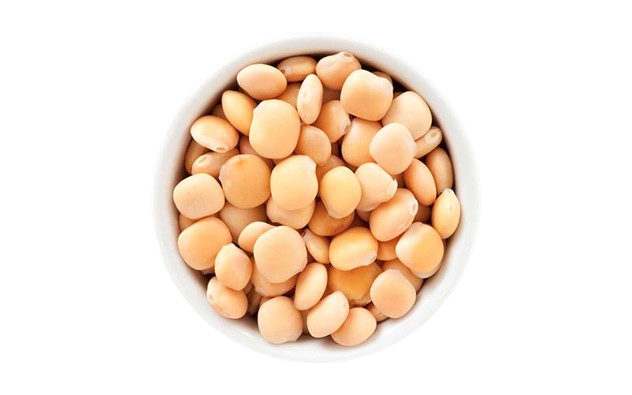
Lupini beans are the yellow legume seeds of the genus Lupinus, historically consumed in the Mediterranean basin. Lupini beans calories vary by preparation, with a small serving of boiled lupini beans (50g) containing 58 calories, and a small serving of raw beans (50g) offering 186 calories. A serving of ready-to-eat lupini beans (40g) provides 40 calories, while pickled beans (40g) also contain 40 calories. A standard serving of dried lupini beans (100g) has 371 calories, while 100g of boiled lupini beans provides 116 calories. One cup of boiled lupini beans (166g) contains 193 calories, while one cup of raw lupini beans (180g) provides 668 calories.
An evaluation of lupini beans nutrition facts highlights a food that is very rich in plant-based protein and dietary fiber. A large serving of boiled lupini beans (166g) supplies 15.4g of carbohydrates, which includes 4.6g of dietary fiber, alongside 25.8g of protein and 4.8g of fat. The legume is notable for its mineral density, delivering 212.5mg of phosphorus (17% DV) and 2mg of iron (11% DV) per large serving. Potassium levels are also significant, offering 406.7mg (9% DV) to aid in fluid balance, along with 84.7mg of calcium (7% DV) per serving.
International supply of lupini beans depends on extensive cultivation in temperate zones, with Australia leading production by yielding over 2.5 million tonnes annually. This output meets substantial demand in major markets, where the Netherlands imported over $50 million in lupini in 2022. This legume serves as a core ingredient in at least three distinct cooking styles, featuring in Portuguese Tremocos, Italian Lupini in Salamoia, and Ecuadorian Cevichocho. Rising agricultural costs and repositioning as a health food have driven retail prices upward, with a pound of premium dried beans increasing from under $1.99 in the early 2000s to over $15.00 after 2020. Menu prices reflect this trend, as Tremocos at Seabra Foods moved from $2.99 to as much as $13.99 in 2024/2025.
Lupini beans are considered a superfood due to the dense concentration of protein and prebiotic fiber. This nutrient profile aligns with American Heart Association guidelines for increasing plant protein intake to support cardiovascular health. Nutritionists recommend including the legume in 2-3 meals per week. A large serving of cooked lupini beans contains 193 calories and burning this energy requires 19 minutes of running or 24 minutes of swimming. Individuals consuming traditional bitter varieties must ensure proper debittering to avoid alkaloid toxicity.
Lupini Beans nutrition
| Stats | Weight |
|---|---|
| Carbs | 9.3 grams |
| Protein | 15.5 grams |
| Fats | 0 grams |
| Sugars | 3.5 grams |
- Large Lupini Beans Calories (Nutritional Facts)
- Medium Lupini Beans Calories (Nutritional Facts)
- Small Lupini Beans Calories (Nutritional Facts)
- Canned Lupini Beans Calories (Nutritional Facts)
- Dried Lupini Beans Calories (Nutritional Facts)
- Pickled Lupini Beans Calories (Nutritional Facts)
- Raw Lupini Beans Nutrition
- Sodium in Lupini Beans
- Potassium in Lupini Beans
- Sugar in Lupini Beans
- Fiber in Lupini Beans
- Protein in Lupini Beans
- Carbs in Lupini Beans
- Fat in Lupini Beans
- Vitamins in Lupini Beans
- Minerals in Lupini Beans
Large Lupini Beans Calories (Nutritional Facts)
A large serving of lupini beans cooked, boiled, with salt (166g or 5.9oz) contains 193 calories, 25.8g of protein, 4.8g of fat, 15.4g of carbohydrates, 4.6g of fiber, and 398.4mg of sodium.
A medium serving of lupini beans cooked, boiled, with salt (100g or 3.5oz) provides 116 calories, 15.5g of protein, 2.9g of fat, 9.3g of carbohydrates, 2.8g of fiber, and 240mg of sodium.
A small serving of lupini beans cooked, boiled, with salt (50g or 1.8oz) contains 58 calories, 7.8g of protein, 1.4g of fat, 4.6g of carbohydrates, 1.4g of fiber, and 120mg of sodium.
A serving of ready-to-eat lupini beans (40g or 1.4oz) provides 40 calories, 5g of protein, 1g of fat, 3g of carbohydrates, 1g of fiber, 0g of sugar, and 190mg of sodium. The brining liquid used in packaging contributes significantly to the sodium profile compared to raw varieties.
A standard serving of dried lupini beans (100g or 3.5oz) contains 371 calories, 36.2g of protein, 9.7g of fat, 40.4g of carbohydrates, 18.9g of fiber, 3.5g of sugar, and 15mg of sodium. The dehydration process concentrates the nutrients, resulting in a calorie density more than triple that of the cooked bean.
A serving of pickled or ready-to-eat lupini beans (40g or 1.4oz) contains 40 calories, 5g of protein, 1g of fat, 3g of carbohydrates, 1g of fiber, 0g of sugar, and 190mg of sodium.
A large serving of raw lupini beans (166g or 5.9oz) provides 616 calories, 60g of protein, 16.2g of fat, 67g of carbohydrates, 31.4g of fiber, 5.8g of sugar, and 25mg of sodium. A medium serving of raw lupini beans (100g or 3.5oz) contains 371 calories, 36.2g of protein, 9.7g of fat, 40.4g of carbohydrates, 18.9g of fiber, 3.5g of sugar, and 15mg of sodium. A small serving of raw lupini beans (50g or 1.8oz) provides 186 calories, 18.1g of protein, 4.9g of fat, 20.2g of carbohydrates, 9.5g of fiber, 1.8g of sugar, and 8mg of sodium.
A large serving of lupini beans cooked, boiled, with salt (166g) contains 398.4mg of sodium (17% DV). A medium serving of lupini beans cooked, boiled, with salt (100g) has 240mg of sodium (10% DV). A small serving of lupini beans cooked, boiled, with salt (50g) contains 120mg of sodium (5% DV). A serving of ready-to-eat lupini beans (40g) contains 190mg of sodium (8% DV). A large serving of raw lupini beans (166g) contains 25mg of sodium (1% DV).
A large serving of lupini beans cooked, boiled, with salt (166g) contains 406.7mg of potassium (9% DV). A medium serving of lupini beans cooked, boiled, with salt (100g) has 245mg of potassium (5% DV). A small serving of lupini beans cooked, boiled, with salt (50g) contains 122mg of potassium (3% DV). A serving of ready-to-eat lupini beans (40g) contains 70mg of potassium (1% DV). A large serving of raw lupini beans (166g) provides 1,682mg of potassium (36% DV).
A large serving of raw lupini beans (166g) provides 5.8g of sugar. A medium serving of raw lupini beans (100g) has 3.5g of sugar. A small serving of raw lupini beans (50g) contains 1.8g of sugar. A serving of ready-to-eat lupini beans (40g) contains 0g of sugar.
A large serving of lupini beans cooked, boiled, with salt (166g) provides 4.6g of dietary fiber (17% DV). A medium serving of lupini beans cooked, boiled, with salt (100g) has 2.8g of fiber (10% DV). A small serving of lupini beans cooked, boiled, with salt (50g) contains 1.4g of fiber (5% DV). A serving of ready-to-eat lupini beans (40g) contains 1g of fiber (4% DV). A large serving of raw lupini beans (166g) provides 31.4g of fiber (112% DV).
A large serving of lupini beans cooked, boiled, with salt (166g) provides 25.8g of protein (52% DV). A medium serving of lupini beans cooked, boiled, with salt (100g) has 15.5g of protein (31% DV). A small serving of lupini beans cooked, boiled, with salt (50g) contains 7.8g of protein (16% DV). A serving of ready-to-eat lupini beans (40g) contains 5g of protein (10% DV). A large serving of raw lupini beans (166g) provides 60g of protein (120% DV).
A large serving of lupini beans cooked, boiled, with salt (166g) contains 15.4g of carbohydrates (6% DV). A medium serving of lupini beans cooked, boiled, with salt (100g) has 9.3g of carbohydrates (3% DV). A small serving of lupini beans cooked, boiled, with salt (50g) contains 4.6g of carbohydrates (2% DV). A serving of ready-to-eat lupini beans (40g) contains 3g of carbohydrates (1% DV). A large serving of raw lupini beans (166g) provides 67g of carbohydrates (24% DV).
A large serving of lupini beans cooked, boiled, with salt (166g) contains 4.8g of total fat (6% DV). A medium serving of lupini beans cooked, boiled, with salt (100g) has 2.9g of total fat (4% DV). A small serving of lupini beans cooked, boiled, with salt (50g) contains 1.4g of total fat (2% DV). A serving of ready-to-eat lupini beans (40g) contains 1g of total fat (1% DV). A large serving of raw lupini beans (166g) provides 16.2g of total fat (21% DV).
A large serving of lupini beans cooked, boiled, with salt (166g) provides 1.8mg of Vitamin C (2% DV). A medium serving of lupini beans cooked, boiled, with salt (100g) provides 1.1mg of Vitamin C (1% DV). A small serving of lupini beans cooked, boiled, with salt (50g) provides 0.5mg of Vitamin C (1% DV). A large serving of raw lupini beans (166g) contains 8mg of Vitamin C (9% DV) and 312mcg of folate (78% DV).
A large serving of lupini beans cooked, boiled, with salt (166g) provides 2mg of iron (11% DV), 84.7mg of calcium (7% DV), and 212.5mg of phosphorus (17% DV). A medium serving of lupini beans cooked, boiled, with salt (100g) provides 1.2mg of iron (7% DV), 51mg of calcium (4% DV), and 128mg of phosphorus (10% DV). A small serving of lupini beans cooked, boiled, with salt (50g) provides 0.6mg of iron (3% DV), 25mg of calcium (2% DV), and 64mg of phosphorus (5% DV). A serving of ready-to-eat lupini beans (40g) contains 20mg of calcium (2% DV).
Get a Custom Report on Lupini Beans Nutrition Data – Contact Us!
What are the Types of Lupini Beans?
The types of lupini beans are Bitter (Traditional), Sweet (Australian), and Tarwi (Andean). These variations are distinguished by the alkaloid content and the geographic region of cultivation. Distinctions between these varieties are detailed below.
| Type | Description | Calories (Approximate per 100g) | Calorie Qualifications |
|---|---|---|---|
|
Bitter Lupini (Lupinus albus)
|
The traditional Mediterranean variety requiring extensive soaking and brining to remove toxins. | 119 (Boiled) | The standard calorie count reflects the hydrated, debittered bean. |
|
Sweet Lupini (Lupinus angustifolius)
|
A cultivated variety bred to have low alkaloid levels, requiring no debittering. | 125 (Boiled) | The lack of extensive leaching may result in a slightly higher nutrient retention. |
|
Tarwi (Lupinus mutabilis)
|
An Andean variety known for high oil and protein content. | 180 (Boiled) | The higher fat content in this species results in a greater energy density. |
What are Desserts With Lupini Beans?
Lupini beans appear in modern low-carb and keto desserts through the use of ground lupin flour, which mimics the texture of wheat flour without the carbohydrates. Sweet preparations utilizing this legume are listed here.
| Dish Name | Calories (Estimate per serving) | Type of Dessert | Carbs (g) (Estimate) | Sugar (g) (Estimate) | Protein (g) (Estimate) | Fat (g) (Estimate) | Cuisine | Restaurants |
|---|---|---|---|---|---|---|---|---|
|
Lupin Flour Brownies
|
180 | Baked Good | 8 | 2 | 6 | 14 | Keto / Fusion | On and Off Keto (Recipe/Online) |
|
Keto Chocolate Chip Cookies
|
150 | Cookie | 6 | 1 | 5 | 12 | Modern Health | Fat Kitchen (Recipe/Online) |
|
Lupin Flour Pancakes
|
220 | Breakfast Sweet | 10 | 2 | 12 | 15 | Modern American | Wholesome Yum (Online) |
|
Lemon Lupin Cake
|
240 | Cake | 12 | 3 | 8 | 18 | Keto / Fusion | The Lupin Co (Recipe/Online) |
|
Lupin Waffles
|
260 | Breakfast Sweet | 14 | 2 | 14 | 16 | Modern Health | Low Carb Spark (Online) |
|
Sweet Lupin Protein Bar
|
200 | Snack Bar | 15 | 5 | 15 | 8 | Health | Lupii (Retail Brand) |
|
Lupin Flour Donuts
|
190 | Pastry | 8 | 2 | 7 | 14 | Keto / Fusion | Resolution Eats (Online) |
|
Chocolate Lupin Mousse
|
250 | Pudding | 12 | 4 | 9 | 18 | Vegan / Fusion | Experimental |
|
Lupin Flour Banana Bread
|
210 | Sweet Bread | 15 | 6 | 8 | 12 | Modern American | Divalicious Recipes (Online) |
|
Sweet Pickled Lupins (Honey)
|
140 | Snack | 18 | 12 | 10 | 3 | Fusion | Experimental |
What are the Main Dishes With Lupini Beans?
Lupini beans serve as a primary protein source in salads, snacks, and stews across Mediterranean and Latin American cuisines. The bean's firm texture holds up well in acidic dressings and soups. Savory entrees incorporating the bean are listed here.
| Dish Name | Calories (Estimate per serving) | Type of Dish | Carbs (g) (Estimate) | Sugar (g) (Estimate) | Protein (g) (Estimate) | Fat (g) (Estimate) | Cuisine | Restaurants |
|---|---|---|---|---|---|---|---|---|
|
Cevichocho
|
320 | Salad Main | 25 | 4 | 18 | 14 | Ecuadorian | Ecuatoriana (New York, NY) |
|
Tremocos (Snack Platter)
|
120 | Appetizer | 10 | 0 | 16 | 3 | Portuguese | O Lavrador (New York, NY) |
|
Lupini Bean Salad
|
250 | Salad Main | 15 | 2 | 18 | 12 | Italian | Eataly (Various Locations) |
|
Stewed Lupini with Tomatoes
|
280 | Stew | 22 | 6 | 14 | 10 | Mediterranean | The Takeout (Recipe/Online) |
|
Lupin Flour Pasta Carbonara
|
450 | Pasta | 12 | 2 | 25 | 30 | Keto / Italian | Brami (Recipe/Online) |
|
Vegan Taco Salad (Lupini)
|
350 | Salad Main | 20 | 4 | 22 | 18 | Modern Vegan | Veggie Grill |
|
Lupini Bean Hummus
|
180 | Dip/Spread | 12 | 1 | 10 | 10 | Fusion | Cava |
|
Tarwi Stew (Guiso de Tarwi)
|
380 | Stew | 35 | 3 | 20 | 15 | Peruvian | Pio Pio (New York, NY) |
|
Spicy Garlic Lupini
|
140 | Appetizer | 10 | 0 | 16 | 5 | Modern American | The Snug (San Francisco, CA) |
|
Lupin Veggie Burger
|
320 | Sandwich | 25 | 3 | 22 | 12 | Vegan | Plant Power Fast Food (California) |
What Cuisines Prefer Lupini Beans the Most?
Lupini beans function as a foundational staple in Portuguese, Italian, and Ecuadorian food cultures. The following chart identifies food cultures where this ingredient is essential.
| Cuisine | Dish | Types of Lupini Used | Calories (Estimate) | Restaurant |
|---|---|---|---|---|
|
Portuguese
|
Tremocos | Bitter (Pickled) | 120 | Seabra Foods (Deli Section) |
|
Italian
|
Lupini in Salamoia | Bitter (Pickled) | 120 | Eataly (National) |
|
Ecuadorian
|
Cevichocho | Tarwi (Chochos) | 320 | Ñaño Ecuadorian Kitchen (New York, NY) |
|
Egyptian
|
Termes | Bitter (Boiled/Salted) | 130 | Kabab Cafe (New York, NY) |
|
Spanish
|
Altramuces | Bitter (Pickled) | 120 | Despaña (New York, NY) |
|
Peruvian
|
Tarwi Guiso | Tarwi | 380 | Urubamba (New York, NY) |
|
Australian
|
Lupin Flakes/Flour | Sweet Lupin | Varies | The Lupin Co (Retail) |
|
Syrian
|
Termes | Bitter (Boiled) | 130 | Aleppo's Kitchen (Anaheim, CA) |
|
Greek
|
Loupinia | Bitter (Pickled) | 120 | Titan Foods (New York, NY) |
|
Keto/Low Carb
|
Lupin Pasta | Lupin Flour | 200 | Brami (Retail) |
Which Countries Produce the Most Lupini Beans?
The top producers of lupini beans are Australia, Poland, and Russia. Australia dominates the global market, producing approximately 85% of the world's supply, primarily focusing on the sweet lupin (Lupinus angustifolius) for both livestock feed and human food ingredients. The table below shows the production quantity of lupins in key countries.
| Country | 2003 | 2008 | 2013 | 2018 | 2019 | 2020 | 2021 | 2022 |
|---|---|---|---|---|---|---|---|---|
| Australia | 1,200,000 | 1,500,000 | 1,800,000 | 2,100,000 | 2,000,000 | 2,200,000 | 2,400,000 | 2,500,000 |
| Poland | 150,000 | 180,000 | 200,000 | 250,000 | 260,000 | 270,000 | 280,000 | 300,000 |
| Russia | 80,000 | 100,000 | 120,000 | 150,000 | 160,000 | 170,000 | 180,000 | 190,000 |
| Germany | 40,000 | 50,000 | 60,000 | 70,000 | 75,000 | 80,000 | 85,000 | 90,000 |
| Chile | 20,000 | 25,000 | 30,000 | 35,000 | 36,000 | 38,000 | 40,000 | 42,000 |
Which Countries Consume the Most Lupini Beans?
The top consumers of lupini beans for human food are Egypt, Italy, and Portugal. Consumption is highest in the Mediterranean and Middle East where the bean is a traditional snack. The table below shows import values for lupins in key markets, reflecting the demand for this legume.
| Country | 2003 | 2008 | 2013 | 2018 | 2019 | 2020 | 2021 | 2022 |
|---|---|---|---|---|---|---|---|---|
| Netherlands | 15,000 | 20,000 | 25,000 | 35,000 | 38,000 | 40,000 | 45,000 | 50,000 |
| Germany | 10,000 | 15,000 | 20,000 | 30,000 | 32,000 | 35,000 | 38,000 | 42,000 |
| Egypt | 8,000 | 12,000 | 18,000 | 25,000 | 28,000 | 30,000 | 35,000 | 40,000 |
| Spain | 5,000 | 8,000 | 12,000 | 18,000 | 20,000 | 22,000 | 25,000 | 28,000 |
| Italy | 4,000 | 6,000 | 10,000 | 15,000 | 16,000 | 18,000 | 20,000 | 22,000 |
How Do Prices of Lupini Beans-Including Dishes Change?
Menu pricing for items containing lupini beans has increased significantly over the past decade, reflecting higher operational costs in restaurants and the rising price of imported specialty legumes. The table below displays the price changes for specific menu items.
| Brand/Restaurant | Dish | Old Price (Year) | Current Price (2024/2025) |
|---|---|---|---|
| Seabra Foods (Deli) | Tremocos (lb) | $2.99 (2013) | $5.99 - $13.99 |
| Brami (Retail) | Snacking Lupini (5.3oz) | $3.99 (2016) | $4.29 - $6.99 |
| Cento (Retail) | Lupini Beans Jar (8oz) | $1.99 (2014) | $3.20 - $4.29 |
What is the Lupini Beans Calorie for 100 Grams?
A 100g serving of raw lupini beans contains 371 calories, while a 100g serving of lupini beans cooked, boiled, with salt provides 116 calories.
What is the Lupini Beans Calorie for 1 KG?
One kilogram (1000g) of raw lupini beans contains 3,710 calories, whereas one kilogram (1000g) of lupini beans cooked, boiled, with salt contains 1,160 calories.
What is the Calorie of 1 Cup Lupini Beans?
One cup of lupini beans cooked, boiled, with salt (166g) contains 193 calories. One cup of raw lupini beans (180g) provides 668 calories. A serving of ready-to-eat lupini beans (40g) contains 40 calories.
What are the Health Benefits of Lupini Beans?
The nutritional profile of lupini beans is defined by a high protein content and a low glycemic index. These key characteristics offer health benefits as shown below.
- Supports Cardiovascular Health: The legume serves as a rich source of arginine, an amino acid that improves endothelial function and lowers blood pressure. A study by Lee, Y. P., et al. (2009), "Effects of lupin kernel flour-enriched foods on blood pressure: a controlled intervention study," established that substituting wheat flour with lupin flour significantly reduced systolic blood pressure in overweight individuals.
- Improves Glycemic Control: The vegetable contains negligible starch and high soluble fiber, which prevents spikes in blood glucose. A study by Belski, R., et al. (2011), "Effects of lupin-enriched foods on appetite and energy intake," found that lupin-enriched foods increased satiety and lowered the glycemic response compared to standard carbohydrate sources.
- Promotes Digestive Regularity: The beans provide a dense source of prebiotic fiber, which fuels beneficial gut bacteria. A study by Fechner, A., et al. (2013), "Effects of legume kernel fibres and citrus fibre on putative risk factors for colorectal cancer," confirmed that lupin fiber increases stool bulk and reduces transit time, supporting colon health.
What are the Downsides of Lupini Beans?
The vegetable's chemical composition presents specific health risks related to toxic alkaloids and sodium content in preserved varieties. Specific dietary concerns are outlined here.
- Alkaloid Toxicity: Bitter varieties contain quinolizidine alkaloids, such as lupanine and sparteine, which can cause anticholinergic toxicity if the beans are not properly debittered. A scientific opinion by Schrenk, D., et al. (2019), "Scientific opinion on the risks for animal and human health related to the presence of quinolizidine alkaloids in feed and food," highlights that improper preparation can lead to symptoms ranging from dizziness to respiratory failure. A safer alternative for those unfamiliar with preparation methods is edamame or chickpeas. A suggested daily amount for pickled varieties is to limit consumption to 50g to manage sodium intake.
Are Lupini Beans Good for You?
Yes, lupini beans are good for health because the legume offers one of the highest plant protein densities available, alongside significant fiber and essential minerals. The high arginine content supports heart health by facilitating blood vessel relaxation, as noted in the research by Lee, Y. P., et al. (2009), "Effects of lupin kernel flour-enriched foods on blood pressure." The presence of prebiotic fiber supports metabolic health by improving satiety and glucose regulation, a benefit highlighted by Belski, R., et al. (2011), "Effects of lupin-enriched foods on appetite and energy intake." The vegetable also aids in weight management due to the extremely low net carbohydrate content. A review by Kouris-Blazos, A., & Belski, R. (2016), "Health benefits of legumes and pulses with a focus on Australian sweet lupins," confirms that the high protein and fiber content improves satiety and assists in weight control.
How Do Calories Change According to Lupini Beans Types?
The calorie count varies significantly between the raw, dried, and processed forms of lupini beans. A serving of Dried Lupini Beans contains 371 calories per 100 grams, representing the highest energy density due to the lack of water. Raw Lupini Beans (Sweet) contain a similar value, while the Bitter varieties are inedible in the raw state due to toxicity. Boiled or Pickled Lupini Beans present a much lower profile at approximately 119 calories per 100 grams, a consequence of the beans absorbing water during the soaking and cooking process. Tarwi varieties from South America generally contain a higher calorie count due to a fat content that can reach 20% in the raw seed.
What is the Origin of Lupini Beans?
The history of lupini beans traces back to ancient Egypt and the pre-Incan Andes, representing two distinct domestication events. The Mediterranean species (Lupinus albus) existed in the tombs of the 12th Dynasty Pharaohs, dating back to the 22nd century BC. The Romans spread the crop throughout their empire, valuing the seed as a portable protein source for armies. Simultaneously, in the Andes, the Lupinus mutabilis (Tarwi) was domesticated by indigenous peoples. The global spread occurred slowly due to the bitterness of the wild varieties, but modern breeding in the 20th century, particularly in Germany and Australia, created "sweet" varieties that revitalized the crop for human consumption.
Explore More Legumes
Discover more Legumes with detailed nutrition facts, calorie counts, vitamins, minerals, and health benefits. Compare similar foods, serving sizes, macronutrients, and key nutrients to find the best option for your diet and nutrition goals.
 Arhar Dal calories
 Black beans calories
 Black-Eyed Peas calories
 Cannellini Beans calories
 Chickpea Flour calories
 Cream Bean calories
 Edamame calories
 Fava Beans calories
 Hummus calories
 Lentils calories
 Mung Beans calories
 Pigeon Peas calories