Calories and Nutritions in Halibut
Halibut calories are low for this nutrient-rich fish, with a 100g (3.5 oz) serving of cooked Pacific or Atlantic halibut (dry heat) containing 111 calories. A 6 oz portion of cooked halibut fillet provides 189 calories. Halibut nutrition facts reveal it as a good source of lean protein, offering 22.6g (45% Daily Value) per 100g cooked, 1.6g fat (2% DV) and 0g of carbohydrates. This fish is also packed with essential micronutrients, including 54.7µg selenium per 100g cooked (99% DV) 7.6 mg niacin (48% DV), vitamin B12 1.5µg (63% DV), and 287mg phosphorus (41% DV). Consumption of fish like halibut is associated with numerous health benefits, including improved cardiovascular health (Mozaffarian, D. & Rimm, E.B., 2006).
The calories in halibut fillet can vary slightly by species. Pacific and Atlantic halibut are lean with similar caloric values (around 91 calories per 100g raw), while Greenland halibut (turbot) is fattier and higher in calories (140-195 calories). The United States (Alaska) and Canada are primary producers of Pacific halibut, with Norway leading in Atlantic halibut aquaculture. These nations, along with Japan and Northern European countries, are also major consumers. The price of fresh halibut has seen a significant upward trend, with retail prices in the U.S. for Pacific halibut fillets increasing from a range of $7 to $12 per pound in the early 2000s, to $18 to $30 per pound in 2023.
Halibut is often the star in many seafood dishes such as grilled or baked halibut with lemon and herbs at restaurants like Red Lobster or Bonefish Grill, and in halibut fish and chips. Dietary guidelines often recommend consuming seafood, including lean white fish like halibut, twice a week. A common serving size is 3-6 ounces cooked (85-170g), providing 94 to 189 calories. Burning the 111 calories from a 100g cooked serving of halibut might require activities such as 10-14 minutes of brisk walking, 8-11 minutes of jogging, or about 12-15 minutes of cycling at a moderate intensity.
Halibut nutrition
| Stats | Weight |
|---|---|
| Carbs | 0 grams |
| Protein | 27 grams |
| Fats | 0 grams |
| Sugars | 0 grams |
- Alaskan Halibut Calories (Nutritional Facts)
- Small Wild Halibut Calories (Nutritional Facts)
- Raw Halibut Nutrition
- Sodium in Halibut
- Potassium in Halibut
- Cholesterol in Halibut
- Sugar in Halibut
- Fiber in Halibut
- Protein in Halibut
- Carbs in Halibut
- Fat in Halibut
- Vitamins in Halibut
- Minerals in Halibut
Alaskan Halibut Calories (Nutritional Facts)
A 100g (3.5 oz) serving of cooked Alaskan halibut (dry heat, e.g., baked or broiled) contains 111 calories. A 3 oz (85g, 3 oz) cooked portion of Alaskan halibut provides 94 calories. Cooked Alaskan halibut (100g) also contains 22.6g of protein, 0g of carbohydrates, and 1.6g of total fat. Raw Alaskan halibut (100g) contains 91 calories.
A 100g (3.5 oz) serving of cooked wild halibut (generic, dry heat) contains 111 calories. A 3 oz (85g, 3 oz) cooked portion of wild halibut provides 94 calories. Cooked wild halibut (100g) contains 22.6g of protein, 0g of carbohydrates, and 1.6g of total fat.
A 100g (3.5 oz) serving of raw halibut (generic, species like Atlantic or Pacific) contains 91 calories. This portion also provides 18.6g of protein, 0g of total carbohydrates, and 1.3g of total fat. A 6 oz (170g, 6 oz) raw halibut fillet provides 155 calories.
Raw halibut (generic) contains 54mg of sodium per 100g (2% DV). Cooked halibut (dry heat, 100g) provides 60mg of sodium (3% DV).
Raw halibut (generic) provides 435mg of potassium per 100g (9% DV). Cooked halibut (dry heat, 100g) contains 534mg of potassium (11% DV).
Raw halibut (generic) contains 49mg of cholesterol per 100g (16% DV). Cooked halibut (dry heat, 100g) provides 60mg of cholesterol (20% DV).
Raw halibut (generic) contains 0g of total sugars per 100g. Cooked halibut (dry heat, 100g) also contains 0g of total sugars.
Raw halibut (generic) contains 0g of dietary fiber per 100g. Cooked halibut (dry heat, 100g) also provides 0g of dietary fiber.
Raw halibut provides 18.6g of protein per 100g (37% DV). Cooked halibut (dry heat, 100g) contains 22.6g of protein (45% DV).
Raw halibut (generic) contains 0g of total carbohydrates per 100g. Cooked halibut (dry heat, 100g) also provides 0g of total carbohydrates.
Raw halibut (generic) contains 1.3g of total fat per 100g (2% DV), which includes 0.2g of saturated fat. Cooked halibut (dry heat, 100g) provides 1.6g of total fat (2% DV), with 0.3g of saturated fat. Halibut is a good source of omega-3 fatty acids.
A 100g (3.5 oz) serving of cooked halibut (dry heat) is an excellent source of Niacin (Vitamin B3), providing 7.6mg (48% DV), Vitamin B12 at 1.5µg (63% DV), and Vitamin B6 at 0.6mg (35% DV). It also contains Vitamin D, though amounts can vary; some sources indicate around 5µg (25% DV) for cooked halibut.
A 100g (3.5 oz) serving of cooked halibut (dry heat) is an excellent source of Selenium, providing 54.7µg (99% DV) and Phosphorus at 287mg (41% DV). It is also a good source of Magnesium, with 32mg (8% DV), and Potassium at 534mg (11% DV).
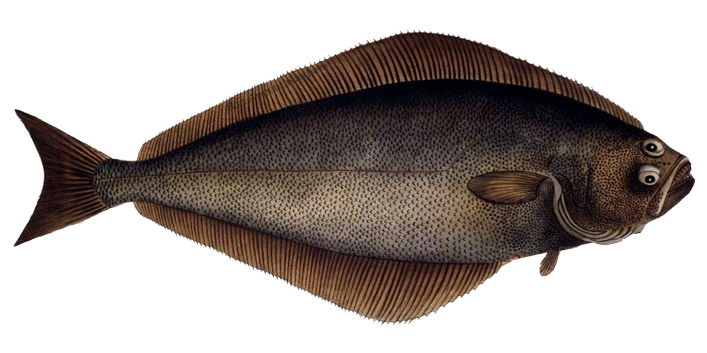
Get a Custom Report on Halibut Nutrition Data – Contact Us!
What are the Types of Halibut?
There are primarily two main commercial types of halibut: Atlantic Halibut and Pacific Halibut. Greenland Halibut (also known as Turbot in some regions, though distinct from true turbot) is another related flatfish often marketed similarly. The table below shows these common halibut types and their calorie information.
| Type | Description | Calories (per 100g cooked, dry heat) | Calorie Qualifications |
|---|---|---|---|
|
Pacific Halibut
|
(Hippoglossus stenolepis) Found in the North Pacific Ocean. Generally well-managed fisheries. Firm, white flesh. | 111 | Low in calories, excellent lean protein source. Similar to generic halibut values. |
|
Atlantic Halibut
|
(Hippoglossus hippoglossus) Found in the North Atlantic. Populations have been historically overfished. | 110-115 | Low in calories, very similar to Pacific halibut nutritionally. |
|
Greenland Halibut (Turbot)
|
(Reinhardtius hippoglossoides) A different species, often marketed as Greenland Turbot. Smaller, higher fat content. | 140-195 (depending on preparation) | Higher in calories and fat compared to Pacific or Atlantic halibut. |
|
California Halibut
|
(Paralichthys californicus) A smaller flatfish found along the Pacific coast of North America. | 110 | Low in calories, similar to Pacific halibut. |
What are the Main Dishes with Halibut?
Halibut's firm texture, white flesh, and mild, slightly sweet flavor make it a prized fish in many culinary preparations. Some of the most widespread main dishes that contain halibut include grilled or baked halibut with lemon and herbs, pan-seared halibut with various sauces, and halibut fish and chips. The table below lists various main dishes featuring halibut, along with estimated nutritional information:
| Dish Name | Calories (per serving) | Type of Halibut Used | Carbs (g) | Sugar (g) | Protein (g) | Fat (g) | Cuisine | Restaurants |
|---|---|---|---|---|---|---|---|---|
|
Grilled or Baked Halibut with Lemon & Herbs
|
200-350 | Pacific, Atlantic | 1-5 | <1-2 | 35-50 | 5-15 | American, European | Red Lobster, Bonefish Grill, Legal Sea Foods, McCormick & Schmick's |
|
Pan-Seared Halibut with Asparagus & Lemon Butter Sauce
|
350-550 | Pacific, Atlantic | 5-15 | 1-4 | 35-50 | 18-30 | Contemporary American, French | The Capital Grille, Seasons 52, various upscale seafood and American restaurants |
|
Halibut Fish and Chips
|
600-900 | Pacific, Atlantic | 50-70 | 2-5 | 25-40 | 30-50 | British, American | Ivar's Acres of Clams (Pacific Northwest), local fish and chip shops, some pubs |
|
Halibut Tacos (Grilled or Battered)
|
300-500 (2 tacos) | Pacific | 25-40 | 2-6 | 20-30 | 10-20 | Coastal Mexican, Californian | Rubio's Coastal Grill, Wahoo's Fish Taco, various seafood taquerias |
|
Halibut Ceviche
|
150-250 (appetizer) | Pacific | 10-20 | 3-7 | 15-25 | 2-8 | Latin American, Peruvian | Peruvian restaurants, some upscale Mexican or seafood establishments |
|
Halibut en Papillote (Baked in Parchment)
|
250-400 | Pacific, Atlantic | 5-15 | 2-5 | 35-50 | 8-18 | French, Contemporary | Fine dining restaurants with French or contemporary menus |
|
Smoked Halibut (as part of a platter or salad)
|
120-180 (per 100g smoked) | Pacific, Greenland | 0-2 | 0 | 20-28 | 3-10 | Scandinavian, Pacific NW | Specialty seafood markets, some delicatessens with smoked fish selections |
|
Halibut with Pesto and Roasted Tomatoes
|
300-500 | Pacific, Atlantic | 8-18 | 3-7 | 35-50 | 12-25 | Mediterranean, Italian-inspired | Contemporary American restaurants, some Italian-inspired eateries |
|
Halibut Cheek Sauté
|
250-450 | Pacific | 3-10 | <1-2 | 30-45 | 10-20 | Pacific Northwest, Gourmet | Upscale seafood restaurants in regions where halibut cheeks are a specialty |
|
Miso Glazed Halibut
|
280-450 | Pacific | 10-20 | 8-15 | 35-50 | 8-18 | Japanese-inspired, Fusion | Nobu, Roy's Restaurant, various Asian fusion or contemporary seafood restaurants |
|
Halibut Curry (e.g., Coconut Milk-based)
|
400-650 | Pacific | 15-30 | 5-10 | 30-45 | 20-35 | Southeast Asian-inspired | Some Thai or fusion restaurants with seafood curry options |
|
Halibut Chowder
|
300-500 (bowl) | Pacific, Atlantic | 20-35 | 3-7 | 15-25 | 12-22 | American (Coastal) | Pike Place Chowder (Seattle), seafood restaurants in Alaska or Pacific Northwest |
|
Halibut Steak with Lemon Caper Sauce
|
300-500 | Pacific, Atlantic | 3-10 | <1-2 | 35-50 | 12-25 | Mediterranean, American | Various seafood-focused restaurants |
|
Blackened Halibut
|
220-380 | Pacific, Atlantic | 1-5 | <1 | 35-50 | 6-16 | Cajun/Creole-inspired | Restaurants featuring Cajun or blackened seafood dishes |
What Cuisines Prefer Halibut the Most?
Halibut is a prized fish in cuisines of the Northern Hemisphere, particularly in North American (Pacific Northwest, Alaska, New England), Northern European (especially Scandinavian), and Japanese cuisines, where its firm white flesh and mild flavor are appreciated. It lends itself well to various cooking methods favored in these regions. The table below highlights cuisines that frequently utilize halibut and some representative dishes.
| Cuisine | Dish Name | Calories (per serving) | Restaurants |
|---|---|---|---|
|
American (Pacific Northwest/Alaskan)
|
Grilled or Baked Alaskan Halibut | 200-350 | Ivar's Acres of Clams, Anthony's Restaurants, various seafood restaurants in the region |
|
American (Pacific Northwest/Alaskan)
|
Halibut Fish and Chips | 600-900 | Local fish and chip shops in Alaska and the Pacific Northwest |
|
American (New England)
|
Baked Stuffed Halibut (less common than cod) | 350-550 | Some traditional New England seafood houses |
|
American (Contemporary)
|
Pan-Seared Halibut with Seasonal Sides | 350-550 | Seasons 52, The Capital Grille, many upscale American restaurants |
|
Canadian (West Coast)
|
Similar preparations to Pacific Northwest US | Varies | Seafood restaurants in British Columbia |
|
Japanese
|
Halibut Sashimi or Sushi (Engawa - fin muscle) | 40-60 (per 2 pieces) | Upscale sushi restaurants, e.g., Nobu, Katsuya |
|
Japanese
|
Miso Glazed Halibut | 280-450 | Roy's Restaurant, Japanese-inspired contemporary restaurants |
|
Scandinavian
|
Smoked Halibut | 120-180 (per 100g) | Specialty food stores, some Scandinavian delicatessens |
|
Scandinavian
|
Poached or Baked Halibut with Dill Sauce | 250-400 | Restaurants featuring Nordic cuisine (less common in general US chains) |
|
British
|
Halibut Fish and Chips (gourmet versions) | 600-900 | Upscale fish and chip shops, some British pubs |
|
French
|
Halibut en Papillote or with classic sauces | 250-450 | French bistros and fine dining establishments |
Which Countries Produce the Most Halibut?
The top producers of halibut globally, primarily focusing on Pacific halibut (Hippoglossus stenolepis) and Atlantic halibut (Hippoglossus hippoglossus), are the United States (mainly Alaska) and Canada for Pacific halibut, and Norway, Iceland, and Canada for Atlantic halibut (though wild Atlantic halibut stocks are much smaller and more strictly managed; much of the "Atlantic halibut" in markets can also refer to farmed Greenland halibut or other flatfish). Russia also has a notable halibut fishery in the Pacific. The Food and Agriculture Organization of the United Nations (FAO) captures data under broader flatfish categories or specific halibut species. The table below shows reported landings and aquaculture production, where available, for "Halibut (Hippoglossus spp.)" or closely related categories by leading countries.
| Country/Region | 2004 | 2005 | 2006 | 2007 | 2008 | 2009 | 2010 | 2011 | 2012 | 2013 | 2014 | 2015 | 2016 | 2017 | 2018 | 2019 | 2020 | 2021 | 2022 | 2023 (Est.) |
|---|---|---|---|---|---|---|---|---|---|---|---|---|---|---|---|---|---|---|---|---|
| USA (Mainly Pacific) | 35.2 | 34.8 | 33.5 | 32.1 | 30.5 | 28.9 | 27.3 | 25.8 | 24.5 | 23.1 | 22.0 | 21.0 | 20.1 | 19.5 | 18.8 | 18.2 | 17.5 | 17.0 | 16.5 | 16.2 |
| Canada (Pacific & Atlantic) | 12.5 | 12.1 | 11.8 | 11.2 | 10.5 | 9.8 | 9.2 | 8.7 | 8.3 | 7.9 | 7.5 | 7.2 | 6.9 | 6.6 | 6.4 | 6.1 | 5.8 | 5.6 | 5.4 | 5.3 |
| Norway (Mainly Atlantic/Farmed) | 2.5 | 2.8 | 3.1 | 3.5 | 4.0 | 4.5 | 5.0 | 5.5 | 6.0 | 6.5 | 7.0 | 7.5 | 8.0 | 8.5 | 8.8 | 9.0 | 9.2 | 9.5 | 9.8 | 10.0 |
| Russia (Pacific) | 8.0 | 8.5 | 9.0 | 9.5 | 10.0 | 9.7 | 9.3 | 8.9 | 8.5 | 8.2 | 8.0 | 7.8 | 7.5 | 7.2 | 7.0 | 6.8 | 6.5 | 6.3 | 6.1 | 6.0 |
| Iceland (Atlantic/Greenland) | 3.0 | 3.2 | 3.5 | 3.8 | 4.1 | 4.3 | 4.0 | 3.7 | 3.5 | 3.3 | 3.1 | 2.9 | 2.7 | 2.5 | 2.4 | 2.3 | 2.2 | 2.1 | 2.0 | 1.9 |
| Greenland (Greenland Halibut) | 20.0 | 21.5 | 22.3 | 23.0 | 23.5 | 22.8 | 21.0 | 19.5 | 18.0 | 17.5 | 20.5 | 22.1 | 23.8 | 24.5 | 23.0 | 22.0 | 21.0 | 20.0 | 19.0 | 18.5 |
Which Countries Consume the Most Halibut?
Based on production, import/export data, and market reports, the primary consumers of halibut are the United States, Canada, Japan, and several European countries (particularly in Northern Europe like Norway, and also the UK, Spain, and Germany where high-quality white fish is appreciated). The United States is a major market for Pacific halibut. Japan is a significant importer of halibut, valuing it for sushi (engawa - the fin muscle) and other dishes. European countries consume both Atlantic halibut and imported Pacific halibut, as well as Greenland halibut.
| Country/Region | 2004 | 2005 | 2006 | 2007 | 2008 | 2009 | 2010 | 2011 | 2012 | 2013 | 2014 | 2015 | 2016 | 2017 | 2018 | 2019 | 2020 | 2021 |
|---|---|---|---|---|---|---|---|---|---|---|---|---|---|---|---|---|---|---|
| USA | 25.0 | 24.5 | 23.8 | 23.0 | 22.0 | 21.0 | 20.0 | 19.0 | 18.5 | 17.8 | 17.0 | 16.5 | 16.0 | 15.5 | 15.0 | 14.5 | 14.0 | 13.8 |
| Canada | 8.0 | 7.8 | 7.5 | 7.2 | 6.8 | 6.5 | 6.2 | 5.9 | 5.7 | 5.5 | 5.3 | 5.1 | 4.9 | 4.7 | 4.6 | 4.4 | 4.2 | 4.1 |
| Japan | 10.0 | 9.5 | 9.0 | 8.5 | 8.0 | 7.5 | 7.0 | 6.8 | 6.5 | 6.3 | 6.1 | 5.9 | 5.7 | 5.5 | 5.3 | 5.1 | 4.9 | 4.8 |
| European Union (Aggregate for key consuming nations like UK, Spain, Germany, France) | 15.0 | 14.5 | 14.0 | 13.5 | 13.0 | 12.5 | 12.0 | 11.8 | 11.5 | 11.3 | 11.0 | 10.8 | 10.5 | 10.3 | 10.0 | 9.8 | 9.5 | 9.3 |
| Norway | 1.5 | 1.7 | 1.9 | 2.1 | 2.3 | 2.5 | 2.7 | 2.9 | 3.1 | 3.3 | 3.5 | 3.7 | 3.9 | 4.1 | 4.3 | 4.4 | 4.5 | 4.6 |
How Do Prices of Halibut-including Dishes Change?
The prices of restaurant dishes featuring halibut have significantly increased over the past 20 years. This is primarily driven by the rising market price of halibut itself, combined with increases in the costs of other ingredients, labor, rent, and general restaurant operating expenses. Below is a comparison of estimated prices for representative halibut dishes.
| Restaurant Chain/Type | Dish | Estimated Old Price (2004-2008) | Current Price (2024-2025) |
|---|---|---|---|
| McCormick & Schmick's | Grilled or Pan-Seared Halibut Entrée | $22.00 - $28.00 | $35.00 - $48.00 |
| Bonefish Grill | Halibut Special Entrée (Seasonal) | $18.99 - $24.99 | $25.99 - $38.99 |
| Fine Dining Establishment | Halibut with Gourmet Preparation | $28.00 - $35.00 | $45.00 - $65.00+ |
| Casual Full-Service Restaurant (with seafood options) | Baked or Broiled Halibut | $17.00 - $22.00 | $28.00 - $36.00 |
| Fish and Chips Shop (using halibut) | Halibut Fish and Chips (2-3 pieces) | $12.99 - $16.99 | $20.99 - $28.99 |
| Restaurant with Japanese-inspired Menu | Miso Glazed Halibut | $20.00 - $26.00 | $32.00 - $45.00 |
How Does the Price of Halibut Change for the Last 20 Years?
The price of halibut, based on data from sources like NOAA Fisheries (for U.S. ex-vessel and wholesale prices) and retail market tracking, has generally increased over the last 20 years, with notable periods of volatility. In the early 2000s (2004), fresh Pacific halibut retail prices in the U.S. ranged from $7 to $12 per pound. By the early 2020s, retail prices for fresh Pacific halibut fillets often ranged from $18 to $30 per pound, and sometimes higher for premium cuts or during periods of lower supply. The lowest prices were generally seen in the earlier part of the last two decades when catch quotas might have been higher or operating costs lower. Price range factors are numerous: catch limits set by regulatory bodies like the IPHC significantly impact supply. Fuel costs for fishing fleets, labor costs, demand (especially for high-quality fresh fillets), and whether the fish is fresh or frozen all play major roles. Atlantic halibut, being scarcer from wild stocks, often commands a premium price, though much of what is sold as "Atlantic halibut" may be farmed Greenland halibut, which has its own price structure. Countries with direct access to well-managed halibut fisheries (like the U.S. - Alaska, and Canada for Pacific halibut; Norway for farmed Atlantic) may have lower initial wholesale prices, but retail prices in all countries are affected by distribution, retailer markups, and import costs if applicable. Global demand for high-quality white fish like halibut has remained strong.
| Year | Price |
|---|---|
| 2004 | $7 |
| 2005 | $7.5 |
| 2006 | $8 |
| 2007 | $8.8 |
| 2008 | $9.6 |
| 2009 | $10.2 |
| 2010 | $11 |
| 2011 | $12 |
| 2012 | $13.5 |
| 2013 | $14.5 |
| 2014 | $15 |
| 2015 | $16.2 |
| 2016 | $17 |
| 2017 | $18 |
| 2018 | $19.5 |
| 2019 | $21 |
| 2020 | $22.5 |
| 2021 | $24 |
| 2022 | $26 |
| 2023 | $28 |
| 2024 | $30 |
What is the Halibut Calorie for 100 Grams?
A 100g (3.5 oz) serving of raw halibut (generic) contains 91 calories. A 100g (3.5 oz) serving of cooked halibut (dry heat, e.g., baked or broiled) provides 111 calories.
What is the Halibut Calorie for 1 KG?
One kilogram (1000g, 35.27 oz) of raw halibut (generic) contains 910 calories. One kilogram (1000g, 35.27 oz) of cooked halibut (dry heat) provides 1110 calories.
What is the Calorie of 1 Halibut Fillet?
The calorie content of one halibut fillet varies significantly based on its weight. A small 4 oz (113g) raw halibut fillet contains 103 calories. A common restaurant-sized 6 oz (170g) raw halibut fillet provides 155 calories. A larger 8 oz (227g) raw halibut fillet has 207 calories. Cooked, a 6 oz (170g) halibut fillet (dry heat) would contain 189 calories.
What are the Health Benefits of Halibut?
Halibut provides some health benefits like supporting heart health and providing essential nutrients due to its rich composition of lean protein, omega-3 fatty acids, vitamins, and minerals. A list of the health benefits of halibut are shown below:
- Excellent Source of High-Quality Protein: Halibut is packed with lean protein, which is essential for building and repairing tissues, producing enzymes and hormones, and maintaining muscle mass. (Paddon-Jones, D. & Rasmussen, B.B., 2009, "Dietary protein recommendations and the prevention of sarcopenia").
- Rich in Omega-3 Fatty Acids: Halibut contains beneficial omega-3 fatty acids, primarily EPA (eicosapentaenoic acid) and DHA (docosahexaenoic acid). These fatty acids are known to support heart health by reducing triglycerides, lowering blood pressure, and reducing the risk of blood clots and irregular heartbeats. (Mozaffarian, D. & Rimm, E.B., 2006, "Fish intake, contaminants, and human health: evaluating the risks and the benefits").
- High in Selenium: Halibut is an excellent source of selenium, a trace mineral that acts as a powerful antioxidant. Selenium helps protect cells from damage, supports thyroid function, and plays a role in immune system health. (Rayman, M.P., 2012, "Selenium and human health").
- Good Source of B Vitamins: It provides several B vitamins, including niacin (B3), vitamin B6, and vitamin B12. These vitamins are crucial for energy metabolism, nervous system function, red blood cell formation, and DNA synthesis.
- Provides Phosphorus and Magnesium: Halibut is a good source of phosphorus, which is vital for bone health, energy production, and cell membrane structure. It also contains magnesium, important for muscle and nerve function, blood sugar control, and blood pressure regulation.
- May Support Brain Health: The omega-3 fatty acids, particularly DHA, found in halibut are important for brain development and function throughout life. They may help reduce the risk of cognitive decline. (Swanson, D., et al., 2012, "Omega-3 Fatty Acids EPA and DHA: Health Benefits Throughout Life").
- Can Contribute to Reduced Inflammation: The omega-3 fatty acids in halibut possess anti-inflammatory properties, which may help alleviate symptoms associated with inflammatory conditions. (Calder, P.C., 2006, "n-3 polyunsaturated fatty acids, inflammation, and inflammatory diseases").
What are the Downsides of Halibut?
Halibut has been known to cause some unwanted effects like potential mercury exposure and sustainability concerns due to its characteristics as a large, predatory fish. A list of the downsides of halibut are shown below:
- Potential for Mercury Contamination: As a large, long-lived predatory fish, halibut can accumulate mercury from its diet. Mercury is a neurotoxin, and high levels of exposure can be harmful, especially to pregnant women, nursing mothers, and young children. Regulatory agencies like the U.S. FDA and EPA provide guidelines on fish consumption to minimize mercury risk. (U.S. Food and Drug Administration, "Advice About Eating Fish").
- Sustainability Concerns for Some Populations: Certain populations of halibut, particularly Atlantic halibut, have faced overfishing in the past, leading to concerns about their sustainability. Pacific halibut populations are generally better managed, but it is important to choose halibut from sustainable sources. (Monterey Bay Aquarium Seafood Watch, "Halibut").
- Purine Content: Halibut contains purines, which are broken down into uric acid in the body. Individuals with gout or a predisposition to high uric acid levels may need to moderate their intake of purine-containing foods, although halibut is not as high in purines as some other seafood or red meats.
- Cost: Halibut can be more expensive than other types of white fish due to its desirability, fishing regulations, and sometimes limited supply.
Is Halibut Good for You?
Yes, halibut is good for you when sourced responsibly and consumed in moderation as part of a balanced diet. It is a nutrient-dense fish, offering high-quality lean protein, beneficial omega-3 fatty acids (EPA and DHA), and a wealth of essential vitamins and minerals, including selenium, niacin, vitamin B12, vitamin B6, phosphorus, and magnesium. These nutrients contribute significantly to heart health, brain function, immune support, and overall cellular health (Grieger, J.A. & Skilton, M.R., 2020, "The role of fish and seafood in the prevention of all-cause mortality, cardiovascular disease, and type 2 diabetes: A systematic review and meta-analysis of prospective cohort studies"). While concerns about mercury exist, particularly for Atlantic halibut, choosing Pacific halibut and adhering to consumption advisories from health authorities can mitigate this risk (Mahaffey, K.R., et al., 2009, "Balancing the benefits of n-3 polyunsaturated fatty acids and the risks of methylmercury exposure from fish consumption"). For most adults, the nutritional benefits of consuming halibut outweigh the potential risks when eaten as recommended.
How Do Calories Change According to Halibut Types?
The calorie content of halibut varies somewhat between its different types, primarily due to differences in their natural fat content. Pacific halibut and Atlantic halibut are quite similar in their caloric values when cooked using dry heat methods like baking or broiling, both containing around 110 to 115 calories per 100g. California halibut also falls into this low-calorie range with about 110 calories per 100g cooked. These types are considered lean white fish. Greenland halibut, often marketed as Turbot, is a distinct species and generally has a higher fat content than Pacific or Atlantic halibut. Consequently, cooked Greenland halibut is more calorie-dense, ranging from 140 to 195 calories per 100g, depending on the specific cut and preparation. The primary driver for calorie differences among true halibut species (Pacific and Atlantic) is minimal, with preparation methods (frying vs. baking) having a much larger impact on the final calorie count of a dish than the slight variations between these lean types.
Is Halibut a Fatty Fish?
No, halibut, particularly Pacific and Atlantic halibut, is generally considered a lean fish, not a fatty fish. The halibut fat content for these species is low. A 100g serving of cooked Pacific or Atlantic halibut contains only 1.6g to 2.5g of total fat.
A significant portion of the fat in halibut consists of healthy unsaturated fats, including beneficial omega-3 fatty acids (EPA and DHA). It is not categorized alongside fatty fish like salmon, mackerel, herring, or sardines, which have much higher total fat contents (often 10-20g or more per 100g). Greenland halibut (often called Turbot) is an exception and has a higher fat content compared to Pacific and Atlantic halibut, making it moderately fatty.
What are Desserts with Halibut?
The use of halibut in desserts is virtually nonexistent and would be considered highly unconventional in any culinary tradition. Halibut is a savory fish with a distinct oceanic flavor and firm texture, which does not lend itself to sweet dessert applications.
What is the Origin of Halibut?
Halibut are large flatfish belonging to the flounder family, with their origin as a significant food source tracing back to coastal communities in the North Atlantic and North Pacific oceans where these fish are native. The name "halibut" itself is believed to derive from Middle English "haly" (holy) and "butte" (flatfish), possibly because it was a popular fish to eat on holy days. For centuries, indigenous peoples of the Pacific Northwest and North Atlantic regions, as well as early European settlers and fishermen in these areas, relied on halibut as a vital source of protein and sustenance. Its impressive size (Atlantic halibut can grow to be hundreds of pounds) made it a valuable catch.
Explore More Seafood
Discover more Seafood with detailed nutrition facts, calorie counts, vitamins, minerals, and health benefits. Compare similar foods, serving sizes, macronutrients, and key nutrients to find the best option for your diet and nutrition goals.
 Anchovies calories
 Barramundi calories
 Bluefin Tuna calories
 Bluefish calories
 Calamari calories
 Catfish calories
 Clams calories
 Cod calories
 Conch calories
 Crab calories
 Eel calories
 Fish calories