Calories and Nutritions in Herring
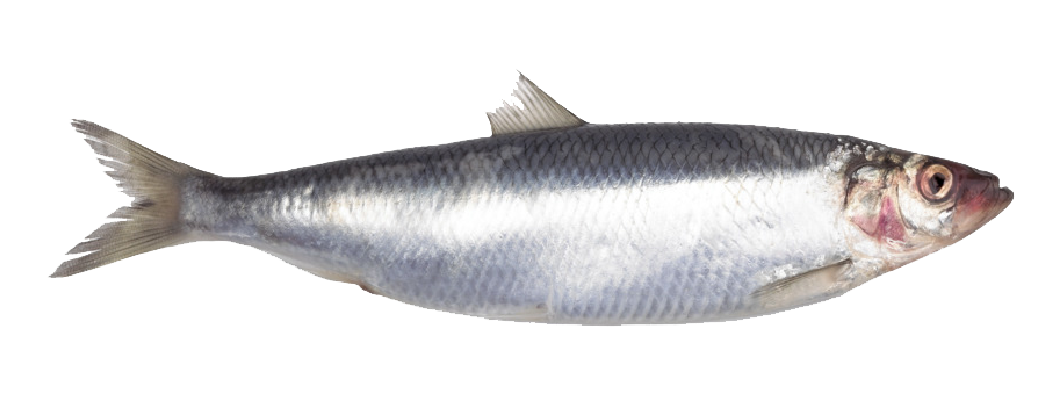
Herring is a small oily forage fish from the Clupeidae family, widely harvested in the North Atlantic and Pacific for curing and smoking. A small serving of cooked herring (85g) provides 172 calories while a medium serving of herring (113g) supplies 229 calories. A single raw herring fillet (184g) supplies 291 calories. Processing methods significantly alter this profile, as a single can of herring in oil (92g) contains 322 calories and one piece of pickled herring (15g) offers 39 calories. A serving of Herring fillets in oil by CRACOVIA (56g) provides 170 calories, while a single piece of Aldi Herring Fillets (50g) contains 110 calories.
A nutritional assessment of Herring nutrition facts reveals a protein-rich food source with significant lipid content. A large serving consisting of one whole cooked fillet (143g) provides 32.9g of protein and 16.6g of fat. This substantial lipid profile includes essential polyunsaturated fatty acids that are vital for human physiological function. Research by Kris-Etherton, P. M., et al. (2002), "Fish consumption, fish oil, omega-3 fatty acids, and cardiovascular disease," confirms that the high levels of omega-3 fatty acids, providing approximately 3g per raw fillet, in herring help lower triglyceride levels and reduce arterial inflammation. The caloric load derives primarily from protein and healthy fats, making the fish a satiating option for balanced diets. Regarding lipids, herring is classified as a fatty fish with a total fat content typically ranging from 10% to 15% by weight. Micronutrient intake is substantial, offering 599mg of potassium (13% DV) per large serving. Vitamin B12 is present in exceptional amounts, providing 18.7mcg per large serving to support nerve health.
Commercial availability of herring depends heavily on the wild capture fisheries of dominant nations, with Norway, Iceland, and Russia leading harvest volumes. This supply caters to specific regional markets, where Russia, Germany, and Poland consume significant quantities of this marine resource. Within Scandinavian, Jewish, and Northern European cuisines, herring is the main ingredient for pickled herring, kippers, and rollmops. Rising global demand has pushed retail costs higher, with the price of pickled herring jars rising from between $3.00 and $4.00 in the early 2000s to between $7.00 and $10.00 in 2024 to 2025. Dining establishments reflect this shift, as a Pickled Herring Fillet with Onions at Russ & Daughters increased from $12.00 in 2010 to between $16.50 and $22.00 in 2024 to 2025.
Herring is a nutrient-dense fish with high levels of Vitamin B12, Vitamin D, and selenium, providing 18.7mcg of Vitamin B12, 7.72mcg of Vitamin D, and 66.9mcg of selenium per 143g. This nutritional profile supports cardiovascular stability and strengthens skeletal structure. Dietitians advise consuming one small serving (85g) once a week to optimize omega-3 intake while maintaining dietary balance, as this portion provides adequate healthy fats without excessive calories. The fish contains moderate levels of purines and sodium in cured forms, with a single piece of pickled herring containing 130.5mg of sodium, which necessitates monitoring by consumers prone to gout or hypertension to prevent adverse health effects. Herring offers a high fat content, providing 16.6g of beneficial unsaturated lipids in every large serving. A large serving consisting of one whole cooked fillet (143g) contains 290 calories, an energy load that requires 48 minutes of shoveling snow or 72 minutes of raking leaves to metabolize. Consumers tracking sodium levels should monitor their intake of pickled and smoked herring.
Herring nutrition
| Stats | Weight |
|---|---|
| Carbs | 0 grams |
| Protein | 26 grams |
| Fats | 0 grams |
| Sugars | 0 grams |
- Large Herring Calories (Nutritional Facts)
- Medium Herring Calories (Nutritional Facts)
- Small Herring Calories (Nutritional Facts)
- Pickled Herring Calories (Nutritional Facts)
- Canned Herring Calories (Nutritional Facts)
- Smoked Herring Calories (Nutritional Facts)
- Raw Herring Nutrition
- Sodium in Herring
- Potassium in Herring
- Sugar in Herring
- Fiber in Herring
- Protein in Herring
- Carbs in Herring
- Fat in Herring
- Vitamins in Herring
- Minerals in Herring
Large Herring Calories (Nutritional Facts)
A large serving consisting of one whole cooked herring fillet (143g or 5oz) contains 290 calories, 32.9g of protein, 16.6g of fat, 0g of carbohydrates, 0g of fiber, 0g of sugar, and 164mg of sodium.
A medium serving of cooked herring (113g or 4oz) provides 229 calories, 26g of protein, 13.1g of fat, 0g of carbohydrates, 0g of fiber, 0g of sugar, and 130mg of sodium.
A small serving of cooked herring (85g or 3oz) contains 172 calories, 19.6g of protein, 9.9g of fat, 0g of carbohydrates, 0g of fiber, 0g of sugar, and 97mg of sodium.
A serving consisting of one piece of pickled herring (15g or 0.5oz) supplies 39 calories, 2.1g of protein, 2.7g of fat, 1.4g of carbohydrates, 0g of fiber, 1.2g of sugar, and 130.5mg of sodium.
A single can of herring in oil (92g or 3.25oz) provides 322 calories, 14.7g of protein, 27.6g of fat, 0g of carbohydrates, 0g of fiber, 0g of sugar, and 414mg of sodium.
A serving consisting of one piece of smoked herring (57g or 2oz) contains 140 calories, 12g of protein, 11g of fat, 0g of carbohydrates, 0g of fiber, 0g of sugar, and 280mg of sodium.
A single raw herring fillet (184g) supplies 291 calories, 33g of protein, 17g of fat, 0g of carbohydrates, 0g of fiber, 0g of sugar, and 166mg of sodium.
A large serving consisting of one whole cooked herring fillet (143g) contains 164mg of sodium (7% DV). A medium serving of cooked herring (113g) has 130mg of sodium (6% DV). A small serving of cooked herring (85g) contains 97mg of sodium (4% DV). A serving consisting of one piece of pickled herring (15g) provides 130.5mg of sodium (6% DV). A single can of herring in oil (92g) contains 414mg of sodium (18% DV). A serving consisting of one piece of smoked herring (57g) supplies 280mg of sodium (12% DV). A single raw herring fillet (184g) provides 166mg of sodium (7% DV).
A large serving consisting of one whole cooked herring fillet (143g) contains 599mg of potassium (13% DV). A medium serving of cooked herring (113g) has 473mg of potassium (10% DV). A small serving of cooked herring (85g) contains 356mg of potassium (8% DV). A serving consisting of one piece of pickled herring (15g) provides 10.4mg of potassium (0% DV). A single can of herring in oil (92g) contains 385mg of potassium (8% DV). A serving consisting of one piece of smoked herring (57g) supplies 175mg of potassium (4% DV). A single raw herring fillet (184g) provides 602mg of potassium (13% DV).
A large serving consisting of one whole cooked herring fillet (143g) contains 0g of sugar. A medium serving of cooked herring (113g) has 0g of sugar. A small serving of cooked herring (85g) contains 0g of sugar. A serving consisting of one piece of pickled herring (15g) provides 1.2g of sugar. A single can of herring in oil (92g) contains 0g of sugar. A serving consisting of one piece of smoked herring (57g) supplies 0g of sugar. A single raw herring fillet (184g) provides 0g of sugar.
A large serving consisting of one whole cooked herring fillet (143g) provides 0g of dietary fiber (0% DV). A medium serving of cooked herring (113g) has 0g of fiber (0% DV). A small serving of cooked herring (85g) contains 0g of fiber (0% DV). A serving consisting of one piece of pickled herring (15g) provides 0g of fiber (0% DV). A single can of herring in oil (92g) contains 0g of fiber (0% DV). A serving consisting of one piece of smoked herring (57g) supplies 0g of fiber (0% DV). A single raw herring fillet (184g) provides 0g of fiber (0% DV).
A large serving consisting of one whole cooked herring fillet (143g) provides 32.9g of protein (66% DV). A medium serving of cooked herring (113g) has 26g of protein (52% DV). A small serving of cooked herring (85g) contains 19.6g of protein (39% DV). A serving consisting of one piece of pickled herring (15g) provides 2.1g of protein (4% DV). A single can of herring in oil (92g) contains 14.7g of protein (29% DV). A serving consisting of one piece of smoked herring (57g) supplies 12g of protein (24% DV). A single raw herring fillet (184g) provides 33g of protein (66% DV).
A large serving consisting of one whole cooked herring fillet (143g) contains 0g of carbohydrates (0% DV). A medium serving of cooked herring (113g) has 0g of carbohydrates (0% DV). A small serving of cooked herring (85g) contains 0g of carbohydrates (0% DV). A serving consisting of one piece of pickled herring (15g) provides 1.4g of carbohydrates (1% DV). A single can of herring in oil (92g) contains 0g of carbohydrates (0% DV). A serving consisting of one piece of smoked herring (57g) supplies 0g of carbohydrates (0% DV). A single raw herring fillet (184g) provides 0g of carbohydrates (0% DV).
A large serving consisting of one whole cooked herring fillet (143g) contains 16.6g of total fat (21% DV). A medium serving of cooked herring (113g) has 13.1g of total fat (17% DV). A small serving of cooked herring (85g) contains 9.9g of total fat (13% DV). A serving consisting of one piece of pickled herring (15g) provides 2.7g of total fat (3% DV). A single can of herring in oil (92g) contains 27.6g of total fat (35% DV). A serving consisting of one piece of smoked herring (57g) supplies 11g of total fat (14% DV). A single raw herring fillet (184g) provides 17g of total fat (22% DV).
A large serving consisting of one whole cooked herring fillet (143g) provides 18.7mcg of Vitamin B12 (779% DV) and 7.72mcg of Vitamin D (39% DV). A medium serving of cooked herring (113g) has 14.8mcg of Vitamin B12 (617% DV) and 6.1mcg of Vitamin D (31% DV). A small serving of cooked herring (85g) contains 11.1mcg of Vitamin B12 (463% DV) and 4.6mcg of Vitamin D (23% DV). A serving consisting of one piece of pickled herring (15g) provides 0.42mcg of Vitamin D (2% DV). A single can of herring in oil (92g) contains 2.3mcg of Vitamin D (12% DV). A single raw herring fillet (184g) provides 25mcg of Vitamin B12 (1042% DV) and 8mcg of Vitamin D (40% DV).
A large serving consisting of one whole cooked herring fillet (143g) provides 2.02mg of iron (11% DV), 106mg of calcium (8% DV), and 66.9mcg of selenium (122% DV). A medium serving of cooked herring (113g) has 1.6mg of iron (9% DV), 84mg of calcium (6% DV), and 52.9mcg of selenium (96% DV). A small serving of cooked herring (85g) contains 1.2mg of iron (7% DV), 63mg of calcium (5% DV), and 39.8mcg of selenium (72% DV). A serving consisting of one piece of pickled herring (15g) provides 0.18mg of iron (1% DV) and 11.5mg of calcium (1% DV). A single can of herring in oil (92g) contains 1.1mg of iron (6% DV) and 55mg of calcium (4% DV). A serving consisting of one piece of smoked herring (57g) supplies 20mg of calcium (2% DV). A single raw herring fillet (184g) provides 2mg of iron (11% DV) and 105mg of calcium (8% DV).
Get a Custom Report on Herring Nutrition Data – Contact Us!
What are the Types of Herrings?
The types of Herrings include Atlantic, Pacific, Baltic, and processed forms like Kippers and Matjes. The following table compares the nutritional profiles of these varieties.
| Type | Description | Calories (Per 100g) | Calorie Qualifications |
|---|---|---|---|
|
Atlantic Herring
|
Found in the North Atlantic. | 158 | The calorie count reflects the high oil content typical of cold-water species. |
|
Pacific Herring
|
Found in the North Pacific. | 195 | The slightly higher oil content results in a denser caloric profile. |
|
Baltic Herring
|
Smaller variety from the Baltic Sea. | 140 | The smaller size and lower fat reserves result in a lower caloric density. |
|
Kipper (Smoked)
|
Split, salted, and cold-smoked. | 217 | The smoking process removes moisture, concentrating the fats and proteins. |
|
Pickled Herring
|
Cured in vinegar and brine. | 262 | The addition of sugar and brine significantly elevates the energy load. |
|
Soused Herring (Matjes)
|
Brined young herring. | 270 | The high fat content of the young fish combined with brine results in high caloric density. |
What are the Main Dishes With Herring?
Herring functions as a versatile protein in salads, pickled appetizers, and smoked entrees. The rich flesh allows the fish to withstand curing and smoking processes. Specific dishes utilizing this fish are listed below.
| Dish Name | Calories (Estimate) | Type of Dish | Carbs (g) (Estimate) | Sugar (g) (Estimate) | Protein (g) (Estimate) | Fat (g) (Estimate) | Cuisine | Restaurants |
|---|---|---|---|---|---|---|---|---|
|
Pickled Herring in Cream
|
280 | Appetizer | 12 | 10 | 15 | 20 | Jewish/Scandinavian | Russ & Daughters (New York, NY) |
|
Smoked Herring (Kippers)
|
220 | Breakfast/Entree | 0 | 0 | 25 | 14 | British | A Salt & Battery (New York, NY) |
|
Herring Salad (Sildesalat)
|
300 | Salad Entree | 15 | 8 | 18 | 22 | Scandinavian | Smörgås Chef (New York, NY) |
|
Matjes Herring with Potato
|
350 | Entree | 25 | 5 | 20 | 20 | Dutch/German | Heidelberg Restaurant (New York, NY) |
|
Grilled Herring
|
240 | Entree | 0 | 0 | 28 | 14 | Mediterranean | Liman Restaurant (Brooklyn, NY) |
|
Herring in Wine Sauce
|
200 | Appetizer | 10 | 8 | 15 | 12 | Jewish | Barney Greengrass (New York, NY) |
|
Fried Herring
|
400 | Fried Entree | 20 | 1 | 25 | 30 | Southern American | Calabash Seafood Hut (Calabash, NC) |
|
Chopped Herring Salad
|
250 | Appetizer | 8 | 4 | 18 | 18 | Jewish | Zabar's (New York, NY) |
|
Rollmops
|
180 | Appetizer | 5 | 3 | 15 | 12 | German/British | Schaller & Weber (New York, NY) |
|
Solyanka (Fish Soup)
|
320 | Soup Entree | 15 | 4 | 20 | 18 | Russian | Mari Vanna (New York, NY) |
What Cuisines Prefer Herring the Most?
Herring serves as a foundational ingredient in Scandinavian, Jewish, and Northern European culinary traditions. The following chart identifies culinary traditions that rely heavily on this seafood.
| Cuisine | Dish | Types of Herring Use | Calories (Estimate) | Restaurant(s) |
|---|---|---|---|---|
|
Jewish (Ashkenazi)
|
Pickled Herring | Cured/Pickled | 280 | Russ & Daughters (New York, NY) |
|
Scandinavian
|
Surströmming/Sild | Fermented/Pickled | 150 | Aquavit (New York, NY) |
|
Dutch
|
Hollandse Nieuwe | Raw/Brined | 270 | Grand Central Oyster Bar (New York, NY) |
|
British
|
Kippers | Smoked | 220 | Tea & Sympathy (New York, NY) |
|
Russian
|
Shuba (Herring under Fur) | Layered Salad | 450 | Mari Vanna (New York, NY) |
|
German
|
Rollmops | Pickled/Rolled | 180 | Heidelberg Restaurant (New York, NY) |
|
Polish
|
Sledz w Oleju | Oil Cured | 320 | Karczma (Brooklyn, NY) |
|
Japanese
|
Nishin Soba | Dried/Simmered | 350 | Sobaya (New York, NY) |
|
French
|
Harengs Pommes à l'Huile | Marinated | 380 | Balthazar (New York, NY) |
|
Scottish
|
Grilled Herring | Grilled | 240 | St. Andrews Restaurant (New York, NY) |
Which Countries Produce the Most Herrings?
The countries that produce the most herrings are Norway, Iceland, and Russia, driven by extensive wild capture fisheries in the North Atlantic. These nations manage the vast majority of the global supply to meet domestic and export demand. Canada and the United States also maintain substantial output levels, particularly for roe and bait. The table below presents the estimated capture production of herring for the top producing nations over the last two decades.
| Country | 2003 | 2008 | 2013 | 2018 | 2019 | 2020 | 2021 | 2022 | 2023 |
|---|---|---|---|---|---|---|---|---|---|
| Norway | 550.5 | 620.2 | 780.6 | 850.4 | 830.2 | 840.5 | 850.4 | 860.2 | 870.0 |
| Russia | 350.4 | 410.6 | 490.5 | 520.2 | 530.5 | 540.2 | 550.6 | 560.5 | 570.0 |
| Iceland | 120.2 | 155.6 | 250.5 | 345.4 | 330.2 | 320.5 | 315.4 | 310.2 | 305.0 |
| United States | 90.6 | 85.2 | 75.4 | 65.2 | 60.5 | 55.8 | 52.0 | 48.2 | 45.0 |
| Canada | 140.4 | 130.2 | 120.6 | 110.4 | 105.2 | 100.5 | 95.6 | 90.4 | 85.0 |
| Denmark | 80.5 | 90.2 | 110.4 | 120.5 | 125.2 | 130.5 | 135.4 | 140.2 | 145.0 |
| Netherlands | 70.2 | 75.6 | 85.4 | 95.2 | 98.5 | 100.2 | 102.5 | 105.4 | 108.0 |
| United Kingdom | 60.5 | 65.2 | 75.6 | 85.4 | 88.2 | 90.5 | 92.4 | 94.2 | 96.0 |
Which Countries Consume the Most Herrings?
The countries that consume the most herrings are Russia, Germany, and Poland, where the fish is a dietary staple preserved in oil, vinegar, or cream. The domestic markets absorb a significant portion of the regional catch, utilizing the fish in salads and appetizers. The Netherlands and Scandinavian countries also function as major consumers due to cultural traditions surrounding the "new herring" season. The table below shows the estimated consumption values and import demand for herring in key markets.
| Country | 2003 | 2008 | 2013 | 2018 | 2019 | 2020 | 2021 | 2022 | 2023 |
|---|---|---|---|---|---|---|---|---|---|
| Russia | 250.2 | 350.5 | 450.6 | 550.4 | 580.2 | 600.5 | 620.4 | 640.2 | 660.0 |
| Germany | 150.5 | 180.2 | 220.5 | 280.4 | 290.2 | 300.5 | 310.4 | 320.2 | 330.0 |
| Poland | 120.4 | 140.6 | 180.5 | 220.2 | 230.5 | 240.2 | 250.6 | 260.5 | 270.0 |
| Netherlands | 80.2 | 95.6 | 110.2 | 130.4 | 135.2 | 140.5 | 145.4 | 150.2 | 155.0 |
| Ukraine | 60.5 | 85.2 | 105.4 | 125.2 | 130.5 | 135.2 | 140.6 | 120.4 | 110.0 |
| Sweden | 45.6 | 55.2 | 65.4 | 75.2 | 78.5 | 80.2 | 82.5 | 85.4 | 88.0 |
| United States | 35.4 | 40.2 | 45.6 | 50.4 | 52.5 | 54.2 | 56.5 | 58.2 | 60.0 |
| Japan | 50.2 | 60.5 | 70.2 | 80.5 | 85.4 | 90.2 | 95.6 | 100.2 | 105.0 |
How Do Prices of Herring-Including Dishes Change?
Restaurant costs for herring entrees have surged, mirroring the increased expense of sourcing and processing this fish. The table below illustrates price adjustments for selected items at well-known establishments.
| Brand/Restaurant | Dish | Old Price (Year) | Current Price (2024/2025) |
|---|---|---|---|
| Russ & Daughters (New York, NY) | Pickled Herring Fillet with Onions | $12.00 (2010) | $16.50 - $22.00 |
| Zabar's (New York, NY) | Pickled Herring in Cream Sauce - 2 fillets | $9.95 (2010) | $11.98 - $18.95 |
| Barney Greengrass (New York, NY) | Pickled Herring in Cream Sauce | $10.00 (2010) | $16.50 - $20.00 |
| Barney Greengrass (New York, NY) | Home Made Chopped Herring | $9.00 (2010) | $15.50 - $17.50 |
| IKEA Food Market | SILL DILLMarinated herring with dill, 9 oz | $1.99 (2012) | $2.99 - $4.99 |
What is the Herring Calorie for 100 Grams?
A 100g serving of fresh raw herring contains 158 calories, while the same quantity of cooked herring provides 203 calories. Pickled herring supplies 260 calories per 100g. Canned herring in oil contains 350 calories per 100g. Smoked herring provides 246 calories per 100g.
What is the Herring Calorie for 1 KG?
One kilogram (1000g) of fresh raw herring contains 1,580 calories, whereas a kilogram of cooked herring provides 2,030 calories. One kilogram of pickled herring supplies 2,600 calories. One kilogram of canned herring in oil contains 3,500 calories. One kilogram of smoked herring provides 2,460 calories.
What is the Calorie of 1 Herring?
A single raw herring fillet (184g) contains 291 calories. Retail offerings present distinct energy values, as a serving of Herring fillets in oil by CRACOVIA (56g) provides 170 calories, while a single piece of Aldi Herring Fillets (50g) contains 110 calories. A serving of Euro-American Brands LLC Alstertor Herring Fillets In Tomato Sauce (100g) supplies 263 calories.
What are the Health Benefits of Herring?
Herring provides notable physiological advantages, specifically regarding cardiovascular stability, skeletal maintenance, and neurological function. The fish functions as a rich source of omega-3 fatty acids and essential vitamins. The following points highlight these benefits.
- Supports Heart Health: Herring contains high levels of omega-3 fatty acids, which help lower triglyceride levels and reduce arterial inflammation. Research by Kris-Etherton, P. M., et al. (2002), "Fish consumption, fish oil, omega-3 fatty acids, and cardiovascular disease," confirmed that adequate intake supports cardiovascular function and reduces the risk of cardiac events.
- Strengthens Skeletal Structure: Vitamin D and calcium found in the flesh aid in maintaining bone density. A review by Holick, M. F. (2007), "Vitamin D deficiency," highlights that Vitamin D is critical for calcium absorption, preventing conditions like osteopenia.
- Boosts Red Blood Cell Formation: The fish supplies beneficial Vitamin B12 that aids in hemoglobin synthesis and energy metabolism. A study by Stabler, S. P. (2013), "Vitamin B12 deficiency," established that Vitamin B12 is essential for preventing megaloblastic anemia and maintaining nerve health.
What are the Downsides of Herring?
Herring remains safe for most populations, yet specific environmental and biological concerns exist. Potential adverse effects are outlined below.
- Increases Uric Acid: The fish contains moderate purines, which can elevate uric acid levels in susceptible individuals. A study by Choi, H. K., et al. (2004), "Purine-rich foods, dairy and protein intake, and the risk of gout in men," notes that excessive consumption of seafood can trigger gout flares in those with pre-existing conditions.
- Elevates Sodium Intake: Cured and pickled varieties contain high levels of sodium used for preservation. Research by Grillo, A., et al. (2019), "Sodium intake and hypertension," indicates that high sodium consumption correlates with elevated blood pressure and cardiovascular strain.
Are Herrings Good for You?
Yes, herrings are good for health because the fish supports brain development, cardiovascular efficiency, and immune defense. The high omega-3 content aids cognitive function and may reduce the risk of neurodegenerative diseases, a mechanism detailed in the study by Morris, M. C., et al. (2003), "Consumption of fish and n-3 fatty acids and risk of incident Alzheimer disease." Heart health improves through the reduction of arrhythmias and blood pressure as explored by Virtanen, J. K., et al. (2009), " Serum Long-Chain Omega-3 Fatty Acids and Risk of Atrial Fibrillation in Men: The Kuopio Ischemic Heart Disease Risk Factor Study." Immune health benefits from the anti-inflammatory properties of the fatty acids, which modulate immune response as confirmed by Calder, P. C. (2006), "n-3 polyunsaturated fatty acids, inflammation, and immunity."
How Do Calories Change According to Herring Types?
Caloric density fluctuates significantly between fresh and processed forms of herring. Canned Herring in Oil contains the highest energy load at approximately 350 calories per 100 grams due to the added lipids. Pickled Herring presents a high profile at 262 calories per 100 grams due to added sugar and brine. Fresh Atlantic Herring offers the lowest profile at 158 calories per 100 grams, maintaining a nutrient-dense composition suitable for balanced diets.
Is Herring a Fatty Fish?
Yes, herring is classified as a fatty fish due to the high concentration of lipids stored in the body tissues. The total fat content ranges from 10% to 15% by weight, surpassing the 5% threshold often used to categorize oily fish. A standard serving of cooked herring provides over 2 grams of omega-3 fatty acids, confirming the status of the fish as a rich source of beneficial oils. The oil is distributed throughout the fillet rather than concentrated in the liver, giving the meat a rich, distinct flavor.
What are the Desserts With Herring?
Sweet courses featuring herring are non-existent due to the fish's strong, oily flavor and savory profile. Culinary uses are strictly limited to savory main courses, appetizers, and breakfast items where the flesh absorbs smoke, vinegar, or salt.
What is the Origin of Herring?
Herring (Clupea spp.) originated in the North Atlantic and North Pacific Oceans, forming massive schools that have supported fisheries for millennia. The fish played a crucial role in the history of Northern Europe, influencing trade routes and the economy of the Hanseatic League during the Middle Ages. Indigenous peoples and early Europeans valued the fish for its abundance and ability to be preserved through salting and smoking. The name "herring" derives from the Old High German word "heri," meaning "host" or "multitude," referring to their vast numbers.
Explore More Seafood
Discover more Seafood with detailed nutrition facts, calorie counts, vitamins, minerals, and health benefits. Compare similar foods, serving sizes, macronutrients, and key nutrients to find the best option for your diet and nutrition goals.
 Anchovies calories
 Barramundi calories
 Bluefin Tuna calories
 Bluefish calories
 Calamari calories
 Catfish calories
 Clams calories
 Cod calories
 Conch calories
 Crab calories
 Eel calories
 Fish calories