Calories and Nutritions in Monkfish
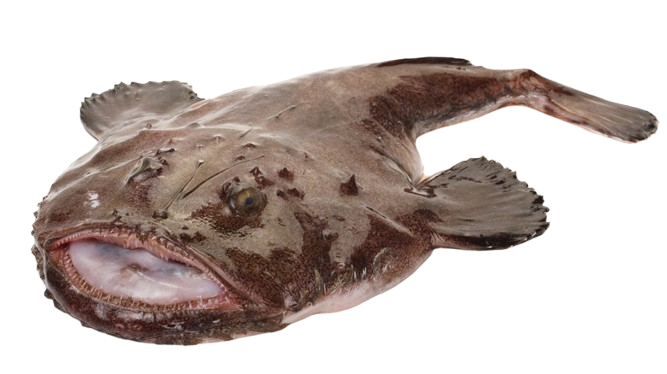
Monkfish is a bottom-dwelling anglerfish known for its sweet meat that resembles lobster tail. A raw monkfish (150g) supplies 114 monkfish calories. A small 3-ounce serving of cooked monkfish (85g) provides 82 calories, while a 4-ounce portion (113g) supplies 110 calories. A large 6-ounce fillet of cooked monkfish (170g) yields 165 calories. Energy content fluctuates based on preparation, as the liver (Ankimo) contains significantly more calories in monkfish due to high fat reserves, providing 441 calories per 100g. A serving of Skinless and boneless monkfish fillets by Tesco Finest (100g) provides 97 calories, while a small serving of Citarella Monkfish (1oz) contains 21.25 calories.
A nutritional assessment of monkfish nutrition facts reveals a protein-rich food source with minimal lipid content. A 4-ounce portion of cooked monkfish (113g) provides 21g of protein and 2.3g of fat. The fish serves as an excellent source of essential trace minerals required for hormonal balance. Research by Rayman, M. P. (2012), "Selenium and human health," confirms that the high selenium content in such fish prevents thyroid dysfunction and supports metabolic regulation. The caloric load derives primarily from protein, making the fish a satiating option for balanced diets. Regarding lipids, monkfish is a lean white fish with less than 2% fat by weight, similar to cod. Micronutrient intake is substantial, offering 565mg of potassium (12% DV) per medium serving. Vitamin B12 is present in beneficial amounts, providing 1.3mcg per medium serving to support nerve function.
Global production of monkfish depends heavily on the capture fisheries of major nations, with the United Kingdom, United States, and France leading harvest volumes. This supply caters to specific regional markets, where European and Asian countries consume significant quantities of this marine resource. Monkfish is a primary component in bouillabaisse, ankimo, and grilled kebabs popular in French, Japanese, and Spanish cuisines. Increasing global demand has pushed retail costs higher, with the price of fresh monkfish fillets rising from between $6.00 and $8.00 per lb in the early 2000s to between $16.00 and $22.00 per lb by 2024. Restaurants reflect this shift, as the price of Ankimo with Caviar at Nobu increased from $18.00 in 2012 to between $28.00 and $35.00 in 2024.
Monkfish is a nutrient-dense protein featuring substantial levels of Vitamin B12 (1.3mcg) and selenium (53.7mcg) per 4 oz serving. This monkfish nutrition profile supports energy metabolism and strengthens immune defense. Dietitians advise consuming one serving of monkfish per week to optimize nutrient intake while mitigating potential mercury exposure, which is estimated to be 20.5mcg of mercury per 4 oz fillet. A large 6-ounce monkfish fillet contains 165 calories, an energy load that requires 45 minutes of sweeping or 35 minutes of weeding to metabolize.
Monkfish nutrition
| Stats | Weight |
|---|---|
| Carbs | 0 grams |
| Protein | 21 grams |
| Fats | 0 grams |
| Sugars | 0 grams |
- Large Monkfish Calories (Nutritional Facts)
- Medium Monkfish Calories (Nutritional Facts)
- Small Monkfish Calories (Nutritional Facts)
- Monkfish Liver Calories (Nutritional Facts)
- Raw Monkfish Nutrition
- Sodium in Monkfish
- Potassium in Monkfish
- Mercury in Monkfish
- Sugar in Monkfish
- Fiber in Monkfish
- Protein in Monkfish
- Carbs in Monkfish
- Fat in Monkfish
- Vitamins in Monkfish
- Minerals in Monkfish
Large Monkfish Calories (Nutritional Facts)
A large 6-ounce fillet of cooked monkfish (170g) contains 165 calories, 31.5g of protein, 3.4g of fat, 0g of carbohydrates, 0g of fiber, 0g of sugar, and 306mg of sodium.
A medium 4-ounce portion of cooked monkfish (113g) provides 110 calories, 21g of protein, 2.3g of fat, 0g of carbohydrates, 0g of fiber, 0g of sugar, and 203mg of sodium.
A small 3-ounce serving of cooked monkfish (85g) contains 82 calories, 15.8g of protein, 1.7g of fat, 0g of carbohydrates, 0g of fiber, 0g of sugar, and 153mg of sodium.
A serving of steamed monkfish liver (100g or 3.5oz) supplies 441 calories, 9.8g of protein, 42g of fat, 3.6g of carbohydrates, 0g of fiber, 0g of sugar, and 110mg of sodium.
A raw monkfish (150g) supplies 114 calories, 21.8g of protein, 2.3g of fat, 0g of carbohydrates, 0g of fiber, 0g of sugar, and 27mg of sodium.
A large 6-ounce fillet of cooked monkfish (170g) contains 306mg of sodium (13% DV). A medium 4-ounce portion of cooked monkfish (113g) has 203mg of sodium (9% DV). A small 3-ounce serving of cooked monkfish (85g) contains 153mg of sodium (7% DV). A raw monkfish (150g) supplies 27mg of sodium (1% DV).
A large 6-ounce fillet of cooked monkfish (170g) contains 850mg of potassium (18% DV). A medium 4-ounce portion of cooked monkfish (113g) has 565mg of potassium (12% DV). A small 3-ounce serving of cooked monkfish (85g) contains 425mg of potassium (9% DV). A raw monkfish (150g) supplies 600mg of potassium (13% DV).
A large 6-ounce fillet of cooked monkfish (170g) contains 30.8mcg of mercury. A medium 4-ounce portion of cooked monkfish (113g) has 20.5mcg of mercury. A small 3-ounce serving of cooked monkfish (85g) contains 15.4mcg of mercury. A cup of raw monkfish (150g) supplies 27.2mcg of mercury.
A large 6-ounce fillet of cooked monkfish (170g) contains 0g of sugar. A medium 4-ounce portion of cooked monkfish (113g) has 0g of sugar. A small 3-ounce serving of cooked monkfish (85g) contains 0g of sugar. A raw monkfish (150g) supplies 0g of sugar.
A large 6-ounce fillet of cooked monkfish (170g) provides 0g of dietary fiber (0% DV). A medium 4-ounce portion of cooked monkfish (113g) has 0g of fiber (0% DV). A small 3-ounce serving of cooked monkfish (85g) contains 0g of fiber (0% DV). A raw monkfish (150g) supplies 0g of fiber (0% DV).
A large 6-ounce fillet of cooked monkfish (170g) provides 31.5g of protein (63% DV). A medium 4-ounce portion of cooked monkfish (113g) has 21g of protein (42% DV). A small 3-ounce serving of cooked monkfish (85g) contains 15.8g of protein (32% DV). A raw monkfish (150g) supplies 21.8g of protein (44% DV).
A large 6-ounce fillet of cooked monkfish (170g) contains 0g of carbohydrates (0% DV). A medium 4-ounce portion of cooked monkfish (113g) has 0g of carbohydrates (0% DV). A small 3-ounce serving of cooked monkfish (85g) contains 0g of carbohydrates (0% DV). A raw monkfish (150g) supplies 0g of carbohydrates (0% DV).
A large 6-ounce fillet of cooked monkfish (170g) contains 3.4g of total fat (4% DV). A medium 4-ounce portion of cooked monkfish (113g) has 2.3g of total fat (3% DV). A small 3-ounce serving of cooked monkfish (85g) contains 1.7g of total fat (2% DV). A raw monkfish (150g) supplies 2.3g of total fat (3% DV).
A large 6-ounce fillet of cooked monkfish (170g) provides 1.9mcg of Vitamin B12 (79% DV) and 3.4mg of Niacin (21% DV). A medium 4-ounce portion of cooked monkfish (113g) has 1.3mcg of Vitamin B12 (54% DV) and 2.3mg of Niacin (14% DV). A small 3-ounce serving of cooked monkfish (85g) contains 0.9mcg of Vitamin B12 (38% DV) and 1.7mg of Niacin (11% DV). A raw monkfish (150g) supplies 1.5mcg of Vitamin B12 (63% DV).
A large 6-ounce fillet of cooked monkfish (170g) provides 0.6mg of iron (3% DV), 34mg of calcium (3% DV), and 80.8mcg of selenium (147% DV). A medium 4-ounce portion of cooked monkfish (113g) has 0.4mg of iron (2% DV), 23mg of calcium (2% DV), and 53.7mcg of selenium (98% DV). A small 3-ounce serving of cooked monkfish (85g) contains 0.3mg of iron (2% DV), 17mg of calcium (1% DV), and 40.4mcg of selenium (73% DV). A raw monkfish (150g) supplies 0.5mg of iron (3% DV) and 27mg of calcium (2% DV).
Get a Custom Report on Monkfish Nutrition Data – Contact Us!
What are the Types of Monkfish?
The types of Monkfish include American, European, and Black-bellied. The chart below delineates the nutritional variances among these species.
| Type | Description | Calories (Per 100g Cooked) | Calorie Qualifications |
|---|---|---|---|
|
American Monkfish
|
Found in the NW Atlantic. | 97 | The calorie count reflects the lean, firm texture of the tail meat. |
|
European Monkfish
|
Found in the NE Atlantic. | 95 | The nutritional profile closely mimics the American variety, maintaining a low energy load. |
|
Black-bellied Monkfish
|
Smaller species, Mediterranean. | 92 | The slightly smaller size often results in a leaner composition. |
|
Monkfish Liver (Ankimo)
|
Delicacy, high fat. | 441 | The liver stores significant fat reserves, resulting in a very high caloric density. |
|
Smoked Monkfish
|
Cured and smoked tail. | 110 | The smoking process reduces moisture, slightly concentrating the nutrients. |
What are Main Dishes With Monkfish?
Monkfish functions as a versatile protein in stews, roasts, and liver pâtés. The firm flesh allows the fish to withstand high heat without falling apart. Specific dishes utilizing this fish are listed below.
| Dish Name | Calories (Estimate) | Type of Dish | Carbs (g) (Estimate) | Sugar (g) (Estimate) | Protein (g) (Estimate) | Fat (g) (Estimate) | Cuisine | Restaurants |
|---|---|---|---|---|---|---|---|---|
|
Ankimo (Monkfish Liver)
|
250 | Appetizer | 5 | 2 | 10 | 20 | Japanese | Nobu |
|
Roasted Monkfish Tail
|
280 | Entree | 2 | 0 | 35 | 12 | French | Le Bernardin (New York, NY) |
|
Monkfish Bourride
|
450 | Stew Entree | 25 | 4 | 30 | 25 | French | Bouley at Home (New York, NY) |
|
Grilled Monkfish Kebabs
|
220 | Entree | 5 | 2 | 30 | 8 | Mediterranean | Zaytinya (Washington, D.C.) |
|
Pan-Seared Monkfish
|
300 | Entree | 4 | 0 | 32 | 16 | American | The Oceanaire (Various Locations) |
|
Monkfish Curry
|
400 | Soup Entree | 15 | 5 | 28 | 25 | Indian/Thai | Arun's Thai Restaurant (Chicago, IL) |
|
Monkfish Osso Buco
|
350 | Braised Entree | 12 | 4 | 35 | 15 | Italian | Il Buco (New York, NY) |
|
Fried Monkfish Cheeks
|
380 | Appetizer | 20 | 1 | 25 | 22 | Spanish | Boqueria (New York, NY) |
|
Monkfish Stew (Caldeirada)
|
420 | Stew Entree | 30 | 6 | 35 | 18 | Portuguese | Seabra's Marisqueira (Newark, NJ) |
|
Monkfish Liver Pâté
|
320 | Appetizer | 3 | 0 | 12 | 28 | French | Bouchon (Yountville, CA) |
What Cuisines Prefer Monkfish the Most?
Monkfish serves as a foundational ingredient in French, Japanese, and Spanish culinary traditions. The following chart identifies culinary traditions that rely heavily on this seafood.
| Cuisine | Dish | Types of Monkfish Use | Calories (Estimate) | Restaurant(s) |
|---|---|---|---|---|
|
French
|
Bourride | Stewed/Poached | 450 | Le Bernardin (New York, NY) |
|
Japanese
|
Ankimo | Steamed Liver | 250 | Nobu |
|
Spanish
|
Suquet de Peix | Stewed | 400 | Boqueria (New York, NY) |
|
American
|
Roasted Tail | Roasted | 280 | The Lobster Place (New York, NY) |
|
Italian
|
Coda di Rospo | Braised | 350 | Il Buco (New York, NY) |
|
Portuguese
|
Arroz de Tamboril | Rice Stew | 500 | Seabra's Marisqueira (Newark, NJ) |
|
Korean
|
Agu-jjim | Braised/Spicy | 450 | K-Town Food Courts (National) |
|
British
|
Monkfish Scampi | Battered/Fried | 550 | The Chippy (New York, NY) |
|
Chinese
|
Stir-fried Monkfish | Stir-fry | 300 | Ping's Seafood (New York, NY) |
|
Mediterranean
|
Grilled Kebabs | Grilled | 220 | Zaytinya (Washington, D.C.) |
Which Countries Produce the Most Monkfish?
The countries that produce the most monkfish are the United Kingdom, the United States, and France, driven by extensive bottom-trawl fisheries in the Atlantic. These nations manage the vast majority of the global supply to meet domestic and export demand. China and South Korea also maintain substantial output levels, particularly for the Asian species Lophius litulon. The table below presents the estimated capture production of monkfish for the top producing nations over the last two decades.
| Country | 2003 | 2008 | 2013 | 2018 | 2019 | 2020 | 2021 | 2022 | 2023 |
|---|---|---|---|---|---|---|---|---|---|
| United Kingdom | 18.5 | 20.2 | 22.6 | 25.4 | 26.2 | 24.5 | 23.4 | 22.2 | 21.0 |
| United States | 22.4 | 18.6 | 15.5 | 12.2 | 11.5 | 10.2 | 11.6 | 12.5 | 13.0 |
| France | 15.2 | 16.5 | 18.2 | 19.4 | 18.8 | 17.5 | 16.8 | 16.2 | 15.5 |
| China | 10.5 | 12.2 | 14.6 | 16.8 | 17.2 | 18.5 | 19.4 | 20.2 | 21.5 |
| South Korea | 8.4 | 9.2 | 10.5 | 11.8 | 12.2 | 12.5 | 12.8 | 13.2 | 13.5 |
| Spain | 12.5 | 11.2 | 10.5 | 9.8 | 9.5 | 9.2 | 8.8 | 8.5 | 8.2 |
| Ireland | 6.5 | 7.2 | 8.5 | 9.2 | 9.0 | 8.8 | 8.6 | 8.4 | 8.2 |
| Norway | 4.2 | 5.5 | 6.8 | 7.5 | 7.8 | 8.0 | 8.2 | 8.4 | 8.6 |
Which Countries Consume the Most Monkfish?
The countries that consume the most monkfish are France, Spain, and Japan, where the fish is a culinary staple. The domestic markets absorb a significant portion of the regional catch, utilizing the fish in stews and liver delicacies. The United States and Italy also function as major consumers due to the popularity of fine dining seafood. The table below shows the estimated consumption values and import demand for monkfish in key markets.
| Country | 2003 | 2008 | 2013 | 2018 | 2019 | 2020 | 2021 | 2022 | 2023 |
|---|---|---|---|---|---|---|---|---|---|
| France | 45.2 | 55.6 | 65.8 | 75.4 | 72.1 | 70.5 | 74.2 | 76.5 | 78.0 |
| Spain | 35.4 | 45.2 | 55.6 | 65.8 | 68.2 | 65.5 | 68.2 | 70.5 | 72.0 |
| Japan | 25.6 | 30.2 | 35.4 | 40.2 | 42.5 | 45.2 | 48.6 | 50.4 | 52.5 |
| Italy | 20.5 | 25.4 | 30.2 | 35.6 | 36.8 | 38.5 | 40.2 | 42.5 | 44.0 |
| United States | 15.2 | 18.5 | 22.4 | 25.6 | 26.8 | 28.5 | 30.2 | 32.5 | 34.0 |
| South Korea | 10.5 | 12.2 | 15.6 | 18.2 | 19.5 | 20.8 | 21.5 | 22.2 | 23.0 |
| United Kingdom | 12.5 | 14.2 | 16.5 | 18.4 | 19.2 | 20.5 | 21.4 | 22.5 | 23.5 |
| Germany | 8.5 | 10.2 | 12.5 | 14.5 | 15.2 | 15.8 | 16.5 | 17.2 | 18.0 |
How Do Prices of Monkfish-Including Dishes Change?
Restaurant costs for monkfish entrees have surged, mirroring the increased expense of sourcing this premium fish. The table below illustrates price adjustments for selected items at well-known establishments.
| Brand/Restaurant | Dish | Old Price (Year) | Current Price (2024/2025) |
|---|---|---|---|
| Nobu (Los Angeles, CA) | Ankimo with Caviar | $18.00 (2012) | $28.00 - $35.00 |
| The Lobster Place (New York, NY) | Monkfish Fillet (lb) | $12.99 (2010) | $19.50 - $24.99 |
| Citarella (New York, NY) | Fresh Monkfish Tail | $14.99 (2012) | $20.99 - $26.99 |
| Highland Fish Market | Baked Monkfish | $19.00 (2010) | $22.99 - $26.00 |
What is the Monkfish Calorie for 100 Grams?
A 100g serving of fresh raw monkfish contains 76 calories, while the same quantity of cooked monkfish provides 97 calories.
What is the Monkfish Calorie for 1 KG?
One kilogram (1000g) of fresh raw monkfish contains 760 calories, whereas a kilogram of cooked monkfish provides 970 calories.
What is the Calorie of 1 Monkfish?
A single raw monkfish tail fillet (200g) contains 152 calories. Retail offerings present distinct energy values, as a serving of Skinless and boneless monkfish fillets by Tesco Finest (100g) provides 97 calories, while a serving of Citarella Monkfish (1oz) contains 21.25 calories.
What are the Health Benefits of Monkfish?
Monkfish provides notable physiological advantages, specifically regarding thyroid support, muscle maintenance, and neurological function. The fish functions as a concentrated source of selenium and complete proteins. The following points highlight these benefits.
- Supports Thyroid Function: Monkfish contains exceptionally high concentrations of selenium, a mineral critical for thyroid hormone synthesis. A study by Rayman, M. P. (2012), "Selenium and human health," confirmed that adequate selenium intake prevents thyroid dysfunction and supports metabolic regulation.
- Promotes Muscle Maintenance: The fish supplies high-quality complete protein necessary for tissue repair. Research by Paddon-Jones, D., & Rasmussen, B. B. (2009), "Dietary protein recommendations and the prevention of sarcopenia," established that leucine-rich proteins found in fish effectively stimulate muscle protein synthesis in adults.
- Boosts Neurological Health: Vitamin B12 found in the flesh aids in nerve health and cognitive processes. A study by O'Leary, F., & Samman, S. (2010), "Vitamin B12 in health and disease," established that Vitamin B12 is essential for maintaining the myelin sheath and preventing neurological degeneration.
What are the Downsides of Monkfish?
Monkfish remains safe for most populations, yet specific environmental and biological concerns exist. Potential adverse effects are outlined below.
- Exposes to Mercury: Certain long-lived species of monkfish accumulate methylmercury over time. A study by Bosch, A. C., et al. (2016), "Heavy metals in marine fish meat and consumer health: a review," notes that predatory fish can exceed safe mercury limits, posing risks to fetal development.
- Triggers Fish Allergies: The fish contains parvalbumins, which are potent allergens for sensitive individuals. Research by Sharp, M. F., & Lopata, A. L. (2014), "Fish allergy: in review," indicates that these proteins remain stable even after cooking, causing reactions in allergic subjects.
Are Monkfish Good for You?
Yes, monkfish are good for health because the fish supports cardiovascular efficiency, nerve function, and immune defense. The high Vitamin B12 content aids nerve function and red blood cell formation, a mechanism detailed in the study by O'Leary, F., & Samman, S. (2010), "Vitamin B12 in health and disease." Heart health improves through the presence of potassium and selenium, which help regulate blood pressure as explored by Rayman, M. P. (2012), "Selenium and human health." Immune health benefits from the protein content, which is essential for antibody production as confirmed by Li, P., et al. (2007), "Amino acids and immune function."
How Do Calories Change According to Monkfish Types?
Caloric density fluctuates significantly between the flesh and the liver of the fish. Monkfish Liver (Ankimo) contains the highest energy load at approximately 441 calories per 100 grams due to high fat content. Cooked Monkfish Tail presents a moderate profile at 97 calories per 100 grams. Raw Monkfish offers the lowest profile at 76 calories per 100 grams, maintaining a lean composition suitable for low-fat diets.
Is Monkfish a White Fish?
Yes, monkfish is classified as a white fish due to the low lipid content and pearly white flesh found in the tail. The meat contains less than 2% fat by weight, aligning with the nutritional characteristics of other white fish like cod and haddock. The texture resembles lobster, earning the fish the nickname "poor man's lobster," but the biological classification places the species among lean, demersal white fish.
What are the Desserts With Monkfish?
Sweet courses featuring monkfish are non-existent due to the fish's firm, lobster-like texture and distinct savory flavor. Culinary uses are strictly limited to savory main courses and appetizers where the flesh absorbs spices, acidic sauces, and savory broths. The natural salinity and protein composition do not pair well with sugar or fruit.
How Does Cooking Affect Monkfish Nutrition?
Cooking of monkfish alters the nutritional density of monkfish by reducing moisture content and potentially adding external fats. Grilling or roasting concentrates the protein content per gram due to water evaporation, slightly increasing the caloric density to 97 calories per 100g. Deep-frying significantly elevates the energy load and fat content due to oil absorption, often doubling the caloric value compared to steamed preparations.
Is Monkfish Safe to Eat?
Yes, monkfish is safe to eat when cooked properly, though consumers must monitor intake due to moderate mercury levels. The FDA classifies monkfish as a "Good Choice," recommending one serving per week for pregnant women and children. Proper cooking to an internal temperature of 145°F ensures the elimination of potential parasites found in wild-caught bottom dwellers.
What is the Origin of Monkfish?
Monkfish (Lophius spp.) originated in the North Atlantic Ocean, inhabiting the coastal waters of Europe and North America. Fishermen historically discarded the fish due to the grotesque appearance of the broad head and wide mouth. Culinary appreciation grew in the late 20th century as chefs recognized the firm, lobster-like texture of the tail meat, transforming the species from bycatch to a premium seafood delicacy.
Explore More Seafood
Discover more Seafood with detailed nutrition facts, calorie counts, vitamins, minerals, and health benefits. Compare similar foods, serving sizes, macronutrients, and key nutrients to find the best option for your diet and nutrition goals.
 Anchovies calories
 Barramundi calories
 Bluefin Tuna calories
 Bluefish calories
 Calamari calories
 Catfish calories
 Clams calories
 Cod calories
 Conch calories
 Crab calories
 Eel calories
 Fish calories