Calories and Nutritions in Mussels
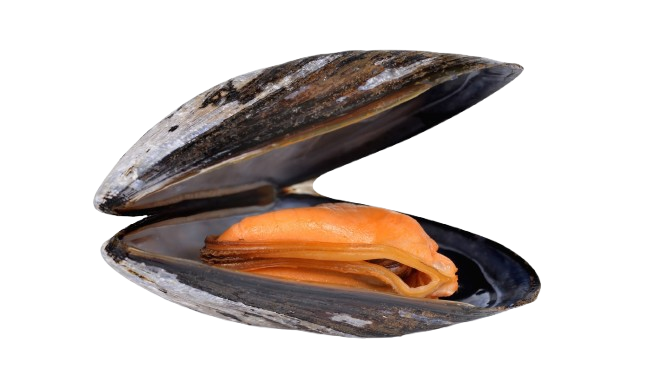
Mussels calories are moderate, with a 100g (3.5 oz) serving of cooked blue mussels (meat only) containing 172 calories. One-cup serving of cooked blue mussel meat (150g, 5.3 oz) provides 258 calories. Mussels nutrition facts show high nutrient density, with a 100g portion of cooked blue mussels offering 23.8g of protein (48% Daily Value/DV), 24µg of Vitamin B12 (1000% DV), 6.72mg of iron (37% DV), and 89.6µg of selenium (163% DV). Mussels are also a good source of omega-3 fatty acids. Research indicates that shellfish, including mussels, contribute valuable micronutrients and high-quality protein to the diet, supporting overall health (Venugopal, V. & Gopakumar, K., 2017, "Nutritional and functional properties of bivalve molluscs").
The calories in mussels vary by type. Cooked New Zealand green-lipped mussels are lower in calories at 107 per 100g, while raw blue mussels contain 86 calories per 100g. Canned mussels in oil (drained) have around 163 calories per 100g. China is the leading global producer of mussels, with Spain and Chile also being major producers. European countries like Spain, France, and Belgium are among the highest per capita consumers. The price of fresh mussels in the U.S. has seen a moderate increase, often retailing for $3.50 to $6.00 per pound in 2023, up from $2.00 to $4.00 in the early 2000s.
Mussels are featured in dishes such as Moules Frites at Belgian bistros like Mon Ami Gabi, steamed mussels in white wine at restaurants like Bonefish Grill, and in seafood pastas at Italian eateries. Burning 172 calories from a 100g serving of steamed blue mussels requires about 15-20 minutes of jogging, 20-25 minutes of brisk walking, or 25-30 minutes of cycling at a moderate intensity.
Mussels nutrition
| Stats | Weight |
|---|---|
| Carbs | 7 grams |
| Protein | 24 grams |
| Fats | 0 grams |
| Sugars | 0 grams |
- Black Mussels Calories (Nutritional Facts)
- Green Mussels Calories (Nutritional Facts)
- Steamed Mussels Calories (Nutritional Facts)
- Canned Mussels Calories (Nutritional Facts)
- Smoked Mussels Calories (Nutritional Facts)
- Raw Mussels Nutrition
- Sodium in Mussels
- Potassium in Mussels
- Sugar in Mussels
- Iron in Mussels
- Omega 3 in Mussels
- Fiber in Mussels
- Protein in Mussels
- Carbs in Mussels
- Fat in Mussels
- Vitamins in Mussels
- Minerals in Mussels
Black Mussels Calories (Nutritional Facts)
A 100g (3.5 oz) serving of cooked blue mussels (a common black mussel) contains 172 calories. One cup of cooked blue mussels (150g, 5.3 oz, meat only) provides 258 calories. Cooked blue mussels (100g) also contain 23.8g of protein, 7.4g of carbohydrates, and 4.5g of total fat. Raw blue mussels (100g) contain 86 calories.
A 100g (3.5 oz) serving of cooked New Zealand green-lipped mussels contains 107 calories. Three ounces (85g, 3 oz) of cooked green-lipped mussels provide 91 calories. Cooked green-lipped mussels (100g) contain 18.8g of protein, 3.8g of carbohydrates, and 2.2g of total fat. Raw green-lipped mussels (100g) contain 88 calories.
A 100g (3.5 oz) serving of steamed blue mussels (meat only) contains 172 calories. This is because steaming is a moist heat cooking method that does not add fat, and the calorie change from raw (86 calories per 100g) is due to water loss and concentration of nutrients. A typical serving of one pound of mussels in shell (454g) yields about 100-150g (3.5-5.3 oz) of cooked meat, which would contain 172-258 calories.
A 100g (3.5 oz) serving of canned mussels, drained solids, in oil, contains 163 calories. A 3 oz can (85g, drained solids 50g) of Crown Prince Natural Smoked Mussels in Olive Oil provides 100 calories for the drained solids. Canned mussels in brine or water, drained (100g), will have fewer calories, closer to cooked plain mussels, around 90-120 calories, as they don't absorb as much oil. Canned mussels in oil (100g, drained) contain 12.3g of protein, 5.9g of carbohydrates, and 9.5g of total fat.
A 100g (3.5 oz) serving of smoked mussels (often canned in oil, drained) contains 163 calories. One can (85g, 3 oz total, with oil) of smoked mussels can contain 180-220 calories; if drained, the mussel meat itself will be lower. Smoked mussels (100g, drained, if previously in oil) contain 12.3g of protein, 5.9g of carbohydrates, and 9.5g of total fat. If smoked without oil packing, the calories would be closer to plain cooked mussels.
A 100g (3.5 oz) serving of raw blue mussels (meat only) contains 86 calories. This portion also provides 11.9g of protein, 3.7g of total carbohydrates, and 2.2g of total fat. One cup of raw blue mussel meat (150g, 5.3 oz) provides 129 calories.
Raw blue mussels (100g) contain 286mg of sodium (12% DV). Cooked blue mussels (100g, steamed) provide 369mg of sodium (16% DV). Canned mussels in brine (drained, 100g) can contain 300-700mg of sodium (13-30% DV) or more. Smoked mussels canned in oil (drained, 100g) have 257mg of sodium (11% DV).
Raw blue mussels (100g) provide 320mg of potassium (7% DV). Cooked blue mussels (100g, steamed) contain 268mg of potassium (6% DV). Canned, drained mussels (100g) offer 130mg of potassium (3% DV).
Raw blue mussels (100g) contain 0g of total sugars. Cooked blue mussels (100g, steamed) also contain 0g of total sugars. Canned and smoked mussels (plain, 100g) typically contain 0g of sugar, unless they are in a sweetened sauce.
Raw blue mussels (100g) are a good source of iron, providing 3.95mg (22% DV). Cooked blue mussels (100g, steamed) are an excellent source of iron, with 6.72mg (37% DV). Canned, drained mussels (100g) offer 3.8mg of iron (21% DV).
A 100g (3.5 oz) serving of cooked blue mussels provides 738mg of combined EPA and DHA omega-3 fatty acids. Raw blue mussels (100g) contain 410mg of combined EPA and DHA. Green-lipped mussels are also noted for their omega-3 content, particularly EPA and DHA, and other beneficial fatty acids.
Raw blue mussels (100g) contain 0g of dietary fiber. Cooked blue mussels (100g, steamed) also provide 0g of dietary fiber. Canned and smoked mussels (100g) contain 0g of dietary fiber.
Raw blue mussels (100g) provide 11.9g of protein (24% DV). Cooked blue mussels (100g, steamed) contain 23.8g of protein (48% DV). Canned, drained mussels in oil (100g) offer 12.3g of protein (25% DV).
Raw blue mussels (100g) have 3.7g of total carbohydrates (1% DV). Cooked blue mussels (100g, steamed) contain 7.4g of total carbohydrates (3% DV). Canned, drained mussels in oil (100g) provide 5.9g of total carbohydrates (2% DV).
Raw blue mussels (100g) contain 2.2g of total fat (3% DV), which includes 0.4g of saturated fat. Cooked blue mussels (100g, steamed) have 4.5g of total fat (6% DV), with 0.9g of saturated fat. Canned, drained mussels in oil (100g) provide 9.5g of total fat (12% DV), with 2g of saturated fat, due to the oil.
A 100g (3.5 oz) serving of cooked blue mussels is a good source of Vitamin B12, providing 24µg (1000% DV). It is also an excellent source of Selenium at 89.6µg (163% DV) and Manganese at 6.8mg (296% DV). It provides Vitamin C at 13.6mg (15% DV) and Folate at 76µg (19% DV). Raw blue mussels (100g) contain 12µg of Vitamin B12 (500% DV).
A 100g (3.5 oz) serving of cooked blue mussels is a good source of Selenium (89.6µg, 163% DV), Manganese (6.8mg, 296% DV), and Iron (6.72mg, 37% DV). It also provides Phosphorus at 285mg (41% DV), Zinc at 2.67mg (24% DV), and Potassium at 268mg (6% DV). Raw blue mussels (100g) are also rich in these minerals.
Get a Custom Report on Mussels Nutrition Data – Contact Us!
What are the Types of Mussels?
There are several different types of mussels commonly consumed worldwide, with Blue mussels and Green-lipped mussels being two of the most well-known. They vary in size, shell color, and subtly in flavor and texture. The table below shows some common types of mussels and their calorie information.
| Type | Description | Calories (per 100g cooked meat) | Calorie Qualifications |
|---|---|---|---|
|
Blue Mussel (Common Mussel)
|
(Mytilus edulis) Dark blue to black shells, found in North Atlantic and Pacific. Most widely consumed. | 172 | Moderate in calories, excellent source of protein and B12. |
|
Green-Lipped Mussel (New Zealand Green Mussel)
|
(Perna canaliculus) Distinctive green edge on its shell, native to New Zealand. Larger size. | 107 | Lower in calories than blue mussels, noted for anti-inflammatory compounds. |
|
Mediterranean Mussel
|
(Mytilus galloprovincialis) Similar to blue mussel, found in Mediterranean, parts of Atlantic/Pacific. | 170-180 | Similar calorie and nutrient profile to blue mussels. |
|
Ribbed Mussel
|
(Geukensia demissa) Found in salt marshes along the Atlantic coast of North America. Less commonly eaten. | 80-90 (raw estimate) | Calorie data less common; likely low similar to other raw mussels. |
|
Horse Mussel
|
(Modiolus modiolus) Large mussel found in deeper waters of North Atlantic. Not as commonly farmed/eaten. | 85-95 (raw estimate) | Calorie data less common; likely low in calories. |
What are the Main Dishes with Mussels?
Mussels are a popular shellfish featured in a variety of flavorful main dishes around the world. Some of the most widespread main dishes that contain mussels include Moules Frites, steamed mussels in white wine and garlic, and seafood paellas. They are often steamed, simmered in broths or sauces, or added to pasta and rice dishes. The table below lists various main dishes incorporating mussels:
| Dish Name | Calories (per serving) | Type of Mussel Commonly Used | Carbs (g) | Sugar (g) | Protein (g) | Fat (g) | Cuisine | Restaurants |
|---|---|---|---|---|---|---|---|---|
|
Moules Frites (Mussels with French Fries)
|
600-900 | Blue, Mediterranean | 50-70 | 2-5 | 30-45 | 25-45 | Belgian, French | Balthazar (NYC), Mon Ami Gabi (Las Vegas, Chicago), local French/Belgian bistros |
|
Steamed Mussels in White Wine & Garlic Broth
|
300-500 (appetizer/main) | Blue, Mediterranean | 10-20 | 2-5 | 25-40 | 10-20 | European (French, Italian, Spanish) | Bonefish Grill, Carrabba's Italian Grill (seasonal), Red Lobster (seasonal) |
|
Mussels Marinara (with Red Tomato Sauce)
|
350-550 | Blue, Mediterranean | 15-30 | 5-10 | 25-40 | 10-20 | Italian, Italian-American | Olive Garden (seasonal), local Italian restaurants |
|
Seafood Paella (often includes mussels)
|
500-800 | Blue, Mediterranean | 60-80 | 3-6 | 25-40 | 15-30 | Spanish | Jaleo by José Andrés, Spanish restaurants |
|
Mussels with Pasta (e.g., Linguine, Spaghetti)
|
550-850 | Blue, Mediterranean | 60-90 | 4-8 | 25-40 | 18-30 | Italian, Italian-American | Local Italian restaurants, some Olive Garden or Carrabba's seasonal seafood pasta dishes |
|
Thai Green Curry with Mussels
|
400-650 | Blue, Green-Lipped | 20-35 | 5-10 | 20-30 | 20-35 | Thai | Local Thai restaurants |
|
Mussels in Coconut Broth with Lemongrass & Ginger
|
350-550 | Blue, Green-Lipped | 15-25 | 4-8 | 20-30 | 15-25 | Southeast Asian, Fusion | Some Asian fusion restaurants |
|
Bouillabaisse (Provençal Fish Stew, often with mussels)
|
400-700 | Blue, Mediterranean | 15-25 | 3-6 | 30-45 | 15-25 | French (Provençal) | Upscale French restaurants specializing in regional cuisine |
|
Cioppino (Italian-American Fish Stew, with mussels)
|
400-700 | Blue, Mediterranean | 15-30 | 5-10 | 30-45 | 10-20 | Italian-American (San Francisco) | Tadich Grill (San Francisco), various seafood restaurants |
|
Mussels Escabeche (Pickled Mussels)
|
150-250 (appetizer) | Blue, Mediterranean | 5-10 | 2-4 | 10-18 | 5-10 | Spanish, Mediterranean | Spanish tapas bars |
|
Creamy Garlic Mussels
|
400-600 | Blue, Mediterranean | 10-20 | 2-5 | 25-35 | 25-40 | European | Many bistros and seafood restaurants |
|
Mussels with Chorizo and Smoked Paprika
|
450-700 | Blue, Mediterranean | 10-20 | 2-4 | 30-45 | 25-40 | Spanish, Portuguese | Spanish or Portuguese restaurants |
|
New England Style Steamed Mussels (with drawn butter)
|
350-550 | Blue | 5-10 | <1 | 25-35 | 20-35 | American (New England) | New England seafood shacks and restaurants |
|
Mussels in Saffron Broth
|
300-500 | Blue, Mediterranean | 8-15 | 1-3 | 25-35 | 10-20 | Mediterranean | Upscale Mediterranean or seafood restaurants |
|
Korean Spicy Mussel Soup (Honghap Tang)
|
200-350 (bowl) | Korean Black Mussels | 5-15 | 1-3 | 15-25 | 5-10 | Korean | Korean pubs (pojangmacha style), Korean seafood restaurants |
What Cuisines Prefer Mussels the Most?
Mussels are a cherished delicacy in numerous coastal cuisines globally, particularly in Europe where countries like Belgium, France, Spain, Portugal, and Italy have iconic mussel dishes. Southeast Asian cuisines, especially Thai and Vietnamese, also make use of mussels, often incorporating them into flavorful broths and curries. The table below highlights some of the cuisines that most prominently feature mussels.
| Cuisine | Dish Name | Calories (per serving) | Restaurants |
|---|---|---|---|
|
Belgian
|
Moules Frites | 600-900 | Balthazar (NYC), Mon Ami Gabi (Las Vegas, Chicago), local Belgian bistros |
|
French
|
Moules Marinières (Mussels in White Wine) | 300-500 | Most French bistros |
|
Italian
|
Cozze alla Marinara (Mussels in Tomato Sauce) | 350-550 | Local Italian restaurants, Olive Garden (seasonal) |
|
Italian
|
Spaghetti con le Cozze (Spaghetti with Mussels) | 550-850 | Authentic Italian restaurants |
|
Spanish
|
Mejillones a la Vinagreta (Mussels Vinaigrette) | 200-350 (tapa) | Spanish tapas bars |
|
Spanish
|
Paella (often includes mussels) | 500-800 | Jaleo by José Andrés, various Spanish restaurants |
|
Portuguese
|
Amêijoas à Bulhão Pato (often made with clams, but mussels can be used or served alongside) | 300-500 | Portuguese restaurants |
|
Thai
|
Hoy Malang Phu Ob Mor Din (Pot Steamed Mussels with Herbs) | 300-500 | Local Thai restaurants |
|
American (New England)
|
Steamed Mussels ("Steamers" often refers to soft-shell clams, but blue mussels are also popular) | 300-500 | New England seafood shacks and restaurants like Legal Sea Foods |
|
Dutch
|
Mosselen-friet (similar to Belgian Moules Frites) | 600-900 | Restaurants in the Netherlands, particularly in Zeeland |
|
Korean
|
Honghap Tang (Spicy Mussel Soup) | 200-350 | Korean pubs and seafood restaurants |
Which Countries Produce the Most Mussels?
The top producers of mussels globally are China, Spain, Chile, New Zealand, and the Netherlands. China is by far the largest producer, primarily through aquaculture. Spain is renowned for its production of Mediterranean mussels, while New Zealand is famous for its green-lipped mussels. The Food and Agriculture Organization of the United Nations (FAO) provides data for "Mussels nei" (not elsewhere included) which covers various mussel species. In 2022, China's production in this category was over 9,000 kilotonnes. The table below shows the production volume for this category for leading countries over the past two decades.
| Country | 2004 | 2005 | 2006 | 2007 | 2008 | 2009 | 2010 | 2011 | 2012 | 2013 | 2014 | 2015 | 2016 | 2017 | 2018 | 2019 | 2020 | 2021 | 2022 | 2023 (Est.) |
|---|---|---|---|---|---|---|---|---|---|---|---|---|---|---|---|---|---|---|---|---|
| China | 6,500 | 6,800 | 7,100 | 7,350 | 7,600 | 7,800 | 8,050 | 8,300 | 8,550 | 8,750 | 8,900 | 9,050 | 9,180 | 9,280 | 9,350 | 9,400 | 9,430 | 9,450 | 9,460 | 9,470 |
| Spain | 250 | 260 | 270 | 240 | 220 | 200 | 180 | 210 | 230 | 255 | 260 | 240 | 220 | 210 | 200 | 190 | 180 | 185 | 190 | 192 |
| Chile | 80 | 95 | 120 | 150 | 180 | 210 | 240 | 270 | 290 | 310 | 330 | 350 | 370 | 390 | 410 | 430 | 440 | 445 | 450 | 452 |
| New Zealand | 90 | 95 | 100 | 102 | 98 | 95 | 92 | 90 | 88 | 90 | 92 | 95 | 98 | 100 | 102 | 100 | 95 | 92 | 90 | 88 |
| Netherlands | 50 | 55 | 60 | 58 | 55 | 45 | 40 | 42 | 45 | 48 | 50 | 52 | 48 | 45 | 42 | 40 | 38 | 39 | 40 | 41 |
| Italy | 70 | 75 | 80 | 82 | 78 | 75 | 70 | 68 | 65 | 62 | 60 | 58 | 55 | 52 | 50 | 48 | 45 | 46 | 47 | 48 |
Which Countries Consume the Most Mussels?
Based on FAOSTAT data regarding food supply quantity ( kg/capita/yr ) and production/trade figures, countries in Europe, particularly Spain, France, Belgium, Italy, and the Netherlands, have very high per capita consumption of mussels. China has the largest total consumption volume due to its massive production and population. Other significant consumers include Chile, New Zealand (for its green-lipped mussels), and North American countries where mussels are popular in restaurants.
| Country | 2004 | 2005 | 2006 | 2007 | 2008 | 2009 | 2010 | 2011 | 2012 | 2013 | 2014 | 2015 | 2016 | 2017 | 2018 | 2019 | 2020 | 2021 |
|---|---|---|---|---|---|---|---|---|---|---|---|---|---|---|---|---|---|---|
| China | 6450 | 6740 | 7030 | 7270 | 7510 | 7700 | 7940 | 8180 | 8420 | 8610 | 8750 | 8890 | 9010 | 9100 | 9160 | 9200 | 9220 | 9230 |
| Spain | 230 | 240 | 250 | 225 | 210 | 190 | 170 | 195 | 210 | 230 | 235 | 220 | 205 | 195 | 185 | 175 | 165 | 170 |
| France | 100 | 105 | 110 | 115 | 120 | 115 | 110 | 105 | 100 | 95 | 90 | 85 | 80 | 78 | 75 | 72 | 70 | 71 |
| Italy | 130 | 135 | 140 | 142 | 138 | 130 | 125 | 120 | 115 | 110 | 105 | 100 | 95 | 90 | 85 | 80 | 75 | 76 |
| Belgium | 45 | 47 | 49 | 50 | 52 | 50 | 48 | 46 | 45 | 43 | 42 | 40 | 38 | 37 | 36 | 35 | 33 | 34 |
| Netherlands | 60 | 65 | 70 | 68 | 65 | 55 | 50 | 52 | 55 | 58 | 60 | 62 | 58 | 55 | 52 | 50 | 48 | 49 |
| USA | 25 | 28 | 30 | 32 | 35 | 33 | 30 | 28 | 29 | 30 | 31 | 32 | 33 | 34 | 35 | 36 | 34 | 33 |
How Do Prices of Mussels-including Dishes Change?
The prices of restaurant dishes with mussels, such as Moules Frites, steamed mussels in white wine, or mussels in pasta dishes, have increased over the past 20 years. This is due to the moderate rise in the cost of mussels themselves, combined with more substantial increases in the prices of other ingredients (French fries, wine, garlic, cream, pasta, bread), and major escalations in restaurant operational costs like labor, rent, and energy. Below is a comparison of estimated prices for representative menu items where mussels are a key component.
| Restaurant Chain/Type | Dish | Old Price (2004-2008) | Estimated Current Price (2024-2025) |
|---|---|---|---|
| Balthazar | Moules Frites (Mussels with Fries) | $20.00 - $22.00 | $32.00 |
| Carrabba's Italian Grill | Mussels In White Wine Lemon Butter | $8.99 - $11.99 | $12.99 - $14.99 |
| Red Lobster (Seasonal Appetizer) | Mussels in Garlic & Wine Broth | $7.99 - $10.49 | $12.99 - $16.99 |
| Upscale Seafood Restaurant | Large Bowl of Steamed Mussels (Main Course) | $16.00 - $24.00 | $26.00 - $38.00 |
| Spanish Tapas Bar | Mejillones al Vapor (Steamed Mussels Tapa) | $6.50 - $9.50 | $10.50 - $15.50 |
How Does the Price of Mussels Change for the Last 20 Years?
The price of mussels, based on data from sources like national fisheries statistics (NOAA for U.S. landings and import prices) and wholesale market reports, has seen a general trend of moderate increase over the last 20 years. In the early 2000s, fresh, live mussels at retail in the U.S. cost $2.00 to $4.00 per pound. By the early 2020s, retail prices for fresh mussels often ranged from $3.50 to $6.00 per pound, and sometimes higher for specific types like New Zealand green-lipped mussels or depending on the season and location. The lowest prices for mussels were generally seen in the earlier part of this period, with prices gradually climbing. Price range factors include the species of mussel (blue mussels are often more affordable than green-lipped mussels), whether they are wild-caught or farmed (farmed mussels, which dominate the market, tend to have more stable pricing), size, and quality. Production costs in aquaculture, including labor, feed (though mussels are filter feeders, farm maintenance costs exist), and adherence to environmental and safety standards, influence prices. Fuel costs for harvesting and transportation also play a role. Countries that are major producers and exporters, such as Spain, Chile, New Zealand, and Canada (for blue mussels from Prince Edward Island), are key to global supply and pricing. While global mussel production, largely from aquaculture, has been relatively stable or increasing to meet consistent consumer demand (especially in Europe and North America), rising operational and distribution costs have contributed to the gradual price increase over the last two decades. Mussels remain one of the more affordable shellfish options compared to oysters or scallops.
| Year | Price |
|---|---|
| 2004 | $2 |
| 2005 | $2.1 |
| 2006 | $2.2 |
| 2007 | $2.3 |
| 2008 | $2.5 |
| 2009 | $2.6 |
| 2010 | $2.7 |
| 2011 | $2.85 |
| 2012 | $3 |
| 2013 | $3.1 |
| 2014 | $3.2 |
| 2015 | $3.3 |
| 2016 | $3.4 |
| 2017 | $3.6 |
| 2018 | $3.8 |
| 2019 | $4 |
| 2020 | $4.2 |
| 2021 | $4.6 |
| 2022 | $5.2 |
| 2023 | $5.6 |
| 2024 | $5.8 |
What is the Mussels Calorie for 100 Grams?
A 100g (3.5 oz) serving of raw blue mussels (meat only) contains 86 calories. A 100g (3.5 oz) serving of steamed blue mussels (meat only) provides 172 calories. A 100g (3.5 oz) serving of cooked New Zealand green-lipped mussels has 107 calories. Canned mussels in oil, drained (100g), contain 163 calories.
What is the Mussels Calorie for 1 KG?
One kilogram (1000g, 35.27 oz) of raw blue mussels (meat only) contains 860 calories. One kilogram (1000g, 35.27 oz) of steamed blue mussels (meat only) provides 1720 calories. One kilogram (1000g, 35.27 oz) of cooked New Zealand green-lipped mussels has 1070 calories.
What is the Calorie of Tahong Per Piece?
"Tahong" is the Filipino word for green-lipped mussels or similar local species. The calorie content of one tahong (mussel) depends on its size and type. One medium raw blue mussel (meat only, 8-10g) contains 7-9 calories. One medium cooked green-lipped mussel (meat only, 10-12g) provides 11-13 calories. A very large mussel could contain 15-20 calories or more.
What are the Health Benefits of Mussels?
Mussels provide some health benefits like supporting neurological function and boosting iron levels due to its rich array of vitamins and minerals. A list of the health benefits of mussels are shown below:
- Excellent Source of Lean Protein: Mussels are packed with high-quality protein, which is vital for building and repairing tissues, supporting muscle growth, and producing enzymes and hormones. (Paddon-Jones, D. & Rasmussen, B.B., 2009, "Dietary protein recommendations and the prevention of sarcopenia").
- Rich in Vitamin B12: Mussels are an exceptional source of Vitamin B12, crucial for nerve function, red blood cell formation, and DNA synthesis. Adequate B12 intake helps prevent anemia and supports cognitive health. (Watanabe, F., 2007, "Vitamin B12 sources and bioavailability").
- High in Iron: They are a very good source of heme iron, which is easily absorbed by the body and is essential for carrying oxygen in the blood, thus preventing iron-deficiency anemia and supporting energy levels. (Abbaspour, N., et al., 2014, "Review on iron and its importance for human health").
- Good Source of Omega-3 Fatty Acids: Mussels contain beneficial omega-3 fatty acids, including EPA and DHA, known for their anti-inflammatory properties and their role in supporting heart health and brain function. (Mozaffarian, D. & Rimm, E.B., 2006, "Fish intake, contaminants, and human health: evaluating the risks and the benefits").
- Provide Essential Minerals like Selenium and Manganese: Mussels are rich in selenium, a powerful antioxidant that supports thyroid function and protects against cell damage, and manganese, which is involved in bone health and metabolism. (Rayman, M.P., 2012, "Selenium and human health").
- Contribute to Bone Health: Mussels provide phosphorus and manganese, both of which are important for maintaining strong and healthy bones.
- Support Immune Function: The combination of zinc, selenium, and Vitamin C found in mussels contributes to a healthy immune system. (Wintergerst, E.S., et al., 2006, "Immune-enhancing role of vitamin C and zinc and effect on clinical conditions").
What are the Downsides of Mussels?
Mussels have been known to cause some unwanted effects like potential foodborne illness if not properly handled and risk of allergic reactions due to its nature as a shellfish. A list of the downsides of mussels are shown below:
- Risk of Foodborne Illness: Consuming raw or undercooked mussels can lead to foodborne illnesses from bacteria (like Vibrio species) or viruses (like norovirus, Hepatitis A) that they may filter from the water. Thorough cooking until the shells open wide is crucial. (Iwamoto, M., et al., 2010, "Epidemiology of seafood-associated infections in the United States").
- Shellfish Allergies: Mussels are molluscan shellfish, a common food allergen. Allergic reactions can range from mild (hives, itching, digestive upset) to severe and life-threatening anaphylaxis. Individuals with shellfish allergies must avoid mussels.
- Accumulation of Marine Toxins (Biotoxins): Mussels, as filter feeders, can accumulate biotoxins produced by harmful algal blooms (HABs), leading to conditions like Paralytic Shellfish Poisoning (PSP), Diarrhetic Shellfish Poisoning (DSP), or Amnesic Shellfish Poisoning (ASP) if harvested from affected waters during a bloom. Commercial harvesting areas are monitored for these toxins. (Food and Agriculture Organization of the United Nations, "Marine biotoxins").
- Potential for Heavy Metal Contamination: Mussels can accumulate heavy metals such as mercury, cadmium, and lead from their aquatic environment, especially if harvested from polluted waters. Levels are generally low in mussels compared to large predatory fish, but it is a factor to consider with sourcing. (U.S. Food and Drug Administration, "Metals and Your Food").
- Sodium Content in Prepared or Canned Varieties: While fresh mussels are moderate in sodium, prepared dishes or canned mussels in brine can be very high in sodium, which can be a concern for individuals managing blood pressure.
Is Tahong High in Mercury?
No, tahong (mussels) are generally not high in mercury. Mussels are bivalve filter feeders and are low on the aquatic food chain. This means they do not accumulate mercury in their tissues to the same extent as larger, long-lived predatory fish like shark, swordfish, or some types of tuna. The U.S. Food and Drug Administration (FDA) typically lists mussels in the "Best Choices" category for fish consumption regarding mercury levels, meaning they are among the options with the lowest mercury content and can be consumed more frequently, even by vulnerable populations like pregnant women and young children, as part of a healthy diet.
Are Mussels Good for You?
Yes, mussels are very good for you when sourced from safe waters and cooked properly. They are a highly nutritious food, packed with lean protein, an exceptional amount of Vitamin B12, and essential minerals like iron, selenium, and manganese. Mussels also provide beneficial omega-3 fatty acids, which are important for heart and brain health. (Arts, I.C. & Hollman, P.C., 2005, "Polyphenols and disease risk in epidemiologic studies" - while this refers to polyphenols, the general concept of nutrient-dense whole foods like mussels contributing to health is relevant). Their low calorie and fat content make them an excellent choice for a nutrient-rich meal. The primary health considerations are ensuring they are cooked thoroughly to avoid foodborne illness and being aware of potential shellfish allergies. (Venugopal, V. & Gopakumar, K., 2017, "Nutritional and functional properties of bivalve molluscs").
How Do Calories Change According to Mussel Types?
The calorie content of mussels can vary somewhat according to the specific type, though most fresh, cooked mussel meat falls into a moderate calorie range. Cooked blue mussels, one of the most common types, contain 172 calories per 100g of meat. Mediterranean mussels have a very similar caloric value, around 170-180 calories per 100g cooked. New Zealand green-lipped mussels are notably lower in calories, providing 107 calories per 100g of cooked meat. Less commonly consumed types like ribbed mussels or horse mussels, if assessed raw, would likely be in the lower range, 80-95 calories per 100g, similar to raw blue mussels (86 calories per 100g). The cooking method itself (e.g., steaming vs. frying) and added ingredients (sauces, oils) will cause more significant variations in the final calorie count of a mussel dish than the minor differences between the fresh mussel types themselves. Canned mussels packed in oil will be higher in calories (around 163 calories per 100g drained) compared to those canned in brine.
What are Desserts with Mussels?
The inclusion of mussels in desserts is virtually nonexistent and would be considered extremely unconventional in any culinary tradition worldwide.
What is the Origin of Mussels?
Mussels, as bivalve mollusks, have been a food source for humans for thousands of years, with evidence of their consumption dating back to prehistoric coastal settlements around the world. Archaeological sites reveal large shell middens (piles of discarded shells) indicating that mussels were an important and readily available source of protein for early human populations in Europe, the Americas, Asia, and Africa. They thrive in intertidal zones and shallow coastal waters, making them relatively easy to harvest.
The cultivation of mussels, known as mytiliculture, also has a long history, with some accounts suggesting it began with the Romans. However, more formal and widespread mussel farming techniques are often traced back to 13th-century Ireland and France. An interesting and often cited story regarding early mussel farming involves an Irish sailor named Patrick Walton. Shipwrecked on the French coast in 1235, Walton reportedly tried to catch seabirds by stretching nets between tall poles in the tidal flats. He soon discovered that mussel larvae (spat) settled and grew abundantly on these wooden poles, known as "bouchots." This led to the development of the bouchot technique of mussel cultivation, still used today in parts of France, where mussels are grown on ropes wrapped around wooden poles set in the intertidal zone. This method allowed for a more consistent and higher-quality supply of mussels compared to simply foraging wild ones, contributing to their enduring popularity in European cuisine, particularly in dishes like Moules Marinières.
Explore More Seafood
Discover more Seafood with detailed nutrition facts, calorie counts, vitamins, minerals, and health benefits. Compare similar foods, serving sizes, macronutrients, and key nutrients to find the best option for your diet and nutrition goals.
 Anchovies calories
 Barramundi calories
 Bluefin Tuna calories
 Bluefish calories
 Calamari calories
 Catfish calories
 Clams calories
 Cod calories
 Conch calories
 Crab calories
 Eel calories
 Fish calories