Calories and Nutritions in Orange Roughy
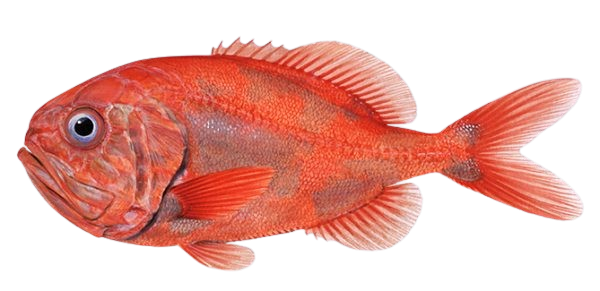
Orange roughy is a deep-sea fish whose white flesh is used in various American entrée recipes. A large fillet of cooked orange roughy (170 grams) contains 281 calories, while a small portion (28 grams) offers 46 calories. A standard 100 gram serving of raw orange roughy nutrition facts consist of126 calories compared to 165 calories for the cooked equivalent. A serving of High Liner Pan-Sear Selects Orange Roughy (140 grams) contains 260 calories, while Findus Orange Roughy Fillets (100 grams) provides 130 calories. One standard size raw orange roughy fillet (150 grams) contains 189 calories while its cooked counterpart provides 248 calories. The cooking method significantly alters the calorie profile, as breaded or battered versions contain approximately 240 calories per 100g, whereas steamed preparations remain low at 130 calories.
A medium fillet of cooked orange roughy (85 grams) delivers 16.2g of protein and 0g of carbohydrates, accompanied by 7.7g of fat and 0g of sugar. A closer look at orange roughy nutrition reveals a composition dominated by lean protein and moderate lipids. The selenium content supports thyroid function, a benefit confirmed by Rayman, M. P. (2000), who noted that adequate selenium intake maintains optimal thyroid metabolism. Micronutrient intake includes 1.5mcg of Vitamin B12 (60% DV) and 0.2mg of iron (1% DV) per medium serving. Sodium levels in fresh preparations remain naturally low, as this portion contains 68mg of sodium, though the addition of seasoning during cooking frequently spikes this value.
International supply chains rely on deep-sea trawling in the Southern Hemisphere, with New Zealand and Australia leading the export of these regulated fish. This supply feeds steady demand in the United States and China, where the US imported over $55 million worth of orange roughy in 2022. These markets utilize the ingredient as a premium white fish in Grilled Orange Roughy and Baked Orange Roughy dishes. Rising sustainability concerns pushed wholesale prices for fillets from $5.00 per pound in 2003 to between $14.00 and $22.00 per pound by 2024. Retail pricing mirrors this trend, as fresh fillets at Whole Foods Market increased from $7.99 per pound to between $9.99 and $11.99 per pound in 2024.
Orange roughy is valued for supporting tissue repair and providing essential minerals like selenium. Dietitians recommend limiting consumption to minimal amounts, restricting intake to between 0g and 85g per week to avoid methylmercury accumulation. The lean fillets are not considered fattening due to the low energy density, though breaded or fried versions contribute to weight gain if consumed in excess. A large serving of orange roughy (170g) contains 281 calories, an energy load that requires 31 minutes of cycling or 70 minutes of walking the dog to metabolize. Vulnerable groups should exercise caution due to the high heavy metal content characteristic of this long-lived species.
Orange Roughy nutrition
| Stats | Weight |
|---|---|
| Carbs | 0 grams |
| Protein | 16.2 grams |
| Fats | 0 grams |
| Sugars | 0 grams |
- Large Orange Roughy Calories (Nutritional Facts)
- Medium Orange Roughy Calories (Nutritional Facts)
- Small Orange Roughy Calories (Nutritional Facts)
- Broiled Orange Roughy Calories (Nutritional Facts)
- Steamed Orange Roughy Calories (Nutritional Facts)
- Raw Orange Roughy Nutrition
- Sodium in Orange Roughy
- Potassium in Orange Roughy
- Sugar in Orange Roughy
- Fiber in Orange Roughy
- Protein in Orange Roughy
- Carbs in Orange Roughy
- Fat in Orange Roughy
- Vitamins in Orange Roughy
- Minerals in Orange Roughy
Large Orange Roughy Calories (Nutritional Facts)
A large fillet of cooked orange roughy (170 grams or 6 oz) provides 281 calories, 32.3g of protein, 15.3g of fat, 0g of carbohydrates, 0g of fiber, 0g of sugar, and 136mg of sodium. A large serving of raw orange roughy (170 grams or 6 oz) contains 214 calories, 25g of protein, 11.9g of fat, 0g of carbohydrates, 0g of fiber, 0g of sugar, and 109mg of sodium. This cooked fillet provides 0.3mg of iron and 2.9mcg of Vitamin B12.
A medium fillet of cooked orange roughy (85 grams or 3 oz) contains 140 calories, 16.2g of protein, 7.7g of fat, 0g of carbohydrates, 0g of fiber, 0g of sugar, and 68mg of sodium. A medium serving of raw orange roughy (85 grams or 3 oz) provides 107 calories, 12.5g of protein, 6g of fat, 0g of carbohydrates, 0g of fiber, 0g of sugar, and 54mg of sodium. This cooked portion supplies 0.2mg of iron and 1.5mcg of Vitamin B12.
A small fillet of cooked orange roughy (28 grams or 1 oz) offers 46 calories, 5.3g of protein, 2.5g of fat, 0g of carbohydrates, 0g of fiber, 0g of sugar, and 22mg of sodium. A small serving of raw orange roughy (28 grams or 1 oz) contains 35 calories, 4.1g of protein, 2g of fat, 0g of carbohydrates, 0g of fiber, 0g of sugar, and 18mg of sodium. This cooked amount offers 0.1mg of iron and 0.5mcg of Vitamin B12.
A serving of broiled orange roughy (100 grams or 3.5 oz) contains 165 calories, 19g of protein, 9g of fat, 0g of carbohydrates, 0g of fiber, 0g of sugar, and 80mg of sodium. The dry heat cooking method concentrates the nutrient density compared to raw preparations.
A serving of steamed orange roughy (100 grams or 3.5 oz) contains 130 calories, 15.5g of protein, 7.2g of fat, 0g of carbohydrates, 0g of fiber, 0g of sugar, and 65mg of sodium. This moist cooking method retains water content, resulting in a lower caloric density than broiled or baked versions.
A serving of raw orange roughy nutrition (100 grams or 3.5 oz) contains 126 calories, 14.7g of protein, 7g of fat, 0g of carbohydrates, 0g of fiber, 0g of sugar, and 64mg of sodium. A large serving of raw orange roughy (170 grams or 6 oz) contains 214 calories, 25g of protein, 11.9g of fat, 0g of carbohydrates, 0g of fiber, 0g of sugar, and 109mg of sodium.
A large fillet of cooked orange roughy (170 grams) has 136mg of sodium (6% DV), while the same portion of raw orange roughy contains 109mg of sodium (5% DV). A medium fillet of cooked orange roughy (85 grams) contains 68mg of sodium (3% DV), whereas a medium serving of raw orange roughy (85 grams) has 54mg of sodium (2% DV). A small fillet of cooked orange roughy (28 grams) contains 22mg of sodium (1% DV), and a small serving of raw orange roughy (28 grams) provides 18mg of sodium (1% DV). A serving of broiled orange roughy (100 grams) contains 80mg of sodium (3% DV), while a serving of steamed orange roughy (100 grams) provides 65mg of sodium (3% DV).
A large fillet of cooked orange roughy (170 grams) provides 850mg of potassium (18% DV), whereas a large serving of raw orange roughy (170 grams) contains 714mg of potassium (15% DV). A medium fillet of cooked orange roughy (85 grams) offers 425mg of potassium (9% DV), while a medium serving of raw orange roughy (85 grams) supplies 357mg of potassium (8% DV). A small fillet of cooked orange roughy (28 grams) provides 140mg of potassium (3% DV), and a small serving of raw orange roughy (28 grams) has 118mg of potassium (3% DV). A serving of broiled orange roughy (100 grams) offers 530mg of potassium (11% DV), and a serving of steamed orange roughy (100 grams) supplies 440mg of potassium (9% DV).
A large fillet of cooked orange roughy (170 grams) has 0g of sugar, and a large serving of raw orange roughy (170 grams) also contains 0g of sugar. A medium fillet of cooked orange roughy (85 grams) and a medium serving of raw orange roughy (85 grams) both contain 0g of sugar. A small fillet of cooked orange roughy (28 grams) and a small serving of raw orange roughy (28 grams) provide 0g of sugar. A serving of broiled orange roughy (100 grams) and a serving of steamed orange roughy (100 grams) both contain 0g of sugar.
A large fillet of cooked orange roughy (170 grams) has 0g of fiber (0% DV), matching the 0g of fiber (0% DV) found in a large serving of raw orange roughy (170 grams). A medium fillet of cooked orange roughy (85 grams) and a medium serving of raw orange roughy (85 grams) contain 0g of fiber (0% DV). A small fillet of cooked orange roughy (28 grams) and a small serving of raw orange roughy (28 grams) provide 0g of fiber (0% DV). A serving of broiled orange roughy (100 grams) and a serving of steamed orange roughy (100 grams) both provide 0g of fiber (0% DV).
A large fillet of cooked orange roughy (170 grams) has 32.3g of protein (65% DV), while a large serving of raw orange roughy (170 grams) provides 25g of protein (50% DV). A medium fillet of cooked orange roughy (85 grams) contains 16.2g of protein (32% DV), whereas a medium serving of raw orange roughy (85 grams) offers 12.5g of protein (25% DV). A small fillet of cooked orange roughy (28 grams) contains 5.3g of protein (11% DV), and a small serving of raw orange roughy (28 grams) supplies 4.1g of protein (8% DV). A serving of broiled orange roughy (100 grams) delivers 19g of protein (38% DV), while a serving of steamed orange roughy (100 grams) provides 15.5g of protein (31% DV).
A large fillet of cooked orange roughy (170 grams) has 0g of carbohydrates (0% DV), whereas a large serving of raw orange roughy (170 grams) contains 0g of carbohydrates (0% DV). A medium fillet of cooked orange roughy (85 grams) and a medium serving of raw orange roughy (85 grams) both contain 0g of carbohydrates (0% DV). A small fillet of cooked orange roughy (28 grams) and a small serving of raw orange roughy (28 grams) provide 0g of carbohydrates (0% DV). A serving of broiled orange roughy (100 grams) and a serving of steamed orange roughy (100 grams) both provide 0g of carbohydrates (0% DV).
A large fillet of cooked orange roughy (170 grams) has 15.3g of total fat (20% DV), and a large serving of raw orange roughy (170 grams) contains 11.9g of total fat (15% DV). A medium fillet of cooked orange roughy (85 grams) contains 7.7g of total fat (10% DV), while a medium serving of raw orange roughy (85 grams) has 6g of total fat (8% DV). A small fillet of cooked orange roughy (28 grams) contains 2.5g of total fat (3% DV), and a small serving of raw orange roughy (28 grams) offers 2g of total fat (3% DV). A serving of broiled orange roughy (100 grams) contains 9g of total fat (12% DV), and a serving of steamed orange roughy (100 grams) offers 7.2g of total fat (9% DV).
A large fillet of cooked orange roughy (170 grams) provides 2.9mcg of Vitamin B12 (121% DV) and 2.6mg of Niacin (16% DV). A large serving of raw orange roughy (170 grams) provides 2.4mcg of Vitamin B12 (100% DV) and 2.2mg of Niacin (14% DV). A small fillet of cooked orange roughy (28 grams) provides 0.5mcg of Vitamin B12 (21% DV). A serving of broiled orange roughy (100 grams) provides 1.7mcg of Vitamin B12 (71% DV), while a serving of steamed orange roughy (100 grams) supplies 1.4mcg of Vitamin B12 (58% DV).
A large fillet of cooked orange roughy (170 grams) provides 0.3mg of iron (2% DV) and 136mcg of selenium (247% DV). A large serving of raw orange roughy (170 grams) provides 0.2mg of iron (1% DV) and 110mcg of selenium (200% DV). A small fillet of cooked orange roughy (28 grams) provides 22mcg of selenium (40% DV). A serving of broiled orange roughy (100 grams) delivers 80mcg of selenium (145% DV), and a serving of steamed orange roughy (100 grams) contains 65mcg of selenium (118% DV).
Get a Custom Report on Orange Roughy Nutrition Data – Contact Us!
What are the Types of Orange Roughys?
The types of orange roughy available in markets are Fresh Fillets, Frozen Fillets, and Breaded/Value-Added portions. The chart presented here displays the data for these varieties.
| Type | Description | Calories (per 100g) | Calorie Qualifications |
|---|---|---|---|
|
Fresh Orange Roughy (Raw)
|
Unprocessed fillets sold at seafood counters. | 126 | This raw version offers the lowest calorie count due to high moisture content. |
|
Frozen Orange Roughy
|
Flash-frozen fillets, often glazed with water. | 126 | The freezing process preserves the nutrient profile without altering the caloric density. |
|
Breaded Orange Roughy
|
Coated in breadcrumbs and pre-fried or prepared for baking. | 220 - 260 | The addition of flour, oil, and binding agents significantly increases carbohydrates and calories. |
|
Smoked Orange Roughy
|
Hot-smoked fillets, rare but available in specialty markets. | 145 | The loss of moisture during smoking slightly concentrates the caloric value per gram. |
What are the Main Dishes With Orange Roughy?
Orange roughy serves as a versatile white fish suitable for baking, grilling, and frying in various culinary styles. The registry below enumerates substantial meals incorporating orange roughy.
| Dish Name | Calories (Estimate per serving) | Type of Dish | Carbs (g) (Estimate) | Sugar (g) (Estimate) | Protein (g) (Estimate) | Fat (g) (Estimate) | Cuisine | Restaurants |
|---|---|---|---|---|---|---|---|---|
|
Grilled Orange Roughy
|
280 | Grilled Entree | 0 | 0 | 35 | 14 | American | Red Lobster |
|
Baked Orange Roughy
|
320 | Baked Dish | 2 | 0 | 32 | 18 | American | Bonefish Grill |
|
Orange Roughy Français
|
450 | Sautéed Dish | 15 | 1 | 30 | 28 | French-American | The Cheesecake Factory (National Locations) |
|
Pan-Seared Roughy
|
350 | Skillet Main | 2 | 0 | 34 | 20 | Continental | Chart House |
|
Orange Roughy Imperial
|
500 | Stuffed Fish | 10 | 2 | 40 | 32 | American Seafood | Phillips Seafood (Baltimore, MD) |
|
Cajun Spiced Roughy
|
300 | Spicy Entree | 1 | 0 | 33 | 16 | Cajun | Pappadeaux Seafood Kitchen (Houston, TX) |
|
Steamed Roughy with Ginger
|
250 | Steamed Dish | 5 | 1 | 30 | 10 | Chinese | P.F. Chang's |
|
Fried Orange Roughy Sandwich
|
600 | Sandwich | 55 | 4 | 28 | 30 | American | Ivar's (Seattle, WA) |
|
Orange Roughy Tacos
|
400 | Mexican Main | 35 | 2 | 25 | 18 | Mexican Fusion | Rubio's Coastal Grill (California) |
|
Roughy with Lemon Butter
|
380 | Sautéed Dish | 2 | 0 | 32 | 26 | American | Legal Sea Foods (Boston, MA) |
|
Pecan Crusted Roughy
|
550 | Breaded Entree | 25 | 3 | 35 | 38 | Southern | O'Charley's |
|
Roughy Oscar Style
|
650 | Topped Fish | 8 | 1 | 45 | 48 | Steakhouse | Ruth's Chris Steak House (National Locations) |
|
Broiled Roughy Platter
|
300 | Broiled Main | 0 | 0 | 36 | 15 | American | Captain D's |
|
Orange Roughy Ceviche
|
200 | Raw Marinated | 10 | 4 | 25 | 8 | Latin Fusion | La Mar (San Francisco, CA) |
|
Roughy Fish and Chips
|
750 | Fried Main | 80 | 2 | 30 | 40 | British/American | Duke's Chowder House (Seattle, WA) |
What Cuisines Prefer Orange Roughy the Most?
Orange roughy features prominently in Western cuisines, particularly in the United States and Australia, where the mild flavor appeals to a broad consumer base. The schedule here illustrates the culinary traditions that prioritize this deep-sea fish.
| Cuisine | Dish | Types of Roughy Used | Calories (Estimate) | Restaurant(s) |
|---|---|---|---|---|
|
American (Seafood)
|
Grilled/Baked Fillet | Frozen/Thawed | 300 | Red Lobster |
|
Chinese (Cantonese)
|
Steamed with Soy & Ginger | Whole/Fillet | 250 | Canton 8 (Global Ref/Local Chinatowns) |
|
Australian (Modern)
|
Pan-Fried with Lemon | Fresh Fillet | 350 | Outback Steakhouse |
|
Cajun
|
Blackened Roughy | Fillet | 320 | Pappadeaux Seafood Kitchen (Houston, TX) |
|
French (Bistro)
|
Meunière Style | Fillet | 450 | Mon Ami Gabi (Las Vegas, NV) |
|
Italian (Coastal)
|
Roughy Piccata | Fillet | 400 | Maggiano's Little Italy |
|
Mexican (Baja)
|
Fish Tacos | Fried Strips | 400 | Wahoo's Fish Taco |
|
British (Pub)
|
Fish and Chips | Battered Fillet | 750 | The Codfather (Phoenix, AZ) |
|
Japanese (Fusion)
|
Miso Glazed Roughy | Fillet | 380 | Roy's (National Locations) |
|
Southern US
|
Pecan Crusted | Fillet | 550 | Copeland's of New Orleans |
|
New Zealand
|
Battered Fish | Fresh Fillet | 600 | Local NZ Style Chippers (Various) |
|
Peruvian
|
Ceviche | Raw Cubes | 200 | Limón Rotisserie (San Francisco, CA) |
|
Mediterranean
|
Baked with Olives | Fillet | 320 | The Great Greek (Las Vegas, NV) |
|
Thai
|
Spicy Lime Fish | Steamed Fillet | 280 | Arun's (Chicago, IL) |
|
Caribbean
|
Jerk Spiced Fish | Grilled Fillet | 300 | Bahama Breeze |
Which Countries Produce the Most Orange Roughy?
The top producers of orange roughy are New Zealand, Australia, and Namibia. These nations manage the few remaining commercial fisheries for this deep-water species under strict quota systems to prevent stock collapse. The data presented here displays the export values for deep-sea perch and orange roughy for the leading countries over the last two decades.
| Country | 2003 | 2008 | 2013 | 2018 | 2019 | 2020 | 2021 | 2022 |
|---|---|---|---|---|---|---|---|---|
| New Zealand | 120 | 90 | 70 | 60 | 65 | 55 | 60 | 65 |
| Australia | 20 | 15 | 10 | 8 | 9 | 7 | 8 | 10 |
| Namibia | 15 | 10 | 8 | 5 | 6 | 4 | 5 | 6 |
| China (Processing) | 10 | 20 | 30 | 40 | 45 | 35 | 40 | 45 |
| South Africa | 5 | 4 | 3 | 2 | 2 | 2 | 3 | 3 |
Which Countries Consume the Most Orange Roughy?
The top consumers of orange roughy are the United States and China. The United States historically drove the market demand for the white, mild fillets, while China has increased imports for both domestic consumption and re-processing. The schedule here illustrates the import values for orange roughy and similar deep-sea fish in key markets.
| Country | 2003 | 2008 | 2013 | 2018 | 2019 | 2020 | 2021 | 2022 |
|---|---|---|---|---|---|---|---|---|
| United States | 100 | 80 | 60 | 50 | 55 | 45 | 50 | 55 |
| China | 10 | 20 | 35 | 45 | 50 | 40 | 45 | 50 |
| Canada | 15 | 10 | 8 | 6 | 7 | 5 | 6 | 7 |
| Australia | 5 | 4 | 3 | 2 | 2 | 2 | 3 | 3 |
| France | 4 | 3 | 2 | 2 | 2 | 1 | 2 | 2 |
How Do Prices of Fresh Orange Roughy Change?
Retail valuations for fresh and frozen-thawed orange roughy fillets surged as supply chains tightened under sustainability regulations and import quotas. The comparison table here highlights the financial shifts for raw fillets at major grocery retailers and seafood markets.
| Retailer/Market | Item | Old Price (Year) | Current Price (2024/2025) |
|---|---|---|---|
| Whole Foods Market (National) | Fresh Orange Roughy Fillet (per lb) | $7.99 (2012) | $9.99/lb- $11.99/lb |
| H-E-B (Texas) | Orange Roughy Fillets (per lb) | $8.99 (2012) | $9.98- $13.99 |
| Publix (Southeast) | Fresh Orange Roughy (per lb) | $7.99 (2013) | $9.97 - $10.99 |
What is the Orange Roughy Calorie for 100 Grams?
A 100g serving of raw orange roughy contains 126 calories, while a 100g serving of cooked orange roughy contains 165 calories.
What is the Orange Roughy Calorie for 1 KG?
One kilogram (1000g) of raw orange roughy contains 1260 calories, whereas one kilogram (1000g) of cooked orange roughy contains 1650 calories.
What is the Calorie of 1 Orange Roughy?
One standard raw orange roughy fillet (150 grams) contains 189 calories, while one cooked orange roughy fillet (150 grams) contains 248 calories. A serving of High Liner Pan-Sear Selects Orange Roughy (140 grams) contains 260 calories, and a serving of Findus Orange Roughy Fillets (100 grams) provides 130 calories.
What are the Health Benefits of Orange Roughy?
Orange roughy provides specific health advantages such as supporting thyroid function and enhancing tissue repair through a dense concentration of selenium and high-quality protein. A summary of these favorable characteristics appears below.
- Supports Thyroid Function: The high selenium content regulates hormone synthesis and protects the thyroid gland from oxidative damage. A study by Rayman, M. P. (2000), "The importance of selenium to human health," confirmed that adequate selenium intake maintains optimal thyroid metabolism.
- Enhances Tissue Repair: The complete amino acid profile facilitates the rebuilding of cells and muscle fibers following physical exertion. Research by Paddon-Jones, D., et al. (2008), "Protein, weight management, and satiety," established that lean protein sources effectively support lean body mass retention.
- Promotes Cardiovascular Health: The presence of Omega-3 fatty acids, though lower than in oily fish, contributes to lipid management. A study by Mozaffarian, D., & Rimm, E. B. (2006), "Fish intake, contaminants, and human health," noted that replacing saturated fats with lean seafood proteins improves heart health markers.
What are the Downsides of Orange Roughy?
Orange roughy poses distinct downsides including high mercury bioaccumulation and sustainability concerns due to the long lifespan of the species. The following list outlines these specific dangers.
- Accumulates High Mercury: The extreme longevity of the fish allows for significant buildup of methylmercury, a neurotoxin. A study by Karagas, M. R., et al. (2012), "Evidence of health effects of methylmercury exposure," noted that elevated levels cause cognitive impairment and developmental issues. A safer alternative is cod or haddock. A suggested daily limit is 0g to 85g per week maximum.
- Lacks Sustainability: The slow reproductive cycle renders the population vulnerable to overfishing, impacting long-term availability. Research by Norse, E. A., et al. (2012), "Sustainability of deep-sea fisheries," highlighted the ecological risks associated with harvesting deep-water species like orange roughy.
Is Orange Roughy Good for You?
Yes, orange roughys are good for the body when consumed in strict moderation because the lean protein supports muscle maintenance and the selenium content aids immune defense. Heart health improves through the consumption of low-fat protein, a dietary shift linked to reduced cholesterol by Hu, F. B. (2005), "Protein, body weight, and cardiovascular health." Brain health benefits from the Vitamin B12 concentration, which preserves nerve function as confirmed by O'Leary, F., & Samman, S. (2010), "Vitamin B12 in Health and Disease." Immune health relies on the presence of selenium to neutralize free radicals, a mechanism detailed in research by Rayman, M. P. (2012), "Selenium and human health."
How Does Calorie Change According to Orange Roughy Types?
The preparation and processing method determines the calorie count of orange roughy varieties. Breaded or battered orange roughy possess the highest calorie value at approximately 240 calories per 100 grams due to the absorption of oil and the addition of carbohydrate-heavy coatings. Smoked orange roughy falls in the middle range at 145 calories per 100 grams. Raw and frozen fillets contain the lowest calorie value at 126 calories per 100 grams, maintaining the natural lean profile of the fish.
What are the Desserts With Orange Roughy?
Orange roughy does not function as an ingredient in dessert courses due to the savory, flaky texture and fish flavor profile. Culinary professionals utilize this deep-sea fish exclusively for savory appetizers and main entrees rather than sweet confections. No established recipes or restaurant menus feature orange roughy in sugar-based or frozen dessert preparations.
What is the Origin of Orange Roughy?
The origin of the orange roughy (Hoplostethus atlanticus) traces back to the deep waters of the Western Pacific and Eastern Atlantic oceans. Historically known as the "slimehead" due to the mucous-producing canals on the head, the fish remained commercially irrelevant until the late 1970s. Marketing efforts in New Zealand rebranded the species as "orange roughy" to appeal to international consumers, particularly in the United States. The discovery of massive aggregations on seamounts led to a boom in deep-sea trawling during the 1980s. Scientific understanding later revealed the extreme longevity and late maturity of the species, leading to strict quota management after early stocks collapsed due to overfishing.
Explore More Seafood
Discover more Seafood with detailed nutrition facts, calorie counts, vitamins, minerals, and health benefits. Compare similar foods, serving sizes, macronutrients, and key nutrients to find the best option for your diet and nutrition goals.
 Anchovies calories
 Barramundi calories
 Bluefin Tuna calories
 Bluefish calories
 Calamari calories
 Catfish calories
 Clams calories
 Cod calories
 Conch calories
 Crab calories
 Eel calories
 Fish calories