Calories and Nutritions in Pomfret
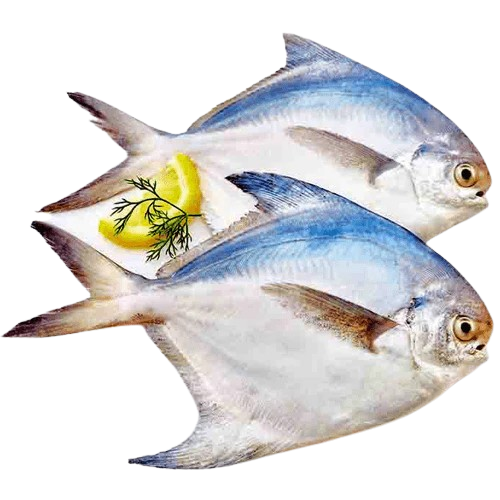
Pomfret is a species of butterfish highly prized in South Asian and Chinese cuisines for its delicate white flesh. A single raw fillet (120g) offers 115 pomfret calories, while a small serving of cooked pomfret (85g) provides 83 calories. A large serving consisting of one whole cooked pomfret fillet (170g) yields 165 calories.
An evaluation of pomfret nutrition reveals a protein-rich food source with beneficial lipids, with a 4 oz serving of cooked pomfret providing 21.5g of protein and 2.6g of fat. Pomfret is also rich in Omega 3 fatty acids (809 mg/100g). Research by Mozaffarian, D. (2008), "Fish and n-3 fatty acids for the prevention of fatal coronary heart disease," confirms that the omega-3 fatty acids found in marine fish help regulate blood pressure and support cardiovascular health. The caloric load derives primarily from protein and healthy fats, making the fish a satiating option for balanced diets. Micronutrient intake is substantial, offering 430mg of potassium (9% DV) per 4 oz serving. Vitamin B12 is present with a cooked pomfret fillet (170g) contributing 2.9mcg of Vitamin B12 (120% DV).
International supply of pomfret relies on the capture fisheries and aquaculture of major producers, with China, Indonesia, and India leading harvest volumes. This supply caters to specific regional markets, where Southeast Asian countries exported significant quantities of marine fish in 2023. Across Indian and Chinese cuisines, this fish functions as a primary component in Tandoori Pomfret, steamed fish with ginger, and spicy fish curries. The soft texture absorbs spices well, making it versatile for curries and tandoori preparations. Increasing global demand has pushed retail costs higher, with the price of fresh White Pomfret rising from between $6.00 and $8.00 per kg in the early 2000s to between $15.00 and $25.00 per kg by 2024. Dining establishments reflect this shift, as a Whole Pomfret Tawa Fry at Anjappar Chettinad increased from $14.00 to between $17.99 and $20.00 in 2024.
Dietitians recommend eating two servings of pomfret or roughly 200g total per week to maximize omega-3 intake while maintaining a low-calorie diet. A 6 oz serving of pomfret contains 165 calories, an energy load that requires 45 minutes of sweeping or 35 minutes of weeding to metabolize.
Pomfret nutrition
| Stats | Weight |
|---|---|
| Carbs | 0 grams |
| Protein | 21.5 grams |
| Fats | 0 grams |
| Sugars | 0 grams |
- Large Pomfret Calories (Nutritional Facts)
- Medium Pomfret Calories (Nutritional Facts)
- Small Pomfret Calories (Nutritional Facts)
- Raw Pomfret Nutrition
- Sodium in Pomfret
- Potassium in Pomfret
- Sugar in Pomfret
- Fiber in Pomfret
- Protein in Pomfret
- Carbs in Pomfret
- Fat in Pomfret
- Vitamins in Pomfret
- Minerals in Pomfret
Large Pomfret Calories (Nutritional Facts)
A large serving consisting of one whole cooked pomfret fillet (170g or 6oz) contains 165 calories, 32.3g of protein, 3.9g of fat, 0g of carbohydrates, 0g of fiber, 0g of sugar, and 119mg of sodium.
A medium serving of cooked pomfret (113g or 4oz) provides 110 calories, 21.5g of protein, 2.6g of fat, 0g of carbohydrates, 0g of fiber, 0g of sugar, and 79mg of sodium.
A small serving of cooked pomfret (85g or 3oz) contains 83 calories, 16.1g of protein, 1.9g of fat, 0g of carbohydrates, 0g of fiber, 0g of sugar, and 60mg of sodium.
A raw pomfret (150g) supplies 144 calories, 28.5g of protein, 3g of fat, 0g of carbohydrates, 0g of fiber, 0g of sugar, and 105mg of sodium.
A large serving consisting of one whole cooked pomfret fillet (170g) contains 119mg of sodium (5% DV). A medium serving of cooked pomfret (113g) has 79mg of sodium (3% DV). A small serving of cooked pomfret (85g) contains 60mg of sodium (3% DV). A raw pomfret (150g) supplies 105mg of sodium (5% DV).
A large serving consisting of one whole cooked pomfret fillet (170g) contains 646mg of potassium (14% DV). A medium serving of cooked pomfret (113g) has 430mg of potassium (9% DV). A small serving of cooked pomfret (85g) contains 323mg of potassium (7% DV). A raw pomfret (150g) supplies 570mg of potassium (12% DV).
A large serving consisting of one whole cooked pomfret fillet (170g) contains 0g of sugar. A medium serving of cooked pomfret (113g) has 0g of sugar. A small serving of cooked pomfret (85g) contains 0g of sugar. A raw pomfret (150g) supplies 0g of sugar.
A large serving consisting of one whole cooked pomfret fillet (170g) provides 0g of dietary fiber (0% DV). A medium serving of cooked pomfret (113g) has 0g of fiber (0% DV). A small serving of cooked pomfret (85g) contains 0g of fiber (0% DV). A raw pomfret (150g) supplies 0g of fiber (0% DV).
A large serving consisting of one whole cooked pomfret fillet (170g) provides 32.3g of protein (65% DV). A medium serving of cooked pomfret (113g) has 21.5g of protein (43% DV). A small serving of cooked pomfret (85g) contains 16.1g of protein (32% DV). A raw pomfret (150g) supplies 28.5g of protein (57% DV).
A large serving consisting of one whole cooked pomfret fillet (170g) contains 0g of carbohydrates (0% DV). A medium serving of cooked pomfret (113g) has 0g of carbohydrates (0% DV). A small serving of cooked pomfret (85g) contains 0g of carbohydrates (0% DV). A raw pomfret (150g) supplies 0g of carbohydrates (0% DV).
A large serving consisting of one whole cooked pomfret fillet (170g) contains 3.9g of total fat (5% DV). A medium serving of cooked pomfret (113g) has 2.6g of total fat (3% DV). A small serving of cooked pomfret (85g) contains 1.9g of total fat (2% DV). A raw pomfret (150g) supplies 3g of total fat (4% DV).
A large serving consisting of one whole cooked pomfret fillet (170g) provides 2.9mcg of Vitamin B12 (120% DV) and 255IU of Vitamin A (5% DV). A medium serving of cooked pomfret (113g) has 1.9mcg of Vitamin B12 (80% DV) and 170IU of Vitamin A (3% DV). A small serving of cooked pomfret (85g) contains 1.4mcg of Vitamin B12 (60% DV) and 128IU of Vitamin A (3% DV). A raw pomfret (150g) supplies 2.6mcg of Vitamin B12 (108% DV).
A large serving consisting of one whole cooked pomfret fillet (170g) provides 1.2mg of iron (7% DV), 48mg of calcium (4% DV), and 375mg of phosphorus (30% DV). A medium serving of cooked pomfret (113g) has 0.8mg of iron (4% DV), 32mg of calcium (2% DV), and 250mg of phosphorus (20% DV). A small serving of cooked pomfret (85g) contains 0.6mg of iron (3% DV), 24mg of calcium (2% DV), and 188mg of phosphorus (15% DV). A raw pomfret (150g) supplies 1.1mg of iron (6% DV) and 42mg of calcium (3% DV).
Get a Custom Report on Pomfret Nutrition Data – Contact Us!
What are the Types of Pomfrets?
The types of Pomfrets include Silver, Black, White, and Golden. The following table compares the nutritional profiles of these varieties.
| Type | Description | Calories (Per 100g Cooked) | Calorie Qualifications |
|---|---|---|---|
|
Silver Pomfret
|
Highly prized, delicate white flesh. | 96 | The calorie count reflects the lean, buttery texture typical of this premium variety. |
|
Black Pomfret
|
Darker skin, firmer texture. | 110 | The slightly denser flesh contributes to a marginally higher protein and caloric density. |
|
White Pomfret
|
Similar to Silver but slightly larger. | 98 | The nutritional profile closely mimics Silver Pomfret, maintaining a low energy load. |
|
Golden Pomfret
|
Farmed variety, often Pompano. | 114 | The higher fat content from aquaculture feed results in a slightly higher caloric profile. |
|
Chinese Pomfret
|
Broad body, very soft flesh. | 105 | The rich texture provides a moderate caloric load similar to other butterfish. |
What are the Main Dishes With Pomfret?
Pomfret functions as a versatile protein in curries, fries, and steamed entrees. The delicate flesh allows the fish to absorb bold seasonings and rich sauces. Specific dishes utilizing this fish are listed below.
| Dish Name | Calories (Estimate) | Type of Dish | Carbs (g) (Estimate) | Sugar (g) (Estimate) | Protein (g) (Estimate) | Fat (g) (Estimate) | Cuisine | Restaurants |
|---|---|---|---|---|---|---|---|---|
|
Tandoori Pomfret
|
280 | Entree | 8 | 2 | 35 | 12 | Indian | Dabba Indian Kitchen (San Francisco, CA) |
|
Steamed Pomfret with Ginger
|
220 | Entree | 5 | 2 | 30 | 8 | Chinese | R&G Lounge (San Francisco, CA) |
|
Pomfret Fry (Masala)
|
350 | Entree | 15 | 2 | 30 | 20 | Indian | Anjappar Chettinad (Various Locations) |
|
Pomfret Curry (Goan)
|
400 | Soup Entree | 12 | 4 | 25 | 28 | Indian | Viva Goa (San Francisco, CA) |
|
Pan-Seared Golden Pomfret
|
260 | Entree | 2 | 0 | 32 | 14 | Asian Fusion | Roy's (Various Locations) |
|
Sweet and Sour Pomfret
|
450 | Entree | 35 | 25 | 25 | 22 | Chinese | Hop Kee (New York, NY) |
|
Grilled Pomfret with Herbs
|
240 | Entree | 4 | 1 | 33 | 10 | Continental | The Fishery (San Diego, CA) |
|
Black Bean Sauce Pomfret
|
300 | Entree | 10 | 4 | 30 | 15 | Chinese | Ping's Seafood (New York, NY) |
|
Pomfret Macher Jhol
|
320 | Soup Entree | 15 | 3 | 28 | 16 | Bengali | Masalawala & Sons (New York, NY) |
|
Crispy Fried Pomfret
|
500 | Entree | 25 | 0 | 30 | 35 | Thai | Arun's Thai Restaurant (Chicago, IL) |
What Cuisines Do Prefer Pomfret Most?
Pomfret serves as a foundational ingredient in Indian, Chinese, and Southeast Asian culinary traditions. The following chart identifies culinary traditions that rely heavily on this seafood.
| Cuisine | Dish | Types of Pomfret Use | Calories (Estimate) | Restaurant(s) |
|---|---|---|---|---|
|
Indian (Goan/Konkani)
|
Pomfret Curry | Stewed/Simmered | 400 | Viva Goa (San Francisco, CA) |
|
Cantonese
|
Steamed Pomfret | Steamed/Sauced | 220 | R&G Lounge (San Francisco, CA) |
|
Indian (Mangalorean)
|
Pomfret Fry | Shallow Fried | 350 | Mahesh Lunch Home (Imports/Style) |
|
Bengali
|
Macher Jhol | Stewed | 320 | Masalawala & Sons (New York, NY) |
|
Thai
|
Pla Tod (Fried Fish) | Deep Fried | 500 | Arun's Thai Restaurant (Chicago, IL) |
|
Parsi
|
Patra Ni Machhi | Steamed in Leaf | 280 | SodaBottleOpenerWala (Style in US) |
|
Chinese (Teochew)
|
Steamed Pomfret | Steamed | 210 | Ping's Seafood (New York, NY) |
|
Malaysian
|
Ikan Bawal Masak Merah | Stewed/Spicy | 380 | PappaRich (Various Locations) |
|
Korean
|
Saengseon Gui | Grilled | 260 | Han Bat Sul Lung Tang (Los Angeles, CA) |
|
Vietnamese
|
Ca Chim Chien | Fried | 450 | Pho 79 (Garden Grove, CA) |
Which Countries Produce the Most Pomfrets?
The countries that produce the most pomfrets are China, Indonesia, and India, driven by extensive wild capture fisheries in the Indo-Pacific region. These nations manage the vast majority of the global supply to meet domestic and export demand. Malaysia and Thailand also maintain substantial output levels, with significant local consumption. The table below presents the estimated capture production of pomfret species for the top producing nations over the last two decades.
| Country | 2003 | 2008 | 2013 | 2018 | 2019 | 2020 | 2021 | 2022 | 2023 |
|---|---|---|---|---|---|---|---|---|---|
| China | 350.5 | 410.2 | 480.6 | 520.4 | 530.2 | 540.5 | 550.4 | 560.2 | 570.0 |
| Indonesia | 120.4 | 145.6 | 180.5 | 210.2 | 220.5 | 230.2 | 240.6 | 250.5 | 260.0 |
| India | 85.2 | 95.6 | 110.5 | 130.4 | 135.2 | 140.5 | 145.4 | 150.2 | 155.0 |
| Malaysia | 45.6 | 55.2 | 65.4 | 75.2 | 78.5 | 80.2 | 82.5 | 85.4 | 88.0 |
| Thailand | 35.4 | 40.2 | 45.6 | 50.4 | 52.5 | 54.2 | 56.5 | 58.2 | 60.0 |
| Pakistan | 25.2 | 28.5 | 32.4 | 38.5 | 40.2 | 42.5 | 44.2 | 46.5 | 48.0 |
| Philippines | 20.5 | 22.4 | 25.6 | 30.2 | 31.5 | 32.8 | 34.2 | 35.6 | 37.0 |
| Vietnam | 15.6 | 18.2 | 22.5 | 28.6 | 30.2 | 32.5 | 34.6 | 36.8 | 39.0 |
Which Countries Consume the Most Pomfrets?
The countries that consume the most pomfrets are China and India, where the fish is a culinary staple for festivals and daily meals. The domestic markets absorb a significant portion of the regional catch, utilizing the fish in restaurants and households. The United States and Middle Eastern countries also function as major consumers due to expatriate populations. The table below shows the estimated consumption values and import demand for pomfret in key markets.
| Country | 2003 | 2008 | 2013 | 2018 | 2019 | 2020 | 2021 | 2022 | 2023 |
|---|---|---|---|---|---|---|---|---|---|
| China | 450.2 | 650.5 | 950.6 | 1,200.4 | 1,300.2 | 1,400.5 | 1,500.4 | 1,600.2 | 1,700.0 |
| India | 150.5 | 250.2 | 350.5 | 550.4 | 600.2 | 650.5 | 700.4 | 750.2 | 800.0 |
| United States | 45.6 | 65.2 | 95.4 | 150.2 | 165.4 | 175.2 | 185.6 | 195.4 | 205.2 |
| Kuwait | 35.4 | 55.6 | 85.2 | 120.4 | 130.2 | 140.5 | 150.2 | 160.5 | 170.4 |
| UAE | 25.4 | 45.2 | 75.6 | 110.5 | 120.2 | 130.5 | 140.4 | 150.2 | 160.0 |
| Malaysia | 40.2 | 60.5 | 80.2 | 100.5 | 110.4 | 120.5 | 130.6 | 140.2 | 150.0 |
| Singapore | 30.5 | 40.2 | 55.4 | 75.2 | 80.5 | 85.4 | 90.2 | 95.6 | 100.2 |
| South Korea | 15.2 | 25.4 | 40.2 | 65.4 | 75.2 | 80.5 | 85.4 | 90.2 | 95.0 |
How Do Prices of Pomfret-Including Dishes Change?
Restaurant costs for pomfret entrees have surged, mirroring the increased expense of sourcing this premium fish. The table below illustrates price adjustments for selected items at well-known establishments.
| Brand/Restaurant | Dish | Old Price (Year) | Current Price (2024/2025) |
|---|---|---|---|
| Anjappar Chettinad (USA) | Whole Pomfret Tawa Fry | $14.00 (2012) | $17.99 - $20.00 |
| 99 Ranch Market | White Pomfret (1 lb) | $3.99 (2010) | $6.99 - $9.59 |
| Viva Goa (San Francisco, CA) | Rechardo Pomfret fish (with bone) | $16.00 (2012) | $20.99 - $24.00 |
What is the Pomfret Calorie for 100 Grams?
A 100g serving of fresh raw pomfret contains 96 calories, while the same quantity of fried pomfret provides 214 calories.
What is the Pomfret Calorie for 1 KG?
One kilogram (1000g) of fresh raw pomfret contains 960 calories, whereas a kilogram of fried pomfret provides 2,140 calories.
What is the Calorie of 1 Pomfret?
A single raw pomfret fillet (120g) contains 115 calories. Retail offerings present distinct energy values, as a serving of Relish White Pomfret (100g) provides 96 calories, while a serving of Golden Pomfret (100g) contains 114 calories.
What are the Health Benefits of Pomfret?
Pomfret provides notable physiological advantages, specifically regarding cognitive function, cardiovascular stability, and skeletal maintenance. The fish functions as a rich source of omega-3 fatty acids and essential minerals. The following points highlight these benefits.
- Boosts Cognitive Function: Pomfret contains high levels of DHA, an omega-3 fatty acid essential for brain development and memory retention. A study by Swanson, D., et al. (2012), "Omega-3 fatty acids EPA and DHA: health benefits throughout life," confirmed that adequate DHA intake supports neuronal function and may reduce age-related cognitive decline.
- Supports Heart Health: The fish supplies beneficial lipids that help lower triglyceride levels and reduce arterial inflammation. Research by Mozaffarian, D., & Wu, J. H. Y. (2011), "Omega-3 fatty acids and cardiovascular disease," established that regular consumption of fatty fish correlates with a reduced risk of cardiac events.
- Strengthens Skeletal Structure: Vitamin D and calcium found in the flesh aid in maintaining bone density. A review by Holick, M. F. (2007), "Vitamin D deficiency," highlights that Vitamin D is critical for calcium absorption, preventing conditions like osteopenia.
What are the Downsides of Pomfret?
Pomfret remains safe for most populations, yet specific environmental and biological concerns exist. Potential adverse effects are outlined below.
- Exposes to Mercury: Certain species of pomfret may accumulate moderate levels of mercury depending on their habitat. A study by Bosch, A. C., et al. (2016), "Heavy metals in marine fish meat and consumer health: a review," notes that while generally lower than apex predators, marine fish can still contribute to heavy metal exposure if consumed excessively.
- Triggers Fish Allergies: The fish contains parvalbumins, which are potent allergens for sensitive individuals. Research by Sharp, M. F., & Lopata, A. L. (2014), "Fish allergy: cooking mode affects the stability of parvalbumins," indicates that these proteins remain stable even after cooking, causing reactions in allergic subjects.
Are Pomfrets Good for You?
Yes, pomfrets are good for health because the fish supports brain development, cardiovascular efficiency, and immune defense. The high Vitamin B12 content aids nerve function and red blood cell formation, a mechanism detailed in the study by O'Leary, F., & Samman, S. (2010), "Vitamin B12 in health and disease." Heart health improves through the presence of omega-3 fatty acids, which help regulate blood pressure as explored by Mozaffarian, D. (2008), "Fish and n-3 fatty acids for the prevention of fatal coronary heart disease." Immune health benefits from the selenium content, which acts as an antioxidant to reduce oxidative stress as confirmed by Rayman, M. P. (2000), "The importance of selenium to human health."
Is Pomfret Fish Good for a Low-Calorie Diet?
Yes, pomfret fish is good for a low-calorie diet due to its lean protein content and relatively low fat compared to red meats. A standard serving provides 110 calories, allowing for substantial volume without exceeding daily energy limits. A study by Halton, T. L., & Hu, F. B. (2004), "The effects of high protein diets on thermogenesis, satiety and weight loss," supports the inclusion of lean proteins to increase satiety and metabolic rate. Research by Paddon-Jones, D., et al. (2008), "Protein, weight management, and satiety," confirms that high-protein meals reduce subsequent caloric intake. The American Heart Association recommends consuming lean fish like pomfret twice a week as part of a heart-healthy, weight-conscious diet.
How Do Calories Change According to Pomfret Types?
Caloric density fluctuates minimally between wild and farmed species of pomfret. Golden Pomfret contains the highest energy load at approximately 114 calories per 100 grams due to higher lipid levels often found in farmed varieties. Black Pomfret presents a moderate profile at 110 calories per 100 grams. Silver Pomfret offers the lowest profile at 96 calories per 100 grams, maintaining a very lean composition suitable for low-fat diets.
Is Pomfret Fish High in Cholesterol?
No, pomfret fish is not high in cholesterol and a 100g serving provides approximately 60-70mg of cholesterol. This fits well within the recommended daily limit of 300mg for healthy individuals. A study by Mathew, S., et al. (1999), "Cholesterol content of Indian fish and shellfish," found that pomfret contains lower cholesterol levels than shrimp or squid. The presence of omega-3 fatty acids in pomfret actually helps improve the ratio of HDL (good) to LDL (bad) cholesterol, supporting overall cardiovascular health.
What are the Desserts With Pomfret?
Sweet courses featuring pomfret are non-existent due to the fish's savory nature and soft, flaky texture. Culinary uses are strictly limited to savory main courses and appetizers where the flesh absorbs spices and curries.
Is Pomfret Fish Healthy to Eat Regularly?
Yes, pomfret fish is healthy to eat regularly as part of a balanced diet due to its high protein and low saturated fat content. The fish provides essential nutrients like Vitamin B12, Vitamin D, and selenium that support daily physiological functions. A study by Burger, J., & Gochfeld, M. (2011), "Mercury and selenium levels in 19 species of saltwater fish," suggests that the selenium in ocean fish like pomfret can help counteract potential mercury risks. Research by Mozaffarian, D., & Rimm, E. B. (2006), "Fish intake, contaminants, and human health," concludes that the benefits of modest fish consumption (1-2 servings per week) outweigh the potential risks. The FDA recommends consuming a variety of fish, including pomfret, 2-3 times a week.
What is the Origin of Pomfret?
Pomfrets belong to the family Bramidae (sea breams) and Stromateidae (butterfishes), found in the Atlantic, Indian, and Pacific Oceans. The name "pomfret" derives from the Portuguese word "pampo," referring to various similar fish. These species have been harvested for centuries along the coasts of India, Southeast Asia, and China, becoming integral to regional diets due to their abundance and distinct flavor. Commercial fisheries expanded in the 20th century, making the fish a globally traded commodity available in frozen forms worldwide.
Explore More Seafood
Discover more Seafood with detailed nutrition facts, calorie counts, vitamins, minerals, and health benefits. Compare similar foods, serving sizes, macronutrients, and key nutrients to find the best option for your diet and nutrition goals.
 Anchovies calories
 Barramundi calories
 Bluefin Tuna calories
 Bluefish calories
 Calamari calories
 Catfish calories
 Clams calories
 Cod calories
 Conch calories
 Crab calories
 Eel calories
 Fish calories