Calories and Nutritions in Roasted Chickpeas
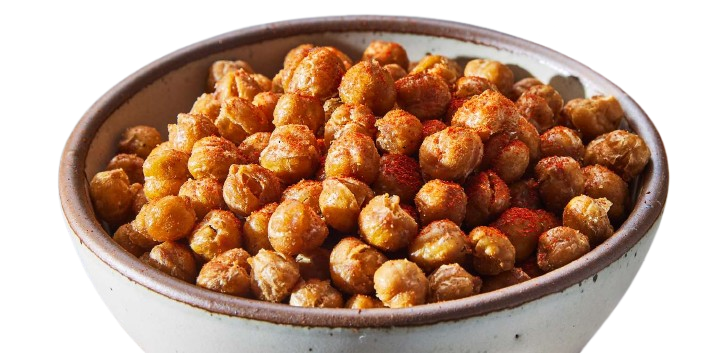
Roasted chickpeas are nutrient-dense and high fiber food popular in Middle Eastern, Mediterranean, and South Asian cuisines. A one cup serving of dry roasted chickpeas or garbanzo beans provides 605 calories, while an ounce offers 103 calories. Oil-roasted chickpeas deliver 754 calories per cup. The addition of sweeteners also plays a role, with honey-roasted chickpeas containing 430 calories per 100g, exceeding the 369 calories typical of the plain dry roasted type. Volume measurements further illustrate the caloric load, as a full kilogram (1000g) of dry roasted chickpeas aggregates to 3690 calories. Brand-specific packaging also varies, as a 40g package of The Good Bean Sea Salt Chickpeas supplies 160 calories, and a 28g bag of Saffron Road Bombay Spice Crunchy Chickpeas offers 130 calories.
Roasted chickpeas nutrition consists of 98g of carbs, 31g of protein, and 10g of fat per cup. Chickpeas is also a key source for dietary fiber and sustained energy. Research led by Zafar, T. A., & Kabir, Y. (2017), titled "Chickpeas suppress postprandial blood glucose concentration, and appetite and reduce energy intake at the next meal," confirms that the high fiber content promotes satiety and stabilizes blood sugar. The caloric energy is derived principally from complex carbohydrates and protein, making the legume a filling fuel source. Fat content varies widely, constituting about 6% of the weight in dry roasted forms but jumping to over 14% in oil-roasted varieties. Micronutrient levels are notable, supplying 1435mg of potassium (31% DV) and 3.6mg of manganese per cup.
International availability of roasted chickpeas relies significantly on the farming yields of India, Turkey, and Australia, with India being the primary producer of raw chickpeas or garbanzo beans. This production satisfies demand in key markets, specifically India, Turkey, and Pakistan. In Turkish, Indian, and Middle Eastern kitchens, the legume is a staple ingredient for savory snacks, street food, and dishes such as Leblebi, Bhuna Chana, and Spiced Chickpeas. Increasing global consumption and logistical challenges have driven retail costs up, with wholesale values for large chickpeas jumping from approximately $18 per hundredweight in 2019 to roughly $39 per hundredweight in 2024 following supply chain disruptions. Restaurant costs mirror this economic shift, for example, a Kale Caesar Salad with Roasted Chickpeas at Sweetgreen increased from $8.95 in 2014 to between $12.95 and $14.50 in 2024.
Roasted chickpeas offer significant amounts of fiber and protein, providing 28g of fiber and 31g of protein per cup. Nutritionists advise a daily intake of ½ cup of chickpeas to optimize nutrient absorption while managing caloric intake, as this portion contains 302 calories. This calorie content requires 30 minutes of Circuit Training or 40 minutes of Power Yoga to burn.
Roasted Chickpeas nutrition
| Stats | Weight |
|---|---|
| Carbs | 49 grams |
| Protein | 15.5 grams |
| Fats | 0 grams |
| Sugars | 8.5 grams |
- Large Roasted Chickpeas Calories (Nutritional Facts)
- Medium Roasted Chickpeas Calories (Nutritional Facts)
- Small Roasted Chana Calories (Nutritional Facts)
- Raw Roasted Chickpeas Nutrition
- Sodium in Roasted Chickpeas
- Potassium in Roasted Chickpeas
- Sugar in Roasted Chickpeas
- Fiber in Roasted Chickpeas
- Protein in Roasted Chickpeas
- Carbs in Roasted Chickpeas
- Fat in Roasted Chickpeas
- Vitamins in Roasted Chickpeas
- Minerals in Roasted Chickpeas
Large Roasted Chickpeas Calories (Nutritional Facts)
A large serving of dry roasted chickpeas (164g or 1 cup) contains 605 calories, 31g of protein, 10g of fat, 98g of carbohydrates, 28g of fiber, 17g of sugar, and 11mg of sodium. A large serving of oil-roasted chickpeas (164g or 1 cup) provides 754 calories, 28g of protein, 24g of fat, 104g of carbohydrates, 22g of fiber, 16g of sugar, and 450mg of sodium.
A medium portion of dry roasted chickpeas (82g or 0.5 cup) provides 302 calories, 15.5g of protein, 5g of fat, 49g of carbohydrates, 14g of fiber, 8.5g of sugar, and 5mg of sodium. A medium portion of honey-roasted chickpeas (82g or 0.5 cup) supplies 360 calories, 12g of protein, 10g of fat, 56g of carbohydrates, 10g of fiber, 24g of sugar, and 150mg of sodium.
A small handful of dry roasted chana (28g or 1oz) contains 103 calories, 5.3g of protein, 1.7g of fat, 17g of carbohydrates, 4.8g of fiber, 3g of sugar, and 2mg of sodium. A small serving of salted oil-roasted chickpeas (28g or 1oz) provides 129 calories, 4.8g of protein, 4.1g of fat, 18g of carbohydrates, 3.8g of fiber, 2.7g of sugar, and 77mg of sodium.
A cup of raw dried chickpeas (200g) supplies 756 calories, 41g of protein, 12g of fat, 126g of carbohydrates, 34g of fiber, 21g of sugar, and 48mg of sodium. A cup of plain dry roasted chickpeas without salt (164g) contains 605 calories, 31g of protein, 10g of fat, 98g of carbohydrates, 28g of fiber, 17g of sugar, and 11mg of sodium.
A large serving of unsalted dry roasted chickpeas (164g or 1 cup) contains 11mg of sodium (0% DV), while a large serving of salted roasted chickpeas (164g or 1 cup) provides 656mg of sodium (29% DV). A medium portion of unsalted dry roasted chickpeas (82g or 0.5 cup) has 5mg of sodium (0% DV), whereas a medium portion of salted roasted chickpeas (82g or 0.5 cup) supplies 328mg of sodium (14% DV). A small handful of unsalted dry roasted chana (28g or 1oz) contains 2mg of sodium (0% DV), and a small handful of salted roasted chana (28g or 1oz) provides 112mg of sodium (5% DV). A standard serving of commercially prepared oil-roasted chickpeas (28g or 1oz) supplies 180mg of sodium (8% DV), while a serving of honey-roasted chickpeas (28g or 1oz) contains 60mg of sodium (3% DV).
A large serving of dry roasted chickpeas (164g or 1 cup) provides 1435mg of potassium (31% DV), while a large serving of oil-roasted chickpeas (164g or 1 cup) contains 1100mg of potassium (23% DV). A medium portion of dry roasted chickpeas (82g or 0.5 cup) has 717mg of potassium (15% DV), whereas a medium portion of oil-roasted chickpeas (82g or 0.5 cup) supplies 550mg of potassium (12% DV). A small handful of dry roasted chana (28g or 1oz) contains 245mg of potassium (5% DV), and a small handful of oil-roasted chickpeas (28g or 1oz) provides 188mg of potassium (4% DV). A standard serving of raw dried chickpeas (200g) supplies 1750mg of potassium (37% DV), while a serving of canned chickpeas (drained, 164g) contains 477mg of potassium (10% DV).
A large serving of dry roasted chickpeas (164g or 1 cup) contains 17g of sugar, while a large serving of honey-roasted chickpeas (164g or 1 cup) provides 48g of sugar. A medium portion of dry roasted chickpeas (82g or 0.5 cup) has 8.5g of sugar, whereas a medium portion of honey-roasted chickpeas (82g or 0.5 cup) supplies 24g of sugar. A small handful of dry roasted chana (28g or 1oz) contains 3g of sugar, and a small handful of honey-roasted chickpeas (28g or 1oz) provides 8g of sugar. A standard serving of raw dried chickpeas (200g) supplies 21g of sugar, while a serving of oil-roasted chickpeas (28g or 1oz) contains 2.7g of sugar.
A large serving of dry roasted chickpeas (164g or 1 cup) provides 28g of dietary fiber (100% DV), while a large serving of oil-roasted chickpeas (164g or 1 cup) contains 22g of fiber (79% DV). A medium portion of dry roasted chickpeas (82g or 0.5 cup) has 14g of fiber (50% DV), whereas a medium portion of oil-roasted chickpeas (82g or 0.5 cup) supplies 11g of fiber (39% DV). A small handful of dry roasted chana (28g or 1oz) contains 4.8g of fiber (17% DV), and a small handful of oil-roasted chickpeas (28g or 1oz) provides 3.8g of fiber (14% DV). A standard serving of raw dried chickpeas (200g) supplies 34g of fiber (121% DV), while a serving of canned chickpeas (drained, 164g) contains 12g of fiber (43% DV).
A large serving of dry roasted chickpeas (164g or 1 cup) provides 31g of protein (62% DV), while a large serving of oil-roasted chickpeas (164g or 1 cup) contains 28g of protein (56% DV). A medium portion of dry roasted chickpeas (82g or 0.5 cup) has 15.5g of protein (31% DV), whereas a medium portion of oil-roasted chickpeas (82g or 0.5 cup) supplies 14g of protein (28% DV). A small handful of dry roasted chana (28g or 1oz) contains 5.3g of protein (11% DV), and a small handful of oil-roasted chickpeas (28g or 1oz) provides 4.8g of protein (10% DV). A standard serving of raw dried chickpeas (200g) supplies 41g of protein (82% DV), while a serving of honey-roasted chickpeas (28g or 1oz) contains 4g of protein (8% DV).
A large serving of dry roasted chickpeas (164g or 1 cup) contains 98g of carbohydrates (36% DV), while a large serving of honey-roasted chickpeas (164g or 1 cup) provides 112g of carbohydrates (41% DV). A medium portion of dry roasted chickpeas (82g or 0.5 cup) has 49g of carbohydrates (18% DV), whereas a medium portion of honey-roasted chickpeas (82g or 0.5 cup) supplies 56g of carbohydrates (20% DV). A small handful of dry roasted chana (28g or 1oz) contains 17g of carbohydrates (6% DV), and a small handful of honey-roasted chickpeas (28g or 1oz) provides 19g of carbohydrates (7% DV). A standard serving of raw dried chickpeas (200g) supplies 126g of carbohydrates (46% DV), while a serving of oil-roasted chickpeas (28g or 1oz) contains 18g of carbohydrates (7% DV).
A large serving of dry roasted chickpeas (164g or 1 cup) contains 10g of total fat (13% DV), while a large serving of oil-roasted chickpeas (164g or 1 cup) provides 24g of total fat (31% DV). A medium portion of dry roasted chickpeas (82g or 0.5 cup) has 5g of total fat (6% DV), whereas a medium portion of oil-roasted chickpeas (82g or 0.5 cup) supplies 12g of total fat (15% DV). A small handful of dry roasted chana (28g or 1oz) contains 1.7g of total fat (2% DV), and a small handful of oil-roasted chickpeas (28g or 1oz) provides 4.1g of total fat (5% DV). A standard serving of raw dried chickpeas (200g) supplies 12g of total fat (15% DV), while a serving of honey-roasted chickpeas (28g or 1oz) contains 3.5g of total fat (4% DV).
A large serving of dry roasted chickpeas (164g or 1 cup) provides 913mcg of Folate (228% DV) and 0.9mg of Vitamin B6 (53% DV). A large serving of oil-roasted chickpeas (164g or 1 cup) contains 280mcg of Folate (70% DV) and 0.2mg of Thiamin (17% DV). A medium portion of dry roasted chickpeas (82g or 0.5 cup) has 456mcg of Folate (114% DV), whereas a medium portion of oil-roasted chickpeas (82g or 0.5 cup) supplies 140mcg of Folate (35% DV). A small handful of dry roasted chana (28g or 1oz) contains 156mcg of Folate (39% DV), and a small handful of oil-roasted chickpeas (28g or 1oz) provides 48mcg of Folate (12% DV). A standard serving of raw dried chickpeas (200g) supplies 1114mcg of Folate (279% DV), while a serving of canned chickpeas (drained, 164g) contains 282mcg of Folate (71% DV).
A large serving of dry roasted chickpeas (164g or 1 cup) provides 3.6mg of manganese (157% DV) and 10mg of iron (56% DV). A large serving of oil-roasted chickpeas (164g or 1 cup) contains 2.8mg of manganese (122% DV) and 4.8mg of iron (27% DV). A medium portion of dry roasted chickpeas (82g or 0.5 cup) has 1.8mg of manganese (78% DV), whereas a medium portion of oil-roasted chickpeas (82g or 0.5 cup) supplies 1.4mg of manganese (61% DV). A small handful of dry roasted chana (28g or 1oz) contains 0.6mg of manganese (26% DV), and a small handful of oil-roasted chickpeas (28g or 1oz) provides 0.5mg of manganese (22% DV). A standard serving of raw dried chickpeas (200g) supplies 4.4mg of manganese (191% DV), while a serving of canned chickpeas (drained, 164g) contains 1.7mg of manganese (74% DV).
Get a Custom Report on Roasted Chickpeas Nutrition Data – Contact Us!
What are the Types of Roasted Chickpeas?
The varieties of Roasted Chickpeas include Dry Roasted (Leblebi), Oil-Roasted, Honey-Roasted, and Spiced/Seasoned. The table below compares the nutritional variations among these defined classifications.
| Type | Description | Calories (Per 100g) | Calorie Qualifications |
|---|---|---|---|
|
Dry Roasted Chickpeas (Leblebi)
|
Roasted without added fats or oils. | 369 | The absence of added lipids results in the lowest caloric density per gram. |
|
Oil-Roasted Chickpeas
|
Tossed in olive or vegetable oil before baking. | 460 | The absorption of fats during the roasting process significantly increases the energy load. |
|
Honey-Roasted Chickpeas
|
Coated in honey or sugar syrup and baked. | 430 | The addition of simple sugars raises the carbohydrate content and overall calorie count. |
|
Spiced/Seasoned Chickpeas
|
Dusted with savory powders like curry or paprika. | 380 | The caloric value varies slightly based on the binding agents used for the spices. |
|
Chocolate-Covered Chickpeas
|
Roasted and then dipped in dark or milk chocolate. | 490 | The confectionery coating adds substantial fats and sugars, creating the highest energy profile. |
What are Desserts With Roasted Chickpeas?
Roasted chickpeas serve as a crunchy and nutty element in confectionery by adding texture and protein to sweet treats. The legume functions as a base for brittles, a mix-in for cookies, and a core ingredient in trail mixes. The list below highlights selected sweet treats where this crunchy pulse serves as a main component.
| Dish Name | Calories (Estimate) | Type of Dish | Carbs (g) (Estimate) | Sugar (g) (Estimate) | Protein (g) (Estimate) | Fat (g) (Estimate) | Cuisine | Restaurants |
|---|---|---|---|---|---|---|---|---|
|
Chocolate Covered Chickpeas
|
140 | Snack/Candy | 18 | 12 | 4 | 6 | American | Biena Snacks (Retail) |
|
Chickpea Brittle
|
180 | Candy | 25 | 20 | 3 | 8 | Middle Eastern | Sahadi's (New York, NY) |
|
Cinnamon Sugar Chickpeas
|
130 | Sweet Snack | 22 | 9 | 5 | 3 | American | The Good Bean (Retail) |
|
Chickpea Blondies
|
220 | Bar Cookie | 28 | 15 | 6 | 10 | American | Whole Foods Market |
|
Honey Roasted Chickpeas
|
150 | Sweet Snack | 24 | 10 | 5 | 4 | Mediterranean | Saffron Road (Retail) |
|
Chickpea Cookie Dough Bites
|
160 | No-Bake Dessert | 20 | 12 | 4 | 7 | American | Trader Joe's (National) |
|
Dark Chocolate Sea Salt Chickpeas
|
140 | Snack | 17 | 10 | 4 | 6 | American | Lebby Snacks (Retail) |
|
Maple Pecan Roasted Chickpeas
|
190 | Sweet Snack | 20 | 12 | 5 | 10 | American | Nuts.com (Online) |
|
Chickpea Granola
|
250 | Breakfast/Dessert | 35 | 12 | 8 | 10 | American | Purely Elizabeth (Retail) |
|
Mocha Roasted Chickpeas
|
140 | Sweet Snack | 21 | 8 | 5 | 4 | American | Biena Snacks (Retail) |
What are the Main Dishes With Roasted Chickpeas?
Roasted chickpeas function as a versatile textural component and protein source in savory cuisine, particularly for salads and grain bowls. The crunch replaces croutons, while the nutty flavor complements roasted vegetables and savory sauces. The list below presents selected dishes where this ingredient plays a key role.
| Dish Name | Calories (Estimate) | Type of Dish | Carbs (g) (Estimate) | Sugar (g) (Estimate) | Protein (g) (Estimate) | Fat (g) (Estimate) | Cuisine | Restaurants |
|---|---|---|---|---|---|---|---|---|
|
Kale Caesar with Roasted Chickpeas
|
450 | Salad Entree | 35 | 4 | 15 | 28 | American | Sweetgreen |
|
Mediterranean Grain Bowl
|
550 | Bowl Entree | 65 | 6 | 18 | 22 | Mediterranean | CAVA |
|
Spiced Chickpea Wrap
|
480 | Sandwich | 55 | 5 | 16 | 18 | American | Tropical Smoothie Cafe (National) |
|
Roasted Chickpea Soup Topper
|
220 | Soup Garnish | 30 | 4 | 10 | 6 | American | Panera Bread |
|
Chickpea Taco Salad
|
520 | Salad Entree | 45 | 6 | 20 | 25 | Mexican-Fusion | Chopt Creative Salad Co. (East Coast) |
|
Buddha Bowl (Crispy Chickpeas)
|
600 | Vegetarian Entree | 70 | 10 | 22 | 25 | American | True Food Kitchen |
|
Leblebi (Snack Portion)
|
180 | Snack | 30 | 5 | 10 | 3 | Turkish | Gulluoglu (New York, NY) |
|
Curried Chickpea Salad
|
380 | Salad Entree | 35 | 8 | 12 | 18 | Indian-Fusion | Mendocino Farms |
|
Falafel Bowl (Roasted Variation)
|
580 | Bowl Entree | 60 | 8 | 20 | 28 | Middle Eastern | Mamoun's Falafel (New York, NY) |
|
Spinach & Chickpea Salad
|
320 | Side Dish | 25 | 4 | 10 | 18 | Mediterranean | Zoe's Kitchen |
What Cuisines Prefer Roasted Chickpeas the Most?
Roasted chickpeas act as a cornerstone component in Middle Eastern, Mediterranean, and South Asian cuisines. The table below highlights specific food cultures that depend heavily on this crunchy legume.
| Cuisine | Dish | Types of Roasted Chickpeas Use | Calories (Estimate) | Restaurant(s) |
|---|---|---|---|---|
|
Turkish
|
Leblebi | Snack/Appetizer | 369 (per 100g) | Gulluoglu (New York, NY) |
|
Indian
|
Bhuna Chana | Snack/Street Food | 160 | Haldiram's (Retail/International) |
|
Middle Eastern
|
Spiced Chickpeas | Mezze/Garnish | 140 | Mamoun's Falafel (New York, NY) |
|
Mediterranean
|
Salad Topper | Crouton Replacement | 120 | CAVA |
|
North African
|
Dukkah (Chickpea var.) | Spice Blend/Dip | 80 | Shaya (New Orleans, LA) |
|
American (Health)
|
Sea Salt Chickpeas | Packaged Snack | 130 | Biena Snacks (Retail) |
|
Spanish
|
Garbanzos Tostados | Bar Snack | 150 | Boqueria (New York, NY) |
|
Iranian
|
Nokhodchi | Sweet/Savory Snack | 140 | Ravagh Persian Grill (New York, NY) |
|
Greek
|
Revithia | Roasted Garnish | 130 | The Great Greek Mediterranean Grill |
|
Tunisian
|
Lablabi (Garnish) | Soup Topping | 200 | Barsha (Los Angeles, CA) |
Which Countries Produce the Most Roasted Chickpeas?
India, Turkey, and Australia function as the primary manufacturers of chickpeas, providing the raw material for the roasting industry. India controls a vast majority of the global stock, producing over 70% of the world's total supply. Turkey serves as the cultural and industrial hub specifically for roasted chickpeas (Leblebi), exporting high-quality processed snacks to Europe and the Middle East. Australia has emerged as a major exporter, supplying raw pulses to processing facilities worldwide. The table below displays the estimated production of chickpeas in key nations over the last two decades.
| Country | 2003 | 2008 | 2013 | 2018 | 2019 | 2020 | 2021 | 2022 |
|---|---|---|---|---|---|---|---|---|
| India | 4,130 | 5,750 | 8,830 | 11,380 | 9,940 | 11,080 | 11,910 | 13,500 |
| Turkey | 600 | 518 | 506 | 630 | 630 | 630 | 475 | 580 |
| Australia | 185 | 313 | 813 | 1,000 | 281 | 735 | 876 | 1,062 |
| Russia | 10 | 15 | 180 | 620 | 506 | 291 | 316 | 450 |
| Myanmar | 220 | 275 | 560 | 530 | 540 | 550 | 560 | 570 |
| Ethiopia | 180 | 250 | 400 | 450 | 460 | 470 | 480 | 490 |
| Pakistan | 650 | 800 | 750 | 323 | 447 | 497 | 234 | 350 |
| United States | 20 | 35 | 150 | 580 | 283 | 194 | 130 | 166 |
Which Countries Consume the Most Roasted Chickpeas?
India, Turkey, and Pakistan stand as the leading purchasers of chickpeas and roasted chickpea products. Indian buyers represent the largest single market, utilizing the legume in various forms including roasted snacks (chana). Turkish culture integrates Leblebi deeply into daily life, maintaining high per capita consumption of the roasted variety. Western nations like the United States and the United Kingdom have recently increased their intake due to the rising popularity of plant-based protein snacks. The table below shows the estimated domestic consumption of chickpeas in key markets.
| Country | 2003 | 2008 | 2013 | 2018 | 2019 | 2020 | 2021 | 2022 |
|---|---|---|---|---|---|---|---|---|
| India | 4,000 | 5,500 | 8,500 | 10,500 | 9,800 | 10,800 | 11,500 | 12,800 |
| Pakistan | 600 | 750 | 700 | 600 | 650 | 700 | 680 | 720 |
| Turkey | 550 | 480 | 450 | 500 | 510 | 520 | 480 | 500 |
| Ethiopia | 170 | 240 | 380 | 420 | 430 | 440 | 450 | 460 |
| Myanmar | 180 | 220 | 400 | 450 | 460 | 470 | 480 | 490 |
| United States | 50 | 80 | 120 | 250 | 300 | 350 | 380 | 400 |
| United Kingdom | 30 | 45 | 60 | 90 | 100 | 110 | 120 | 130 |
| Canada | 20 | 30 | 40 | 60 | 65 | 70 | 75 | 80 |
How Do Prices of Roasted Chickpeas-Including Dishes Change?
Dining establishment charges for chickpea-based items have climbed, reflecting the broader inflationary trends in the hospitality and health food sectors. The table below illustrates price adjustments for selected items at well-known establishments.
| Brand/Restaurant | Dish | Old Price (Year) | Current Price (2024/2025) |
|---|---|---|---|
| Sweetgreen | Kale Caesar Salad (with Roasted Chickpeas) | $8.95 (2014) | $12.95 - $14.50 |
| CAVA | Grain Bowl (with Roasted Chickpeas) | $8.75 (2015) | $11.45 - $13.96 |
| Biena Snacks | Sea Salt Roasted Chickpeas (4 Pack) | $13.99 (2013) | $15.99 - $17.96 |
| The Good Bean | Sea Salt Chickpeas (6 oz bag) | $3.49 (2012) | $5.49 - $9.23 |
| Trader Joe's | Greek Chickpeas with Cumin and Parsley | $1.99 (2014) | $2.79 - $3.49 |
| Saffron Road | Bombay Spice Chickpeas (6 oz) | $3.69 (2013) | $4.99 - $5.02 |
What is the Calorie Content of Roasted Chana per 100g?
A 100g serving of dry roasted chana contains 369 calories, while a 100g serving of oil-roasted chickpeas provides 460 calories. A 100g serving of honey-roasted chickpeas supplies 430 calories.
What is the Roasted Chickpeas Calorie for 1 KG?
One kilogram (1000g) of dry roasted chana contains 3690 calories, while one kilogram (1000g) of oil-roasted chickpeas provides 4600 calories. One kilogram (1000g) of honey-roasted chickpeas supplies 4300 calories.
What is the Calorie of 1 Roasted Chickpea?
A single-serve bag of Biena Sea Salt Chickpea Snacks (34g or 1.2oz) contains 140 calories, while a package of The Good Bean Sea Salt Chickpeas (40g or 1.4oz) provides 160 calories, and a small bag of Saffron Road Bombay Spice Crunchy Chickpeas (28g or 1oz) supplies 130 calories.
What are the Health Benefits of Roasted Chickpeas?
Roasted chickpeas function as a concentrated source of plant-based protein and dietary fiber, supporting metabolic regulation and satiety. The snack facilitates the slow release of glucose into the bloodstream, preventing rapid insulin spikes. The following points highlight these specific physiological advantages.
- Promotes Satiety and Weight Management: The high fiber and protein content increases feelings of fullness, reducing overall caloric intake during subsequent meals. A study by Zafar, T. A., & Kabir, Y. (2017), "Chickpeas suppress postprandial blood glucose concentration, and appetite and reduce energy intake at the next meal," confirmed that consuming chickpeas significantly lowers appetite ratings and food intake compared to processed carbohydrate snacks.
- Improves Glycemic Control: Legumes possess a low glycemic index which aids in stabilizing blood sugar levels. Research by Pittaway, J. K., et al. (2008), "Chickpeas may influence fatty acid and fiber intake in an ad libitum diet, leading to small improvements in serum lipid profile and glycemic control," established that incorporating chickpeas into the diet improves glucose tolerance and insulin sensitivity.
- Enhances Digestive Health: The oligosaccharides and resistant starch present in the legume act as prebiotics, fostering beneficial gut bacteria. A study by Murty, C. M., et al. (2008), "Chickpea supplementation in an Australian diet affects food choice, satiety and bowel health," detailed how chickpea fiber supports colonic health and regular bowel movements.
What are the Downsides of Roasted Chickpeas?
Roasted chickpeas present a safe nutritional profile for most adults, though specific digestive and renal issues affect certain groups. Dietitians suggest a daily limit of 50g and recommend soaking raw legumes before roasting to minimize anti-nutrients. The list below outlines potential negative health outcomes.
- Causes Gastrointestinal Distress: The legume contains raffinose family oligosaccharides which humans cannot fully digest, leading to gas and bloating. A study by Winham, D. M., & Hutchins, A. M. (2011), "Perceptions of flatulence from bean consumption among adults in 3 feeding studies," identified that increased legume intake correlates with a temporary rise in flatulence.
- Increases Sodium Intake: Commercial varieties often feature high amounts of added salt to enhance flavor, posing risks for hypertensive individuals. Research by Grillo, A., et al. (2019), "Sodium Intake and Hypertension," showed that excessive consumption of salted snacks directly contributes to elevated blood pressure and cardiovascular strain.
- Contains Anti-Nutrients: Phytic acid found in the outer layer binds to minerals like iron and zinc, potentially inhibiting absorption. A report by Gibson, R. S., et al. (2010), "A review of phytate, iron, zinc, and calcium concentrations in plant-based complementary foods," noted that while roasting reduces phytates, residual amounts may still impact mineral bioavailability in nutrient-deficient populations.
Are Roasted Chickpeas Good for You?
Yes, roasted chickpeas are good for health because the snack provides essential macronutrients that support heart health, digestive regularity, and muscle maintenance. Cardiovascular function benefits from the soluble fiber which aids in lowering LDL cholesterol as investigated by Pittaway, J. K., et al. (2008), "Chickpeas may influence fatty acid and fiber intake in an ad libitum diet, leading to small improvements in serum lipid profile and glycemic control." Digestive systems strengthen via the prebiotic effect of resistant starch as confirmed by Fernando, W. M. A. D. B., et al. (2018), "The role of dietary fibre and gut microbiome in metabolic health." Muscle synthesis improves due to the complete amino acid profile available when combined with other plant foods as detailed in the study by Wallace, T. C., et al. (2016), "The Nutritional Value and Health Benefits of Chickpeas and Hummus."
Are Roasted Chickpeas Healthy?
Yes, roasted chickpeas are healthy due to the dense concentration of vitamins, minerals, and fiber which support chronic disease prevention. Nutritionists recommend a consumption rate of 82g (approx. 1/2 cup) daily to achieve therapeutic benefits without digestive discomfort. A study by Wallace, T. C., et al. (2016), "The Nutritional Value and Health Benefits of Chickpeas and Hummus," confirmed that regular consumers exhibit higher nutrient intakes of dietary fiber, polyunsaturated fatty acids, vitamin A, vitamin E, vitamin C, folate, magnesium, potassium, and iron. Research by Ha, V., et al. (2014), "Effect of dietary pulse intake on established therapeutic lipid targets for cardiovascular risk reduction: a systematic review and meta-analysis of randomized controlled trials," established that daily legume consumption significantly lowers LDL cholesterol levels. Further evidence by Mitchell, D. C., et al. (2009), "Consumption of dry beans, peas, and lentils could improve diet quality in the US population," demonstrated that dietary pulses significantly reduce the risk of metabolic syndrome and improve overall diet quality scores.
How Do Calories Change According to Roasted Chickpeas Types?
Energy values vary considerably depending on the cooking medium and the addition of flavor coatings. Oil-roasted chickpeas possess the maximal caloric load per 100g because the porous legume absorbs the cooking fat. Honey-roasted and chocolate-covered varieties exhibit a higher energy profile than the plain version due to the infusion of simple sugars and cocoa butter. Dry roasted chickpeas present a standard count of 369 calories per 100g. Spiced versions without added oil offer a moderate caloric density, sitting between the dry and oil-roasted categories.
What is the Origin of Roasted Chickpeas?
The chickpea plant originated in the Levant and Ancient Egypt, with cultivation dating back over 7,500 years. The specific method of roasting chickpeas, known as "Leblebi," traces its roots to the Çorum province in Turkey centuries ago. Turkish artisans perfected the multi-step process of drying, soaking, and roasting the legumes to create a crunchy, shelf-stable snack. Leblebi became a staple in Ottoman cuisine and subsequently spread throughout the Middle East, North Africa, and parts of Asia. India also developed a strong tradition of dry roasting chickpeas, known as "Bhuna Chana," often consumed by farmers and laborers for sustained energy. Modern manufacturing has transformed this ancient preservation method into a globally recognized health food product.
Explore More Legumes
Discover more Legumes with detailed nutrition facts, calorie counts, vitamins, minerals, and health benefits. Compare similar foods, serving sizes, macronutrients, and key nutrients to find the best option for your diet and nutrition goals.
 Arhar Dal calories
 Black beans calories
 Black-Eyed Peas calories
 Cannellini Beans calories
 Chickpea Flour calories
 Cream Bean calories
 Edamame calories
 Fava Beans calories
 Hummus calories
 Lentils calories
 Lupini Beans calories
 Mung Beans calories