Calories and Nutritions in Rockfish
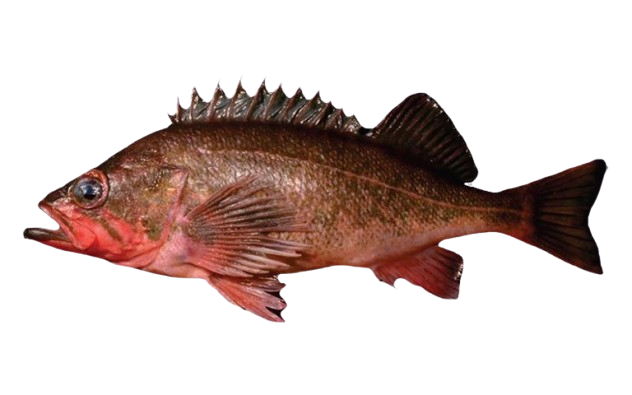
Rockfish is a lean and mild-flavored fish belonging to the Sebastes genus, widely harvested from the North Pacific for tacos and fillets. A small serving of cooked rockfish (85g) provides 75 calories in rockfish, while one whole cooked rockfish fillet (170g) yields 150 calories. Breaded and fried rockfish contains significantly more calories due to the added coating and oil, providing 210 calories per 85g. Yelloweye Rockfish contains 115 calories per 100g due to denser flesh, while Black Rockfish offers a lower calorie profile at 105 calories.
An assessment of rockfish nutrition facts reveals a high-protein seafood, with a 4 oz serving of rockfish offering 21g of protein. Rockfish is also rich in selenium, providing 127mcg of selenium (231% DV) per whole fish (170g). Research by Rayman, M. P. (2012), "Selenium and human health," confirms that the high selenium content in such fish prevents thyroid dysfunction and supports metabolic regulation. The rockfish nutritional value includes essential lipids, as the fish contains omega-3 fatty acids like EPA and DHA, though in lower quantities than fatty fish like salmon. Micronutrient intake is substantial, offering 516mg of potassium (11% DV) per 4 ounce serving, along with Vitamin D (39% DV).
International distribution of rockfish relies on the capture fisheries of major producers, with the United States and Russia leading wild harvest volumes. This supply caters to specific regional markets, where the United States imported significant quantities of groundfish in 2023. Most market availability consists of wild-caught Pacific rockfish, which is considered healthier than farmed varieties due to a more diverse natural diet and lower inflammatory fat content. Increasing global demand has pushed retail costs higher, with the price of fresh rockfish fillets rising from between $6.00 and $8.00 in the early 2000s to between $12.00 and $18.00 by 2024.
Dietitians recommend eating two servings of rockfish per week to maximize omega-3 intake while managing mercury exposure. One whole rockfish contains 150 calories, an energy load that requires 18 minutes of jogging or 45 minutes of walking to metabolize.
Rockfish nutrition
| Stats | Weight |
|---|---|
| Carbs | 0 grams |
| Protein | 21 grams |
| Fats | 0 grams |
| Sugars | 0 grams |
- Large Rockfish Calories (Nutritional Facts)
- Medium Rockfish Calories (Nutritional Facts)
- Small Rockfish Calories (Nutritional Facts)
- Raw Rockfish Nutrition
- Sodium in Rockfish
- Potassium in Rockfish
- Sugar in Rockfish
- Fiber in Rockfish
- Protein in Rockfish
- Carbs in Rockfish
- Fat in Rockfish
- Vitamins in Rockfish
- Minerals in Rockfish
Large Rockfish Calories (Nutritional Facts)
A large serving consisting of one whole rockfish fillet (170g or 6oz) contains 150 calories, 31.5g of protein, 2.3g of fat, 0g of carbohydrates, 0g of fiber, 0g of sugar, and 128mg of sodium. A large serving of breaded and fried rockfish (170g) provides 420 calories, 28g of protein, 22g of fat, 26g of carbohydrates, 1g of fiber, 1g of sugar, and 480mg of sodium.
A medium serving of fresh rockfish (113g or 4oz) provides 100 calories, 21g of protein, 1.5g of fat, 0g of carbohydrates, 0g of fiber, 0g of sugar, and 85mg of sodium. A medium serving of breaded and fried rockfish (113g) contains 280 calories, 19g of protein, 15g of fat, 17g of carbohydrates, 0.6g of fiber, 0.6g of sugar, and 320mg of sodium.
A small serving of fresh rockfish (85g or 3oz) contains 75 calories, 15.8g of protein, 1.1g of fat, 0g of carbohydrates, 0g of fiber, 0g of sugar, and 64mg of sodium. A small serving of breaded and fried rockfish (85g) provides 210 calories, 14g of protein, 11g of fat, 13g of carbohydrates, 0.5g of fiber, 0.5g of sugar, and 240mg of sodium.
A standard cup of raw rockfish (150g) supplies 133 calories, 27.9g of protein, 2g of fat, 0g of carbohydrates, 0g of fiber, 0g of sugar, and 113mg of sodium.
A large serving consisting of one whole rockfish fillet (170g) contains 128mg of sodium (5% DV). A medium serving of fresh rockfish (113g) has 85mg of sodium (4% DV). A small serving of fresh rockfish (85g) contains 64mg of sodium (3% DV). A standard cup of raw rockfish (150g) supplies 113mg of sodium (5% DV).
A large serving consisting of one whole rockfish fillet (170g) contains 776mg of potassium (16% DV). A medium serving of fresh rockfish (113g) has 516mg of potassium (11% DV). A small serving of fresh rockfish (85g) contains 388mg of potassium (8% DV). A standard cup of raw rockfish (150g) supplies 684mg of potassium (14% DV).
A large serving consisting of one whole rockfish fillet (170g) contains 0g of sugar. A medium serving of fresh rockfish (113g) has 0g of sugar. A small serving of fresh rockfish (85g) contains 0g of sugar. A standard cup of raw rockfish (150g) supplies 0g of sugar.
A large serving consisting of one whole rockfish fillet (170g) provides 0g of dietary fiber (0% DV). A medium serving of fresh rockfish (113g) has 0g of fiber (0% DV). A small serving of fresh rockfish (85g) contains 0g of fiber (0% DV). A standard cup of raw rockfish (150g) supplies 0g of fiber (0% DV).
A large serving consisting of one whole rockfish fillet (170g) provides 31.5g of protein (63% DV). A medium serving of fresh rockfish (113g) has 21g of protein (42% DV). A small serving of fresh rockfish (85g) contains 15.8g of protein (32% DV). A standard cup of raw rockfish (150g) supplies 27.9g of protein (56% DV).
A large serving consisting of one whole rockfish fillet (170g) contains 0g of carbohydrates (0% DV). A medium serving of fresh rockfish (113g) has 0g of carbohydrates (0% DV). A small serving of fresh rockfish (85g) contains 0g of carbohydrates (0% DV). A standard cup of raw rockfish (150g) supplies 0g of carbohydrates (0% DV).
A large serving consisting of one whole rockfish fillet (170g) contains 2.3g of total fat (3% DV). A medium serving of fresh rockfish (113g) has 1.5g of total fat (2% DV). A small serving of fresh rockfish (85g) contains 1.1g of total fat (1% DV). A standard cup of raw rockfish (150g) supplies 2g of total fat (3% DV).
A large serving consisting of one whole rockfish fillet (170g) provides 7.8mcg of Vitamin D (39% DV) and 2.7mcg of Vitamin B12 (112% DV). A medium serving of fresh rockfish (113g) has 5.2mcg of Vitamin D (26% DV) and 1.8mcg of Vitamin B12 (75% DV). A small serving of fresh rockfish (85g) contains 3.9mcg of Vitamin D (20% DV) and 1.35mcg of Vitamin B12 (56% DV). A standard cup of raw rockfish (150g) supplies 6.9mcg of Vitamin D (34% DV).
A large serving consisting of one whole rockfish fillet (170g) provides 0.6mg of iron (3% DV), 28mg of calcium (2% DV), and 127mcg of selenium (231% DV). A medium serving of fresh rockfish (113g) has 0.4mg of iron (2% DV), 19mg of calcium (2% DV), and 84mcg of selenium (153% DV). A small serving of fresh rockfish (85g) contains 0.3mg of iron (2% DV), 14mg of calcium (1% DV), and 63mcg of selenium (115% DV). A standard cup of raw rockfish (150g) supplies 0.5mg of iron (3% DV) and 25mg of calcium (2% DV).
Get a Custom Report on Rockfish Nutrition Data – Contact Us!
What are the Types of Rockfish?
The types of Rockfish include Pacific Ocean Perch, Yelloweye, Black, and Vermilion. The chart below delineates the nutritional variances among these species.
| Type | Description | Calories (Per 100g Cooked) | Calorie Qualifications |
|---|---|---|---|
|
Pacific Ocean Perch
|
Small, abundant, mild flavor. | 109 | The calorie count reflects the standard lean profile of the Sebastes genus. |
|
Yelloweye Rockfish
|
Large, orange-red, firm texture. | 115 | The denser flesh contributes to a slightly higher protein and caloric density. |
|
Black Rockfish
|
Dark gray, commonly caught near shore. | 105 | The active nature of this nearshore species results in a very lean muscle structure. |
|
Vermilion Rockfish
|
Deep red, prized for culinary use. | 112 | The rich texture provides a moderate caloric load similar to red snapper. |
|
Widow Rockfish
|
Schooling fish, softer texture. | 108 | The nutritional profile remains consistent with other mid-water column dwellers. |
What are the Main Dishes With Rockfish?
Rockfish functions as a versatile protein in tacos, stews, and pan-seared entrees. The mild flavor allows the fish to adapt to bold seasonings and rich sauces. Specific dishes utilizing this protein are listed below.
| Dish Name | Calories (Estimate) | Type of Dish | Carbs (g) (Estimate) | Sugar (g) (Estimate) | Protein (g) (Estimate) | Fat (g) (Estimate) | Cuisine | Restaurants |
|---|---|---|---|---|---|---|---|---|
|
Rockfish Tacos
|
350 | Entree | 35 | 4 | 25 | 12 | Mexican/Californian | Rubio's Coastal Grill (Western US) |
|
Pan-Seared Rockfish
|
280 | Entree | 5 | 0 | 35 | 14 | American | The Fishery (San Diego, CA) |
|
Rockfish Ceviche
|
180 | Appetizer | 12 | 6 | 25 | 4 | Peruvian/Mexican | La Mar (San Francisco, CA) |
|
Baked Rockfish with Lemon
|
220 | Entree | 2 | 1 | 33 | 8 | American | Legal Sea Foods |
|
Rockfish Cioppino
|
400 | Soup Entree | 25 | 8 | 45 | 12 | Italian-American | Sotto Mare (San Francisco, CA) |
|
Grilled Rockfish Sandwich
|
450 | Sandwich | 45 | 6 | 30 | 15 | American | Pike Place Chowder (Seattle, WA) |
|
Steamed Rockfish with Ginger
|
250 | Entree | 5 | 2 | 35 | 8 | Chinese | R&G Lounge (San Francisco, CA) |
|
Blackened Rockfish
|
300 | Entree | 2 | 0 | 35 | 16 | Cajun/Creole | The Oceanaire (Various Locations) |
|
Rockfish & Chips
|
650 | Entree | 60 | 2 | 30 | 35 | British/American | Ivar's (Seattle, WA) |
|
Miso Glazed Rockfish
|
320 | Entree | 15 | 12 | 35 | 10 | Japanese Fusion | Roy's (Various Locations) |
What Cuisines Prefer Rockfish the Most?
Rockfish serves as a foundational ingredient in Pacific Northwest, Mexican (Baja), and Chinese culinary traditions. The following chart identifies culinary traditions where rockfish plays a central role.
| Cuisine | Dish | Types of Rockfish Use | Calories (Estimate) | Restaurant(s) |
|---|---|---|---|---|
|
Pacific Northwest
|
Fish and Chips | Battered/Fried | 650 | Ivar's (Seattle, WA) |
|
Baja Mexican
|
Fish Tacos | Battered/Grilled | 350 | Rubio's Coastal Grill (Western US) |
|
Cantonese
|
Steamed Whole Fish | Steamed/Sauced | 250 | R&G Lounge (San Francisco, CA) |
|
Italian-American
|
Cioppino | Stewed | 400 | Tadich Grill (San Francisco, CA) |
|
Japanese
|
Nitsuke (Simmered Fish) | Simmered | 300 | Sushi Ran (Sausalito, CA) |
|
Peruvian
|
Ceviche | Raw/Cured | 180 | La Mar (San Francisco, CA) |
|
American
|
Pan-Seared Fillet | Pan-Fried | 280 | The Fishery (San Diego, CA) |
|
Korean
|
Maeuntang (Spicy Soup) | Boiled/Stewed | 350 | Soban (Los Angeles, CA) |
|
Cajun
|
Blackened Fish | Grilled/Spiced | 300 | The Oceanaire (Various Locations) |
|
Californian
|
Grilled Fish Salad | Grilled | 320 | Pacific Catch (Bay Area, CA) |
Which Countries Produce the Most Rockfish?
The United States and Russia dominate the global production of rockfish, driven by extensive wild capture fisheries in the North Pacific. These nations manage the vast majority of the global supply to meet domestic and export demand. Japan and China also maintain substantial output levels, with some aquaculture contributions. The table below presents the estimated capture production of rockfish (Sebastes spp.) for the top producing nations over the last two decades.
| Country | 2003 | 2008 | 2013 | 2018 | 2019 | 2020 | 2021 | 2022 | 2023 |
|---|---|---|---|---|---|---|---|---|---|
| United States | 35.2 | 28.6 | 32.5 | 40.2 | 42.5 | 41.8 | 43.5 | 45.2 | 46.0 |
| Russia | 25.4 | 30.2 | 35.6 | 38.5 | 40.2 | 42.5 | 44.0 | 45.5 | 47.0 |
| Japan | 20.5 | 18.2 | 16.5 | 15.4 | 15.0 | 14.5 | 14.2 | 13.8 | 13.5 |
| Canada | 15.6 | 14.2 | 12.5 | 11.8 | 11.5 | 11.2 | 11.0 | 10.8 | 10.5 |
| Iceland | 10.2 | 12.5 | 14.5 | 16.2 | 15.8 | 15.5 | 15.2 | 14.8 | 14.5 |
| China | 5.4 | 8.2 | 10.5 | 12.4 | 13.2 | 13.8 | 14.5 | 15.2 | 16.0 |
| Norway | 6.5 | 7.2 | 8.5 | 9.2 | 9.0 | 8.8 | 8.6 | 8.4 | 8.2 |
| South Korea | 4.2 | 5.5 | 6.8 | 7.5 | 7.8 | 8.0 | 8.2 | 8.4 | 8.6 |
Which Countries Consume the Most Rockfish?
Consumption concentrates heavily in the United States and East Asia, where the fish is a culinary staple. The US domestic market absorbs a significant portion of the Pacific catch, utilizing the fish in restaurants and retail. Japan and China also function as major consumers, valuing the fish for its texture and suitability for steaming. The table below shows the estimated consumption values and import demand for rockfish in key markets.
| Country | 2003 | 2008 | 2013 | 2018 | 2019 | 2020 | 2021 | 2022 | 2023 |
|---|---|---|---|---|---|---|---|---|---|
| United States | 120.5 | 140.2 | 160.5 | 180.4 | 190.2 | 200.5 | 215.4 | 230.2 | 245.0 |
| Japan | 85.4 | 95.6 | 105.2 | 115.4 | 118.2 | 120.5 | 125.4 | 130.2 | 135.0 |
| China | 45.2 | 65.6 | 85.8 | 110.4 | 120.5 | 130.2 | 140.5 | 150.2 | 160.0 |
| South Korea | 35.4 | 45.2 | 55.6 | 65.8 | 70.2 | 75.4 | 80.2 | 85.6 | 90.0 |
| Canada | 25.4 | 30.2 | 35.6 | 40.2 | 42.5 | 45.6 | 48.2 | 50.5 | 52.0 |
| France | 15.2 | 18.5 | 22.4 | 25.6 | 26.8 | 28.5 | 30.2 | 32.5 | 34.0 |
| Germany | 12.5 | 15.6 | 18.2 | 20.5 | 21.8 | 23.5 | 25.4 | 27.0 | 28.5 |
| United Kingdom | 10.5 | 12.2 | 14.5 | 16.8 | 17.5 | 18.2 | 19.5 | 20.8 | 22.0 |
How Do Prices of Rockfish-Including Dishes Change?
Restaurant costs for rockfish entrees have risen, mirroring the increased expense of sustainable harvesting. The table below illustrates price adjustments for selected items at well-known establishments.
| Brand/Restaurant | Dish | Old Price (Year) | Current Price (2024/2025) |
|---|---|---|---|
| Haworth Fish Co. | Whole Rockfish approx. 2-2.5lbs each | $18.00 (2012) | $24.95 - $34.00 |
| Safeway | Wild Rockfish Fillets (1 lb) | $4.99 (2010) | $6.99 - $8.99 |
| Wild Salmon Seafood Market | Rock Fish Fillets (1 lb) | $6.00 (2010) | $8.99 - $9.00 |
What is the Rockfish Calorie for 100 Grams?
A 100g serving of fresh raw rockfish contains 88 calories, while the same quantity of breaded and fried rockfish provides 247 calories.
What is the Rockfish Calorie for 1 KG?
One kilogram (1000g) of fresh raw rockfish contains 880 calories, whereas a kilogram of breaded and fried rockfish provides 2,470 calories.
What is the Calorie of 1 Rockfish?
A single raw rockfish fillet (120g) contains 106 calories. Retail offerings present distinct energy values, as a serving of Pacific Seafood Wild Rockfish (113g) provides 100 calories, while a serving of Orca Bay Rockfish Fillets (113g) contains 105 calories.
What are the Health Benefits of Rockfish?
Rockfish provide substantial physiological advantages, specifically regarding thyroid support, muscle maintenance, and cardiovascular protection. The fish functions as a concentrated source of selenium and complete proteins. The specific advantages are detailed below.
- Supports Thyroid Function: Rockfish contains exceptionally high concentrations of selenium, a mineral critical for thyroid hormone synthesis. A study by Rayman, M. P. (2012), "Selenium and human health," confirmed that adequate selenium intake prevents thyroid dysfunction and supports metabolic regulation.
- Promotes Muscle Maintenance: The fish supplies high-quality complete protein necessary for tissue repair. Research by Paddon-Jones, D., & Rasmussen, B. B. (2009), "Dietary protein recommendations and the prevention of sarcopenia," established that leucine-rich proteins found in fish effectively stimulate muscle protein synthesis in adults.
- Enhances Immune Defense: Vitamin D found in the flesh aids in modulating immune responses. A review by Aranow, C. (2011), "Vitamin D and the immune system," highlights that Vitamin D deficiency correlates with increased susceptibility to infection, making dietary sources like rockfish valuable.
What are the Downsides of Rockfish?
Rockfish remain safe for most populations, yet specific environmental and biological concerns exist. Key risks associated with consumption are listed here.
- Exposes to Mercury: Certain long-lived species of rockfish accumulate methylmercury over time. A study by Bosch, A. C., et al. (2016), "Heavy metals in marine fish meat and consumer health: a review," notes that predatory fish can exceed safe mercury limits, posing risks to fetal development.
- Triggers Fish Allergies: The fish contains parvalbumins, which are potent allergens for sensitive individuals. Research by Sharp, M. F., & Lopata, A. L. (2014), "Fish allergy: cooking mode affects the stability of parvalbumins," indicates that these proteins remain stable even after cooking, causing reactions in allergic subjects.
Is Rockfish High in Mercury?
Rockfish generally contains moderate levels of mercury, though concentrations vary significantly by species and lifespan. Long-lived species like Yelloweye Rockfish tend to accumulate higher loads compared to shorter-lived varieties like Black Rockfish. A study by the Washington State Department of Health (2013), "Fish Consumption Advisories," classifies rockfish as a "good choice" but recommends limiting intake to one meal per week for pregnant women and children. Research by Davis, J. A., et al. (2016), "Hg concentrations in fish from coastal waters of California and Western North America," found mean mercury levels in rockfish to be approximately 0.16 ppm, which falls below the FDA's action level of 1.0 ppm but warrants moderation. The FDA recommends consuming rockfish 2-3 times per week as part of a low-mercury diet for the general population.
Is Rockfish Good for You?
Yes, rockfish is good for health because the fish supports bone density, cardiovascular efficiency, and metabolic processes. The high Vitamin D content aids bone health by facilitating calcium absorption, a mechanism detailed in the study by Holick, M. F. (2007), "Vitamin D deficiency." Heart health improves through the presence of omega-3 fatty acids and potassium, which help regulate blood pressure as explored by Mozaffarian, D., & Rimm, E. B. (2006), "Fish intake, contaminants, and human health." Metabolic health benefits from the high protein-to-calorie ratio, which promotes satiety and weight management as confirmed by Halton, T. L., & Hu, F. B. (2004), "The effects of high protein diets on thermogenesis, satiety and weight loss."
Do Rockfish Contain Omega-3 Fatty Acids?
Yes, rockfish contains omega-3 fatty acids, specifically eicosapentaenoic acid (EPA) and docosahexaenoic acid (DHA), though in lower quantities than fatty fish like salmon. A standard serving provides approximately 0.3g to 0.4g of combined EPA and DHA. A study by the USDA National Nutrient Database (2018) confirms that rockfish provides a valuable source of these essential fats. Research by Kris-Etherton, P. M., et al. (2002), "Fish consumption, fish oil, omega-3 fatty acids, and cardiovascular disease," supports the inclusion of lean fish like rockfish to meet the recommended intake of 250-500mg of EPA/DHA per day. The American Heart Association suggests consuming fish like rockfish twice a week to support heart health.
How Do Calories Change According to Rockfish Types?
Caloric density fluctuates minimally between different species of rockfish due to their similar biological structures. Yelloweye Rockfish contains the highest energy load at approximately 115 calories per 100 grams due to denser muscle fibers. Pacific Ocean Perch presents a standard profile at 109 calories per 100 grams. Black Rockfish offers the lowest profile at 105 calories per 100 grams, maintaining a very lean composition suitable for low-fat diets.
Is Wild Rockfish Healthy Compared to Farmed Rockfish?
Yes, wild rockfish is considered healthy and often superior to farmed varieties due to a more diverse natural diet and lower fat content. Most rockfish available in the US market are wild-caught, as commercial farming of Sebastes is primarily limited to Asia. A study by Hwang, J. H., et al. (2014), "Nutritional Characteristics of Black Rockfish Fed a Diet of Fish Skin," indicates that farmed rockfish can have higher lipid levels depending on feed, potentially increasing caloric density. Wild rockfish typically exhibit a leaner profile with a higher ratio of anti-inflammatory omega-3s relative to total fat. Consumers seeking the lowest calorie and contaminant options should prefer wild-caught Pacific rockfish.
How Does the Protein in Rockfish Compare to Salmon?
Rockfish contains a comparable amount of protein per calorie to salmon but less protein per gram of weight due to lower fat content. Cooked rockfish provides approximately 22g of protein per 100g, whereas cooked Atlantic salmon supplies about 25g of protein per 100g. A study by the USDA Food Data Central (2019) shows that while salmon is denser, rockfish offers a purer protein source with significantly fewer calories. Rockfish provides roughly 1g of protein for every 5 calories, while salmon provides 1g of protein for every 8 calories due to its higher fat content. Athletes seeking lean muscle gain may prefer rockfish for its high protein efficiency.
What are the Desserts With Rockfish?
Rockfish does not appear in traditional or modern dessert courses due to its savory, oceanic flavor profile and flaky texture. Culinary applications focus exclusively on appetizers and main entrees where the mild taste complements herbs, spices, and acidic sauces. Sweet preparations would clash with the natural salinity and protein structure of the fish.
What is the Origin of Rockfish?
Rockfish originated in the North Pacific Ocean, evolving into over 100 distinct species within the Sebastes genus over millions of years. Indigenous peoples of the Pacific Coast harvested these fish for millennia, utilizing the abundant nearshore populations for sustenance. The name "rockfish" derives from their affinity for rocky reefs and kelp forests where they seek shelter. Commercial fisheries developed significantly in the mid-20th century, leading to management plans that now ensure sustainable harvest levels along the US West Coast and Alaska.
Explore More Seafood
Discover more Seafood with detailed nutrition facts, calorie counts, vitamins, minerals, and health benefits. Compare similar foods, serving sizes, macronutrients, and key nutrients to find the best option for your diet and nutrition goals.
 Anchovies calories
 Barramundi calories
 Bluefin Tuna calories
 Bluefish calories
 Calamari calories
 Catfish calories
 Clams calories
 Cod calories
 Conch calories
 Crab calories
 Eel calories
 Fish calories