Calories and Nutritions in Snapper
Snapper is a family of perciform fish known for their firm texture and mildly sweet flavor. A 100g serving of fresh raw snapper contains 100 snapper calories, while. a small serving of cooked snapper (85g) provides 109 calories. A single raw snapper fillet (218g) supplies 218 calories. A serving of Member's Mark Wild Caught Snapper Skin-On Fillets (113g) provides 110 calories, while a serving of Sea Best Snapper Fillets (113g) contains 99 calories.
An evaluation of snapper nutrition highlights a food source abundant in protein with very little fat. One whole cooked snapper fillet (170g) provides 44.7g of protein and 2.9g of fat. This lean composition makes the fish an excellent vehicle for delivering essential trace minerals like selenium to the body. Research by Rayman, M. P. (2012), "Selenium and human health," confirms that the high selenium content in such fish prevents thyroid dysfunction and supports metabolic regulation. The caloric load derives primarily from protein, making the fish a satiating option for balanced diets. In terms of fat content, snapper classifies as a lean white fish containing under 2% lipids by weight. The mineral profile of snapper is robust, supplying 887mg of potassium (19% DV) per 6 oz portion, along with Vitamin D, offering 17.3mcg.
Global production of snapper fish depends heavily on the capture fisheries of major nations, with China, Indonesia, and Mexico leading harvest volumes. This supply caters to specific regional markets, where the United States and Japan consume significant quantities of this marine resource. Snapper is a main component in Caribbean, Mexican, and American cuisines, used in grilled fillets and fish tacos. Increasing global demand has pushed retail costs higher, with the price of fresh snapper fillets rising from between $6.00 and $8.00 per lb in the early 2000s to between $14.00 and $20.00 per lb by 2024.
Dietitians advise consuming two servings of snapper or similar fish per week to optimize nutrient intake while mitigating potential mercury exposure. Red Snapper contains approximately 0.19 ppm of methylmercury. A large serving of one whole cooked snapper fillet (170g) contains 218 calories, an energy load that requires 35 minutes of carrying groceries or 50 minutes of washing the car to metabolize.
Snapper nutrition
| Stats | Weight |
|---|---|
| Carbs | 0.441 grams |
| Protein | 20.7 grams |
| Fats | 0.569 grams |
| Sugars | 0 grams |
- Large Snapper Calories (Nutritional Facts)
- Medium Snapper Calories (Nutritional Facts)
- Small Snapper Calories (Nutritional Facts)
- Raw Snapper Nutrition
- Sodium in Snapper
- Potassium in Snapper
- Sugar in Snapper
- Fiber in Snapper
- Protein in Snapper
- Carbs in Snapper
- Fat in Snapper
- Vitamins in Snapper
- Minerals in Snapper
Large Snapper Calories (Nutritional Facts)
A large serving consisting of one whole cooked snapper fillet (170g or 6oz) contains 218 calories, 44.7g of protein, 2.9g of fat, 0g of carbohydrates, 0g of fiber, 0g of sugar, and 97mg of sodium.
A medium serving of cooked snapper (113g or 4oz) provides 145 calories, 29.7g of protein, 1.9g of fat, 0g of carbohydrates, 0g of fiber, 0g of sugar, and 64mg of sodium.
A small serving of cooked snapper (85g or 3oz) contains 109 calories, 22.4g of protein, 1.5g of fat, 0g of carbohydrates, 0g of fiber, 0g of sugar, and 48mg of sodium.
A single raw snapper fillet (218g) supplies 218 calories, 44.7g of protein, 2.9g of fat, 0g of carbohydrates, 0g of fiber, 0g of sugar, and 139.5mg of sodium.
A large serving consisting of one whole cooked snapper fillet (170g) contains 97mg of sodium (4% DV). A medium serving of cooked snapper (113g) has 64mg of sodium (3% DV). A small serving of cooked snapper (85g) contains 48mg of sodium (2% DV). A single raw snapper fillet (218g) supplies 139.5mg of sodium (6% DV).
A large serving consisting of one whole cooked snapper fillet (170g) contains 887mg of potassium (19% DV). A medium serving of cooked snapper (113g) has 590mg of potassium (13% DV). A small serving of cooked snapper (85g) contains 444mg of potassium (9% DV). A single raw snapper fillet (218g) supplies 909.1mg of potassium (19% DV).
A large serving consisting of one whole cooked snapper fillet (170g) contains 0g of sugar. A medium serving of cooked snapper (113g) has 0g of sugar. A small serving of cooked snapper (85g) contains 0g of sugar. A single raw snapper fillet (218g) supplies 0g of sugar.
A large serving consisting of one whole cooked snapper fillet (170g) provides 0g of dietary fiber (0% DV). A medium serving of cooked snapper (113g) has 0g of fiber (0% DV). A small serving of cooked snapper (85g) contains 0g of fiber (0% DV). A single raw snapper fillet (218g) supplies 0g of fiber (0% DV).
A large serving consisting of one whole cooked snapper fillet (170g) provides 44.7g of protein (89% DV). A medium serving of cooked snapper (113g) has 29.7g of protein (59% DV). A small serving of cooked snapper (85g) contains 22.4g of protein (45% DV). A single raw snapper fillet (218g) supplies 44.7g of protein (89% DV).
A large serving consisting of one whole cooked snapper fillet (170g) contains 0g of carbohydrates (0% DV). A medium serving of cooked snapper (113g) has 0g of carbohydrates (0% DV). A small serving of cooked snapper (85g) contains 0g of carbohydrates (0% DV). A single raw snapper fillet (218g) supplies 0g of carbohydrates (0% DV).
A large serving consisting of one whole cooked snapper fillet (170g) contains 2.9g of total fat (4% DV). A medium serving of cooked snapper (113g) has 1.9g of total fat (2% DV). A small serving of cooked snapper (85g) contains 1.5g of total fat (2% DV). A single raw snapper fillet (218g) supplies 2.9g of total fat (4% DV).
A large serving consisting of one whole cooked snapper fillet (170g) provides 6mcg of Vitamin B12 (250% DV) and 17.3mcg of Vitamin D (87% DV). A medium serving of cooked snapper (113g) has 4mcg of Vitamin B12 (167% DV) and 11.5mcg of Vitamin D (58% DV). A small serving of cooked snapper (85g) contains 3mcg of Vitamin B12 (125% DV) and 8.7mcg of Vitamin D (44% DV). A single raw snapper fillet (218g) supplies 22.2mcg of Vitamin D (111% DV).
A large serving consisting of one whole cooked snapper fillet (170g) provides 0.4mg of iron (2% DV), 68mg of calcium (5% DV), and 83.3mcg of selenium (152% DV). A medium serving of cooked snapper (113g) has 0.27mg of iron (2% DV), 45mg of calcium (3% DV), and 55.4mcg of selenium (101% DV). A small serving of cooked snapper (85g) contains 0.2mg of iron (1% DV), 34mg of calcium (3% DV), and 41.7mcg of selenium (76% DV). A single raw snapper fillet (218g) supplies 0.39mg of iron (2% DV) and 69.8mg of calcium (5% DV).
Get a Custom Report on Snapper Nutrition Data – Contact Us!
What are the Types of Snappers?
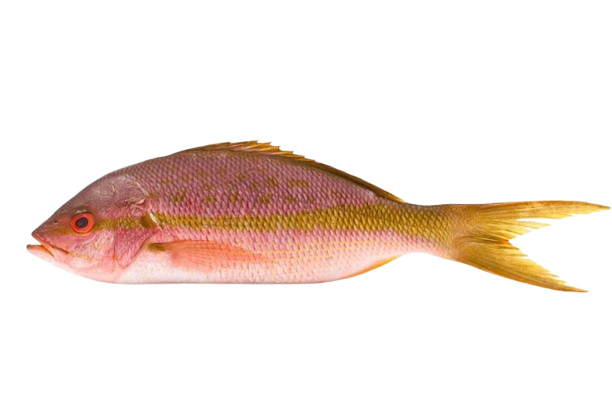
The types of Snappers include Red, Vermilion, Yellowtail, Lane, and Mutton. The chart below delineates the nutritional variances among these species.
| Type | Description | Calories (Per 100g Cooked) | Calorie Qualifications |
|---|---|---|---|
|
Red Snapper
|
Premium, red-skinned fish. | 128 | The calorie count reflects the standard lean profile of the Lutjanusgenus. |
|
Vermilion Snapper
|
Smaller, often called "B-liner." | 115 | The smaller size often results in a slightly leaner composition. |
|
Yellowtail Snapper
|
Distinct yellow stripe, mild flavor. | 120 | The nutritional profile closely mimics Red Snapper, maintaining a moderate energy load. |
|
Lane Snapper
|
Pinkish with yellow lines. | 118 | The flesh is slightly softer, with a similar caloric density to Yellowtail. |
|
Mutton Snapper
|
Larger, reef-dwelling species. | 130 | The denser flesh of larger adults contributes to a slightly higher caloric density. |
What are Main Dishes With Snapper?
Snapper functions as a versatile protein in tacos, grilled entrees, and whole roasted preparations. The mild flavor allows the fish to adapt to bold seasonings and rich sauces. Specific dishes utilizing this protein are listed below.
| Dish Name | Calories (Estimate) | Type of Dish | Carbs (g) (Estimate) | Sugar (g) (Estimate) | Protein (g) (Estimate) | Fat (g) (Estimate) | Cuisine | Restaurants |
|---|---|---|---|---|---|---|---|---|
|
Snapper Veracruz
|
350 | Entree | 15 | 6 | 30 | 18 | Mexican | Red O (Los Angeles, CA) |
|
Grilled Red Snapper
|
280 | Entree | 2 | 0 | 35 | 12 | American | Pappadeaux Seafood Kitchen |
|
Fried Snapper Throat
|
450 | Appetizer | 10 | 1 | 25 | 35 | Southern/Gulf | Gaido's Seafood (Galveston, TX) |
|
Whole Roasted Snapper
|
400 | Entree | 5 | 2 | 45 | 20 | Mediterranean | Estiatorio Milos (Various Locations) |
|
Snapper Ceviche
|
180 | Appetizer | 12 | 6 | 25 | 4 | Peruvian | La Mar (San Francisco, CA) |
|
Blackened Snapper
|
320 | Entree | 2 | 0 | 35 | 18 | Cajun | The Oceanaire (Various Locations) |
|
Steamed Snapper with Ginger
|
250 | Entree | 5 | 2 | 35 | 8 | Chinese | R&G Lounge (San Francisco, CA) |
|
Snapper Tacos
|
380 | Entree | 35 | 4 | 25 | 15 | Mexican | Rubio's Coastal Grill (Western US) |
|
Pan-Seared Snapper
|
300 | Entree | 4 | 0 | 32 | 16 | American | Legal Sea Foods |
|
Thai Fried Snapper
|
550 | Entree | 30 | 15 | 35 | 30 | Thai | Arun's Thai Restaurant (Chicago, IL) |
What Cuisines Prefer Snapper the Most?
Snapper serves as a foundational ingredient in Caribbean, Mexican, and American Gulf Coast culinary traditions. The following chart identifies culinary traditions that rely heavily on this seafood.
| Cuisine | Dish | Types of Snapper Use | Calories (Estimate) | Restaurant(s) |
|---|---|---|---|---|
|
Mexican (Veracruz)
|
Huachinango a la Veracruzana | Stewed/Baked | 350 | Red O (Los Angeles, CA) |
|
American (Gulf)
|
Blackened Snapper | Grilled/Spiced | 320 | Pappadeaux Seafood Kitchen |
|
Caribbean
|
Fried Whole Snapper | Fried | 600 | Miss Lily's (New York, NY) |
|
Cantonese
|
Steamed Whole Fish | Steamed | 250 | R&G Lounge (San Francisco, CA) |
|
Greek
|
Psari Psito (Grilled) | Grilled | 400 | Estiatorio Milos (Various Locations) |
|
Peruvian
|
Ceviche | Raw/Cured | 180 | La Mar (San Francisco, CA) |
|
Thai
|
Pla Kapong Neung Manao | Steamed/Spicy | 280 | Arun's Thai Restaurant (Chicago, IL) |
|
Japanese
|
Tai Sashimi (Sea Bream/Snapper) | Raw | 120 | Nobu |
|
Cajun
|
Snapper Pontchartrain | Pan-Fried/Sauced | 550 | Galatoire's (New Orleans, LA) |
|
Brazilian
|
Moqueca de Peixe | Stewed | 450 | Plataforma Churrascaria (New York, NY) |
Which Countries Produce the Most Snappers?
The countries that produce the most snappers are China, Indonesia, and Mexico, driven by extensive wild capture fisheries in tropical waters. These nations manage the vast majority of the global supply to meet domestic and export demand. The United States and Brazil also maintain substantial output levels, particularly for Red Snapper (Lutjanus campechanus). The table below presents the estimated capture production of snapper species for the top producing nations over the last two decades.
| Country | 2003 | 2008 | 2013 | 2018 | 2019 | 2020 | 2021 | 2022 | 2023 |
|---|---|---|---|---|---|---|---|---|---|
| China | 85.2 | 95.6 | 110.5 | 125.4 | 130.2 | 135.5 | 140.4 | 145.2 | 150.0 |
| Indonesia | 60.4 | 75.2 | 90.6 | 110.2 | 115.5 | 120.2 | 125.6 | 130.5 | 135.0 |
| Mexico | 45.6 | 50.2 | 55.4 | 60.5 | 62.2 | 64.5 | 66.2 | 68.5 | 70.0 |
| Philippines | 30.2 | 35.6 | 40.2 | 45.4 | 46.5 | 47.8 | 49.2 | 50.5 | 52.0 |
| United States | 15.2 | 12.5 | 14.6 | 16.8 | 17.5 | 18.2 | 19.5 | 20.8 | 22.0 |
| Brazil | 20.5 | 22.4 | 25.6 | 28.2 | 29.5 | 30.2 | 31.5 | 32.8 | 34.0 |
| Malaysia | 18.5 | 20.2 | 22.5 | 25.4 | 26.2 | 27.5 | 28.4 | 29.5 | 30.5 |
| Vietnam | 12.5 | 15.6 | 18.2 | 22.5 | 23.8 | 25.2 | 26.5 | 28.0 | 29.5 |
Which Countries Consume the Most Snappers?
The countries that consume the most snappers are the United States, China, and Japan, where the fish is a premium menu item. The US domestic market absorbs a significant portion of the Gulf of Mexico catch, utilizing the fish in restaurants and retail. Mexico and Caribbean nations also function as major consumers due to local availability and cultural traditions. The table below shows the estimated consumption values and import demand for snapper in key markets.
| Country | 2003 | 2008 | 2013 | 2018 | 2019 | 2020 | 2021 | 2022 | 2023 |
|---|---|---|---|---|---|---|---|---|---|
| United States | 150.2 | 180.5 | 220.6 | 280.4 | 300.2 | 320.5 | 350.4 | 380.2 | 410.0 |
| China | 80.5 | 110.2 | 150.5 | 200.4 | 210.5 | 220.2 | 230.6 | 240.5 | 250.0 |
| Japan | 60.4 | 75.6 | 90.2 | 110.5 | 115.2 | 120.5 | 125.4 | 130.2 | 135.0 |
| Mexico | 40.2 | 50.5 | 65.4 | 80.2 | 85.5 | 90.2 | 95.6 | 100.4 | 105.0 |
| France | 25.6 | 30.2 | 40.5 | 50.4 | 52.5 | 55.2 | 58.5 | 61.2 | 64.0 |
| Spain | 20.2 | 25.4 | 35.6 | 45.2 | 48.5 | 50.2 | 52.6 | 55.4 | 58.0 |
| South Korea | 15.4 | 20.2 | 25.6 | 35.4 | 38.2 | 40.5 | 42.8 | 45.2 | 48.0 |
| Australia | 10.5 | 15.6 | 20.2 | 25.4 | 26.8 | 28.5 | 30.2 | 32.5 | 34.0 |
How Do Prices of Snapper-Including Dishes Change?
Menu pricing for dishes containing snapper has increased, reflecting the rising procurement costs of the popular reef fish. The table below displays the price changes for specific menu items and products at established vendors.
| Brand/Restaurant | Dish | Old Price (Year) | Current Price (2024/2025) |
|---|---|---|---|
| Pappadeaux Seafood Kitchen | Wild-Caught Red Snapper & Jumbo Crab | $24.95 (2010) | $39.95 - $48.95 |
| Tres Islas Seafood | Red Snapper / Huachinango Fish whole 4-6lb fish | $26.00 (2012) | $39.99 - $42.00 |
| The Oceanaire (Various Locations) | Blackened Fish Tacos | $9.00 (2010) | $12.00 - $18.00 |
| Whole Foods Market | Wild Red Snapper Fillet (lb) | $24.99 (2012) | $29.99 - $31.99 |
What is the Snapper Calorie for 100 Grams?
A 100g serving of fresh raw snapper contains 100 calories, while the same quantity of cooked snapper provides 128 calories.
What is the Snapper Calorie for 1 KG?
One kilogram (1000g) of fresh raw snapper contains 1,000 calories, whereas a kilogram of cooked snapper provides 1,280 calories.
What is the Calorie of 1 Snapper?
A single raw snapper fillet (170g) contains 170 calories. Retail offerings present distinct energy values, as a serving of Member's Mark Wild Caught Snapper Skin-On Fillets (113g) provides 110 calories, while a serving of Sea Best Snapper Fillets (113g) contains 99 calories. A serving of Packers Snapper Wh Y/T (112g) supplies 110 calories.
What are the Health Benefits of Snapper?
Snapper provides notable physiological advantages, specifically regarding thyroid support, muscle maintenance, and cardiovascular protection. The fish functions as a concentrated source of selenium and complete proteins. The following points highlight these benefits.
- Supports Thyroid Function: Snapper contains high concentrations of selenium, a mineral critical for thyroid hormone synthesis. A study by Rayman, M. P. (2012), "Selenium and human health," confirmed that adequate selenium intake prevents thyroid dysfunction and supports metabolic regulation.
- Promotes Muscle Maintenance: The fish supplies high-quality complete protein necessary for tissue repair. Research by Paddon-Jones, D., & Rasmussen, B. B. (2009), "Dietary protein recommendations and the prevention of sarcopenia," established that leucine-rich proteins found in fish effectively stimulate muscle protein synthesis in adults.
- Enhances Immune Defense: Vitamin D found in the flesh aids in modulating immune responses. A review by Aranow, C. (2011), "Vitamin D and the immune system," highlights that Vitamin D deficiency correlates with increased susceptibility to infection, making dietary sources like snapper valuable.
What are the Downsides of Snapper?
Snapper remains safe for most populations, yet specific environmental and biological concerns exist. Potential adverse effects are outlined below.
- Exposes to Mercury: Certain long-lived species of snapper accumulate methylmercury over time. A study by Bosch, A. C., et al. (2016), "Heavy metals in marine fish meat and consumer health: a review," notes that predatory fish can exceed safe mercury limits, posing risks to fetal development.
- Risks Ciguatera Poisoning: Reef-dwelling snapper can accumulate ciguatoxins from their diet. Research by Friedman, M. A., et al. (2008), "Ciguatera Fish Poisoning: Treatment, Prevention and Management," indicates that consuming large reef fish from endemic areas can lead to neurological and gastrointestinal symptoms.
Are Snappers Good for You?
Yes, snappers are good for health because the fish supports bone density, cardiovascular efficiency, and metabolic processes. The high Vitamin D content aids bone health by facilitating calcium absorption, a mechanism detailed in the study by Holick, M. F. (2007), "Vitamin D deficiency." Heart health improves through the presence of omega-3 fatty acids and potassium, which help regulate blood pressure as explored by Mozaffarian, D., & Rimm, E. B. (2006), "Fish intake, contaminants, and human health." Metabolic health benefits from the high protein-to-calorie ratio, which promotes satiety and weight management as confirmed by Halton, T. L., & Hu, F. B. (2004), "The effects of high protein diets on thermogenesis, satiety and weight loss."
How Do Calories Change According to Snapper Types?
Caloric density fluctuates minimally between different species of snapper due to their similar biological structures. Mutton Snapper contains the highest energy load at approximately 130 calories per 100 grams due to denser muscle fibers in larger adults. Red Snapper presents a standard profile at 128 calories per 100 grams. Vermilion Snapper offers the lowest profile at 115 calories per 100 grams, maintaining a very lean composition suitable for low-fat diets.
How Do Calories in Red Snapper Compare to Other Lean Fish?
Red Snapper contains slightly more calories than other ultra-lean white fish like cod or tilapia due to a marginally higher fat content. Cooked Red Snapper provides 128 calories per 100g, whereas cooked Atlantic Cod supplies 105 calories and cooked Tilapia provides 128 calories per 100g. A study by the USDA Food Data Central (2019) confirms that while Red Snapper is lean, the fish offers a denser texture and richer flavor profile compared to the flakier, lower-calorie cod. The protein content remains comparable across these species, making Red Snapper an efficient protein source with a slightly higher energy yield.
What are the Desserts With Snapper?
Sweet courses featuring snapper are non-existent due to the fish's savory, oceanic flavor profile and flaky texture. Culinary applications focus exclusively on appetizers and main entrees where the mild taste complements herbs, spices, and acidic sauces. Sweet preparations would clash with the natural salinity and protein structure of the fish.
How Does Cooking Affect Snapper Calories?
Cooking alters the nutritional density of snapper by reducing moisture content and potentially adding external fats. Grilling or roasting concentrates the protein content per gram due to water evaporation, slightly increasing the caloric density to 128 calories per 100g. Deep-frying significantly elevates the energy load and fat content due to oil absorption, often doubling the caloric value compared to steamed preparations.
What is the Origin of Snapper?
Snapper (Lutjanidae) originated in the tropical and subtropical reefs of the Atlantic, Indian, and Pacific Oceans. Indigenous peoples of the Caribbean and Americas harvested these fish for millennia, utilizing the abundant reef populations for sustenance. The name "snapper" derives from the fish's tendency to snap its jaws when hooked or handled. Commercial fisheries developed significantly in the 20th century, making Red Snapper a prized commodity in the United States and global markets.
Explore More Seafood
Discover more Seafood with detailed nutrition facts, calorie counts, vitamins, minerals, and health benefits. Compare similar foods, serving sizes, macronutrients, and key nutrients to find the best option for your diet and nutrition goals.
 Anchovies calories
 Barramundi calories
 Bluefin Tuna calories
 Bluefish calories
 Calamari calories
 Catfish calories
 Clams calories
 Cod calories
 Conch calories
 Crab calories
 Eel calories
 Fish calories