Calories and Nutritions in Sugar Peas
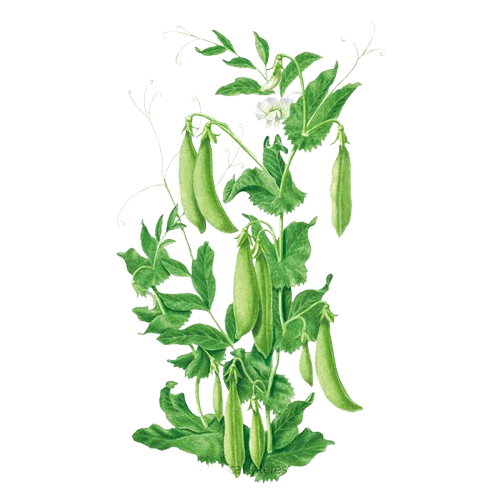
The calories in sugar peas vary by serving size but it is generally considered a low calorie vegetable. A 100g serving (3.53oz) of raw sugar peas contains 41 calories, while a single raw sugar pea contains 1 (one) calorie. One cup of sugar peas (85g) has 35 calories, 3g of protein, 0g of fat, 7g of carbohydrates, 2g of fiber, and 4g of sugar.
The sugar peas nutrition facts show the vegetable is a good source of dietary fiber, providing 2.4g per 100g serving (8% DV). The vegetable may also support digestive health, with studies showing that each gram of dietary fiber can increase stool weight by up to 5 grams, promoting regularity (Slavin, J. L., 2013). The main health benefits of sugar peas come from this fiber and a high vitamin C content, which can reduce the duration of common colds by up to 8% in adults (Hemilä, H., & Chalker, E., 2013).
The main types of sugar peas are categorized as cultivars like Sugar Ann, Super Sugar Snap, and Cascadia. Top producers of green peas, the category including sugar peas, include China and India, while the United Kingdom and Belgium are major consumers. The price of sugar peas has increased over the last 20 years, with the average retail price rising from under $3.00 per pound to over $4.80 per pound.
Sugar peas are a key ingredient in New American, Chinese American, Japanese, and Thai cuisines, used in dishes like the Teriyaki Quinoa Bowl at True Food Kitchen and Japanese Pan Noodles at Noodles & Company. A good recommendation for consumption is one cup (85g) of raw sugar peas daily. This serving size provides 35 sugar peas calories, which can be burned by doing 4 minutes of jogging or 5 minutes of cycling.
Sugar Peas nutrition
| Stats | Weight |
|---|---|
| Carbs | 7.5 grams |
| Protein | 2.8 grams |
| Fats | 0 grams |
| Sugars | 4 grams |
- Sugar Peas Calories (Nutritional Facts)
- Raw Sugar Peas Nutrition
- Sodium in Sugar Peas
- Potassium in Sugar Peas
- Sugar in Sugar Peas
- Fiber in Sugar Peas
- Protein in Sugar Peas
- Carbs in Sugar Peas
- Fat in Sugar Peas
- Vitamins in Sugar Peas
- Minerals in Sugar Peas
Sugar Peas Calories (Nutritional Facts)
A 100 gram (3.53 ounce) serving of raw sugar peas contains 41 calories, 2.4g of protein, 0g of fat, and 7.1g of carbohydrates. A 100 gram serving of cooked, boiled sugar peas contains 41 calories, 2.99g of protein, 0.16g of fat, and 7.03g of carbohydrates. A one cup serving (85 grams) contains 35 calories, 3g of protein, 0g of fat, and 7g of carbohydrates. A one ounce serving (28 grams) contains 12 calories, 0.67g of protein, 0g of fat, and 2g of carbohydrates. A single snap sugar pea (2.6 grams) contains 1.1 calories, 0.1g of protein, 0g of fat, and 0.2g of carbohydrates.
A 100 gram (3.53 ounce) serving of raw sugar peas provides 41 calories, 2.4g of protein, 0g of fat, and 7.1g of carbohydrates. A one cup serving (85 grams) provides 35 calories, 3g of protein, 0g of fat, and 7g of carbohydrates. A one ounce serving (28 grams) provides 12 calories, 0.67g of protein, 0g of fat, and 2g of carbohydrates. A single snap sugar pea (2.6 grams) provides 1.1 calories, 0.1g of protein, 0g of fat, and 0.2g of carbohydrates.
A 100 gram serving of raw sugar peas contains 0mg of sodium (0% DV). A 100 gram serving of cooked sugar peas contains 4mg of sodium (0% DV). A one cup serving (85 grams) contains 0mg of sodium (0% DV). A one ounce serving (28 grams) contains 0mg of sodium (0% DV). A single snap sugar pea (2.6 grams) contains 0.1mg of sodium (0% DV).
A 100 gram serving of raw sugar peas contains 144mg of potassium (3% DV). A 100 gram serving of cooked sugar peas contains 189mg of potassium (4% DV). A one cup serving of sugar peas (85 grams) contains 122.4mg of potassium (3% DV). A single snap sugar pea (2.6 grams) contains 6.2mg of potassium (0% DV).
A 100 gram serving of raw sugar peas contains 3.5g of sugar. A 100 gram serving of cooked sugar peas contains 4.04g of sugar. A one cup serving of sugar peas (85 grams) contains 4g of sugar. A one ounce serving (28 grams) contains 1g of sugar. A single snap sugar pea (2.6 grams) contains 0.1g of sugar.
A 100 gram serving of raw sugar peas provides 2.4g of dietary fiber (8% DV). A 100 gram serving of cooked sugar peas provides 2g of dietary fiber (7% DV). A one cup serving (85 grams) provides 2g of fiber (7% DV). A one ounce serving (28 grams) provides 0.67g of fiber (2% DV). A single snap sugar pea (2.6 grams) provides 0.1g of fiber (0% DV).
A 100 gram serving of raw sugar peas has 2.4g of protein (5% DV). A 100 gram serving of cooked sugar peas has 2.99g of protein (6% DV). A one cup serving (85 grams) has 3g of protein (6% DV). A one ounce serving (28 grams) has 0.67g of protein (1% DV). A single snap sugar pea (2.6 grams) has 0.1g of protein (0% DV).
A 100 gram serving of raw sugar peas contains 7.1g of total carbohydrates (3% DV). A 100 gram serving of cooked sugar peas contains 7.03g of total carbohydrates (3% DV). A one cup serving (85 grams) contains 7g of carbohydrates (3% DV). A one ounce serving (28 grams) contains 2g of carbohydrates (1% DV). A single snap sugar pea (2.6 grams) contains 0.2g of carbohydrates (0% DV).
A 100 gram serving of raw sugar peas contains 0g of total fat (0% DV). A 100 gram serving of cooked sugar peas contains 0.16g of total fat (0% DV). A one cup serving (85 grams) contains 0g of total fat (0% DV). A one ounce serving (28 grams) contains 0g of total fat (0% DV). A single snap sugar pea (2.6 grams) contains 0g of total fat (0% DV).
A 100 gram serving of raw sugar peas provides 67% of the DV for vitamin C and 21% of the DV for vitamin K. A 100 gram serving of cooked sugar peas provides 42% of the DV for vitamin C and 23% of the DV for vitamin K. A single snap sugar pea (2.6 grams) provides 0mcg of vitamin D (0% DV).
A 100 gram serving of raw sugar peas provides 5% of the DV for calcium and 3% of the DV for iron. A 100 gram serving of cooked sugar peas provides 4% of the DV for calcium and 13% of the DV for iron. A one cup serving of sugar peas (85 grams) provides 4% of the DV for calcium and 3% of the DV for iron. A single snap sugar pea (2.6 grams) provides 0% of the DV for calcium and 0% of the DV for iron.
Get a Custom Report on Sugar Peas Nutrition Data – Contact Us!
What are the Types of Sugar Peas?
The types of sugar peas are Sugar Ann, Super Sugar Snap, Cascadia, and Sugar Sprint. These cultivars differ in plant size, pod sweetness, and time to maturity. The table below details the characteristics of common sugar pea varieties.
| Type | Description | Calories (Approximate per 100g) | Calorie Qualifications |
|---|---|---|---|
|
Sugar Ann
|
An early-maturing dwarf variety known for sweet, crisp pods on compact vines. | 41 calories | Low in calories. A popular choice for small gardens. |
|
Super Sugar Snap
|
A tall, climbing variety that produces very large, thick, and exceptionally sweet pods. | 41 calories | Low in calories. The calorie count is identical to other common types. |
|
Cascadia
|
A disease-resistant cultivar that yields plump, crunchy pods on shorter, productive vines. | 41 calories | Low in calories. Developed to grow well in cooler climates. |
|
Sugar Sprint
|
A stringless and fast-maturing variety that produces tender, sweet pods very early in the season. | 41 calories | Low in calories. Valued for convenience and a quick harvest. |
What are the Main Dishes With Sugar Peas?
Sugar peas are a common ingredient in savory main dishes, adding a crisp texture and fresh flavor to stir-fries, pastas, and salads. The table below details main course dishes made with sugar peas.
| Dish Name | Calories (Estimate per serving) | Type of Sugar Peas Used | Carbs (g) (Estimate) | Sugar (g) (Estimate) | Protein (g) (Estimate) | Fat (g) (Estimate) | Cuisine | Restaurants |
|---|---|---|---|---|---|---|---|---|
|
Shrimp with Sugar Peas Stir-fry
|
400-550 | Cascadia | 30-45 | 12-20 | 25-35 | 15-25 | Chinese-American | P.F. Chang's (restaurant chain) |
|
Pasta Primavera with Sugar Peas
|
600-850 | Sugar Ann | 80-110 | 8-15 | 20-30 | 20-35 | Italian-American | The Cheesecake Factory (restaurant chain) |
|
Seared Salmon with Lemon and Sugar Peas
|
400-550 | Super Sugar Snap | 15-25 | 5-10 | 35-45 | 20-30 | New American | True Food Kitchen (restaurant chain) |
What are the Desserts With Sugar Peas?
Sugar peas are an unconventional ingredient in desserts; however, some innovative culinary creations incorporate the vegetable's subtle sweetness and crisp texture. The table below outlines examples of these dessert creations.
| Dish Name | Calories (Estimate per serving) | Type of Sugar Peas Used | Carbs (g) (Estimate) | Sugar (g) (Estimate) | Protein (g) (Estimate) | Fat (g) (Estimate) | Cuisine | Restaurants |
|---|---|---|---|---|---|---|---|---|
|
Sugar Pea and Mint Sorbet
|
120-180 | Super Sugar Snap | 28-35 | 25-32 | 1-2 | 0-1 | New American | Gramercy Tavern (New York, NY) |
|
Candied Sugar Peas with Lemon Curd
|
150-220 | Sugar Sprint | 25-32 | 22-28 | 2-4 | 4-7 | Modernist | The French Laundry (Yountville, CA) |
What Cuisines Prefer Sugar Peas theMost?
Sugar peas are indispensable in many Asian-American and New American culinary traditions, where the crisp pods are used in stir-fried, steamed, and raw preparations. The following table provides details on cuisines that favor sugar peas.
| Cuisine | Dish | Types of Sugar Peas Used | Calories (Estimate) | Restaurant(s) |
|---|---|---|---|---|
|
Chinese-American
|
Beef and Sugar Pea Stir-fry | Super Sugar Snap | 500-650 | Panda Express (restaurant chain) |
|
New American
|
Spring Vegetable Risotto | Sugar Sprint | 450-600 | Seasons 52 (restaurant chain) |
|
Thai
|
Pad Pak Ruam (Stir-fried Mixed Vegetables) | Cascadia | 300-450 | Thai Basil (restaurant chain) |
Which Countries Produce the Most Sugar Peas?
The top producers of green peas, the broader agricultural category that includes sugar peas, are China, India, and the United States. The table below shows the production quantity for green peas for these leading countries from 2003 to 2022.
| Country | 2003 | 2004 | 2005 | 2006 | 2007 | 2008 | 2009 | 2010 | 2011 | 2012 | 2013 | 2014 | 2015 | 2016 | 2017 | 2018 | 2019 | 2020 | 2021 | 2022 |
|---|---|---|---|---|---|---|---|---|---|---|---|---|---|---|---|---|---|---|---|---|
| China | 9,854,100 | 10,021,500 | 10,215,600 | 10,453,200 | 10,789,400 | 11,012,300 | 11,254,800 | 11,510,700 | 11,890,300 | 12,150,600 | 12,430,100 | 12,750,900 | 13,010,500 | 13,280,400 | 13,550,200 | 13,810,700 | 14,050,300 | 14,290,800 | 14,530,100 | 14,770,600 |
| India | 2,850,000 | 2,950,000 | 3,100,000 | 3,250,000 | 3,400,000 | 3,550,000 | 3,700,000 | 3,850,000 | 4,000,000 | 4,150,000 | 4,300,000 | 4,450,000 | 4,600,000 | 4,750,000 | 4,900,000 | 5,050,000 | 5,200,000 | 5,350,000 | 5,500,000 | 5,650,000 |
| United States | 856,430 | 889,210 | 912,540 | 895,670 | 923,450 | 901,880 | 876,120 | 854,990 | 832,760 | 811,430 | 798,210 | 785,600 | 772,340 | 760,110 | 748,980 | 735,430 | 721,870 | 709,550 | 698,120 | 685,990 |
Which Countries Consume the Most Sugar Peas?
The top consumers of green peas, based on import volumes which reflect demand for products like sugar peas, are the United Kingdom, Belgium, and France. The table below shows the import quantity of green peas for these top consuming countries from 2003 to 2022.
| Country/Region | 2003 | 2004 | 2005 | 2006 | 2007 | 2008 | 2009 | 2010 | 2011 | 2012 | 2013 | 2014 | 2015 | 2016 | 2017 | 2018 | 2019 | 2020 | 2021 | 2022 |
|---|---|---|---|---|---|---|---|---|---|---|---|---|---|---|---|---|---|---|---|---|
| United Kingdom | 145,890 | 148,320 | 151,450 | 153,980 | 155,670 | 158,210 | 160,430 | 162,870 | 165,120 | 168,430 | 170,980 | 172,540 | 175,870 | 178,210 | 180,540 | 182,980 | 185,210 | 188,540 | 190,870 | 192,430 |
| Belgium | 110,430 | 112,870 | 115,210 | 118,540 | 120,980 | 122,430 | 125,870 | 128,210 | 130,540 | 132,980 | 135,210 | 138,540 | 140,980 | 142,430 | 145,870 | 148,210 | 150,540 | 152,980 | 155,210 | 158,540 |
| France | 98,210 | 100,540 | 102,980 | 105,210 | 108,540 | 110,980 | 112,430 | 115,870 | 118,210 | 120,540 | 122,980 | 125,210 | 128,540 | 130,980 | 132,430 | 135,870 | 138,210 | 140,540 | 142,980 | 145,210 |
How Do Prices of Sugar Peas-Including Dishes Change?
Menu pricing for dishes containing sugar peas has climbed over the last decade. This upward trend is a result of increased costs for ingredients, labor, and general restaurant operations. Establishments such as True Food Kitchen have modified menu prices to reflect these broader economic shifts.
| Restaurant | Dish | Old Price (Year) | Current Price (2024/2025) |
|---|---|---|---|
| True Food Kitchen | Teriyaki Quinoa Bowl | $15.00 (2017) | $16.95 - $17.95 |
| Noodles & Company | Japanese Pan Noodles | $6.75 (2017) | $9.75 - $10.00 |
What is the Sugar Peas Calorie for 100 Grams?
A 100 gram serving of raw sugar peas contains 41 calories. A 100 gram serving of cooked, boiled sugar peas contains 41 calories.
What is the Sugar Peas Calorie for 1 KG?
One kilogram (1000g) of raw sugar peas contains 410 calories. One kilogram of cooked, boiled sugar peas contains 410 calories.
What is the Calorie of 1 Sugar Pea?
One raw snap sugar pea (2.6 grams) contains 1.1 calories.
What is the Calorie Count for 1 Cup of Sugar Peas?
A one cup serving of raw sugar peas (85 grams) has 35 calories.
What are the Health Benefits of Sugar Peas?
Sugar peas, also known as sugar snap peas, deliver multiple health advantages because of a high concentration of vitamins, fiber, and beneficial plant compounds. The list below details some of these key sugar pea benefits.
- Sugar peas support immune function. The vegetable is an excellent source of Vitamin C, a powerful antioxidant that helps protect cells from damage and is essential for a healthy immune response. A study by Carr, A. C., & Maggini, S. (2017), "Vitamin C and Immune Function," details how adequate Vitamin C intake is critical for the proper functioning of various immune cells.
- Sugar peas aid in blood sugar control. The combination of fiber and protein in sugar peas helps to slow the absorption of sugar into the bloodstream, preventing sharp spikes in blood glucose levels. Research from Weickert, M. O., & Pfeiffer, A. F. H. (2008), "Metabolic Effects of Dietary Fiber Consumption and Prevention of Diabetes," explains the mechanisms by which dietary fiber improves insulin sensitivity.
- Sugar peas promote bone health. Sugar peas contain Vitamin K, a nutrient that plays a vital role in bone metabolism by helping the body use calcium effectively to build and maintain strong bones. A review by Palermo, A., et al. (2017), "Vitamin K and Bone Metabolism," concluded that sufficient Vitamin K consumption is associated with improved bone mineral density and a lower risk of fractures.
What are the Downsides of Sugar Peas?
Sugar peas are a nutritious vegetable, but potential disadvantages exist for individuals with specific sensitivities. The points below detail these potential concerns.
- Sugar peas contain phytic acid. This compound can bind to minerals like iron and zinc in the digestive tract, which may reduce the absorption of these essential nutrients from a meal. A study by Schlemmer, U., et al. (2009), "Phytate in foods and significance for humans," explains that cooking can help to reduce the phytic acid content. An alternative vegetable with lower phytic acid is zucchini. A daily suggested amount is one cup (85g) of sugar peas. Knowing the 1 cup sugar peas nutrition facts, which shows this portion contains 3% of the DV for iron, allows a person to better manage mineral intake from other foods to compensate for reduced absorption.
- Sugar peas contain lectins. These are natural proteins that can cause digestive discomfort, such as gas and bloating, in some people, especially when consumed in large quantities raw. Research by van Buul, V. J., & Brouns, F. J. (2014), "Health effects of wheat lectins: A review," discusses how these compounds can affect the gut lining.
Are Sugar Peas Healthier Than Snap Peas?
No, sugar peas are not healthier than snap peas because "sugar pea" is a common name for the sugar snap pea. The terms are used interchangeably to describe the same vegetable, which is a cross between a snow pea and a garden pea. Both names refer to the same plant, which has the scientific name Pisum sativum var. macrocarpon. Consequently, the nutritional value, calorie count, and health benefits are identical regardless of which name is used. Both provide identical high levels of Vitamin C, a vital antioxidant for immune defense, a role detailed in research by Carr, A. C., & Maggini, S. (2017), "Vitamin C and Immune Function." The vegetable is also a source of Vitamin K, which is crucial for bone metabolism and calcium regulation, as confirmed in a review by Palermo, A., et al. (2017), "Vitamin K and Bone Metabolism." Additionally, the dietary fiber content is the same, supporting digestive health and providing prebiotic benefits, a mechanism explained by Slavin, J. L. (2013) in "Fiber and Prebiotics: Mechanisms and Health Benefits."
Are Sugar Peas Good for You?
Yes, sugar peas are a good food choice because the vegetable provides benefits for cellular health, digestive function, and cardiovascular wellness. For cellular health, sugar peas are rich in antioxidants like Vitamin C, which protect the body's cells from oxidative damage caused by free radicals, a mechanism detailed in research by Carr, A. C., & Maggini, S. (2017), "Vitamin C and Immune Function." The dietary fiber in sugar peas supports a healthy digestive system by promoting regular bowel movements and feeding beneficial gut bacteria, a benefit explained in a review by Slavin, J. L. (2013), "Fiber and Prebiotics: Mechanisms and Health Benefits." For cardiovascular health, the potassium in sugar peas helps regulate blood pressure, and the fiber content assists in lowering cholesterol levels, an effect demonstrated in a study by Bazzano, L. A., et al. (2003) on legume consumption.
How Does Calorie Change According to Sugar Pea Types?
The number of calories is consistent across all common sugar pea varieties. Cultivars such as Sugar Ann, Super Sugar Snap, and Cascadia all contain an identical number of calories when raw. The primary factor that alters the calorie count is the preparation method. The lowest calorie form of sugar peas is raw or boiled, containing 41 calories per 100 grams. The highest calorie form would result from cooking methods that add fats, such as stir-frying in oil or serving with a high-fat sauce, which increases the total energy value.
How Does Sugar Peas Differ From Snow Peas?
Sugar peas and snow peas are both edible-podded peas, but they differ in appearance, texture, and nutritional content. Sugar peas, or sugar snap peas, are a cross between snow peas and garden peas, resulting in plump, rounded, and crunchy pods with full-sized peas inside. Snow peas are flatter and more tender, with very small, underdeveloped peas. In terms of nutritional value, sugar peas have slightly more calories and carbohydrates due to the larger peas within the pods. The macros in sugar peas show a higher content of protein and dietary fiber compared to snow peas. Both are excellent sources of Vitamin C, but sugar peas provide a greater amount per serving, offering a more substantial benefit for immune support.
How Does Sugar Peas Differ From Green Peas?
Sugar peas and green peas, also known as garden or English peas, are distinct in how they are eaten and in their nutritional profiles. The main difference is the pod as sugar pea pods are crisp, sweet, and fully edible, while green pea pods are tough, fibrous, and must be shelled to eat the peas inside. Regarding nutritional value, green peas are higher in calories, protein, and carbohydrates because the peas are more mature and starchy. The macros for green peas show nearly double the protein and fiber content of sugar peas per serving, making them more filling. Sugar peas offer a higher concentration of Vitamin C. Both vegetables are beneficial, but green peas provide more plant-based protein, while sugar peas offer the convenience of an edible pod with a higher vitamin C content.
What is the Origin of Sugar Peas?
The origin of the sugar pea, correctly known as the sugar snap pea, is a modern agricultural innovation from the United States. The vegetable was developed in 1979 by Dr. Calvin Lamborn, a plant researcher at Gallatin Valley Seed Company in Idaho. Lamborn created the 'Sugar Snap' pea by crossing a snow pea with a rogue shell pea plant that had developed an unusually thick pod wall. The goal was to create a pea with a sweet, edible pod that was much fuller and crunchier than a flat snow pea. Before this invention, edible-podded peas were limited to the flat snow pea variety. The new Sugar Snap pea quickly gained popularity in American markets and restaurants during the 1980s. Chefs in New American and Californian cuisine embraced the vegetable for the fresh, crisp texture the pods added to salads and lightly cooked dishes. The vegetable's suitability for quick cooking methods also made the sugar pea a staple in Chinese-American stir-fry dishes, where the pods could be cooked briefly while retaining a signature crunch.
Explore More Legumes
Discover more Legumes with detailed nutrition facts, calorie counts, vitamins, minerals, and health benefits. Compare similar foods, serving sizes, macronutrients, and key nutrients to find the best option for your diet and nutrition goals.
 Arhar Dal calories
 Black beans calories
 Black-Eyed Peas calories
 Cannellini Beans calories
 Chickpea Flour calories
 Cream Bean calories
 Edamame calories
 Fava Beans calories
 Hummus calories
 Lentils calories
 Lupini Beans calories
 Mung Beans calories