Calories and Nutritions in Tofu
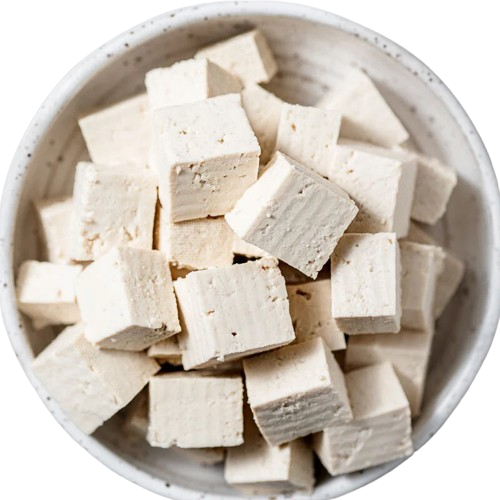
Tofu is a versatile plant-based food and fried tofu is the most calorie-dense, offering 270 calories per 100g. Raw firm tofu has 363 calories for a large serving (252g) and 144 calories per 100g. Soft tofu is the least calorie-dense, with a large serving (248g) offering 151 calories or 61 calories per 100g. One piece of fried tofu (81g) contains 219 calories, while a piece of soft tofu (120g or 4.2oz) has 73 calories. A full block of Nasoya Extra Firm Tofu (453g) contains 360 calories while a serving of House Foods Medium Firm Tofu (85g) has 70 calories.
The tofu nutrition profile is valued for its high protein content, with a large serving of raw firm tofu (252g) offering 43.5g of protein (87% DV). High-quality plant protein is essential for cardiovascular health, a conclusion supported by research (Messina, M., 2016). The tofu macros for a 100g firm portion consist of 17.3g of protein, 8.7g of fat, and 2.8g of carbohydrates. This nutrient profile also delivers key minerals, with the same 100g serving providing an excellent source of calcium (53% DV) and a good source of iron (15% DV). These nutritional advantages are part of the tokwa benefits, which is the name for firm tofu in Filipino cuisine.
Tofu is prepared in many ways, including frying, scrambling, and blending into sauces, and is a key ingredient in dishes like Mapo Tofu and Pad Thai. The global supply is driven by top soybean producers like Brazil and the United States, with consumption being highest in China. The price of tofu has seen a steady increase over the last 20 years. The average retail cost rose from under $1.50 per pound in the early 2000s to over $2.50 per pound by the 2020s.
Tofu is a central ingredient in many East and Southeast Asian cuisines. Health experts suggest a moderate intake of 1 to 2 servings daily, with a serving being 3 ounces (85g). This portion size makes tofu an excellent food for weight loss, as it is a low-calorie, high-protein option compared to meat. A small 81g serving of firm tofu contains only 117 calories, an amount that can be expended through 12 minutes of jogging or 16 minutes of cycling.
Tofu nutrition
| Stats | Weight |
|---|---|
| Carbs | 1.9 grams |
| Protein | 8 grams |
| Fats | 0 grams |
| Sugars | 0.6 grams |
- Large Tofu Calories (Nutritional Facts)
- Medium Tofu Calories (Nutritional Facts)
- Small Tofu Calories (Nutritional Facts)
- Raw Tofu Nutrition
- Sodium in Tofu
- Potassium in Tofu
- Sugar in Tofu
- Fiber in Tofu
- Protein in Tofu
- Carbs in Tofu
- Fat in Tofu
- Vitamins in Tofu
- Minerals in Tofu
Large Tofu Calories (Nutritional Facts)
A large serving of raw firm tofu (252g or 8.9oz) contains 363 calories, 43.5g of protein, 22g of fat, 7g of carbohydrates, 5.8g of fiber, and 35.3mg of sodium. A large serving of fried tofu (252g) has 680 calories, 47.4g of protein, 50.9g of fat, 22.3g of carbohydrates, 9.8g of fiber, 6.9g of sugar, and 40.3mg of sodium. A large serving of raw soft tofu (248g or 8.7oz) has 151 calories, 17.8g of protein, 9.2g of fat, 2.9g of carbohydrates, 0.5g of fiber, 1.7g of sugar, and 19.8mg of sodium.
A medium serving of raw firm tofu (126g or 4.4oz) has 181 calories, 21.8g of protein, 11g of fat, 3.5g of carbohydrates, 2.9g of fiber, and 17.6mg of sodium. A medium serving of fried tofu (126g) has 340 calories, 23.7g of protein, 25.4g of fat, 11.2g of carbohydrates, 4.9g of fiber, 3.4g of sugar, and 20.2mg of sodium. A medium serving of raw soft tofu (116g or 4.1oz) has 71 calories, 8.3g of protein, 4.3g of fat, 1.4g of carbohydrates, 0.23g of fiber, 0.81g of sugar, and 9.3mg of sodium.
A small serving of raw firm tofu (81g or 2.9oz) provides 117 calories, 14g of protein, 7.1g of fat, 2.3g of carbohydrates, 1.9g of fiber, and 11.3mg of sodium. A small serving of fried tofu (81g) has 219 calories, 15.2g of protein, 16.3g of fat, 7.2g of carbohydrates, 3.2g of fiber, 2.2g of sugar, and 13mg of sodium. A small serving of raw soft tofu (90g or 3.2oz) has 55 calories, 6.5g of protein, 3.3g of fat, 1.1g of carbohydrates, 0.18g of fiber, 0.63g of sugar, and 7.2mg of sodium.
A half-cup serving of raw regular tofu (124g or 4.4oz) has 94 calories, 10g of protein, 5.9g of fat, 2.3g of carbohydrates, 0.37g of fiber, 0.77g of sugar, and 8.7mg of sodium.
A large serving of fried tofu (252g) contains 40.3mg of sodium (2% DV). A large serving of raw firm tofu (252g) has 35.3mg of sodium (1% DV). A medium serving of fried tofu (126g) has 20.2mg of sodium (1% DV). A large serving of raw soft tofu (248g) has 19.8mg of sodium (1% DV). A medium serving of firm tofu (126g) has 17.6mg of sodium (1% DV). A small serving of fried tofu (81g) has 13mg of sodium (1% DV). A small serving of firm tofu (81g) has 11.3mg of sodium (0% DV). A medium serving of soft tofu (116g) has 9.3mg of sodium (0% DV). A half-cup of regular tofu (124g) has 8.7mg of sodium (0% DV). A small serving of soft tofu (90g) has 7.2mg of sodium (0% DV).
A large serving of raw firm tofu (252g) provides 597.2mg of potassium (13% DV). A large serving of fried tofu (252g) has 367.9mg of potassium (8% DV). A large serving of raw soft tofu (248g) has 297.6mg of potassium (6% DV). A medium serving of firm tofu (126g) has 298.6mg of potassium (6% DV). A medium serving of fried tofu (126g) has 184mg of potassium (4% DV). A small serving of firm tofu (81g) has 192mg of potassium (4% DV). A half-cup of regular tofu (124g) has 150mg of potassium (3% DV). A medium serving of soft tofu (116g) has 139.2mg of potassium (3% DV). A small serving of fried tofu (81g) has 118.3mg of potassium (3% DV). A small serving of soft tofu (90g) has 108mg of potassium (2% DV).
A large serving of fried tofu (252g) contains 6.9g of sugar. A medium serving of fried tofu (126g) has 3.4g of sugar. A small serving of fried tofu (81g) has 2.2g of sugar. A large serving of raw soft tofu (248g) has 1.7g of sugar. A medium serving of raw soft tofu (116g) has 0.81g of sugar. A half-cup of regular tofu (124g) has 0.77g of sugar. A small serving of raw soft tofu (90g) has 0.63g of sugar. Raw firm tofu contains no sugar.
A large serving of fried tofu (252g) provides 9.8g of fiber (35% DV). A large serving of raw firm tofu (252g) has 5.8g of fiber (21% DV). A medium serving of fried tofu (126g) has 4.9g of fiber (18% DV). A medium serving of firm tofu (126g) has 2.9g of fiber (10% DV). A small serving of fried tofu (81g) has 3.2g of fiber (11% DV). A small serving of firm tofu (81g) has 1.9g of fiber (7% DV). A large serving of soft tofu (248g) has 0.5g of fiber (2% DV). A half-cup of regular tofu (124g) has 0.37g of fiber (1% DV). A medium serving of soft tofu (116g) has 0.23g of fiber (1% DV). A small serving of soft tofu (90g) has 0.18g of fiber (1% DV).
A large serving of fried tofu (252g) provides 47.4g of protein (95% DV). A large serving of raw firm tofu (252g) has 43.5g of protein (87% DV). A medium serving of fried tofu (126g) has 23.7g of protein (47% DV). A medium serving of firm tofu (126g) has 21.8g of protein (44% DV). A large serving of soft tofu (248g) has 17.8g of protein (36% DV). A small serving of fried tofu (81g) has 15.2g of protein (30% DV). A small serving of firm tofu (81g) has 14g of protein (28% DV). A half-cup of regular tofu (124g) has 10g of protein (20% DV). A medium serving of soft tofu (116g) has 8.3g of protein (17% DV). A small serving of soft tofu (90g) has 6.5g of protein (13% DV).
A large serving of fried tofu (252g) contains 22.3g of carbohydrates (8% DV). A medium serving of fried tofu (126g) has 11.2g of carbohydrates (4% DV). A small serving of fried tofu (81g) has 7.2g of carbohydrates (3% DV). A large serving of raw firm tofu (252g) has 7g of carbohydrates (3% DV). A medium serving of firm tofu (126g) has 3.5g of carbohydrates (1% DV). A large serving of soft tofu (248g) has 2.9g of carbohydrates (1% DV). A small serving of firm tofu (81g) has 2.3g of carbohydrates (1% DV). A half-cup of regular tofu (124g) has 2.3g of carbohydrates (1% DV). A medium serving of soft tofu (116g) has 1.4g of carbohydrates (0% DV). A small serving of soft tofu (90g) has 1.1g of carbohydrates (0% DV).
A large serving of fried tofu (252g) contains 50.9g of total fat (65% DV). A medium serving of fried tofu (126g) has 25.4g of total fat (33% DV). A large serving of raw firm tofu (252g) has 22g of total fat (28% DV). A small serving of fried tofu (81g) has 16.3g of total fat (21% DV). A medium serving of firm tofu (126g) has 11g of total fat (14% DV). A large serving of soft tofu (248g) has 9.2g of total fat (12% DV). A small serving of firm tofu (81g) has 7.1g of total fat (9% DV). A half-cup of regular tofu (124g) has 5.9g of total fat (8% DV). A medium serving of soft tofu (116g) has 4.3g of total fat (5% DV). A small serving of soft tofu (90g) has 3.3g of total fat (4% DV).
A large serving of raw firm tofu (252g) provides 1% of the DV for Vitamin C, and a large serving of raw soft tofu (248g) also provides 1% of the DV for Vitamin C. All other servings, including large, medium, and small fried tofu, medium and small raw firm tofu, medium and small raw soft tofu, and a half-cup of regular raw tofu, provide 0% of the DV for Vitamin C. All types and serving sizes of tofu contain 0mcg of Vitamin D (0% DV).
A large serving of raw firm tofu (252g) provides 132% of the DV for calcium, 37% of the DV for iron, and 38% of the DV for phosphorus. A large serving of fried tofu (252g) provides 72% of the DV for calcium, 68% of the DV for iron, and 58% of the DV for phosphorus. A medium serving of raw firm tofu (126g) provides 66% of the DV for calcium, 19% of the DV for iron, and 19% of the DV for phosphorus. A half-cup of raw regular tofu (124g) provides 33% of the DV for calcium, 37% of the DV for iron, and 10% of the DV for phosphorus. A small serving of raw firm tofu (81g) provides 43% of the DV for calcium, 12% of the DV for iron, and 12% of the DV for phosphorus. A medium serving of fried tofu (126g) provides 36% of the DV for calcium, 34% of the DV for iron, and 29% of the DV for phosphorus. A small serving of fried tofu (81g) provides 23% of the DV for calcium, 22% of the DV for iron, and 19% of the DV for phosphorus. A large serving of raw soft tofu (248g) provides 21% of the DV for calcium, 15% of the DV for iron, and 18% of the DV for phosphorus. A medium serving of raw soft tofu (116g) provides 10% of the DV for calcium, 7% of the DV for iron, and 9% of the DV for phosphorus. A small serving of raw soft tofu (90g) provides 8% of the DV for calcium, 6% of the DV for iron, and 7% of the DV for phosphorus.
Get a Custom Report on Tofu Nutrition Data – Contact Us!
What are the Types of Tofu?
The types of tofu are Silken, Soft, Firm, Extra-Firm, and Fried. These types are determined by the water content, which affects the texture and best culinary use. The following table explains these common types.
| Type | Description | Calories (Approximate per 100g, Raw) | Calorie Qualifications |
|---|---|---|---|
|
Silken
|
Has the highest water content, with a soft, custard-like texture. Blends easily into smoothies and sauces. | 61 | The high water content makes this the least calorie-dense type of tofu. |
|
Soft
|
Slightly more pressed than silken tofu, but still delicate. Crumbles easily and is used in dishes like mapo tofu. | 61 | Similar in water content and calories to silken tofu. |
|
Firm
|
Pressed to remove a significant amount of water, resulting in a solid texture that holds its shape well. | 144 | The reduced water and higher nutrient concentration result in a moderate calorie count. |
|
Extra-Firm
|
The most pressed variety, with a dense, chewy texture. Ideal for frying, baking, and grilling. | 152 | The lowest water content makes this the most calorie-dense type of raw tofu. |
|
Fried
|
Tofu that has been deep-fried, resulting in a golden, puffy exterior and a firm interior. | 270 | The absorption of oil during frying makes this the highest-calorie type of tofu. |
What are the Desserts With Tofu?
Tofu, particularly the silken variety, is a versatile ingredient in many sweet dessert preparations due to its neutral flavor and creamy texture. The table below presents dessert choices that are made with tofu.
| Dish Name | Calories (Estimate per serving) | Type of Tofu | Carbs (g) (Estimate) | Sugar (g) (Estimate) | Protein (g) (Estimate) | Fat (g) (Estimate) | Cuisine | Restaurants |
|---|---|---|---|---|---|---|---|---|
|
Tofu Chocolate Mousse
|
250-400 | Silken | 30 | 25 | 10 | 15 | Vegan/Modern | Vegan and health-focused cafes |
|
Tofu Cheesecake
|
350-500 | Silken or Firm | 40 | 30 | 12 | 20 | Vegan | Veggie Grill, vegan bakeries |
|
Tofu Ice Cream
|
200-350 | Silken | 35 | 30 | 8 | 10 | Vegan/Modern | Tofutti brand, specialty ice cream shops |
|
Tofu Smoothies
|
250-450 | Silken | 50 | 40 | 15 | 8 | Modern Health | Jamba Juice, smoothie bars |
What are the Main Dishes With Tofu?
Tofu is a staple protein source in many main dishes around the world, prized for its ability to absorb flavors. A breakdown of main dishes that feature tofu is provided in the following table.
| Dish Name | Calories (Estimate per serving) | Type of Tofu | Carbs (g) (Estimate) | Sugar (g) (Estimate) | Protein (g) (Estimate) | Fat (g) (Estimate) | Cuisine | Restaurants |
|---|---|---|---|---|---|---|---|---|
|
Mapo Tofu
|
400-600 | Soft or Silken | 20 | 8 | 25 | 30 | Chinese (Sichuan) | P.F. Chang's, Din Tai Fung |
|
Pad Thai with Tofu
|
600-900 | Firm or Extra-Firm | 90 | 20 | 20 | 25 | Thai | The Cheesecake Factory, local Thai restaurants |
|
Agedashi Tofu
|
200-350 | Silken or Firm | 15 | 8 | 15 | 10 | Japanese | Nobu, local Japanese restaurants |
|
General Tso's Tofu
|
500-800 | Firm (often fried) | 70 | 40 | 20 | 25 | Chinese-American | Panda Express, local Chinese takeout |
|
Tofu and Vegetable Stir-Fry
|
350-550 | Firm or Extra-Firm | 30 | 15 | 20 | 20 | Pan-Asian | Pei Wei Asian Kitchen |
|
Sundubu Jjigae (Korean Soft Tofu Stew)
|
300-500 | Silken (Uncurdled) | 15 | 5 | 20 | 20 | Korean | BCD Tofu House, local Korean restaurants |
What Cuisines Prefer Tofu the Most?
Tofu is a foundational ingredient indispensable in many East and Southeast Asian culinary traditions. The following table shows the cuisines that prominently feature tofu.
| Cuisine | Dish | Types of Tofu Used | Calories (Estimate) | Restaurant(s) |
|---|---|---|---|---|
|
Chinese
|
Mapo Tofu, Salt and Pepper Tofu | Soft, Firm, Fried | 400-700 | P.F. Chang's, Din Tai Fung |
|
Japanese
|
Agedashi Tofu, Hiyayakko | Silken, Firm | 200-400 | Nobu, local Japanese restaurants |
|
Korean
|
Sundubu Jjigae, Dubu Jorim | Silken, Firm | 300-550 | BCD Tofu House, local Korean restaurants |
|
Vietnamese
|
Bún chả giò chay (Tofu Spring Rolls) | Firm, Fried | 350-550 | Local Vietnamese restaurants |
|
Vegan (Western)
|
Tofu Scramble, Baked Tofu | Firm, Extra-Firm | 250-500 | Veggie Grill, local vegan cafes |
Which Countries Produce the Most Tofu?
The top producers of soybeans, which are the primary ingredient for tofu, are Brazil, the United States, and Argentina. Specific global production data for "tofu" is not tracked, but soybean production is a direct indicator of the capacity for tofu manufacturing. The table below shows the production quantity of soybeans in key countries.
| Country | 2003 | 2008 | 2013 | 2018 | 2019 | 2020 | 2021 | 2022 |
|---|---|---|---|---|---|---|---|---|
| Brazil | 51,180,000 | 59,900,000 | 86,760,000 | 118,000,000 | 114,700,000 | 121,800,000 | 114,600,000 | 130,500,000 |
| United States | 66,800,000 | 80,750,000 | 91,370,000 | 123,700,000 | 96,670,000 | 112,500,000 | 120,700,000 | 116,400,000 |
| Argentina | 34,800,000 | 46,200,000 | 49,300,000 | 37,790,000 | 55,260,000 | 48,800,000 | 46,200,000 | 44,000,000 |
| China | 15,400,000 | 15,500,000 | 12,200,000 | 16,000,000 | 18,100,000 | 19,600,000 | 16,400,000 | 20,280,000 |
| India | 7,900,000 | 9,900,000 | 11,800,000 | 11,000,000 | 11,200,000 | 12,900,000 | 13,000,000 | 13,500,000 |
Which Countries Consume the Most Tofu?
The top consumers of soybeans, which includes tofu and other soy products, are China, the United States, and Brazil. China is by far the largest consumer, reflecting the central role of soy foods in the national diet. The table below shows soybean consumption (domestic disappearance) in key markets.
| Country | 2003 | 2008 | 2013 | 2018 | 2019 | 2020 | 2021 | 2022 |
|---|---|---|---|---|---|---|---|---|
| China | 30,500,000 | 55,000,000 | 85,000,000 | 105,000,000 | 108,000,000 | 115,000,000 | 118,000,000 | 120,000,000 |
| United States | 28,000,000 | 30,000,000 | 32,000,000 | 35,000,000 | 34,000,000 | 36,000,000 | 37,000,000 | 38,000,000 |
| Brazil | 22,000,000 | 25,000,000 | 30,000,000 | 35,000,000 | 36,000,000 | 38,000,000 | 39,000,000 | 40,000,000 |
| Argentina | 5,000,000 | 8,000,000 | 10,000,000 | 12,000,000 | 13,000,000 | 14,000,000 | 14,500,000 | 15,000,000 |
| European Union | 12,000,000 | 13,000,000 | 14,000,000 | 15,000,000 | 15,500,000 | 16,000,000 | 16,500,000 | 17,000,000 |
How Do Prices of Tofu-Including Dishes Change?
Menu prices for dishes with tofu have climbed over the past decade. This change is a direct result of the rising cost of tofu, combined with increased expenses for restaurant labor and other ingredients. Price adjustments are visible on the menus of Asian and vegetarian-focused restaurant chains.
| Restaurant | Dish | Old Price (Year) | Current Price (2024/2025) |
|---|---|---|---|
| P.F. Chang's | Ma Po Tofu | $11.50 (2014) | $14.50 - $18.49 |
| Panda Express | Eggplant Tofu | $7.20 (2016) | $9.10 - $10.70 |
| Pei Wei Asian Kitchen | Firecracker Crispy Tofu | $8.99 (2017) | $12.49 - $14.49 |
| Veggie Grill | General Tso's Tofu | $10.95 (2018) | $11.30 - $18.95 |
What is the Tofu Calorie for 100 Grams?
Fried tofu (100g) contains 270 calories, a raw firm portion has 144 calories, and a raw soft portion has 61 calories.
What is the Tofu Calorie for 1 KG?
One kilogram of fried tofu contains 2700 calories, a kilogram of raw firm tofu has 1440 calories, and a kilogram of raw soft tofu has 610 calories.
What is the Calorie of 1 Tofu?
One piece of fried tofu (81g) contains 219 calories, while a piece of soft tofu (120g or 4.2oz) has 73 calories. A full block of Nasoya Extra Firm Tofu (453g) has 360 calories, and a serving of House Foods Medium Firm Tofu (85g) has 70 calories.
What are the Health Benefits of Tofu?
Tofu provides distinct nutritional benefits from its plant-based origin, offering high-quality protein and essential minerals. The key health advantages of consuming tofu are listed here.
- Supports Heart Health: Tofu contains isoflavones, which are plant compounds that have been shown to improve cardiovascular health markers. Regular consumption of soy products like tofu is associated with lower levels of LDL (bad) cholesterol. A meta-analysis by Messina, M. (2016), "Soy and Health Update," established that soy protein consumption can lead to modest reductions in blood cholesterol levels, a key factor in reducing heart disease risk.
- Promotes Bone Density: Tofu, especially when prepared with calcium sulfate as a coagulant, is an excellent source of calcium, which is crucial for building and maintaining strong bones. The isoflavones in tofu may also play a role in preventing bone loss. A study by Baglia, M.L., et al. (2015), " Soy Isoflavone Intake and Bone Mineral Density in Breast Cancer Survivors," found a positive association between soy isoflavone intake and bone mineral density in women, suggesting a protective effect against osteoporosis.
- May Reduce Risk of Certain Cancers: The isoflavones in tofu, such as genistein, have antioxidant properties that may help protect cells from damage that can lead to cancer. Population studies have observed lower rates of certain cancers, including breast and prostate cancer, in populations with high soy consumption. A review by Fritz, H., et al. (2013), "Soy, red clover, and isoflavones and breast cancer," concluded that soy intake may be associated with a reduced risk of breast cancer recurrence in some women.
What are the Downsides of Tofu?
Consumption of tofu presents some health considerations, mainly related to its phytoestrogen content and potential effects on thyroid function in specific individuals. The health issues linked to tofu consumption are explained below.
- Potential Thyroid Interference: Soy products contain goitrogens, substances that can interfere with thyroid function, particularly in individuals with pre-existing, subclinical thyroid conditions and insufficient iodine intake. A review by Messina, M., & Redmond, G. (2006), "Effects of soy protein and soy isoflavones on thyroid function in healthy adults and hypothyroid patients," concluded that while soy has little effect on people with normal thyroid function, those with compromised function should ensure adequate iodine intake. An alternative is other plant-based proteins like lentils or quinoa. A suggested amount is to consume tofu in moderation and ensure a diet rich in iodine.
- Antinutrient Content: Tofu contains phytates, which are compounds that can bind to minerals like iron, zinc, and calcium and reduce their absorption in the body. Soaking, sprouting, and fermenting soybeans can reduce phytate levels. A study by Gibson, R. S., et al. (2010), "A review of phytate, iron, zinc, and calcium concentrations in plant-based complementary foods," detailed how processing methods can improve mineral bioavailability. An alternative is to consume tofu with foods high in Vitamin C, which enhances iron absorption. A daily suggested amount is to maintain a varied diet to avoid over-reliance on a single protein source.
Does Tofu Have Estrogen?
No, tofu does not contain estrogen. Tofu contains plant-based compounds called isoflavones, which are classified as phytoestrogens. Phytoestrogens have a chemical structure similar to human estrogen, which allows them to bind to estrogen receptors in the body. This interaction is much weaker than that of human estrogen. Depending on the situation, isoflavones can have either a weak estrogen-like effect or an anti-estrogenic effect by blocking the body's natural estrogen from binding to its receptor. This dual action means that eating tofu does not have the same effect as taking estrogen hormones.
Is Tofu Good for You?
Yes, tofu is a good food choice as part of a balanced diet because it is a nutrient-dense, low-calorie, plant-based protein source. The nutritional makeup provides several advantages for bodily functions. The isoflavones in tofu support Heart Health by helping to lower LDL cholesterol levels, a concept detailed in a meta-analysis by Jenkins, D. J. A., et al. (2011), "Effect of a dietary portfolio of cholesterol-lowering foods on lipid-lipoprotein axes." The high calcium content in calcium-set tofu promotes Bone Health, serving as a vital structural component of bones and teeth, a relationship explained in a review by Heaney, R. P. (2000), "Calcium, dairy products and osteoporosis." The phytoestrogens in tofu may also support Brain Health, with some research suggesting a link between isoflavone intake and improved cognitive function in certain populations, as explored in a study by Lee, Y. B., et al. (2005), "Soy isoflavones and cognitive function."
How Much Tofu is Too Much?
A general guideline by organizations like the American Institute for Cancer Research is to consume 1 to 2 servings of soy foods, including tofu, per day, with a standard serving being 3 ounces (85g). Consuming up to 100mg of isoflavones per day, which is equivalent to about two large servings of tofu, is widely regarded as safe. The effects of eating too much tofu are not fully established, but excessive intake may pose theoretical risks for individuals with specific health conditions, such as compromised thyroid function or a history of estrogen-sensitive cancers, due to the high concentration of isoflavones.
Is Tofu Good for Weight Loss?
Yes, tofu is good for weight loss. Tofu is a low-calorie, high-protein food, a combination that is effective for managing weight. Protein increases feelings of fullness, or satiety, which can help reduce overall calorie intake, a concept supported by a review from Paddon-Jones, D., et al. (2008), "Protein, weight management, and sarcopenia." Compared to its usual substitutes like meat, tofu is much lower in calories and saturated fat. A 100g serving of firm tofu contains 144 calories, while a 100g serving of 80/20 ground beef contains 254 calories. A study by Veldhorst, M. A., et al. (2008), "Protein-induced satiety," confirmed that higher protein meals enhance satiety and lead to lower subsequent energy intake. The high protein content in tofu also helps preserve lean muscle mass during weight loss, which is important for maintaining a healthy metabolic rate, a benefit highlighted in research by Pasiakos, SM. et al. (201e), "Effects of higher-protein diets on fat-free mass and muscle protein synthesis."
How Does Calorie Change According to Tofu Types?
The calorie count in tofu varies depending on its water content and preparation method. Fried tofu has the highest calorie value at 270 calories per 100 grams, a result of the oil absorbed during the frying process. Silken and soft tofu contain the lowest calorie value at 61 calories per 100 grams, reflecting their very high water content. The calorie count increases as more water is pressed out, with firm tofu at 144 calories and extra-firm tofu at 152 calories per 100 grams.
What is the Origin of Tofu?
Tofu dates back over 2,000 years to Han Dynasty China. Legend attributes its invention to Prince Liu An of Huainan around 164 BCE. The process was likely discovered by accident when a cook mixed mashed, boiled soybeans with impure sea salt containing calcium and magnesium salts, causing the soy milk to curdle and form a soft gel. This new food, called "doufu" in Chinese, became a staple protein source, particularly in Buddhist monasteries where vegetarianism was practiced. The method for making tofu spread to Japan in the 8th century, where it was refined and became a central part of Japanese cuisine. From Japan, tofu was introduced to other parts of Asia. Tofu was not widely known in the Western world until the 20th century, gaining popularity with the rise of vegetarianism and interest in Asian cuisines.
Explore More Legumes
Discover more Legumes with detailed nutrition facts, calorie counts, vitamins, minerals, and health benefits. Compare similar foods, serving sizes, macronutrients, and key nutrients to find the best option for your diet and nutrition goals.
 Arhar Dal calories
 Black beans calories
 Black-Eyed Peas calories
 Cannellini Beans calories
 Chickpea Flour calories
 Cream Bean calories
 Edamame calories
 Fava Beans calories
 Hummus calories
 Lentils calories
 Lupini Beans calories
 Mung Beans calories