Calories and Nutritions in Acai
Acai is a nutrient-dense berry and a dietary staple in Brazilian and modern American wellness cuisines. Calories in acai bowl servings average 550 calories for a standard 425 g (15 oz) portion. Often referred to as "purple gold" or the "Amazonian superberry," acai berry provides a unique energy profile consisting of healthy fats and antioxidants. Unsweetened acai puree contains 70 calories per 100 g (3.5 oz) serving, while a small 15 g (1 tbsp) portion of plain pulp provides 11 calories.
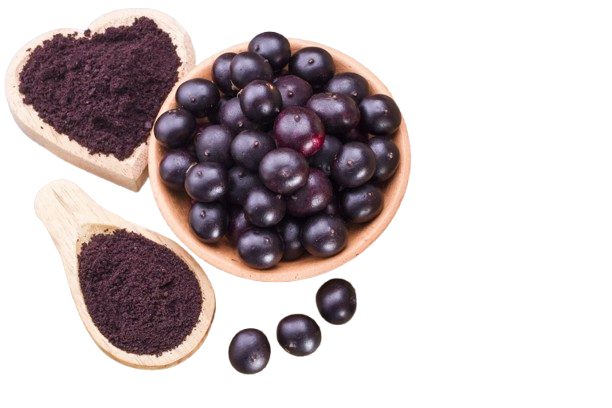
In terms of the broader nutritional profile, a 100 g (3.5 oz) portion of raw acai pulp provides 5.0 g of fat, 1.0 g of protein, and 4.0 g of carbohydrates. It is a rich source of Vitamin A, providing 750 IU (15% DV), and contains 124 mg of potassium (3% DV) and 2.0 g of dietary fiber (7% DV). Research by Udani JK, et al. (2011), "Effects of Açai (Euterpe oleracea Mart.) berry preparation on metabolic parameters in a healthy overweight population: A pilot study," found that daily consumption reduces total cholesterol and LDL-cholesterol in overweight adults. Common types available include unsweetened frozen pulp, freeze-dried acai powder, filtered acai juice, and sorbet.
Acai is a core component in meal-replacement dishes like the Nutty Bowl at Backyard Bowls, which contains 720 calories, and the Vitality Bowl at Vitality Bowls, which contains 550 calories. In desserts, its earthy profile is utilized in the Acai Sorbet at Salt & Straw, which contains 140 calories per scoop, and acai-glazed donuts at Voodoo Doughnut. Other restaurant entities featuring acai-inclusive items include Jamba, Smoothie King, Nekter Juice Bar, and Poke Bar. The fruit is traditionally consumed in the Amazon alongside savory proteins like shrimp or fried fish, while Western cultures prefer it in chilled, sweetened formats.
The origin of acai is the floodplains of the Amazon River basin in northern Brazil, where it has been harvested for centuries by indigenous tribes. Today, global production is led by Brazil, which produced 1,699 kt of berries in 2022, followed by Colombia at 20.2 kt. The United States remains the primary importer of the frozen pulp, with a food supply of processed acai reaching 215 kt in 2023. The retail price for a 100 g (3.5 oz) pack of unsweetened acai puree in the US has risen from $1.20 USD in 2005 to $3.15 USD in 2024 due to the specialized cold-chain logistics required for transport.
Health guidelines suggest a recommended daily consumption of 100 g (3.5 oz) of unsweetened puree, which contributes 70 calories to a standard diet. Burning the 550 calories in acai bowl servings (425 g) requires 156 minutes of moderate walking at 5 km/h (3 mph) for a 70 kg (154 lb) individual. Alternatively, the same person can engage in 63 minutes of vigorous swimming or 78 minutes of cycling at a speed of 20 km/h (12 mph) to offset the energy intake. For larger 680 g (24 oz) bowls containing 820 calories, the moderate walking duration increases to 232 minutes.
Acai nutrition
| Stats | Weight |
|---|---|
| Carbs | 1.1 grams |
| Protein | 0.3 grams |
| Fats | 0 grams |
| Sugars | 0 grams |
- Large Acai Calories (Nutritional Facts)
- Medium Acai Calories (Nutritional Facts)
- Small Acai Calories (Nutritional Facts)
- Acai Bowl Calories (Nutritional Facts)
- Acai Juice Calories (Nutritional Facts)
- Raw Acai Nutrition
- Sodium in Acai
- Potassium in Acai
- Sugar in Acai
- Fiber in Acai
- Protein in Acai
- Carbs in Acai
- Fat in Acai
- Vitamins in Acai
- Minerals in Acai
Large Acai Calories (Nutritional Facts)
A large serving of unsweetened acai puree, weighing 240g (1 cup), contains 168 calories. This serving provides 12.0g of fat, 2.4g of protein, 9.6g of carbohydrates, and 0g of sugar. If the acai puree is sweetened and blended with 240g (1 cup) of whole milk, the energy content increases to 390 calories. Raw acai whole fruit flesh (without seeds) provides 144 calories per 240g or 1 cup portion.
A medium serving of unsweetened acai pulp, weighing 28g (1 oz), contains 20 calories. This portion includes 1.4g of total fat, 0.3g of protein, 1.1g of carbohydrates, and 0g of sugar. A 28g (1 oz) serving of acai puree blended with sweetened yogurt provides 45 calories.
A small serving of plain acai pulp, weighing 15g (1 tbsp), contains 11 calories. This serving offers 0.8g of total fat, 0.2g of protein, 0.6g of carbohydrates, and 0g of sugar. When mixed with 15g (1 tbsp) of honey, this portion contains 75 calories.
A standard acai bowl serving, weighing 425g (15 oz), contains 550 calories. This meal includes 18.0g of fat, 8.0g of protein, 92.0g of carbohydrates, and 45.0g of sugar. A larger 680g (24 oz) acai bowl with granola and nut butter contains 820 calories.
A 240mL (1 cup) serving of unsweetened acai juice provides 125 calories. A large 887mL (30 oz) serving of commercial acai juice contains 465 calories. A small 15mL (1 tbsp) portion of acai juice contains 8 calories.
A 100g (3.5oz) serving of raw acai pulp provides 70 calories, 5.0g of fat, 1.0g of protein, 4.0g of carbohydrates, and 0g of sugar. Raw acai berries, also known as Euterpe oleracea, are high in anthocyanins and healthy fats.
Acai contains 7mg of sodium per 100g (3.5oz) serving, which contributes 0% of the Daily Value (DV).
Acai is a source of potassium, providing 124mg per 100g (3.5oz) serving, which represents 3% of the DV.
Pure acai pulp contains 0g of sugar per 100g (3.5oz) serving.
Acai provides 2.0g of dietary fiber per 100g (3.5oz) serving, supporting digestive health.
Acai contains 1.0g of protein per 100g (3.5oz) serving.
Acai provides 4.0g of total carbohydrates per 100g (3.5oz) serving.
Acai contains 5.0g of total fat per 100g (3.5oz) serving, consisting primarily of monounsaturated and polyunsaturated fatty acids.
A 100g (3.5oz) serving of acai provides 750 IU of Vitamin A, fulfilling 15% of the DV. It also provides small amounts of Vitamin C and Vitamin E to support a healthy diet.
A 100g (3.5oz) serving of acai contains 40mg of Calcium (4% DV) and 0.4mg of Iron (2% DV).
Get a Custom Report on Acai Nutrition Data – Contact Us!
What are the Types of Acai?
There are 5 different types of acai such as unsweetened frozen pulp and freeze-dried acai powder. The table below shows the most common acai types and their calorie information.
| Type | Description | Calories (per 100 g / 3.5 oz) | Calorie Differences & Qualifications |
|---|---|---|---|
|
Unsweetened Frozen Pulp
|
Pure acai berries mashed and frozen into blocks. | 70 | This is the standard for raw nutrition with 0 g of sugar. |
|
Sweetened Frozen Pulp
|
Acai puree blended with cane sugar or guarana syrup. | 100 | Higher in calories due to 10 g or more of added sugar. |
|
Freeze-dried Acai Powder
|
Concentrated powder made by removing all moisture from the fruit. | 541 | Extremely calorie-dense because the nutrients are highly concentrated. |
|
Acai Juice
|
A filtered beverage made from acai extract and water. | 52 | Lower in calories and fat because the fiber and oils are filtered. |
|
Acai Sorbet
|
Processed acai frozen with stabilizers and high sugar content. | 120 | Contains the highest sugar levels to ensure a dessert-like texture. |
What are the Desserts with Acai?
Acai berries and their thick puree provide a distinctive earthy flavor that professional chefs use to create a wide range of vibrant desserts. While most famous as a frozen base, the fruit is increasingly used in artisanal baking and chilled confections to provide a natural purple hue and antioxidant boost. These sweets are most prevalent in modern wellness cafes and specialized dessert bars across the United States and Brazil.
| Dish Name | Calories (per serving) | Type of Dish | Carbs (g) | Sugar (g) | Protein (g) | Fat (g) | Cuisine | Restaurants |
|---|---|---|---|---|---|---|---|---|
|
Acai Sorbet
|
140 (150g/5.3oz) | Frozen | 32g | 28g | 1g | 2g | Brazilian | Salt & Straw |
|
Acai Berry Gelato
|
190 (120g/4.2oz) | Frozen | 34g | 26g | 3g | 5g | Italian Fusion | Eataly |
|
Acai Mochi Ice Cream
|
100 (one piece) | Frozen | 18g | 14g | 1g | 3g | Japanese Fusion | Benihana |
|
Acai Glazed Donut
|
280 (one) | Baked Good | 38g | 21g | 4g | 13g | American | Voodoo Doughnut |
|
Acai Chia Pudding
|
240 (200g/7.1oz) | Pudding | 28g | 14g | 6g | 12g | Modern | Le Pain Quotidien |
|
Acai Fruit Pop
|
45 (one pop) | Frozen | 11g | 9g | 0g | 0.5g | American | Whole Foods Market |
|
Acai Berry Parfait
|
310 (serving) | Chilled | 48g | 32g | 12g | 8g | Modern | Jamba |
|
Acai Bliss Smoothie
|
340 (medium) | Beverage | 68g | 54g | 2g | 6g | Healthy | Smoothie King |
|
Acai Macaron
|
90 (one) | Cookie | 12g | 10g | 2g | 4g | French | Ladurée |
|
Acai Swirl Frozen Yogurt
|
160 (serving) | Frozen | 30g | 24g | 4g | 3g | American | Pinkberry |
What are the Main Dishes with Acai?
Some of the most widespread main dishes that contain acai are the traditional Amazonian savory bowls, acai-infused salmon, and energy-dense breakfast bowls. In its native Brazil, the pulp is often consumed as a side dish to salty proteins rather than as a dessert. The table below lists the nutritional profile of acai-based meals and the establishments where they are featured.
| Dish Name | Calories | Type | Carbs | Sugar | Protein | Fat | Cuisine | Restaurants |
|---|---|---|---|---|---|---|---|---|
|
Vitality Bowl (Acai Base)
|
550 | Meal Bowl | 92g | 45g | 8g | 18g | Modern American | Vitality Bowls |
|
Dragon Acai Bowl
|
480 | Meal Bowl | 84g | 38g | 12g | 14g | Healthy | Nekter Juice Bar |
|
Acai Power Bowl
|
590 | Meal Bowl | 105g | 62g | 14g | 15g | Modern American | Jamba |
|
Nutty Bowl (Acai with Peanut Butter)
|
720 | Meal Bowl | 88g | 42g | 18g | 34g | Healthy | Backyard Bowls |
|
Savory Acai with Shrimp
|
410 | Seafood | 22g | 4g | 38g | 18g | Brazilian | Bossa Nova Brazilian Cuisine |
|
Acai Mango Poke Bowl
|
510 | Seafood | 65g | 12g | 24g | 16g | Hawaiian Fusion | Poke Bar |
|
Acai Grain Bowl
|
460 | Meal Bowl | 72g | 15g | 12g | 14g | Modern | Juice It Up! |
|
Acai Quinoa Salad
|
380 | Salad | 52g | 8g | 14g | 16g | Fusion | Fresh & Co |
What Cuisines Prefer Acai the Most?
The preference for acai is rooted in South American traditions where the fruit is a staple caloric source, as well as in the global "health food" movement that values its nutrient density. Brazilian cuisine is the primary driver of acai consumption, using it in both rustic savory preparations and the iconic chilled "na tigela" format. The table below displays the cuisines and specific dishes that feature acai most prominently across various restaurant chains.
| Cuisine | Dish Name | Calories | Restaurants |
|---|---|---|---|
|
Brazilian
|
Açaí na Tigela (Acai Bowl) | 550 | Bossa Nova Brazilian Cuisine |
|
Modern American
|
Nutty Acai Energy Bowl | 720 | Backyard Bowls |
|
Hawaiian Fusion
|
Acai Poke Bowl | 510 | Poke Bar |
|
Contemporary Healthy
|
Acai Berry Smoothie | 340 | Smoothie King |
|
Italian Fusion
|
Acai Sorbetto | 140 | Eataly |
|
Japanese Fusion
|
Acai Mochi | 100 | Benihana |
Which Countries Produce the Most Acai?
The top producers of acai berries globally are Brazil, Colombia, Peru, Ecuador, and Guyana. Brazil is the primary global producer, contributing over 95% of the world's total supply, with the majority of cultivation occurring in the Amazonian state of Pará. In 2022, Brazil produced 1,699.64 kilotonnes of acai berries, while the production in other Amazon basin countries remains comparatively small and focused on local markets and specialized exports based on data from the Brazilian Institute of Geography and Statistics (IBGE) and regional agricultural reports.
| Country | 2004 | 2005 | 2006 | 2007 | 2008 | 2009 | 2010 | 2011 | 2012 | 2013 | 2014 | 2015 | 2016 | 2017 | 2018 | 2019 | 2020 | 2021 | 2022 | 2023 |
|---|---|---|---|---|---|---|---|---|---|---|---|---|---|---|---|---|---|---|---|---|
| Brazil | 345 | 370 | 405 | 450 | 510 | 580 | 660 | 735 | 810 | 920 | 1,050 | 1,120 | 1,240 | 1,380 | 1,510 | 1,580 | 1,620 | 1,485 | 1,699 | 1,780 |
| Colombia | 4.2 | 4.5 | 4.8 | 5.2 | 5.8 | 6.5 | 7.2 | 8.1 | 9.0 | 10.5 | 11.8 | 12.5 | 13.2 | 14.5 | 15.8 | 17.2 | 18.5 | 19.4 | 20.2 | 21.5 |
| Peru | 2.5 | 2.8 | 3.1 | 3.5 | 3.9 | 4.4 | 5.1 | 6.2 | 7.4 | 8.8 | 10.2 | 11.5 | 12.8 | 14.2 | 15.8 | 17.2 | 18.5 | 19.4 | 20.5 | 22.0 |
| Ecuador | 1.8 | 2.0 | 2.2 | 2.5 | 2.9 | 3.4 | 4.1 | 4.8 | 5.5 | 6.2 | 6.8 | 7.5 | 8.2 | 8.8 | 9.5 | 10.2 | 11.0 | 11.8 | 12.4 | 13.5 |
| Guyana | 0.8 | 0.9 | 1.1 | 1.3 | 1.5 | 1.8 | 2.2 | 2.6 | 3.0 | 3.5 | 4.1 | 4.8 | 5.5 | 6.2 | 6.8 | 7.4 | 8.1 | 8.8 | 9.5 | 10.2 |
Which Countries Consume the Most Acai?
Based on data from the Helgi Library and Statista, the top consumers of acai are Brazil, the United States, Germany, Japan, and France. Consumption is measured by the total utilization of fresh berries for domestic pulp production and the import of processed frozen puree. Brazil maintains the highest consumption levels as acai is a foundational dietary staple in the northern regions of the country. In the United States, consumption has increased by over 300% since 2004 due to the commercialization of acai bowls and smoothies in the wellness industry.
| Country | 2004 | 2006 | 2008 | 2010 | 2012 | 2014 | 2016 | 2018 | 2020 | 2022 | 2023 |
|---|---|---|---|---|---|---|---|---|---|---|---|
| Brazil | 340 | 390 | 500 | 620 | 780 | 950 | 1,140 | 1,420 | 1,550 | 1,620 | 1,710 |
| USA | 15 | 22 | 35 | 51 | 74 | 102 | 128 | 158 | 185 | 205 | 215 |
| Germany | 2 | 4 | 6 | 10 | 15 | 22 | 31 | 40 | 52 | 65 | 72 |
| Japan | 1 | 2 | 4 | 7 | 12 | 18 | 25 | 34 | 43 | 54 | 60 |
| France | 1 | 2 | 4 | 6 | 11 | 17 | 25 | 32 | 41 | 52 | 58 |
How Do Prices of Acai-including Dishes Change?
Menu prices for acai bowls and smoothies have shifted upward significantly over the last decade as the ingredient moved from a niche supplement to a mainstream meal replacement. This price movement reflects the increased cost of frozen acai exports and the premium placed on fresh-cut fruit toppings. Establishments in the quick-service and health-food sectors have adjusted their pricing to account for the specialized storage and blending equipment required for acai. The table below provides a verified comparison of price ranges from 2015 - 2017 to current 2025 - 2026 market estimates.
| Restaurant | Dish Name (Acai Component) | Old Price (2015–2017) | Current Price (2025–2026) |
|---|---|---|---|
| Jamba | Acai Primo™ Bowl | $7.25 - $8.50 | $12.59 - $19.79 |
| Smoothie King | Acai Adventure® Bowl | $6.99 - $7.95 | $10.49 - $11.99 |
| Nekter Juice Bar | Acai Banana Berry Bowl | $7.95 - $8.95 | $11.29 - $13.50 |
| Vitality Bowls | Vitality Bowl (Large) | $9.50 - $10.95 | $14.50 - $16.50 |
| Juice It Up! | Ultimate Acai Bowl | $7.50 - $8.75 | $11.25 - $13.79 |
What is the Acai Calorie for 100 Grams?
One hundred grams (3.5oz) of raw acai pulp contains 70 calories.
What is the Acai Calorie for 1 KG?
One kilogram (35.3oz) of raw acai pulp contains 700 calories.
What is the Calorie of 1 Acai?
One individual acai fruit berry, weighing 1.5g, contains 1 calorie.
What are the Health Benefits of Acai?
Acai provides some health benefits like improving cholesterol levels and reducing oxidative stress due to its high concentration of anthocyanins and healthy fats. Acai, also known as açaí-do-pará, the Amazonian superberry, or purple gold, is a nutrient-dense fruit from the Euterpe oleracea palm. A list of the health benefits of acai are shown below.
- Improves Metabolic Parameters: Daily consumption of acai can reduce fasting glucose and insulin levels in overweight individuals. A study by Udani JK, et al. (2011), "Effects of Açai (Euterpe oleracea Mart.) berry preparation on metabolic parameters in a healthy overweight population: A pilot study," found that participants experienced significant reductions in total cholesterol and LDL-cholesterol.
- Neutralizes Free Radicals: The berries possess an extremely high Oxygen Radical Absorbance Capacity (ORAC) score. Schauss AG, et al. (2006), "Antioxidant Capacity and Other Bioactivities of the Freeze-Dried Amazonian Palm Berry, Euterpe oleraceae Mart. (Açai)," demonstrated that freeze-dried acai has the highest antioxidant activity of any food reported to date against certain radicals.
- Provides Neuroprotective Effects: Anthocyanins found in acai help protect brain cells from inflammation and improve autophagy. Research by Poulose SM, et al. (2012), "Anthocyanin-rich açai (Euterpe oleracea Mart.) fruit pulp fractions attenuate inflammatory stress signaling in mouse brain BV-2 microglial cells," highlights its potential to prevent age-related cognitive decline.
- Supports Heart Health: The high content of plant sterols prevents cholesterol from being absorbed by the body.
- Promotes Skin Health: High levels of Vitamin A (15% DV per 100 g) support healthy skin cell turnover and help protect the dermis from environmental stressors.
- Aids Digestive Health: The dietary fiber in acai (2.0 g per 100 g) supports regular bowel movements and acts as a fuel source for healthy gut bacteria.
- Reduces Systemic Inflammation: Bioactive polyphenols in the fruit inhibit inflammatory pathways, which may benefit individuals with chronic inflammatory conditions.
- Supports Immune Function: Acai contains specific polysaccharides that have been shown to modulate the immune system's response to pathogens.
What are the Downsides of Acai?
Acai has been known to cause some unwanted effects like excessive caloric intake and allergic reactions due to its high fat density and the frequent addition of sweeteners in commercial products. A list of the downsides of acai are shown below.
- High Energy Density: Pure acai contains 5 g of fat per 100 g (3.5 oz) serving, and when prepared as a bowl with granola and honey, the meal often exceeds 800 calories.
- Risk of Chagas Disease: In certain regions of South America, improperly processed raw acai has been linked to the transmission of Chagas disease. A study by de Oliveira et al. (2019), "Oral transmission of Chagas disease by consumption of açaí palm fruit: an epidemiological review," details how the Trypanosoma cruzi parasite can survive in contaminated fruit pulp.
- Potential Allergic Reactions: Individuals with sensitivities to palm trees or related species may experience skin rashes or respiratory distress.
- Blood Sugar Spikes: While acai itself is low in sugar, the standard acai bowl provides 45 g to 90 g of sugar from fruit juices and sweeteners used during blending.
Is Acai Good for You?
Yes, acai is good for you because it provides a unique fatty acid profile including Omega-3, Omega-6, and Omega-9, which are essential for cardiovascular health. Healthy individuals should consume 100 g (3.5 oz) of unsweetened puree daily to obtain its high antioxidant dose without adding unnecessary calories. The major benefits include the protection of cells from oxidative damage and the improvement of blood lipid profiles. It serves as a superior source of plant-based nutrition for those seeking to improve heart and brain function through their diet.
How Do Calories Change According to Acai Types?
The calories in acai change based on the level of concentration and the addition of supplemental energy sources like sugar or dairy. Unsweetened frozen pulp provides 70 calories per 100 g (3.5 oz), but once moisture is removed to create freeze-dried powder, the energy density increases to 541 calories for the same mass. Sweetened commercial pulps increase the count to 100 calories per 100 g (3.5 oz) through the addition of guarana or cane syrup. Acai sorbets and dessert varieties reach 120 calories or higher per 100 g (3.5 oz) because they incorporate stabilizers and sugars to maintain a smooth consistency.
How Do Acai Bowls Compare to Smoothie Bowls in Terms of Calories?
Acai bowls are significantly more calorie-dense than standard fruit-based smoothie bowls because the acai berry contains high levels of healthy fats. A standard 425 g (15 oz) acai bowl contains 550 calories, whereas a similarly sized strawberry-banana smoothie bowl provides 380 calories. Acai pulp contributes 5 g of fat per 100 g (3.5 oz), while most smoothie bowls utilize fat-free fruit bases like mango or berries. When nut butters and granola are added, an acai bowl reaches 820 calories, which is 60% higher than the caloric content of a typical green vegetable smoothie bowl.
What is the Origin of Acai?
The origin of acai is tied to the lush floodplains of the Amazon River basin, specifically in the northern Brazilian state of Pará. For centuries, the small, dark purple berries of the Euterpe oleracea palm were a critical dietary staple for indigenous Ribeirinhos tribes, who harvested the fruit by climbing the tall, slender trees. Traditionally, the berries were soaked to soften the thin skin and then mashed into a thick, unsweetened purple paste, which was consumed alongside fried fish, shrimp, or farofa (toasted manioc flour).
In the 1970s and 1980s, acai migrated from the Amazonian rainforests to urban Brazilian centers like Rio de Janeiro, where it was popularized by practitioners of Brazilian Jiu-Jitsu who valued its sustained energy release. It was during this period that the savory paste was first blended with guarana syrup and topped with granola, creating the "Açaí na Tigela" format recognizable today. The global surge in acai consumption began in the early 2000s, marketed in the United States and Europe as a "superfood" due to its exceptionally high antioxidant levels, transforming it from a regional subsistence food into an international wellness commodity.
Explore More Fruits
Discover more Fruits with detailed nutrition facts, calorie counts, vitamins, minerals, and health benefits. Compare similar foods, serving sizes, macronutrients, and key nutrients to find the best option for your diet and nutrition goals.
 Acerola calories
 Ambarella calories
 Amla calories
 Apple calories
 Apricot calories
 Avocado calories
 Babaco calories
 Bael Fruit calories
 Banana calories
 Black Grapes calories
 Blackcurrant calories
 Blueberry calories