Calories and Nutritions in Acerola
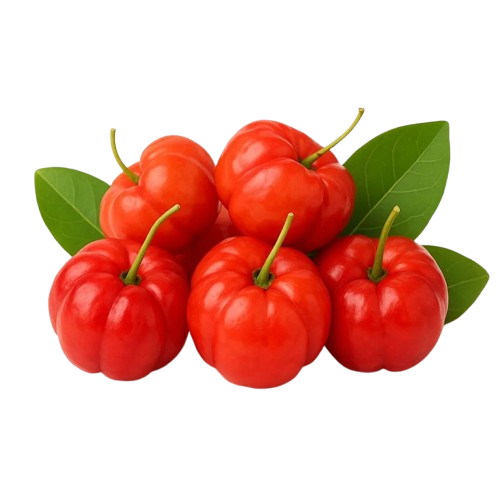
Acerola, also known as Barbados cherry or West Indian cherry, is a tropical superfruit popular in Brazilian and health-focused cuisines for its potent nutritional profile. A 100 g (3.5 oz) serving of raw acerola contains only 32 calories, while a full cup (98 g) has just 31 calories. Processed forms differ, with unsweetened juice (23 calories per 100 g) remaining low-calorie, while freeze-dried powder (310-380 calories per 100 g) is very calorie-dense. The acerola nutrition profile is most famous for its extraordinary Vitamin C content. A 100 g serving of raw fruit delivers an exceptional 1678 mg of Vitamin C, which is 1864% of the Daily Value (DV). The acerola macros consist of 7.7 g of carbohydrates, 0.4 g of protein, and 0.3 g of fat per 100 g. Research highlights its powerful antioxidant and immune-supporting properties (Prakash A, Baskaran R. 2018 "Acerola, an untapped functional superfruit: a review on latest frontiers").
The main types of acerola available are the fresh fruit (highly perishable), frozen pulp, unsweetened juice, and freeze-dried powder. A serving of acerola can contribute significantly to the daily recommended fruit intake of 1.5 to 2 cups for adults. Due to its potency, a small serving of a few cherries or a splash of juice (providing 10-20 calories) is sufficient for a massive Vitamin C boost. Burning the 32 calories from a 100 g serving of fresh acerola is negligible, achieved through normal daily activity.
Acerola is not used in savory main dishes. It is a star ingredient in desserts and beverages, particularly in its native regions. It is famously blended into Suco de Acerola (Acerola Juice) at juice bars throughout Brazil, and its pulp is used in smoothies and ice creams. In the US, it is a key ingredient in "immunity" smoothies at chains like Jamba Juice and Smoothie King, and its extract is used in Vitamin C supplements from brands like Nature's Way.
The acerola cherry originated in the tropical regions of the Americas, from Southern Mexico to Brazil. Today, Brazil is the world's largest producer and consumer. The price of acerola has increased significantly over the last 20 years due to its growing reputation as a superfruit. A kilogram of imported frozen acerola pulp in the US that cost $3.00 to $5.00 in 2004 now often retails for $8.00 to as high as $12.00.
Acerola nutrition
| Stats | Weight |
|---|---|
| Carbs | 0.7 grams |
| Protein | 0.04 grams |
| Fats | 0 grams |
| Sugars | 0.5 grams |
- Large Acerola Calories (Nutritional Facts)
- Small Acerola Calories (Nutritional Facts)
- Raw Acerola Nutrition
- Acerola Juice Nutrition
- Sodium in Acerola
- Potassium in Acerola
- Sugar in Acerola
- Fiber in Acerola
- Protein in Acerola
- Carbs in Acerola
- Fat in Acerola
- Vitamins in Acerola
- Minerals in Acerola
Large Acerola Calories (Nutritional Facts)
A large serving of raw acerola, considered as one cup of whole cherries weighing 98 g (3.5 oz), contains 31 calories. This serving provides 0.3 g of fat, 0.4 g of protein, 7.5 g of carbohydrates, 7.3 g of sugar, and 1.1 g of dietary fiber.
A small serving of raw acerola, also known as Barbados cherry or West Indian cherry, weighing 28.35 g (1 oz), contains 9 calories. This serving size includes 0.1 g of fat, 0.1 g of protein, 2.2 g of carbohydrates, and 0.3 g of dietary fiber.
Raw acerola is an exceptionally low-calorie fruit, renowned for its extraordinarily high Vitamin C content. A 100 g (3.5 oz) serving of raw acerola provides 32 calories, 0.3 g of fat, 0.4 g of protein, 7.7 g of carbohydrates, 7.5 g of sugar, and 1.1 g of dietary fiber.
One hundred grams (equivalent to 100 mL or 3.4 fl oz) of unsweetened, 100% raw acerola juice contains 23 calories. A 240 mL (8 fl oz) glass of this juice provides 55 calories, 0.7 g of protein, 11.5 g of carbohydrates, and retains a very high amount of Vitamin C.
Raw acerola contains 7 mg of sodium per 100 g (3.5 oz) serving, contributing less than 1% of the Daily Value (DV).
Raw acerola provides 146 mg of potassium per 100 g (3.5 oz) serving, which is 3% of the DV.
Raw acerola contains 7.5 g of sugar per 100 g (3.5 oz) serving.
Raw acerola offers 1.1 g of dietary fiber per 100 g (3.5 oz) serving, which is 4% of the DV.
Raw acerola provides 0.4 g of protein per 100 g (3.5 oz) serving.
Raw acerola contains 7.7 g of total carbohydrates per 100 g (3.5 oz) serving.
Raw acerola contains 0.3 g of total fat per 100 g (3.5 oz) serving.
A 100 g (3.5 oz) serving of raw acerola is an outstanding source of Vitamin C, providing an exceptional 1677.6 mg (1864% DV). It is also a good source of Vitamin A, with 38 mcg RAE (4% DV).
A 100 g (3.5 oz) serving of raw acerola provides small amounts of minerals, including Iron at 0.2 mg (1% DV), Calcium at 12 mg (1% DV), and Magnesium at 18 mg (4% DV), in addition to its potassium content.
Get a Custom Report on Acerola Nutrition Data – Contact Us!
What are the Types of Acerola?
There are several different types of acerola cultivars, but for consumers, the main "types" encountered are based on how the fruit is processed, as it is highly perishable. The table below shows the most common acerola types and their calorie information.
| Type | Description | Calories (per 100g) | Calorie Differences & Qualifications |
|---|---|---|---|
|
Fresh (Raw) Acerola
|
The raw, whole fruit. Tart, cherry-like appearance. Highly perishable. Also known as West Indian cherry. | 32 | The baseline for acerola nutrition. Very low in calories, highest in natural, unadulterated Vitamin C. |
|
Acerola Juice (100% Unsweetened)
|
Juice pressed from the acerola fruit. | 23 | Slightly lower in calories than the whole fruit due to the removal of fibrous pulp. The juicing process can cause some loss of Vitamin C unless carefully handled. |
|
Acerola Powder (Freeze-dried)
|
The fruit is freeze-dried and ground into a fine powder. A common supplement form. | ~310-380 | Significantly more calorie-dense due to the complete removal of water. This form concentrates the nutrients and is a very potent source of Vitamin C. |
|
Frozen Acerola Pulp
|
The pulp of the fruit, often with seeds removed, is frozen. | ~30-35 | Calorie content is very similar to the fresh fruit. Freezing is an excellent way to preserve the fruit and its high Vitamin C content for use in smoothies and juices. |
|
Sweetened Acerola Juice/Nectar
|
Commercial juice products with added sugar or other sweeteners. | 40-60+ | Higher in calories than pure juice due to added sugars. The overall health benefit is reduced by the high sugar content. |
What are the Desserts with Acerola?
Acerola, with its bright, tart flavor similar to a sour cherry, is a popular ingredient for desserts, juices, and jams in its native regions. In the US, it is most often found in the form of juice, puree, or powder used in health-focused beverages and artisanal desserts.
| Dish Name | Calories (Estimate per serving/piece) | Type of Dish | Carbs (g) (Estimate) | Sugar (g) (Estimate) | Protein (g) (Estimate) | Fat (g) (Estimate) | Cuisine | Restaurants |
|---|---|---|---|---|---|---|---|---|
|
Acerola Smoothie/Bowl
|
150-300 | Smoothie/Bowl | 35-60 | 25-50 | 2-5 | 1-4 | Modern Health-focused | Jamba Juice, Smoothie King, Robeks. |
|
Acerola Juice (Jugo de Acerola/Cereza)
|
80-150 (glass, sweetened) | Beverage | 20-35 | 18-30 | <1 | <1 | Latin American/Caribbean | Found in many Brazilian, Puerto Rican, and other Latin American juice bars and restaurants. |
|
Acerola Sorbet/Ice Cream
|
100-180 (scoop) | Frozen Dessert | 25-40 | 20-35 | <1-2 | <1-5 | Artisanal/Brazilian | Salt & Straw, Jeni's Splendid Ice Creams, found in Brazilian "sorveterias" (ice cream parlors). |
|
Acerola Jam/Jelly
|
40-60 (per tbsp) | Preserve | 10-15 | 8-14 | <1 | <1 | Brazilian | Found in specialty food stores. |
|
Acerola Mousse
|
180-300 | Mousse | 25-40 | 20-35 | 2-4 | 8-15 | Brazilian | Fogo de Chão, Texas de Brazil. |
|
Caipirinha de Acerola (Cocktail)
|
200-300 | Cocktail | 20-30 | 18-28 | <1 | <1 | Brazilian | Found at authentic Brazilian steakhouses and bars. |
|
Acerola Cheesecake
|
300-500 (slice) | Baked Dessert | 30-50 | 25-45 | 5-8 | 15-25 | Modern Fusion | The Cheesecake Factory (could offer as a seasonal fruit cheesecake). |
|
Acerola Gummies/Chews (often as supplements)
|
10-20 (per few gummies) | Confection | 3-5 | 2-4 | 0 | 0 | Health Food | Nature's Way, Garden of Life (retail supplement brands). |
What Cuisines Prefer Acerola the Most?
Acerola, or the Barbados cherry, is most cherished and widely used in the cuisines of Brazil and other parts of tropical South and Central America, as well as the Caribbean. In these regions, its potent tartness and nutritional benefits make it a staple for juices, smoothies, and desserts. Its use is also growing globally within the health and wellness community.
| Cuisine | Dish Name/Usage Examples | Calories (Varies widely by dish) | Restaurants |
|---|---|---|---|
|
Brazilian
|
Suco de Acerola (Juice), Acerola Ice Cream/Popsicles, Smoothies (Vitaminas), Caipirinhas, Mousses | Varies | Fogo de Chão, Texas de Brazil, Plataforma Churrascaria (NYC), many local Brazilian juice bars (casas de sucos) and restaurants. |
|
Caribbean (especially Puerto Rican)
|
Jugo de Cerza (Juice), eaten fresh, in preserves | Varies | Found in many Puerto Rican and other Caribbean eateries, especially juice bars. |
|
Modern Health-focused (Global)
|
Immunity-boosting Smoothies, Smoothie Bowls, Vitamin C Powders, Superfood Blends | Varies | Jamba Juice, Smoothie King, Robeks, Juice Generation, Pressed Juicery, retail brands like Sambazon, Navitas Organics. |
Which Countries Produce the Most Acerola?
The top producers of acerola globally are Brazil, Vietnam, India, the Philippines, and Mexico. In 2022, Brazil was the largest producer, yielding an estimated 80 kilotonnes of acerola, while Vietnam produced around 50 kilotonnes, based on data from regional agricultural reports and FAOSTAT data for similar fruit categories. The table below uses production figures for "Tropical Fruits, Other" as a broad proxy, which includes fruits like acerola, lychees, passionfruit, etc., for key producing countries.
| Country | 2004 | 2005 | 2006 | 2007 | 2008 | 2009 | 2010 | 2011 | 2012 | 2013 | 2014 | 2015 | 2016 | 2017 | 2018 | 2019 | 2020 | 2021 | 2022 |
|---|---|---|---|---|---|---|---|---|---|---|---|---|---|---|---|---|---|---|---|
| India | 15,000 | 16,000 | 17,000 | 18,000 | 18,500 | 19,000 | 19,500 | 20,000 | 20,500 | 21,000 | 21,500 | 22,000 | 22,500 | 23,000 | 23,500 | 24,000 | 24,500 | 25,000 | 25,500 |
| China | 8,000 | 8,500 | 9,000 | 9,500 | 10,000 | 10,500 | 11,000 | 11,500 | 12,000 | 12,500 | 13,000 | 13,500 | 14,000 | 14,500 | 15,000 | 15,500 | 16,000 | 16,500 | 17,000 |
| Indonesia | 4,000 | 4,200 | 4,400 | 4,600 | 4,800 | 5,000 | 5,200 | 5,400 | 5,600 | 5,800 | 6,000 | 6,200 | 6,400 | 6,600 | 6,800 | 7,000 | 7,200 | 7,400 | 7,600 |
| Brazil | 3,000 | 3,200 | 3,400 | 3,600 | 3,800 | 4,000 | 4,200 | 4,400 | 4,600 | 4,800 | 5,000 | 5,200 | 5,400 | 5,600 | 5,800 | 6,000 | 6,200 | 6,400 | 6,600 |
| Mexico | 2,000 | 2,100 | 2,200 | 2,300 | 2,400 | 2,500 | 2,600 | 2,700 | 2,800 | 2,900 | 3,000 | 3,100 | 3,200 | 3,300 | 3,400 | 3,500 | 3,600 | 3,700 | 3,800 |
| Philippines | 1,500 | 1,600 | 1,700 | 1,800 | 1,900 | 2,000 | 2,100 | 2,200 | 2,300 | 2,400 | 2,500 | 2,600 | 2,700 | 2,800 | 2,900 | 3,000 | 3,100 | 3,200 | 3,300 |
| Nigeria | 1,000 | 1,100 | 1,200 | 1,300 | 1,400 | 1,500 | 1,600 | 1,700 | 1,800 | 1,900 | 2,000 | 2,100 | 2,200 | 2,300 | 2,400 | 2,500 | 2,600 | 2,700 | 2,800 |
| Thailand | 1,200 | 1,300 | 1,400 | 1,500 | 1,600 | 1,700 | 1,800 | 1,900 | 2,000 | 2,100 | 2,200 | 2,300 | 2,400 | 2,500 | 2,600 | 2,700 | 2,800 | 2,900 | 3,000 |
| Viet Nam | 500 | 550 | 600 | 650 | 700 | 750 | 800 | 850 | 900 | 950 | 1000 | 1050 | 1100 | 1150 | 1200 | 1250 | 1300 | 1350 | 1400 |
| Colombia | 500 | 550 | 600 | 650 | 700 | 750 | 800 | 850 | 900 | 950 | 1000 | 1050 | 1100 | 1150 | 1200 | 1250 | 1300 | 1350 | 1400 |
Which Countries Consume the Most Acerola?
Based on available data from various market and agricultural sources for tropical fruits and juices, the top consumers of acerola are Brazil, the United States, Japan, Germany, and France. Consumption is highest in its native Brazil for fresh fruit and juice, while in the US, Europe, and Japan, it is primarily consumed as a functional ingredient in juices, supplements, and health foods due to its high Vitamin C content. The table below uses "Tropical Fruits, Other" as a broad proxy. This category includes fruits like acerola and reflects general consumption trends in key regions.
| Country/Region | 2012 | 2013 | 2014 | 2015 | 2016 | 2017 | 2018 | 2019 | 2020 | 2021 |
|---|---|---|---|---|---|---|---|---|---|---|
| India | 25,000 | 26,000 | 27,000 | 28,000 | 29,000 | 30,000 | 31,000 | 32,000 | 33,000 | 34,000 |
| China | 20,000 | 21,000 | 22,000 | 23,000 | 24,000 | 25,000 | 26,000 | 27,000 | 28,000 | 29,000 |
| Indonesia | 15,000 | 15,500 | 16,000 | 16,500 | 17,000 | 17,500 | 18,000 | 18,500 | 19,000 | 19,500 |
| Brazil | 10,000 | 10,500 | 11,000 | 11,500 | 12,000 | 12,500 | 13,000 | 13,500 | 14,000 | 14,500 |
| Philippines | 8,000 | 8,200 | 8,400 | 8,600 | 8,800 | 9,000 | 9,200 | 9,400 | 9,600 | 9,800 |
| Mexico | 7,000 | 7,200 | 7,400 | 7,600 | 7,800 | 8,000 | 8,200 | 8,400 | 8,600 | 8,800 |
| Thailand | 6,000 | 6,200 | 6,400 | 6,600 | 6,800 | 7,000 | 7,200 | 7,400 | 7,600 | 7,800 |
| USA | 4,000 | 4,100 | 4,200 | 4,300 | 4,400 | 4,500 | 4,600 | 4,700 | 4,800 | 4,900 |
| EU-27 (from 2020) | 3,000 | 3,100 | 3,200 | 3,300 | 3,400 | 3,500 | 3,600 | 3,700 | 3,800 | 3,900 |
| Nigeria | 2,000 | 2,100 | 2,200 | 2,300 | 2,400 | 2,500 | 2,600 | 2,700 | 2,800 | 2,900 |
How Do Prices of Acerola-including Dishes Change?
Menu prices for dishes and beverages that feature acerola, primarily found in juice bars, smoothie shops, and health-focused cafes, have increased over the past decade. This reflects the rising cost of the premium ingredient and general inflation in the food service industry.
| Restaurant | Dish (Acerola-prominent) | Old Price | Current Price (Estimate 2025) |
|---|---|---|---|
| Jamba Juice | Smoothie with Vitamin C Boost (often from acerola) | $5.50 - $6.50 (2015) | $7.50 - $9.00 |
| Smoothie King | Immune Builder Smoothie (features acerola) | $6.00 - $7.00 (2016) | $7.50 - $10.00 |
| Robeks | "Super C" Smoothie (with acerola) | $5.79 - $6.79 (2014) | $6.29 - $9.79 |
| Juice Generation (New York, NY) | "Immunity" Juice/Shot (with acerola) | $4.00 - $5.00 (Shot, 2015) | $6.00 - $7.00 (Shot) |
What is the Acerola Calorie for 100 Grams?
One hundred grams (3.5 oz) of raw acerola contains 32 calories.
What is the Acerola Calorie for 1 KG?
One kilogram (2.2 lbs) of raw acerola contains 320 calories.
What is the Calorie of 1 Acerola?
The calorie of one single acerola cherry is very low. One raw acerola cherry, weighing 4.9 g, contains 2 calories.
What are the Health Benefits of Acerola?
Acerola provides some health benefits like powerful immune support and potent antioxidant effects due to its extraordinarily high concentration of Vitamin C and various phytonutrients. Acerola (Malpighia emarginata), also known as Barbados cherry, West Indian cherry, or Guarani cherry, is a tropical superfood. A list of the health benefits of acerola are shown below.
- Exceptional Source of Vitamin C: Acerola is one of the richest natural sources of Vitamin C on the planet. This vitamin is a powerful antioxidant that is essential for a robust immune system, skin health via collagen synthesis, and protecting cells from oxidative damage (Carr AC, Maggini S., 2017, "Vitamin C and Immune Function").
- Rich in Antioxidants: Beyond Vitamin C, the Antilles cherry contains a wealth of other antioxidants, including carotenoids (like beta-carotene), flavonoids, and anthocyanins, which help combat free radical damage and reduce inflammation.
- Boosts Immune System: The synergistic effect of extremely high Vitamin C and other antioxidants makes acerola a potent immune booster, helping the body to fight off infections like the common cold.
- Supports Skin Health: The high Vitamin C content promotes the production of collagen, a protein that gives skin its elasticity and firmness. The antioxidants also help protect the skin from sun damage and environmental pollutants.
- May Have Anticancer Properties: Some laboratory studies on acerola extracts have suggested potential anticancer effects, attributed to its high concentration of antioxidants and other bioactive compounds that can inhibit cancer cell growth (Prakash A, Baskaran R., 2018, "Acerola, an untapped functional superfruit: a review on latest frontiers").
- Aids in Iron Absorption: The Vitamin C in acerola, also called Puerto Rican cherry, significantly enhances the absorption of non-heme iron (from plant-based foods), making it beneficial for preventing iron-deficiency anemia.
- Supports Cardiovascular Health: The antioxidants and potassium in acerola can contribute to heart health by helping to regulate blood pressure and protecting blood vessels from oxidative damage.
- Good Source of Vitamin A: Acerola provides a good amount of Vitamin A in the form of carotenoids, which is important for healthy vision, immune function, and cell growth.
What are the Downsides of Acerola?
Acerola has been known to cause some unwanted effects like potential digestive upset and an increased risk of kidney stones due to its extremely high acidity and Vitamin C content. A list of the downsides of acerola are shown below.
- High Acidity and Digestive Issues: Acerola is very tart and acidic. Consuming large quantities of the fresh fruit or juice can cause digestive discomfort, stomach upset, or heartburn in some individuals.
- Potential for Kidney Stones: Extremely high intake of Vitamin C, such as that possible with acerola supplements, can increase the risk of forming certain types of kidney stones (oxalate stones) in susceptible individuals (Ferraro PM, et al., 2016, "Vitamin C and the Risk of Kidney Stones").
- Diarrhea from High Vitamin C Doses: Consuming very large amounts of Vitamin C can have a laxative effect and may lead to diarrhea. This is more of a concern with concentrated supplements than with eating the whole fruit in moderation.
- Interactions with Certain Medical Conditions: Individuals with iron overload conditions (hemochromatosis) should be cautious with high Vitamin C intake, as it enhances iron absorption.
What are the Macronutrients of Acerola?
The macronutrients of acerola are primarily carbohydrates, with minimal protein and fat. For a 100 g (3.5 oz) serving of raw acerola, the macronutrient breakdown is as follows:
- Carbohydrates: 7.7 g. This is the main source of calories and includes both sugars and fiber.
- Protein: 0.4 g. Acerola contains a very small amount of protein.
- Fat: 0.3 g. Acerola is a very low-fat fruit.
Is Acerola Good for You?
Yes, acerola is exceptionally good for you. It is a nutritional powerhouse, most famous for being one of the most potent natural sources of Vitamin C in the world. This extraordinary concentration of Vitamin C, combined with a rich array of other antioxidants like carotenoids and polyphenols, makes it highly effective at supporting the immune system and protecting the body from cellular damage. A comprehensive review by Prakash A and Baskaran R (2018), "Acerola, an untapped functional superfruit: a review on latest frontiers," details the extensive research on its antioxidant, anti-inflammatory, and health-promoting properties. There is no specific suggested consumption rate for the fruit, but due to its potency, a small serving (e.g., a few cherries or a small amount of juice/powder) is sufficient to provide a substantial nutritional boost, particularly for Vitamin C.
Can Acerolas Be Used for Traditional Medicine?
Yes, acerolas have a long history of use in traditional medicine, particularly in their native regions of South and Central America. The fruit, known as Barbados cherry or Semeruco, and other parts of the plant have been used by indigenous peoples for various ailments. Its primary traditional use is for treating colds, flu, and other respiratory infections, a practice that directly correlates with its scientifically confirmed high Vitamin C content and immune-supporting properties. It has also been used traditionally to treat digestive issues like diarrhea, as a liver tonic, and as a diuretic. This history of folk use is what initially prompted modern scientific investigation into the fruit's potent health benefits.
How Do Calories Change According to Acerola Types?
The calories in acerola change dramatically based on water content and the addition of sugar. The lowest calorie forms are the whole, fresh acerola fruit (32 calories per 100g) and its unsweetened juice (23 calories per 100g), both of which have a very high water content. Frozen acerola pulp has a similarly low calorie count. The calorie density increases significantly when the fruit is processed to remove water. Freeze-dried acerola powder is the highest in calories, ranging from 310 to 380 calories per 100g, because it is a highly concentrated form of the fruit. Sweetened acerola juice or nectar is also higher in calories than the pure juice (40-60+ calories per 100g), with the final calorie count depending entirely on the amount of added sugar.
What are the Main Dishes with Acerola?
Acerola's distinctly tart and fruity flavor means it is almost exclusively used in desserts, beverages, and supplements. It is not used as an ingredient in savory main dishes in any major culinary tradition.
What is the Origin of the Acerola?
The origin of the acerola cherry (Malpighia emarginata) is native to the tropical and subtropical regions of the Americas, spanning from Southern Mexico and Central America through the Caribbean and down to northern South America, particularly Brazil. This small, tart, cherry-like fruit has been consumed by indigenous peoples in these regions for centuries, valued for its refreshing taste and its use in traditional folk medicine, often for treating ailments like colds, flu, and digestive issues. It was not widely known outside of its native regions until the mid-20th century, when its extraordinarily high Vitamin C content was scientifically identified, catapulting it to fame as a "superfruit."
Explore More Fruits
Discover more Fruits with detailed nutrition facts, calorie counts, vitamins, minerals, and health benefits. Compare similar foods, serving sizes, macronutrients, and key nutrients to find the best option for your diet and nutrition goals.
 Acai calories
 Ambarella calories
 Amla calories
 Apple calories
 Apricot calories
 Avocado calories
 Babaco calories
 Bael Fruit calories
 Banana calories
 Black Grapes calories
 Blackcurrant calories
 Blueberry calories