Calories and Nutritions in Babaco
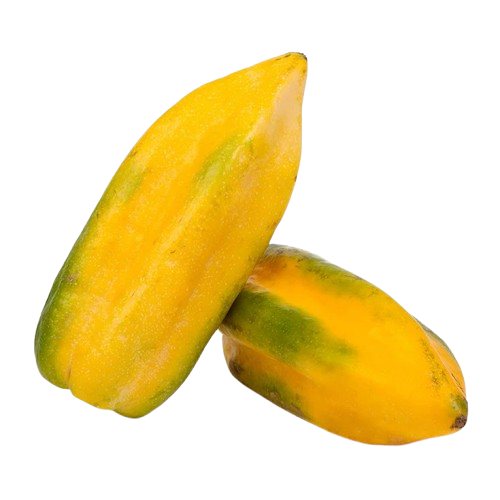
Babaco delivers essential digestive enzymes, Vitamin C, and just 31 calories per 100g. Scientifically documented as Vasconcellea × heilbornii (syn. Vasoncelea x pentagona), this seedless mountain papaya is a vital culinary cornerstone in the high-altitude regions of Ecuador. Evaluating the calories in babaco fruit reveals an effervescent fruit that combines the flavors of pineapple, papaya, and strawberry. One small whole babaco fruit weighing 700 g contains 217 calories, while one medium whole babaco fruit weighing 1,000 g contains 310 calories. Based on exact nutritional profiles, a 100 g edible portion delivers 6.5 g of carbohydrates, 0.5 g of protein, 4.5 g of sugars, and 1.5 g of dietary fiber.
Exploring the health benefits uncovers several advantages, including powerful immune system fortification and accelerated protein breakdown due to the dense presence of papain-like enzymes inside the fresh fruit. A study by Mihai et al. (2024), "Impact of Babaco (Vasoncelea x pentagona) Fruit Ripening Stages on Phytochemical Composition and Biological Properties," demonstrates that the fully ripe fruit acts as a powerful nutraceutical, providing a unique phytochemical profile rich in phenolic compounds and flavonoids that protect against cellular oxidative stress. Furthermore, fresh babaco boasts a very low glycemic index of 25, making it exceptional for blood sugar management.
Common commercial varieties available in the market are limited to the naturally sterile whole fruit and processed exports like frozen pulp and traditional syrups. Because it requires highly specific cool, high-altitude climates to thrive without developing fungal diseases, it is entirely excluded from mainstream international fast-food chains or standard restaurant supply networks. Instead, it is masterfully elevated in Ecuadorian gastronomy, featuring heavily in popular desserts at renowned Quito restaurants, such as the Dulce de Babaco con Queso at Casa Gangotena and the Babaco Sorbet at Zazu. Due to its delicate nature, there are zero main dishes containing the fruit in commercial kitchens, and international consumers looking for retail varieties must find imported frozen pulps from specialty Latin American distributors.
The origin of the crop is deeply rooted in the Andes mountains of Ecuador, where it emerged as a natural hybrid between two wild papaya species. Global production data tracks its yield under the general papayas category, an industry led entirely by India, which produced 6,200 kt in 2026. Consumption of the babaco variety is highly localized to domestic Ecuadorian markets and select regions of New Zealand where commercial farming has been successfully established. The retail price for 1 lb of fresh imported babaco has increased from $4.00 USD in 2007 to $9.50 USD in 2026.
Health experts suggest a recommended daily intake of 300 g (10.5 oz) of fresh babaco, which adds 93 calories to a person's diet. These calories can be burned by doing 23 minutes of walking at 5 km/h for an average sized woman or 20 minutes of walking for an average sized man. If a person consumes a heavy traditional dessert like the Dulce de Babaco con Queso yielding 420 calories, the physical requirement increases significantly to 105 minutes of walking for a woman and 88 minutes of walking for a man.
Babaco nutrition
| Stats | Weight |
|---|---|
| Carbs | 65 grams |
| Protein | 5 grams |
| Fats | 0 grams |
| Sugars | 45 grams |
- Large Babaco Calories (Nutritional Facts)
- Medium Babaco Calories (Nutritional Facts)
- Small Babaco Calories (Nutritional Facts)
- Raw Babaco Nutrition
- Sodium in Babaco
- Potassium in Babaco
- Sugar in Babaco
- Fiber in Babaco
- Protein in Babaco
- Carbs in Babaco
- Fat in Babaco
- Vitamins in Babaco
- Minerals in Babaco
Large Babaco Calories (Nutritional Facts)
One large whole babaco fruit weighing 1,500 g (53 oz) contains 465 calories. This 1,500 g (53 oz) edible portion provides 1.5 g of total fat, 7.5 g of protein, 97.5 g of carbohydrates, and 67.5 g of sugar. One large whole babaco fruit dehydrated into dried slices contains 2,650 calories because the moisture removal process densely concentrates the natural fruit sugars.
One medium whole babaco fruit weighing 1,000 g (35.2 oz) contains 310 calories. This 1,000 g (35.2 oz) edible portion delivers 1 g of total fat, 5 g of protein, 65 g of carbohydrates, and 45 g of sugar. One medium whole babaco fruit blended into a fresh juice provides 310 calories.
One small whole babaco fruit weighing 700 g (24.7 oz) contains 217 calories. This 700 g (24.7 oz) edible portion consists of 0.7 g of total fat, 3.5 g of protein, 45.5 g of carbohydrates, and 31.5 g of sugar.
A 100 g (3.5 oz) edible portion of raw babaco provides 31 calories, 0.1 g of total fat, 0.5 g of protein, 6.5 g of total carbohydrates, and 1.5 g of dietary fiber. Raw babaco is dense with Vitamin C and papain-like digestive enzymes, which strongly support immune defense and protein metabolism. The nutrient concentration is maximized when the fruit is eaten fresh with its delicate, edible skin intact, as the skin harbors a high level of insoluble fiber.
Raw babaco contains 2 mg of sodium per 100 g (3.5 oz) edible portion, contributing 0% of the Daily Value (DV). This zero-sodium profile makes it an excellent tropical fruit for strict cardiovascular and blood pressure management diets.
Raw babaco supplies 180 mg of potassium per 100 g (3.5 oz) edible portion, fulfilling 4% of the DV. This mineral helps support healthy nerve transmission and muscular contraction.
One hundred grams (3.5 oz) of raw babaco contains 4.5 g of natural sugars. These sugars consist of a balance of fructose and glucose. The sugar levels in this mountain papaya cultivar are significantly lower than those found in standard lowland papayas, giving it a uniquely refreshing, tart flavor profile.
Raw babaco provides 1.5 g of dietary fiber per 100 g (3.5 oz) edible portion, fulfilling 5% of the DV. This fiber content supports consistent digestion and prolonged satiety.
Raw babaco provides 0.5 g of protein per 100 g (3.5 oz) edible portion.
Raw babaco contains 6.5 g of total carbohydrates per 100 g (3.5 oz) edible portion.
Raw babaco contains 0.1 g of total fat per 100 g (3.5 oz) edible portion.
A 100 g (3.5 oz) edible portion of raw babaco provides 30 mg of Vitamin C (33% DV) and 15 mcg of Vitamin A (2% DV). These vitamins help maintain a robust immune system and support ocular health.
A 100 g (3.5 oz) edible portion provides 12 mg of Calcium (1% DV), 10 mg of Magnesium (2% DV), and 0.2 mg of Iron (1% DV). They also contain trace amounts of phosphorus and zinc.
Get a Custom Report on Babaco Nutrition Data – Contact Us!
What are the Types of Babaco?
There are 4 different types of commercialized babaco products such as the fresh whole fruit and the traditional Dulce de Babaco syrup. The table below shows the most common babaco products and their calorie information.
| Type | Description | Calories (per 100g) | Calorie Differences & Qualifications |
|---|---|---|---|
|
Fresh Babaco
|
Raw, entirely edible yellow fruit with a tangy, effervescent flavor. | 31 | Baseline energy for the fresh fruit. |
|
Frozen Babaco Pulp
|
Pureed fruit flesh flash-frozen for export and smoothie bases. | 30 | Identical calories; minor water loss during freezing. |
|
Dulce de Babaco
|
Traditional Ecuadorian dessert made by boiling the fruit in cane syrup. | 250 | Significantly higher calories due to massive added sucrose. |
|
Dried Babaco Slices
|
Dehydrated fruit rings with heavily concentrated natural sugars. | 220 | High energy density due to total moisture removal. |
What are the Desserts with Babaco?
Babaco is highly prized by Ecuadorian pastry chefs and traditional cooks, where its effervescent, tangy flavor cuts perfectly through heavy sugars and cheeses. High-end restaurants in Quito utilize the fruit to create vibrant, culturally significant finales to heavy meals. The table below shows desserts containing babaco that are served in restaurants.
| Dish Name | Calories | Type | Carbs | Sugar | Protein | Fat | Cuisine | Restaurants |
|---|---|---|---|---|---|---|---|---|
|
Dulce de Babaco con Queso
|
420 | Fruit Preserve | 58g | 48g | 8g | 18g | Traditional Ecuadorian | Casa Gangotena |
|
Babaco Sorbet (Seasonal)
|
160 | Frozen | 38g | 34g | 0g | 0g | Contemporary Ecuadorian | Zazu |
|
Dulce de Babaco Tradicional
|
340 | Fruit Preserve | 82g | 68g | 1g | 0g | Traditional Ecuadorian | Hasta La Vuelta Señor |
|
Babaco Meringue (Seasonal)
|
290 | Pastry | 48g | 38g | 4g | 9g | Modern Andean | Nuema |
|
Babaco Cheesecake
|
510 | Cake | 46g | 32g | 8g | 32g | Ecuadorian Fusion | La Purísima |
|
Babaco and Macambo Textures
|
380 | Molecular | 42g | 28g | 6g | 22g | Modern Ecuadorian | Quitu Identidad Culinaria |
|
Copa de Dulce de Babaco
|
310 | Fruit Preserve | 76g | 62g | 1g | 0g | Heritage Ecuadorian | Tianguez |
|
Babaco Mousse
|
340 | Pudding | 38g | 26g | 5g | 18g | Contemporary | Somos |
|
Babaco Textures (Seasonal)
|
240 | Dessert Tasting | 45g | 32g | 2g | 6g | Avant-Garde | Urko |
|
Babaco in Syrup
|
320 | Fruit Preserve | 78g | 65g | 1g | 0g | Traditional Ecuadorian | La Choza |
What Cuisines Prefer Babaco the Most?
Babaco is exclusively preferred in traditional Ecuadorian and modern Andean high-altitude cuisines. In Quito and the surrounding mountain valleys, the fruit is a cultural emblem, served universally as a syrupy dessert known as Dulce de Babaco. Modern avant-garde restaurants in Ecuador highlight the fruit in sorbets and molecular gastronomy to celebrate the country's immense biodiversity. The table below outlines the cuisines and dishes.
| Cuisine | Dish Name | Calories | Restaurants |
|---|---|---|---|
|
Traditional Ecuadorian
|
Dulce de Babaco con Queso | 420 | Casa Gangotena |
|
Contemporary Ecuadorian
|
Babaco Sorbet (Seasonal) | 160 | Zazu |
|
Heritage Ecuadorian
|
Dulce de Babaco Tradicional | 340 | Hasta La Vuelta Señor |
|
Modern Andean
|
Babaco Meringue (Seasonal) | 290 | Nuema |
|
Avant-Garde
|
Babaco Textures (Seasonal) | 240 | Urko |
Which Countries Produce the Most Babacos?
The top producers of papayas globally, the specific FAO agricultural reporting category that encompasses the babaco mountain papaya, are India, Brazil, Indonesia, Mexico, and Nigeria. In 2026, India produced 6,200.00 kilotonnes of papayas based on international agricultural data. While India dominates the general lowland papaya trade, the commercial cultivation of the specific high-altitude babaco is entirely dominated by Ecuador, followed by extremely small boutique commercial orchards in New Zealand. The table below displays general papaya production volumes over the last 20 years in kilotonnes.
| Country | 2007 | 2008 | 2009 | 2010 | 2011 | 2012 | 2013 | 2014 | 2015 | 2016 | 2017 | 2018 | 2019 | 2020 | 2021 | 2022 | 2023 | 2024 | 2025 | 2026 |
|---|---|---|---|---|---|---|---|---|---|---|---|---|---|---|---|---|---|---|---|---|
| India | 4000 | 4200 | 4400 | 4600 | 4800 | 5000 | 5200 | 5300 | 5400 | 5500 | 5600 | 5700 | 5800 | 5850 | 5900 | 5950 | 6000 | 6050 | 6100 | 6200 |
| Brazil | 1500 | 1520 | 1540 | 1560 | 1580 | 1600 | 1610 | 1620 | 1630 | 1640 | 1650 | 1660 | 1670 | 1675 | 1680 | 1685 | 1690 | 1695 | 1700 | 1710 |
| Mexico | 700 | 720 | 750 | 780 | 810 | 840 | 870 | 900 | 930 | 960 | 990 | 1020 | 1040 | 1050 | 1060 | 1070 | 1080 | 1090 | 1100 | 1110 |
| Indonesia | 700 | 720 | 740 | 760 | 780 | 800 | 820 | 840 | 860 | 880 | 900 | 920 | 940 | 950 | 960 | 970 | 980 | 990 | 1000 | 1010 |
| Nigeria | 700 | 710 | 720 | 730 | 740 | 750 | 760 | 770 | 780 | 790 | 800 | 810 | 820 | 830 | 840 | 850 | 860 | 870 | 880 | 890 |
Which Countries Consume the Most Babacos?
The top consumers of papayas and mountain papayas are India, Brazil, Mexico, Indonesia, and Nigeria. Consumption patterns flawlessly mirror production outputs because the fully ripe, delicate fruits damage easily during overseas shipping, keeping the vast majority of the harvest within domestic borders. The table below represents the food supply for these nations based on agricultural tracking.
| Country | 2007 | 2008 | 2009 | 2010 | 2011 | 2012 | 2013 | 2014 | 2015 | 2016 | 2017 | 2018 | 2019 | 2020 | 2021 | 2022 | 2023 | 2024 | 2025 | 2026 |
|---|---|---|---|---|---|---|---|---|---|---|---|---|---|---|---|---|---|---|---|---|
| India | 3900 | 4100 | 4300 | 4500 | 4700 | 4900 | 5100 | 5200 | 5300 | 5400 | 5500 | 5600 | 5700 | 5750 | 5800 | 5850 | 5900 | 5950 | 6000 | 6100 |
| Brazil | 1450 | 1470 | 1490 | 1510 | 1530 | 1550 | 1560 | 1570 | 1580 | 1590 | 1600 | 1610 | 1620 | 1625 | 1630 | 1635 | 1640 | 1645 | 1650 | 1660 |
| Mexico | 650 | 670 | 700 | 730 | 760 | 790 | 820 | 850 | 880 | 910 | 940 | 970 | 990 | 1000 | 1010 | 1020 | 1030 | 1040 | 1050 | 1060 |
| Indonesia | 680 | 700 | 720 | 740 | 760 | 780 | 800 | 820 | 840 | 860 | 880 | 900 | 920 | 930 | 940 | 950 | 960 | 970 | 980 | 990 |
| Nigeria | 680 | 690 | 700 | 710 | 720 | 730 | 740 | 750 | 760 | 770 | 780 | 790 | 800 | 810 | 820 | 830 | 840 | 850 | 860 | 870 |
How Do Prices of Babaco-including Dishes Change?
Restaurant menu prices for dishes containing babaco have increased in tandem with rising labor and premium local ingredient costs in Ecuador. Because the United States dollar (USD) is the official currency of Ecuador, the table below accurately compares historical price ranges from 2015–2017 to current 2025–2026 estimates directly in USD.
| Restaurant | Dish Name | Old Price Range (2015-17) | Current Price Range (2025-26) |
|---|---|---|---|
| Casa Gangotena | Dulce de Babaco con Queso | $7.00 - $9.00 | $11.00 - $14.00 |
| Zazu | Babaco Sorbet (Seasonal) | $6.50 - $8.50 | $10.50 - $13.50 |
| Nuema | Babaco Meringue (Seasonal) | $9.00 - $11.00 | $14.00 - $18.00 |
| Hasta La Vuelta Señor | Dulce de Babaco Tradicional | $4.50 - $6.00 | $7.50 - $9.50 |
| La Purísima | Babaco Cheesecake | $5.50 - $7.50 | $9.00 - $12.00 |
What is the Babaco Calorie for 100 Grams?
One hundred grams (3.5 oz) of the edible portion of raw babaco contains 31 calories.
What is the Babaco Calorie for 1 KG?
One kilogram (1,000 g) of the edible portion of raw babaco provides 310 calories.
What is the Calorie of 1 Babaco?
One single large whole babaco fruit weighing 1,500 g (53 oz) contains 465 calories. One medium whole babaco fruit weighing 1,000 g (35.2 oz) contains 310 calories. One small whole babaco fruit weighing 700 g (24.7 oz) contains 217 calories.
What are the Health Benefits of Babaco?
Babaco provides some health benefits like accelerated protein digestion and reduced oxidative stress due to its high concentration of proteolytic enzymes and Vitamin C. This fruit, completely seedless and entirely edible, is a highly valued nutritional staple in the Andean highlands. A list of the health benefits of babaco are shown below.
- Enhances Protein Digestion: The fruit contains a papain-like enzyme complex that aggressively breaks down tough dietary protein chains in the stomach. A study by Krumreich et al. (2015), "Physicochemical and nutritional characterization of babaco (Vasconcellea × heilbornii)," confirms the high biological activity of these native enzymes in aiding gastrointestinal processing.
- Boosts Immune Function: High Vitamin C levels stimulate the production of white blood cells to combat infections.
- Reduces Oxidative Stress: Phenolic compounds within the fruit neutralize cellular free radicals, protecting tissues from premature aging.
- Regulates Blood Pressure: The potassium content acts as a vasodilator, reducing strain on the cardiovascular system.
- Promotes Skin Elasticity: Vitamin C is essential for collagen synthesis, keeping the skin firm and structurally sound.
- Supports Weight Management: With only 31 calories per 100 g, its high water volume provides a highly filling, low-energy snack.
- Aids Cellular Hydration: The exceptionally high moisture content (over 90%) replaces lost fluids and maintains electrolyte balance.
What are the Downsides of Babaco?
Babaco has been known to cause some unwanted effects like oral irritation and latex-induced allergic reactions due to its natural sap content when underripe. A list of the downsides of babaco are shown below.
- Triggers Latex Allergies: Individuals with severe latex allergies experience cross-reactive anaphylaxis when consuming the fruit due to the chitinases present in the plant's sap.
- Induces Oral Irritation: The skin of an unripe or semi-ripe babaco secretes a mild latex enzyme that burns or numbs the lips and tongue upon contact.
- Causes Gastrointestinal Distress: The heavy enzymatic load in the fruit acts as a mild laxative, causing severe diarrhea and stomach cramps if consumed in massive single sittings.
Are Babacos Good for You?
Yes, babacos are good for you because they deliver 33% of the DV for Vitamin C and a unique digestive enzyme profile in a 100 g (3.5 oz) edible portion. Healthy individuals should consume 300 g (10.5 oz) of fresh, fully ripe babaco daily to optimize their antioxidant intake and support digestive transit. A study by Mihai et al. (2024), "Impact of Babaco (Vasoncelea x pentagona) Fruit Ripening Stages on Phytochemical Composition and Biological Properties," highlights that the fully ripe fruit possesses immense nutraceutical potential, delivering highly potent antioxidant capacities that support overall health and well-being. They are an ultra-low-fat, highly hydrating tropical snack with a very low glycemic index of 25.
How Do Calories Change According to Babaco Types?
The calories in babaco change exclusively based on industrial dehydration methods and traditional sweetening processes. The fresh, whole babaco fruit contains 31 calories per 100 g (3.5 oz). If the fruit is processed into the traditional Ecuadorian dessert Dulce de Babaco, the energy increases exponentially to 250 calories per 100 g (3.5 oz) because it is submerged and boiled in thick cane sugar syrup. When fresh fruit is subjected to commercial dehydration to create dried babaco slices, the value surges to 220 calories per 100 g (3.5 oz) due to the total evaporation of water weight, concentrating the naturally occurring fructose.
What are the Main Dishes with Babaco?
There are no existing main dishes with babaco on the permanent or seasonal menus of mainstream or local restaurant chains. Because the fruit disintegrates completely when subjected to savory cooking methods and possesses a distinctive strawberry-pineapple sweetness, it is strictly excluded from commercial savory entrees and protein preparations.
What is the Origin of Babaco?
The origin of the babaco (Vasconcellea × heilbornii) is the high-altitude Andean valleys of Ecuador. It is a completely sterile, naturally occurring hybrid between two wild mountain papayas: Vasconcellea cundinamarcensis and V. stipulata. Indigenous populations cultivated the seedless fruit for centuries before European contact. Due to its inability to produce seeds, it is propagated entirely through human intervention via stem cuttings. In recent decades, horticulturalists successfully introduced the plant to New Zealand and California, though Ecuador remains its true botanical and cultural home.
Explore More Fruits
Discover more Fruits with detailed nutrition facts, calorie counts, vitamins, minerals, and health benefits. Compare similar foods, serving sizes, macronutrients, and key nutrients to find the best option for your diet and nutrition goals.
 Acai calories
 Acerola calories
 Ambarella calories
 Amla calories
 Apple calories
 Apricot calories
 Avocado calories
 Bael Fruit calories
 Banana calories
 Black Grapes calories
 Blackcurrant calories
 Blueberry calories