Calories and Nutritions in Amla
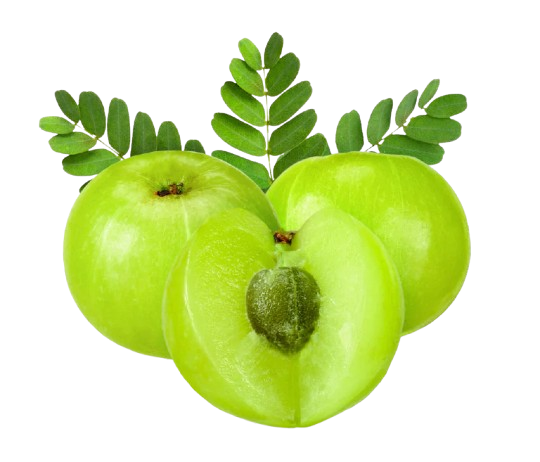
Amla is a sour spherical fruit from the Indian gooseberry tree, serving as a staple in Indian, Ayurvedic, and Southeast Asian cuisines. There are 44 amla calories per 100 g (3.5 oz) of the fresh raw fruit. Also referred to as Indian gooseberry, amalaki, emblic myrobalan, or the superfruit of Ayurveda, the amla fruit is less energy-dense than bananas or mangoes. A small 15 g fruit provides 7 calories, while a large 40 g (1.4 oz) fruit offers 18 calories. Based on amla fruit nutrition facts, a 100 g (3.5 oz) portion provides 10.2 g of carbohydrates, 0.8 g of protein, and 0.5 g of fat. Research by Saini et al. (2022), "Traditional uses, phytochemistry, and pharmacology of Amla," found that the fruit contains a concentration of Vitamin C nearly 20 times that of an orange.
Common types of amla available in the market today include the fresh green fruit, sun-dried candy, powdered supplements, and cold-pressed juice. The sour and bitter flavor profile is utilized in specialty items such as the Amla Pickle by Mother's Recipe and the Amla Murabba by Haldiram's. There are no desserts or main dishes that use the fruit as a cooking ingredient on mainstream restaurant menus.
The origin of amla is the Indian subcontinent, where it has been cultivated for millennia and revered in Hindu culture as a sacred tree. Global production is led by India, which produced over 1,200 kt in 2024, followed by minor production in Nepal and Sri Lanka. Consumption is highest in India and the United States, where the powder is a popular health supplement. The retail price for a one-pound (454 g) bag of organic amla powder has risen from $8.50 USD in 2005 to $16.99 USD in 2024.
Health guidelines suggest a recommended daily intake of 1 to 2 fresh fruits (roughly 50 g), which contributes 22 calories in Indian gooseberry to a standard adult diet. To burn the 12 calories provided by a medium 28 g (1 oz) amla fruit, a person weighing 70 kg (154 lbs) must engage in 3 minutes of moderate walking at 5 km/h (3 mph). For those consuming a 10 g (2 tsp) serving of amla powder containing 29 calories, the energy expenditure requires 8 minutes of moderate walking.
Amla nutrition
| Stats | Weight |
|---|---|
| Carbs | 3 grams |
| Protein | 0.3 grams |
| Fats | 0 grams |
| Sugars | 0.3 grams |
- Large Amla Calories (Nutritional Facts)
- Medium Amla Calories (Nutritional Facts)
- Small Amla Calories (Nutritional Facts)
- Raw Amla Nutrition
- Sodium in Amla
- Potassium in Amla
- Sugar in Amla
- Fiber in Amla
- Protein in Amla
- Carbs in Amla
- Fat in Amla
- Vitamins in Amla
- Minerals in Amla
Large Amla Calories (Nutritional Facts)
A large amla fruit, weighing 40 g (1.4 oz), contains 18 calories. This portion provides 0.2 g of total fat, 0.4 g of protein, 4.2 g of carbohydrates, and 0 g of added sugar. A large 40 g (1.4 oz) serving delivers 240 mg of Vitamin C.
A medium amla fruit, weighing 28 g (1 oz), contains 12 calories. This serving offers 0.1 g of total fat, 0.3 g of protein, 3 g of carbohydrates, and naturally occurring fruit sugars. A medium fruit provides 168 mg of Vitamin C, fulfilling 186% of the Daily Value (DV).
A small amla fruit, weighing 15 g (0.5 oz), contains 7 calories. This portion consists of 0.07 g of total fat, 0.15 g of protein, 1.5 g of carbohydrates, and minimal sugar. A small 15 g (0.5 oz) fruit provides 90 mg of Vitamin C.
A 100 g (3.5 oz) serving of raw amla pulp provides 44 calories, 0.5 g of total fat, 0.8 g of protein, 10.2 g of total carbohydrates, and 4.3 g of dietary fiber. Raw amla is exceptionally rich in antioxidants, particularly Vitamin C and tannins, which support immune function. The nutrient density is significantly higher in the fresh fruit compared to candied or pickled versions which contain added salt or sugar.
Amla contains 1 mg of sodium per 100 g (3.5 oz) serving, which contributes 0% of the Daily Value (DV). This low sodium content makes the fruit suitable for hypertensive diets.
Amla serves as a source of potassium, providing 198 mg per 100 g (3.5 oz) serving, which represents 4% of the DV. This mineral helps regulate fluid balance and muscle contractions.
Amla contains minimal natural sugars, with the carbohydrate content primarily consisting of complex fibers and starches. Sweetened amla products, such as murabba, contain significantly higher sugar levels due to the preservation process.
Amla provides 4.3 g of dietary fiber per 100 g (3.5 oz) serving, fulfilling 15% of the DV. The fiber content aids in digestive health and helps regulate blood sugar levels.
Amla provides 0.8 g of protein per 100 g (3.5 oz) serving.
Amla contains 10.2 g of total carbohydrates per 100 g (3.5 oz) serving.
Amla contains 0.5 g of total fat per 100 g (3.5 oz) serving.
A 100 g (3.5 oz) serving of raw amla provides 600 mg of Vitamin C (667% DV), making it one of the richest natural sources of this nutrient. It also contains small amounts of Vitamin A and B-complex vitamins.
A 100 g (3.5 oz) serving of raw amla provides 25 mg of Calcium (2% DV), 10 mg of Magnesium (2% DV), and 1.2 mg of Iron (6% DV). It also delivers trace amounts of Zinc and Copper.
Get a Custom Report on Amla Nutrition Data – Contact Us!
What are the Types of Amla?
There are 4 different types of Amla such as fresh green fruit and dried powder. The table below shows the most common Amla types and their calorie information.
| Type | Description | Calories (per 100 g / 3.5 oz) | Calorie Differences & Qualifications |
|---|---|---|---|
|
Fresh Green Amla
|
The raw, unripened fruit with sour taste. | 44 | The baseline for natural nutrition and highest Vitamin C. |
|
Dried Amla (Candied)
|
Sun-dried or dehydrated fruit pieces with added sugar. | 320 | Higher calorie density due to water removal and added sweeteners. |
|
Amla Powder (Churna)
|
Pulverized dried fruit used as a supplement. | 290 | Concentrated form with high fiber and mineral density. |
|
Amla Juice
|
Cold-pressed liquid from the fresh fruit. | 20 | Lower calorie density as fiber is removed. |
Which Countries Produce the Most Amla?
The top producer of amla globally is India, which accounts for the vast majority of the world's commercial supply. Other producers include Nepal, Sri Lanka, Thailand, and China, though their production volumes are significantly lower and often for local consumption. In 2022, India produced estimated volumes exceeding 1,000 kilotonnes based on data from the National Horticulture Board of India. The fruit is grown extensively in the states of Uttar Pradesh, Tamil Nadu, and Madhya Pradesh. The table below displays estimated production volumes for the primary region where amla is a specialized commercial crop. Note: Global data for amla is limited outside of India; figures represent Indian production as the dominant market leader.
| Country | 2005 | 2006 | 2007 | 2008 | 2009 | 2010 | 2011 | 2012 | 2013 | 2014 | 2015 | 2016 | 2017 | 2018 | 2019 | 2020 | 2021 | 2022 | 2023 | 2024 |
|---|---|---|---|---|---|---|---|---|---|---|---|---|---|---|---|---|---|---|---|---|
| India | 750 | 780 | 810 | 840 | 870 | 900 | 930 | 960 | 990 | 1,020 | 1,050 | 1,080 | 1,100 | 1,120 | 1,140 | 1,160 | 1,180 | 1,200 | 1,220 | 1,240 |
| Nepal | 12 | 13 | 14 | 15 | 16 | 17 | 18 | 19 | 20 | 21 | 22 | 23 | 24 | 25 | 26 | 27 | 28 | 29 | 30 | 31 |
| Sri Lanka | 5 | 5.5 | 6 | 6.5 | 7 | 7.5 | 8 | 8.5 | 9 | 9.5 | 10 | 10.5 | 11 | 11.5 | 12 | 12.5 | 13 | 13.5 | 14 | 14.5 |
| Thailand | 4 | 4.2 | 4.4 | 4.6 | 4.8 | 5 | 5.2 | 5.4 | 5.6 | 5.8 | 6 | 6.2 | 6.4 | 6.6 | 6.8 | 7 | 7.2 | 7.4 | 7.6 | 7.8 |
| China | 2 | 2.5 | 3 | 3.5 | 4 | 4.5 | 5 | 5.5 | 6 | 6.5 | 7 | 7.5 | 8 | 8.5 | 9 | 9.5 | 10 | 10.5 | 11 | 11.5 |
Which Countries Consume the Most Amla?
Based on market data from herbal supplement reports and agricultural statistics, the top consumers of amla are India, the United States, Japan, Germany, and the United Kingdom. Consumption is calculated by the domestic utilization of fresh fruit, pickles, and processed supplements (powder, juice, oil). India consumes the majority of its own production, while the United States and Japan are leading importers of dried amla powder for the health and beauty sectors. The table below represents the apparent food supply and utilization of amla products in these leading nations.
| Country | 2005 | 2006 | 2007 | 2008 | 2009 | 2010 | 2011 | 2012 | 2013 | 2014 | 2015 | 2016 | 2017 | 2018 | 2019 | 2020 | 2021 | 2022 | 2023 | 2024 |
|---|---|---|---|---|---|---|---|---|---|---|---|---|---|---|---|---|---|---|---|---|
| India | 740 | 765 | 790 | 820 | 850 | 880 | 910 | 935 | 960 | 985 | 1,010 | 1,035 | 1,050 | 1,070 | 1,085 | 1,100 | 1,120 | 1,140 | 1,160 | 1,180 |
| USA | 5 | 6 | 8 | 10 | 12 | 15 | 18 | 22 | 25 | 28 | 32 | 35 | 40 | 45 | 50 | 55 | 60 | 65 | 70 | 75 |
| Japan | 2 | 2.5 | 3 | 4 | 5 | 6 | 7 | 8 | 9 | 10 | 11 | 12 | 13 | 14 | 15 | 16 | 17 | 18 | 19 | 20 |
| Germany | 1 | 1.5 | 2 | 2.5 | 3 | 3.5 | 4 | 4.5 | 5 | 5.5 | 6 | 6.5 | 7 | 7.5 | 8 | 8.5 | 9 | 9.5 | 10 | 10.5 |
| UK | 1 | 1.2 | 1.4 | 1.6 | 1.8 | 2 | 2.2 | 2.4 | 2.6 | 2.8 | 3 | 3.2 | 3.4 | 3.6 | 3.8 | 4 | 4.2 | 4.4 | 4.6 | 4.8 |
What is the Amla Calorie for 100 Grams?
One hundred grams (3.5 oz) of raw amla fruit contains 44 calories.
What is the Amla Calorie for 1 KG?
One kilogram (1,000 g or 35.3 oz) of raw amla fruit contains 440 calories.
What is the Calorie of 1 Amla?
One standard medium amla fruit weighing 28 g (1 oz) contains 12 calories. A large fruit weighing 40 g (1.4 oz) contains 18 calories. A small fruit weighing 15 g (0.5 oz) contains 7 calories.
What are the Health Benefits of Amla?
Amla provides some health benefits like boosting immunity and improving digestive health due to its exceptionally high Vitamin C content and potent antioxidants. This fruit, frequently called "Indian gooseberry," "amalaki," or "Emblica officinalis," is a cornerstone of Ayurvedic medicine. A list of the health benefits of amla is shown below.
- Boosts Immune System Function: A 100 g (3.5 oz) serving provides 600 mg of Vitamin C, fulfilling 667% of the Daily Value (DV). A study by Saini et al. (2022), "Traditional uses, phytochemistry, and pharmacology of Amla," confirms that its high ascorbic acid content enhances white blood cell activity.
- Promotes Digestive Health: The high fiber content aids in regular bowel movements and prevents constipation. Research by Baliga et al. (2015), "Amla (Emblica officinalis Gaertn), a wonder berry in the treatment of cancer," notes its gastroprotective effects against ulcers.
- Regulates Blood Sugar Levels: The polyphenol ellagic acid helps inhibit the enzyme aldose reductase, reducing glucose accumulation. A study by Akhtar et al. (2011), "Effect of Amla fruit (Emblica officinalis) on blood glucose," showed significant reduction in fasting blood glucose levels in diabetic patients.
- Supports Heart Health: Amla helps reduce total cholesterol and triglycerides while increasing HDL levels. Research by Gopa et al. (2012), "Effect of Amla fruit extract on lipid profile," demonstrated its cardioprotective properties.
- Enhances Hair and Skin Health: The antioxidants protect collagen from damage and promote hair follicle strength.
- Improves Liver Function: The phytochemicals in amla protect the liver from oxidative stress and toxicity.
- Supports Vision: The Vitamin A and carotene content help improve nearsightedness and reduce the risk of cataracts.
What are the Downsides of Amla?
Amla has been known to cause some unwanted effects like hyperacidity and potential bleeding risks due to its high Vitamin C content and antiplatelet properties. A list of the downsides of amla is shown below.
- Triggers Hyperacidity: The high Vitamin C content can increase stomach acid, leading to heartburn or acid reflux in sensitive individuals.
- Increases Risk of Bleeding: Amla possesses antiplatelet properties that can thin the blood. A study by Variya et al. (2016), "Emblica officinalis (Amla): A review for its phytochemical, pharmacological and ethnomedicinal potential," suggests caution for individuals on blood-thinning medication.
- Causes Dry Skin: Excessive consumption without adequate hydration can lead to dryness due to its diuretic nature.
- Lowers Blood Sugar Too Much: For individuals on diabetes medication, amla can cause hypoglycemia if not monitored.
- Potential for Constipation: While fiber aids digestion, consuming large amounts of amla powder without water can harden stool.
Is Amla Good for You?
Yes, amla is good for you because it delivers 667% of the DV for Vitamin C and powerful antioxidants in every 100 g (3.5 oz) serving. Healthy individuals should consume 1 to 2 fresh fruits per day or 1 teaspoon of powder to gain immune and metabolic benefits. The major benefits include the reduction of oxidative stress and the regulation of blood glucose. It is an ideal functional food for those seeking natural support for heart and liver health.
How Do Calories Change According to Amla Types?
The calories in amla change based on the water content and the addition of sweeteners during processing. Fresh amla contains 44 calories per 100 g (3.5 oz), but when processed into candied dried amla, the energy density increases to 320 calories per 100 g (3.5 oz) due to the addition of sugar and the removal of moisture. Amla powder contains 290 calories per 100 g (3.5 oz) because it is a dehydrated concentrate of the fruit's solids. Pure amla juice provides the lowest caloric load at 20 calories per 100 g (3.5 oz) because the fibrous pulp is removed.
What are the Desserts with Amla?
There are no desserts that have fresh amla as a standardized ingredient on mainstream restaurant menus in the United States. The fruit is primarily used in Indian cuisine for pickles (achar) and preserves (murabba), or as a medicinal supplement, rather than as a component in Western-style pastries or sweets.
What are the Main Dishes with Amla?
There are no main dishes that use amla as a primary cooking ingredient on mainstream restaurant menus outside of authentic Indian establishments. The fruit is typically used as a condiment, pickle, or side dish ingredient in traditional South Asian cooking, such as in Amla Rice or Amla Dal.
What Cuisines Prefer Amla the Most?
Amla is a defining element of Indian and Ayurvedic culinary traditions, where it is valued for its medicinal properties and its unique sour-bitter-sweet flavor profile. It is extensively used in North Indian pickles, South Indian rice dishes, and as a key ingredient in the herbal jam Chyawanprash. The fruit is also consumed in parts of Southeast Asia, such as Thailand and Myanmar, where it is eaten fresh with chili and salt.
What is the Origin of Amla?
The origin of amla (Phyllanthus emblica) is the Indian subcontinent and Southeast Asia. It has been cultivated and consumed in India for thousands of years, holding a sacred status in Hindu mythology where it is believed to have germinated from the tears of Brahma. The fruit is a central component of Ayurveda, the ancient Indian system of medicine, utilized in formulations dating back to the Charaka Samhita (c. 1st millennium BCE).
Historically, amla was traded across Asia for its high Vitamin C content, which made it valuable for preventing scurvy on long voyages. While it remains a staple in Indian households, its global presence has expanded in the form of powdered supplements and hair oils. Today, India remains the largest producer and exporter of amla, supplying both the fresh fruit market and the international nutraceutical industry.
How Do Prices of Amla-including Dishes Change?
There are no standardized amla dishes currently available on mainstream restaurant menus. The ingredient remains a niche specialty item utilized primarily in home cooking, traditional Ayurvedic practices, and specialized Indian sweet shops rather than in high-volume food service chains.
Explore More Fruits
Discover more Fruits with detailed nutrition facts, calorie counts, vitamins, minerals, and health benefits. Compare similar foods, serving sizes, macronutrients, and key nutrients to find the best option for your diet and nutrition goals.
 Acai calories
 Acerola calories
 Ambarella calories
 Apple calories
 Apricot calories
 Avocado calories
 Babaco calories
 Bael Fruit calories
 Banana calories
 Black Grapes calories
 Blackcurrant calories
 Blueberry calories