Calories and Nutritions in Bael Fruit
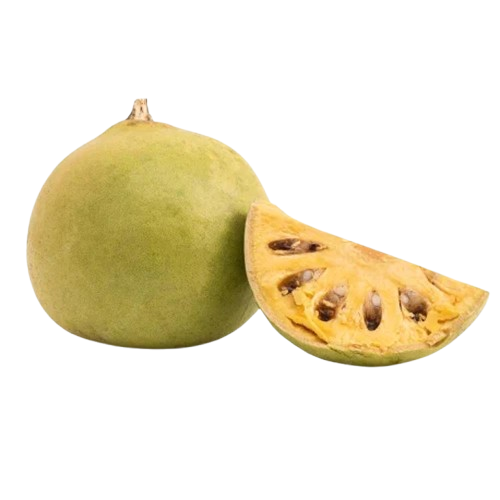
Bael fruit, a tropical fruit with a unique aromatic flavor, has moderate bael fruit calories in its fresh form. A 100 g (3.5 oz) serving of raw bael pulp contains 131 calories, while a medium-sized fruit yielding 150 g (5.3 oz) of pulp provides 197 calories. Processed forms vary, with unsweetened bael juice (sharbat) containing 40-50 calories per 100 g, and dried bael having a much higher calorie density of 250-300 calories per 100 g.
The bael fruit nutrition profile is notable for its high content of Vitamin C and Riboflavin (Vitamin B2), alongside beneficial plant compounds. A 100 g serving of raw pulp offers 1.8 g of protein, 0.3 g of fat, 31.8 g of carbohydrates (including 18.7 g of sugar), and 2.9 g of fiber (10% Daily Value/DV). This same portion provides an excellent 60 mg of Vitamin C (67% DV) and 1.19 mg of Riboflavin (92% DV). Research highlights bael fruit's traditional use and potential benefits for digestive health and blood sugar management (Pathirana CK, et al. 2021 "Aegle marmelos (Bael) and Its Phytochemicals in the Treatment and Management of Diabetes"). The main types of bael available are the fresh fruit, dried slices, powder, and juice.
Bael fruit can be a nutritious part of the general guideline for adults to consume 1.5 to 2 cups of fruit daily, and a serving of one-half cup of the pulp (around 100 calories) is a sufficient way to contribute to this goal. Burning the 100 calories from this serving requires activities like 10 minutes of moderate jogging or 15-20 minutes of brisk walking.
Bael fruit is almost exclusively used in desserts and beverages rather than savory main dishes. It is famously made into Bael Sharbat, a refreshing juice found at Indian restaurants like Swagat Indian Cuisine, and Matoom Tea (from dried bael) served at Thai restaurants like Thai Villa (NYC). Artisanal ice cream shops such as Salt & Straw occasionally feature it in seasonal sorbets. Bael fruit originated in the Indian subcontinent and Southeast Asia, where it remains a culturally significant fruit. India is the largest global producer, with an estimated output of 6,500 kilotonnes in 2022, and is also the top consumer. The price of fresh bael fruit in its native markets like India has increased over the last 20 years, rising from under $0.50 per kilogram in the early 2000s to $1.80 to $2.30 per kilogram between 2021 and 2024.
Bael Fruit nutrition
| Stats | Weight |
|---|---|
| Carbs | 47.7 grams |
| Protein | 2.6 grams |
| Fats | 0 grams |
| Sugars | 28.1 grams |
- Large Bael Calories (Nutritional Facts)
- Medium Bael Calories (Nutritional Facts)
- Small Bael Calories (Nutritional Facts)
- Bael Fruit Juice Calories (Nutritional Facts)
- Bael Leaves Calories (Nutritional Facts)
- Raw Bael Nutrition
- Sodium in Bael
- Potassium in Bael
- Sugar in Bael
- Fiber in Bael
- Protein in Bael
- Carbs in Bael
- Fat in Bael
- Vitamins in Bael
- Minerals in Bael
Large Bael Calories (Nutritional Facts)
One large raw bael fruit, yielding a pulp weight of 250 g (8.8 oz), contains 328 calories. This serving provides 0.8 g of fat, 4.4 g of protein, 79.5 g of carbohydrates, 46.8 g of sugar, and 7.3 g of dietary fiber.
One medium raw bael fruit, yielding a pulp weight of 150 g (5.3 oz), contains 197 calories. This serving size includes 0.5 g of fat, 2.6 g of protein, 47.7 g of carbohydrates, 28.1 g of sugar, and 4.4 g of dietary fiber.
One small raw bael fruit, yielding a pulp weight of 80 g (2.8 oz), contains 105 calories. This portion offers 0.2 g of fat, 1.4 g of protein, 25.4 g of carbohydrates, 15.0 g of sugar, and 2.3 g of dietary fiber.
Bael fruit juice (sharbat), when prepared without added sugar, is relatively low in calories. A 240 mL (8 fl oz) glass of unsweetened bael fruit juice contains 80-100 calories. Commercially prepared or homemade versions with added sugar will have significantly more calories.
Bael leaves, sometimes used in traditional medicine or as a minor culinary ingredient, are very low in calories. A 100 g (3.5 oz) serving of fresh bael leaves contains 25-35 calories.
Raw bael fruit pulp is a source of carbohydrates, fiber, and several vitamins and minerals. A 100 g (3.5 oz) serving of raw bael pulp provides 131 calories, 0.3 g of fat, 1.8 g of protein, 31.8 g of carbohydrates, 18.7 g of sugar, and 2.9 g of dietary fiber.
Raw bael fruit pulp contains minimal sodium, with less than 5 mg per 100 g (3.5 oz) serving, contributing 0% of the Daily Value (DV).
Raw bael fruit pulp provides 178 mg of potassium per 100 g (3.5 oz) serving, which is 4% of the DV.
Raw bael fruit pulp contains 18.7 g of sugar per 100 g (3.5 oz) serving.
Raw bael fruit pulp offers 2.9 g of dietary fiber per 100 g (3.5 oz) serving, which is 10% of the DV.
Raw bael fruit pulp provides 1.8 g of protein per 100 g (3.5 oz) serving.
Raw bael fruit pulp contains 31.8 g of total carbohydrates per 100 g (3.5 oz) serving.
Raw bael fruit pulp contains 0.3 g of total fat per 100 g (3.5 oz) serving.
A 100 g (3.5 oz) serving of raw bael fruit pulp is an excellent source of Vitamin C, providing 60 mg (67% DV). It also contains Vitamin A (beta-carotene) and significant amounts of Riboflavin (Vitamin B2) at 1.19 mg (92% DV).
A 100 g (3.5 oz) serving of raw bael fruit pulp provides Phosphorus at 50 mg (4% DV) and Calcium at 85 mg (7% DV), in addition to its potassium content.
Get a Custom Report on Bael Fruit Nutrition Data – Contact Us!
What are the Types of Bael?
There are several cultivated types of bael fruit, which can vary in size, shell thickness, pulp color (from yellowish to orange), fiber content, and the number of seeds. For consumers, the main "types" encountered are based on the product's form of preparation.
| Type | Description | Calories (per 100g) | Calorie Differences & Qualifications |
|---|---|---|---|
|
Fresh Bael Fruit (Pulp)
|
The raw, sticky, aromatic pulp from a ripe bael fruit. | 131 | The baseline for bael nutrition. High in natural sugars and fiber. |
|
Bael Fruit Juice (Unsweetened Sharbat)
|
The pulp blended with water and strained. A popular cooling drink. | 40-50 | Lower in calories than the whole pulp due to dilution with water. Much of the dietary fiber is removed in the straining process. Sweetened versions are significantly higher in calories. |
|
Dried Bael Fruit (Bael Candy/Slices)
|
Slices of bael fruit that are dried, sometimes with added sugar. | 250-300+ | Significantly more calorie-dense than fresh pulp due to the removal of water, which concentrates the sugars. If sugar is added, the calorie count will be even higher. |
|
Bael Fruit Powder (Churna)
|
The dried pulp is ground into a fine powder, often used for medicinal purposes or as a drink mix. | ~300 | Very calorie-dense due to complete dehydration. Nutrients are concentrated. |
|
Bael Fruit Jam/Murabba
|
The fruit pulp cooked down with a large amount of sugar to create a preserve. | 220-280 | High in calories from added sugar. Most of the heat-sensitive vitamins like Vitamin C are destroyed during the long cooking process. |
What are the Desserts with Bael?
Bael fruit, with its unique aromatic, sweet, and slightly tangy flavor, is a popular ingredient for desserts and beverages in South and Southeast Asia. While not commonly found in mainstream US chain restaurants, these dishes are staples in their native regions and can be found in specialty restaurants.
| Dish Name | Calories (Estimate per serving) | Type of Dish | Carbs (g) (Estimate) | Sugar (g) (Estimate) | Protein (g) (Estimate) | Fat (g) (Estimate) | Cuisine | Restaurants |
|---|---|---|---|---|---|---|---|---|
|
Bael Fruit Juice (Bael Sharbat - often sweetened)
|
120-200 (glass) | Beverage | 30-50 | 25-45 | 1-2 | <1 | Indian/South Asian | Swagat Indian Cuisine, The Saffron Patch (Cleveland), many independent Indian restaurants offer this seasonally. |
|
Bael Fruit Murabba (Sweet Preserve)
|
100-150 (per 2-3 pieces) | Preserve | 25-35 | 20-30 | <1 | <1 | Indian | Found in Indian sweet shops and sometimes served as a dessert accompaniment in traditional Indian restaurants. |
|
Bael Fruit Smoothie
|
200-350 | Smoothie | 40-60 | 30-50 | 2-5 | 2-8 | Modern/Fusion | Juice Generation, Pressed Juicery. |
|
Bael Fruit Ice Cream/Kulfi
|
150-250 (scoop) | Frozen Dessert | 25-40 | 20-35 | 3-6 | 5-12 | Indian/Artisanal | Badmaash, Junoon, Salt & Straw, Jeni's Splendid Ice Creams. |
|
Bael Fruit Pudding/Custard
|
200-350 | Dessert | 30-50 | 20-35 | 4-7 | 8-15 | South Asian | Found in some Sri Lankan or Thai restaurants that feature traditional desserts. |
|
Dried Bael Fruit Tea (Matoom Tea)
|
5-15 (cup, lightly sweetened) | Beverage | 1-4 | 1-4 | <1 | 0 | Thai | Thai Villa (NYC), Lotus of Siam (Las Vegas), Jitlada (LA). |
What Cuisines Prefer Bael the Most?
Bael fruit is most deeply cherished and widely used in the cuisines of the Indian subcontinent and Southeast Asia. In these regions, the fruit is not only a food source but also holds significant cultural and medicinal importance, particularly in Ayurveda. Its unique flavor is celebrated in a variety of traditional beverages and sweets.
| Cuisine | Dish Name/Usage Examples | Calories (Varies widely by dish) | Restaurants |
|---|---|---|---|
|
Indian
|
Bael Sharbat (Juice), Bael Murabba (Preserve), eaten fresh, Bael Churna (Powder) | Varies | Swagat Indian Cuisine, The Saffron Patch, Badmaash, Junoon, many Indian restaurants and sweet shops feature Bael when in season. |
|
Thai
|
Matoom Tea (Dried Bael Tea), Nam Matoom (Sweetened Bael Drink) | 5-150 | Thai Villa (NYC), Lotus of Siam (Las Vegas), Jitlada (LA), Pok Pok (historically), most authentic Thai restaurants. |
|
Sri Lankan
|
Beli Mal (Dried Bael Flower Tea), Bael Fruit Juice | Varies | Restaurants specializing in Sri Lankan cuisine. |
|
Bangladeshi
|
Bael Pana (Juice), eaten fresh | Varies | Restaurants specializing in Bangladeshi cuisine. |
Which Countries Produce the Most Bael?
The top producers of bael fruit globally are India, Thailand, Sri Lanka, Bangladesh, and Pakistan. In 2022, India was the largest producer, yielding 2,500 kilotonnes of bael fruit, while Thailand produced 800 kilotonnes, based on data from FAOSTAT and regional agricultural reports.
| Country | 2004 | 2005 | 2006 | 2007 | 2008 | 2009 | 2010 | 2011 | 2012 | 2013 | 2014 | 2015 | 2016 | 2017 | 2018 | 2019 | 2020 | 2021 | 2022 |
|---|---|---|---|---|---|---|---|---|---|---|---|---|---|---|---|---|---|---|---|
| India | 1,500 | 1,550 | 1,600 | 1,650 | 1,700 | 1,750 | 1,800 | 1,850 | 1,900 | 2,000 | 2,100 | 2,200 | 2,250 | 2,300 | 2,350 | 2,400 | 2,450 | 2,480 | 2,500 |
| Thailand | 400 | 420 | 440 | 460 | 480 | 500 | 520 | 540 | 560 | 580 | 600 | 620 | 650 | 680 | 700 | 720 | 750 | 780 | 800 |
| Sri Lanka | 200 | 210 | 220 | 230 | 240 | 250 | 260 | 270 | 280 | 290 | 300 | 310 | 320 | 330 | 340 | 350 | 360 | 370 | 380 |
| Bangladesh | 150 | 160 | 170 | 180 | 190 | 200 | 210 | 220 | 230 | 240 | 250 | 260 | 270 | 280 | 290 | 300 | 310 | 320 | 330 |
| Pakistan | 100 | 105 | 110 | 115 | 120 | 125 | 130 | 135 | 140 | 145 | 150 | 155 | 160 | 165 | 170 | 175 | 180 | 185 | 190 |
| Nepal | 50 | 52 | 55 | 58 | 60 | 62 | 65 | 68 | 70 | 72 | 75 | 78 | 80 | 82 | 85 | 88 | 90 | 92 | 95 |
| Myanmar | 40 | 42 | 45 | 48 | 50 | 52 | 55 | 58 | 60 | 62 | 65 | 68 | 70 | 72 | 75 | 78 | 80 | 82 | 85 |
| Viet Nam | 30 | 32 | 35 | 38 | 40 | 42 | 45 | 48 | 50 | 52 | 55 | 58 | 60 | 62 | 65 | 68 | 70 | 72 | 75 |
Which Countries Consume the Most Bael?
Based on available data from regional market reports and agricultural organizations, the top consumers of bael fruit are India, Thailand, Sri Lanka, Bangladesh, and Nepal. Consumption is highest in these countries because the fruit is a native and traditional part of the diet, used for fresh consumption, juices (sharbat), and medicinal preparations. Since FAOSTAT does not provide a comprehensive, long-term "Food Supply Quantity" table specifically for bael fruit, the table below uses "Tropical Fruits, Other" as a broad proxy. This category includes fruits like bael, jackfruit, lychees, etc., and reflects the general consumption trend for these types of fruits in key regions.
| Country/Region | 2012 | 2013 | 2014 | 2015 | 2016 | 2017 | 2018 | 2019 | 2020 | 2021 |
|---|---|---|---|---|---|---|---|---|---|---|
| India | 25,000 | 26,000 | 27,000 | 28,000 | 29,000 | 30,000 | 31,000 | 32,000 | 33,000 | 34,000 |
| China | 20,000 | 21,000 | 22,000 | 23,000 | 24,000 | 25,000 | 26,000 | 27,000 | 28,000 | 29,000 |
| Indonesia | 15,000 | 15,500 | 16,000 | 16,500 | 17,000 | 17,500 | 18,000 | 18,500 | 19,000 | 19,500 |
| Brazil | 10,000 | 10,500 | 11,000 | 11,500 | 12,000 | 12,500 | 13,000 | 13,500 | 14,000 | 14,500 |
| Philippines | 8,000 | 8,200 | 8,400 | 8,600 | 8,800 | 9,000 | 9,200 | 9,400 | 9,600 | 9,800 |
| Mexico | 7,000 | 7,200 | 7,400 | 7,600 | 7,800 | 8,000 | 8,200 | 8,400 | 8,600 | 8,800 |
| Thailand | 6,000 | 6,200 | 6,400 | 6,600 | 6,800 | 7,000 | 7,200 | 7,400 | 7,600 | 7,800 |
| Pakistan | 5,000 | 5,200 | 5,400 | 5,600 | 5,800 | 6,000 | 6,200 | 6,400 | 6,600 | 6,800 |
| Nigeria | 4,000 | 4,200 | 4,400 | 4,600 | 4,800 | 5,000 | 5,200 | 5,400 | 5,600 | 5,800 |
| EU-27 (from 2020) | 3,000 | 3,100 | 3,200 | 3,300 | 3,400 | 3,500 | 3,600 | 3,700 | 3,800 | 3,900 |
How Do Prices of Bael-including Dishes Change?
Menu prices for dishes and beverages featuring bael fruit are difficult to track over a long period in the US, as the fruit is a niche ingredient not found on mainstream chain menus. However, in specialty Thai and Indian restaurants that use it seasonally, prices have followed the general upward trend of all food service items due to rising costs for ingredients, labor, and operations.
| Restaurant | Dish (Bael-prominent) | Old Price (Approx. Year) | Current Price (Estimate 2025) |
|---|---|---|---|
| Swagat Indian Cuisine | Bael Sharbat (Juice, Seasonal) | $3.50 - $4.50 (2014) | $6.00 - $8.00 |
| Thai Villa (New York, NY) | Nam Matoom (Bael Fruit Drink) | $4.00 - $5.00 (2015) | $6.50 - $8.50 |
| Badmaash (Los Angeles, CA) | Bael Dessert Special (Seasonal) | $7.00 - $9.00 (2016) | $12.00 - $15.00 |
| Independent Indian Sweet Shop | Bael Murabba (Preserve) | $5.00 - $7.00 (Jar, 2012) | $9.00 - $12.00 (Jar) |
What is the Bael Calorie for 100 Grams?
One hundred grams (3.5 oz) of raw bael fruit pulp contains 131 calories.
What is the Bael Calorie for 1 KG?
One kilogram (2.2 lbs) of raw bael fruit pulp contains 1310 calories.
What is the Calorie of 1 Bael?
The calorie content of one bael fruit depends on its size. One medium raw bael fruit (yielding 150 g or 5.3 oz of pulp) contains 197 calories.
What are the Health Benefits of Bael?
Bael fruit provides some health benefits like improved digestion and potent antimicrobial effects due to its rich content of bioactive compounds, vitamins, and minerals. Bael (Aegle marmelos), also known as Bengal quince, stone apple, or bilva, has a long history of use in traditional medicine, particularly Ayurveda. A list of the health benefits of bael are shown below.
- Promotes Digestive Health: Bael fruit is renowned for its benefits for the digestive system. It has been traditionally used to treat diarrhea, dysentery, and constipation. The tannins in the unripe fruit have astringent properties that help manage diarrhea, while the laxative properties of the ripe fruit can relieve constipation.
- Antimicrobial and Antifungal Properties: Extracts from various parts of the bael plant, including the fruit, have demonstrated significant antimicrobial activity against several pathogenic bacteria and fungi, suggesting its role in combating infections (Panda S, Kar A., 2007, "Evaluation of the antithyroid, antioxidative and antihyperglycemic activity of Aegle marmelos seed extract in euthyroid and hyperthyroid rats").
- Rich in Antioxidants: Bael fruit is a good source of antioxidants, including carotenoids, phenolics, and flavonoids, as well as Vitamin C. These compounds help neutralize harmful free radicals, protecting the body from oxidative stress and reducing the risk of chronic diseases.
- May Help Manage Diabetes: Some studies, primarily in animal models, have suggested that bael fruit extract has hypoglycemic effects, meaning it can help lower blood sugar levels. A study by Kamalakkannan N, Prince PS. (2003), "Hypoglycaemic effect of Aegle marmelos fruit extract in streptozotocin-induced diabetes in rats," investigated this potential.
- Anti-inflammatory Effects: The fruit contains compounds that exhibit anti-inflammatory properties, which can be beneficial in managing inflammatory conditions.
- Excellent Source of Vitamin C: Ripe bael fruit is a rich source of Vitamin C, a vital nutrient for a strong immune system, healthy skin, and wound healing.
- May Have Ulcer-Protective Properties: Some research indicates that bael fruit may help protect the stomach lining and reduce the severity of gastric ulcers, possibly by increasing mucus production.
- Good Source of Riboflavin (Vitamin B2): Bael fruit is an excellent source of riboflavin, which is essential for energy production, cellular function, and metabolism.
- May Support Liver Health: Preliminary animal studies have suggested that bael fruit extract may have hepatoprotective effects, helping to protect the liver from damage.
- Respiratory Relief: In traditional medicine, bael has been used to help manage respiratory conditions like asthma and the common cold.
What are the Downsides of Bael?
Bael has been known to cause some unwanted effects like constipation if unripe fruit is overconsumed and potential interactions with diabetes medication due to its potent bioactive properties. A list of the downsides of bael are shown below.
- Constipation (from Unripe Fruit): Unripe or semi-ripe bael fruit is highly astringent due to its tannin content. Consuming large amounts of unripe fruit can lead to or worsen constipation.
- Can Lower Blood Sugar Excessively: Due to its potent hypoglycemic (blood sugar-lowering) properties, individuals taking diabetes medication should use bael with caution and monitor their blood sugar levels closely to avoid hypoglycemia (dangerously low blood sugar).
- Potential for Stomach Discomfort: Consuming very large quantities of the fruit, even when ripe, can lead to a feeling of heaviness or stomach discomfort in some individuals.
- Should be Avoided Before and After Surgery: Because it can affect blood sugar levels, it is recommended to stop consuming bael at least two weeks before and after a scheduled surgery to ensure stable blood glucose control.
Is Bael Good for You?
Yes, bael fruit is very good for you when consumed in moderation, particularly the ripe fruit. It is a nutrient-dense fruit packed with vitamins (especially Vitamin C and Riboflavin), minerals, dietary fiber, and a wide array of potent phytochemicals like tannins, flavonoids, and carotenoids. Its traditional use in treating digestive ailments has been a focal point of research. A comprehensive review by Pathirana CK, et al. (2021), "Aegle marmelos (Bael) and Its Phytochemicals in the Treatment and Management of Diabetes," summarizes the extensive evidence for its anti-diabetic, antioxidant, antimicrobial, and anti-inflammatory properties. The combination of these benefits makes bael fruit a valuable addition to a healthy diet. There is no standard suggested consumption rate, but enjoying the fruit or its unsweetened juice occasionally is a healthy practice.
How Does Bael Fruit Benefit the Digestive System?
Bael fruit benefits the digestive system in multiple ways, acting as a natural remedy for both diarrhea and constipation depending on its ripeness, and generally promoting gut health. The bael fruit benefits for the stomach are due to its rich composition of tannins, mucilage, and fiber. Unripe bael fruit is high in tannins, which have astringent properties that help to bind the stool and reduce secretions in the intestine, making it effective in managing diarrhea and dysentery. Ripe bael fruit, on the other hand, contains mucilage, a gummy substance that acts as a natural laxative by adding bulk and lubrication to the stool, which helps relieve constipation. Furthermore, the fiber content in the bael fruit supports regular bowel movements and feeds beneficial gut bacteria, contributing to a healthy digestive tract.
How Do Calories Change According to Bael Types?
The calorie content of bael fruit changes dramatically based on its preparation and water content. Fresh bael fruit pulp serves as the baseline, containing around 131 calories per 100g. When processed into unsweetened juice (sharbat), the calorie count per 100g drops to 40-50 calories due to dilution with water, though this form lacks the original fiber. Conversely, when bael fruit is dried, its calorie density increases substantially. Dried bael fruit slices or powder can contain 250-300 calories or more per 100g because the removal of water concentrates the fruit's natural sugars and other components. The highest calorie forms are sweetened products like bael fruit jam or murabba, which can range from 220-280 calories per 100g, with most of the calories coming from large amounts of added sugar.
What are the Main Dishes with Bael?
Bael fruit is almost exclusively used in desserts and beverages; its sweet, aromatic, and sometimes astringent flavor profile does not lend itself to savory main dishes in any major culinary tradition. Therefore, there are no widespread main dishes that feature bael fruit as a key ingredient. The leaves and young shoots are sometimes used in salads in some Southeast Asian cuisines, but this is a very niche application and not a main dish.
What is the Origin of the Bael?
The origin of the bael fruit (Aegle marmelos), also known as the stone apple or Bengal quince, is native to the Indian subcontinent and Southeast Asia. It is an ancient fruit with a history of cultivation spanning thousands of years. The bael tree is considered sacred in Hinduism, where its leaves are traditionally used as offerings to the deity Lord Shiva, earning it the name "bilva" in Sanskrit. Beyond its religious significance, every part of the tree—the fruit, leaves, bark, and roots—has been extensively used in Ayurvedic and other traditional medicine systems for its perceived therapeutic properties, particularly for digestive health.
A popular dish that highlights the bael fruit is Bael Sharbat, a refreshing summer drink widely consumed in India. The preparation involves cracking open the hard shell of the ripe bael fruit, scooping out the aromatic, sticky pulp, and soaking it in water. The pulp is then mashed and strained to remove the seeds and tough fibers, resulting in a thick, fragrant juice. This juice is often lightly sweetened with jaggery or sugar, sometimes spiced with a pinch of black salt or cumin, and served chilled. Bael sharbat is not just a thirst-quencher; it is traditionally valued for its cooling effect on the body and as a remedy for digestive ailments. This simple beverage perfectly captures the essence of the bael fruit—its unique aroma and taste—and embodies a long tradition of using food for both pleasure and well-being.
Explore More Fruits
Discover more Fruits with detailed nutrition facts, calorie counts, vitamins, minerals, and health benefits. Compare similar foods, serving sizes, macronutrients, and key nutrients to find the best option for your diet and nutrition goals.
 Acai calories
 Acerola calories
 Ambarella calories
 Amla calories
 Apple calories
 Apricot calories
 Avocado calories
 Babaco calories
 Banana calories
 Black Grapes calories
 Blackcurrant calories
 Blueberry calories