Calories and Nutritions in Black Grapes
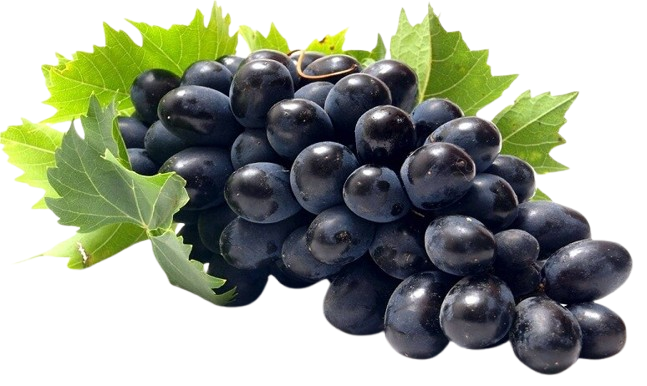
Black grapes are the dark-skinned, tannin-rich fruit of the Vitis vinifera or Vitis labrusca vine. There are 69 black grapes calories per 100 g (3.5 oz). A small serving (1 oz) handful provides 19 calories, while a 1 cup portion offers 104 calories. The black grapes nutrition facts reveal that a 100 g (3.5 oz) serving delivers 18.1 g of carbohydrates, 0.72 g of protein, and 0.16 g of fat. These grapes are distinguished by their high levels of resveratrol and anthocyanins, which research by Xia et al. (2010), "Resveratrol and cardiovascular health," links to improved heart function and cellular protection.
Black grapes are known by varietal names such as Autumn Royal, Midnight Beauty, or Concord. Common types range from the crunchy, seedless Autumn Royal to the aromatic, slip-skin Concord. This fruit is utilized in main courses like the Pork Chops with Grape Sauce at Cooper's Hawk Winery and the Curry Chicken Salad at Mendocino Farms. It is also featured in the Peanut Butter & Concord Grape Doughnut at Doughnut Plant and the classic Concord Grape Pie at Little Pie Company.
Cultivated for millennia in the Near East, black grapes are now produced globally, with China leading the market at an estimated 15,100 kt of total grapes in 2024, followed by Italy and the United States. Consumption is robust in China and the United States, where the fruit is a staple item. Retail prices for fresh black seedless grapes have risen from $1.59 USD per pound in 2005 to $3.59 USD in 2024.
Health experts recommend consuming 1 cup per day which adds 104 calories in black grapes to a standard diet. To metabolize these calories, an average woman weighing 70 kg (154 lbs) needs to walk moderately for 29 minutes at 5 km/h (3 mph), while an average man weighing 84 kg (185 lbs) would need about 24 minutes.
Black Grapes nutrition
| Stats | Weight |
|---|---|
| Carbs | 18.1 grams |
| Protein | 0.72 grams |
| Fats | 0 grams |
| Sugars | 15.5 grams |
- Large Black Grapes Calories (Nutritional Facts)
- Medium Black Grapes Calories (Nutritional Facts)
- Small Black Grapes Calories (Nutritional Facts)
- Raw Black Grapes Nutrition
- Sodium in Black Grapes
- Potassium in Black Grapes
- Sugar in Black Grapes
- Fiber in Black Grapes
- Protein in Black Grapes
- Carbs in Black Grapes
- Fat in Black Grapes
- Vitamins in Black Grapes
- Minerals in Black Grapes
Large Black Grapes Calories (Nutritional Facts)
A generous serving of raw black grapes weighing 150 g (1 cup) delivers 104 calories. This substantial portion contributes 0.24 g of total fat, 1.1 g of protein, 27.3 g of carbohydrates, and 23.4 g of sugar. A 150 g (1 cup) serving is an excellent source of hydration and provides 1.4 g of dietary fiber to support digestion.
A standard serving of fresh black grapes, weighing 100 g (3.5 oz), provides 69 calories. This amount offers 0.16 g of total fat, 0.72 g of protein, 18.1 g of carbohydrates, and 15.5 g of sugar. Consuming 100 g (3.5 oz) of the fruit supplies the body with 191 mg of potassium.
A small snack-sized portion of raw black grapes, weighing 28 g (1 oz), yields 19 calories. This minimal serving consists of 0.04 g of total fat, 0.2 g of protein, 5.1 g of carbohydrates, and 4.3 g of sugar.
A 100 g (3.5 oz) serving of raw black grapes provides 69 calories, 0.16 g of total fat, 0.72 g of protein, 18.1 g of total carbohydrates, and 0.9 g of dietary fiber. Black grapes are chemically distinct from their green counterparts due to the high concentration of resveratrol and anthocyanins found in their dark skins. The nutrient density is superior in the whole, unpeeled fruit compared to processed grape juice, which lacks the fibrous skin and seeds where many antioxidants reside.
Black grapes are naturally very low in sodium, containing just 2 mg per 100 g (3.5 oz) serving, which contributes 0% of the Daily Value (DV). This negligible sodium content makes them a safe choice for individuals managing hypertension.
These grapes act as a functional source of potassium, offering 191 mg per 100 g (3.5 oz) serving, which represents 4% of the DV. Adequate potassium intake from sources like grapes helps counteract the effects of sodium on blood pressure.
Black grapes contain 15.5 g of sugar per 100 g (3.5 oz) serving. The sweetness comes from a mix of glucose and fructose that develops as the fruit ripens on the vine.
Black grapes provide 0.9 g of dietary fiber per 100 g (3.5 oz) serving, fulfilling 3% of the DV. Most of this fiber is insoluble and located within the skin, aiding in digestive health.
Black grapes provide 0.72 g of protein per 100 g (3.5 oz) serving.
Black grapes contain 18.1 g of total carbohydrates per 100 g (3.5 oz) serving.
Black grapes contain 0.16 g of total fat per 100 g (3.5 oz) serving. The fruit is considered a fat-free food.
A 100 g (3.5 oz) serving of raw black grapes is a reliable source of Vitamin K, providing 14.6 mcg (12% DV) for blood coagulation support. It also delivers 3.2 mg of Vitamin C (4% DV) along with essential B-vitamins like Thiamin.
A 100 g (3.5 oz) serving of raw black grapes provides 0.127 mg of Copper, fulfilling 14% of the DV. The fruit also contributes 10 mg of Calcium (1% DV), 7 mg of Magnesium (2% DV), and 0.36 mg of Iron (2% DV) to the diet.
Get a Custom Report on Black Grapes Nutrition Data – Contact Us!
What are the Types of Black Grapes?
There are 3 main commercial categories of Black Grapes such as the thick-skinned seeded varieties, modern seedless cultivars, and specialty luxury grapes. The table below shows the most common Black Grapes types and their calorie information.
| Type | Description | Calories (per 100 g / 3.5 oz) | Calorie Differences & Qualifications |
|---|---|---|---|
|
Autumn Royal
|
Large, seedless, oval berries with a crunchy texture. | 69 | Standard calorie density; widely available. |
|
Concord
|
Seeded variety with "slip-skin" and intense foxy flavor. | 70 | Nearly identical calories; higher aromatic compounds. |
|
Kyoho
|
Large Japanese grape with thick, inedible skin; very sweet. | 72 | Higher sugar density due to selective breeding for brix. |
|
Sable Seedless
|
Small, black berries with a tropical, muscat-like taste. | 70 | Standard energy content with intense flavor profile. |
|
Midnight Beauty
|
Crisp, elongated seedless grape with neutral flavor. | 69 | Standard nutritional profile. |
What are the Desserts with Black Grapes?
Black grapes, particularly the Concord variety, are a cherished ingredient in American and Italian baking due to their intense, musky sweetness and thick skins that hold up well under heat. They are the standard for jams, jellies, and specific rustic pastries. The table below lists nutritional estimates for desserts that use black grapes as a primary ingredient.
| Dish Name | Calories | Type | Carbs | Sugar | Protein | Fat | Cuisine | Restaurants |
|---|---|---|---|---|---|---|---|---|
|
Peanut Butter & Concord Grape Doughnut
|
390 | Yeast Donut | 46g | 22g | 6g | 21g | American | Doughnut Plant (NYC) |
|
Concord Grape Pie (Slice)
|
460 | Pie | 64g | 36g | 4g | 22g | American | Little Pie Company |
|
Schiacciata all'Uva (Grape Focaccia)
|
310 | Sweet Bread | 52g | 16g | 8g | 8g | Italian | Sullivan Street Bakery |
|
Concord Grape Sorbet (Scoop)
|
130 | Frozen | 33g | 29g | 0g | 0g | Artisanal | Jeni's Splendid Ice Creams |
|
Grape & Anise Coffee Cake
|
350 | Cake | 48g | 24g | 4g | 16g | Italian-American | Grandiosi Bakery |
|
Black Grape & Cheese Board
|
540 | Platter | 24g | 18g | 24g | 40g | Wine Bar | Barcelona Wine Bar |
|
Concord Grape Tart
|
380 | Pastry | 45g | 25g | 5g | 20g | French | Petrossian |
What are the Main Dishes with Black Grapes?
Well-known main dishes that contain black grapes include Sausage and Grape Pizza, Brussels Sprouts with Grapes, and Duck with Concord Gastrique. The deep tannins of black grapes pair nicely with fennel, game meats, and charred vegetables, offering a complexity not found in green or red table grapes. The table below lists the nutritional facts for popular savory entrees and sides that incorporate black grapes as a defining ingredient.
| Dish Name | Calories | Type | Carbs | Sugar | Protein | Fat | Cuisine | Restaurants |
|---|---|---|---|---|---|---|---|---|
|
Pizza with Sausage & Black Grapes
|
980 | Pizza | 108g | 14g | 38g | 44g | Italian | Pizzeria Mozza (Los Angeles) |
|
Crispy Brussels Sprouts with Grapes
|
240 | Side Dish | 26g | 12g | 6g | 14g | Mediterranean | Zaytinya |
|
Duck Breast with Concord Sauce
|
720 | Poultry Entree | 18g | 14g | 46g | 52g | American | Union Square Cafe (Seasonal) |
|
Waldorf Chicken Salad
|
580 | Salad | 34g | 26g | 32g | 38g | American | California Chicken Cafe |
|
Foie Gras Terrine with Grape Jelly
|
450 | Appetizer | 12g | 8g | 14g | 42g | French | Bouchon Bistro |
|
Pork Belly with Roasted Grapes
|
840 | Meat Entree | 16g | 12g | 34g | 72g | American | The Publican |
|
Farro Salad with Black Grapes
|
390 | Salad | 54g | 14g | 10g | 16g | Health Fusion | Tender Greens |
What Cuisines Prefer Black Grapes the Most?
Black grapes are a defining element of Italian (Tuscan), American Heritage, and Modern Californian cuisines. Tuscan cuisine famously utilizes Canaiolo or Concord-style grapes for harvest breads. American cuisine relies heavily on the Concord grape for classic jellies and pies found in the Northeast. Modern Californian and Mediterranean restaurants utilize the fruit roasted to concentrate flavors in savory dishes. The table below outlines the specific culinary contexts and dishes where black grapes are a prominent featured element.
| Cuisine | Dish Name | Calories | Restaurants |
|---|---|---|---|
|
Modern Italian
|
Sausage & Black Grape Pizza | 980 | Pizzeria Mozza |
|
Mediterranean
|
Brussels Sprouts with Grapes | 240 | Zaytinya |
|
American Heritage
|
Concord Grape Pie | 460 | Little Pie Company |
|
New York Artisan
|
PB & Concord Grape Doughnut | 390 | Doughnut Plant |
|
Tuscan
|
Schiacciata all'Uva | 310 | Sullivan Street Bakery |
Which Countries Produce the Most Black Grapes?
The top producers of grapes (including black table varieties) globally are China, Italy, the United States, Spain, and France. In 2022, China produced an estimated 14,800.00 kilotonnes of grapes, leading the global market for fresh table consumption based on data from the International Organisation of Vine and Wine (OIV). While European nations focus heavily on wine grape production, China and the United States (California) prioritize table grapes like the Autumn Royal, Kyoho, and Summer Royal. The table below displays estimated production volumes for the primary regions where black grapes are a specialized crop. Note: Data aggregates all grape varieties; table grapes represent approx. 30-40% of total.
| Country | 2005 | 2006 | 2007 | 2008 | 2009 | 2010 | 2011 | 2012 | 2013 | 2014 | 2015 | 2016 | 2017 | 2018 | 2019 | 2020 | 2021 | 2022 | 2023 | 2024 |
|---|---|---|---|---|---|---|---|---|---|---|---|---|---|---|---|---|---|---|---|---|
| China | 6,500 | 7,200 | 8,100 | 9,000 | 9,800 | 10,500 | 11,200 | 11,800 | 12,400 | 12,900 | 13,400 | 13,800 | 14,100 | 14,300 | 14,500 | 14,600 | 14,700 | 14,800 | 14,950 | 15,100 |
| Italy | 8,200 | 8,000 | 7,800 | 7,600 | 7,400 | 7,200 | 7,000 | 6,900 | 7,100 | 6,800 | 7,200 | 7,300 | 7,000 | 7,500 | 7,200 | 7,100 | 7,150 | 7,200 | 7,250 | 7,300 |
| USA | 6,800 | 6,600 | 6,500 | 6,700 | 6,800 | 6,900 | 6,850 | 6,950 | 7,100 | 7,200 | 7,100 | 7,000 | 6,900 | 7,000 | 6,800 | 6,700 | 6,600 | 6,500 | 6,450 | 6,400 |
| Spain | 6,200 | 6,100 | 5,900 | 5,800 | 5,700 | 5,600 | 5,500 | 5,400 | 6,200 | 6,100 | 6,000 | 5,900 | 5,800 | 6,100 | 5,700 | 5,600 | 5,500 | 5,450 | 5,400 | 5,350 |
| France | 6,500 | 6,400 | 6,200 | 6,000 | 5,900 | 5,800 | 6,200 | 5,600 | 5,700 | 6,000 | 6,100 | 5,900 | 5,500 | 6,000 | 5,400 | 5,600 | 5,500 | 5,400 | 5,350 | 5,300 |
Which Countries Consume the Most Black Grapes?
Based on market data from the USDA and global trade reports, the top consumers of fresh table grapes are China, the United States, the European Union, Brazil, and India. Consumption is calculated by the domestic utilization of fresh fruit in retail sectors. China consumes the vast majority of its own production, valuing black grapes like the Kyoho for their intense sweetness and size. The United States maintains high consumption year-round through imports from Chile and Peru. The table below represents the apparent food supply and utilization of table grape products in these leading nations.
| Country | 2005 | 2006 | 2007 | 2008 | 2009 | 2010 | 2011 | 2012 | 2013 | 2014 | 2015 | 2016 | 2017 | 2018 | 2019 | 2020 | 2021 | 2022 | 2023 | 2024 |
|---|---|---|---|---|---|---|---|---|---|---|---|---|---|---|---|---|---|---|---|---|
| China | 6,200 | 6,800 | 7,500 | 8,400 | 9,200 | 10,000 | 10,800 | 11,500 | 12,100 | 12,600 | 13,100 | 13,500 | 13,800 | 14,000 | 14,200 | 14,300 | 14,400 | 14,500 | 14,650 | 14,800 |
| USA | 1,200 | 1,250 | 1,300 | 1,350 | 1,400 | 1,450 | 1,500 | 1,550 | 1,580 | 1,600 | 1,620 | 1,640 | 1,660 | 1,680 | 1,700 | 1,720 | 1,740 | 1,760 | 1,780 | 1,800 |
| EU | 2,100 | 2,150 | 2,200 | 2,250 | 2,300 | 2,350 | 2,400 | 2,450 | 2,500 | 2,550 | 2,600 | 2,650 | 2,600 | 2,700 | 2,650 | 2,600 | 2,550 | 2,500 | 2,450 | 2,400 |
| Brazil | 800 | 850 | 900 | 950 | 1,000 | 1,050 | 1,100 | 1,150 | 1,200 | 1,250 | 1,300 | 1,350 | 1,400 | 1,450 | 1,500 | 1,550 | 1,580 | 1,600 | 1,620 | 1,640 |
| India | 1,100 | 1,200 | 1,300 | 1,400 | 1,500 | 1,600 | 1,700 | 1,800 | 1,900 | 2,000 | 2,100 | 2,200 | 2,300 | 2,400 | 2,500 | 2,600 | 2,700 | 2,800 | 2,900 | 3,000 |
How Do Prices of Black Grapes-including Dishes Change?
Menu prices for dishes that feature black grapes have seen steady increases, reflecting the rising cost of fresh produce and labor. The table below compares historical price ranges from the 2015–2017 period with current 2025–2026 market estimates for specific menu items that feature black grapes.
| Restaurant | Dish Name | Old Price Range (2015–2017) | Current Price Range (2025–2026) |
|---|---|---|---|
| Pizzeria Mozza | Specialty Pizza | $18.00 - $21.00 | $24.00 - $28.00 |
| Little Pie Company | Concord Grape Pie (Slice) | $6.50 - $7.50 | $9.50 - $11.00 |
| Doughnut Plant | Peanut Butter & Concord Grape Doughnut | $3.50 - $4.00 | $4.95 - $5.50 |
| Zaytinya | Brussels Sprouts with Grapes (Seasonal) | $8.50 - $10.00 | $12.50 - $14.50 |
| Jeni's Splendid Ice Creams | Concord Grape Sorbet (Scoop, seasonal) | $4.50 - $5.50 | $6.75 - $7.95 |
| Sullivan Street Bakery | Schiacciata all'Uva (Slice, seasonal) | $4.25 - $5.25 | $6.50 - $8.00 |
| California Chicken Cafe | Waldorf Chicken Salad | $10.95 - $12.50 | $15.50 - $17.95 |
What is the Black Grapes Calorie for 100 Grams?
One hundred grams (3.5 oz) of raw black grapes contains 69 calories.
What is the Black Grapes Calorie for 1 KG?
One kilogram (1,000 g or 35.3 oz) of raw black grapes contains 690 calories.
What is the Calorie of 1 Black Grape?
One medium black grape weighing 5 g (0.17 oz) contains 3 calories. A large black grape weighing 7 g (0.25 oz) contains 5 calories. A small grape weighing 2.4 g (0.08 oz) contains 2 calories.
What are the Health Benefits of Black Grapes?
The deep pigmentation of black grapes signals a high concentration of specific antioxidants that distinguish them from pale varieties, particularly regarding cardiovascular protection. These fruits, encompassing varieties like "Midnight Beauty" and "Autumn Royal," are essential components of the heart-healthy Mediterranean diet. A list of the health benefits of black grapes is shown below.
- Bolsters Cardiovascular Health: The polyphenols in black grapes induce the relaxation of blood vessels (vasodilation). Research by Dohadwala and Vita (2009), "Grapes and Cardiovascular Disease," indicates that regular consumption improves endothelial function and reduces blood pressure.
- Combats Cellular Aging: The skins of black grapes are the primary dietary source of resveratrol, a compound linked to longevity. A study by Xia et al. (2010), "Resveratrol and cardiovascular health," demonstrated its role in activating sirtuins which repair cellular damage.
- Enhances Neuroprotection: Resveratrol crosses the blood-brain barrier to increase cerebral blood flow. This mechanism may help delay the onset of neurodegenerative conditions.
- Strengthens Skeletal Structure: A 100 g (3.5 oz) serving provides 12% of the DV for Vitamin K, a critical nutrient for bone mineralization.
- Modulates Inflammatory Responses: Anthocyanins, which give the grapes their dark color, actively inhibit inflammatory pathways in the body.
- Supports Glycemic Control: Despite their sugar content, the fruit has a low glycemic index (53) and contains compounds that improve insulin sensitivity.
- Fortifies Immune Defenses: The presence of Copper and Vitamin C supports the production and function of white blood cells.
What are the Downsides of Black Grapes?
Black grapes are nutrient-dense but this fruit presents certain risks related to its physical structure and sugar concentration, particularly for vulnerable populations. A list of the downsides of black grapes is shown below.
- Significant Choking Risk: The round, firm shape of the grape is a leading cause of choking in children under four years old if the fruit is not quartered.
- Digestive Malabsorption: The 15.5 g of fructose per 100 g (3.5 oz) can trigger symptoms in individuals with fructose malabsorption or Irritable Bowel Syndrome (IBS).
- Chemical Residue Concerns: Grapes have a large surface area relative to their weight and often retain pesticide residues. The Environmental Working Group (EWG) frequently lists conventionally grown grapes as a "high residue" crop.
- Caloric Overconsumption: The small size and lack of prep work make it easy to mindlessly consume large quantities, leading to excessive calorie intake.
- Drug Interactions: High Vitamin K intake can interfere with the efficacy of blood-thinning medications like warfarin if dietary consistency is not maintained.
Are Black Grapes Good for You?
Yes, black grapes are good for you because they provide a unique combination of resveratrol, anthocyanins, and 12% of the DV for Vitamin K in every 100 g (3.5 oz) serving. Healthy individuals should consume 150 g (1 cup) daily to maximize heart health and anti-aging benefits without overloading on sugar. The primary advantage of black grapes over other fruits is their specific polyphenol profile which supports circulation and cellular longevity. Research by Pezzuto (2008), "Grapes and human health: a perspective," confirms that the bioactive compounds in grapes contribute to disease prevention.
How Do Calories Change According to Black Grapes Types?
The caloric content of black grapes remains relatively stable across fresh varieties, with most types providing between 69 and 72 calories per 100 g (3.5 oz). Variations arise mainly from the sugar-to-acid ratio; luxury varieties like the Japanese Kyoho are bred for extreme sweetness and may contain slightly more calories than a standard Autumn Royal. The most dramatic shift in energy density occurs when the grapes are dried into raisins or currants, which contain approximately 300 calories per 100 g (3.5 oz) due to the removal of water mass.
What is the Origin of Black Grapes?
The origin of the black grape (Vitis vinifera) is the Near East, specifically the region encompassing modern-day Georgia, Turkey, and Iran. Cultivation dates back over 6,000 to 8,000 years, initially for winemaking due to the high tannin and sugar content in the dark skins. The domestication of table grapes spread to Egypt and Phoenicia by 3000 BC and later to Greece and Rome.
The Concord grape (Vitis labrusca), a distinct dark-skinned species native to North America, was developed in 1849 by Ephraim Wales Bull in Concord, Massachusetts. This variety is famous for its "foxy" flavor and slip-skin texture. In the modern era, California breeders developed seedless black varieties like Autumn Royal to meet consumer demand for convenient snacking fruit. Today, China and Italy are the world's largest producers, supplying a global market year-round.
Explore More Fruits
Discover more Fruits with detailed nutrition facts, calorie counts, vitamins, minerals, and health benefits. Compare similar foods, serving sizes, macronutrients, and key nutrients to find the best option for your diet and nutrition goals.
 Acai calories
 Acerola calories
 Ambarella calories
 Amla calories
 Apple calories
 Apricot calories
 Avocado calories
 Babaco calories
 Bael Fruit calories
 Banana calories
 Blackcurrant calories
 Blueberry calories