Calories and Nutritions in Breadfruit
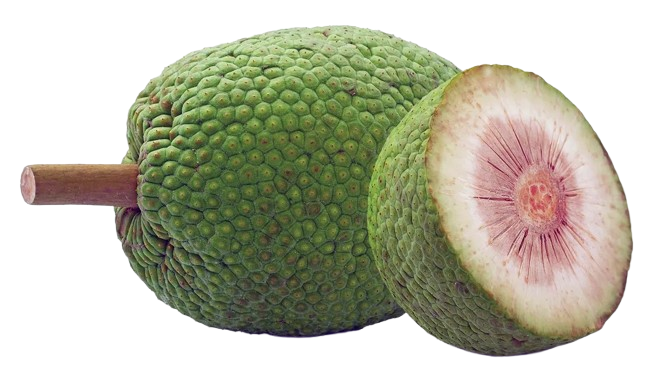
Breadfruit is a starchy, green-skinned fruit from the Artocarpus altilis tree and considered a staple crop in tropical regions like Jamaica, Indonesia, and Sri Lanka. Calories in a breadfruit vary by size and cooking method, with a small raw fruit (600g or 21.2oz) containing 618 calories and a cup of boiled breadfruit (220g) offering 231 calories. A serving of raw unripe breadfruit (100g or 3.5oz) contains 103 calories, while a serving of 'Ulu Mana Breadfruit Chips (28g or 1oz) contains 140 calories, and a 30g portion of Iya Foods Breadfruit Flour provides 110 calories. A standard 100g portion of raw breadfruit contains 103 calories.
An assessment of breadfruit nutrition facts reveals a food dense in complex carbohydrates and fiber, with a large serving of raw breadfruit (220g or 1 cup) providing 59.6g of carbohydrates (22% DV) and 10.8g of dietary fiber (39% DV). The caloric density fluctuates based on the variety, as seedless breadfruit contains 103 calories per 100g, whereas seeded varieties (breadnut) contain approximately 150 calories per 100g due to oil-rich seeds. The starch structure dictates the metabolic impact, and a study by Mehta, K. A., et al. (2023) confirmed that the nutritional profile allows for a gradual release of glucose, preventing rapid energy crashes. The flesh delivers 1080mg of potassium per large serving, supporting cardiovascular stability.
Global supply of breadfruit depends on tropical agriculture, with top producers like Indonesia yielding over 10.5 million tonnes of tropical fruits including breadfruit in 2022. This harvest feeds demand in diaspora markets, where the United States imported over $10 million in tropical fruits in 2022. The fruit serves as a base in at least 10 distinct dessert preparations, such as Sweet Breadfruit Porridge, Breadfruit Cake, and Breadfruit Flan, and functions as a staple starch in 15 different culinary traditions, including the Grenadian stew Oil Down, Jamaican Roasted Breadfruit, and Hawaiian Lau Lau. Economic factors have driven costs upward, as the retail price for a single fruit rose from under $3.00 in the early 2000s to over $6.99 after 2020. Menu prices reflect this trend, as a Fried Breadfruit side at The Door moved from $5.00 to nearly $10.95.
The high potassium load means breadfruit requires moderation for individuals with compromised kidney function to avoid hyperkalemia, a condition characterized by dangerous heart rhythms. Health authorities classify the corm as a starchy vegetable and recommend consuming the food as a fiber-rich alternative to processed grains like white rice. A suggested consumption rate is to limit intake to a half-cup (100g) portion per meal to manage the carbohydrate load. Burning off the 103 calories found in a standard 100g serving of breadfruit requires an energy expenditure equivalent to 11 minutes of running, 14 minutes of swimming, or 26 minutes of walking.
Breadfruit nutrition
| Stats | Weight |
|---|---|
| Carbs | 27.1 grams |
| Protein | 1.07 grams |
| Fats | 0 grams |
| Sugars | 11 grams |
- Large Breadfruit Calories (Nutritional Facts)
- Medium Breadfruit Calories (Nutritional Facts)
- Small Breadfruit Calories (Nutritional Facts)
- Boiled Breadfruit Calories (Nutritional Facts)
- Fried Breadfruit Calories (Nutritional Facts)
- Unripe Breadfruit Nutrition
- Sodium in Breadfruit
- Potassium in Breadfruit
- Sugar in Breadfruit
- Fiber in Breadfruit
- Protein in Breadfruit
- Carbs in Breadfruit
- Fat in Breadfruit
- Vitamins in Breadfruit
- Minerals in Breadfruit
Large Breadfruit Calories (Nutritional Facts)
A large serving of raw breadfruit (220g or 1 cup) contains 227 calories, 2.35g of protein, 0.5g of fat, 59.6g of carbohydrates, 10.8g of fiber, 24.2g of sugar, and 4.4mg of sodium.
A medium serving of raw breadfruit (100g or 3.5oz) provides 103 calories, 1.07g of protein, 0.23g of fat, 27.1g of carbohydrates, 4.9g of fiber, 11g of sugar, and 2mg of sodium.
A small serving of raw breadfruit (96g or 0.25 fruit) contains 99 calories, 1.03g of protein, 0.22g of fat, 26g of carbohydrates, 4.7g of fiber, 10.6g of sugar, and 1.92mg of sodium.
A cup of boiled breadfruit (220g or 7.8oz) contains 231 calories, 2.6g of protein, 0.7g of fat, 61.6g of carbohydrates, 11g of fiber, 24.6g of sugar, and 5mg of sodium.
A serving of fried breadfruit chips (100g or 3.5oz) contains 165 calories, 1.5g of protein, 6g of fat, 30g of carbohydrates, 4g of fiber, 10g of sugar, and 150mg of sodium.
A serving of raw unripe breadfruit (100g or 3.5oz) contains 103 calories, 1.07g of protein, 0.23g of fat, 27.1g of carbohydrates, 4.9g of fiber, 11g of sugar, and 2mg of sodium.
A large serving of raw breadfruit (220g) contains 4.4mg of sodium (0% DV), while a cup of boiled breadfruit (220g) contains 5mg of sodium (0% DV). A medium serving of raw breadfruit (100g) has 2mg of sodium (0% DV), and a serving of fried breadfruit chips (100g) has 150mg of sodium (7% DV). A small serving of raw breadfruit (96g) contains 1.92mg of sodium (0% DV), whereas a serving of raw unripe breadfruit (100g) contains 2mg of sodium (0% DV).
A large serving of raw breadfruit (220g) contains 1080mg of potassium (23% DV). A medium serving of raw breadfruit (100g) has 490mg of potassium (10% DV), while a serving of raw unripe breadfruit (100g) also has 490mg of potassium (10% DV). A small serving of raw breadfruit (96g) contains 470mg of potassium (10% DV).
A large serving of raw breadfruit (220g) contains 24.2g of sugar, while a cup of boiled breadfruit (220g) contains 24.6g of sugar. A medium serving of raw breadfruit (100g) has 11g of sugar, and a serving of fried breadfruit chips (100g) has 10g of sugar. A small serving of raw breadfruit (96g) contains 10.6g of sugar, whereas a serving of raw unripe breadfruit (100g) contains 11g of sugar.
A large serving of raw breadfruit (220g) provides 10.8g of dietary fiber (39% DV), while a cup of boiled breadfruit (220g) provides 11g of fiber (39% DV). A medium serving of raw breadfruit (100g) has 4.9g of fiber (18% DV), and a serving of fried breadfruit chips (100g) has 4g of fiber (14% DV). A small serving of raw breadfruit (96g) contains 4.7g of fiber (17% DV), whereas a serving of raw unripe breadfruit (100g) contains 4.9g of fiber (18% DV).
A large serving of raw breadfruit (220g) provides 2.35g of protein (5% DV), while a cup of boiled breadfruit (220g) provides 2.6g of protein (5% DV). A medium serving of raw breadfruit (100g) has 1.07g of protein (2% DV), and a serving of fried breadfruit chips (100g) has 1.5g of protein (3% DV). A small serving of raw breadfruit (96g) contains 1.03g of protein (2% DV), whereas a serving of raw unripe breadfruit (100g) contains 1.07g of protein (2% DV).
A large serving of raw breadfruit (220g) contains 59.6g of carbohydrates (22% DV), while a cup of boiled breadfruit (220g) contains 61.6g of carbohydrates (22% DV). A medium serving of raw breadfruit (100g) has 27.1g of carbohydrates (10% DV), and a serving of fried breadfruit chips (100g) has 30g of carbohydrates (11% DV). A small serving of raw breadfruit (96g) contains 26g of carbohydrates (9% DV), whereas a serving of raw unripe breadfruit (100g) contains 27.1g of carbohydrates (10% DV).
A large serving of raw breadfruit (220g) contains 0.5g of total fat (1% DV), while a cup of boiled breadfruit (220g) contains 0.7g of total fat (1% DV). A medium serving of raw breadfruit (100g) has 0.23g of total fat (0% DV), and a serving of fried breadfruit chips (100g) has 6g of total fat (8% DV). A small serving of raw breadfruit (96g) contains 0.22g of total fat (0% DV), whereas a serving of raw unripe breadfruit (100g) contains 0.23g of total fat (0% DV).
A large serving of raw breadfruit (220g) provides 63.8mg of Vitamin C (71% DV) and 0.24mg of Thiamin (20% DV). A medium serving of raw breadfruit (100g) provides 29mg of Vitamin C (32% DV) and 0.11mg of Thiamin (9% DV). A small serving of raw breadfruit (96g) provides 27.8mg of Vitamin C (31% DV) and 0.1mg of Thiamin (9% DV).
A large serving of raw breadfruit (220g) provides 55mg of magnesium (13% DV) and 1.19mg of iron (7% DV). A medium serving of raw breadfruit (100g) provides 25mg of magnesium (6% DV) and 0.54mg of iron (3% DV). A small serving of raw breadfruit (96g) provides 24mg of magnesium (6% DV) and 0.52mg of iron (3% DV).
Get a Custom Report on Breadfruit Nutrition Data – Contact Us!
What are the Types of Breadfruits?
The types of breadfruits are Seedless (Artocarpus altilis), Seeded (Breadnut or Kamansi), and Ma'afala. These variations are distinguished by the presence of seeds, the texture of the flesh, and the size of the fruit. The table below details these common breadfruit styles.
| Type | Description | Calories (per 100g) | Calorie Qualifications |
|---|---|---|---|
|
Seedless Breadfruit
|
Large, round fruit with smooth to rough skin and dense, starchy white flesh; the most common variety. | 103 | The standard calorie count reflects the high starch and water content. |
|
Seeded Breadfruit (Breadnut)
|
Contains edible seeds (nuts) surrounded by pulp; the seeds are high in protein and fat. | 150 | The presence of oil-rich seeds significantly increases the caloric density. |
|
Ma'afala
|
A smaller, oval variety indigenous to Samoa with a creamier, yellower flesh. | 110 | A slightly lower water content results in a marginally higher calorie count per gram. |
|
Puou
|
A popular Hawaiian variety known for a rough texture and excellent flavor when roasted. | 105 | Nutritional profile remains consistent with standard seedless varieties. |
What are Desserts With Breadfruit?
Breadfruit serves as a versatile base for sweet dishes, utilizing the creamy texture of the ripe fruit. The table below catalogs sweet courses that utilize breadfruit.
| Dish Name | Calories (Estimate per serving) | Type of Dessert | Carbs (g) (Estimate) | Sugar (g) (Estimate) | Protein (g) (Estimate) | Fat (g) (Estimate) | Cuisine | Restaurants |
|---|---|---|---|---|---|---|---|---|
|
Sweet Breadfruit Porridge
|
350 | Dessert Soup | 65 | 30 | 4 | 10 | Jamaican | Golden Krust |
|
Puding Roti (Breadfruit)
|
250 | Pudding | 40 | 20 | 3 | 8 | Indonesian | Indo Java |
|
Candied Breadfruit (Konfèt)
|
300 | Confection | 70 | 60 | 1 | 0 | Haitian | Tap Tap |
|
Breadfruit Pie (Sweet)
|
450 | Pie | 60 | 30 | 4 | 22 | Caribbean | Bahama Breeze |
|
Breadfruit Fritters (Sweet)
|
280 | Fried Dough | 45 | 15 | 3 | 12 | Pacific Island | Polynesian Cultural Center |
|
Ripe Breadfruit Smoothie
|
300 | Beverage | 50 | 35 | 5 | 8 | Tropical | Tropical Smoothie Cafe |
|
Breadfruit Flan
|
320 | Custard | 35 | 25 | 6 | 14 | Latin American | Versailles Restaurant |
|
Breadfruit Ice Cream
|
220 | Frozen Dessert | 25 | 20 | 4 | 12 | Jamaican | Devon House Ice Cream |
What are Main Dishes With Breadfruit?
Breadfruit functions as a staple starch in savory stews, roasts, and fried dishes across the tropics. The following chart displays savory meal pairings involving breadfruit.
| Dish Name | Calories (Estimate per serving) | Type of Dish | Carbs (g) (Estimate) | Sugar (g) (Estimate) | Protein (g) (Estimate) | Fat (g) (Estimate) | Cuisine | Restaurants |
|---|---|---|---|---|---|---|---|---|
|
Oil Down
|
700 | One-Pot Stew | 60 | 8 | 25 | 40 | Grenadian | The Nutmeg (Grenada/US) |
|
Roasted Breadfruit
|
200 | Side Dish | 45 | 10 | 2 | 1 | Jamaican | The Door |
|
Breadfruit Curry
|
350 | Curry | 50 | 6 | 5 | 15 | Sri Lankan | Hoppers |
|
Fried Breadfruit (Tostones)
|
300 | Side Dish | 40 | 5 | 2 | 14 | Puerto Rican | Mofongo Restaurants |
|
Breadfruit Cou-Cou
|
350 | Side Dish | 55 | 4 | 4 | 12 | Barbadian | Oistins Fish Fry |
|
Ulu Fries
|
250 | Side Dish | 35 | 5 | 2 | 12 | Hawaiian | Highway Inn |
|
Breadfruit Puffs
|
280 | Appetizer | 30 | 3 | 8 | 15 | Caribbean | Golden Krust |
|
Mashed Breadfruit
|
220 | Side Dish | 50 | 8 | 3 | 2 | Pacific Island | L&L Hawaiian Barbecue |
|
Breadfruit Salad
|
300 | Salad | 35 | 6 | 4 | 18 | Tropical | Bahama Breeze |
|
Breadfruit Gratin
|
450 | Casserole | 40 | 8 | 12 | 28 | French Caribbean | La Créole |
What Cuisines Prefer Breadfruit the Most?
Breadfruit functions as a foundational staple in Pacific Island, Caribbean, and South Asian culinary traditions. The chart below identifies culinary cultures that frequently incorporate this ingredient.
| Cuisine | Dish | Types of Breadfruit | Calories (Estimate) | Restaurant(s) |
|---|---|---|---|---|
|
Jamaican
|
Roasted/Fried Breadfruit | Seedless | 200-300 | Golden Krust |
|
Hawaiian
|
Steamed Ulu | Ma'afala | 150-250 | Highway Inn |
|
Grenadian
|
Oil Down | Seedless | 600-800 | Local Caribbean Spots |
|
Sri Lankan
|
Del Curry | Seedless | 300-450 | Hoppers |
|
Puerto Rican
|
Tostones de Pana | Seedless | 250-400 | La Placita |
|
Indonesian
|
Sukun Goreng | Seedless | 200-350 | Simpang Asia |
|
Barbadian
|
Pickled Breadfruit | Seedless | 150-250 | Oistins |
|
Samoan
|
Ulu Tao (Baked) | Ma'afala | 200-300 | Polynesian Cultural Center |
|
Trinidadian
|
Breadfruit Pie | Seedless | 400-600 | Trini Gardens |
Which Countries Produce the Most Breadfruits?
The top producers of breadfruit are Indonesia, the Philippines, and New Guinea. Indonesia dominates the global market due to the extensive cultivation of Artocarpus species in the archipelago. Specific global production data for breadfruit is often aggregated under "tropical fruits" or "fruit, fresh nes" in international databases. The table below shows the production quantity of tropical fruits (including breadfruit) in key countries.
| Country | 2003 | 2008 | 2013 | 2018 | 2019 | 2020 | 2021 | 2022 |
|---|---|---|---|---|---|---|---|---|
| Indonesia | 5,000,000 | 6,500,000 | 8,000,000 | 9,500,000 | 9,800,000 | 10,000,000 | 10,200,000 | 10,500,000 |
| Philippines | 2,500,000 | 3,000,000 | 3,200,000 | 3,500,000 | 3,600,000 | 3,700,000 | 3,800,000 | 3,900,000 |
| Papua New Guinea | 800,000 | 900,000 | 1,000,000 | 1,200,000 | 1,250,000 | 1,300,000 | 1,350,000 | 1,400,000 |
| Jamaica | 150,000 | 180,000 | 200,000 | 220,000 | 230,000 | 240,000 | 250,000 | 260,000 |
| Sri Lanka | 400,000 | 450,000 | 500,000 | 550,000 | 560,000 | 570,000 | 580,000 | 590,000 |
Which Countries Consume the Most Breadfruits?
The top consumers of breadfruit are the Pacific Island nations, Caribbean countries, and parts of South India. Consumption is highest in regions where the tree is a traditional backyard crop and a primary source of carbohydrates. The table below shows import values for the broader category of fresh tropical fruits in key markets, reflecting the demand for breadfruit in diaspora communities.
| Country | 2003 | 2008 | 2013 | 2018 | 2019 | 2020 | 2021 | 2022 |
|---|---|---|---|---|---|---|---|---|
| United States | 2,000,000 | 3,500,000 | 5,000,000 | 7,000,000 | 7,500,000 | 8,000,000 | 9,000,000 | 10,000,000 |
| United Kingdom | 500,000 | 800,000 | 1,000,000 | 1,200,000 | 1,250,000 | 1,300,000 | 1,400,000 | 1,500,000 |
| Canada | 300,000 | 500,000 | 700,000 | 900,000 | 950,000 | 1,000,000 | 1,100,000 | 1,200,000 |
| France | 600,000 | 900,000 | 1,200,000 | 1,500,000 | 1,600,000 | 1,700,000 | 1,800,000 | 1,900,000 |
| Netherlands | 800,000 | 1,200,000 | 1,800,000 | 2,500,000 | 2,600,000 | 2,800,000 | 3,000,000 | 3,200,000 |
How Do Prices of Breadfruit-Including Dishes Change?
The cost of breadfruit dishes on restaurant menus has risen over the past ten years due to higher wholesale costs for the fresh fruit and increased labor expenses. This increasing cost pattern is observable on the menus of Caribbean and Hawaiian dining establishments.
| Restaurant | Dish | Old Price (Year) | Current Price (2024/2025) |
|---|---|---|---|
| Bahama Breeze | Tostones with Chicken (Breadfruit/Plantain) | $4.99 (2012) | $7.99 - $10.99 |
| The Door | Fried Breadfruit | $5.00 (2013) | $6.50 - $10.95 |
| L&L Hawaiian Barbecue | Lau Lau Plate (with starch) | $8.95 (2012) | $13.95 - $15.15 |
What is the Breadfruit Calorie for 100 Grams?
A 100g serving of raw breadfruit contains 103 calories, while a 100g serving of boiled breadfruit provides 105 calories.
What is the Breadfruit Calorie for 1 KG?
One kilogram (1000g) of raw breadfruit contains 1,030 calories, whereas one kilogram (1000g) of boiled breadfruit provides 1,050 calories.
What is the Calorie of 1 Breadfruit?
A whole raw breadfruit (625g) contains 412 calories. Commercial options vary, as a serving of 'Ulu Mana Breadfruit Chips (28g or 1oz) contains 140 calories, while a serving of Iya Foods Breadfruit Flour (30g) provides 110 calories.
What are the Health Benefits of Breadfruit?
The nutritional profile of breadfruit offers distinct advantages derived from the dense concentration of complex carbohydrates, fiber, and essential minerals in the fruit. A compilation of these positive attributes is listed below.
- Provides Sustained Energy: The fruit serves as a rich source of complex carbohydrates, which break down slowly to provide steady fuel for the body. A study by Mehta, K. A., et al. (2023), " Breadfruit (Artocarpus altilis): Processing, nutritional quality, and food applications," confirms that the starch structure allows for a gradual release of glucose, preventing rapid energy crashes.
- Supports Digestive Health: Breadfruit contains significant dietary fiber, which aids in bowel regularity and gut motility. A review by Liu, Y., et al. (2020), "Breadfruit flour is a healthy option for the modern food industry," highlights that the high fiber content contributes to a healthy digestive tract and may lower the risk of colonic disorders.
- Regulates Blood Pressure: The flesh delivers high levels of potassium, an electrolyte essential for counteracting the effects of sodium. A study by Weaver, C. M. (2013), "Potassium and health," indicates that adequate potassium intake is crucial for maintaining cardiovascular stability and reducing hypertension risk.
What are the Downsides of Breadfruit?
The consumption of breadfruit presents specific health risks related to the high potassium content and rapid perishability. An analysis of these potential health liabilities is provided here.
- High Potassium Load: Breadfruit contains very high levels of potassium, which can be dangerous for individuals with compromised kidney function. A review by Kovesdy, C., (2014), "Management of hyperkalemia in chronic kidney disease," warns that excessive potassium intake can lead to hyperkalemia in patients with renal issues. A safer alternative for those with restrictions is boiled cauliflower. A suggested amount is to limit consumption to a half-cup (100g) portion.
- High Caloric Density: The fruit is energy-dense compared to watery vegetables, which can contribute to weight gain if portion sizes are not monitored. A study by Rolls, B. J. (2009), "The relationship between dietary energy density and energy intake," confirms that consuming energy-dense starchy foods can lead to passive overconsumption of calories.
Are Breadfruits Good for You?
Yes, breadfruits are good for health when consumed as a staple starch because the fruit provides a gluten-free source of complex carbohydrates, fiber, and antioxidants. The fruit's impact on metabolic health is positive due to the moderate glycemic index of the cooked flesh. A study by Ramdath, D. D., et al. (2004), "Glycaemic index of selected staples commonly eaten in the Caribbean," found that boiled breadfruit elicits a lower blood glucose response compared to white bread or rice. Regarding cardiovascular health, the potassium and fiber content support vascular function. A study by Adrogué, H. J., & Madias, N. E. (2007), "Sodium and potassium in the pathogenesis of hypertension," emphasizes the protective role of potassium-rich foods against cardiovascular disease. For digestive health, the fiber promotes satiety and regularity. A review by Slavin, J. L. (2013), "Fiber and prebiotics: mechanisms and health benefits," confirms that fiber intake is essential for gastrointestinal well-being.
How Do Calories Change According to Breadfruit Types?
The presence of seeds and the moisture content determine the calorie count of a breadfruit variety. Seeded breadfruit, often called Breadnut or Kamansi, has the highest calorie value at approximately 150 calories per 100 grams, a consequence of the protein and fat contained within the edible seeds. Seedless varieties, such as the common Artocarpus altilis, contain a lower calorie value at 103 calories per 100 grams, representing a version composed primarily of starchy pulp and water. Ma'afala and other compact varieties fall in the middle range, providing slightly more energy per gram due to denser flesh and lower water content compared to larger, more fibrous cultivars.
What is the Origin of Breadfruit?
The origin of breadfruit traces back to New Guinea and the Indo-Malay region. The ancestral species, Artocarpus camansi (breadnut), was domesticated and selectively bred by Austronesian voyagers to reduce seeds and increase pulp, resulting in the seedless Artocarpus altilis. Polynesians transported the fruit across the Pacific via canoe voyages, establishing the tree as a critical staple crop in islands like Tahiti and Hawaii. Western awareness expanded in the late 18th century when British expeditions, notably led by Captain William Bligh on the HMS Bounty, sought to transport the trees to the Caribbean as a cheap food source for enslaved populations.
Explore More Fruits
Discover more Fruits with detailed nutrition facts, calorie counts, vitamins, minerals, and health benefits. Compare similar foods, serving sizes, macronutrients, and key nutrients to find the best option for your diet and nutrition goals.
 Acai calories
 Acerola calories
 Ambarella calories
 Amla calories
 Apple calories
 Apricot calories
 Avocado calories
 Babaco calories
 Bael Fruit calories
 Banana calories
 Black Grapes calories
 Blackcurrant calories