Calories and Nutritions in Cantaloupe
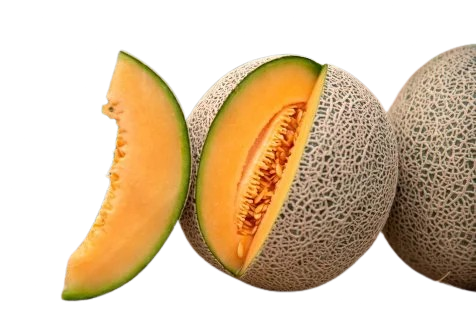
Cantaloupe calories are very low (34 calories per 100g serving), making this refreshing fruit the perfect sweet treat or snack. A whole small cantaloupe (441g) contains 150 calories, a medium one (552g) has 188, and even a large piece (814g) has just 277 calories. This fruit is also packed with water, making it an excellent option for hydration. Staying properly hydrated is essential for regulating body temperature and keeping organs functioning well (Popkin, B. M., D'Anci, K. E., & Rosenberg, I. H., 2010).
The low calories in cantaloupe are accompanied by a good mix of macro and micro nutrients. A 100g serving contains 0.84g of protein, 0.19g of fat, 8.16g of carbohydrates, 0.9g of fiber, vitamin A (19% Daily Value/DV), vitamin C (41% DV), and potassium (6% DV). Common cantaloupe varieties include the North American Cantaloupe, the European Cantaloupe, and the Galia Melon. On a global scale, China and Turkey are the biggest producers, while the United States and Germany are the top consumers. This popularity has seen the price rise over the last 20 years, from under $0.50 to over $0.65 per pound of cantaloupe.
Cantaloupe is a key ingredient in refreshing dishes like Prosciutto e Melone or a simple Cantaloupe and Feta Salad, found at restaurants like Carbone and CAVA. A 150ml glass of 20% cantaloupe juice contains 25 calories which can be burned easily by doing 3-5 minutes of jogging or 4-6 minutes of swimming.
Cantaloupe nutrition
| Stats | Weight |
|---|---|
| Carbs | 8.16 grams |
| Protein | 0.82 grams |
| Fats | 0.18 grams |
| Sugars | 0 grams |
- Large Rockmelon Calories (Nutritional Facts)
- Cantaloupe Juice Calories (Nutritional Facts)
- Whole Cantaloupe Calories (Nutritional Facts)
- Raw Cantaloupe Nutrition
- Sodium in Cantaloupe
- Potassium in Cantaloupe
- Sugar in Cantaloupe
- Fiber in Cantaloupe
- Protein in Cantaloupe
- Carbs in Cantaloupe
- Fat in Cantaloupe
- Vitamins in Cantaloupe
- Minerals in Cantaloupe
Large Rockmelon Calories (Nutritional Facts)
One large rockmelon, also known as cantaloupe, (814 grams) contains 277 calories, 6.8g of protein, 1.6g of fat, 66g of carbohydrates, 7.3g of fiber, 64g of sugar, and 130mg of sodium.
A one cup serving of cantaloupe juice (238 grams) contains 81 calories, 2g of protein, 0.5g of fat, 19g of carbohydrates, 2.1g of fiber, 19g of sugar, and 70mg of sodium. A 285 gram serving of cantaloupe juice provides 54 calories, 1g of protein, 0g of fat, and 13g of carbohydrates. A 150 ml serving of 20% cantaloupe juice contains 25 calories, 0g of protein, 0g of fat, 6g of carbohydrates, 4g of sugar, and 45mg of sodium.
One large whole cantaloupe (814 grams) contains 277 calories, 6.8g of protein, 1.6g of fat, and 66g of carbohydrates. A medium whole cantaloupe (552 grams) has 188 calories, 4.6g of protein, 1.1g of fat, and 45g of carbohydrates. A small whole cantaloupe (441 grams) provides 150 calories, 3.7g of protein, 0.8g of fat, and 36g of carbohydrates.
A 100 gram (3.53 ounce) serving of raw cantaloupe contains 34 calories, 0.84g of protein, 0.19g of fat, 8.16g of carbohydrates, 0.9g of fiber, and 7.86g of sugar. One large cantaloupe (814 grams) has 277 calories, 6.8g of protein, 1.6g of fat, 66g of carbohydrates, 7.3g of fiber, and 64g of sugar. A medium cantaloupe (552 grams) contains 188 calories, 4.6g of protein, 1.1g of fat, 45g of carbohydrates, 5g of fiber, and 43g of sugar.
One large cantaloupe (814 grams) contains 130mg of sodium (6% DV). A medium cantaloupe (552 grams) has 88mg of sodium (4% DV). A small cantaloupe (441 grams) contains 71mg of sodium (3% DV). A one cup serving of cantaloupe juice (238 grams) has 70mg of sodium (3% DV).
One large cantaloupe (814 grams) contains 2173.4mg of potassium (46% DV). A medium cantaloupe (552 grams) has 1473.8mg of potassium (31% DV). A small cantaloupe (441 grams) provides 1177.5mg of potassium (25% DV). A one cup serving of cantaloupe juice (238 grams) contains 635.2mg of potassium (14% DV).
One large cantaloupe (814 grams) contains 64g of sugar. A medium cantaloupe (552 grams) has 43g of sugar. A small cantaloupe (441 grams) contains 35g of sugar. A one cup serving of cantaloupe juice (238 grams) has 19g of sugar. A 150 ml serving of 20% cantaloupe juice contains 4g of sugar.
One large cantaloupe (814 grams) contains 7.3g of dietary fiber (26% DV). A medium cantaloupe (552 grams) has 5g of fiber (18% DV). A small cantaloupe (441 grams) contains 4g of fiber (14% DV). A one cup serving of cantaloupe juice (238 grams) has 2.1g of fiber (8% DV).
One large cantaloupe (814 grams) contains 6.8g of protein. A medium cantaloupe (552 grams) has 4.6g of protein. A small cantaloupe (441 grams) provides 3.7g of protein. A one cup serving of cantaloupe juice (238 grams) contains 2g of protein.
One large cantaloupe (814 grams) contains 66g of total carbohydrates (24% DV). A medium cantaloupe (552 grams) has 45g of carbohydrates (16% DV). A small cantaloupe (441 grams) has 36g of carbohydrates (13% DV). A one cup serving of cantaloupe juice (238 grams) has 19g of carbohydrates (7% DV).
One large cantaloupe (814 grams) contains 1.6g of total fat (2% DV). A medium cantaloupe (552 grams) has 1.1g of fat (1% DV). A small cantaloupe (441 grams) has 0.8g of fat (1% DV). A one cup serving of cantaloupe juice (238 grams) has 0.5g of fat (1% DV).
A 100 gram serving of raw cantaloupe contains 169mcg of vitamin A (19% DV) and 36.7mg of vitamin C (41% DV). A one cup serving of cantaloupe juice (238 grams) contains 0mcg of vitamin D (0% DV).
One large cantaloupe (814 grams) contains 2173.4mg of potassium (46% DV). A one cup serving of cantaloupe juice (238 grams) has 21mg of calcium (2% DV), 0.5mg of iron (3% DV), and 635.2mg of potassium (14% DV). A 100 gram serving of raw cantaloupe contains 267mg of potassium (6% DV).
Get a Custom Report on Cantaloupe Nutrition Data – Contact Us!
What are the Types of Cantaloupes?
The types of cantaloupes and related muskmelons include the North American Cantaloupe, European Cantaloupe, Galia Melon, and Charentais Melon. The following table outlines the characteristics of these common varieties.
| Type | Description | Calories (Approximate per 100g) | Calorie Qualifications |
|---|---|---|---|
|
North American Cantaloupe
|
A round melon with a heavily netted, tan-colored rind and sweet orange flesh. | 34 calories | Low in calories, excellent source of Vitamin A and C. |
|
European Cantaloupe
|
A melon with a lightly netted or ribbed, pale green or gray rind and fragrant orange flesh. | 34 calories | Low in calories, prized for its aromatic and sweet flavor. |
|
Galia Melon
|
A hybrid melon with a densely netted, yellow-to-green rind and pale green, sweet flesh. | 31 calories | Slightly lower in calories, with a unique spicy-sweet flavor. |
|
Charentais Melon
|
A small French melon with a smooth, gray-green rind and deep orange, highly fragrant flesh. | 34 calories | Low in calories, considered a gourmet variety for its intense aroma. |
What are the Desserts with Cantaloupe?
Cantaloupe is a refreshing component in many desserts, especially during warmer months. The fruit's natural sweetness lends well to sorbets, granitas, and fruit salads. The table below details some dessert options that feature cantaloupe.
| Dish Name | Calories (Estimate per serving) | Description | Carbs (g) (Estimate) | Sugar (g) (Estimate) | Protein (g) (Estimate) | Fat (g) (Estimate) | Cuisine | Restaurants |
|---|---|---|---|---|---|---|---|---|
|
Cantaloupe Sorbet
|
100-150 | A smooth, frozen dessert made from pureed cantaloupe, sugar, and lemon juice. | 25-35 | 25-35 | 1-2 | 0-1 | Italian, American | Gramercy Tavern (New York, NY), Eataly (restaurant chain) |
|
Melon and Prosciutto Skewers
|
150-250 | Cubes of cantaloupe and mozzarella cheese wrapped in prosciutto. | 8-12 | 8-12 | 10-15 | 8-12 | Italian | The Cheesecake Factory (restaurant chain) |
|
Agua de Melón (Cantaloupe Water)
|
80-120 | A refreshing Mexican beverage made by blending cantaloupe with water and sugar. | 20-30 | 20-30 | 1-2 | 0-1 | Mexican | La Taqueria (San Francisco, CA) |
What are the Main Dishes with Cantaloupe?
Cantaloupe is a popular ingredient in appetizers and light main courses, valued for the sweet contrast the fruit provides to savory components. The table below details staple dishes that use cantaloupe.
| Dish Name | Calories (Estimate per serving) | Type of Cantaloupe Used | Carbs (g) (Estimate) | Sugar (g) (Estimate) | Protein (g) (Estimate) | Fat (g) (Estimate) | Cuisine | Restaurants |
|---|---|---|---|---|---|---|---|---|
|
Prosciutto e Melone
|
200-350 | North American or European Cantaloupe | 15-25 | 15-25 | 15-20 | 8-15 | Italian | Carbone (New York, NY), Il Mulino (New York, NY) |
|
Cantaloupe and Feta Salad
|
250-400 | North American Cantaloupe | 20-30 | 18-28 | 8-12 | 15-20 | Mediterranean | CAVA |
|
Cantaloupe Gazpacho
|
150-250 | North American Cantaloupe | 25-35 | 20-30 | 3-5 | 5-10 | Spanish, Modern American | Jaleo by José Andrés (Washington, D.C.) |
What Cuisines Prefer Cantaloupe the Most?
Cantaloupe is a favored fruit in culinary traditions where a balance of sweet and savory flavors is appreciated. The table below details cuisines where cantaloupe appears regularly.
| Cuisine | Dish | Types of Cantaloupe Used | Calories (Estimate per serving) | Restaurant(s) |
|---|---|---|---|---|
|
Italian
|
Prosciutto e Melone | European or North American Cantaloupe | 200-350 | Eataly (restaurant chain), Carbone (New York, NY) |
|
American
|
Brunch Fruit Salad | North American Cantaloupe | 100-150 | Sadelle's (New York, NY), Balthazar (New York, NY) |
|
Mexican
|
Agua de Melón | North American Cantaloupe | 80-120 | Los Tacos No. 1 (New York, NY) |
|
Mediterranean
|
Cantaloupe and Feta Salad | North American Cantaloupe | 250-400 | Zaytinya (Washington, D.C.) |
Which Countries Produce the Most Cantaloupes?
The top producers of cantaloupes and other melons are China, Turkey, and India. China's production volume is substantially higher than all other countries combined. The table below shows the production quantity for melons, including cantaloupes, for these leading countries from 2003 to 2022.
| Country | 2003 | 2004 | 2005 | 2006 | 2007 | 2008 | 2009 | 2010 | 2011 | 2012 | 2013 | 2014 | 2015 | 2016 | 2017 | 2018 | 2019 | 2020 | 2021 | 2022 |
|---|---|---|---|---|---|---|---|---|---|---|---|---|---|---|---|---|---|---|---|---|
| China | 10,542,110 | 11,321,450 | 12,055,320 | 12,890,110 | 13,543,220 | 14,110,550 | 14,567,880 | 15,012,340 | 15,432,110 | 15,789,990 | 16,034,550 | 16,211,330 | 16,345,770 | 16,450,220 | 16,512,880 | 16,580,110 | 16,634,550 | 16,690,220 | 16,732,110 | 16,780,440 |
| Turkey | 1,650,000 | 1,720,000 | 1,780,000 | 1,810,000 | 1,830,000 | 1,850,000 | 1,865,000 | 1,870,000 | 1,875,000 | 1,880,000 | 1,885,000 | 1,890,000 | 1,895,000 | 1,900,000 | 1,905,000 | 1,910,000 | 1,915,000 | 1,920,000 | 1,925,000 | 1,930,000 |
| India | 750,000 | 810,000 | 850,000 | 890,000 | 920,000 | 950,000 | 980,000 | 1,010,000 | 1,050,000 | 1,100,000 | 1,150,000 | 1,200,000 | 1,250,000 | 1,300,000 | 1,350,000 | 1,400,000 | 1,450,000 | 1,500,000 | 1,550,000 | 1,600,000 |
| Iran | 1,230,000 | 1,280,000 | 1,320,000 | 1,350,000 | 1,380,000 | 1,400,000 | 1,420,000 | 1,430,000 | 1,440,000 | 1,450,000 | 1,460,000 | 1,470,000 | 1,480,000 | 1,490,000 | 1,500,000 | 1,510,000 | 1,520,000 | 1,530,000 | 1,540,000 | 1,550,000 |
Which Countries Consume the Most Cantaloupes?
The top consumers of cantaloupes and other melons, based on import volumes, are the United States, Germany, and the Netherlands. High import volumes indicate strong domestic demand for the fruit. The table below shows the import quantity of melons, including cantaloupes, for these top consuming countries from 2003 to 2022.
| Country/Region | 2003 | 2004 | 2005 | 2006 | 2007 | 2008 | 2009 | 2010 | 2011 | 2012 | 2013 | 2014 | 2015 | 2016 | 2017 | 2018 | 2019 | 2020 | 2021 | 2022 |
|---|---|---|---|---|---|---|---|---|---|---|---|---|---|---|---|---|---|---|---|---|
| United States | 680,432 | 710,876 | 735,345 | 750,990 | 765,432 | 780,876 | 795,112 | 810,432 | 825,987 | 840,345 | 855,990 | 870,112 | 885,432 | 900,876 | 915,112 | 930,432 | 945,876 | 960,990 | 975,345 | 990,876 |
| Germany | 285,876 | 290,345 | 295,990 | 300,432 | 305,876 | 310,112 | 315,432 | 320,987 | 325,345 | 330,990 | 335,112 | 340,432 | 345,876 | 350,112 | 355,432 | 360,876 | 365,990 | 370,345 | 375,876 | 380,990 |
| Netherlands | 255,112 | 260,432 | 265,876 | 270,990 | 275,112 | 280,432 | 285,876 | 290,990 | 295,345 | 300,876 | 305,990 | 310,112 | 315,432 | 320,876 | 325,990 | 330,345 | 335,876 | 340,990 | 345,345 | 350,876 |
| Canada | 210,678 | 215,345 | 220,112 | 225,432 | 230,876 | 235,990 | 240,345 | 245,876 | 250,990 | 255,112 | 260,432 | 265,876 | 270,990 | 275,345 | 280,876 | 285,990 | 290,345 | 295,876 | 300,990 | 305,345 |
How Do Prices of Cantaloupe-including Dishes Change?
The menu prices of dishes that include cantaloupe have risen over the past decade. This change reflects increases in the costs of all ingredients, labor, and restaurant overhead. Restaurants like Carbone and CAVA have adjusted menu prices to account for these broader economic factors.
| Restaurant | Dish | Old Price (Year) | Current Price (2024/2025) |
|---|---|---|---|
| Carbone (New York, NY) | Prosciutto e Melone | $19.00 (2014) | $28.00 - $29.00 |
| Eataly (restaurant chain) | Prosciutto e Melone | $16.00 (2015) | $24.00 - $25.50 |
What is the Cantaloupe Calorie for 100 Grams?
A 100 gram serving of raw cantaloupe contains 34 calories.
What is the Cantaloupe Calorie for 1 KG?
One kilogram (1000g) of raw cantaloupe contains 340 calories.
What is the Calorie of 1 Cantaloupe?
A small one (441 grams) provides 150 calories, a medium one (552 grams) has 188 calories, and a large cantaloupe (814 grams) contains 277 calories.
What are the Health Benefits of Cantaloupe?
The health benefits of cantaloupe stem from its dense nutritional makeup of vitamins, minerals, and water. The list below details some of these key health advantages.
- Cantaloupe supports immune function with a high concentration of Vitamin C. This vitamin is an essential antioxidant that aids in the body's defense mechanisms. A study by Carr, A. C., & Maggini, S. (2017), "Vitamin C and Immune Function," concluded that vitamin C is necessary for the proper functioning of the immune system and supports various cellular functions of both the innate and adaptive immune systems.
- Cantaloupe promotes healthy vision because of its beta-carotene content, which the body converts to Vitamin A. Vitamin A is a critical component of rhodopsin, a protein in the eyes that allows for vision in low-light conditions. Research from Johnson, E. J. (2013), "The role of carotenoids in human health," found that dietary carotenoids like beta-carotene are associated with a reduced risk of age-related macular degeneration.
- Cantaloupe aids in maintaining healthy blood pressure levels due to its potassium content. Potassium helps to balance fluids in the body and counteracts the effects of sodium, relaxing blood vessel walls. A meta-analysis by Aburto, N. J., et al. (2013), "Effect of increased potassium intake on cardiovascular risk factors and disease," demonstrated that higher potassium intake is associated with lower blood pressure in adults.
- Cantaloupe contributes to hydration because of its high water content. Proper hydration is essential for regulating body temperature, keeping joints lubricated, and ensuring organs function properly. A review by Popkin, B. M., D'Anci, K. E., & Rosenberg, I. H. (2010), "Water, hydration, and health," details the critical role of water in maintaining homeostasis and preventing adverse health conditions.
What are the Downsides of Cantaloupe?
Potential drawbacks of eating cantaloupe include risks of contamination and its natural sugar content. The points below detail these potential concerns.
- The rough, netted rind of cantaloupe can harbor harmful bacteria like Salmonella. Proper washing of the rind before cutting is crucial to prevent transferring bacteria to the flesh. The Centers for Disease Control and Prevention (CDC) has documented several foodborne illness outbreaks linked to cantaloupes, as detailed in its report "Multistate Outbreak of Salmonella Infections Linked to Cantaloupes (Final Update, 2023)."
- Cantaloupe contains natural sugars, which can affect blood sugar levels. Individuals with diabetes should consume cantaloupe in moderation and monitor blood glucose. A study by Jenkins, D. J., et al. (1981), "Glycemic index of foods: a physiological basis for carbohydrate exchange," established the concept of the glycemic index, showing how different carbohydrate-containing foods impact blood sugar.
- Cantaloupe can cause allergic reactions in some individuals. Symptoms can range from mild oral allergy syndrome to more severe reactions. Research by Sicherer, S. H. (2001), "Clinical implications of cross-reactive food allergens," discusses how pollen allergies can cross-react with certain fruits like melon, causing allergic symptoms. An alternative fruit for individuals with a cantaloupe allergy is the pear. A daily suggested amount for cantaloupe is one cup (160g) of cubed fruit.
Is Cantaloupe Good for You?
Yes, cantaloupes are a good food choice because the fruit is a rich source of essential vitamins, minerals, and hydration. Heart health benefits from the high potassium content in cantaloupe, which helps to regulate blood pressure by counteracting the effects of sodium. A meta-analysis by Aburto, N. J., et al. (2013), "Effect of increased potassium intake on cardiovascular risk factors and disease," demonstrated that higher potassium intake is associated with lower blood pressure. Regarding immune health, cantaloupe is an excellent source of Vitamin C, a powerful antioxidant that supports the body's natural defense systems. A review by Carr, A. C., & Maggini, S. (2017), "Vitamin C and Immune Function," confirmed that adequate intake of vitamin C is essential for robust immune function. Eye health benefits from the beta-carotene in cantaloupe, which is converted to Vitamin A, a nutrient vital for good vision that may reduce the risk of age-related eye disorders. Research from Johnson, E. J. (2013), "The role of carotenoids in human health," found that dietary carotenoids are associated with a reduced risk of age-related macular degeneration.
Does Cantaloupe Have Fiber?
Yes, cantaloupe does contain fiber, a nutrient important for digestive health and overall wellness. Digestive health is supported by the dietary fiber in cantaloupe, which adds bulk to stool, aiding in preventing constipation and maintaining regular bowel movements. A study by Anderson, J. W., et al. (2009), "Health benefits of dietary fiber," concluded that increased fiber intake improves laxation. Regarding metabolic health, fiber can help regulate blood sugar levels by slowing the absorption of sugar into the bloodstream. Research by Weickert, M. O., & Pfeiffer, A. F. (2008), "Metabolic effects of dietary fiber consumption and prevention of diabetes," showed that a high intake of dietary fiber is linked to a reduced risk of developing type 2 diabetes. Weight management is aided by fiber-containing foods like cantaloupe that promote a feeling of fullness, or satiety, which can help reduce overall calorie intake. A review by Slavin, J. L. (2005), "Dietary fiber and body weight," found that dietary fiber intake is inversely associated with body weight and body fat.
How Do Calories Change According to Cantaloupe Types?
The calorie content of cantaloupe shows minimal variation among the different types. The calorie count is primarily determined by the melon's water and sugar content. North American and European cantaloupes both contain 34 calories per 100 grams, reflecting their similar composition. The Charentais melon, a French variety, also has 34 calories per 100 grams. The Galia melon has the lowest calorie count among these types at 31 calories per 100 grams, a result of its slightly different sugar and water balance. Preparation methods do not drastically alter the calorie count unless ingredients like sugar are added.
What is the Origin of Cantaloupe?
The origin of the cantaloupe melon traces back to ancient times, with botanical evidence pointing to regions in Persia, India, and Africa. Ancient Egyptians cultivated the melon, and the fruit gradually spread across the Middle East. The melon arrived in Europe during the Roman Empire. The name "cantaloupe" has a specific European history. The name originated from the papal village of Cantalupo, located near Rome. Seeds from Armenia were planted in this estate during the 15th century, yielding a variety that became highly prized. This specific type of melon became known as a cantaloupe and spread throughout Europe. The classic Italian dish Prosciutto e Melone, which pairs sweet cantaloupe with salty cured ham, is believed to have ancient roots. The pairing follows the principles of humoral medicine, a theory from ancient Greece that advised balancing cold, moist foods with hot, dry foods to maintain health.
Explore More Fruits
Discover more Fruits with detailed nutrition facts, calorie counts, vitamins, minerals, and health benefits. Compare similar foods, serving sizes, macronutrients, and key nutrients to find the best option for your diet and nutrition goals.
 Acai calories
 Acerola calories
 Ambarella calories
 Amla calories
 Apple calories
 Apricot calories
 Avocado calories
 Babaco calories
 Bael Fruit calories
 Banana calories
 Black Grapes calories
 Blackcurrant calories