Calories and Nutritions in Carambola
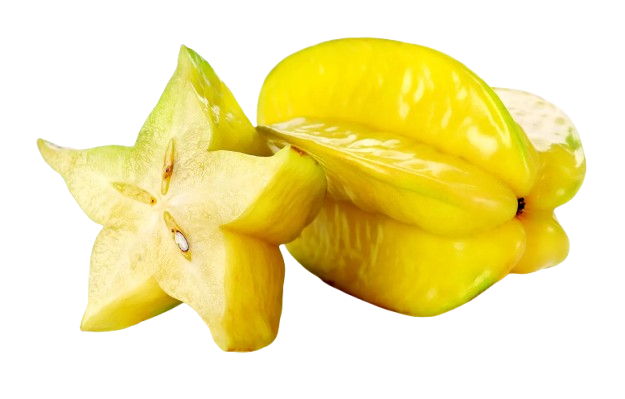
Carambola, also known as star fruit or balimbing, is a tropical fruit with a unique star shape that is popular in Southeast Asian and Latin American cuisines. A 100 g (3.5 oz) serving of raw carambola contains only 31 calories, while a whole medium fruit (91 g or 3.2 oz) provides just 28 calories. The carambola nutrition profile is notable for its high Vitamin C content and dietary fiber. A 100 g serving offers 1.0 g of protein, 0.3 g of fat, 6.7 g of carbohydrates, and 2.8 g of fiber (10% Daily Value/DV). This portion also delivers an excellent 34.4 mg of Vitamin C (38% DV) and provides key minerals like copper (15% DV). The carambola macros show it is a low-fat, low-protein fruit. Research highlights the fruit's significant antioxidant capacity, attributed to its content of beneficial plant compounds like flavonoids (Shui G and Leong LP, 2006 "Residue from star fruit as valuable source for functional food ingredients and antioxidant nutraceuticals").
The main types of carambola are distinguished by their taste as either sweet or tart, though both have the same low calorie count per gram. A serving of carambola can contribute to the recommended daily fruit intake for adults, which is 1.5 to 2 cups. Including one medium carambola (28 calories) is a low-calorie and nutrient-dense way to help meet this goal. Burning the 28 calories from a medium star fruit is minimal and is achieved through normal daily activities like walking for 5-7 minutes.
Carambola is primarily featured in desserts, beverages, and as a garnish, and is less common in savory main dishes. Its visually appealing star shape makes it a popular garnish for desserts at restaurants like The Cheesecake Factory and for tropical cocktails at establishments such as Tommy Bahama Restaurant & Bar. It is a popular flavor for sorbets at artisanal ice cream shops like Salt & Straw and is used in tropical fruit salads and smoothies. In savory cooking, tart varieties are sometimes used in Southeast Asian curries or as a component in chutneys served with meat.
The carambola originated in Southeast Asia, with Malaysia, India, and the Philippines being among the top producers and consumers. The price of this exotic fruit has increased over the last two decades. A single star fruit that cost $1.00 to $2.00 in the US in 2004 now retails for $2.50 to as high as $4.00.
Carambola nutrition
| Stats | Weight |
|---|---|
| Carbs | 6 grams |
| Protein | 0.9 grams |
| Fats | 0 grams |
| Sugars | 3.6 grams |
- Large Carambola Calories (Nutritional Facts)
- Small Carambola Calories (Nutritional Facts)
- Raw Carambola Nutrition
- Cooked Carambola Nutrition
- Sodium in Carambola
- Potassium in Carambola
- Sugar in Carambola
- Fiber in Carambola
- Protein in Carambola
- Carbs in Carambola
- Fat in Carambola
- Vitamins in Carambola
- Minerals in Carambola
Large Carambola Calories (Nutritional Facts)
One large raw carambola, also known as star fruit, weighing 124 g (4.4 oz), contains 38 calories. This serving provides 0.4 g of fat, 1.3 g of protein, 8.3 g of carbohydrates, 4.9 g of sugar, and 3.5 g of dietary fiber.
One small raw carambola, weighing 61 g (2.2 oz), contains 19 calories. This serving size includes 0.2 g of fat, 0.6 g of protein, 4.1 g of carbohydrates, 2.4 g of sugar, and 1.7 g of dietary fiber.
Raw carambola is a low-calorie fruit with a high water content. A medium raw carambola, weighing 91 g (3.2 oz), provides 28 calories, 0.3 g of fat, 0.9 g of protein, 6.1 g of carbohydrates, 3.6 g of sugar, and 2.5 g of dietary fiber.
Cooking carambola, such as by stewing, slightly alters its nutritional profile per gram. A 100 g (3.5 oz) serving of stewed carambola contains 27 calories, 0.5 g of protein, 6.9 g of carbohydrates, and 4.2 g of sugar. The cooking process can reduce the Vitamin C content.
Raw carambola contains 2 mg of sodium per 100 g (3.5 oz) serving, contributing less than 1% of the Daily Value (DV).
Raw carambola provides 133 mg of potassium per 100 g (3.5 oz) serving, which is 3% of the DV.
Raw carambola contains 4.0 g of sugar per 100 g (3.5 oz) serving.
Raw carambola offers 2.8 g of dietary fiber per 100 g (3.5 oz) serving, which is 10% of the DV.
Raw carambola provides 1.0 g of protein per 100 g (3.5 oz) serving.
Raw carambola contains 6.7 g of total carbohydrates per 100 g (3.5 oz) serving.
Raw carambola contains 0.3 g of total fat per 100 g (3.5 oz) serving.
A 100 g (3.5 oz) serving of raw carambola is an excellent source of Vitamin C, providing 34.4 mg (38% DV). It also contains Vitamin A at 6 mcg RAE (1% DV) and Pantothenic Acid (Vitamin B5) at 0.391 mg (8% DV).
A 100 g (3.5 oz) serving of raw carambola provides Copper at 0.137 mg (15% DV). It also contains small amounts of other minerals like Calcium, Magnesium, and Phosphorus.
Get a Custom Report on Carambola Nutrition Data – Contact Us!
What are the Types of Carambola?
There are two main types of carambola, primarily distinguished by their taste (sweet vs. tart) and size. The table below shows these two types and their calorie information.
| Type | Description | Calories (per 100g, raw) | Calorie Differences & Qualifications |
|---|---|---|---|
|
Sweet Carambola
|
Larger varieties, with thick, fleshy ribs. Pale yellow to orange-yellow skin. Low acidity and a mild, sweet flavor. | 31 | This is the most common type sold for fresh eating in supermarkets. Its lower acidity makes it more palatable raw. Cultivars include 'Arkin' and 'Fwang Tung'. |
|
Tart Carambola
|
Smaller varieties, with more pronounced ribs. Green to yellowish-green skin. High acidity and a very tart, sour flavor. | 31 | Calorie content is identical to the sweet type. The main difference is the much higher oxalic acid content, giving it a sour taste. It is more often used for cooking, preserves, or as a garnish. |
What are the Desserts with Carambola?
Carambola, or star fruit, with its juicy texture and unique star shape, is a visually stunning addition to a variety of desserts, where it can be used fresh as a garnish or cooked into the dish itself.
| Dish Name | Calories (Estimate per serving/piece) | Type of Dish | Carbs (g) (Estimate) | Sugar (g) (Estimate) | Protein (g) (Estimate) | Fat (g) (Estimate) | Cuisine | Restaurants |
|---|---|---|---|---|---|---|---|---|
|
Tropical Fruit Salad
|
80-150 | Fruit Salad | 20-35 | 15-30 | 1-2 | <1 | Global | Panera Bread, The Cheesecake Factory, Edible Arrangements. |
|
Star Fruit Upside-Down Cake
|
300-450 (slice) | Cake | 45-65 | 30-50 | 3-6 | 10-20 | Modern Tropical/American | Some artisanal bakeries or restaurants in tropical regions like Florida or Hawaii. |
|
Star Fruit Tart/Pie
|
250-400 (slice) | Baked Dessert | 35-55 | 20-35 | 3-5 | 12-22 | French/Fusion | Dominique Ansel Bakery (NYC, LA), Tartine Bakery (SF) (for innovative fruit tarts). |
|
Candied Star Fruit (as garnish or snack)
|
30-50 (per slice) | Confection | 8-12 | 7-11 | <1 | <1 | Global | Found in some specialty confectioneries. |
|
Star Fruit Sorbet/Ice Cream
|
100-180 (scoop) | Frozen Dessert | 25-40 | 20-35 | <1-2 | <1-5 | Artisanal | Salt & Straw, Jeni's Splendid Ice Creams. |
|
Garnish for Cheesecakes/Panna Cotta
|
Varies with base dessert | Garnish | Varies | Varies | Varies | Varies | Global | The Cheesecake Factory (many desserts are garnished with fresh fruit). |
|
Star Fruit Juice (Agua de Carambola)
|
80-120 (glass, sweetened) | Beverage | 20-30 | 18-28 | <1 | <1 | Latin American | Found in some Latin American or tropical juice bars. |
|
Star Fruit Smoothie
|
150-300 | Smoothie | 35-50 | 25-45 | 2-5 | 1-4 | Modern Health-focused | Jamba Juice, Smoothie King, Robeks. |
|
Star Fruit Jam/Preserve
|
40-60 (per tbsp) | Preserve | 10-15 | 8-14 | <1 | <1 | Global | Found in specialty food stores. |
|
Pavlova with Tropical Fruits (including star fruit)
|
300-450 (serving) | Meringue Dessert | 50-70 | 45-65 | 3-5 | 8-15 | Australian/New Zealand | Found in restaurants specializing in Australian or NZ cuisine. |
What are the Main Dishes with Carambola?
Carambola, or star fruit, is primarily used in desserts and beverages, but its tart varieties can be used in some savory main dishes, often as a garnish or to add an acidic, fruity note to sauces and salads, particularly in Southeast Asian and Caribbean cuisines.
| Dish Name | Calories (Estimate per serving) | Type of Dish | Carbs (g) (Estimate) | Sugar (g) (Estimate) | Protein (g) (Estimate) | Fat (g) (Estimate) | Cuisine | Restaurants |
|---|---|---|---|---|---|---|---|---|
|
Garnish for Seafood/Fish Dishes
|
Negligible calories from garnish | Garnish | Varies | Varies | Varies | Varies | Tropical/Fusion | Roy's Restaurant, Tommy Bahama Restaurant & Bar. |
|
Star Fruit in Salads (savory, e.g., with shrimp)
|
250-450 | Salad | 15-30 | 10-20 | 15-25 | 8-15 | Southeast Asian/Fusion | Found on some menus at contemporary Asian or tropical-themed restaurants. |
|
Star Fruit Chutney/Salsa (served with meats/fish)
|
30-60 (per 2 tbsp) | Condiment | 7-12 | 6-10 | <1 | <1 | Indian/Caribbean | May be served with dishes at Indian restaurants like Junoon (NYC) or Badmaash (LA), or Caribbean spots like Miss Lily's (NYC). |
|
Star Fruit in Curries (tart varieties)
|
Varies with curry | Curry | Varies | Varies | Varies | Varies | Malaysian/Indonesian | Padi Restaurant (various locations), Warung Selasa (NYC). |
|
Pickled Star Fruit (as a condiment)
|
20-40 (per serving) | Condiment | 4-8 | 3-7 | <1 | <1 | Southeast Asian | Found as part of a condiment tray in some Southeast Asian restaurants. |
|
Garnish for Cocktails
|
Negligible calories from garnish | Garnish | Varies | Varies | Varies | Varies | Global | P.F. Chang's, The Cheesecake Factory, Bahama Breeze. |
What Cuisines Prefer Carambola the Most?
Carambola, or star fruit, is most preferred in the cuisines of Southeast Asia, where it is a native and commonly used fruit. It is also popular in parts of Latin America, the Caribbean, and the Pacific Islands. Its striking appearance and refreshing taste make it a favorite for garnishes, juices, and salads in these tropical regions.
| Cuisine | Dish Name/Usage Examples | Calories (Varies widely by dish) | Restaurants |
|---|---|---|---|
|
Southeast Asian (Malaysian, Indonesian, Filipino, Vietnamese)
|
Eaten fresh, in Salads (Rojak), Juices, Curries (tart varieties), Pickles | Varies | Padi Restaurant (various locations), Max's Restaurant (seasonal fruit dishes), many local Southeast Asian eateries. |
|
Indian
|
Eaten fresh, in juices, and chutneys. | Varies | Swagat Indian Cuisine, The Saffron Patch (Cleveland) (for chutneys or seasonal fruit dishes). |
|
Chinese
|
Eaten fresh, used as a garnish. | Varies | P.F. Chang's. |
|
Latin American (Brazilian, Colombian, etc.)
|
Eaten fresh, in juices (Agua de Carambola), salads, and ice pops (Paletas) | Varies | La Michoacana, many juice bars in Latin American communities. |
|
American (Hawaiian/Floridian/Californian)
|
As a garnish for cocktails and desserts, in tropical fruit salads. | Varies | Roy's Restaurant, Tommy Bahama Restaurant & Bar, The Cheesecake Factory (as garnish). |
Which Countries Produce the Most Carambola?
The top producers of carambola (star fruit) globally are Malaysia, India, China, the Philippines, and Indonesia. In 2022, Malaysia was a leading producer, and the Philippines also contributed a significant volume to the global supply, based on data from FAOSTAT and regional agricultural reports for this fruit.
| Country | 2004 | 2005 | 2006 | 2007 | 2008 | 2009 | 2010 | 2011 | 2012 | 2013 | 2014 | 2015 | 2016 | 2017 | 2018 | 2019 | 2020 | 2021 | 2022 |
|---|---|---|---|---|---|---|---|---|---|---|---|---|---|---|---|---|---|---|---|
| Malaysia | 150 | 155 | 160 | 165 | 170 | 175 | 180 | 185 | 190 | 195 | 200 | 205 | 210 | 215 | 220 | 225 | 230 | 235 | 240 |
| India | 100 | 105 | 110 | 115 | 120 | 125 | 130 | 135 | 140 | 145 | 150 | 155 | 160 | 165 | 170 | 175 | 180 | 185 | 190 |
| China | 80 | 85 | 90 | 95 | 100 | 105 | 110 | 115 | 120 | 125 | 130 | 135 | 140 | 145 | 150 | 155 | 160 | 165 | 170 |
| Philippines | 70 | 75 | 80 | 85 | 90 | 95 | 100 | 105 | 110 | 115 | 120 | 125 | 130 | 135 | 140 | 145 | 150 | 155 | 160 |
| Indonesia | 50 | 55 | 60 | 65 | 70 | 75 | 80 | 85 | 90 | 95 | 100 | 105 | 110 | 115 | 120 | 125 | 130 | 135 | 140 |
| Taiwan | 60 | 62 | 65 | 68 | 70 | 72 | 75 | 78 | 80 | 82 | 85 | 88 | 90 | 92 | 95 | 98 | 100 | 102 | 105 |
| Thailand | 40 | 42 | 45 | 48 | 50 | 52 | 55 | 58 | 60 | 62 | 65 | 68 | 70 | 72 | 75 | 78 | 80 | 82 | 85 |
| Brazil | 30 | 32 | 35 | 38 | 40 | 42 | 45 | 48 | 50 | 52 | 55 | 58 | 60 | 62 | 65 | 68 | 70 | 72 | 75 |
| USA | 5 | 6 | 7 | 8 | 9 | 10 | 11 | 12 | 13 | 14 | 15 | 16 | 17 | 18 | 19 | 20 | 21 | 22 | 23 |
Which Countries Consume the Most Carambola?
Based on available data from FAOSTAT for this specific category, the top consumers of carambola (star fruit) are Indonesia, Malaysia, Philippines, India, and China. Consumption is highest in these and other Southeast Asian countries where the fruit is native and a common part of the diet.
| Country | 2012 | 2013 | 2014 | 2015 | 2016 | 2017 | 2018 | 2019 | 2020 | 2021 |
|---|---|---|---|---|---|---|---|---|---|---|
| Indonesia | 80 | 85 | 90 | 95 | 100 | 105 | 110 | 115 | 120 | 125 |
| Malaysia | 70 | 72 | 75 | 78 | 80 | 82 | 85 | 88 | 90 | 92 |
| Philippines | 50 | 52 | 55 | 58 | 60 | 62 | 65 | 68 | 70 | 72 |
| India | 40 | 42 | 45 | 48 | 50 | 52 | 55 | 58 | 60 | 62 |
| China | 30 | 32 | 35 | 38 | 40 | 42 | 45 | 48 | 50 | 52 |
| Thailand | 20 | 22 | 25 | 28 | 30 | 32 | 35 | 38 | 40 | 42 |
| Brazil | 15 | 16 | 18 | 20 | 22 | 24 | 26 | 28 | 30 | 32 |
| USA | 10 | 11 | 12 | 13 | 14 | 15 | 16 | 17 | 18 | 19 |
| Viet Nam | 8 | 9 | 10 | 11 | 12 | 13 | 14 | 15 | 16 | 17 |
How Do Prices of Carambola-including Dishes Change?
Menu prices for dishes that feature carambola (star fruit) are difficult to track historically in major US chains, as it is a niche, often seasonal or decorative, ingredient. However, in restaurants that use it, such as those with tropical or Pan-Asian themes, prices for these dishes have followed the general upward trend of all food service items.
| Restaurant | Dish | Old Price | Current Price (2025) |
|---|---|---|---|
| Tommy Bahama Restaurant & Bar | Tropical Cocktail with Star Fruit Garnish | $12.00 - $14.00 (2015) | $17.00 - $20.00 |
| The Cheesecake Factory | Fresh Fruit Plate (with seasonal star fruit) | $8.95 - $10.95 (2014) | $13.95 - $16.95 |
| Salt & Straw | Star Fruit Sorbet (Seasonal Scoop) | $4.50 - $5.50 (2016) | $6.50 - $7.50 |
What is the Carambola Calorie for 100 Grams?
One hundred grams (3.5 oz) of raw carambola, or star fruit, contains 31 calories.
What is the Carambola Calorie for 1 KG?
One kilogram (2.2 lbs) of raw carambola contains 310 calories.
What is the Calorie of 1 Carambola?
The calorie of one raw carambola fruit ranges from 19 to 38 calories, depending on its size. A small carambola (61 g) contains 19 calories, while a large carambola (124 g) contains 38 calories.
What are the Health Benefits of Carambola?
Carambola provides some health benefits like supporting immune function and promoting digestive health due to its high content of Vitamin C and dietary fiber. Carambola (Averrhoa carambola), also known as star fruit, is a tropical fruit with a distinctive star shape when sliced. A list of the health benefits of carambola are shown below.
- Excellent Source of Vitamin C: Star fruit is packed with Vitamin C, a powerful antioxidant that boosts the immune system, protects cells from free radical damage, and is essential for collagen synthesis for healthy skin (Carr AC, Maggini S., 2017, "Vitamin C and Immune Function").
- Good Source of Dietary Fiber: It contains a good amount of both soluble and insoluble fiber, which aids digestion, helps prevent constipation, promotes regular bowel movements, and can contribute to feelings of fullness.
- Rich in Antioxidants: Carambola contains various plant-based antioxidants, including flavonoids like quercetin, epicatechin, and gallic acid. These compounds help combat oxidative stress and may reduce inflammation.
- Low in Calories: Star fruit is very low in calories, making it a healthy choice for a snack or addition to meals, especially for those managing their weight.
- May Support Heart Health: The combination of fiber (which can help lower cholesterol), potassium (which helps regulate blood pressure), and antioxidants in carambola contributes to overall cardiovascular health.
- Promotes Hydration: With its high water content, carambola is a hydrating fruit that helps contribute to daily fluid intake.
- Contains B Vitamins: Carambola is a source of B vitamins, particularly Pantothenic Acid (Vitamin B5) and folate, which are important for energy metabolism and cell function.
- Provides Copper: It is a good source of the mineral copper, which is essential for iron absorption, red blood cell formation, and maintaining healthy nerves and blood vessels.
What are the Downsides of Carambola?
Carambola has been known to cause some unwanted effects like kidney damage in susceptible individuals and potential medication interactions due to its high content of oxalates and a specific neurotoxin. A list of the downsides of carambola are shown below.
- High Oxalate Content and Kidney Issues: Carambola contains a high amount of oxalic acid. In healthy individuals, this is not an issue, but for people with pre-existing kidney disease or impaired kidney function, consuming star fruit can lead to oxalate nephropathy and acute kidney injury (Neto MM, et al., 2003, "Intoxication by star fruit (Averrhoa carambola) in 32 uraemic patients: treatment and outcome").
- Contains a Neurotoxin (Caramboxin): Star fruit contains a neurotoxin called caramboxin. Healthy kidneys can filter this toxin out without any problems. However, in individuals with kidney failure, this toxin can build up in the body and cause severe neurological symptoms, including hiccups, confusion, seizures, and even death (Garcia-Cairasco N, et al., 2013, "Star-fruit-induced neurotoxicity: a review of the literature").
- May Interact with Medications: Like grapefruit, star fruit can interfere with the metabolism of certain medications by inhibiting the CYP3A4 enzyme in the gut and liver. This can lead to higher, potentially toxic levels of some drugs in the bloodstream. Individuals taking prescription medications should consult their doctor before consuming star fruit.
Are Carambolas Carbs Complex Carbohydrates?
No, the majority of the carbohydrates in carambolas are not complex carbohydrates, they are simple carbohydrates (sugars) and dietary fiber. While carambola contains some complex carbs, its carbohydrate profile (6.7g per 100g) is primarily composed of natural sugars (4.0g) and dietary fiber (2.8g), rather than large amounts of starch. Complex carbohydrates are long chains of sugar molecules found in starchy vegetables and whole grains. They are broken down more slowly, providing sustained energy and helping to stabilize blood sugar levels. The benefits of complex carbohydrates, particularly from whole grains, are linked to reduced risks of chronic diseases (Aune D, et al., 2016, "Whole grain consumption and risk of cardiovascular disease, cancer, and all cause and cause specific mortality...").
Is Carambola Good for You?
Yes, for healthy individuals with normal kidney function, carambola is a good and nutritious fruit. It is low in calories, high in water content, and provides an excellent source of Vitamin C and a good amount of dietary fiber. It also offers beneficial antioxidants and minerals like copper. A review of the fruit by Shui G and Leong LP (2006), "Residue from star fruit as a valuable source for functional food ingredients and antioxidant nutraceuticals," highlights its potent antioxidant capacity. There is no specific suggested consumption rate, but for healthy people, including star fruit as part of a varied fruit intake is a good choice. However, due to the risks of oxalate and caramboxin toxicity, it is strongly advised that individuals with any form of kidney disease or impaired kidney function completely avoid consuming star fruit.
Is Carambolas Suitable for Weight-loss Diets?
Yes, carambolas are very suitable for weight-loss diets. They are a low-calorie, high-fiber, and high-water-content fruit. One medium star fruit (91 g) contains only 28 calories, making it a light and refreshing snack. The high fiber content (2.5 g per medium fruit) helps to promote satiety, the feeling of fullness, which can help reduce overall calorie intake and prevent overeating. Foods with low energy density and high fiber are consistently recommended for weight management.
How Do Calories Change According to Carambola Types?
The calories in carambola, or star fruit, show no significant change between the common types. Both the larger, sweet carambola varieties and the smaller, tart carambola varieties contain an identical low calorie count of 31 calories per 100g. The primary difference between these types is their flavor profile, determined by their sugar-to-acid ratio, not their overall energy content. The only way calories would change significantly is through preparation; for example, making a jam or a sweetened juice from carambola would dramatically increase the calorie count due to the addition of sugar.
What is the Origin of the Carambola?
The origin of the carambola, or star fruit, is believed to be Southeast Asia, with its native range likely including Sri Lanka, Indonesia, and the Moluccas (the Spice Islands). It has been cultivated in the region for centuries. The fruit was spread by traders and explorers to India, China, and eventually to other tropical and subtropical parts of the world, including the Americas (particularly Florida and the Caribbean) and Australia. The name "carambola" is derived from a Sanskrit word.
Explore More Fruits
Discover more Fruits with detailed nutrition facts, calorie counts, vitamins, minerals, and health benefits. Compare similar foods, serving sizes, macronutrients, and key nutrients to find the best option for your diet and nutrition goals.
 Acai calories
 Acerola calories
 Ambarella calories
 Amla calories
 Apple calories
 Apricot calories
 Avocado calories
 Babaco calories
 Bael Fruit calories
 Banana calories
 Black Grapes calories
 Blackcurrant calories