Calories and Nutritions in Durian
Durian is a tropical fruit known for its unique aroma and rich taste, and durian calories are much higher than most other fruits. A 100 g (3.5 oz) serving of raw durian pulp contains 147 calories, while a single cup (243 g or 8.6 oz) provides 357 calories. The calories in durian vary slightly by variety, with richer, creamier types like Musang King (160-180 calories per 100 g) being more calorie-dense than milder ones like Monthong (150-160 calories per 100 g).
Durian nutrition facts reveal it is a source of carbohydrates, healthy fats, fiber, and numerous vitamins and minerals. A 100 g serving of durian pulp offers 1.5 g of protein, 5.3 g of fat, 27.1 g of carbohydrates, and 3.8 g of fiber (14% Daily Value/DV). It is an excellent source of Vitamin C, providing 19.7 mg (22% DV), and Thiamin (Vitamin B1) at 0.374 mg (31% DV). It is also rich in potassium, with 436 mg (9% DV) per 100 g. Research has explored the fruit's rich composition of bioactive compounds, including antioxidants (Ho LH and Bhat R, 2015 "Exploring the potential of durian (Durio zibethinus L.) fruit wastes as a novel source for food and non-food applications"). Common types of durian are primarily the many cultivars found in Southeast Asia, such as Monthong, Musang King, D24, and Red Prawn.
Due to its high calorie and sugar content, durian should be consumed in moderation. A sensible portion, such as a few pods (around 100-150 g or 147-220 calories), can be part of a balanced diet, but it is more of an indulgent treat than a daily fruit staple. Burning the 147 calories from a 100 g serving of durian requires activities like 15 minutes of moderate jogging, 20 minutes of cycling, or 25-30 minutes of brisk walking.
Durian is overwhelmingly used in desserts and is not a component of savory main dishes. It is famously featured in Durian Sticky Rice, a popular dessert at Thai restaurants like Thai Villa (NYC) and Lotus of Siam (Las Vegas). It is also made into ice cream at artisanal shops like Salt & Straw and is a key ingredient in pastries and cakes at Southeast Asian bakeries such as Lady M and Sheng Kee Bakery. Durian originated in Borneo and Sumatra and is primarily produced and consumed in Southeast Asia and China, with Indonesia and Thailand being top producers. The price of durian has increased dramatically over the past 20 years; for example, a kilogram of standard durian that cost $2.00 to $3.00 in 2004 has risen to $8.00 to $15.00 in 2024, or even more especially for premium varieties.
Durian nutrition
| Stats | Weight |
|---|---|
| Carbs | 33 grams |
| Protein | 1.8 grams |
| Fats | 0 grams |
| Sugars | 22 grams |
- Large Durian Calories (Nutritional Facts)
- Medium Durian Calories (Nutritional Facts)
- Small Durian Calories (Nutritional Facts)
- Durian Seed Calories (Nutritional Facts)
- Raw Durian Nutrition
- Sodium in Durian
- Potassium in Durian
- Sugar in Durian
- Fiber in Durian
- Cholesterol in Durian
- Protein in Durian
- Carbs in Durian
- Fat in Durian
- Vitamins in Durian
- Minerals in Durian
Large Durian Calories (Nutritional Facts)
A large serving of raw durian (one cup of chopped or diced fruit) weighing 243 g (8.6 oz), contains 357 calories. This serving provides 13.0 g of fat, 3.6 g of protein, 66.0 g of carbohydrates, a high amount of natural sugar, and 9.2 g of dietary fiber.
A medium serving of raw durian (one-half cup of chopped fruit) weighing 122 g (4.3 oz), contains 179 calories. This serving size includes 6.5 g of fat, 1.8 g of protein, 33.0 g of carbohydrates, and 4.6 g of dietary fiber.
A small serving of raw durian (one ounce) weighing 28.35 g or 1 oz contains 42 calories. This portion offers 1.5 g of fat, 0.4 g of protein, 7.7 g of carbohydrates, and 1.1 g of dietary fiber.
Durian seeds are edible when cooked (boiling or roasting is necessary to neutralize cyclopropene fatty acids) and are starchy. One hundred grams (3.5 oz) of boiled durian seeds contain 185 calories, 0.4 g of fat, 4.6 g of protein, 40.5 g of carbohydrates, and 2.5 g of dietary fiber. Raw durian seeds should not be eaten.
Raw durian fruit pulp is a calorie-dense tropical fruit, rich in carbohydrates, fats, and various vitamins and minerals. A 100 g (3.5 oz) serving of raw durian pulp provides 147 calories, 5.3 g of fat, 1.5 g of protein, 27.1 g of carbohydrates, and 3.8 g of dietary fiber.
Raw durian fruit pulp contains 2 mg of sodium per 100 g (3.5 oz) serving, contributing less than 1% of the Daily Value (DV).
Raw durian fruit pulp provides 436 mg of potassium per 100 g (3.5 oz) serving, which is 9% of the DV.
The sugar content of raw durian is high for a fruit, though specific amounts can vary by variety and ripeness. A 100 g (3.5 oz) serving of raw durian pulp contains a significant portion of its carbohydrates as natural sugars, contributing to its sweet taste and calorie count.
Raw durian fruit pulp offers 3.8 g of dietary fiber per 100 g (3.5 oz) serving, which is 14% of the DV.
Durian, being a plant-based food, contains 0 mg of cholesterol.
Raw durian fruit pulp provides 1.5 g of protein per 100 g (3.5 oz) serving.
Raw durian fruit pulp contains 27.1 g of total carbohydrates per 100 g (3.5 oz) serving.
Raw durian fruit pulp contains 5.3 g of total fat per 100 g (3.5 oz) serving. This fat is a mix of saturated, monounsaturated, and polyunsaturated fats.
A 100 g (3.5 oz) serving of raw durian fruit pulp is an excellent source of Vitamin C, providing 19.7 mg (22% DV), and Thiamin (Vitamin B1) at 0.374 mg (31% DV). It is also a good source of Vitamin B6, providing 0.316 mg (19% DV).
A 100 g (3.5 oz) serving of raw durian fruit pulp is a good source of several minerals. It provides Copper at 0.207 mg (23% DV) and Manganese at 0.325 mg (14% DV), in addition to its high potassium content. It also contains Magnesium at 30 mg (7% DV) and Phosphorus at 39 mg (3% DV).
Get a Custom Report on Durian Nutrition Data – Contact Us!
What are the Types of Durian?
There are hundreds of registered durian cultivars (types), particularly in Thailand, Malaysia, and Indonesia, each with a unique flavor, texture, color, and aroma. The table below shows some of the most famous durian types and their general calorie information.
| Type/Variety | Description | Calories (per 100g, raw pulp) | Calorie Differences & Qualifications |
|---|---|---|---|
|
Monthong ("Golden Pillow")
|
Most famous Thai variety, exported widely. Large, pyramid-shaped pods, pale yellow, very meaty flesh. Sweet, creamy, and mild odor. | 150-160 | Often considered a "beginner's" durian due to its milder smell and sweet, less complex flavor. |
|
Musang King (Mao Shan Wang)
|
Most famous Malaysian variety. Bright golden-yellow flesh, creamy, sticky texture. Intense bittersweet flavor with a strong aroma. | 160-180 | A premium, highly sought-after variety. Its higher calorie and fat content contributes to its incredibly rich, custard-like texture. |
|
D24 (Sultan)
|
A popular Malaysian variety. Pale yellow flesh, very creamy, thick. Balanced bittersweet flavor, strong aroma. | 155-175 (estimated) | A classic, well-rounded durian known for its creamy, alcoholic notes. |
|
Red Prawn (Udang Merah)
|
Malaysian variety from Penang. Orangey-red to pinkish flesh. Very soft, creamy, and sticky. Sweet flavor. | 150-170 (estimated) | Named for its colored flesh. Less intense and sweeter than Musang King. |
|
Golden Phoenix (Jin Feng)
|
Malaysian variety. Small fruit with pale, watery, yellow-grayish flesh. Very strong, pungent aroma and a complex bitter flavor. | 140-150 (estimated) | A connoisseur's choice, known for its intense bitterness and potent smell. Often less fleshy. |
|
Black Thorn (Ochee)
|
A premium Malaysian variety. Deep orange, almost reddish flesh. Very creamy, dense, and sweet with a slightly bitter finish. | 165-185 (estimated) | One of the most expensive and sought-after varieties, rivaling Musang King. Very rich and high in fat/sugar, contributing to its higher calorie count. |
|
Durian (Frozen, Thawed)
|
Durian pulp that has been frozen. | 147 | Calorie count is identical to fresh if no sugar or preservatives are added. Texture can become softer and more watery after thawing. This is how it's most often sold in Western countries. |
What are the Desserts with Durian?
Durian, revered as the "King of Fruits" in Southeast Asia, is a prized ingredient in a multitude of desserts due to its uniquely creamy texture and complex, sweet, and sometimes savory flavor. While less common in mainstream US chains, these desserts are staples in their native regions and can be found in specialty restaurants and bakeries.
| Dish Name | Calories (Estimate per serving/piece) | Type of Dish | Carbs (g) (Estimate) | Sugar (g) (Estimate) | Protein (g) (Estimate) | Fat (g) (Estimate) | Cuisine | Restaurants |
|---|---|---|---|---|---|---|---|---|
|
Durian Sticky Rice (Khao Niao Durian)
|
400-600 | Rice Pudding/Dessert | 60-90 | 30-50 | 5-8 | 15-25 | Thai/Southeast Asian | Thai Villa (NYC), Lotus of Siam (Las Vegas), Jitlada (LA), many independent Thai restaurants. |
|
Durian Ice Cream/Gelato
|
200-350 (scoop) | Frozen Dessert | 25-40 | 20-35 | 3-6 | 10-20 | Southeast Asian/Artisanal | Salt & Straw, Jeni's Splendid Ice Creams, Morgenstern's Finest Ice Cream (NYC), many Asian supermarkets carry this flavor. |
|
Durian Cheesecake
|
400-600 (slice) | Dessert | 35-55 | 30-50 | 6-9 | 25-40 | Modern Fusion/Southeast Asian | The Cheesecake Factory (seasonal fruit cheesecakes could feature it), Lady M (Mille Crêpes cakes, sometimes with durian). |
|
Durian Mochi/Crepes
|
150-250 (piece) | Pastry/Confection | 25-40 | 15-25 | 2-4 | 5-10 | East Asian/Southeast Asian | Lady M, Paris Baguette, Beard Papa's (cream puffs, specialty flavors), many Chinese and Southeast Asian bakeries. |
|
Durian Mooncake
|
300-500 (per small mooncake) | Pastry | 40-60 | 25-40 | 5-8 | 15-25 | Chinese/Southeast Asian | Available during Mid-Autumn Festival from many Chinese bakeries like Kee Wah Bakery, Sheng Kee Bakery (California). |
|
Durian Puffs/Pastries
|
100-200 (per puff) | Pastry | 15-25 | 10-20 | 2-4 | 6-12 | Southeast Asian (Singaporean/Malaysian) | Found in specialty Singaporean/Malaysian bakeries. |
|
Durian Pengat (Durian Coconut Milk Pudding)
|
300-500 (bowl) | Pudding | 40-60 | 30-50 | 4-7 | 15-25 | Malaysian/Indonesian | Found in restaurants specializing in Malaysian or Indonesian cuisine. |
|
Cendol/Es Campur with Durian
|
350-550 (bowl) | Shaved Ice Dessert | 50-80 | 40-60 | 3-6 | 10-20 | Southeast Asian | Malaysian and Indonesian restaurants that serve traditional desserts. |
|
Durian Tarts
|
200-350 (per tart) | Pastry | 25-40 | 20-30 | 3-5 | 10-18 | Modern Fusion | Dominique Ansel Bakery (NYC, LA), Tartine Bakery (SF) (for innovative fruit tarts). |
|
Durian Smoothie/Shake
|
300-500 (glass) | Beverage | 50-70 | 40-60 | 4-7 | 8-15 | Southeast Asian | Many Vietnamese restaurants (as a variation of Sinh Tố) or Filipino eateries might offer this. |
What Cuisines Prefer Durian the Most?
Durian is most revered and extensively used in the cuisines of Southeast Asia, where it is native and has been cultivated for centuries. Its status as the "King of Fruits" means it is featured in a vast array of preparations, especially desserts, across this region.
| Cuisine | Dish Name/Usage Examples | Calories (Varies widely by dish) | Restaurants |
|---|---|---|---|
|
Thai
|
Durian Sticky Rice (Khao Niao Durian), Durian Ice Cream, Fresh Durian | Varies | Thai Villa (NYC), Lotus of Siam (Las Vegas), Jitlada (LA), Pok Pok (historically), most authentic Thai restaurants offer durian sticky rice when in season. |
|
Malaysian/Singaporean
|
Durian Pengat, Cendol with Durian, Durian Puffs, Durian Mooncakes, Tempoyak (fermented durian condiment) | Varies | Restaurants specializing in Malaysian or Singaporean cuisine in cities with large Southeast Asian communities. |
|
Indonesian
|
Es Campur (shaved ice) with Durian, Lepok (Durian Toffee), Kolak (sweet dessert soup) | Varies | Padi Restaurant (various locations), Warung Selasa (NYC), Kopi Bar (Philadelphia), many local Indonesian restaurants. |
|
Vietnamese
|
Bánh Pía (pastry with durian filling), Chè Thái (fruit cocktail dessert with durian), Durian Smoothies | Varies | Many Vietnamese sandwich shops (Banh Mi spots) and dessert cafes. |
|
Chinese (Southern and diasporic)
|
Durian Mochi, Durian Pastries, Durian Mooncakes, Durian Pizza (a modern trend) | Varies | Lady M (Mille Crêpes cakes), Kee Wah Bakery, Sheng Kee Bakery (California), many Chinese bakeries in cities like NYC, LA, and San Francisco. |
|
Filipino
|
Durian Ice Cream, Durian Candies, Ginataang Bilo-Bilo (sometimes with durian) | Varies | Red Ribbon Bakeshop, Max's Restaurant, Jollibee. |
Which Countries Produce the Most Durian?
The top producers of durian globally are Indonesia, Thailand, Malaysia, the Philippines, and Vietnam. In 2022, Indonesia was the largest producer, yielding 1,800 kilotonnes of durian, while Thailand produced 1,200 kilotonnes, based on data from FAOSTAT and regional agricultural reports.
| Country | 2004 | 2005 | 2006 | 2007 | 2008 | 2009 | 2010 | 2011 | 2012 | 2013 | 2014 | 2015 | 2016 | 2017 | 2018 | 2019 | 2020 | 2021 | 2022 |
|---|---|---|---|---|---|---|---|---|---|---|---|---|---|---|---|---|---|---|---|
| Indonesia | 800 | 820 | 840 | 860 | 880 | 900 | 950 | 1000 | 1100 | 1200 | 1300 | 1400 | 1450 | 1500 | 1600 | 1700 | 1750 | 1780 | 1800 |
| Thailand | 700 | 720 | 750 | 780 | 800 | 820 | 850 | 880 | 900 | 950 | 1000 | 1050 | 1100 | 1150 | 1180 | 1190 | 1195 | 1198 | 1200 |
| Malaysia | 250 | 260 | 270 | 280 | 290 | 300 | 310 | 320 | 330 | 340 | 350 | 360 | 370 | 380 | 390 | 400 | 410 | 420 | 430 |
| Philippines | 150 | 160 | 170 | 180 | 190 | 200 | 210 | 220 | 230 | 240 | 250 | 260 | 270 | 280 | 290 | 300 | 310 | 320 | 330 |
| Viet Nam | 100 | 110 | 120 | 130 | 140 | 150 | 160 | 170 | 180 | 190 | 200 | 210 | 220 | 230 | 240 | 250 | 260 | 270 | 280 |
| Cambodia | 50 | 55 | 60 | 65 | 70 | 75 | 80 | 85 | 90 | 95 | 100 | 105 | 110 | 115 | 120 | 125 | 130 | 135 | 140 |
| China | 20 | 25 | 30 | 35 | 40 | 45 | 50 | 55 | 60 | 65 | 70 | 75 | 80 | 85 | 90 | 95 | 100 | 105 | 110 |
| India | 10 | 12 | 15 | 18 | 20 | 22 | 25 | 28 | 30 | 32 | 35 | 38 | 40 | 42 | 45 | 48 | 50 | 52 | 55 |
| Sri Lanka | 15 | 16 | 18 | 20 | 22 | 24 | 26 | 28 | 30 | 32 | 34 | 36 | 38 | 40 | 42 | 44 | 46 | 48 | 50 |
| Australia | 2 | 2 | 3 | 3 | 4 | 4 | 5 | 5 | 6 | 6 | 7 | 7 | 8 | 8 | 9 | 9 | 10 | 10 | 11 |
Which Countries Consume the Most Durian?
Based on available data from FAOSTAT and regional market reports for this category, the top consumers of durian are China, Indonesia, Malaysia, Thailand, and Vietnam. Consumption is overwhelmingly concentrated in Southeast Asia and China, where the fruit is a cultural and culinary staple. China is the largest importer and a massive consumer of fresh durian, particularly from Thailand and Vietnam. Since FAOSTAT does not provide a comprehensive "Food Supply Quantity" table specifically for durian for all countries, the table below uses "Tropical Fruits, Other" as a broad proxy. This category includes fruits like durian, jackfruit, lychees, etc., and reflects the general consumption trend for these types of fruits in key regions.
| Country/Region | 2012 | 2013 | 2014 | 2015 | 2016 | 2017 | 2018 | 2019 | 2020 | 2021 |
|---|---|---|---|---|---|---|---|---|---|---|
| China | 20,000 | 21,000 | 22,000 | 23,000 | 24,000 | 25,000 | 26,000 | 27,000 | 28,000 | 29,000 |
| India | 25,000 | 26,000 | 27,000 | 28,000 | 29,000 | 30,000 | 31,000 | 32,000 | 33,000 | 34,000 |
| Indonesia | 15,000 | 15,500 | 16,000 | 16,500 | 17,000 | 17,500 | 18,000 | 18,500 | 19,000 | 19,500 |
| Brazil | 10,000 | 10,500 | 11,000 | 11,500 | 12,000 | 12,500 | 13,000 | 13,500 | 14,000 | 14,500 |
| Philippines | 8,000 | 8,200 | 8,400 | 8,600 | 8,800 | 9,000 | 9,200 | 9,400 | 9,600 | 9,800 |
| Mexico | 7,000 | 7,200 | 7,400 | 7,600 | 7,800 | 8,000 | 8,200 | 8,400 | 8,600 | 8,800 |
| Thailand | 6,000 | 6,200 | 6,400 | 6,600 | 6,800 | 7,000 | 7,200 | 7,400 | 7,600 | 7,800 |
| Pakistan | 5,000 | 5,200 | 5,400 | 5,600 | 5,800 | 6,000 | 6,200 | 6,400 | 6,600 | 6,800 |
| Nigeria | 4,000 | 4,200 | 4,400 | 4,600 | 4,800 | 5,000 | 5,200 | 5,400 | 5,600 | 5,800 |
| EU-27 (from 2020) | 3,000 | 3,100 | 3,200 | 3,300 | 3,400 | 3,500 | 3,600 | 3,700 | 3,800 | 3,900 |
How Do Prices of Durian-including Dishes Change?
Menu prices for dishes featuring durian, which are primarily desserts, have seen a significant increase over the past decade in the US. This is driven by the rising import cost of the fruit (fresh or frozen), its status as a specialty/exotic ingredient, and general restaurant inflation.
| Restaurant | Dish (Durian-prominent) | Old Price (Approx. Year) | Current Price (2025) |
|---|---|---|---|
| Thai Villa (New York, NY) | Durian Sticky Rice | $8.00 - $10.00 (2014) | $14.00 - $18.00 |
| Lady M (US various) | Durian Mille Crêpes Cake (Slice) | $8.50 - $9.50 (2015) | $11.00 - $13.00 |
| Salt & Straw | Durian Ice Cream (Seasonal Scoop) | $4.50 - $5.50 (2016) | $6.50 - $7.50 |
| Sheng Kee Bakery (California) | Durian Pastry/Mochi | $2.50 - $3.50 (2015) | $4.50 - $6.00 |
| Independent Thai Restaurant | Durian Sticky Rice | $6.00 - $8.00 (2012) | $10.00 - $14.00 |
What is the Durian Calorie for 100 Grams?
One hundred grams (3.5 oz) of raw durian fruit pulp contains 147 calories.
What is the Durian Calorie for 1 KG?
One kilogram (2.2 lbs) of raw durian fruit pulp contains 1470 calories.
What is the Calorie of 1 Durian?
The calorie content of one whole durian fruit varies immensely depending on its size and variety. A small durian (e.g., 600 g total weight) might yield 200-250 g of edible pulp, containing 294-368 calories. A very large durian (e.g., 2000 g or 2 kg total weight) could yield 700-800 g of edible pulp, containing over 1000-1176 calories.
What are the Health Benefits of Durian?
Durian fruit provides some health benefits like providing a rich source of energy and supporting digestive health due to its unique composition of carbohydrates, fiber, vitamins, and minerals. Durian, known as the "King of Fruits" in Southeast Asia, is a nutrient-dense tropical fruit. A list of the health benefits of durian are shown below.
- Rich Source of Energy: Durian is high in carbohydrates, providing a quick and substantial energy boost.
- High in Dietary Fiber: The fruit is a good source of dietary fiber, which aids in digestion, promotes regular bowel movements, and helps to maintain a healthy gut.
- Excellent Source of Potassium: Durian is packed with potassium, an essential mineral that helps regulate blood pressure, maintain fluid balance, and support proper nerve and muscle function.
- Good Source of B Vitamins: It contains several B vitamins, including an exceptionally high amount of Thiamin (Vitamin B1), which is crucial for energy metabolism and nerve function. It also provides a good amount of Vitamin B6.
- Provides Vitamin C: Durian is a good source of Vitamin C, a powerful antioxidant that supports the immune system and is essential for collagen production and skin health.
- Rich in Tryptophan: Durian contains the amino acid tryptophan, which the body can convert into serotonin. Serotonin is a neurotransmitter that can promote feelings of well-being and relaxation, potentially acting as a natural mood elevator.
- Contains Healthy Fats: While it is higher in fat than most fruits, durian contains monounsaturated fats, which are considered heart-healthy fats (St-Onge MP, et al., 2005, "Consumption of a Oleic Acid-Rich Diet Improves Serum Cholesterol Profile in Healthy Young Men").
- Good Source of Minerals: Besides potassium, durian provides other important minerals like copper, manganese, and magnesium, which are involved in various bodily functions, including antioxidant defense, bone health, and enzyme production.
- May Support Bone Health: The presence of potassium and magnesium in durian can contribute to maintaining strong and healthy bones.
- Antioxidant Properties: Durian contains various plant compounds, including carotenoids, flavonoids, and anthocyanins (in some varieties), which have antioxidant properties that help protect cells from damage.
What are the Downsides of Durian?
Durian has been known to cause some unwanted effects like a very high calorie intake and potential digestive issues due to its rich, dense composition of fats, sugars, and sulfur compounds. A list of the downsides of durian are shown below.
- Very High in Calories and Sugar: Durian is one of the most calorie-dense fruits. A large serving can contribute significantly to daily calorie and sugar intake, which can lead to weight gain if consumed in excess without adjusting other food intake.
- Inhibition of Aldehyde Dehydrogenase (ALDH): Durian contains sulfur-containing compounds that can inhibit the enzyme ALDH, which is responsible for breaking down acetaldehyde, a toxic byproduct of alcohol metabolism. Consuming durian and alcohol together can lead to a buildup of acetaldehyde, causing severe symptoms like nausea, vomiting, facial flushing, and heart palpitations (Maninang JS, et al., 2009, "Inhibition of aldehyde dehydrogenase by durian fruit extract").
- Can Cause Gas and Bloating: Due to its high carbohydrate, fiber, and sulfur content, eating large amounts of durian can cause digestive discomfort, gas, and bloating in some individuals.
- Strong, Pervasive Odor: The most famous downside of durian is its powerful and pungent odor, which many people find overwhelming and unpleasant. This smell, caused by a complex mix of volatile sulfur compounds, is so strong that the fruit is banned from many hotels and public transportation systems in Southeast Asia.
Is Durian Fruit Good for You?
Yes, durian fruit can be good for you when consumed in moderation. It is a highly nutritious fruit, offering an impressive array of vitamins (especially Vitamin C and Thiamin), minerals (potassium, copper, manganese), dietary fiber, and healthy monounsaturated fats. Its nutrient density makes it beneficial for providing energy, supporting digestive health, and contributing to overall nutrient intake. A review by Ho LH and Bhat R (2015), "Exploring the potential of durian (Durio zibethinus L.) fruit wastes as a novel source for food and non-food applications," while focused on waste, summarizes the rich nutritional and bioactive profile of the fruit pulp. However, due to its very high calorie and sugar content, it is not a fruit to be eaten in large quantities, especially for individuals managing weight or blood sugar. A preferred consumption rate would be a small serving of a few pods (e.g., 100-150 g) on occasion, treating it as a rich, indulgent fruit rather than a light snack.
Is Durian Good for Weight Loss?
No, durian is not a good food for weight loss. While it offers nutritional benefits, it is exceptionally high in calories, carbohydrates, and fats compared to almost all other fruits. A single 100 g serving contains 147 calories, 5.3 g of fat, and 27.1 g of carbohydrates. A large serving, such as one cup (243 g), can contain over 350 calories. The high calorie and sugar content can easily lead to a calorie surplus, which is counterproductive for weight loss. While the fiber in durian (3.8 g per 100 g) can promote satiety, the sheer energy density of the fruit makes it an impractical choice for a weight loss diet where lower-calorie, nutrient-dense foods are prioritized. There are no scientific studies that support the use of durian for weight loss; on the contrary, its high calorie content means it is more likely to contribute to weight gain if not consumed in very small, controlled portions.
How Do Calories Change According to Durian Types?
The calorie content of durian changes according to the variety, primarily based on its richness, which is a function of its sugar, starch, and fat content. Varieties known for being exceptionally creamy, dense, and rich, such as the premium Malaysian cultivars Black Thorn (estimated 165-185 calories per 100g) and Musang King (160-180 calories per 100g), tend to be the highest in calories. This higher calorie count is due to a greater concentration of fats and sugars, which create their prized custard-like texture and intense bittersweet flavor. Varieties that are considered milder, sweeter, and sometimes slightly more watery, like the popular Thai Monthong (150-160 calories per 100g), fall into a slightly lower but still high calorie range. The lowest calorie varieties are often those described as less fleshy or more bitter and watery, such as the Golden Phoenix (estimated 140-150 calories per 100g). However, even the lowest calorie durian is still significantly more calorie-dense than most other fruits.
What is the Best Variety of Durian for Eating?
The "best" variety of durian for eating is a matter of personal taste, as different cultivars offer a wide spectrum of flavors and textures, often creating fierce debate among connoisseurs. For many, the Musang King (Mao Shan Wang) from Malaysia is considered the pinnacle of durian. It has a vibrant golden-yellow flesh with a rich, creamy, and almost sticky texture that is not fibrous. Its flavor is a complex and perfectly balanced bittersweet, often with notes of coffee, chocolate, and a slight alcoholic fermentation, accompanied by a pungent but aromatic smell.
For beginners or those who prefer a less intense experience, the Monthong ("Golden Pillow") from Thailand is an excellent choice and the most widely exported variety. It has large, meaty pods of pale yellow flesh with a milder aroma. The flavor is predominantly sweet and creamy, with very little bitterness, making it more approachable. Other popular and delicious varieties include the D24 (Sultan), which is known for its exceptionally creamy, thick texture and a well-balanced bittersweet taste that is less intense than Musang King. The Red Prawn (Udang Merah) is another favorite, prized for its unique orangey-red flesh, very soft, sticky texture, and a sweet, almost dessert-like flavor. Ultimately, the best durian is a journey of discovery through its many unique and complex varieties.
What are the Main Dishes with Durian?
Durian is overwhelmingly used in desserts and eaten fresh due to its intense sweetness, strong aroma, and rich, creamy texture. Its flavor profile does not typically lend itself to savory main dishes in most culinary traditions. While some highly regional or experimental dishes might exist (such as Tempoyak, a fermented durian condiment in Malaysia and Indonesia used in some savory cooking), there are no widespread main dishes that feature durian as a key ingredient in mainstream restaurants.
What is the Origin of the Durian?
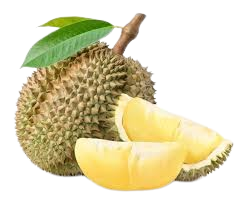
The origin of the durian fruit is traced to the islands of Borneo and Sumatra in Southeast Asia. It is a tropical fruit known for its large size, formidable thorn-covered husk, and distinctively strong, pervasive odor, which is revered by some and reviled by others. The fruit has been cultivated and consumed in the region for centuries and is deeply embedded in the local culture, earning the title "King of Fruits." Different species and hundreds of cultivars have been developed over time, particularly in Malaysia, Thailand, and Indonesia, each prized for its unique flavor and texture.
One iconic and popular dish that highlights durian's unique qualities is Durian Sticky Rice, known as Khao Niao Durian in Thailand. This decadent dessert consists of fresh, ripe durian pulp served alongside sweet sticky rice that has been steamed and then enriched with sweetened coconut milk. The dish is often finished with a drizzle of more creamy, slightly salted coconut sauce and sometimes a sprinkle of toasted mung beans or sesame seeds for texture. The combination is a masterful play of contrasts: the warm, chewy, and mildly sweet sticky rice provides a perfect base for the cool, intensely aromatic, and complex sweetness of the durian pulp, while the salty coconut cream cuts through the richness and balances the flavors. This dish is a beloved treat across Southeast Asia and showcases durian in a way that fully celebrates its rich, custard-like texture and its one-of-a-kind flavor profile.
Explore More Fruits
Discover more Fruits with detailed nutrition facts, calorie counts, vitamins, minerals, and health benefits. Compare similar foods, serving sizes, macronutrients, and key nutrients to find the best option for your diet and nutrition goals.
 Acai calories
 Acerola calories
 Ambarella calories
 Amla calories
 Apple calories
 Apricot calories
 Avocado calories
 Babaco calories
 Bael Fruit calories
 Banana calories
 Black Grapes calories
 Blackcurrant calories