Calories and Nutritions in Durum Wheat
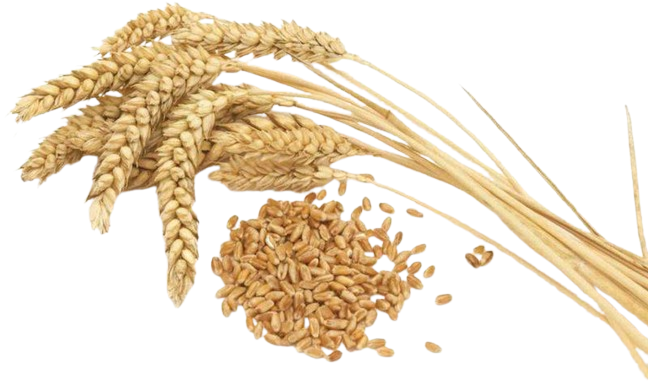
Durum wheat is a high-protein grain popular in Italian and North African cuisines, providing 339 calories per 100g. A large serving of durum wheat grain (167g or 5.9oz) has 566 calories, while a medium serving (84g) contains 285 calories. A 100 gram (3.5 ounce) portion of semolina (durum milled portion) contains 360 calories. One cup of cooked Barilla Penne pasta (140g) which contains durum wheat provides 200 calories, while a serving of Bob's Red Mill Semolina Pasta Flour (45g) contains 160 calories.
The durum wheat nutrition profile is notable for its high levels of protein and fiber. A large serving of the grain (167g) provides 22.8g of protein (46% DV), and its high fiber content is a key component for digestive health, as established in research (Anderson, J. W., et al., 2009). The grain’s value extends to essential minerals, with that same large serving delivering significant amounts of phosphorus (68% DV) and iron (33% DV) to support bone health and energy metabolism.
Durum wheat is most famously used to create pasta and couscous, thanks to its unique properties. Global supply is concentrated, with Canada and Italy being top producers, while the European Union and North African nations are the largest consumers. The price of this specialized grain has seen significant fluctuations over the past 20 years. The average cost per bushel was under $4.00 in the early 2000s but has experienced sharp spikes, climbing past $10.00 during periods of low supply.
Durum wheat is a distinct hard wheat species, different from the common wheat used for "whole wheat" products, giving pasta its signature firm bite. It is also different from Maida, which is a highly refined soft wheat flour. A one-cup serving of cooked pasta made from durum wheat contains 200 calories, which can be expended through 20 minutes of jogging or 27 minutes of swimming.
Durum Wheat nutrition
| Stats | Weight |
|---|---|
| Carbs | 72 grams |
| Protein | 13 grams |
| Fats | 0 grams |
| Sugars | 2 grams |
- Large Durum Wheat Calories (Nutritional Facts)
- Medium Durum Wheat Calories (Nutritional Facts)
- Small Durum Wheat Calories (Nutritional Facts)
- Durum Wheat Semolina Calories (Nutritional Facts)
- Raw Durum Wheat Nutrition
- Sodium in Durum Wheat
- Potassium in Durum Wheat
- Sugar in Durum Wheat
- Fiber in Durum Wheat
- Protein in Durum Wheat
- Carbs in Durum Wheat
- Fat in Durum Wheat
- Vitamins in Durum Wheat
- Minerals in Durum Wheat
Large Durum Wheat Calories (Nutritional Facts)
A large serving of durum wheat grain (167g or 5.9oz) contains 566 calories, 22.8g of protein, 4.1g of fat, 118.8g of carbohydrates, and 3.3mg of sodium.
A medium serving of durum wheat grain (84g or 3oz) has 285 calories, 11.5g of protein, 2.1g of fat, 59.7g of carbohydrates, and 1.7mg of sodium.
A small serving of durum wheat grain (42g or 1.5oz) provides 142 calories, 5.7g of protein, 1g of fat, 29.9g of carbohydrates, and 0.84mg of sodium.
A 100g (3.5oz) serving of uncooked durum wheat semolina contains 360 calories, 12.7g of protein, 1.05g of fat, 72.8g of carbohydrates, 3.9g of fiber, and 1mg of sodium.
A 100g (3.5oz) serving of raw durum wheat grain has 339 calories, 13.7g of protein, 2.5g of fat, 71.1g of carbohydrates, 12.2g of fiber, 0.4g of sugar, and 2mg of sodium.
A large serving of durum wheat grain (167g) contains 3.3mg of sodium (0% DV). A 100g serving of raw durum wheat grain has 2mg of sodium (0% DV). A medium serving of durum wheat grain (84g) has 1.7mg of sodium (0% DV). A 100g serving of durum wheat semolina has 1mg of sodium (0% DV). A small serving of durum wheat grain (42g) has 0.84mg of sodium (0% DV).
A large serving of durum wheat grain (167g) provides 719.8mg of potassium (15% DV). A 100g serving of raw durum wheat grain has 431mg of potassium (9% DV). A medium serving of durum wheat grain (84g) has 362mg of potassium (8% DV). A 100g serving of durum wheat semolina has 186mg of potassium (4% DV). A small serving of durum wheat grain (42g) has 181mg of potassium (4% DV).
A 100g serving of raw durum wheat grain contains 0.4g of sugar. Durum wheat semolina and large, medium, and small servings of durum wheat grain contain 0g of sugar.
A 100g serving of raw durum wheat grain provides 12.2g of fiber (44% DV). A 100g serving of durum wheat semolina has 3.9g of fiber (14% DV).
A large serving of durum wheat grain (167g) provides 22.8g of protein (46% DV). A 100g serving of raw durum wheat grain has 13.7g of protein (27% DV). A 100g serving of durum wheat semolina has 12.7g of protein (25% DV). A medium serving of durum wheat grain (84g) has 11.5g of protein (23% DV). A small serving of durum wheat grain (42g) has 5.7g of protein (11% DV).
A large serving of durum wheat grain (167g) contains 118.8g of carbohydrates (43% DV). A 100g serving of durum wheat semolina has 72.8g of carbohydrates (26% DV). A 100g serving of raw durum wheat grain has 71.1g of carbohydrates (26% DV). A medium serving of durum wheat grain (84g) has 59.7g of carbohydrates (22% DV). A small serving of durum wheat grain (42g) has 29.9g of carbohydrates (11% DV).
A large serving of durum wheat grain (167g) contains 4.1g of total fat (5% DV). A 100g serving of raw durum wheat grain has 2.5g of total fat (3% DV). A medium serving of durum wheat grain (84g) has 2.1g of total fat (3% DV). A 100g serving of durum wheat semolina has 1.05g of total fat (1% DV). A small serving of durum wheat grain (42g) has 1g of total fat (1% DV).
A 100g serving of unenriched durum wheat semolina provides 23% of the DV for thiamin, 18% of the DV for folate, 17% of the DV for niacin, and 12% of the DV for pantothenic acid.
A large serving of durum wheat grain (167g) provides 68% of the DV for phosphorus and 33% of the DV for iron. A medium serving of durum wheat grain (84g) provides 34% of the DV for phosphorus and 16% of the DV for iron. A 100g serving of durum wheat semolina provides 31% of the DV for manganese, 11% of the DV for phosphorus, and 7% of the DV for iron.
Get a Custom Report on Durum Wheat Nutrition Data – Contact Us!
What are the Types of Durum Wheat?
The types of durum wheat products are Whole Durum Wheat Grain, Durum Wheat Semolina, and Durum Wheat Flour. These are primarily defined by how the grain is milled. The table below clarifies the characteristics of these forms.
| Type | Description | Calories (Approximate per 100g, Uncooked) | Calorie Qualifications |
|---|---|---|---|
|
Whole Durum Wheat Grain
|
The intact kernel, containing the bran, germ, and endosperm. Requires cooking like rice or other whole grains. | 339 | The presence of the high-fiber bran and germ makes this the most nutrient-dense but not the highest-calorie form. |
|
Durum Wheat Semolina
|
The coarsely ground endosperm of the durum wheat kernel. This is the primary flour used to make pasta. | 360 | The removal of the bran and germ results in a higher concentration of starch, making it slightly more calorie-dense. |
|
Durum Wheat Flour
|
A finer grind of the durum wheat endosperm, used for breads and noodles. | 360 | Similar in composition and calorie count to semolina, just a finer texture. |
What are Desserts with Durum Wheat?
Durum wheat, in the form of semolina, is a key ingredient in many desserts, particularly in Mediterranean and Middle Eastern cuisines. A list of dessert preparations that use durum wheat is shown in the following table.
| Dish Name | Calories (Estimate per serving) | Type of Durum Wheat | Carbs (g) (Estimate) | Sugar (g) (Estimate) | Protein (g) (Estimate) | Fat (g) (Estimate) | Cuisine | Restaurants |
|---|---|---|---|---|---|---|---|---|
|
Basbousa (Semolina Cake)
|
350-500 | Semolina | 60 | 40 | 6 | 15 | Middle Eastern | Shatila Bakery |
|
Halva
|
400-550 | Semolina | 50 | 40 | 8 | 20 | Greek/Middle Eastern | Titan Foods, Astoria |
|
Semolina Pudding
|
200-350 | Semolina | 40 | 25 | 7 | 5 | European | Cafe Sabarsky |
|
Sooji Ka Halwa
|
300-450 | Semolina (Sooji) | 45 | 30 | 5 | 15 | Indian | Saravanaa Bhavan |
|
Sfouf (Lebanese Turmeric Cake)
|
300-450 | Semolina | 50 | 30 | 6 | 10 | Lebanese | Al Bohsali |
What are Main Dishes with Durum Wheat?
Durum wheat is the foundation of many staple main dishes around the world, most famously pasta and couscous. The table that follows details main courses that are built around durum wheat.
| Dish Name | Calories (Estimate per serving) | Type of Durum Wheat | Carbs (g) (Estimate) | Sugar (g) (Estimate) | Protein (g) (Estimate) | Fat (g) (Estimate) | Cuisine | Restaurants |
|---|---|---|---|---|---|---|---|---|
|
Spaghetti with Marinara
|
400-600 | Semolina (Pasta) | 80 | 15 | 15 | 5 | Italian | Olive Garden, Carrabba's Italian Grill |
|
Couscous with Vegetables
|
350-500 | Semolina (Couscous) | 70 | 10 | 12 | 4 | North African | Mourad, Cafe Mogador |
|
Lasagna Bolognese
|
600-900 | Semolina (Pasta) | 55 | 10 | 40 | 35 | Italian | Maggiano's Little Italy, Buca di Beppo |
|
Macaroni and Cheese
|
500-800 | Semolina (Pasta) | 60 | 8 | 25 | 25 | American | Panera Bread, The Cheesecake Factory |
|
Fregola with Seafood
|
500-700 | Semolina (Fregola) | 70 | 5 | 25 | 15 | Italian (Sardinian) | Marea, Cotogna |
|
Bulgur Pilaf
|
250-400 | Whole Durum (Bulgur) | 50 | 2 | 8 | 5 | Middle Eastern | CAVA, Zaytinya |
What Cuisines Prefer Durum Wheat the Most?
Durum wheat is a cherished grain, essential to the identity of Italian and North African cuisines. The table below highlights the culinary traditions where durum wheat is a central ingredient.
| Cuisine | Dish | Types of Durum Wheat Used | Calories (Estimate) | Restaurant(s) |
|---|---|---|---|---|
|
Italian
|
Pasta (all forms), Fregola | Semolina | 400-900 | Olive Garden, Carmine's |
|
North African
|
Couscous, Tagine | Semolina (Couscous) | 350-600 | Mourad, Cafe Mogador |
|
Middle Eastern
|
Bulgur Pilaf, Tabbouleh | Whole Durum (Bulgur) | 250-450 | CAVA, Zaytinya |
|
Greek
|
Pastitsio, Semolina Halva | Semolina (Pasta, Dessert) | 400-700 | The Great Greek, Souvla |
|
Indian
|
Upma, Sooji Ka Halwa | Semolina (Sooji/Rava) | 300-500 | Rasika, Benares |
Which Countries Produce the Most Durum Wheat?
The top producers of durum wheat are Canada, Italy, and the United States. Unlike common wheat, durum wheat production is more specialized and concentrated in specific regions with suitable climates. The table below shows the production quantity of durum wheat in key countries.
| Country | 2018 | 2019 | 2020 | 2021 | 2022 |
|---|---|---|---|---|---|
| Canada | 5.0 | 5.0 | 6.6 | 3.5 | 5.8 |
| Italy | 4.1 | 4.0 | 4.3 | 3.7 | 4.1 |
| United States | 2.1 | 1.5 | 1.8 | 0.9 | 1.9 |
| Turkey | 3.6 | 3.0 | 3.7 | 2.5 | 3.8 |
| Mexico | 1.8 | 2.4 | 2.6 | 1.4 | 1.6 |
Which Countries Consume the Most Durum Wheat?
The top consumers of durum wheat are countries in the European Union, particularly Italy, and nations in North Africa. Consumption is directly tied to the popularity of pasta and couscous in the national diet. The table below shows durum wheat consumption (domestic use) in key markets.
| Country/Region | 2018 | 2019 | 2020 | 2021 | 2022 |
|---|---|---|---|---|---|
| European Union | 8.8 | 8.5 | 8.9 | 8.2 | 8.6 |
| North Africa | 8.5 | 8.9 | 9.2 | 9.5 | 9.0 |
| Turkey | 4.0 | 3.5 | 4.2 | 3.8 | 4.3 |
| Canada | 1.8 | 1.9 | 2.0 | 1.8 | 2.1 |
| United States | 2.2 | 2.1 | 2.3 | 2.0 | 2.2 |
How Do Prices of Durum Wheat-Including Dishes Change?
Restaurant menu costs for pasta and other dishes containing durum wheat have risen over the last ten years. This increase is directly linked to the volatile market price of durum wheat, coupled with higher operational costs for restaurants, including labor and other food items. These upward price shifts can be seen on the menus at large Italian-style restaurant chains.
| Restaurant | Dish | Old Price (Year) | Current Price (2024/2025) |
|---|---|---|---|
| Olive Garden | Spaghetti with Marinara | $10.99 (2014) | $12.99 - $16.78 |
| Carrabba's Italian Grill | Spaghetti | $12.50 (2015) | $15.29 - $16.29 |
| Maggiano's Little Italy | Mom's Lasagna | $16.95 (2016) | $24.00 - $26.99 |
| Panera Bread | Mac & Cheese | $7.89 (2017) | $10.99 - $12.49 |
What is the Durum Wheat Calorie for 100 Grams?
A 100g serving of durum wheat semolina contains 360 calories. A 100g serving of raw durum wheat grain has 339 calories.
What is the Durum Wheat Calorie for 1 KG?
One kilogram (1000g) of durum wheat semolina contains 3600 calories. One kilogram of raw durum wheat grain has 3390 calories.
What is the Calorie of 1 Durum Wheat?
One cup of cooked Barilla Penne pasta (140g), made from durum wheat semolina, contains 200 calories. A serving of Bob's Red Mill Semolina Pasta Flour (45g) has 160 calories. A large serving of raw durum wheat grain (167g) has 566 calories.
What are the Health Benefits of Durum Wheat?
Durum wheat delivers notable health benefits stemming from its robust nutritional profile. The primary advantages of including durum wheat in a diet are detailed here.
- Supports Digestive Health: The high fiber content in whole durum wheat promotes regular bowel movements and supports a healthy gut microbiome. Dietary fiber adds bulk to stool and serves as a prebiotic, feeding beneficial gut bacteria. A review by Anderson, J. W., et al. (2009), "Health benefits of dietary fiber," established that increased fiber intake is linked to a reduced risk of numerous chronic diseases, including diverticular disease and constipation.
- Aids in Blood Sugar Control: Durum wheat, particularly in its whole grain form, has a lower glycemic index compared to refined wheat products. The fiber and protein slow down digestion and absorption of carbohydrates, leading to a more gradual rise in blood sugar levels. A study by Jenkins, D. J. A., et al. (2002), "Glycemic index," demonstrated that low-glycemic index foods are beneficial for managing blood glucose levels in individuals with and without diabetes.
- Promotes Satiety and Weight Management: The combination of high protein and fiber in durum wheat increases feelings of fullness, or satiety, which can help reduce overall calorie intake. Protein is the most satiating macronutrient, and fiber adds volume to meals without adding calories. A study by Paddon-Jones, D., et al. (2008), "Protein, weight management, and sarcopenia," detailed the role of protein in appetite control and the preservation of lean muscle mass during weight management.
What are the Downsides of Durum Wheat?
Eating durum wheat carries health risks for certain individuals. The potential problems associated with durum wheat consumption are outlined below.
- Contains Gluten: Durum wheat has a very high gluten content, which makes it unsuitable for individuals with celiac disease or non-celiac gluten sensitivity. In these individuals, gluten triggers an immune response that can damage the small intestine and cause a range of symptoms. A review by Sapone, A., et al. (2012), "Spectrum of gluten-related disorders," detailed different manifestations of gluten-related disorders and the necessity of a strict gluten-free diet for management. An alternative is gluten-free grains like quinoa, rice, or buckwheat. A suggested amount for those with gluten sensitivity is complete avoidance.
- Antinutrient Content: Whole durum wheat contains phytates, compounds that can bind to minerals like iron and zinc and reduce their absorption. This can be a concern in diets that rely heavily on whole grains without a varied intake of other foods. A study by Gibson, R. S., et al. (2010), "A review of phytate, iron, zinc, and calcium concentrations in plant-based complementary foods," explained how phytates can impact mineral status. An alternative is to consume durum wheat products with foods high in Vitamin C, which enhances iron absorption. A daily suggested amount is to maintain a varied diet that includes a wide range of nutrient sources.
Is Durum Wheat Good for You?
Yes, durum wheat is a good food choice for most people within a balanced diet because it is a nutrient-dense whole grain providing high-quality protein, fiber, and important minerals. The nutritional composition offers several benefits for bodily functions. The high selenium content supports Cellular Health by functioning as a potent antioxidant. A review by Rayman, M. P. (2012), "Selenium and human health," demonstrated the importance of adequate selenium intake for the body's antioxidant defenses. The rich supply of B vitamins, especially thiamin, supports Brain Health and energy production. A study by Kennedy, D. O. (2016), "B Vitamins and the Brain: Mechanisms, Dose and Efficacy—A Review," details the critical role of B vitamins in cognitive function. The manganese in durum wheat promotes Bone Health and metabolism. A study by Palacios, C. (2006), "The role of nutrients in bone health, from A to Z," explains that manganese is an essential cofactor for enzymes involved in bone matrix formation.
How Do Calories Change According to Durum Wheat Types?
The calorie count in durum wheat is determined by the degree of milling. Durum wheat semolina and durum wheat flour have the highest calorie value at 360 calories per 100 grams. This is a result of milling the grain to isolate the starchy endosperm, which concentrates the carbohydrates. The whole durum wheat grain contains the lowest calorie value at 339 calories per 100 grams. This lower value reflects the presence of the high-fiber bran and nutrient-rich germ, which are less calorie-dense than the endosperm.
What is the Difference Between Durum Wheat and Whole Wheat?
The primary difference between durum wheat and whole wheat is the species of wheat. Durum wheat (Triticum durum) is a hard, high-protein wheat species with a golden color, while "whole wheat" refers to products made from the entire kernel of common wheat (Triticum aestivum). The benefit of durum wheat over common whole wheat is its superior protein quality and gluten strength, which makes it ideal for producing high-quality pasta that holds its shape and firm texture ("al dente") after cooking. Whole durum wheat is nutritionally similar to other whole wheats, but semolina made from durum is prized for its specific culinary properties.
Is Durum Wheat Maida?
No, durum wheat is not Maida. Maida is a highly refined, bleached wheat flour made from the endosperm of softer common wheat varieties (Triticum aestivum). Durum wheat (Triticum durum) is a much harder wheat species. The flour made from durum wheat is semolina, which is coarse and yellow. Maida is white, very fine, and has a lower protein content. The key difference is the wheat species and the resulting texture and protein content of the flour.
What is the Origin of Durum Wheat?
The history of durum wheat dates back to antiquity in the Fertile Crescent region of the Middle East. It is a tetraploid species of wheat, meaning it has four sets of chromosomes, and is believed to have evolved from a natural hybridization of wild grasses. Durum, which means "hard" in Latin, was named for its exceptional hardness compared to other wheat species. This hardness is due to its high protein and gluten content. Ancient civilizations in the Mediterranean basin, including the Romans, cultivated durum wheat extensively. Its unique properties made it the ideal grain for making the earliest forms of pasta, as the dough was strong and could be shaped and dried for storage. The grain's cultivation spread throughout Southern Europe, North Africa, and the Middle East, becoming the foundation for staple foods like pasta, couscous, and bulgur.
Explore More Grains
Discover more Grains with detailed nutrition facts, calorie counts, vitamins, minerals, and health benefits. Compare similar foods, serving sizes, macronutrients, and key nutrients to find the best option for your diet and nutrition goals.
 Amaranth calories
 Arborio Rice calories
 Arrowroot Powder calories
 Barley calories
 Basmati Rice calories
 Black Rice calories
 Brown Rice calories
 Buckwheat calories
 Bulgur Wheat calories
 Coconut Flour calories
 Cornmeal calories
 Cornstarch calories